915
Pain, Physical Activity, and Disability in Individuals With Late
Effects of Polio
Carin Willt!n, MSc, RPT, Gunnar Grimby, MD, PhD
ABSTRACT. Willen C, Grimby G. Pain, physical activity,
and disability in individuals with late effects of polio. Arch Phys
Med Rehabil 1998;79:915-9.
Objective: The aim of this study was to provide adescription
of pain and its relationship to the effects of polio, physical
activity, and disability.
Design: Assessment instruments usedwere: apain question-
naire, a pain drawing, a visual analogue scale (VAS), a 30-m
walk indoors, isokinetic muscle strength, serum creatine kinase
concentration, the Physical Activity Scale for the Elderly, and
the Nottingham Health Profile (NHP).
Setting: A university hospital department.
Subjects: Thirty-two consecutive individuals with late ef-
fects of polio.
Results: More than 50% of the individuals had pain every
day, mostly during physical activity. The mean VAS score for
daily pain intensity was 55mm, range 0 to 93mm. In the lower
limbs cramping pain was the most common pain characteristic
in both polio-affected and non-polio-affected limbs. In the
upper limbs and in the trunk, aching pain was the most common
pain characteristic, especially in the polio-affected areas.The
degree of muscle weakness had no correlation to pain experi-
ence. The walking test demonstrated a relatively small differ-
ence between spontaneous and maximal walking speed. The
NHP questionnaire demonstrated that all six dimensions (en-
ergy, pain, physical mobility, sleep, emotional reactions, and
social isolation) were affected. The dimensions pain and
physical mobility both strongly correlated with energy.
Conclusions: There is a relationship between physical
activity in daily life and experience of pain. In many postpolio
individuals who experience a high level of pain, spontaneous
and maximal walking speed are approximately the same. It is
strongly recommended that individuals with late effects of
polio, experiencing aching and especially cramping pain,
modify their level of physical activity.
o 1998 by the American Congress of Rehabilitation Medi-
cine and the American Academy of Physical Medicine and
Rehabilitation
DURING THE LAST TWO decades attention has been
given to the late effects of poliomyelitis.‘~* More than 50%
of individuals with a history of acute poliomyelitis experience
new health problems later in life related to their original
From the Department of Rehabilitation Medicine, Giiteborg University, GBteborg,
Sweden.
Manuscript received October 1, 1997. Accepted in revised form February 23, 1998.
Supported by grants from the Swedish Foundation for Health and Care Sciences and
Allergy Research, the National Board of Health and Welfare, and the Swedish Medical
Research Council (project 03888).
No commercial party having a direct financial interest in the results of the research
suomxtin~ this article has or will confer a benefit won the authors or won anvLI ” I ~
organization with which the authors are associated.
Reprint requests to Carin Will&n, Department of Rehabilitation Medicine, Sahlgren-
ska University Hospital, S-413 45 Giiteborg. Sweden.
0 1998 by the American Congress of Rehabilitation Medicine and the American
Academy of Physical Medicine and Rehabilitation
0003-9993/98/7908-4669$3.00/O
illness3 This number may continue to increase; for most
individuals, more than 30 years have passed since the acute
polio illness4 The term postpolio syndrome (PPS) has been
used to describe these new health problems and criteria have
been defined for making the diagnosis3 The terms late effectsof
polio and postpolio sequelae are less specific and refer to the
symptoms experienced by individuals with a history of polio.3
Four studie$* have found similar symptoms in individuals
with late effects of polio. In these studies chronic pain and/or
fatigue is the first or secondmost prevalent symptom. Halstead
and Rossi5,gfound the prevalence of muscle andjoint pain in
approximately 75% of subjects. In a clinically based study,
Agre and colleague@ found a somewhat higher prevalence of
muscle pain, 86%, and similar numbers for joint pain. The same
prevalence was found in a study at the rehabilitation hospital in
Sunnaas, Norway.* Ninety percent of 150 individuals visiting
the polio clinic in Giiteborg during 1995 and 1996 experienced
pain from the locomotor system (unpublished data). Pain could
be related to disuse and/or overuse of joints and muscles;
however, there is no single basisfor the muscle pain, aspointed
out by Halstead.
In studies on disability in subjectswith postpolio symptoms,
the impact has mainly been on mobility-related activities.
Common difficulties described are related to walking on level
surfaces and to stairclimbing. 1o-12Westbrook reported differ-
ent lifestyle changesin subjects with postpolio symptoms. Less
walking, reduced social life, and reduced or stopped physical
recreation were the most common changes mentioned. In the
study by Crimby and ThorQ-JGnssonll using the Nottingham
Health Profile (NHP) questionnaire, individuals with PPShad
higher levels of distress in the dimensions of energy, physical
mobility, pain, sleep, and emotional reactions than the group
without PPS.
It is important to reassessthe symptoms of individuals with
late effects of polio to get a deeper knowledge of their
frequency, intensity, and functional implications.4,13The aim of
this study was to provide a description of pain and how it is
related to the effects of polio, physical activity, and disability in
individuals with late effects of polio.
METHODS
Subjects
Thirty-five consecutive individuals (19 women and 16 men)
from the polio clinic at a university hospital during a lo-week
period were asked to participate in the study. Of the 35
individuals, three did not wish to participate. The analyzed
group thus consisted of 32 individuals. The mean age for the
group was 56 years (range 37 to 73).
Twenty-two individuals fulfilled the criteria for PPSand 10
had late effects of polio but did not fulfill the criteria for PPS.3
In every individual one or more extremities was affected; the
trunk could also be affected. The presence of polio-affected
muscleswas first determined according to the clinical history of
the patient. In addition, electromyogram (EMG) was recorded
in at least three to five relevant muscle groups. The limbs and
the trunk of each individual were then classified using the
Arch Phys Med Rehabil Vol79, August 1998
916 PAIN AND DISABILITY IN POLIO, Will&
left arm
&
E2
8 right arm
&
2 left leg
right leg
0 2 4 6 8 10 12 14 16
NUMBER
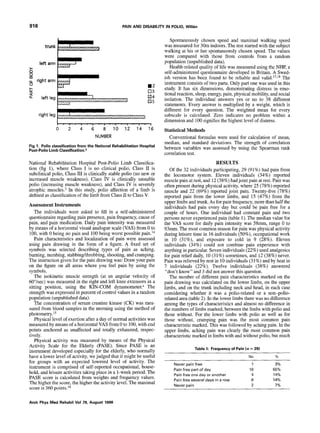
Fig 1. Polio classification from the National Rehabilitation Hospital
Post-Polio Limb Classification.4
National Rehabilitation Hospital Post-Polio Limb Classifica-
tion (fig I), where Class I is no clinical polio, Class II is
subclinical polio, Class III is clinically stable polio (no new or
increased muscle weakness), Class IV is clinically unstable
polio (increasing muscle weakness), and Class IV is severely
atrophic muscles.3 In this study, polio affection of a limb is
defined asclassification of the limb from ClassII to ClassV.
Assessment Instruments
The individuals were asked to fill in a self-administered
questionnaire regarding pain presence,pain frequency, cause of
pain, and pain medication. Daily pain intensity was measured
by meansof ahorizontal visual analogue scale(VAS) from 0 to
100, with 0 being no pain and 100 being worst possible pain.r4
Pain characteristics and localization of pain were assessed
using pain drawing in the form of a figure. A fixed set of
symbols was selected describing types of pain as aching,
burning, numbing, stabbing/throbbing, shooting, and cramping.
The instruction given for the pain drawing was: Draw your pain
on the figure on all areas where you feel pain by using the
symbols.
The isokinetic muscle strength (at an angular velocity of
60”/sec) was measured in the right and left knee extensors in a
sitting position, using the KIN-COM dynamometera The
strength was expressedin percent of control values in arandom
population (unpublished data).
The concentration of serum creatine kinase (CK) was mea-
sured from blood samples in the morning using the method of
photometry. l5
Physical level of exertion after aday of normal activities was
measuredby meansof ahorizontal VAS from 0 to 100, with end
points anchored as unaffected and totally exhausted, respec-
tively.
Physical activity was measured by means of the Physical
Activity Scale for the Elderly (PASE). Since PASE is an
instrument developed especially for the elderly, who normally
have alower level of activity, we judged that it might be useful
for groups with an expected lowered level of activity. The
instrument is comprised of self-reported occupational, house-
hold, andleisure activities taking place in a l-week period. The
PASE score is calculated from weights and frequency values.
The higher the score,the higher the activity level. The maximal
scoreis 360 points.i6
Spontaneously chosen speed and maximal walking speed
was measured for 30m indoors. The test startedwith the subject
walking at his or her spontaneously chosen speed.The values
were compared with those from controls from a random
population (unpublished data).
Health-related quality of life was measured using the NHP, a
self-administered questionnaire developed in Britain. A Swed-
ish version has been found to be reliable and valid.17Jg The
instrument consistsof two parts. Only part one was used in this
study. It has six dimensions, demonstrating distress in emo-
tional reaction, sleep, energy,pain, physical mobility, and social
isolation. The individual answers yes or no to 38 different
statements. Every answer is multiplied by a weight, which is
different for every question. The weighted mean for every
subscale is calculated. Zero indicates no problem within a
dimension and 100 signifies the highest level of distress.
Statistical Methods
Conventional formulas were used for calculation of mean,
median, and standard deviations. The strength of correlation
between variables was assessedby using the Spearman rank
correlation test.
RESULTS
Of the 32 individuals participating, 29 (91%) had pain from
the locomotor system. Eleven individuals (34%) reported
muscle pain at rest, and 12(38%) hadjoint pain atrest. Pain was
often present during physical activity, where 25 (78%) reported
muscle and 22 (69%) reported joint pain. Twenty-five (78%)
reported pain from the lower limbs, and 15 (47%) from the
upper limbs and trunk. As for pain frequency, more than half the
individuals had pain every day but could be pain free for a
couple of hours. One individual had constant pain and two
persons never experienced pain (table 1).The median value for
the VAS score for daily pain intensity was 58mm, range 0 to
93mm. The most common reason for pain was physical activity
during leisure time in 16 individuals (50%), occupational work
in 10 (31%), and exposure to cold in 9 (28%). Eleven
individuals (34%) could not combine pain experience with
anything in particular. Seven individuals (22%) usedanalgesics
for pain relief daily, 10 (31%) sometimes, and 12 (38%) never.
Pain was relieved by rest in 10 individuals (3 1%) and by heat in
7 individuals (22%). Twelve individuals (38%) answered
“don’t know” and 3 did not answer this question.
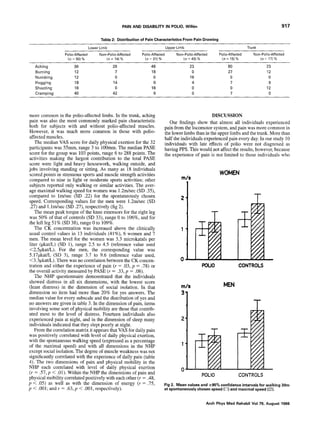
The number of different pain characteristics marked on the
pain drawing was calculated on the lower limbs, on the upper
limbs, and on the trunk including neck and head, in each case
considering whether it was a polio-related or a non-polio-
related area(table 2). In the lower limbs there was no difference
among the types of characteristics and almost no difference in
the numbers of limbs marked, between the limbs with polio and
those without. For the lower limbs with polio as well as for
those without, cramping pain was the most common pain
characteristic marked. This was followed by aching pain. In the
upper limbs, aching pain was clearly the most common pain
characteristic marked in limbs with and without polio, but much
Table 1: Frequency of Pain [n = 29)
NO.
Never pain free 1
Pain free part of day 16
Pain free one day or another 4
Pain free several days in a row 6
Never pain 2
%
3%
55%
14%
14%
7%
Arch Phys Med Rehabil Vol 79, August 1998
PAIN AND DISABILITY IN POLIO, Willen 917
Table 2: Distribution of Pain Characteristics From Pain Drawing
Lower Limb Upper Limb Trunk
Polio-Affected Non-Polio-Affected Polio-Affected Non-Polio-Affected Polio-Affected Non-Polio-Affected
(n = 50) % (n=14)% (n=21)% (n = 43) % (/I= 151% (n= 171%
Aching 36 29 48 23 80 23
Burning 12 7 18 0 27 12
Numbing 12 0 0 18 0 0
Hugging 18 14 0 4 7 6
Shooting 16 0 18 0 0 12
Cramping 40 42 6 0 7 0
more common in the polio-affected limbs. In the trunk, aching
pain was also the most commonly marked pain characteristic
both for subjects with and without polio-affected muscles.
However, it was much more common in those with polio-
affected muscles.
The median VAS scorefor daily physical exertion for the 32
participants was 55mm, range 3 to 100mm. The median PASE
score for the group was 103 points, range 6 to 288 points. The
activities making the largest contribution to the total PASE
score were light and heavy housework, walking outside, and
jobs involving standing or sitting. As many as 18 individuals
scored points in strenuoussports and muscle strength activities
compared to nine in light or moderate sports activities; other
subjects reported only walking or similar activities. The aver-
age maximal walking speedfor women was 1.2m/sec(SD .35),
compared to lm/sec (SD .22) for the spontaneously chosen
speed. Corresponding values for the men were 1.2m/sec (SD
.27) and l.lm/sec (SD .27), respectively (fig 2).
The mean peak torque of the knee extensors for the right leg
was 50% of that of controls (SD 33), range 0 to 106%, and for
the left leg 51% (SD 38), range 0 to 109%.
The CK concentration was increased above the clinically
usual control values in 13 individuals (41%), 6 women and 7
men. The mean level for the women was 3.3 microkatals per
liter Q.&at/L) (SD l), range 2.5 to 4.5 (reference value used
<2.5ukat/L). For the men, the corresponding value was
5.17pkat/L (SD 3), range 3.7 to 9.6 (reference value used,
<3.3pkat/L). There was no correlation between the CK concen-
tration and either the experience of pain (v = .03, p = .78) or
the overall activity measured by PASE(u = .33,p = .08).
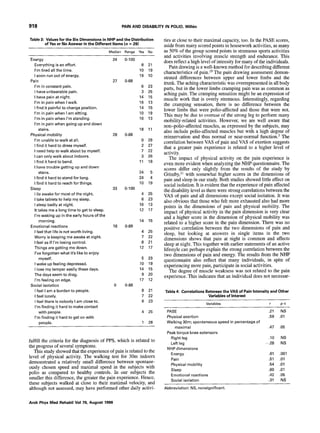
The NHP questionnaire demonstrated that the individuals
showed distress in all six dimensions, with the lowest score
(least distress) in the dimension of social isolation. In that
dimension no item had more than 20% for yes answers. The
median value for every subscale and the distribution of yes and
no answers aregiven in table 3. In the dimension of pain, items
involving some sort of physical mobility arethose that contrib-
uted most to the level of distress. Fourteen individuals also
experienced pain at night, and in the dimension of sleep many
individuals indicated that they slept poorly at night.
From the correlation matrix it appearsthat VAS for daily pain
was positively correlated with level of daily physical exertion,
with the spontaneouswalking speed(expressedas apercentage
of the maximal speed) and with all dimensions in the NHP
except social isolation. The degree of muscle weaknesswas not
significantly correlated with the experience of daily pain (table
4). The two dimensions of pain and physical mobility in the
NHP each correlated with level of daily physical exertion
(v = .57, p < .Ol). Within the NHP the dimensions of pain and
physical mobility correlated positively with eachother (v = .48,
p < .05) as well as with the dimension of energy (v = .75,
p < .OOl;and r = .63,p < .OOl,respectively).
DISCUSSION
Our findings show that almost all individuals experienced
pain from the locomotor system, and pain was more common in
the lower limbs than in the upper limbs and the trunk. More than
half the individuals experienced pain every day. In our study 10
individuals with late effects of polio were not diagnosed as
having PPS.This would not affect the results, however, because
the experience of pain is not limited to those individuals who
WOMEN
m/s
m/s
CONTROLS
CONTROLS
Fig 2. Mean values and *95% confidence intervals for walking 30m
at spontaneously chosen speed (El) and maximal speed (m).
Arch Phys Med Rehabil Vol 79, August 1998
918 PAIN AND DISABILITY IN POLIO, Will&
Table 3: Values for the Six Dimensions in NHP and the Distribution
of Yes or No Answer in the Different Items (n = 29)
Median Range Yes No
Energy
Everything is an effort,
I’m tired all the time.
I soon run out of energy.
Pain
I’m in constant pain.
I have unbearable pain.
I have pain at night.
I’m in pain when I walk.
I find it painful to change position.
I’m in pain when I am sitting.
I’m in pain when I’m standing.
I’m in pain when going up and down
stairs.
Physical mobility
I’m unable to walk at all.
I find it hard to dress myself.
I need help to walk about by myself.
I can only walk about indoors.
I find it hard to bend.
I have trouble getting up and down
stairs.
I find it hard to stand for long.
I find it hard to reach for things.
Sleep
I lie awake for most of the night.
I take tablets to help my sleep.
I sleep badly at night.
It takes me a long time to get to sleep.
I’m waking up in the early hours of the
morning.
Emotional reactions
I feel that life is not worth living.
Worry is keeping me awake at night.
I feel as if I’m losing control.
Things are getting me down.
I’ve forgotten what it’s like to enjoy
myself.
I wake up feeling depressed.
I lose my temper easily these days.
The days seem to drag.
I’m feeling on edge.
Social isolation
I feel I am a burden to people.
I feel lonely.
I feel there is nobody I am close to.
I’m finding it hard to make contact
with people.
I’m finding it hard to get on with
people.
24
27
28
33
18
0
O-l 00
8 21
10 19
19 10
O-68
6 23
3 25
14 15
16 13
14 15
10 19
16 13
18 11
O-68
0 29
2 27
7 22
3 26
11 18
24 5
24 4
10 19
o-100
4 25
6 23
16 13
12 17
14 15
O-89
4 25
7 22
8 21
12 17
5 23
10 19
14 15
9 20
17 12
O-88
8 21
7 22
6 23
4 25
1 28
fulfill the criteria for the diagnosis of PPS, which is related to
the progress of several symptoms.
This study showed that the experience of pain isrelated to the
level of physical activity. The walking test for 30m indoors
demonstrated a relatively small difference between spontane-
ously chosen speed and maximal speed in the subjects with
polio as compared to healthy controls. In our subjects the
smaller this difference, the greater the pain experience. Hence,
these subjects walked at close to their maximal velocity, and
although not assessed,may have performed other daily activi-
ties at close to their maximal capacity, too. In the PASE scores,
aside from many scored points in housework activities, asmany
as 50% of the group scored points in strenuous sports activities
and activities involving muscle strength and endurance. This
doesreflect ahigh level of intensity for many of the individuals.
Pain drawing is awell-known method for describing different
characteristics of pain. l9 The pain drawing assessmentdemon-
strated differences between upper and lower limbs and the
trunk. The aching characteristic was overrepresented in all body
parts, but in the lower limbs cramping pain was as common as
aching pain. The cramping sensationmight be an expression of
muscle work that is overly strenuous. Interestingly, regarding
the cramping sensation, there is no difference between the
lower limbs that were polio-affected and those that were not.
This may be due to overuse of the strong leg to perform many
mobility-related activities. However, we are well aware that
non-polio-affected muscles, as expressedby the subjects, may
also include polio-affected muscles but with a high degree of
reinnervation and thus normal or near-normal function.3 The
correlation between VAS of pain and VAS of exertion suggests
that a greater pain experience is related to a higher level of
activity.
The impact of physical activity on the pain experience is
even more evident when analyzing the NHP questionnaire. The
scores differ only slightly from the results of the study by
Grimby, 11with somewhat higher scores in the dimensions of
pain and sleep in our study. Both studies showed little effect on
social isolation. It is evident that the experience of pain affected
the disability level asthere were strong correlations between the
VAS of pain and all dimensions except social isolation. It was
also obvious that those who felt more exhausted also had more
points in the dimensions of pain and physical mobility. The
impact of physical activity in the pain dimension is very clear
and a higher score in the dimension of physical mobility was
related to a higher score in the pain dimension. There was no
positive correlation between the two dimensions of pain and
sleep, but looking at answers in single items in the two
dimensions shows that pain at night is common and affects
sleep at night. This together with earlier statementsof an active
lifestyle canperhaps explain the strong correlation between the
two dimensions of pain and energy. The results from the NHP
questionnaire also reflect that many individuals, in spite of
experiencing more pain, participate in social activities.
The degree of muscle weakness was not related to the pain
experience. This indicates that an individual does not necessar-
Table 4: Correlations Between the VAS of Pain Intensity and Other
Variables of Interest
Variables r PS
PASE .21 NS
Physical exertion .59 .Ol
Walking 30m; spontaneous speed in percentage of
maximal .47 .05
Peak torque knee extensors
Right leg .I0 NS
Left leg -.28 NS
NHP dimensions
Energy .61 .OOl
Pain .51 .Ol
Physical mobility .54 .Ol
Sleep .60 .Ol
Emotional reactions .42 .05
Social isolation .31 NS
Abbreviation: NS, nonsignificant.
Arch Phys Med Rehabil Vol79, August 1998
PAIN AND DISABILITY IN POLIO, Will& 919
ily experience more pain with more pronounced muscle weak-
ness. On the contrary, it might indicate that those who are less
affected by muscle weakness experience more pain, which can
be a result of a more active life. There was no correlation
between the CK concentration and either the experience of pain
and physical exertion or the overall activity as measured by
PASE. Elevated CK concentration has been found to correlate
with the distance walked during the previous 24 hours20
However, in this study, no specific report was made of the
previous 24 hours of activities.
CONCLUSION
According to our findings, we would recommend that
individuals with late effects of polio who experience aching and
especially cramping pain should adapt their level of physical
activity in daily life. They also need to discuss their exercise
habits with a physiotherapist. An activity diary and a pain
drawing could be a useful basefor discussions, aswell as more
systematized patient education.
References
1. Halstead LS, Wiechers DO, Rossi CD. Late effects of poliomyeli-
tis: a national survey. In: Halstead LS, Wiechers DO. editors. Late
effects of poliomyelitis. Miami (FL): Symposia Foundation; 1985.
p. 11-31.
2. Westbrook MT. A survey of post-poliomyelitis sequelae: manifes-
tations, effects on people’s lives and responses to treatment. Aust .I
Physiother 1991;37:89-102.
3. Gawne CA, Halstead LS. Post-polio syndrome: pathophysiology
and clinical management. Crit Rev Phys Rehabil Med 1995;7:147-
88.
4. Dean E. Clinical decision making in the management of the late
sequelae of poliomyelitis. Phys Ther 1991;71:752-61.
5. Halstead LS, Rossi CD. New problems in old polio patients:
results of a survey of 539 polio survivors. Orthopedics 1985;8:845-
50.
6. Agre JC, Rodriquez AA, Sperling KB. Symptoms and clinical
impressions of patients seen in a postpolio clinic. Arch Phys Med
Rehabil 1989;70:367-70.
7. Agre JC, Grimby G, Rodriquez AA, Einarsson G, Swiggum ER,
Franke TM. A comparison of symptoms between Swedish and
8.
9.
10.
11.
12.
13.
14.
15.
16.
17.
18.
19.
20.
American post-polio individuals and assessment of lower limb
strength-a four-year cohort study. Stand J Rehabil Med 1995;27:
183-92.
Stanghelle JK, Helseth R, Roaldsen KS. 42 pasienter med post-
polio syndromet. Nor Laegefor 1991;111:3159-62.
Halstead LS, Rossi CD. Post-polio syndrome: clinical experience
with 132 consecutive outpatients. In: Halstead LS, Wiechers DO,
editors. Research and clinical aspects of the late effects of
poliomyelitis, vol. 23. New York: March of Dimes Birth Defects
Foundation: 1987. p. 13-26.
Einarson G, Grimby G. Disability and handicap in late poliomyeli-
tis. Stand J Rehabil Med 1990:22: 113-21.
Grimby G: Thor& Jonsson A-L. Disability in poliomyelitis
sequelae. Phys Ther 1994:74:46-55.
Westbrook MT, McDowell L. Coping with a second disability:
implications of the late effects of poliomyelitis for occupational
therapists. Aust Occup Ther J 1991;38:83-91.
Halstead LS. Assessment and differential diagnosis for post-polio
syndrome. Orthopedics 1991;14:1209-17.
Carlsson AM. Assessment of chronic pain. Aspects of the reliabil-
ity and validity of visual analogue scale. Pain 1983;16:87-101.
Szasz G, Gruber W, Berm E. Creatine kinase in serum: determina-
tion of optimum reaction conditions. Clin Chem 1976;22:650-6.
Washburn RA, Smith KW, Jette AM, Janney CA. The physical
activity scale for the elderly (PASE): development and evaluation.
J Clin Euidemiol 1993:46: 153-62.
W&l& I. The Nottingham Health Profile-a measure of health-
related quality of life. Stand J Prim Health Care 1990;1:15-8.
Wiklund I, Romanus B, Hunt SM. Self-assessed disability in
patients with arthrosis of the hip joint: relationship of the Swedish
version of the Nottingham Health Profile. Int Disabil Stud
1988;10:159-63.
Persson L, Moritz U. Pain-drawing: a quantitative and qualitative
model for pain assessment in cervico-brachial pain syndrome. Pain
Clinic 1994;7:13-22.
Waring P, McLamin T. Correlation of creatine kinase and gait
measurement in the postpolio population: a corrected version.
Arch Phys Med Rehabil 1992;73:447-50.
Supplier
a. Chattanooga Group, Inc., PO Box 489, Hixson, TN.
Arch Phys Med Rehabil Vol79, August 1998

PHYSICAL ACTIVITY AND POLIO

  • 1.
    915 Pain, Physical Activity,and Disability in Individuals With Late Effects of Polio Carin Willt!n, MSc, RPT, Gunnar Grimby, MD, PhD ABSTRACT. Willen C, Grimby G. Pain, physical activity, and disability in individuals with late effects of polio. Arch Phys Med Rehabil 1998;79:915-9. Objective: The aim of this study was to provide adescription of pain and its relationship to the effects of polio, physical activity, and disability. Design: Assessment instruments usedwere: apain question- naire, a pain drawing, a visual analogue scale (VAS), a 30-m walk indoors, isokinetic muscle strength, serum creatine kinase concentration, the Physical Activity Scale for the Elderly, and the Nottingham Health Profile (NHP). Setting: A university hospital department. Subjects: Thirty-two consecutive individuals with late ef- fects of polio. Results: More than 50% of the individuals had pain every day, mostly during physical activity. The mean VAS score for daily pain intensity was 55mm, range 0 to 93mm. In the lower limbs cramping pain was the most common pain characteristic in both polio-affected and non-polio-affected limbs. In the upper limbs and in the trunk, aching pain was the most common pain characteristic, especially in the polio-affected areas.The degree of muscle weakness had no correlation to pain experi- ence. The walking test demonstrated a relatively small differ- ence between spontaneous and maximal walking speed. The NHP questionnaire demonstrated that all six dimensions (en- ergy, pain, physical mobility, sleep, emotional reactions, and social isolation) were affected. The dimensions pain and physical mobility both strongly correlated with energy. Conclusions: There is a relationship between physical activity in daily life and experience of pain. In many postpolio individuals who experience a high level of pain, spontaneous and maximal walking speed are approximately the same. It is strongly recommended that individuals with late effects of polio, experiencing aching and especially cramping pain, modify their level of physical activity. o 1998 by the American Congress of Rehabilitation Medi- cine and the American Academy of Physical Medicine and Rehabilitation DURING THE LAST TWO decades attention has been given to the late effects of poliomyelitis.‘~* More than 50% of individuals with a history of acute poliomyelitis experience new health problems later in life related to their original From the Department of Rehabilitation Medicine, Giiteborg University, GBteborg, Sweden. Manuscript received October 1, 1997. Accepted in revised form February 23, 1998. Supported by grants from the Swedish Foundation for Health and Care Sciences and Allergy Research, the National Board of Health and Welfare, and the Swedish Medical Research Council (project 03888). No commercial party having a direct financial interest in the results of the research suomxtin~ this article has or will confer a benefit won the authors or won anvLI ” I ~ organization with which the authors are associated. Reprint requests to Carin Will&n, Department of Rehabilitation Medicine, Sahlgren- ska University Hospital, S-413 45 Giiteborg. Sweden. 0 1998 by the American Congress of Rehabilitation Medicine and the American Academy of Physical Medicine and Rehabilitation 0003-9993/98/7908-4669$3.00/O illness3 This number may continue to increase; for most individuals, more than 30 years have passed since the acute polio illness4 The term postpolio syndrome (PPS) has been used to describe these new health problems and criteria have been defined for making the diagnosis3 The terms late effectsof polio and postpolio sequelae are less specific and refer to the symptoms experienced by individuals with a history of polio.3 Four studie$* have found similar symptoms in individuals with late effects of polio. In these studies chronic pain and/or fatigue is the first or secondmost prevalent symptom. Halstead and Rossi5,gfound the prevalence of muscle andjoint pain in approximately 75% of subjects. In a clinically based study, Agre and colleague@ found a somewhat higher prevalence of muscle pain, 86%, and similar numbers for joint pain. The same prevalence was found in a study at the rehabilitation hospital in Sunnaas, Norway.* Ninety percent of 150 individuals visiting the polio clinic in Giiteborg during 1995 and 1996 experienced pain from the locomotor system (unpublished data). Pain could be related to disuse and/or overuse of joints and muscles; however, there is no single basisfor the muscle pain, aspointed out by Halstead. In studies on disability in subjectswith postpolio symptoms, the impact has mainly been on mobility-related activities. Common difficulties described are related to walking on level surfaces and to stairclimbing. 1o-12Westbrook reported differ- ent lifestyle changesin subjects with postpolio symptoms. Less walking, reduced social life, and reduced or stopped physical recreation were the most common changes mentioned. In the study by Crimby and ThorQ-JGnssonll using the Nottingham Health Profile (NHP) questionnaire, individuals with PPShad higher levels of distress in the dimensions of energy, physical mobility, pain, sleep, and emotional reactions than the group without PPS. It is important to reassessthe symptoms of individuals with late effects of polio to get a deeper knowledge of their frequency, intensity, and functional implications.4,13The aim of this study was to provide a description of pain and how it is related to the effects of polio, physical activity, and disability in individuals with late effects of polio. METHODS Subjects Thirty-five consecutive individuals (19 women and 16 men) from the polio clinic at a university hospital during a lo-week period were asked to participate in the study. Of the 35 individuals, three did not wish to participate. The analyzed group thus consisted of 32 individuals. The mean age for the group was 56 years (range 37 to 73). Twenty-two individuals fulfilled the criteria for PPSand 10 had late effects of polio but did not fulfill the criteria for PPS.3 In every individual one or more extremities was affected; the trunk could also be affected. The presence of polio-affected muscleswas first determined according to the clinical history of the patient. In addition, electromyogram (EMG) was recorded in at least three to five relevant muscle groups. The limbs and the trunk of each individual were then classified using the Arch Phys Med Rehabil Vol79, August 1998
  • 2.
    916 PAIN ANDDISABILITY IN POLIO, Will& left arm & E2 8 right arm & 2 left leg right leg 0 2 4 6 8 10 12 14 16 NUMBER Fig 1. Polio classification from the National Rehabilitation Hospital Post-Polio Limb Classification.4 National Rehabilitation Hospital Post-Polio Limb Classifica- tion (fig I), where Class I is no clinical polio, Class II is subclinical polio, Class III is clinically stable polio (no new or increased muscle weakness), Class IV is clinically unstable polio (increasing muscle weakness), and Class IV is severely atrophic muscles.3 In this study, polio affection of a limb is defined asclassification of the limb from ClassII to ClassV. Assessment Instruments The individuals were asked to fill in a self-administered questionnaire regarding pain presence,pain frequency, cause of pain, and pain medication. Daily pain intensity was measured by meansof ahorizontal visual analogue scale(VAS) from 0 to 100, with 0 being no pain and 100 being worst possible pain.r4 Pain characteristics and localization of pain were assessed using pain drawing in the form of a figure. A fixed set of symbols was selected describing types of pain as aching, burning, numbing, stabbing/throbbing, shooting, and cramping. The instruction given for the pain drawing was: Draw your pain on the figure on all areas where you feel pain by using the symbols. The isokinetic muscle strength (at an angular velocity of 60”/sec) was measured in the right and left knee extensors in a sitting position, using the KIN-COM dynamometera The strength was expressedin percent of control values in arandom population (unpublished data). The concentration of serum creatine kinase (CK) was mea- sured from blood samples in the morning using the method of photometry. l5 Physical level of exertion after aday of normal activities was measuredby meansof ahorizontal VAS from 0 to 100, with end points anchored as unaffected and totally exhausted, respec- tively. Physical activity was measured by means of the Physical Activity Scale for the Elderly (PASE). Since PASE is an instrument developed especially for the elderly, who normally have alower level of activity, we judged that it might be useful for groups with an expected lowered level of activity. The instrument is comprised of self-reported occupational, house- hold, andleisure activities taking place in a l-week period. The PASE score is calculated from weights and frequency values. The higher the score,the higher the activity level. The maximal scoreis 360 points.i6 Spontaneously chosen speed and maximal walking speed was measured for 30m indoors. The test startedwith the subject walking at his or her spontaneously chosen speed.The values were compared with those from controls from a random population (unpublished data). Health-related quality of life was measured using the NHP, a self-administered questionnaire developed in Britain. A Swed- ish version has been found to be reliable and valid.17Jg The instrument consistsof two parts. Only part one was used in this study. It has six dimensions, demonstrating distress in emo- tional reaction, sleep, energy,pain, physical mobility, and social isolation. The individual answers yes or no to 38 different statements. Every answer is multiplied by a weight, which is different for every question. The weighted mean for every subscale is calculated. Zero indicates no problem within a dimension and 100 signifies the highest level of distress. Statistical Methods Conventional formulas were used for calculation of mean, median, and standard deviations. The strength of correlation between variables was assessedby using the Spearman rank correlation test. RESULTS Of the 32 individuals participating, 29 (91%) had pain from the locomotor system. Eleven individuals (34%) reported muscle pain at rest, and 12(38%) hadjoint pain atrest. Pain was often present during physical activity, where 25 (78%) reported muscle and 22 (69%) reported joint pain. Twenty-five (78%) reported pain from the lower limbs, and 15 (47%) from the upper limbs and trunk. As for pain frequency, more than half the individuals had pain every day but could be pain free for a couple of hours. One individual had constant pain and two persons never experienced pain (table 1).The median value for the VAS score for daily pain intensity was 58mm, range 0 to 93mm. The most common reason for pain was physical activity during leisure time in 16 individuals (50%), occupational work in 10 (31%), and exposure to cold in 9 (28%). Eleven individuals (34%) could not combine pain experience with anything in particular. Seven individuals (22%) usedanalgesics for pain relief daily, 10 (31%) sometimes, and 12 (38%) never. Pain was relieved by rest in 10 individuals (3 1%) and by heat in 7 individuals (22%). Twelve individuals (38%) answered “don’t know” and 3 did not answer this question. The number of different pain characteristics marked on the pain drawing was calculated on the lower limbs, on the upper limbs, and on the trunk including neck and head, in each case considering whether it was a polio-related or a non-polio- related area(table 2). In the lower limbs there was no difference among the types of characteristics and almost no difference in the numbers of limbs marked, between the limbs with polio and those without. For the lower limbs with polio as well as for those without, cramping pain was the most common pain characteristic marked. This was followed by aching pain. In the upper limbs, aching pain was clearly the most common pain characteristic marked in limbs with and without polio, but much Table 1: Frequency of Pain [n = 29) NO. Never pain free 1 Pain free part of day 16 Pain free one day or another 4 Pain free several days in a row 6 Never pain 2 % 3% 55% 14% 14% 7% Arch Phys Med Rehabil Vol 79, August 1998
  • 3.
    PAIN AND DISABILITYIN POLIO, Willen 917 Table 2: Distribution of Pain Characteristics From Pain Drawing Lower Limb Upper Limb Trunk Polio-Affected Non-Polio-Affected Polio-Affected Non-Polio-Affected Polio-Affected Non-Polio-Affected (n = 50) % (n=14)% (n=21)% (n = 43) % (/I= 151% (n= 171% Aching 36 29 48 23 80 23 Burning 12 7 18 0 27 12 Numbing 12 0 0 18 0 0 Hugging 18 14 0 4 7 6 Shooting 16 0 18 0 0 12 Cramping 40 42 6 0 7 0 more common in the polio-affected limbs. In the trunk, aching pain was also the most commonly marked pain characteristic both for subjects with and without polio-affected muscles. However, it was much more common in those with polio- affected muscles. The median VAS scorefor daily physical exertion for the 32 participants was 55mm, range 3 to 100mm. The median PASE score for the group was 103 points, range 6 to 288 points. The activities making the largest contribution to the total PASE score were light and heavy housework, walking outside, and jobs involving standing or sitting. As many as 18 individuals scored points in strenuoussports and muscle strength activities compared to nine in light or moderate sports activities; other subjects reported only walking or similar activities. The aver- age maximal walking speedfor women was 1.2m/sec(SD .35), compared to lm/sec (SD .22) for the spontaneously chosen speed. Corresponding values for the men were 1.2m/sec (SD .27) and l.lm/sec (SD .27), respectively (fig 2). The mean peak torque of the knee extensors for the right leg was 50% of that of controls (SD 33), range 0 to 106%, and for the left leg 51% (SD 38), range 0 to 109%. The CK concentration was increased above the clinically usual control values in 13 individuals (41%), 6 women and 7 men. The mean level for the women was 3.3 microkatals per liter Q.&at/L) (SD l), range 2.5 to 4.5 (reference value used <2.5ukat/L). For the men, the corresponding value was 5.17pkat/L (SD 3), range 3.7 to 9.6 (reference value used, <3.3pkat/L). There was no correlation between the CK concen- tration and either the experience of pain (v = .03, p = .78) or the overall activity measured by PASE(u = .33,p = .08). The NHP questionnaire demonstrated that the individuals showed distress in all six dimensions, with the lowest score (least distress) in the dimension of social isolation. In that dimension no item had more than 20% for yes answers. The median value for every subscale and the distribution of yes and no answers aregiven in table 3. In the dimension of pain, items involving some sort of physical mobility arethose that contrib- uted most to the level of distress. Fourteen individuals also experienced pain at night, and in the dimension of sleep many individuals indicated that they slept poorly at night. From the correlation matrix it appearsthat VAS for daily pain was positively correlated with level of daily physical exertion, with the spontaneouswalking speed(expressedas apercentage of the maximal speed) and with all dimensions in the NHP except social isolation. The degree of muscle weaknesswas not significantly correlated with the experience of daily pain (table 4). The two dimensions of pain and physical mobility in the NHP each correlated with level of daily physical exertion (v = .57, p < .Ol). Within the NHP the dimensions of pain and physical mobility correlated positively with eachother (v = .48, p < .05) as well as with the dimension of energy (v = .75, p < .OOl;and r = .63,p < .OOl,respectively). DISCUSSION Our findings show that almost all individuals experienced pain from the locomotor system, and pain was more common in the lower limbs than in the upper limbs and the trunk. More than half the individuals experienced pain every day. In our study 10 individuals with late effects of polio were not diagnosed as having PPS.This would not affect the results, however, because the experience of pain is not limited to those individuals who WOMEN m/s m/s CONTROLS CONTROLS Fig 2. Mean values and *95% confidence intervals for walking 30m at spontaneously chosen speed (El) and maximal speed (m). Arch Phys Med Rehabil Vol 79, August 1998
  • 4.
    918 PAIN ANDDISABILITY IN POLIO, Will& Table 3: Values for the Six Dimensions in NHP and the Distribution of Yes or No Answer in the Different Items (n = 29) Median Range Yes No Energy Everything is an effort, I’m tired all the time. I soon run out of energy. Pain I’m in constant pain. I have unbearable pain. I have pain at night. I’m in pain when I walk. I find it painful to change position. I’m in pain when I am sitting. I’m in pain when I’m standing. I’m in pain when going up and down stairs. Physical mobility I’m unable to walk at all. I find it hard to dress myself. I need help to walk about by myself. I can only walk about indoors. I find it hard to bend. I have trouble getting up and down stairs. I find it hard to stand for long. I find it hard to reach for things. Sleep I lie awake for most of the night. I take tablets to help my sleep. I sleep badly at night. It takes me a long time to get to sleep. I’m waking up in the early hours of the morning. Emotional reactions I feel that life is not worth living. Worry is keeping me awake at night. I feel as if I’m losing control. Things are getting me down. I’ve forgotten what it’s like to enjoy myself. I wake up feeling depressed. I lose my temper easily these days. The days seem to drag. I’m feeling on edge. Social isolation I feel I am a burden to people. I feel lonely. I feel there is nobody I am close to. I’m finding it hard to make contact with people. I’m finding it hard to get on with people. 24 27 28 33 18 0 O-l 00 8 21 10 19 19 10 O-68 6 23 3 25 14 15 16 13 14 15 10 19 16 13 18 11 O-68 0 29 2 27 7 22 3 26 11 18 24 5 24 4 10 19 o-100 4 25 6 23 16 13 12 17 14 15 O-89 4 25 7 22 8 21 12 17 5 23 10 19 14 15 9 20 17 12 O-88 8 21 7 22 6 23 4 25 1 28 fulfill the criteria for the diagnosis of PPS, which is related to the progress of several symptoms. This study showed that the experience of pain isrelated to the level of physical activity. The walking test for 30m indoors demonstrated a relatively small difference between spontane- ously chosen speed and maximal speed in the subjects with polio as compared to healthy controls. In our subjects the smaller this difference, the greater the pain experience. Hence, these subjects walked at close to their maximal velocity, and although not assessed,may have performed other daily activi- ties at close to their maximal capacity, too. In the PASE scores, aside from many scored points in housework activities, asmany as 50% of the group scored points in strenuous sports activities and activities involving muscle strength and endurance. This doesreflect ahigh level of intensity for many of the individuals. Pain drawing is awell-known method for describing different characteristics of pain. l9 The pain drawing assessmentdemon- strated differences between upper and lower limbs and the trunk. The aching characteristic was overrepresented in all body parts, but in the lower limbs cramping pain was as common as aching pain. The cramping sensationmight be an expression of muscle work that is overly strenuous. Interestingly, regarding the cramping sensation, there is no difference between the lower limbs that were polio-affected and those that were not. This may be due to overuse of the strong leg to perform many mobility-related activities. However, we are well aware that non-polio-affected muscles, as expressedby the subjects, may also include polio-affected muscles but with a high degree of reinnervation and thus normal or near-normal function.3 The correlation between VAS of pain and VAS of exertion suggests that a greater pain experience is related to a higher level of activity. The impact of physical activity on the pain experience is even more evident when analyzing the NHP questionnaire. The scores differ only slightly from the results of the study by Grimby, 11with somewhat higher scores in the dimensions of pain and sleep in our study. Both studies showed little effect on social isolation. It is evident that the experience of pain affected the disability level asthere were strong correlations between the VAS of pain and all dimensions except social isolation. It was also obvious that those who felt more exhausted also had more points in the dimensions of pain and physical mobility. The impact of physical activity in the pain dimension is very clear and a higher score in the dimension of physical mobility was related to a higher score in the pain dimension. There was no positive correlation between the two dimensions of pain and sleep, but looking at answers in single items in the two dimensions shows that pain at night is common and affects sleep at night. This together with earlier statementsof an active lifestyle canperhaps explain the strong correlation between the two dimensions of pain and energy. The results from the NHP questionnaire also reflect that many individuals, in spite of experiencing more pain, participate in social activities. The degree of muscle weakness was not related to the pain experience. This indicates that an individual does not necessar- Table 4: Correlations Between the VAS of Pain Intensity and Other Variables of Interest Variables r PS PASE .21 NS Physical exertion .59 .Ol Walking 30m; spontaneous speed in percentage of maximal .47 .05 Peak torque knee extensors Right leg .I0 NS Left leg -.28 NS NHP dimensions Energy .61 .OOl Pain .51 .Ol Physical mobility .54 .Ol Sleep .60 .Ol Emotional reactions .42 .05 Social isolation .31 NS Abbreviation: NS, nonsignificant. Arch Phys Med Rehabil Vol79, August 1998
  • 5.
    PAIN AND DISABILITYIN POLIO, Will& 919 ily experience more pain with more pronounced muscle weak- ness. On the contrary, it might indicate that those who are less affected by muscle weakness experience more pain, which can be a result of a more active life. There was no correlation between the CK concentration and either the experience of pain and physical exertion or the overall activity as measured by PASE. Elevated CK concentration has been found to correlate with the distance walked during the previous 24 hours20 However, in this study, no specific report was made of the previous 24 hours of activities. CONCLUSION According to our findings, we would recommend that individuals with late effects of polio who experience aching and especially cramping pain should adapt their level of physical activity in daily life. They also need to discuss their exercise habits with a physiotherapist. An activity diary and a pain drawing could be a useful basefor discussions, aswell as more systematized patient education. References 1. Halstead LS, Wiechers DO, Rossi CD. Late effects of poliomyeli- tis: a national survey. In: Halstead LS, Wiechers DO. editors. Late effects of poliomyelitis. Miami (FL): Symposia Foundation; 1985. p. 11-31. 2. Westbrook MT. A survey of post-poliomyelitis sequelae: manifes- tations, effects on people’s lives and responses to treatment. Aust .I Physiother 1991;37:89-102. 3. Gawne CA, Halstead LS. Post-polio syndrome: pathophysiology and clinical management. Crit Rev Phys Rehabil Med 1995;7:147- 88. 4. Dean E. Clinical decision making in the management of the late sequelae of poliomyelitis. Phys Ther 1991;71:752-61. 5. Halstead LS, Rossi CD. New problems in old polio patients: results of a survey of 539 polio survivors. Orthopedics 1985;8:845- 50. 6. Agre JC, Rodriquez AA, Sperling KB. Symptoms and clinical impressions of patients seen in a postpolio clinic. Arch Phys Med Rehabil 1989;70:367-70. 7. Agre JC, Grimby G, Rodriquez AA, Einarsson G, Swiggum ER, Franke TM. A comparison of symptoms between Swedish and 8. 9. 10. 11. 12. 13. 14. 15. 16. 17. 18. 19. 20. American post-polio individuals and assessment of lower limb strength-a four-year cohort study. Stand J Rehabil Med 1995;27: 183-92. Stanghelle JK, Helseth R, Roaldsen KS. 42 pasienter med post- polio syndromet. Nor Laegefor 1991;111:3159-62. Halstead LS, Rossi CD. Post-polio syndrome: clinical experience with 132 consecutive outpatients. In: Halstead LS, Wiechers DO, editors. Research and clinical aspects of the late effects of poliomyelitis, vol. 23. New York: March of Dimes Birth Defects Foundation: 1987. p. 13-26. Einarson G, Grimby G. Disability and handicap in late poliomyeli- tis. Stand J Rehabil Med 1990:22: 113-21. Grimby G: Thor& Jonsson A-L. Disability in poliomyelitis sequelae. Phys Ther 1994:74:46-55. Westbrook MT, McDowell L. Coping with a second disability: implications of the late effects of poliomyelitis for occupational therapists. Aust Occup Ther J 1991;38:83-91. Halstead LS. Assessment and differential diagnosis for post-polio syndrome. Orthopedics 1991;14:1209-17. Carlsson AM. Assessment of chronic pain. Aspects of the reliabil- ity and validity of visual analogue scale. Pain 1983;16:87-101. Szasz G, Gruber W, Berm E. Creatine kinase in serum: determina- tion of optimum reaction conditions. Clin Chem 1976;22:650-6. Washburn RA, Smith KW, Jette AM, Janney CA. The physical activity scale for the elderly (PASE): development and evaluation. J Clin Euidemiol 1993:46: 153-62. W&l& I. The Nottingham Health Profile-a measure of health- related quality of life. Stand J Prim Health Care 1990;1:15-8. Wiklund I, Romanus B, Hunt SM. Self-assessed disability in patients with arthrosis of the hip joint: relationship of the Swedish version of the Nottingham Health Profile. Int Disabil Stud 1988;10:159-63. Persson L, Moritz U. Pain-drawing: a quantitative and qualitative model for pain assessment in cervico-brachial pain syndrome. Pain Clinic 1994;7:13-22. Waring P, McLamin T. Correlation of creatine kinase and gait measurement in the postpolio population: a corrected version. Arch Phys Med Rehabil 1992;73:447-50. Supplier a. Chattanooga Group, Inc., PO Box 489, Hixson, TN. Arch Phys Med Rehabil Vol79, August 1998