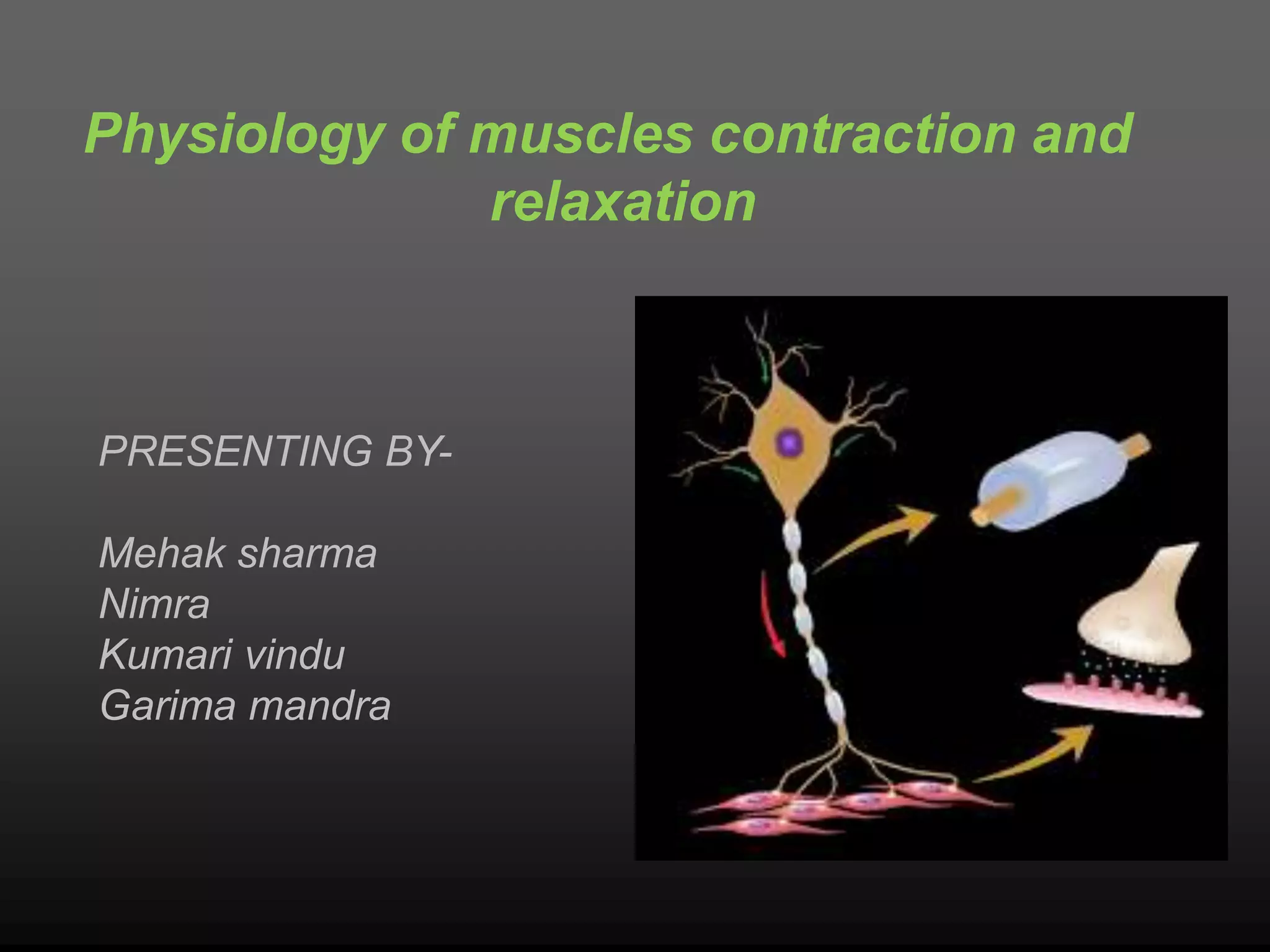
Physiology of muscles contraction and
relaxation
PRESENTING BY-
Mehak sharma
Nimra
Kumari vindu
Garima mandra
•
•
SLIDING FILAMENT THEORY
• THE SLIDING FILAMENT THEORY IS A SUGGESTED MECHANISM OF CONTRACTION OF
STRIATED MUSCLES, ACTIN AND MYOSIN FILAMENTS TO BE PRECISE, WHICH OVERLAP
EACH OTHER RESULTING IN THE SHORTENING OF THE MUSCLE FIBRE LENGTH. ACTIN
(THIN) FILAMENTS COMBINED WITH MYOSIN (THICK FILAMENTS) CONDUCT CELLULAR
MOVEMENTS.
• MYOSIN IS A PROTEIN THAT CONVERTS ATP (CHEMICAL ENERGY) INTO MECHANICAL
ENERGY, THUS CREATING THRUST AND MOVEMENT. THIS MOVEMENT GENERATES
MUSCULAR CONTRACTION AND MOVEMENT OF NON-MUSCLE CELLS, SUCH AS MITOSIS AND
MEIOSIS (CELL DIVISION).
• ALSO, ACTIN POLYMERIZATION AND ACTIN-MYOSIN INTERACTION ARE RESPONSIBLE FOR
MOVEMENTS OF A CELL ACROSS A SURFACE. ACTIN FILAMENTS HAVE MYOSIN-BINDING
SITES WHICH ARE REVEALED WHEN TROPONIN MOLECULES BIND TO CALCIUM IONS IN
FILAMENTS, FACILITATING BRIDGE FORMATION BETWEEN ACTIN AND MYOSIN. THIS
PROCESS IS FUELED BY ATP, WHICH ACTS AS AN ENERGY SOURCE. ATP IS HYDROLYSED
IN THE HEADS OF MOLECULES OF MYOSIN CAUSING A CHANGE IN THE SHAPE OF THE HEAD
AND BINDING TO ACTIN FILAMENTS.
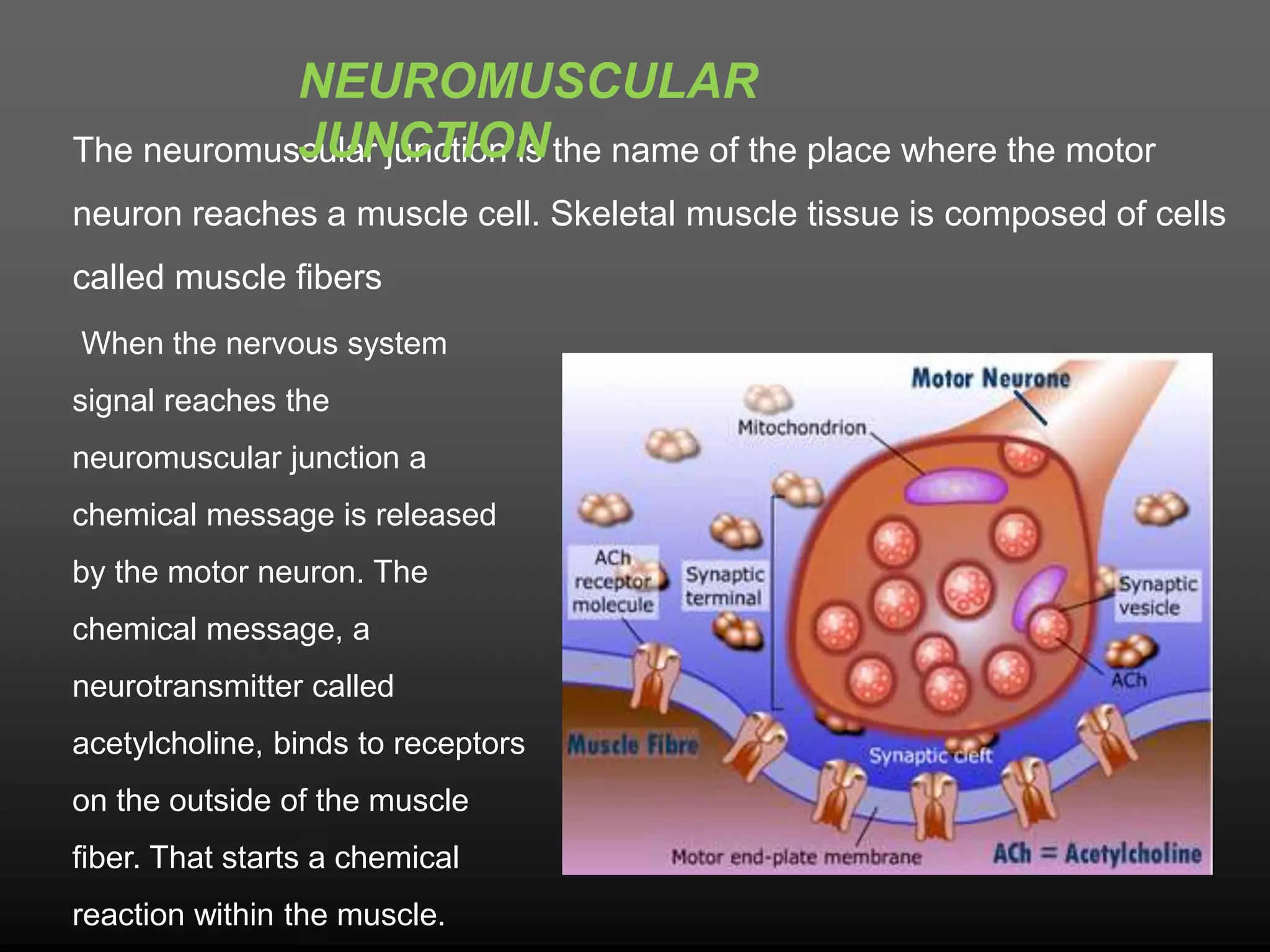
The neuromuscular junction is the name of the place where the motor
neuron reaches a muscle cell. Skeletal muscle tissue is composed of cells
called muscle fibers
When the nervous system
signal reaches the
neuromuscular junction a
chemical message is released
by the motor neuron. The
chemical message, a
neurotransmitter called
acetylcholine, binds to receptors
on the outside of the muscle
fiber. That starts a chemical
reaction within the muscle.
NEUROMUSCULAR
JUNCTION
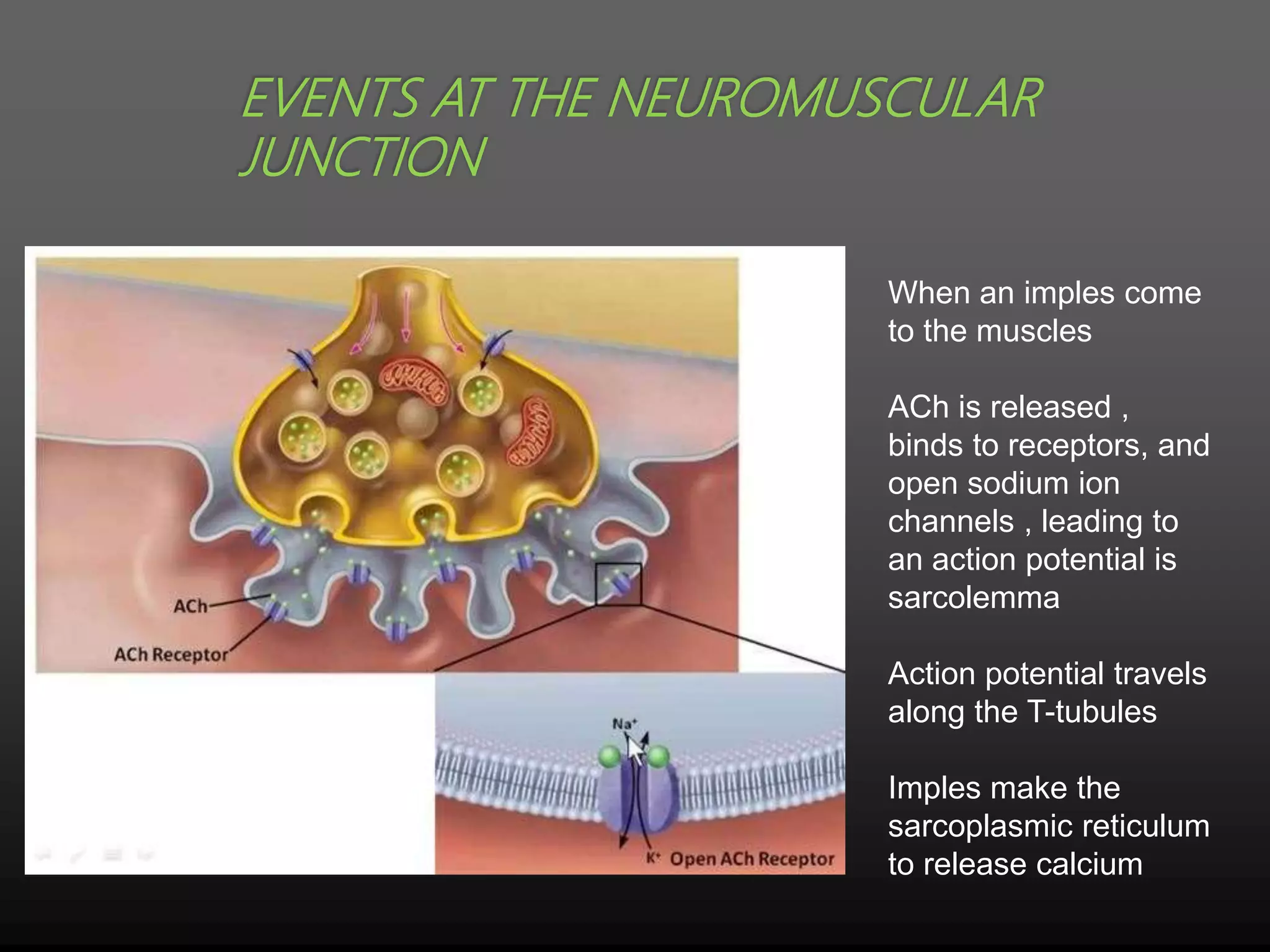
EVENTS AT THE NEUROMUSCULAR
JUNCTION
When an imples come
to the muscles
ACh is released ,
binds to receptors, and
open sodium ion
channels , leading to
an action potential is
sarcolemma
Action potential travels
along the T-tubules
Imples make the
sarcoplasmic reticulum
to release calcium
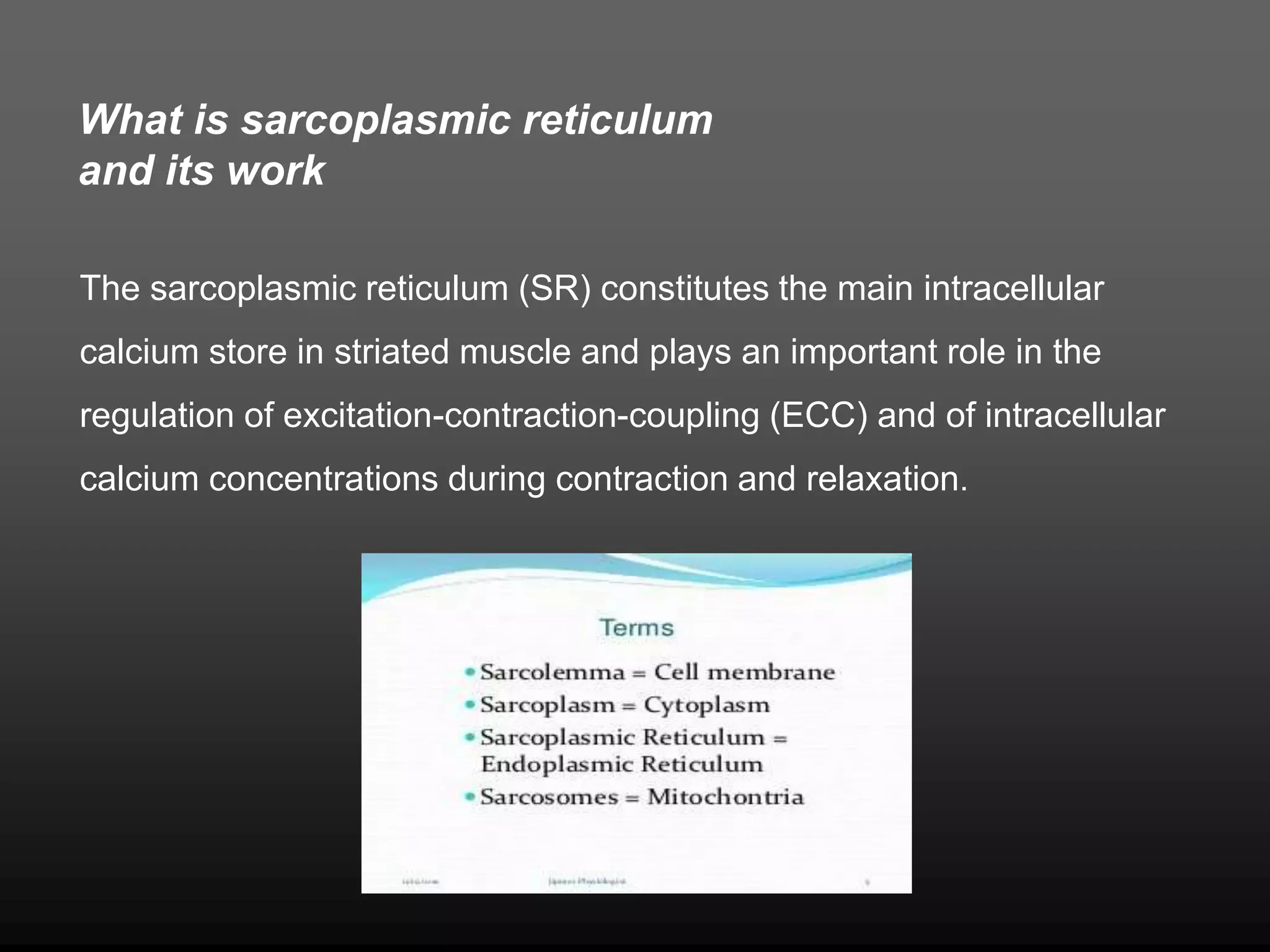
The sarcoplasmic reticulum (SR) constitutes the main intracellular
calcium store in striated muscle and plays an important role in the
regulation of excitation-contraction-coupling (ECC) and of intracellular
calcium concentrations during contraction and relaxation.
What is sarcoplasmic reticulum
and its work
ACTIN AND MYOSIN CROSS
BRIDGE FORMATION EVENT
•
•
•
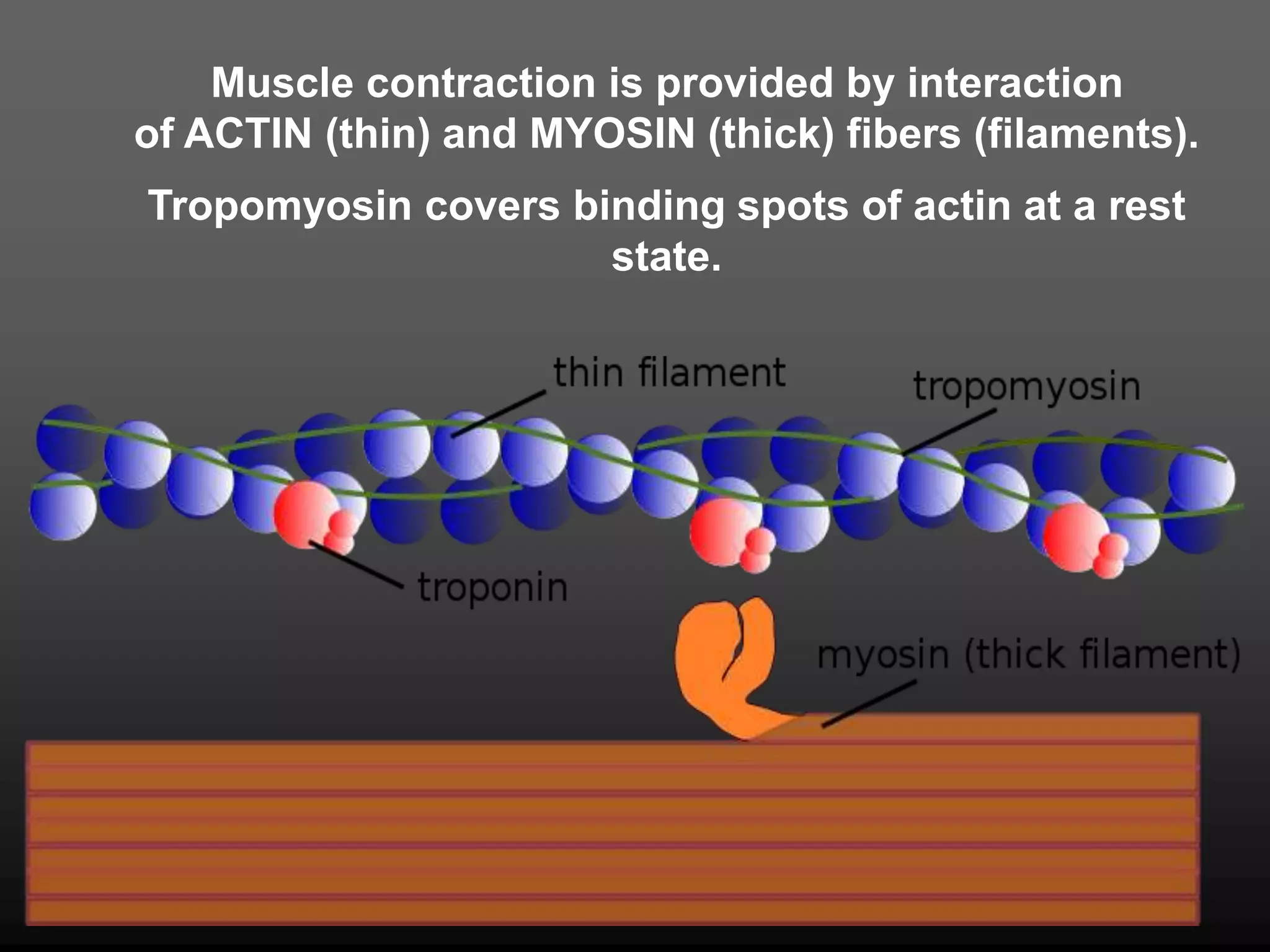
Muscle contraction is provided by interaction
of ACTIN (thin) and MYOSIN (thick) fibers (filaments).
Tropomyosin covers binding spots of actin at a rest
state.
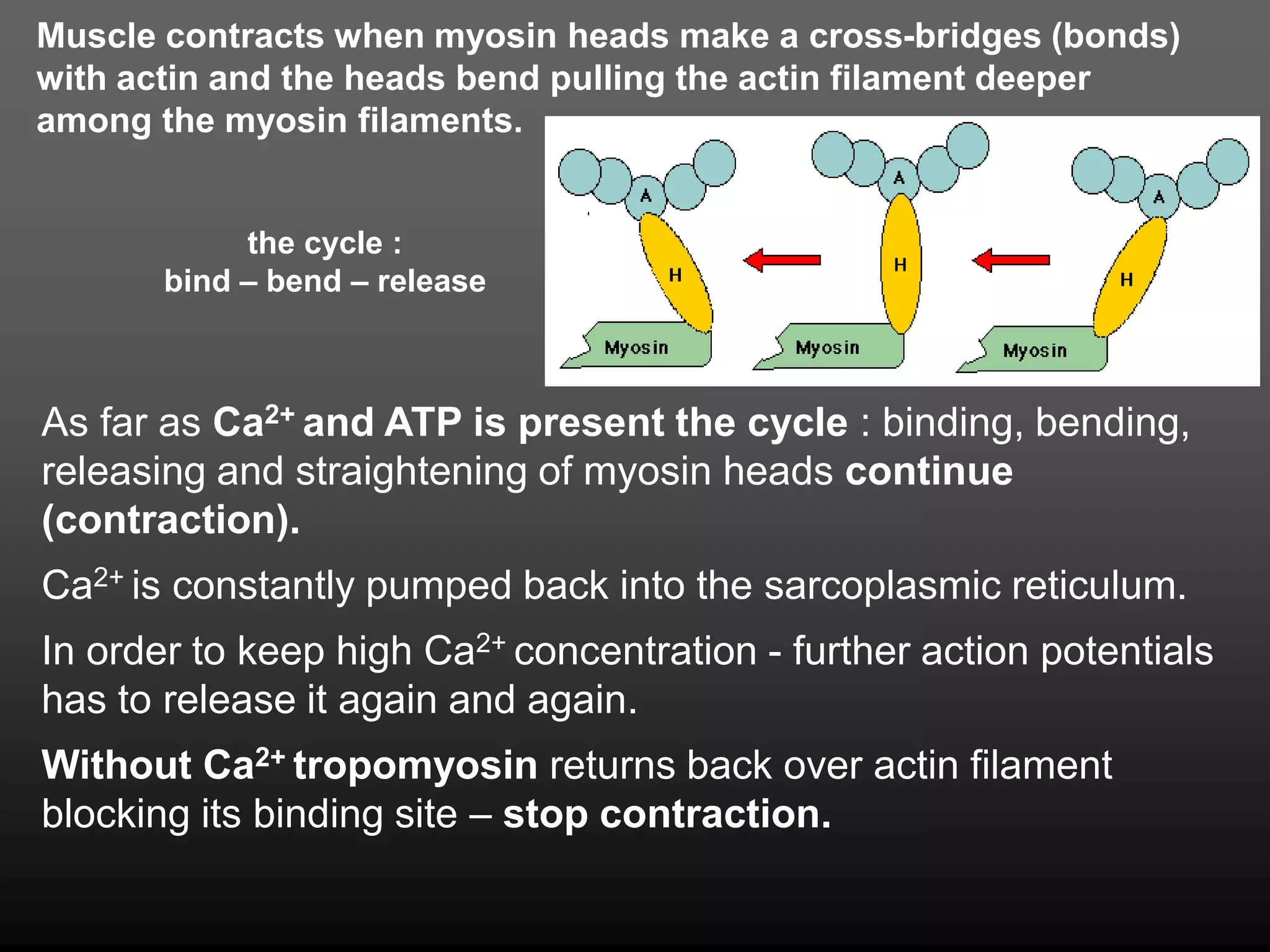
Muscle contracts when myosin heads make a cross-bridges (bonds)
with actin and the heads bend pulling the actin filament deeper
among the myosin filaments.
the cycle :
bind – bend – release
As far as Ca2+ and ATP is present the cycle : binding, bending,
releasing and straightening of myosin heads continue
(contraction).
Ca2+ is constantly pumped back into the sarcoplasmic reticulum.
In order to keep high Ca2+ concentration - further action potentials
has to release it again and again.
Without Ca2+ tropomyosin returns back over actin filament
blocking its binding site – stop contraction.
MYOSIN HYDROLYZE ATP (LYSE IT INTO ADP AND
PHOSPHATE) GATHERING THE ENERGY
BREAKING THE CROSS BRIDGE EVENT
•
•
•
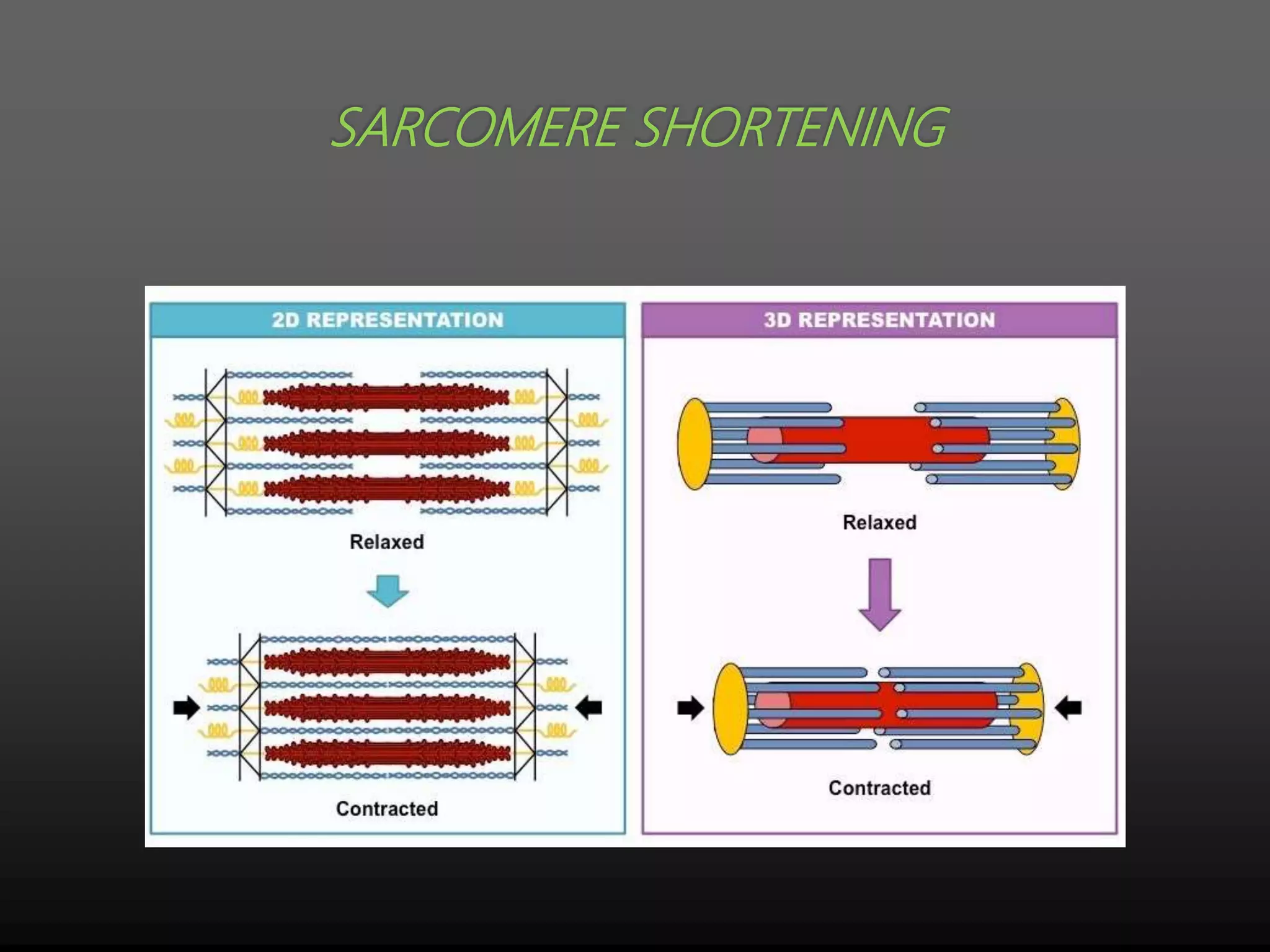
SARCOMERE SHORTENING
• THE REPEATED REORIENTATION OF THE MYOSIN HEAD DRAG THE
ACTIN FILAMENT ALONG THE LENGTH OF THE MYOSIN
• AS ACTIN FILAMENT ARE ANCHORED TO Z LINE THE DRAGGING
OF ACTIN PILLS THE Z LINS CLOSER TOGETHER ,SHORTENING THE
SARCOMERE
• AS THE INDIVIDUAL SARCOMERE BECOME SHORTER IN LENGTH
THE MUSCLES FIBERS AS A WHOLE NUMBER
SARCOMERE SHORTENING
PHYSICAL EVENTS DURING MUSCLES
CONTRACTION
•
•
•
•
•
RELAXATION:
RELAXATION OCCURS WHEN STIMULATION OF THE
NERVE STOPS.
CALCIUM IS THEN PUMPED BACK INTO THE
SARCOPLASMIC RETICULUM BREAKING THE LINK
BETWEEN ACTIN AND MYOSIN. ACTIN AND MYOSIN
RETURN TO THEIR UNBOUND STATE CAUSING THE
MUSCLE TO RELAX.
Short of sliding filament theory
THANK YOU

Physiology of muscles contraction.ppt

  • 1.
    Physiology of musclescontraction and relaxation PRESENTING BY- Mehak sharma Nimra Kumari vindu Garima mandra
  • 3.
  • 6.
    SLIDING FILAMENT THEORY •THE SLIDING FILAMENT THEORY IS A SUGGESTED MECHANISM OF CONTRACTION OF STRIATED MUSCLES, ACTIN AND MYOSIN FILAMENTS TO BE PRECISE, WHICH OVERLAP EACH OTHER RESULTING IN THE SHORTENING OF THE MUSCLE FIBRE LENGTH. ACTIN (THIN) FILAMENTS COMBINED WITH MYOSIN (THICK FILAMENTS) CONDUCT CELLULAR MOVEMENTS. • MYOSIN IS A PROTEIN THAT CONVERTS ATP (CHEMICAL ENERGY) INTO MECHANICAL ENERGY, THUS CREATING THRUST AND MOVEMENT. THIS MOVEMENT GENERATES MUSCULAR CONTRACTION AND MOVEMENT OF NON-MUSCLE CELLS, SUCH AS MITOSIS AND MEIOSIS (CELL DIVISION). • ALSO, ACTIN POLYMERIZATION AND ACTIN-MYOSIN INTERACTION ARE RESPONSIBLE FOR MOVEMENTS OF A CELL ACROSS A SURFACE. ACTIN FILAMENTS HAVE MYOSIN-BINDING SITES WHICH ARE REVEALED WHEN TROPONIN MOLECULES BIND TO CALCIUM IONS IN FILAMENTS, FACILITATING BRIDGE FORMATION BETWEEN ACTIN AND MYOSIN. THIS PROCESS IS FUELED BY ATP, WHICH ACTS AS AN ENERGY SOURCE. ATP IS HYDROLYSED IN THE HEADS OF MOLECULES OF MYOSIN CAUSING A CHANGE IN THE SHAPE OF THE HEAD AND BINDING TO ACTIN FILAMENTS.
  • 7.
    The neuromuscular junctionis the name of the place where the motor neuron reaches a muscle cell. Skeletal muscle tissue is composed of cells called muscle fibers When the nervous system signal reaches the neuromuscular junction a chemical message is released by the motor neuron. The chemical message, a neurotransmitter called acetylcholine, binds to receptors on the outside of the muscle fiber. That starts a chemical reaction within the muscle. NEUROMUSCULAR JUNCTION
  • 8.
    EVENTS AT THENEUROMUSCULAR JUNCTION When an imples come to the muscles ACh is released , binds to receptors, and open sodium ion channels , leading to an action potential is sarcolemma Action potential travels along the T-tubules Imples make the sarcoplasmic reticulum to release calcium
  • 9.
    The sarcoplasmic reticulum(SR) constitutes the main intracellular calcium store in striated muscle and plays an important role in the regulation of excitation-contraction-coupling (ECC) and of intracellular calcium concentrations during contraction and relaxation. What is sarcoplasmic reticulum and its work
  • 10.
    ACTIN AND MYOSINCROSS BRIDGE FORMATION EVENT • • •
  • 11.
    Muscle contraction isprovided by interaction of ACTIN (thin) and MYOSIN (thick) fibers (filaments). Tropomyosin covers binding spots of actin at a rest state.
  • 13.
    Muscle contracts whenmyosin heads make a cross-bridges (bonds) with actin and the heads bend pulling the actin filament deeper among the myosin filaments. the cycle : bind – bend – release As far as Ca2+ and ATP is present the cycle : binding, bending, releasing and straightening of myosin heads continue (contraction). Ca2+ is constantly pumped back into the sarcoplasmic reticulum. In order to keep high Ca2+ concentration - further action potentials has to release it again and again. Without Ca2+ tropomyosin returns back over actin filament blocking its binding site – stop contraction.
  • 14.
    MYOSIN HYDROLYZE ATP(LYSE IT INTO ADP AND PHOSPHATE) GATHERING THE ENERGY
  • 15.
    BREAKING THE CROSSBRIDGE EVENT • • •
  • 16.
    SARCOMERE SHORTENING • THEREPEATED REORIENTATION OF THE MYOSIN HEAD DRAG THE ACTIN FILAMENT ALONG THE LENGTH OF THE MYOSIN • AS ACTIN FILAMENT ARE ANCHORED TO Z LINE THE DRAGGING OF ACTIN PILLS THE Z LINS CLOSER TOGETHER ,SHORTENING THE SARCOMERE • AS THE INDIVIDUAL SARCOMERE BECOME SHORTER IN LENGTH THE MUSCLES FIBERS AS A WHOLE NUMBER
  • 17.
  • 18.
    PHYSICAL EVENTS DURINGMUSCLES CONTRACTION • • • • •
  • 20.
    RELAXATION: RELAXATION OCCURS WHENSTIMULATION OF THE NERVE STOPS. CALCIUM IS THEN PUMPED BACK INTO THE SARCOPLASMIC RETICULUM BREAKING THE LINK BETWEEN ACTIN AND MYOSIN. ACTIN AND MYOSIN RETURN TO THEIR UNBOUND STATE CAUSING THE MUSCLE TO RELAX.
  • 21.
    Short of slidingfilament theory
  • 22.