Lesson 1


March 9, 2012
Today’s Outline
   FORCE AND MOTION:
     Common Terms
     Force
     Newton’s First Law of Motion
Common Terms
   Mechanics – The study of motion of
    objects

   Kinematics – The science of describing
    motion (through
    words, charts, graphs, diagrams, equati
    ons etc.) For this class, we will be
    looking at Free-Body Diagrams
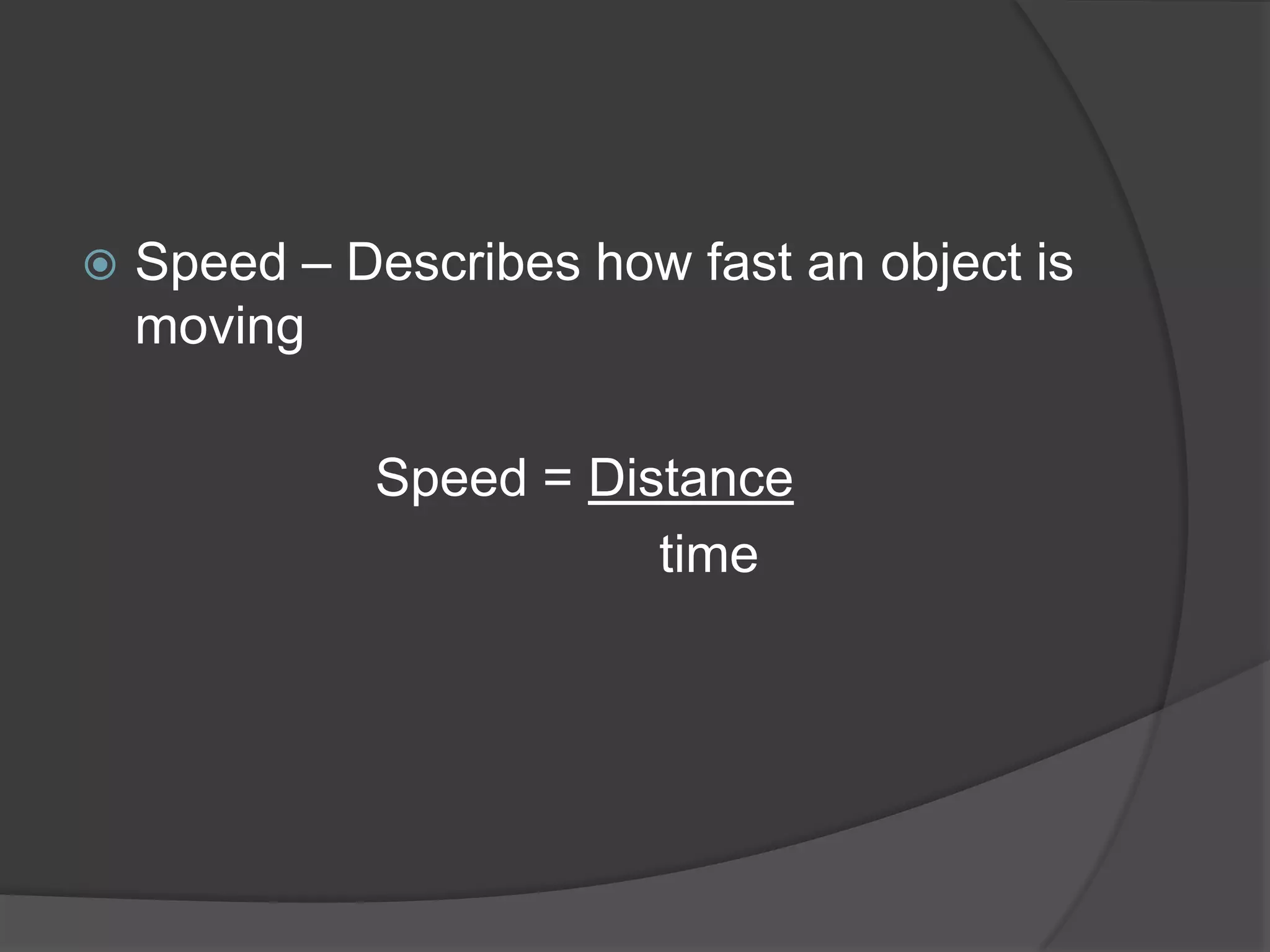
   Speed – Describes how fast an object is
    moving

             Speed = Distance
                        time
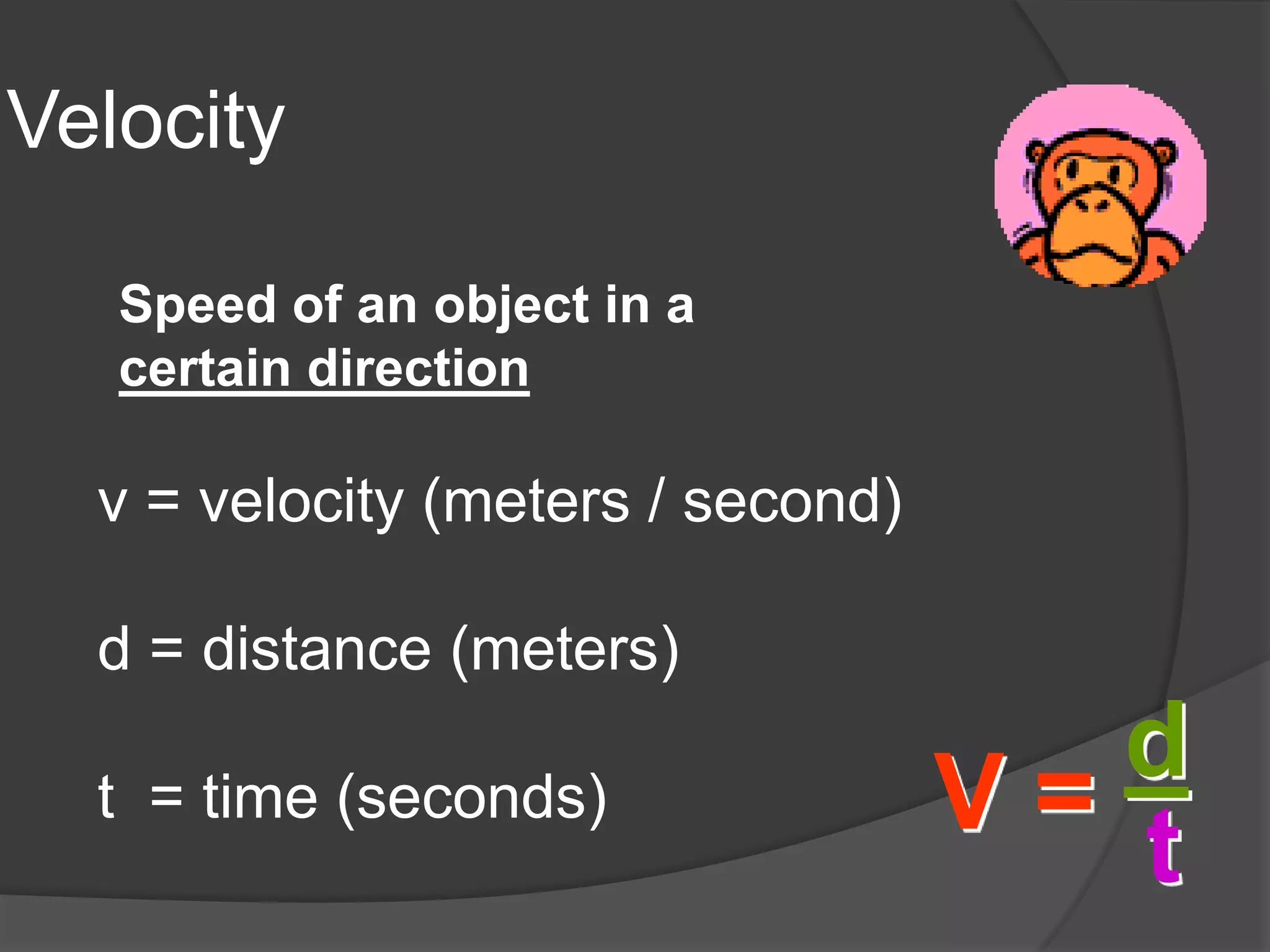
Velocity

   Speed of an object in a
   certain direction

  v = velocity (meters / second)

  d = distance (meters)

  t = time (seconds)
                                      d
                                   V= t
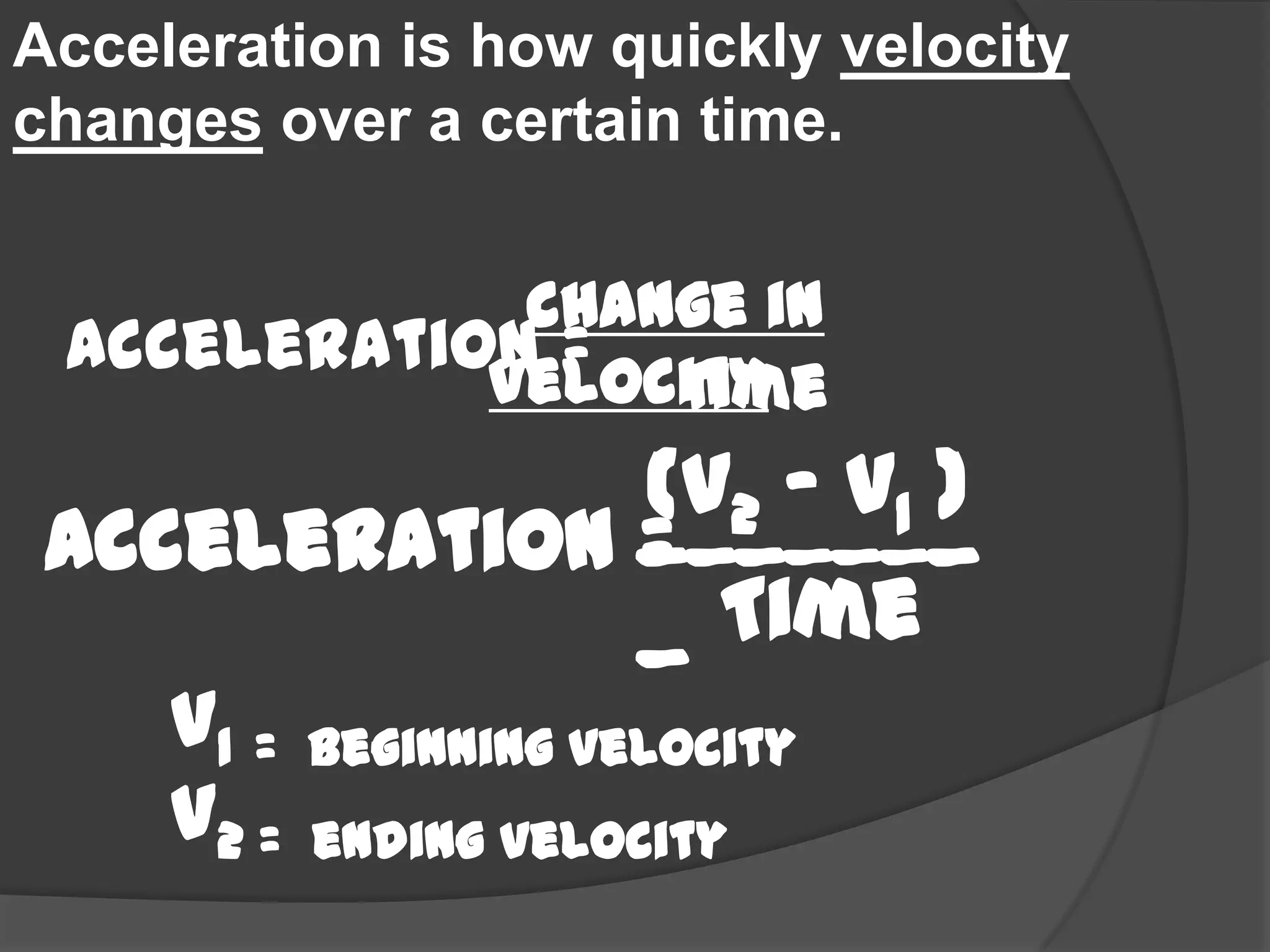
Acceleration is how quickly velocity
changes over a certain time.


             change in
 Acceleration =
            velocity
                 time
              (v2 – v1 )
              _______
 Acceleration =
              _ Time
     V1 =   beginning velocity
     V2 =   ending velocity
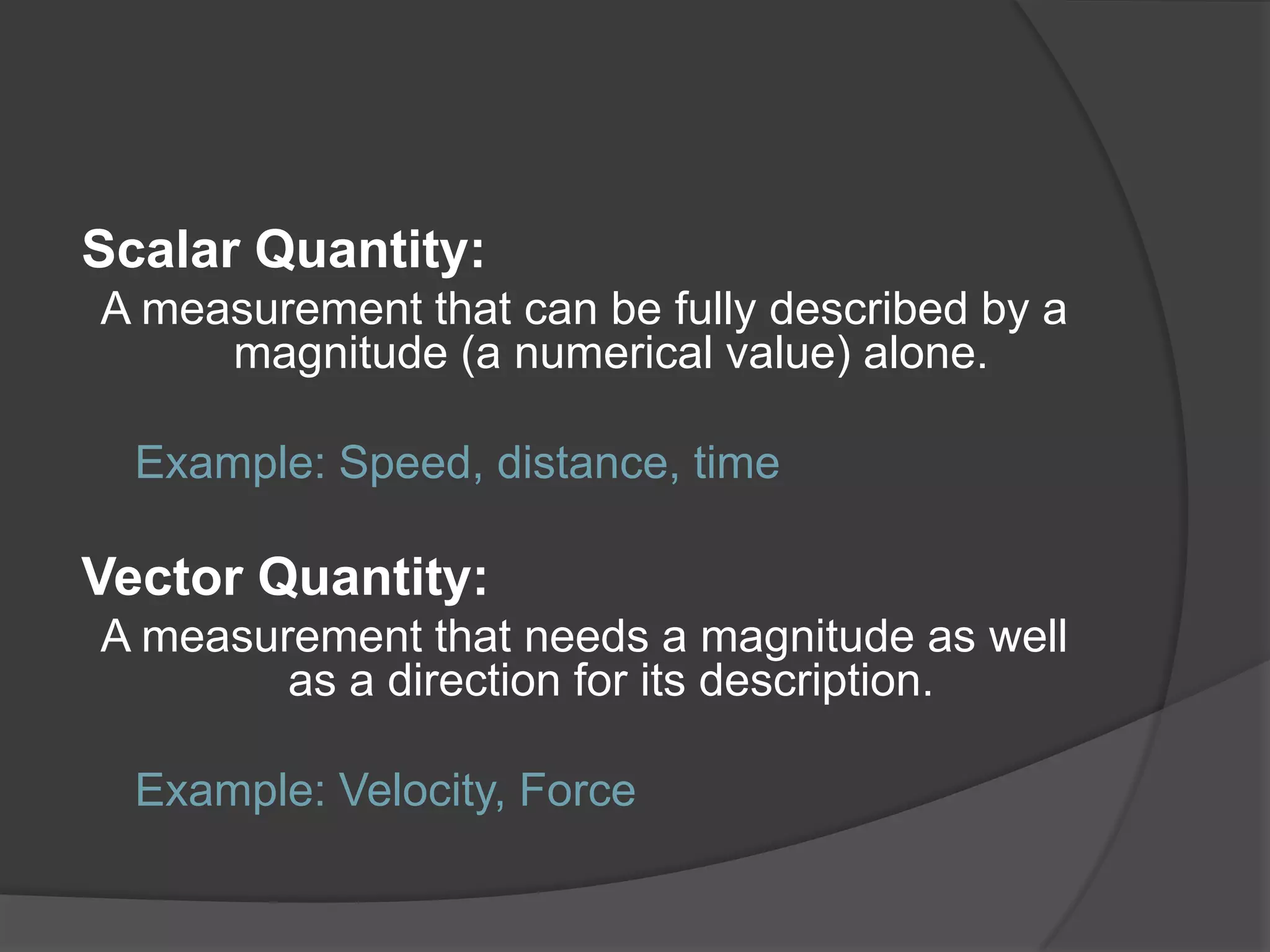
Scalar Quantity:
A measurement that can be fully described by a
     magnitude (a numerical value) alone.

  Example: Speed, distance, time

Vector Quantity:
A measurement that needs a magnitude as well
        as a direction for its description.

  Example: Velocity, Force
Definition, Categories, Types, and Visual Representation
FORCE
   A force is a push or pull upon an object that
    occurs because when that object interacts
    with another object

   Forces ONLY exist when there is
    interaction.

   Keep in mind that objects includes anything
    and everything, including the Earth
   Measured in Newton

   One Newton is the amount of force
    required to give an object of 1Kg an
    acceleration of 1 m/s².

   A force is a vector quantity (has to have
    a direction)
Categories of Force
Two major categories:

1.   Contact Force: The types of forces that
     occur when two objects are said to be in
     physical contact with each other.

2.   Action-at-a-Distance Force: Forces that
     result even when two interacting objects
     are not in physical contact with each other.
Contact Forces
 Frictional Force
 Tension Force
 Normal Force
 Air Resistance Force
 Applied Force
 Spring Force

Physics lesson2 force&motion

  • 1.
  • 2.
    Today’s Outline  FORCE AND MOTION:  Common Terms  Force  Newton’s First Law of Motion
  • 4.
    Common Terms  Mechanics – The study of motion of objects  Kinematics – The science of describing motion (through words, charts, graphs, diagrams, equati ons etc.) For this class, we will be looking at Free-Body Diagrams
  • 5.
    Speed – Describes how fast an object is moving Speed = Distance time
  • 6.
    Velocity Speed of an object in a certain direction v = velocity (meters / second) d = distance (meters) t = time (seconds) d V= t
  • 7.
    Acceleration is howquickly velocity changes over a certain time. change in Acceleration = velocity time (v2 – v1 ) _______ Acceleration = _ Time V1 = beginning velocity V2 = ending velocity
  • 8.
    Scalar Quantity: A measurementthat can be fully described by a magnitude (a numerical value) alone. Example: Speed, distance, time Vector Quantity: A measurement that needs a magnitude as well as a direction for its description. Example: Velocity, Force
  • 9.
    Definition, Categories, Types,and Visual Representation
  • 10.
    FORCE  A force is a push or pull upon an object that occurs because when that object interacts with another object  Forces ONLY exist when there is interaction.  Keep in mind that objects includes anything and everything, including the Earth
  • 11.
    Measured in Newton  One Newton is the amount of force required to give an object of 1Kg an acceleration of 1 m/s².  A force is a vector quantity (has to have a direction)
  • 12.
    Categories of Force Twomajor categories: 1. Contact Force: The types of forces that occur when two objects are said to be in physical contact with each other. 2. Action-at-a-Distance Force: Forces that result even when two interacting objects are not in physical contact with each other.
  • 13.
    Contact Forces  FrictionalForce  Tension Force  Normal Force  Air Resistance Force  Applied Force  Spring Force