Chapter 3, Sec 3  Chemical Properties  Page 91  10/04/10
Warm Up  10/01/10 An object is measured using the displacement method.  The graduated cylinder measures 25mL of water before the object is added.  The cylinder measures 50mL after the object is added.  What is the volume of the object in cm 3 ?
Chemical Properties  Property of matter that describes a substance’s ability to participate in a chemical reaction.
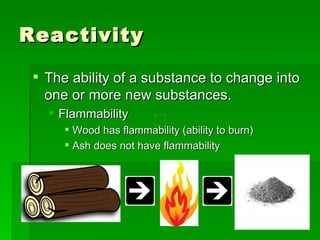
Reactivity  The ability of a substance to change into one or more new substances.  Flammability Wood has flammability (ability to burn)  Ash does not have flammability
Comparing Physical and Chemical Properties  Physical property  – can be observed without changing substance.  Density, thermal conductivity Chemical property  – substance needs to change to observe a chemical property.  Wood needs to burn to know its flammable.
Signs of a chemical change:  If there is a change in the following it is most likely a chemical reaction:  Color Odor Fizz and foam (creating gas) Sound  Light  Sudden heat (or cold)
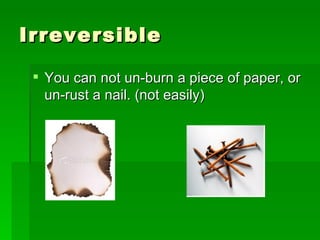
Irreversible  You can not un-burn a piece of paper, or un-rust a nail. (not easily)
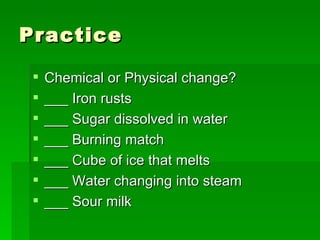
Practice  Chemical or Physical change? ___ Iron rusts  ___ Sugar dissolved in water ___ Burning match ___ Cube of ice that melts ___ Water changing into steam  ___ Sour milk
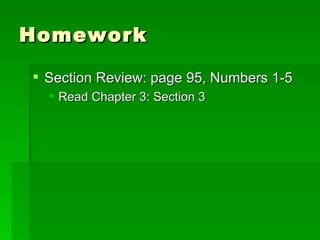
Homework  Section Review: page 95, Numbers 1-5  Read Chapter 3: Section 3

Physical Science: Chapter 3 sec3

  • 1.
    Chapter 3, Sec3 Chemical Properties Page 91 10/04/10
  • 2.
    Warm Up 10/01/10 An object is measured using the displacement method. The graduated cylinder measures 25mL of water before the object is added. The cylinder measures 50mL after the object is added. What is the volume of the object in cm 3 ?
  • 3.
    Chemical Properties Property of matter that describes a substance’s ability to participate in a chemical reaction.
  • 4.
    Reactivity Theability of a substance to change into one or more new substances. Flammability Wood has flammability (ability to burn) Ash does not have flammability
  • 5.
    Comparing Physical andChemical Properties Physical property – can be observed without changing substance. Density, thermal conductivity Chemical property – substance needs to change to observe a chemical property. Wood needs to burn to know its flammable.
  • 6.
    Signs of achemical change: If there is a change in the following it is most likely a chemical reaction: Color Odor Fizz and foam (creating gas) Sound Light Sudden heat (or cold)
  • 7.
    Irreversible Youcan not un-burn a piece of paper, or un-rust a nail. (not easily)
  • 8.
    Practice Chemicalor Physical change? ___ Iron rusts ___ Sugar dissolved in water ___ Burning match ___ Cube of ice that melts ___ Water changing into steam ___ Sour milk
  • 9.
    Homework SectionReview: page 95, Numbers 1-5 Read Chapter 3: Section 3