Chemical Reactions
8.5E Investigate how evidence of chemical reactions
indicates that new substances with different properties are
formed.
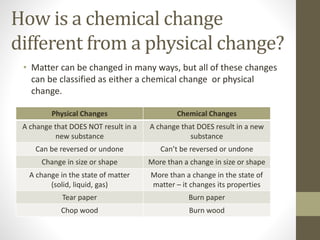
How is a chemical change
different from a physical change?
• Matter can be changed in many ways, but all of these changes
can be classified as either a chemical change or physical
change.
Physical Changes Chemical Changes
A change that DOES NOT result in a
new substance
A change that DOES result in a new
substance
Can be reversed or undone Can’t be reversed or undone
Change in size or shape More than a change in size or shape
A change in the state of matter
(solid, liquid, gas)
More than a change in the state of
matter – it changes its properties
Tear paper Burn paper
Chop wood Burn wood
What is a chemical reaction?
• A change in matter that results in a new substance with
different chemical and physical properties than the original
substance.
• Identify the chemical changes:
• Glass breaking
• Rusting metal
• Burning toast
• Cutting grass
• Fireworks exploding
• Melting butter
• Digesting food
✓
✓
✓
✓
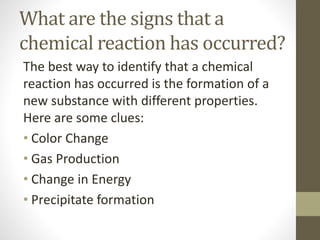
What are the signs that a
chemical reaction has occurred?
The best way to identify that a chemical
reaction has occurred is the formation of a
new substance with different properties.
Here are some clues:
• Color Change
• Gas Production
• Change in Energy
• Precipitate formation
When does color change indicate that a
chemical reaction has occurred?
• When a color change is unexpected. For example, you
would expect to get a green liquid when you mix a blue
and yellow liquid. But getting a green liquid from
combining two clear liquids is unexpected.
• Examples of chemical reactions that result in color
change:
• Bleaching clothes
• Dying hair
• Burning toast
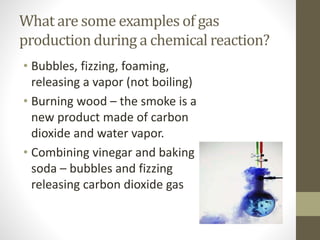
What are some examples of gas
production during a chemical reaction?
• Bubbles, fizzing, foaming,
releasing a vapor (not boiling)
• Burning wood – the smoke is a
new product made of carbon
dioxide and water vapor.
• Combining vinegar and baking
soda – bubbles and fizzing
releasing carbon dioxide gas
What does “a change in energy
mean?”
• A change in energy in a chemical reaction means that energy
is either absorbed or released during a chemical reaction.
• It is very common for energy in the form of heat (thermal
energy) to be absorbed or released during a chemical
reaction. This results in either a temperature increase or
decrease.
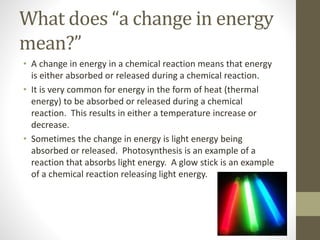
• Sometimes the change in energy is light energy being
absorbed or released. Photosynthesis is an example of a
reaction that absorbs light energy. A glow stick is an example
of a chemical reaction releasing light energy.
What is a precipitate?
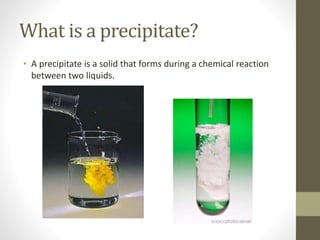
• A precipitate is a solid that forms during a chemical reaction
between two liquids.
Most Importantly….
•Always ask “Is it a new substance
with different properties?”

8.5 chemical reactions

  • 1.
    Chemical Reactions 8.5E Investigatehow evidence of chemical reactions indicates that new substances with different properties are formed.
  • 2.
    How is achemical change different from a physical change? • Matter can be changed in many ways, but all of these changes can be classified as either a chemical change or physical change. Physical Changes Chemical Changes A change that DOES NOT result in a new substance A change that DOES result in a new substance Can be reversed or undone Can’t be reversed or undone Change in size or shape More than a change in size or shape A change in the state of matter (solid, liquid, gas) More than a change in the state of matter – it changes its properties Tear paper Burn paper Chop wood Burn wood
  • 3.
    What is achemical reaction? • A change in matter that results in a new substance with different chemical and physical properties than the original substance. • Identify the chemical changes: • Glass breaking • Rusting metal • Burning toast • Cutting grass • Fireworks exploding • Melting butter • Digesting food ✓ ✓ ✓ ✓
  • 4.
    What are thesigns that a chemical reaction has occurred? The best way to identify that a chemical reaction has occurred is the formation of a new substance with different properties. Here are some clues: • Color Change • Gas Production • Change in Energy • Precipitate formation
  • 5.
    When does colorchange indicate that a chemical reaction has occurred? • When a color change is unexpected. For example, you would expect to get a green liquid when you mix a blue and yellow liquid. But getting a green liquid from combining two clear liquids is unexpected. • Examples of chemical reactions that result in color change: • Bleaching clothes • Dying hair • Burning toast
  • 6.
    What are someexamples of gas production during a chemical reaction? • Bubbles, fizzing, foaming, releasing a vapor (not boiling) • Burning wood – the smoke is a new product made of carbon dioxide and water vapor. • Combining vinegar and baking soda – bubbles and fizzing releasing carbon dioxide gas
  • 7.
    What does “achange in energy mean?” • A change in energy in a chemical reaction means that energy is either absorbed or released during a chemical reaction. • It is very common for energy in the form of heat (thermal energy) to be absorbed or released during a chemical reaction. This results in either a temperature increase or decrease. • Sometimes the change in energy is light energy being absorbed or released. Photosynthesis is an example of a reaction that absorbs light energy. A glow stick is an example of a chemical reaction releasing light energy.
  • 8.
    What is aprecipitate? • A precipitate is a solid that forms during a chemical reaction between two liquids.
  • 9.
    Most Importantly…. •Always ask“Is it a new substance with different properties?”