Presented by,
Lakshmi Priya.R
Rani.T

1
CONTENTS
Aspects of Hospital Services
 Introduction
 Necessity
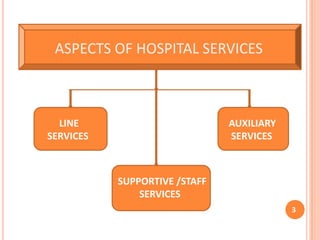
 Pharmacy Services
 Functions
 Pharmacist
 Maintenance
 Information & Report
 Conclusion
 References


2
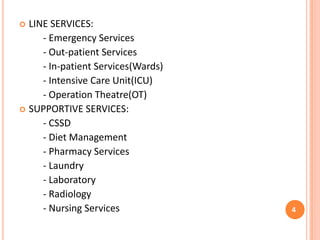
ASPECTS OF HOSPITAL SERVICES

LINE
SERVICES

AUXILIARY
SERVICES

SUPPORTIVE /STAFF
SERVICES
3
LINE SERVICES:
- Emergency Services
- Out-patient Services
- In-patient Services(Wards)
- Intensive Care Unit(ICU)
- Operation Theatre(OT)
 SUPPORTIVE SERVICES:
- CSSD
- Diet Management
- Pharmacy Services
- Laundry
- Laboratory
- Radiology
- Nursing Services


4


AUXILIARY SERVICES:
- Registration and Indoor case records
- Stores
- Transport
- Mortuary
- Dietary Services
- Engineering and Maintenance services
- Hospital Security

5
INTRODUCTION TO PHARMACY SERVICES
Pharmacy are premises licensed for retail sale or supply
of drugs to the hospital, which have qualified licensed
persons and indulged in compounding of drugs.
 The Hospital Pharmacy purchases and dispenses all the
medications used to treat the patients in the hospital.
 Approximately 20% of the hospital costs are accounted
by medicines &pharmaceutical supplies.
 The pharmacist works directly with the medical staff in
establishing a formulary, the listing of drugs chosen to
be included in the pharmacy.


6
NECESSITY OF PHARMACY SERVICES
Availability of the right drug at the required place at the
time of need is the key to the Hospitals existence.
 Efficiency in Pharmacy would help to ensure effective
treatment programmes.
 Delays can be disastrous; non-availability can be
horrifying in terms of mortality and morbidity.


7
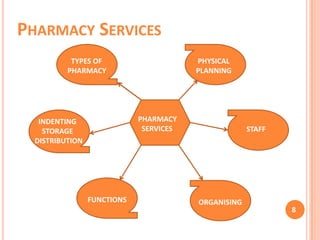
PHARMACY SERVICES
TYPES OF
PHARMACY

PHYSICAL
PLANNING

PHARMACY
SERVICES
PHARMACY
SERVICES

INDENTING
STORAGE
DISTRIBUTION

FUNCTIONS

STAFF

ORGANISING

8
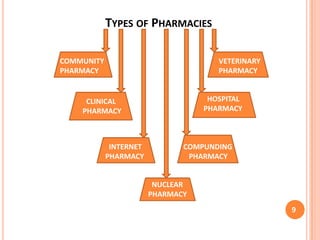
TYPES OF PHARMACIES
COMMUNITY
PHARMACY

VETERINARY
PHARMACY

HOSPITAL
PHARMACY

CLINICAL
PHARMACY

INTERNET
PHARMACY

COMPUNDING
PHARMACY

NUCLEAR
PHARMACY
9
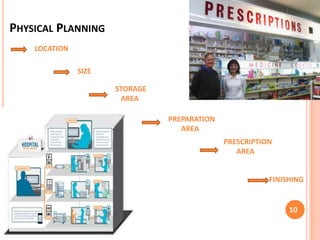
PHYSICAL PLANNING
LOCATION
SIZE
STORAGE
AREA

PREPARATION
AREA
PRESCRIPTION
AREA

FINISHING

10
STAFFING

There should be a Drug and Therapeutic Committee for
advise and decision making.
 A chief pharmacist in hospital with more than 200 beds.
 2 pharmacists for 100 bedded hospital.
 3 pharmacists for 200 bedded hospital.
 7 pharmacists for 500 bedded and more.


11
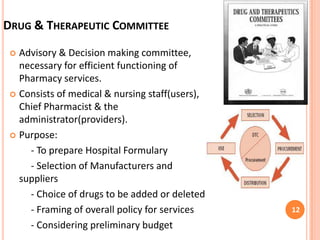
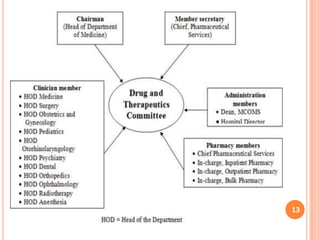
DRUG & THERAPEUTIC COMMITTEE
Advisory & Decision making committee,
necessary for efficient functioning of
Pharmacy services.
 Consists of medical & nursing staff(users),
Chief Pharmacist & the
administrator(providers).
 Purpose:
- To prepare Hospital Formulary
- Selection of Manufacturers and
suppliers
- Choice of drugs to be added or deleted
- Framing of overall policy for services
- Considering preliminary budget


12
13
FUNCTIONS OF PHARMACY SERVICES
Provisioning , purchasing, storing and distributing drugs,
medicinal preparations, pharmaceutical and chemical
sundry items.
 Ensuring potency and quality of drugs during their
storage in the hospital.
 Dispensing prescriptions to in-patients &out-patients.
 Maintaining information regarding quality, cost and
sources of supply of all drugs.
 To investigate pharmaceutical problems arising in the
medications.
 To keep a watch on the adherence by all concerned to
hospital formulary.


14
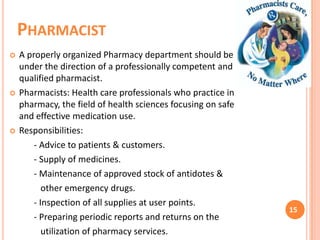
PHARMACIST






A properly organized Pharmacy department should be
under the direction of a professionally competent and
qualified pharmacist.
Pharmacists: Health care professionals who practice in
pharmacy, the field of health sciences focusing on safe
and effective medication use.
Responsibilities:
- Advice to patients & customers.
- Supply of medicines.
- Maintenance of approved stock of antidotes &
other emergency drugs.
- Inspection of all supplies at user points.
- Preparing periodic reports and returns on the
utilization of pharmacy services.

15
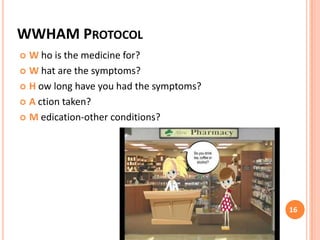
WWHAM PROTOCOL
W ho is the medicine for?
 W hat are the symptoms?
 H ow long have you had the symptoms?
 A ction taken?
 M edication-other conditions?


16
INDIA PHARMACEUTICAL ASSOCIATION
It is the premier professional pharmacists
association in India.
 Over 10,000 member & 33 local branches.
 Aim- setting of Hospital Pharmacy in each hospital.
 It has been working towards constantly upgrading the
standards of professional services offered by the
pharmacists.


INTERNATIONAL PHARMACEUTICAL FEDERATION

17
MAINTENANCE
Drugs and Therapeutics Committee
 Hospital Formulary
 Inventory Management:
- Purchase
- Size of inventory
- Turnover
- Storage facility & stock location system
- Emergency drugs
 Quality & Drug Information Centre
 Charges for drugs


18
INFORMATION & REPORTING
Total no. and value of items
dispensed for out-patients and in
patients.
 Frequency of emergency demands
from wards.
 No. of out-patients prescriptions.
 Volume of drugs dispensed through
Pharmacy.


19
CONCLUSION
The hospital Pharmacy is indispensible in the treatment
of patients.
 Each large hospital will need a pharmacy, with a wellqualified pharmacist in charge.
 It is advantageous in efficient operations of the Hospital.
 “The Pharmacy, despite its apparent autonomy, must
not lose sight of its role as team player in Hospital
planning.”- quoted by Benjamin and Kemppainess.


20
REFERENCES
“Hospital Administration and Management: Theory and
Practice.” by R.Kumar and S.L.Goel.
 http://www.spherehandbook.org/en/health-systemsstandard-3-drugs-and-medical-supplies/
 http://www.slideshare.net/Faseela/hospitaladministration
 http://www.slideshare.net/akareem2/bm-sakharkarprinciples-of-hospital-administration-and-planning-2ndedition
 http://www.youtube.com/watch?v=M0awbCil8LY
 http://www.ipapharma.org/HospitalPharmadivisions.as
px
 http://www.slideshare.net/NcDas/hospital-pharmacy8384928


21
QUERIES?

22

Pharmacy services

  • 1.
  • 2.
    CONTENTS Aspects of HospitalServices  Introduction  Necessity  Pharmacy Services  Functions  Pharmacist  Maintenance  Information & Report  Conclusion  References  2
  • 3.
    ASPECTS OF HOSPITALSERVICES LINE SERVICES AUXILIARY SERVICES SUPPORTIVE /STAFF SERVICES 3
  • 4.
    LINE SERVICES: - EmergencyServices - Out-patient Services - In-patient Services(Wards) - Intensive Care Unit(ICU) - Operation Theatre(OT)  SUPPORTIVE SERVICES: - CSSD - Diet Management - Pharmacy Services - Laundry - Laboratory - Radiology - Nursing Services  4
  • 5.
     AUXILIARY SERVICES: - Registrationand Indoor case records - Stores - Transport - Mortuary - Dietary Services - Engineering and Maintenance services - Hospital Security 5
  • 6.
    INTRODUCTION TO PHARMACYSERVICES Pharmacy are premises licensed for retail sale or supply of drugs to the hospital, which have qualified licensed persons and indulged in compounding of drugs.  The Hospital Pharmacy purchases and dispenses all the medications used to treat the patients in the hospital.  Approximately 20% of the hospital costs are accounted by medicines &pharmaceutical supplies.  The pharmacist works directly with the medical staff in establishing a formulary, the listing of drugs chosen to be included in the pharmacy.  6
  • 7.
    NECESSITY OF PHARMACYSERVICES Availability of the right drug at the required place at the time of need is the key to the Hospitals existence.  Efficiency in Pharmacy would help to ensure effective treatment programmes.  Delays can be disastrous; non-availability can be horrifying in terms of mortality and morbidity.  7
  • 8.
  • 9.
  • 10.
  • 11.
    STAFFING There should bea Drug and Therapeutic Committee for advise and decision making.  A chief pharmacist in hospital with more than 200 beds.  2 pharmacists for 100 bedded hospital.  3 pharmacists for 200 bedded hospital.  7 pharmacists for 500 bedded and more.  11
  • 12.
    DRUG & THERAPEUTICCOMMITTEE Advisory & Decision making committee, necessary for efficient functioning of Pharmacy services.  Consists of medical & nursing staff(users), Chief Pharmacist & the administrator(providers).  Purpose: - To prepare Hospital Formulary - Selection of Manufacturers and suppliers - Choice of drugs to be added or deleted - Framing of overall policy for services - Considering preliminary budget  12
  • 13.
  • 14.
    FUNCTIONS OF PHARMACYSERVICES Provisioning , purchasing, storing and distributing drugs, medicinal preparations, pharmaceutical and chemical sundry items.  Ensuring potency and quality of drugs during their storage in the hospital.  Dispensing prescriptions to in-patients &out-patients.  Maintaining information regarding quality, cost and sources of supply of all drugs.  To investigate pharmaceutical problems arising in the medications.  To keep a watch on the adherence by all concerned to hospital formulary.  14
  • 15.
    PHARMACIST    A properly organizedPharmacy department should be under the direction of a professionally competent and qualified pharmacist. Pharmacists: Health care professionals who practice in pharmacy, the field of health sciences focusing on safe and effective medication use. Responsibilities: - Advice to patients & customers. - Supply of medicines. - Maintenance of approved stock of antidotes & other emergency drugs. - Inspection of all supplies at user points. - Preparing periodic reports and returns on the utilization of pharmacy services. 15
  • 16.
    WWHAM PROTOCOL W hois the medicine for?  W hat are the symptoms?  H ow long have you had the symptoms?  A ction taken?  M edication-other conditions?  16
  • 17.
    INDIA PHARMACEUTICAL ASSOCIATION Itis the premier professional pharmacists association in India.  Over 10,000 member & 33 local branches.  Aim- setting of Hospital Pharmacy in each hospital.  It has been working towards constantly upgrading the standards of professional services offered by the pharmacists.  INTERNATIONAL PHARMACEUTICAL FEDERATION 17
  • 18.
    MAINTENANCE Drugs and TherapeuticsCommittee  Hospital Formulary  Inventory Management: - Purchase - Size of inventory - Turnover - Storage facility & stock location system - Emergency drugs  Quality & Drug Information Centre  Charges for drugs  18
  • 19.
    INFORMATION & REPORTING Totalno. and value of items dispensed for out-patients and in patients.  Frequency of emergency demands from wards.  No. of out-patients prescriptions.  Volume of drugs dispensed through Pharmacy.  19
  • 20.
    CONCLUSION The hospital Pharmacyis indispensible in the treatment of patients.  Each large hospital will need a pharmacy, with a wellqualified pharmacist in charge.  It is advantageous in efficient operations of the Hospital.  “The Pharmacy, despite its apparent autonomy, must not lose sight of its role as team player in Hospital planning.”- quoted by Benjamin and Kemppainess.  20
  • 21.
    REFERENCES “Hospital Administration andManagement: Theory and Practice.” by R.Kumar and S.L.Goel.  http://www.spherehandbook.org/en/health-systemsstandard-3-drugs-and-medical-supplies/  http://www.slideshare.net/Faseela/hospitaladministration  http://www.slideshare.net/akareem2/bm-sakharkarprinciples-of-hospital-administration-and-planning-2ndedition  http://www.youtube.com/watch?v=M0awbCil8LY  http://www.ipapharma.org/HospitalPharmadivisions.as px  http://www.slideshare.net/NcDas/hospital-pharmacy8384928  21
  • 22.