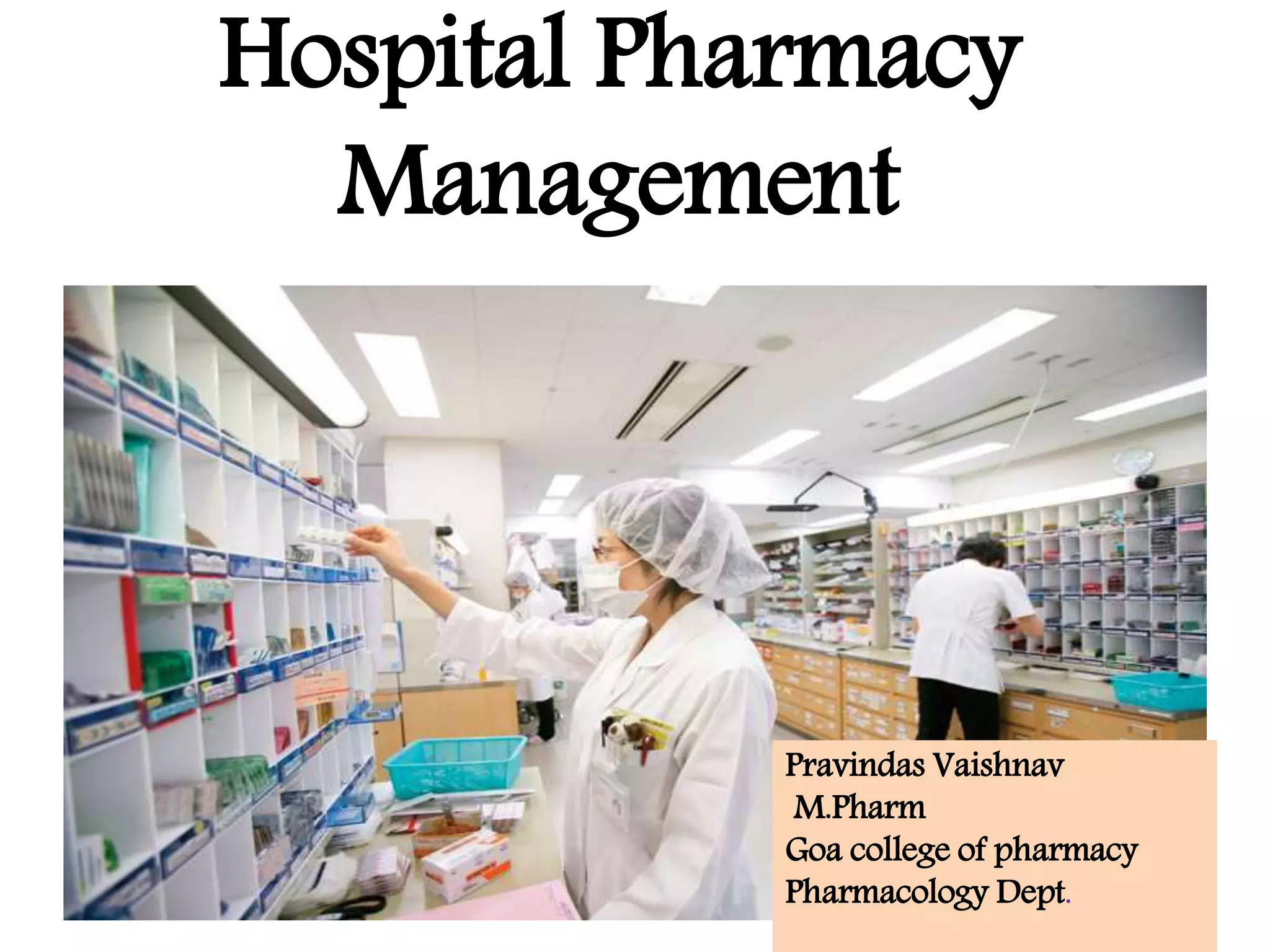
Hospital Pharmacy
Management
Pravindas Vaishnav
M.Pharm
Goa college of pharmacy
Pharmacology Dept.
Contents
 Responsibilities of hospital staffs
 Organization of hospital pharmacy services
 Hospital drugs and therapeutic committee
 Inpatient medication management
 Small scale hospital pharmaceutical production
 Pharmaceutical disposal
 Controlling leakage and drug abuse
Responsibilities of hospital staffs
Hospital pharmacist- expert
on medicines who advises
on
prescribing,administering,
monitoring
Supply manager-ensures that
medicines are available
through
procurement,storage,distri
bution,inventory control,&
quality control,assurance.
Responsibilities of hospital staffs
• The responsibility for establishing policies & procedures realated to
medication selection , procu , distri & use often lies with DTC
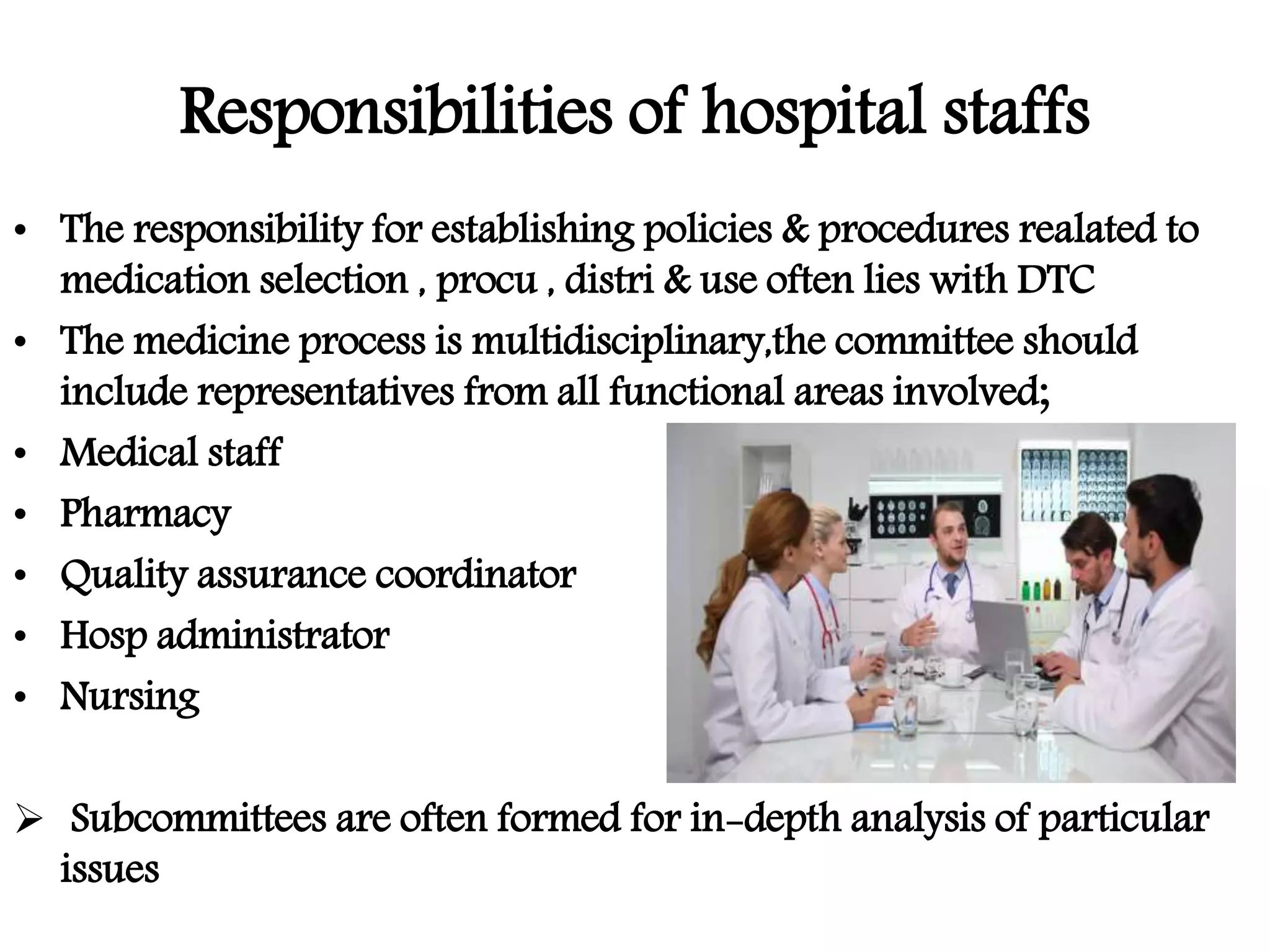
• The medicine process is multidisciplinary,the committee should
include representatives from all functional areas involved;
• Medical staff
• Pharmacy
• Quality assurance coordinator
• Hosp administrator
• Nursing
 Subcommittees are often formed for in-depth analysis of particular
issues
Purchasing and stock management
• In some hospitl a separate dept manages all
hosptl purchasing
• This dept called- medical stores or material
management
• In such cases chief pharmacist prepares an
annual budget request for pharmaceutical
purchases and places orders for medicines
through the medical stores
• Pharmacy dept manages pharmaceutical
purchasing
• Designated committee review & approve all
purchases
• DTC may manage
Medication
use
The medication-use
process can be divided into 4 components-
1. Prescribing
2. Preparation and dispensing
3. Medication administration
4. Monitoring the effects of medications on the
patient & ordering appro changes in therapy
• Govt agencies and licensing boards regulate
medications through laws and professional practice
standards
Organization of hospital pharmacy
In organizing hospital pharmacy services , both
the way in which the staff is organized and the
physical layouts of the building must be
considered-
Personnel
Can be divided into
3 major categories;
Management
Professional staff
Support staff
Physical organization
 Extent of pharmacy’s physical facility - the size of the hospt &
service provided.
 Large pharmacy dept -- sections within one physical space or in
separate locations throughout the hospt-
 Administrative offices
 Bulk storage
 Narcotics or dangerous drug lockers
 Manufacturing & repackaging
 IV soln compounding
 Inpatient and outpatient dispensing
 Medicine info resource center
 After –hours pharmacy
 Emergency medical storage
Hospital Drug & therapeutics
committee(DTC)
• DTC is responsible foe developing policies &
procedures to promote rational medicine use
• Its functions include-
• Management of the approved medicine list &
hospital formulary
• Ongoing drug use review
• Adverse drug event reporting & implementation
of safe medication practices
DTC membership
 An effective DTC requires that members
participate in meetings and assist with other
committee activities
 Members –representative from:-
 Medical staff ( from each dept)
 Pharmacy (chief pharmacist often serves as
the secretary)
 Nursing
 Hospital administration
 Quality assurance staff
 8-15 members
 Invite specialist to make
presentation
or provide advice on
particular issue
Hospital formulary management
• Cornerstone of medication management
• Should be the principal concern of the DTC
• Issues related to medication selection
Guidelines for the hospital setting
• Limit the formulary list to conserve resources-stocking all
medicines on the national formulary is usually not
necessary
• Eliminate generic duplication-only one brand or label of
each generic medicine should be routinely stocked
• Minimize the number of strengths stocked can be same
medication;multiples of lower strengths can be used for
frequently needed higher strengths
• Select medications for the formulary based on disease and
conditions treated at the facility
• Include second-line alternatives to medicines of choice as
needed,but minimize therapeutic duplication
• Ensure that the hospital formulary corresponds with any
national or regional standard treatment guidelines that
have been formally approved by the health system
• In addition to the basic formulary process,
many hospitals add two more features —
therapeutic substitution and use restrictions
for certain medication in the formulary
Inpatient medication management
Medication distribution systems
Medication distribution has long been the
primary function of hospital pharmacy services
4 basic types of medication distribution systems
exist—
1. Bulk ward stock replenishment
2. Individual medication order system
3. Unit-dose system
4. Automated medication dispensing
Patient medication profiles
Patient medication profile are necessary if hospital
pharmacists are to monitor inpatient medication
therapy
Each profile contains data on the patient’s current
& recent pharmaceutical therapy, allergies ,
diagnosis,height,weight,age,sex
Profile allows the pharmacist to review all
medications that a patient is taking before
dispensing the first dose and with each new
medication order
Problems with pharmaceutical therapy can be
detected and avoided or corrected
Medication treatment record
Small scale hospital pharmaceutical
production
• Include secondary production from existing raw
material imported packaging or repackaging
of finished goods into smaller dispensing packs &
course-of-therapy(COT) packages (tertiary
production)
• SSP divided into
sterile &
non-sterile production
or compounding
Pharmaceutical disposal
Hospitals ,health-care—
generates
Expired goods,
Damaged pharmaceuticals
Improper disposal—
>contaminate water
supplies,resale poor quality
of medicine,air pollution
from improper
incineration
• Hospital- return products to the facility from
where they were obtained
• If this option is not available then,
• Proper disposal plan & regularly monitored
• Depending on property –pharmaceutical
waste incineration, land disposal,
inertization(product is mixed with cement)
Special care must taken—
 Narcotics
 Toxic drugs
 Anticancer medicines
Before disposal technique is
instituted any govt laws &
regulations relevant to
health care waste
management and
environmental protection
should reviewed
Controlling leakage and drug abuse
• Systematic approaches for detecting,analyzing &
preventing pharmaceutical losses caused by
theft,bribery and fraud
• Applicable to hospitals and healthcare facilities
• The control of narcotics – concerns in hospital
because it may be the only type of institution
regularly stocking,dispensing,administering them
• Drug addiction among
physician,pharmacists,nurses is quite common
To avoid drug abuse and prevent leakage
• Be alert to changes in
performance,injuries,mood
swings in workers
• Ensure double-witness &
double-signature procedures
for wastage of narcotics
• Limit access to narcotic
storage areas
• Check patient charts & medication administration
records for patterns of consumption; be suspicious if
patients receive noticeably more narcotics during a
• Ask patients if they received medications
• Use locked boxes or wire cages to ensure security for
medication moved from the pharmacy to the wards
• Issue individual narcotics boxes to each
anesthesiologists daily,and make sure that the box is
returned to the pharmacy at the end of the day with a
written record of quantities used for each patient
• Count narcoti stocks daily and reconcile with
inventory records
• Sometims –for antibiotics
• Antiretroviral to treat HIV/AIDS
THANK
YOU

Hosptal pharmacy management

  • 1.
  • 2.
    Contents  Responsibilities ofhospital staffs  Organization of hospital pharmacy services  Hospital drugs and therapeutic committee  Inpatient medication management  Small scale hospital pharmaceutical production  Pharmaceutical disposal  Controlling leakage and drug abuse
  • 3.
    Responsibilities of hospitalstaffs Hospital pharmacist- expert on medicines who advises on prescribing,administering, monitoring Supply manager-ensures that medicines are available through procurement,storage,distri bution,inventory control,& quality control,assurance.
  • 4.
    Responsibilities of hospitalstaffs • The responsibility for establishing policies & procedures realated to medication selection , procu , distri & use often lies with DTC • The medicine process is multidisciplinary,the committee should include representatives from all functional areas involved; • Medical staff • Pharmacy • Quality assurance coordinator • Hosp administrator • Nursing  Subcommittees are often formed for in-depth analysis of particular issues
  • 5.
    Purchasing and stockmanagement • In some hospitl a separate dept manages all hosptl purchasing • This dept called- medical stores or material management • In such cases chief pharmacist prepares an annual budget request for pharmaceutical purchases and places orders for medicines through the medical stores • Pharmacy dept manages pharmaceutical purchasing • Designated committee review & approve all purchases • DTC may manage
  • 6.
    Medication use The medication-use process canbe divided into 4 components- 1. Prescribing 2. Preparation and dispensing 3. Medication administration 4. Monitoring the effects of medications on the patient & ordering appro changes in therapy • Govt agencies and licensing boards regulate medications through laws and professional practice standards
  • 7.
    Organization of hospitalpharmacy In organizing hospital pharmacy services , both the way in which the staff is organized and the physical layouts of the building must be considered- Personnel Can be divided into 3 major categories; Management Professional staff Support staff
  • 8.
    Physical organization  Extentof pharmacy’s physical facility - the size of the hospt & service provided.  Large pharmacy dept -- sections within one physical space or in separate locations throughout the hospt-  Administrative offices  Bulk storage  Narcotics or dangerous drug lockers  Manufacturing & repackaging  IV soln compounding  Inpatient and outpatient dispensing  Medicine info resource center  After –hours pharmacy  Emergency medical storage
  • 9.
    Hospital Drug &therapeutics committee(DTC) • DTC is responsible foe developing policies & procedures to promote rational medicine use • Its functions include- • Management of the approved medicine list & hospital formulary • Ongoing drug use review • Adverse drug event reporting & implementation of safe medication practices
  • 10.
    DTC membership  Aneffective DTC requires that members participate in meetings and assist with other committee activities  Members –representative from:-  Medical staff ( from each dept)  Pharmacy (chief pharmacist often serves as the secretary)  Nursing  Hospital administration  Quality assurance staff  8-15 members  Invite specialist to make presentation or provide advice on particular issue
  • 13.
    Hospital formulary management •Cornerstone of medication management • Should be the principal concern of the DTC • Issues related to medication selection
  • 14.
    Guidelines for thehospital setting • Limit the formulary list to conserve resources-stocking all medicines on the national formulary is usually not necessary • Eliminate generic duplication-only one brand or label of each generic medicine should be routinely stocked • Minimize the number of strengths stocked can be same medication;multiples of lower strengths can be used for frequently needed higher strengths • Select medications for the formulary based on disease and conditions treated at the facility • Include second-line alternatives to medicines of choice as needed,but minimize therapeutic duplication • Ensure that the hospital formulary corresponds with any national or regional standard treatment guidelines that have been formally approved by the health system
  • 15.
    • In additionto the basic formulary process, many hospitals add two more features — therapeutic substitution and use restrictions for certain medication in the formulary
  • 17.
    Inpatient medication management Medicationdistribution systems Medication distribution has long been the primary function of hospital pharmacy services 4 basic types of medication distribution systems exist— 1. Bulk ward stock replenishment 2. Individual medication order system 3. Unit-dose system 4. Automated medication dispensing
  • 19.
    Patient medication profiles Patientmedication profile are necessary if hospital pharmacists are to monitor inpatient medication therapy Each profile contains data on the patient’s current & recent pharmaceutical therapy, allergies , diagnosis,height,weight,age,sex Profile allows the pharmacist to review all medications that a patient is taking before dispensing the first dose and with each new medication order Problems with pharmaceutical therapy can be detected and avoided or corrected
  • 20.
  • 22.
    Small scale hospitalpharmaceutical production • Include secondary production from existing raw material imported packaging or repackaging of finished goods into smaller dispensing packs & course-of-therapy(COT) packages (tertiary production) • SSP divided into sterile & non-sterile production or compounding
  • 24.
    Pharmaceutical disposal Hospitals ,health-care— generates Expiredgoods, Damaged pharmaceuticals Improper disposal— >contaminate water supplies,resale poor quality of medicine,air pollution from improper incineration
  • 25.
    • Hospital- returnproducts to the facility from where they were obtained • If this option is not available then, • Proper disposal plan & regularly monitored • Depending on property –pharmaceutical waste incineration, land disposal, inertization(product is mixed with cement)
  • 26.
    Special care musttaken—  Narcotics  Toxic drugs  Anticancer medicines Before disposal technique is instituted any govt laws & regulations relevant to health care waste management and environmental protection should reviewed
  • 27.
    Controlling leakage anddrug abuse • Systematic approaches for detecting,analyzing & preventing pharmaceutical losses caused by theft,bribery and fraud • Applicable to hospitals and healthcare facilities • The control of narcotics – concerns in hospital because it may be the only type of institution regularly stocking,dispensing,administering them • Drug addiction among physician,pharmacists,nurses is quite common
  • 28.
    To avoid drugabuse and prevent leakage • Be alert to changes in performance,injuries,mood swings in workers • Ensure double-witness & double-signature procedures for wastage of narcotics • Limit access to narcotic storage areas • Check patient charts & medication administration records for patterns of consumption; be suspicious if patients receive noticeably more narcotics during a
  • 29.
    • Ask patientsif they received medications • Use locked boxes or wire cages to ensure security for medication moved from the pharmacy to the wards • Issue individual narcotics boxes to each anesthesiologists daily,and make sure that the box is returned to the pharmacy at the end of the day with a written record of quantities used for each patient • Count narcoti stocks daily and reconcile with inventory records • Sometims –for antibiotics • Antiretroviral to treat HIV/AIDS
  • 30.