ENSURING DRUG SAFETY AND MONITORING ADVERSE EFFECTS
PRESENTED BY
ZAMRAN KHAN
INTRODUCTION TO PHARMACOVIGILANCE
Definition:
Pharmacovigilance (PV) is the science and activities related to the
detection, assessment, understanding, and prevention of adverse
effects or any other drug-related problem.
Importance:
Ensures patient safety and the efficacy of drugs in clinical use.
OBJECTIVES OF PHARMACOVIGILANCE
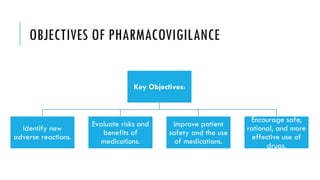
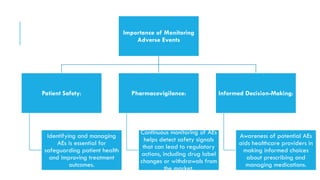
Key Objectives:
Identify new
adverse reactions.
Evaluate risks and
benefits of
medications.
Improve patient
safety and the use
of medications.
Encourage safe,
rational, and more
effective use of
drugs.
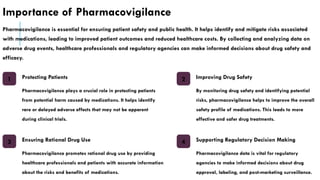
Importance of Pharmacovigilance
Pharmacovigilance is essential for ensuring patient safety and public health. It helps identify and mitigate risks associated
with medications, leading to improved patient outcomes and reduced healthcare costs. By collecting and analyzing data on
adverse drug events, healthcare professionals and regulatory agencies can make informed decisions about drug safety and
efficacy.
1 Protecting Patients
Pharmacovigilance plays a crucial role in protecting patients
from potential harm caused by medications. It helps identify
rare or delayed adverse effects that may not be apparent
during clinical trials.
2 Improving Drug Safety
By monitoring drug safety and identifying potential
risks, pharmacovigilance helps to improve the overall
safety profile of medications. This leads to more
effective and safer drug treatments.
3 Ensuring Rational Drug Use
Pharmacovigilance promotes rational drug use by providing
healthcare professionals and patients with accurate information
about the risks and benefits of medications.
4 Supporting Regulatory Decision Making
Pharmacovigilance data is vital for regulatory
agencies to make informed decisions about drug
approval, labeling, and post-marketing surveillance.
KEY TERMS IN PHARMACOVIGILANCE
Adverse Drug Reaction (ADR):
•Any response to a drug that is harmful and unintended.
Signal Detection:
•Process of identifying new safety information from data sources.
Risk Management:
• Measures taken to mitigate identified risks.
Regulatory Frameworks and Guidelines
Pharmacovigilance is governed by stringent regulatory frameworks and guidelines, ensuring the safety and effectiveness of medications
worldwide. These regulations provide a comprehensive framework for collecting, analyzing, and reporting adverse drug events. The
Food and Drug Administration (FDA) in the United States and the European Medicines Agency (EMA) in Europe are key regulatory
bodies responsible for overseeing pharmacovigilance activities. These agencies establish standards for pharmacovigilance systems,
including requirements for reporting, investigating, and managing adverse drug events.
Good Pharmacovigilance Practices
(GVP)
GVP are a set of guidelines developed by
the EMA to ensure the quality, safety, and
efficacy of medications. These guidelines
provide a comprehensive framework for
pharmacovigilance activities, including
adverse event reporting, signal detection,
and risk management.
International Conference on
Harmonisation (ICH)
ICH is an international organization that
develops guidelines for the registration
of pharmaceuticals. ICH guidelines on
pharmacovigilance address topics such
as adverse event reporting, signal
detection, and risk management.
National Regulations
Many countries have their own
national regulations governing
pharmacovigilance activities. These
regulations may vary depending
on the specific country and its
healthcare system.
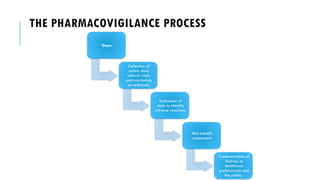
THE PHARMACOVIGILANCE PROCESS
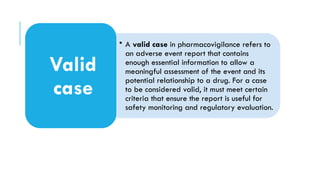
Steps:
Collection of
safety data
(clinical trials,
post-marketing
surveillance).
Evaluation of
data to identify
adverse reactions.
Risk-benefit
assessment.
Communication of
findings to
healthcare
professionals and
the public.
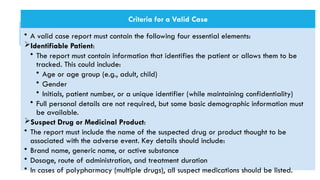
Sources of Safety Data
Clinical Trials: Early-stage drug
safety monitoring.
Post-Marketing Surveillance: Real-
world use once drugs are on the
market.
Spontaneous Reporting Systems:
Healthcare professionals,
patients, and consumers report
adverse reactions.
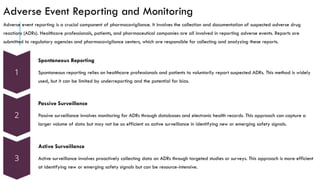
Adverse Event Reporting and Monitoring
Adverse event reporting is a crucial component of pharmacovigilance. It involves the collection and documentation of suspected adverse drug
reactions (ADRs). Healthcare professionals, patients, and pharmaceutical companies are all involved in reporting adverse events. Reports are
submitted to regulatory agencies and pharmacovigilance centers, which are responsible for collecting and analyzing these reports.
Spontaneous Reporting
Spontaneous reporting relies on healthcare professionals and patients to voluntarily report suspected ADRs. This method is widely
used, but it can be limited by underreporting and the potential for bias.
Passive Surveillance
Passive surveillance involves monitoring for ADRs through databases and electronic health records. This approach can capture a
larger volume of data but may not be as efficient as active surveillance in identifying new or emerging safety signals.
Active Surveillance
Active surveillance involves proactively collecting data on ADRs through targeted studies or surveys. This approach is more efficient
at identifying new or emerging safety signals but can be resource-intensive.
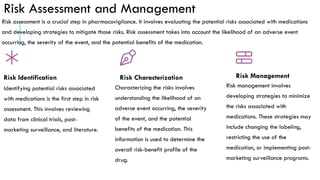
Risk Assessment and Management
Risk assessment is a crucial step in pharmacovigilance. It involves evaluating the potential risks associated with medications
and developing strategies to mitigate those risks. Risk assessment takes into account the likelihood of an adverse event
occurring, the severity of the event, and the potential benefits of the medication.
Risk Identification
Identifying potential risks associated
with medications is the first step in risk
assessment. This involves reviewing
data from clinical trials, post-
marketing surveillance, and literature.
Risk Characterization
Characterizing the risks involves
understanding the likelihood of an
adverse event occurring, the severity
of the event, and the potential
benefits of the medication. This
information is used to determine the
overall risk-benefit profile of the
drug.
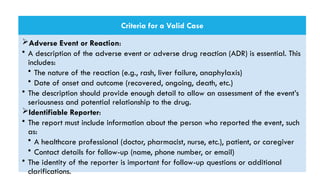
Risk Management
Risk management involves
developing strategies to minimize
the risks associated with
medications. These strategies may
include changing the labeling,
restricting the use of the
medication, or implementing post-
marketing surveillance programs.
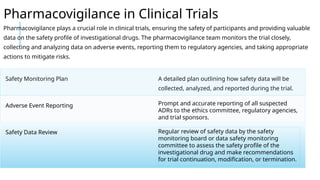
Pharmacovigilance in Clinical Trials
Pharmacovigilance plays a crucial role in clinical trials, ensuring the safety of participants and providing valuable
data on the safety profile of investigational drugs. The pharmacovigilance team monitors the trial closely,
collecting and analyzing data on adverse events, reporting them to regulatory agencies, and taking appropriate
actions to mitigate risks.
Safety Monitoring Plan A detailed plan outlining how safety data will be
collected, analyzed, and reported during the trial.
Adverse Event Reporting Prompt and accurate reporting of all suspected
ADRs to the ethics committee, regulatory agencies,
and trial sponsors.
Safety Data Review Regular review of safety data by the safety
monitoring board or data safety monitoring
committee to assess the safety profile of the
investigational drug and make recommendations
for trial continuation, modification, or termination.
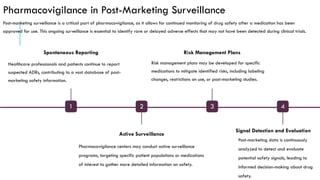
Pharmacovigilance in Post-Marketing Surveillance
Post-marketing surveillance is a critical part of pharmacovigilance, as it allows for continued monitoring of drug safety after a medication has been
approved for use. This ongoing surveillance is essential to identify rare or delayed adverse effects that may not have been detected during clinical trials.
1
Spontaneous Reporting
Healthcare professionals and patients continue to report
suspected ADRs, contributing to a vast database of post-
marketing safety information.
2
Active Surveillance
Pharmacovigilance centers may conduct active surveillance
programs, targeting specific patient populations or medications
of interest to gather more detailed information on safety.
3
Risk Management Plans
Risk management plans may be developed for specific
medications to mitigate identified risks, including labeling
changes, restrictions on use, or post-marketing studies.
4
Signal Detection and Evaluation
Post-marketing data is continuously
analyzed to detect and evaluate
potential safety signals, leading to
informed decision-making about drug
safety.
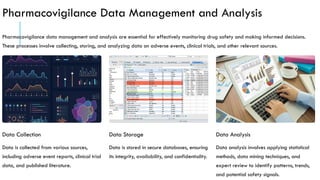
Pharmacovigilance Data Management and Analysis
Pharmacovigilance data management and analysis are essential for effectively monitoring drug safety and making informed decisions.
These processes involve collecting, storing, and analyzing data on adverse events, clinical trials, and other relevant sources.
Data Collection
Data is collected from various sources,
including adverse event reports, clinical trial
data, and published literature.
Data Storage
Data is stored in secure databases, ensuring
its integrity, availability, and confidentiality.
Data Analysis
Data analysis involves applying statistical
methods, data mining techniques, and
expert review to identify patterns, trends,
and potential safety signals.
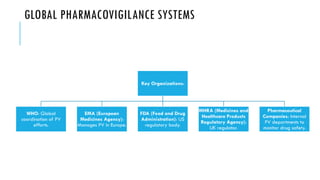
GLOBAL PHARMACOVIGILANCE SYSTEMS
Key Organizations:
WHO: Global
coordination of PV
efforts.
EMA (European
Medicines Agency):
Manages PV in Europe.
FDA (Food and Drug
Administration): US
regulatory body.
MHRA (Medicines and
Healthcare Products
Regulatory Agency):
UK regulator.
Pharmaceutical
Companies: Internal
PV departments to
monitor drug safety.
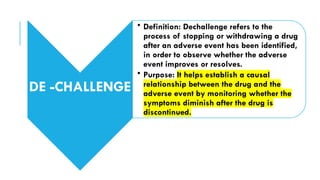
DE -CHALLENGE
• Definition: Dechallenge refers to the
process of stopping or withdrawing a drug
after an adverse event has been identified,
in order to observe whether the adverse
event improves or resolves.
• Purpose: It helps establish a causal
relationship between the drug and the
adverse event by monitoring whether the
symptoms diminish after the drug is
discontinued.
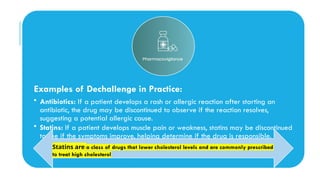
Examples of Dechallenge in Practice:
• Antibiotics: If a patient develops a rash or allergic reaction after starting an
antibiotic, the drug may be discontinued to observe if the reaction resolves,
suggesting a potential allergic cause.
• Statins: If a patient develops muscle pain or weakness, statins may be discontinued
to see if the symptoms improve, helping determine if the drug is responsible.
Statins are a class of drugs that lower cholesterol levels and are commonly prescribed
to treat high cholesterol
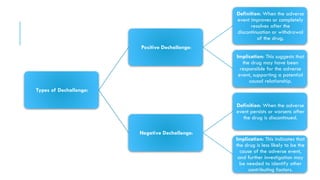
Types of Dechallenge:
Positive Dechallenge:
Definition: When the adverse
event improves or completely
resolves after the
discontinuation or withdrawal
of the drug.
Implication: This suggests that
the drug may have been
responsible for the adverse
event, supporting a potential
causal relationship.
Negative Dechallenge:
Definition: When the adverse
event persists or worsens after
the drug is discontinued.
Implication: This indicates that
the drug is less likely to be the
cause of the adverse event,
and further investigation may
be needed to identify other
contributing factors.
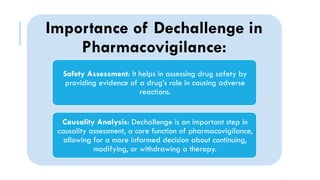
Importance of Dechallenge in
Pharmacovigilance:
Safety Assessment: It helps in assessing drug safety by
providing evidence of a drug’s role in causing adverse
reactions.
Causality Analysis: Dechallenge is an important step in
causality assessment, a core function of pharmacovigilance,
allowing for a more informed decision about continuing,
modifying, or withdrawing a therapy.
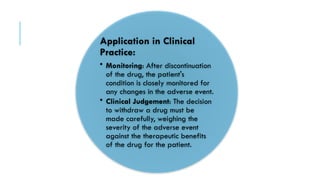
Application in Clinical
Practice:
• Monitoring: After discontinuation
of the drug, the patient's
condition is closely monitored for
any changes in the adverse event.
• Clinical Judgement: The decision
to withdraw a drug must be
made carefully, weighing the
severity of the adverse event
against the therapeutic benefits
of the drug for the patient.
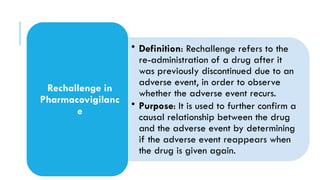
• Definition: Rechallenge refers to the
re-administration of a drug after it
was previously discontinued due to an
adverse event, in order to observe
whether the adverse event recurs.
• Purpose: It is used to further confirm a
causal relationship between the drug
and the adverse event by determining
if the adverse event reappears when
the drug is given again.
Rechallenge in
Pharmacovigilanc
e
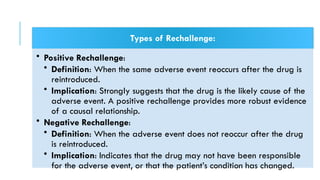
Types of Rechallenge:
• Positive Rechallenge:
• Definition: When the same adverse event reoccurs after the drug is
reintroduced.
• Implication: Strongly suggests that the drug is the likely cause of the
adverse event. A positive rechallenge provides more robust evidence
of a causal relationship.
• Negative Rechallenge:
• Definition: When the adverse event does not reoccur after the drug
is reintroduced.
• Implication: Indicates that the drug may not have been responsible
for the adverse event, or that the patient’s condition has changed.
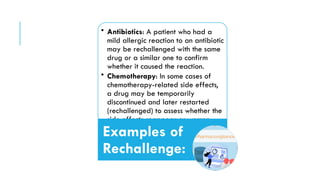
• Antibiotics: A patient who had a
mild allergic reaction to an antibiotic
may be rechallenged with the same
drug or a similar one to confirm
whether it caused the reaction.
• Chemotherapy: In some cases of
chemotherapy-related side effects,
a drug may be temporarily
discontinued and later restarted
(rechallenged) to assess whether the
side effects reappear or worsen.
Examples of
Rechallenge:
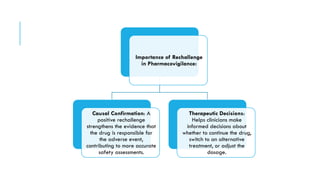
Importance of Rechallenge
in Pharmacovigilance:
Causal Confirmation: A
positive rechallenge
strengthens the evidence that
the drug is responsible for
the adverse event,
contributing to more accurate
safety assessments.
Therapeutic Decisions:
Helps clinicians make
informed decisions about
whether to continue the drug,
switch to an alternative
treatment, or adjust the
dosage.
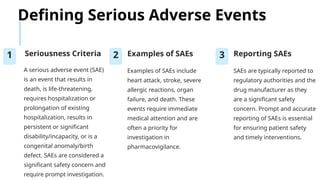
Defining Serious Adverse Events
1 Seriousness Criteria
A serious adverse event (SAE)
is an event that results in
death, is life-threatening,
requires hospitalization or
prolongation of existing
hospitalization, results in
persistent or significant
disability/incapacity, or is a
congenital anomaly/birth
defect. SAEs are considered a
significant safety concern and
require prompt investigation.
2 Examples of SAEs
Examples of SAEs include
heart attack, stroke, severe
allergic reactions, organ
failure, and death. These
events require immediate
medical attention and are
often a priority for
investigation in
pharmacovigilance.
3 Reporting SAEs
SAEs are typically reported to
regulatory authorities and the
drug manufacturer as they
are a significant safety
concern. Prompt and accurate
reporting of SAEs is essential
for ensuring patient safety
and timely interventions.
Importance of Identifying SAEs
• Patient Safety: Timely identification and reporting of
SAEs are crucial for protecting patient health.
• Risk Management: Understanding the nature and
frequency of SAEs helps in risk assessment and
management, guiding clinical decision-making and drug
development.
• Regulatory Actions: Regulatory agencies may require
additional studies, label changes, or even withdrawal of
a drug from the market based on the evaluation of SAEs.
Causal Relationship:
A causal relationship in pharmacovigilance refers to the
connection between a drug and an adverse event, indicating
that the drug is responsible for causing the adverse event.
Establishing a causal relationship is critical for understanding
drug safety and making informed decisions about medication
use.
• Patient Safety: Determining whether a drug causes
an adverse event is crucial for ensuring patient
safety and effective management of drug therapies.
• Risk Management: Understanding causal
relationships allows healthcare providers and
regulatory bodies to implement risk mitigation
strategies, such as modifying labeling, issuing
warnings, or withdrawing drugs from the market.
• Clinical Decision-Making: Causality assessment
informs clinicians about potential drug-related risks,
helping them make informed choices about
prescribing and patient management.
Importance
of
Establishing
Causal
Relationship
s
Adverse Drug Reaction (ADR):
• Definition
• An Adverse Drug Reaction (ADR) is defined as any harmful,
unintended, or undesirable effect that occurs when a drug is
administered at the recommended therapeutic dose. ADRs can
manifest in various forms and may vary in severity.
• Types:
• Serious ADR: Results in death, hospitalization, disability, or
birth defect.
• Non-serious ADR: Less severe, but may still affect treatment
compliance.
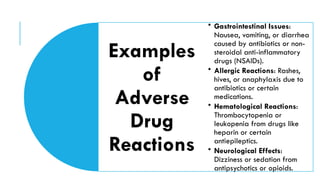
Examples
of
Adverse
Drug
Reactions
• Gastrointestinal Issues:
Nausea, vomiting, or diarrhea
caused by antibiotics or non-
steroidal anti-inflammatory
drugs (NSAIDs).
• Allergic Reactions: Rashes,
hives, or anaphylaxis due to
antibiotics or certain
medications.
• Hematological Reactions:
Thrombocytopenia or
leukopenia from drugs like
heparin or certain
antiepileptics.
• Neurological Effects:
Dizziness or sedation from
antipsychotics or opioids.
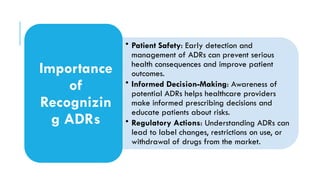
• Patient Safety: Early detection and
management of ADRs can prevent serious
health consequences and improve patient
outcomes.
• Informed Decision-Making: Awareness of
potential ADRs helps healthcare providers
make informed prescribing decisions and
educate patients about risks.
• Regulatory Actions: Understanding ADRs can
lead to label changes, restrictions on use, or
withdrawal of drugs from the market.
Importance
of
Recognizin
g ADRs
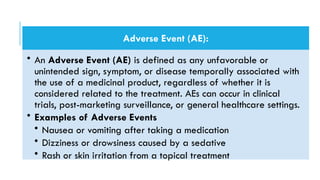
Adverse Event (AE):
• An Adverse Event (AE) is defined as any unfavorable or
unintended sign, symptom, or disease temporally associated with
the use of a medicinal product, regardless of whether it is
considered related to the treatment. AEs can occur in clinical
trials, post-marketing surveillance, or general healthcare settings.
• Examples of Adverse Events
• Nausea or vomiting after taking a medication
• Dizziness or drowsiness caused by a sedative
• Rash or skin irritation from a topical treatment
Importance of Monitoring
Adverse Events
Patient Safety:
Identifying and managing
AEs is essential for
safeguarding patient health
and improving treatment
outcomes.
Pharmacovigilance:
Continuous monitoring of AEs
helps detect safety signals
that can lead to regulatory
actions, including drug label
changes or withdrawals from
the market.
Informed Decision-Making:
Awareness of potential AEs
aids healthcare providers in
making informed choices
about prescribing and
managing medications.
• A valid case in pharmacovigilance refers to
an adverse event report that contains
enough essential information to allow a
meaningful assessment of the event and its
potential relationship to a drug. For a case
to be considered valid, it must meet certain
criteria that ensure the report is useful for
safety monitoring and regulatory evaluation.
Valid
case
Criteria for a Valid Case
• A valid case report must contain the following four essential elements:
Identifiable Patient:
• The report must contain information that identifies the patient or allows them to be
tracked. This could include:
• Age or age group (e.g., adult, child)
• Gender
• Initials, patient number, or a unique identifier (while maintaining confidentiality)
• Full personal details are not required, but some basic demographic information must
be available.
Suspect Drug or Medicinal Product:
• The report must include the name of the suspected drug or product thought to be
associated with the adverse event. Key details should include:
• Brand name, generic name, or active substance
• Dosage, route of administration, and treatment duration
• In cases of polypharmacy (multiple drugs), all suspect medications should be listed.
Criteria for a Valid Case
Adverse Event or Reaction:
• A description of the adverse event or adverse drug reaction (ADR) is essential. This
includes:
• The nature of the reaction (e.g., rash, liver failure, anaphylaxis)
• Date of onset and outcome (recovered, ongoing, death, etc.)
• The description should provide enough detail to allow an assessment of the event’s
seriousness and potential relationship to the drug.
Identifiable Reporter:
• The report must include information about the person who reported the event, such
as:
• A healthcare professional (doctor, pharmacist, nurse, etc.), patient, or caregiver
• Contact details for follow-up (name, phone number, or email)
• The identity of the reporter is important for follow-up questions or additional
clarifications.
Examples of Valid Cases
• Example 1 (Healthcare Professional Report):
• A 50-year-old male patient developed severe liver injury after taking a
high dose of paracetamol (acetaminophen) for 7 days. The adverse event
was reported by his physician, who provided the treatment details and
confirmed that the patient required hospitalization. The report contained
information about the patient's recovery and the dosage of the drug.
• Example 2 (Patient Report):
• A 35-year-old female reported experiencing anaphylaxis 30 minutes
after receiving a penicillin injection. She was treated at a local emergency
department. The patient submitted her own report through an online
portal, including her age, description of symptoms, and treatment
outcome.
Why Valid Cases Are Important
• Safety Signal Detection: Valid cases are essential for
detecting new or unexpected safety signals and
understanding the risk profile of a drug.
• Regulatory Reporting: Regulatory authorities like the FDA,
EMA, and WHO require valid case reports to assess the
safety of drugs and take necessary actions, such as label
changes or recalls.
• Causality Assessment: Valid reports provide enough
information to assess the likelihood that the drug caused the
adverse event, which is crucial for pharmacovigilance.
Case reports
• In pharmacovigilance, case reports document adverse events or reactions related to
drug use and are categorized based on various criteria, such as severity,
predictability, and timing. These reports play a critical role in monitoring drug
safety and identifying potential risks. Here are the types of case reports commonly
recognized in pharmacovigilance:
1.Spontaneous Reports
• Definition: These are voluntary reports submitted by healthcare professionals,
patients, or caregivers when they suspect an adverse event is related to drug use.
• Key Features:
• Unsolicited and spontaneous in nature
• Often used to detect new or rare adverse events
• Examples: A doctor reports a patient’s sudden liver failure after taking a new drug.
2. Solicited Reports
•Definition: These reports are actively collected through structured programs, such as clinical trials, patient
support programs, or registries.
•Key Features:
• Predefined data collection
• Typically involve large patient groups for systematic monitoring
•Examples: Adverse event reports from a post-marketing surveillance study conducted by a
pharmaceutical company.
3. Clinical Trial Reports
•Definition: Adverse events occurring during clinical trials (phases I-IV) are systematically collected and
reported.
•Key Features:
• Controlled environment with predefined conditions
• Early detection of adverse events and side effects during drug development
•Examples: Reports of side effects or serious adverse events (SAEs) in patients participating in clinical trials
for a new cancer drug.
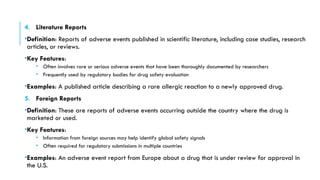
4. Literature Reports
•Definition: Reports of adverse events published in scientific literature, including case studies, research
articles, or reviews.
•Key Features:
• Often involves rare or serious adverse events that have been thoroughly documented by researchers
• Frequently used by regulatory bodies for drug safety evaluation
•Examples: A published article describing a rare allergic reaction to a newly approved drug.
5. Foreign Reports
•Definition: These are reports of adverse events occurring outside the country where the drug is
marketed or used.
•Key Features:
• Information from foreign sources may help identify global safety signals
• Often required for regulatory submissions in multiple countries
•Examples: An adverse event report from Europe about a drug that is under review for approval in
the U.S.
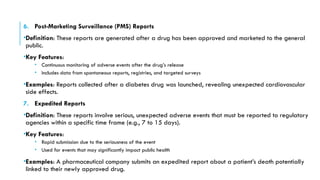
6. Post-Marketing Surveillance (PMS) Reports
•Definition: These reports are generated after a drug has been approved and marketed to the general
public.
•Key Features:
• Continuous monitoring of adverse events after the drug’s release
• Includes data from spontaneous reports, registries, and targeted surveys
•Examples: Reports collected after a diabetes drug was launched, revealing unexpected cardiovascular
side effects.
7. Expedited Reports
•Definition: These reports involve serious, unexpected adverse events that must be reported to regulatory
agencies within a specific time frame (e.g., 7 to 15 days).
•Key Features:
• Rapid submission due to the seriousness of the event
• Used for events that may significantly impact public health
•Examples: A pharmaceutical company submits an expedited report about a patient’s death potentially
linked to their newly approved drug.
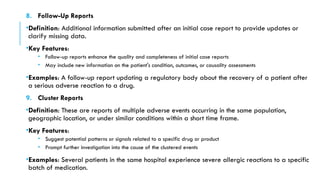
8. Follow-Up Reports
•Definition: Additional information submitted after an initial case report to provide updates or
clarify missing data.
•Key Features:
• Follow-up reports enhance the quality and completeness of initial case reports
• May include new information on the patient's condition, outcomes, or causality assessments
•Examples: A follow-up report updating a regulatory body about the recovery of a patient after
a serious adverse reaction to a drug.
9. Cluster Reports
•Definition: These are reports of multiple adverse events occurring in the same population,
geographic location, or under similar conditions within a short time frame.
•Key Features:
• Suggest potential patterns or signals related to a specific drug or product
• Prompt further investigation into the cause of the clustered events
•Examples: Several patients in the same hospital experience severe allergic reactions to a specific
batch of medication.
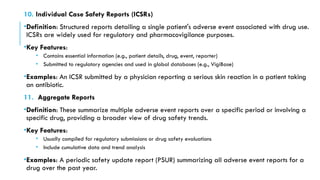
10. Individual Case Safety Reports (ICSRs)
•Definition: Structured reports detailing a single patient's adverse event associated with drug use.
ICSRs are widely used for regulatory and pharmacovigilance purposes.
•Key Features:
• Contains essential information (e.g., patient details, drug, event, reporter)
• Submitted to regulatory agencies and used in global databases (e.g., VigiBase)
•Examples: An ICSR submitted by a physician reporting a serious skin reaction in a patient taking
an antibiotic.
11. Aggregate Reports
•Definition: These summarize multiple adverse event reports over a specific period or involving a
specific drug, providing a broader view of drug safety trends.
•Key Features:
• Usually compiled for regulatory submissions or drug safety evaluations
• Include cumulative data and trend analysis
•Examples: A periodic safety update report (PSUR) summarizing all adverse event reports for a
drug over the past year.
Conclusion
• Pharmacovigilance plays a crucial role in
ensuring drug safety.
• Ongoing monitoring, assessment, and
management of drug risks are essential for
public health.
• Cooperation between healthcare
professionals, regulators, and patients is vital.
THE END

pharmacovigilance introduction & imp terms.pptx

  • 1.
    ENSURING DRUG SAFETYAND MONITORING ADVERSE EFFECTS PRESENTED BY ZAMRAN KHAN INTRODUCTION TO PHARMACOVIGILANCE
  • 2.
    Definition: Pharmacovigilance (PV) isthe science and activities related to the detection, assessment, understanding, and prevention of adverse effects or any other drug-related problem. Importance: Ensures patient safety and the efficacy of drugs in clinical use.
  • 3.
    OBJECTIVES OF PHARMACOVIGILANCE KeyObjectives: Identify new adverse reactions. Evaluate risks and benefits of medications. Improve patient safety and the use of medications. Encourage safe, rational, and more effective use of drugs.
  • 4.
    Importance of Pharmacovigilance Pharmacovigilanceis essential for ensuring patient safety and public health. It helps identify and mitigate risks associated with medications, leading to improved patient outcomes and reduced healthcare costs. By collecting and analyzing data on adverse drug events, healthcare professionals and regulatory agencies can make informed decisions about drug safety and efficacy. 1 Protecting Patients Pharmacovigilance plays a crucial role in protecting patients from potential harm caused by medications. It helps identify rare or delayed adverse effects that may not be apparent during clinical trials. 2 Improving Drug Safety By monitoring drug safety and identifying potential risks, pharmacovigilance helps to improve the overall safety profile of medications. This leads to more effective and safer drug treatments. 3 Ensuring Rational Drug Use Pharmacovigilance promotes rational drug use by providing healthcare professionals and patients with accurate information about the risks and benefits of medications. 4 Supporting Regulatory Decision Making Pharmacovigilance data is vital for regulatory agencies to make informed decisions about drug approval, labeling, and post-marketing surveillance.
  • 5.
    KEY TERMS INPHARMACOVIGILANCE Adverse Drug Reaction (ADR): •Any response to a drug that is harmful and unintended. Signal Detection: •Process of identifying new safety information from data sources. Risk Management: • Measures taken to mitigate identified risks.
  • 6.
    Regulatory Frameworks andGuidelines Pharmacovigilance is governed by stringent regulatory frameworks and guidelines, ensuring the safety and effectiveness of medications worldwide. These regulations provide a comprehensive framework for collecting, analyzing, and reporting adverse drug events. The Food and Drug Administration (FDA) in the United States and the European Medicines Agency (EMA) in Europe are key regulatory bodies responsible for overseeing pharmacovigilance activities. These agencies establish standards for pharmacovigilance systems, including requirements for reporting, investigating, and managing adverse drug events. Good Pharmacovigilance Practices (GVP) GVP are a set of guidelines developed by the EMA to ensure the quality, safety, and efficacy of medications. These guidelines provide a comprehensive framework for pharmacovigilance activities, including adverse event reporting, signal detection, and risk management. International Conference on Harmonisation (ICH) ICH is an international organization that develops guidelines for the registration of pharmaceuticals. ICH guidelines on pharmacovigilance address topics such as adverse event reporting, signal detection, and risk management. National Regulations Many countries have their own national regulations governing pharmacovigilance activities. These regulations may vary depending on the specific country and its healthcare system.
  • 7.
    THE PHARMACOVIGILANCE PROCESS Steps: Collectionof safety data (clinical trials, post-marketing surveillance). Evaluation of data to identify adverse reactions. Risk-benefit assessment. Communication of findings to healthcare professionals and the public.
  • 8.
    Sources of SafetyData Clinical Trials: Early-stage drug safety monitoring. Post-Marketing Surveillance: Real- world use once drugs are on the market. Spontaneous Reporting Systems: Healthcare professionals, patients, and consumers report adverse reactions.
  • 9.
    Adverse Event Reportingand Monitoring Adverse event reporting is a crucial component of pharmacovigilance. It involves the collection and documentation of suspected adverse drug reactions (ADRs). Healthcare professionals, patients, and pharmaceutical companies are all involved in reporting adverse events. Reports are submitted to regulatory agencies and pharmacovigilance centers, which are responsible for collecting and analyzing these reports. Spontaneous Reporting Spontaneous reporting relies on healthcare professionals and patients to voluntarily report suspected ADRs. This method is widely used, but it can be limited by underreporting and the potential for bias. Passive Surveillance Passive surveillance involves monitoring for ADRs through databases and electronic health records. This approach can capture a larger volume of data but may not be as efficient as active surveillance in identifying new or emerging safety signals. Active Surveillance Active surveillance involves proactively collecting data on ADRs through targeted studies or surveys. This approach is more efficient at identifying new or emerging safety signals but can be resource-intensive.
  • 10.
    Risk Assessment andManagement Risk assessment is a crucial step in pharmacovigilance. It involves evaluating the potential risks associated with medications and developing strategies to mitigate those risks. Risk assessment takes into account the likelihood of an adverse event occurring, the severity of the event, and the potential benefits of the medication. Risk Identification Identifying potential risks associated with medications is the first step in risk assessment. This involves reviewing data from clinical trials, post- marketing surveillance, and literature. Risk Characterization Characterizing the risks involves understanding the likelihood of an adverse event occurring, the severity of the event, and the potential benefits of the medication. This information is used to determine the overall risk-benefit profile of the drug. Risk Management Risk management involves developing strategies to minimize the risks associated with medications. These strategies may include changing the labeling, restricting the use of the medication, or implementing post- marketing surveillance programs.
  • 11.
    Pharmacovigilance in ClinicalTrials Pharmacovigilance plays a crucial role in clinical trials, ensuring the safety of participants and providing valuable data on the safety profile of investigational drugs. The pharmacovigilance team monitors the trial closely, collecting and analyzing data on adverse events, reporting them to regulatory agencies, and taking appropriate actions to mitigate risks. Safety Monitoring Plan A detailed plan outlining how safety data will be collected, analyzed, and reported during the trial. Adverse Event Reporting Prompt and accurate reporting of all suspected ADRs to the ethics committee, regulatory agencies, and trial sponsors. Safety Data Review Regular review of safety data by the safety monitoring board or data safety monitoring committee to assess the safety profile of the investigational drug and make recommendations for trial continuation, modification, or termination.
  • 12.
    Pharmacovigilance in Post-MarketingSurveillance Post-marketing surveillance is a critical part of pharmacovigilance, as it allows for continued monitoring of drug safety after a medication has been approved for use. This ongoing surveillance is essential to identify rare or delayed adverse effects that may not have been detected during clinical trials. 1 Spontaneous Reporting Healthcare professionals and patients continue to report suspected ADRs, contributing to a vast database of post- marketing safety information. 2 Active Surveillance Pharmacovigilance centers may conduct active surveillance programs, targeting specific patient populations or medications of interest to gather more detailed information on safety. 3 Risk Management Plans Risk management plans may be developed for specific medications to mitigate identified risks, including labeling changes, restrictions on use, or post-marketing studies. 4 Signal Detection and Evaluation Post-marketing data is continuously analyzed to detect and evaluate potential safety signals, leading to informed decision-making about drug safety.
  • 13.
    Pharmacovigilance Data Managementand Analysis Pharmacovigilance data management and analysis are essential for effectively monitoring drug safety and making informed decisions. These processes involve collecting, storing, and analyzing data on adverse events, clinical trials, and other relevant sources. Data Collection Data is collected from various sources, including adverse event reports, clinical trial data, and published literature. Data Storage Data is stored in secure databases, ensuring its integrity, availability, and confidentiality. Data Analysis Data analysis involves applying statistical methods, data mining techniques, and expert review to identify patterns, trends, and potential safety signals.
  • 14.
    GLOBAL PHARMACOVIGILANCE SYSTEMS KeyOrganizations: WHO: Global coordination of PV efforts. EMA (European Medicines Agency): Manages PV in Europe. FDA (Food and Drug Administration): US regulatory body. MHRA (Medicines and Healthcare Products Regulatory Agency): UK regulator. Pharmaceutical Companies: Internal PV departments to monitor drug safety.
  • 15.
    DE -CHALLENGE • Definition:Dechallenge refers to the process of stopping or withdrawing a drug after an adverse event has been identified, in order to observe whether the adverse event improves or resolves. • Purpose: It helps establish a causal relationship between the drug and the adverse event by monitoring whether the symptoms diminish after the drug is discontinued.
  • 16.
    Examples of Dechallengein Practice: • Antibiotics: If a patient develops a rash or allergic reaction after starting an antibiotic, the drug may be discontinued to observe if the reaction resolves, suggesting a potential allergic cause. • Statins: If a patient develops muscle pain or weakness, statins may be discontinued to see if the symptoms improve, helping determine if the drug is responsible. Statins are a class of drugs that lower cholesterol levels and are commonly prescribed to treat high cholesterol
  • 17.
    Types of Dechallenge: PositiveDechallenge: Definition: When the adverse event improves or completely resolves after the discontinuation or withdrawal of the drug. Implication: This suggests that the drug may have been responsible for the adverse event, supporting a potential causal relationship. Negative Dechallenge: Definition: When the adverse event persists or worsens after the drug is discontinued. Implication: This indicates that the drug is less likely to be the cause of the adverse event, and further investigation may be needed to identify other contributing factors.
  • 18.
    Importance of Dechallengein Pharmacovigilance: Safety Assessment: It helps in assessing drug safety by providing evidence of a drug’s role in causing adverse reactions. Causality Analysis: Dechallenge is an important step in causality assessment, a core function of pharmacovigilance, allowing for a more informed decision about continuing, modifying, or withdrawing a therapy.
  • 19.
    Application in Clinical Practice: •Monitoring: After discontinuation of the drug, the patient's condition is closely monitored for any changes in the adverse event. • Clinical Judgement: The decision to withdraw a drug must be made carefully, weighing the severity of the adverse event against the therapeutic benefits of the drug for the patient.
  • 20.
    • Definition: Rechallengerefers to the re-administration of a drug after it was previously discontinued due to an adverse event, in order to observe whether the adverse event recurs. • Purpose: It is used to further confirm a causal relationship between the drug and the adverse event by determining if the adverse event reappears when the drug is given again. Rechallenge in Pharmacovigilanc e
  • 21.
    Types of Rechallenge: •Positive Rechallenge: • Definition: When the same adverse event reoccurs after the drug is reintroduced. • Implication: Strongly suggests that the drug is the likely cause of the adverse event. A positive rechallenge provides more robust evidence of a causal relationship. • Negative Rechallenge: • Definition: When the adverse event does not reoccur after the drug is reintroduced. • Implication: Indicates that the drug may not have been responsible for the adverse event, or that the patient’s condition has changed.
  • 22.
    • Antibiotics: Apatient who had a mild allergic reaction to an antibiotic may be rechallenged with the same drug or a similar one to confirm whether it caused the reaction. • Chemotherapy: In some cases of chemotherapy-related side effects, a drug may be temporarily discontinued and later restarted (rechallenged) to assess whether the side effects reappear or worsen. Examples of Rechallenge:
  • 23.
    Importance of Rechallenge inPharmacovigilance: Causal Confirmation: A positive rechallenge strengthens the evidence that the drug is responsible for the adverse event, contributing to more accurate safety assessments. Therapeutic Decisions: Helps clinicians make informed decisions about whether to continue the drug, switch to an alternative treatment, or adjust the dosage.
  • 24.
    Defining Serious AdverseEvents 1 Seriousness Criteria A serious adverse event (SAE) is an event that results in death, is life-threatening, requires hospitalization or prolongation of existing hospitalization, results in persistent or significant disability/incapacity, or is a congenital anomaly/birth defect. SAEs are considered a significant safety concern and require prompt investigation. 2 Examples of SAEs Examples of SAEs include heart attack, stroke, severe allergic reactions, organ failure, and death. These events require immediate medical attention and are often a priority for investigation in pharmacovigilance. 3 Reporting SAEs SAEs are typically reported to regulatory authorities and the drug manufacturer as they are a significant safety concern. Prompt and accurate reporting of SAEs is essential for ensuring patient safety and timely interventions.
  • 25.
    Importance of IdentifyingSAEs • Patient Safety: Timely identification and reporting of SAEs are crucial for protecting patient health. • Risk Management: Understanding the nature and frequency of SAEs helps in risk assessment and management, guiding clinical decision-making and drug development. • Regulatory Actions: Regulatory agencies may require additional studies, label changes, or even withdrawal of a drug from the market based on the evaluation of SAEs.
  • 26.
    Causal Relationship: A causalrelationship in pharmacovigilance refers to the connection between a drug and an adverse event, indicating that the drug is responsible for causing the adverse event. Establishing a causal relationship is critical for understanding drug safety and making informed decisions about medication use.
  • 27.
    • Patient Safety:Determining whether a drug causes an adverse event is crucial for ensuring patient safety and effective management of drug therapies. • Risk Management: Understanding causal relationships allows healthcare providers and regulatory bodies to implement risk mitigation strategies, such as modifying labeling, issuing warnings, or withdrawing drugs from the market. • Clinical Decision-Making: Causality assessment informs clinicians about potential drug-related risks, helping them make informed choices about prescribing and patient management. Importance of Establishing Causal Relationship s
  • 28.
    Adverse Drug Reaction(ADR): • Definition • An Adverse Drug Reaction (ADR) is defined as any harmful, unintended, or undesirable effect that occurs when a drug is administered at the recommended therapeutic dose. ADRs can manifest in various forms and may vary in severity. • Types: • Serious ADR: Results in death, hospitalization, disability, or birth defect. • Non-serious ADR: Less severe, but may still affect treatment compliance.
  • 29.
    Examples of Adverse Drug Reactions • Gastrointestinal Issues: Nausea,vomiting, or diarrhea caused by antibiotics or non- steroidal anti-inflammatory drugs (NSAIDs). • Allergic Reactions: Rashes, hives, or anaphylaxis due to antibiotics or certain medications. • Hematological Reactions: Thrombocytopenia or leukopenia from drugs like heparin or certain antiepileptics. • Neurological Effects: Dizziness or sedation from antipsychotics or opioids.
  • 30.
    • Patient Safety:Early detection and management of ADRs can prevent serious health consequences and improve patient outcomes. • Informed Decision-Making: Awareness of potential ADRs helps healthcare providers make informed prescribing decisions and educate patients about risks. • Regulatory Actions: Understanding ADRs can lead to label changes, restrictions on use, or withdrawal of drugs from the market. Importance of Recognizin g ADRs
  • 31.
    Adverse Event (AE): •An Adverse Event (AE) is defined as any unfavorable or unintended sign, symptom, or disease temporally associated with the use of a medicinal product, regardless of whether it is considered related to the treatment. AEs can occur in clinical trials, post-marketing surveillance, or general healthcare settings. • Examples of Adverse Events • Nausea or vomiting after taking a medication • Dizziness or drowsiness caused by a sedative • Rash or skin irritation from a topical treatment
  • 32.
    Importance of Monitoring AdverseEvents Patient Safety: Identifying and managing AEs is essential for safeguarding patient health and improving treatment outcomes. Pharmacovigilance: Continuous monitoring of AEs helps detect safety signals that can lead to regulatory actions, including drug label changes or withdrawals from the market. Informed Decision-Making: Awareness of potential AEs aids healthcare providers in making informed choices about prescribing and managing medications.
  • 33.
    • A validcase in pharmacovigilance refers to an adverse event report that contains enough essential information to allow a meaningful assessment of the event and its potential relationship to a drug. For a case to be considered valid, it must meet certain criteria that ensure the report is useful for safety monitoring and regulatory evaluation. Valid case
  • 34.
    Criteria for aValid Case • A valid case report must contain the following four essential elements: Identifiable Patient: • The report must contain information that identifies the patient or allows them to be tracked. This could include: • Age or age group (e.g., adult, child) • Gender • Initials, patient number, or a unique identifier (while maintaining confidentiality) • Full personal details are not required, but some basic demographic information must be available. Suspect Drug or Medicinal Product: • The report must include the name of the suspected drug or product thought to be associated with the adverse event. Key details should include: • Brand name, generic name, or active substance • Dosage, route of administration, and treatment duration • In cases of polypharmacy (multiple drugs), all suspect medications should be listed.
  • 35.
    Criteria for aValid Case Adverse Event or Reaction: • A description of the adverse event or adverse drug reaction (ADR) is essential. This includes: • The nature of the reaction (e.g., rash, liver failure, anaphylaxis) • Date of onset and outcome (recovered, ongoing, death, etc.) • The description should provide enough detail to allow an assessment of the event’s seriousness and potential relationship to the drug. Identifiable Reporter: • The report must include information about the person who reported the event, such as: • A healthcare professional (doctor, pharmacist, nurse, etc.), patient, or caregiver • Contact details for follow-up (name, phone number, or email) • The identity of the reporter is important for follow-up questions or additional clarifications.
  • 36.
    Examples of ValidCases • Example 1 (Healthcare Professional Report): • A 50-year-old male patient developed severe liver injury after taking a high dose of paracetamol (acetaminophen) for 7 days. The adverse event was reported by his physician, who provided the treatment details and confirmed that the patient required hospitalization. The report contained information about the patient's recovery and the dosage of the drug. • Example 2 (Patient Report): • A 35-year-old female reported experiencing anaphylaxis 30 minutes after receiving a penicillin injection. She was treated at a local emergency department. The patient submitted her own report through an online portal, including her age, description of symptoms, and treatment outcome.
  • 37.
    Why Valid CasesAre Important • Safety Signal Detection: Valid cases are essential for detecting new or unexpected safety signals and understanding the risk profile of a drug. • Regulatory Reporting: Regulatory authorities like the FDA, EMA, and WHO require valid case reports to assess the safety of drugs and take necessary actions, such as label changes or recalls. • Causality Assessment: Valid reports provide enough information to assess the likelihood that the drug caused the adverse event, which is crucial for pharmacovigilance.
  • 38.
    Case reports • Inpharmacovigilance, case reports document adverse events or reactions related to drug use and are categorized based on various criteria, such as severity, predictability, and timing. These reports play a critical role in monitoring drug safety and identifying potential risks. Here are the types of case reports commonly recognized in pharmacovigilance: 1.Spontaneous Reports • Definition: These are voluntary reports submitted by healthcare professionals, patients, or caregivers when they suspect an adverse event is related to drug use. • Key Features: • Unsolicited and spontaneous in nature • Often used to detect new or rare adverse events • Examples: A doctor reports a patient’s sudden liver failure after taking a new drug.
  • 39.
    2. Solicited Reports •Definition:These reports are actively collected through structured programs, such as clinical trials, patient support programs, or registries. •Key Features: • Predefined data collection • Typically involve large patient groups for systematic monitoring •Examples: Adverse event reports from a post-marketing surveillance study conducted by a pharmaceutical company. 3. Clinical Trial Reports •Definition: Adverse events occurring during clinical trials (phases I-IV) are systematically collected and reported. •Key Features: • Controlled environment with predefined conditions • Early detection of adverse events and side effects during drug development •Examples: Reports of side effects or serious adverse events (SAEs) in patients participating in clinical trials for a new cancer drug.
  • 40.
    4. Literature Reports •Definition:Reports of adverse events published in scientific literature, including case studies, research articles, or reviews. •Key Features: • Often involves rare or serious adverse events that have been thoroughly documented by researchers • Frequently used by regulatory bodies for drug safety evaluation •Examples: A published article describing a rare allergic reaction to a newly approved drug. 5. Foreign Reports •Definition: These are reports of adverse events occurring outside the country where the drug is marketed or used. •Key Features: • Information from foreign sources may help identify global safety signals • Often required for regulatory submissions in multiple countries •Examples: An adverse event report from Europe about a drug that is under review for approval in the U.S.
  • 41.
    6. Post-Marketing Surveillance(PMS) Reports •Definition: These reports are generated after a drug has been approved and marketed to the general public. •Key Features: • Continuous monitoring of adverse events after the drug’s release • Includes data from spontaneous reports, registries, and targeted surveys •Examples: Reports collected after a diabetes drug was launched, revealing unexpected cardiovascular side effects. 7. Expedited Reports •Definition: These reports involve serious, unexpected adverse events that must be reported to regulatory agencies within a specific time frame (e.g., 7 to 15 days). •Key Features: • Rapid submission due to the seriousness of the event • Used for events that may significantly impact public health •Examples: A pharmaceutical company submits an expedited report about a patient’s death potentially linked to their newly approved drug.
  • 42.
    8. Follow-Up Reports •Definition:Additional information submitted after an initial case report to provide updates or clarify missing data. •Key Features: • Follow-up reports enhance the quality and completeness of initial case reports • May include new information on the patient's condition, outcomes, or causality assessments •Examples: A follow-up report updating a regulatory body about the recovery of a patient after a serious adverse reaction to a drug. 9. Cluster Reports •Definition: These are reports of multiple adverse events occurring in the same population, geographic location, or under similar conditions within a short time frame. •Key Features: • Suggest potential patterns or signals related to a specific drug or product • Prompt further investigation into the cause of the clustered events •Examples: Several patients in the same hospital experience severe allergic reactions to a specific batch of medication.
  • 43.
    10. Individual CaseSafety Reports (ICSRs) •Definition: Structured reports detailing a single patient's adverse event associated with drug use. ICSRs are widely used for regulatory and pharmacovigilance purposes. •Key Features: • Contains essential information (e.g., patient details, drug, event, reporter) • Submitted to regulatory agencies and used in global databases (e.g., VigiBase) •Examples: An ICSR submitted by a physician reporting a serious skin reaction in a patient taking an antibiotic. 11. Aggregate Reports •Definition: These summarize multiple adverse event reports over a specific period or involving a specific drug, providing a broader view of drug safety trends. •Key Features: • Usually compiled for regulatory submissions or drug safety evaluations • Include cumulative data and trend analysis •Examples: A periodic safety update report (PSUR) summarizing all adverse event reports for a drug over the past year.
  • 44.
    Conclusion • Pharmacovigilance playsa crucial role in ensuring drug safety. • Ongoing monitoring, assessment, and management of drug risks are essential for public health. • Cooperation between healthcare professionals, regulators, and patients is vital.
  • 45.