PHARMACOVIGILANCE
Updated IN 2022: COMMON JOB
INTERVIEW QUESTIONS WITH
ANSWERS By Pristyn Research
A quick Job interview short guide For Pharma and all
Life science jobseekers.
info.pristynresearch.com
www.pristynresearch.com
9028839789 | 8999717656
All Medical | Biotech |Micro |B.Sc., M.Sc.
For PV Job Interview
with Answers
questions
01.
Different terms used in
PV
02.
DEFINITIONS
03.
What are the contents?
PAN India PV companies
list alphabetically.
Companies List
Prepared BY
C.E.O & FOUNDER
Pristyn Research Solutions
AZHER KHAN
Scientific writer,
Pristyn Research Solutions
MRINAL R. GITE
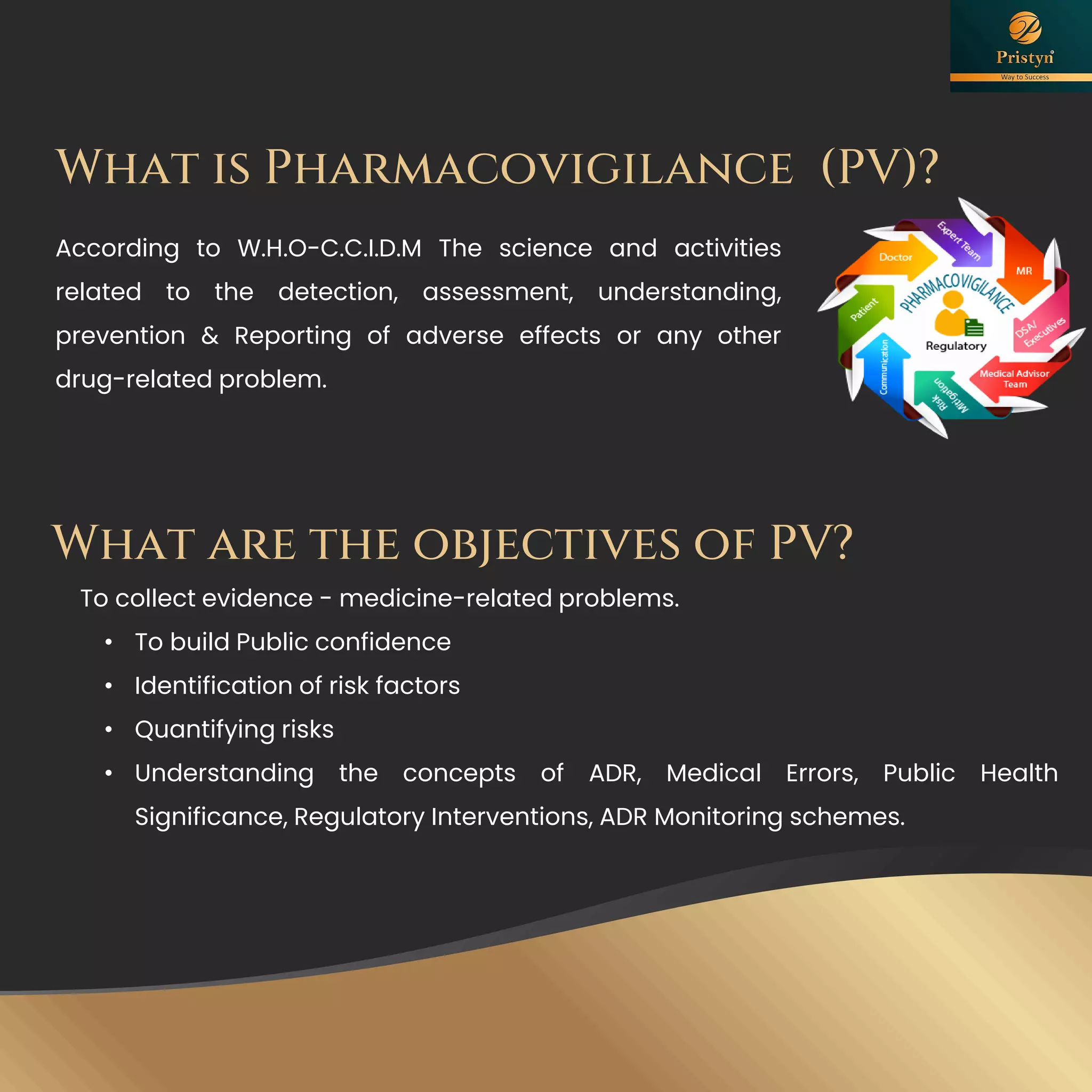
According to W.H.O-C.C.I.D.M The science and activities
related to the detection, assessment, understanding,
prevention & Reporting of adverse effects or any other
drug-related problem.
What is Pharmacovigilance (PV)?
To collect evidence - medicine-related problems.
• To build Public confidence
• Identification of risk factors
• Quantifying risks
• Understanding the concepts of ADR, Medical Errors, Public Health
Significance, Regulatory Interventions, ADR Monitoring schemes.
What are the objectives of PV?
• Rapid identification of events that are likely to affect adherence to treatment
and determination of their rates, and identification of the risk factors that make
these events more likely, to reduce their occurrence;
• Identification of signals (i.e., possible causal relationships between an adverse
event and a medicine; see Glossary) of ADRs of concern following the
introduction of a new drug or drug combination;
• Assessment of signals to evaluate causality, clinical relevance, frequency and
distribution of ADRs in particular population groups; calculation of rates of
events so that:
a) Risk can be measured;
b) The safety of different medicines can be compared and informed choices
made;
c) Risk factors can be identified;
• Contribution to the assessment of benefit, harm, effectiveness and risk of
medicines, leading to the prevention of harm and maximization of benefit;
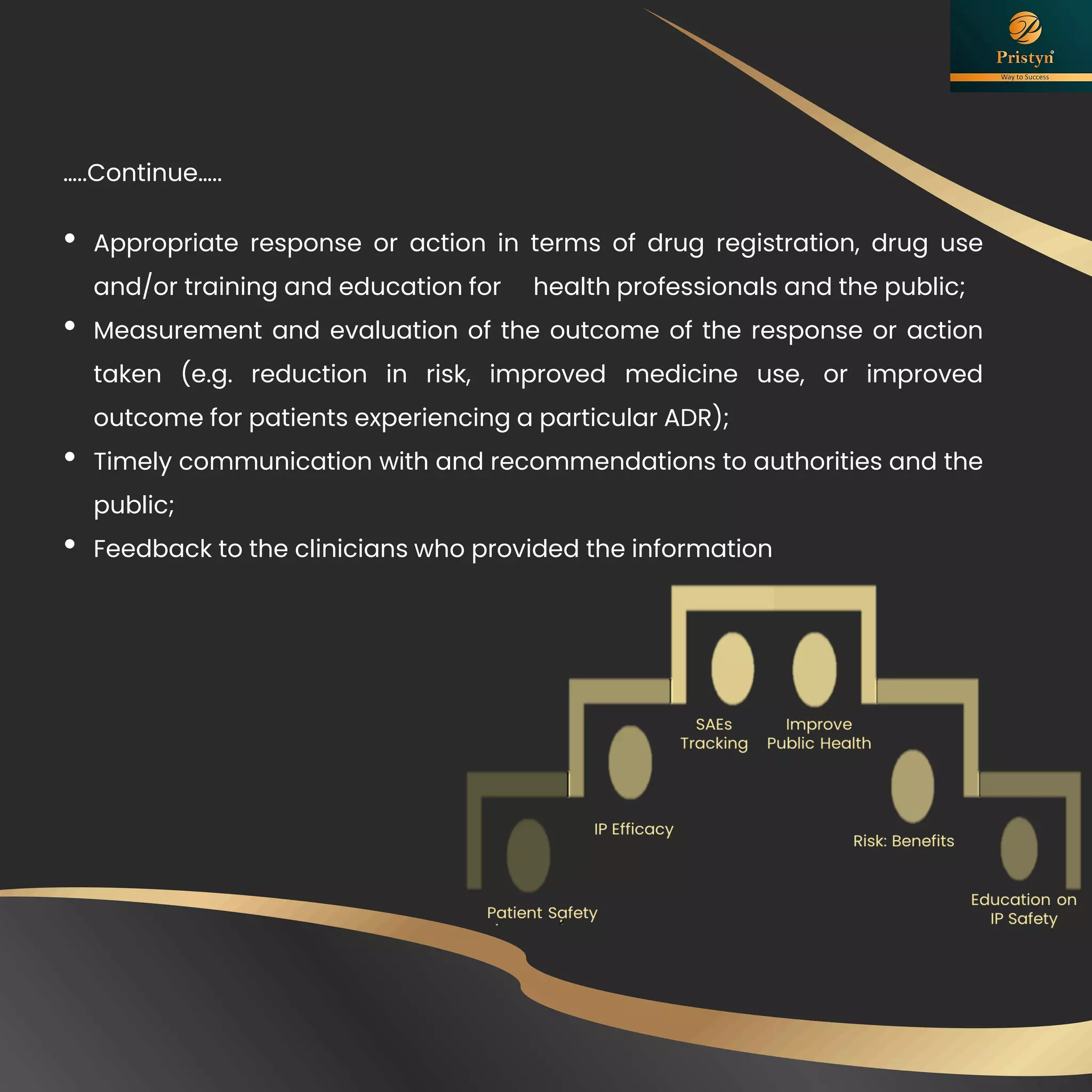
Aim of PV
• Appropriate response or action in terms of drug registration, drug use
and/or training and education for health professionals and the public;
• Measurement and evaluation of the outcome of the response or action
taken (e.g. reduction in risk, improved medicine use, or improved
outcome for patients experiencing a particular ADR);
• Timely communication with and recommendations to authorities and the
public;
• Feedback to the clinicians who provided the information
…..Continue…..
What is Goal of PV?
To ensure the benefits of the use of medicine. safeguard the health of the
Indian population.
International Society of PV (ISOP)
This is an important international society. Their website gives information
about meetings and training courses.
What is MedDRA?
MedDRA (Medical Dictionary for Regulatory Activities) is a standardised
medical terminology, published by the International Council for Harmonisation,
used in particular for coding cases of adverse effects in clinical study reports
and PV databases, and to facilitate searches in these databases.
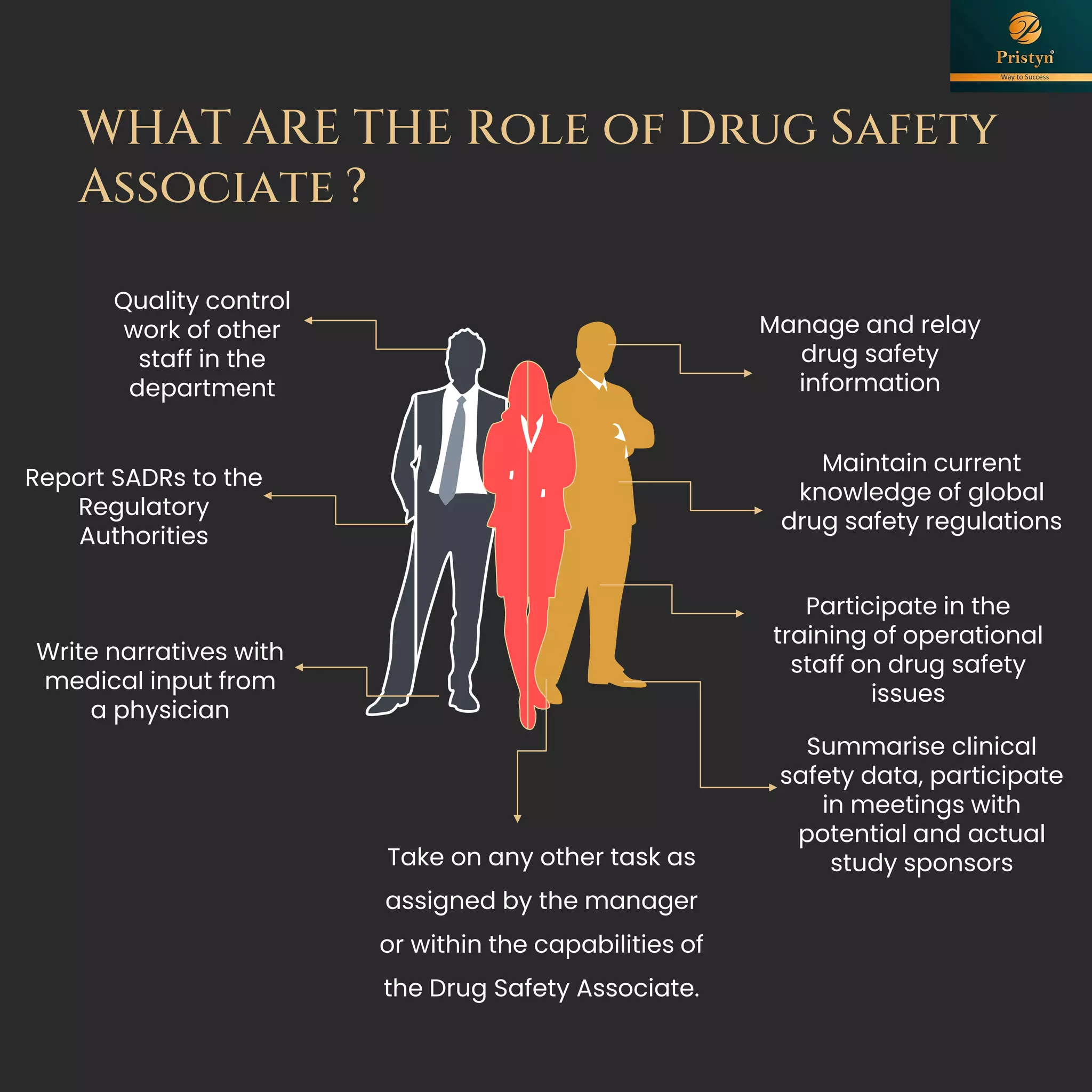
Manage and relay
drug safety
information
Maintain current
knowledge of global
drug safety regulations
Participate in the
training of operational
staff on drug safety
issues
Summarise clinical
safety data, participate
in meetings with
potential and actual
study sponsors
Write narratives with
medical input from
a physician
Quality control
work of other
staff in the
department
Take on any other task as
assigned by the manager
or within the capabilities of
the Drug Safety Associate.
Report SADRs to the
Regulatory
Authorities
WHAT ARE THE Role of Drug Safety
Associate ?
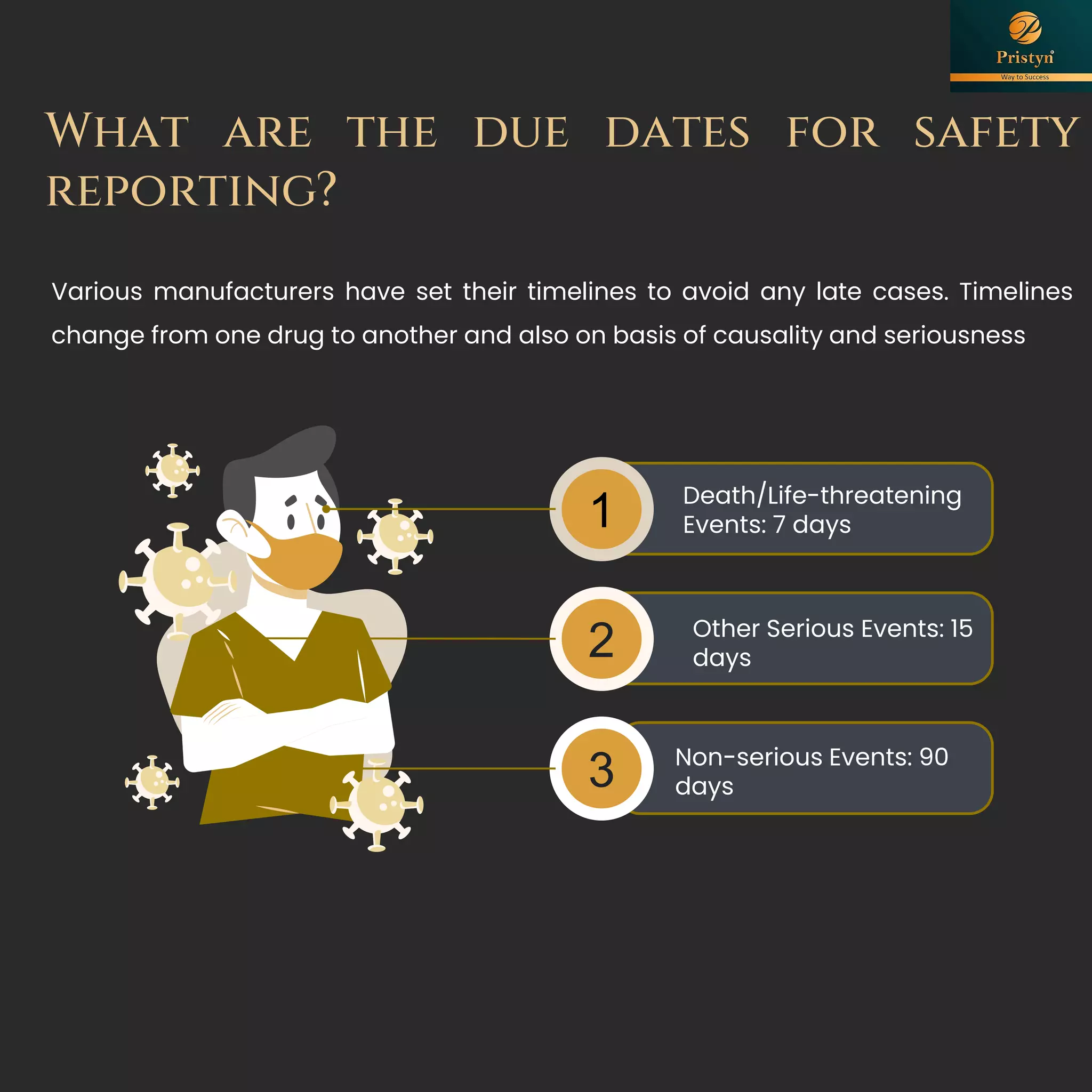
1
2
3
Death/Life-threatening
Events: 7 days
Other Serious Events: 15
days
Non-serious Events: 90
days
What are the due dates for safety
reporting?
Various manufacturers have set their timelines to avoid any late cases. Timelines
change from one drug to another and also on basis of causality and seriousness
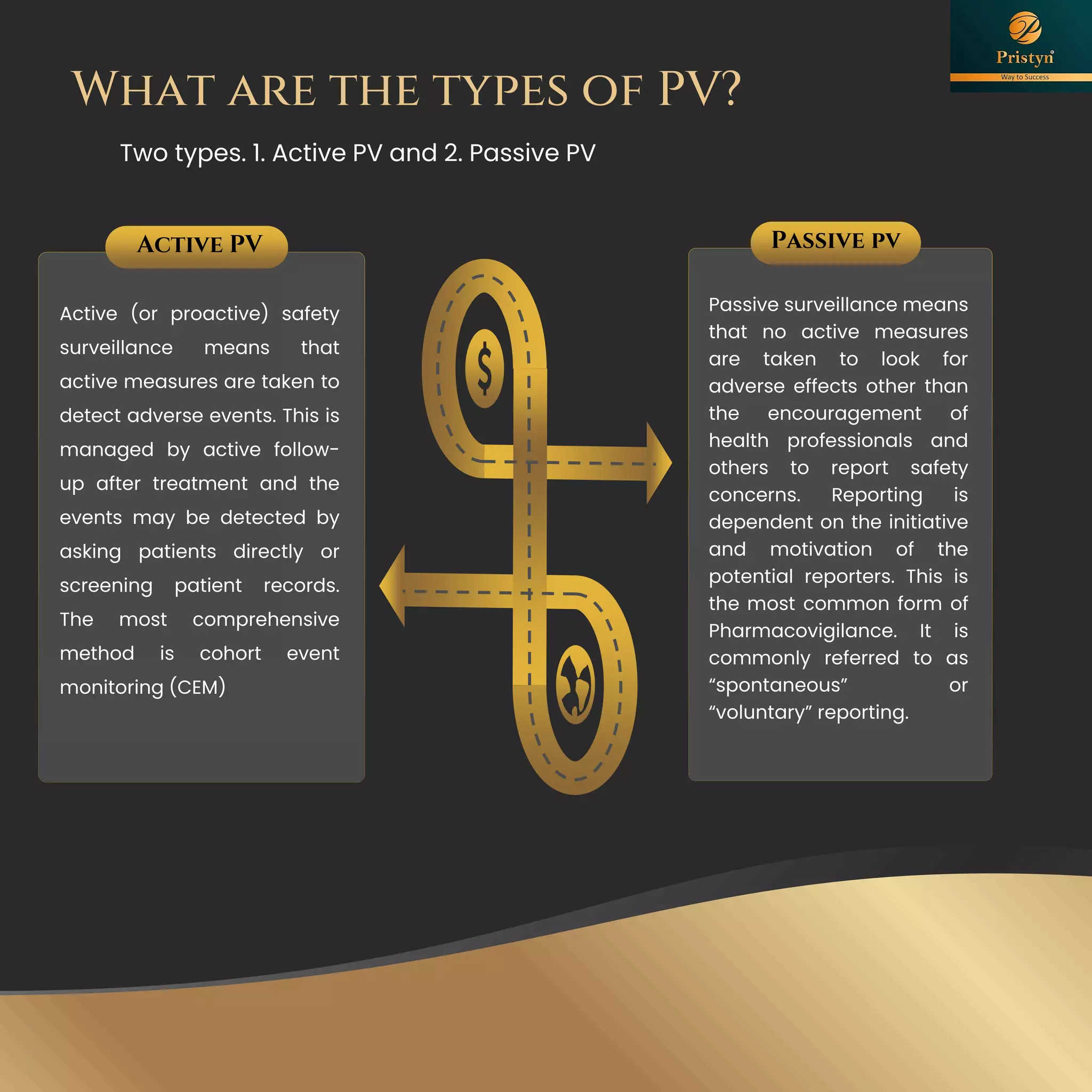
What are the types of PV?
Two types. 1. Active PV and 2. Passive PV
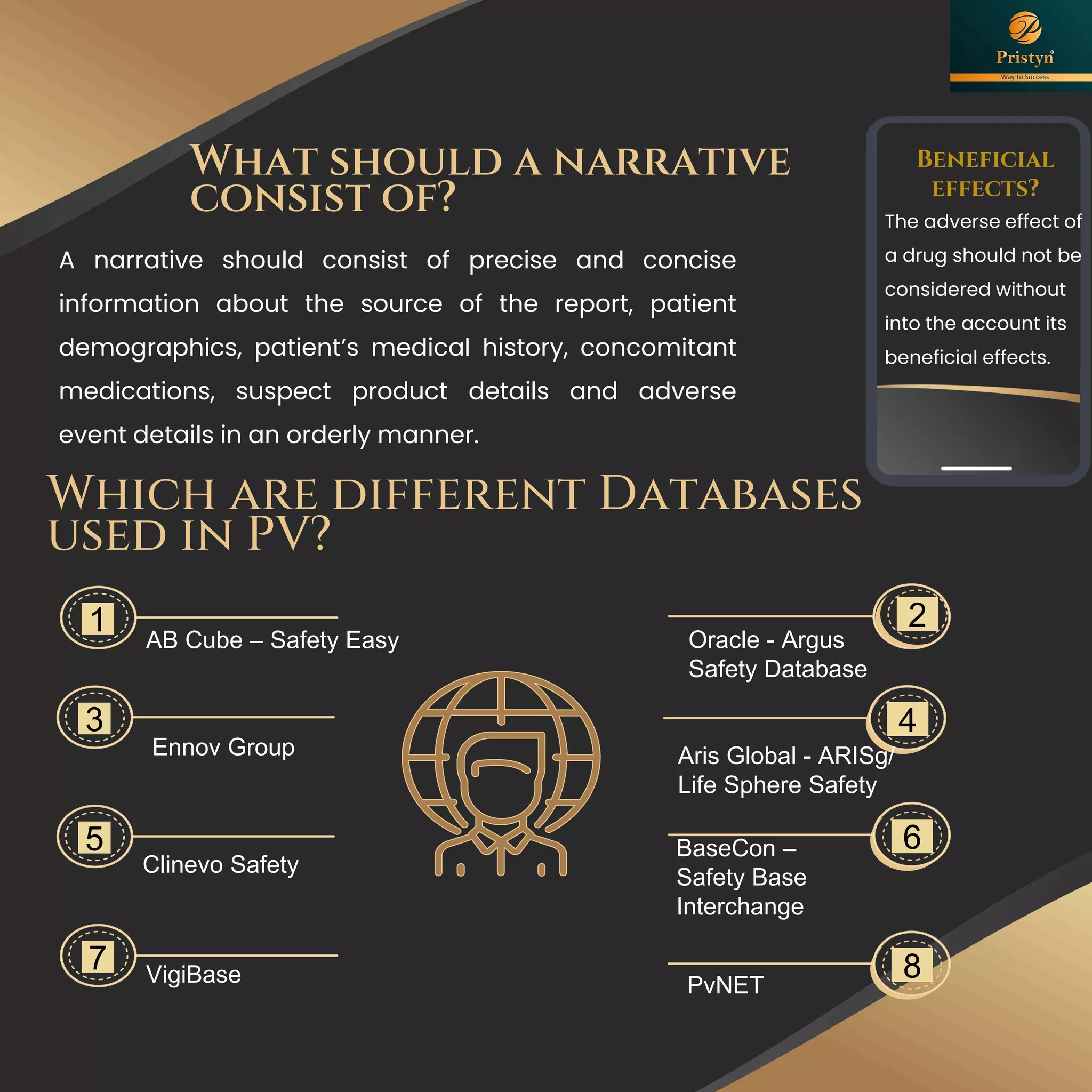
Which are different Databases
used in PV?
1
BaseCon –
Safety Base
Interchange
3
Ennov Group
5
Clinevo Safety
7 VigiBase
2
4
6
8
Oracle - Argus
Safety Database
AB Cube – Safety Easy
Aris Global - ARISg/
Life Sphere Safety
PvNET
Beneficial
effects?
What should a narrative
consist of?
A narrative should consist of precise and concise
information about the source of the report, patient
demographics, patient’s medical history, concomitant
medications, suspect product details and adverse
event details in an orderly manner.
The adverse effect of
a drug should not be
considered without
into the account its
beneficial effects.
State the benefits of PV program
This program will increase the knowledge and importance of
Pharmacovigilance in the drug discovery process and Clinical Research,
Pharmacovigilance is becoming an important part of drug development as it
deals with the patients’ safety & efficacy of drug results into new job avenues.
The participants after the completion of this would have new economic
pursuits as Pharmacovigilance potential opportunities & growth prospects
are huge. Pharmacovigilance Programme of India (PVPI) - launched in July
2010.
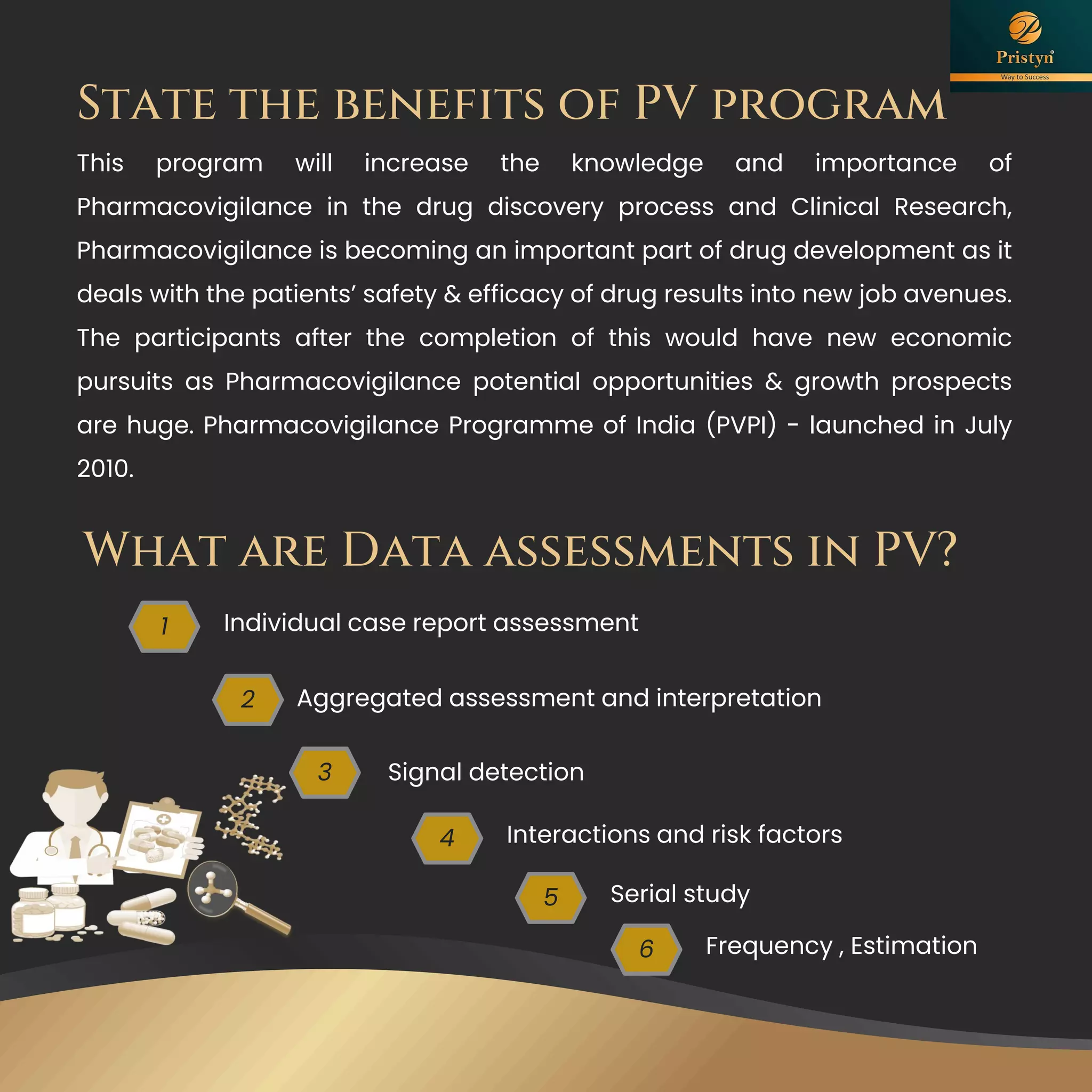
What are Data assessments in PV?
1
2 Aggregated assessment and interpretation
3
4
5
6
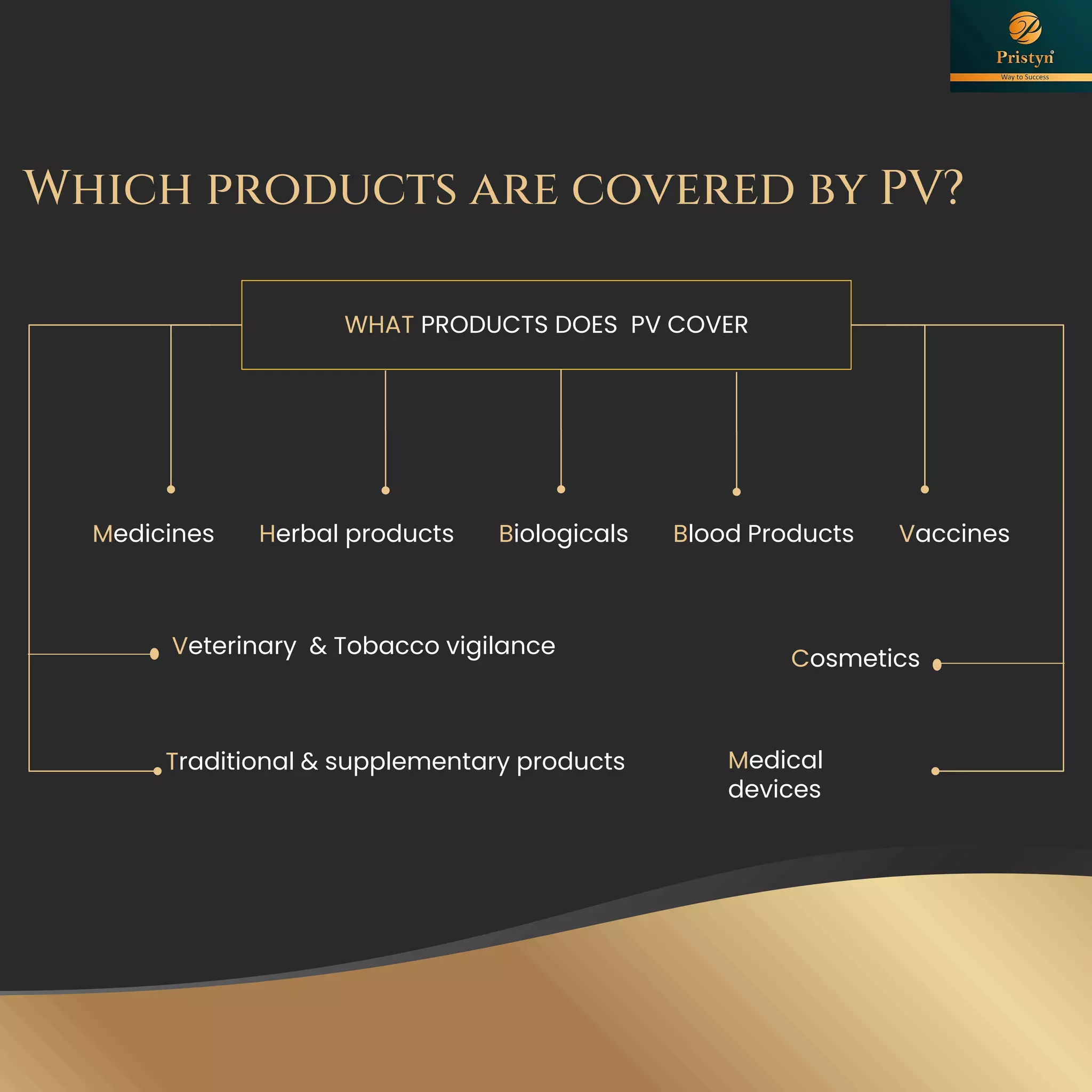
WHAT PRODUCTS DOES PV COVER
Medicines Herbal products Biologicals Blood Products Vaccines
Traditional & supplementary products
Cosmetics
Veterinary & Tobacco vigilance
Medical
devices
Which products are covered by PV?
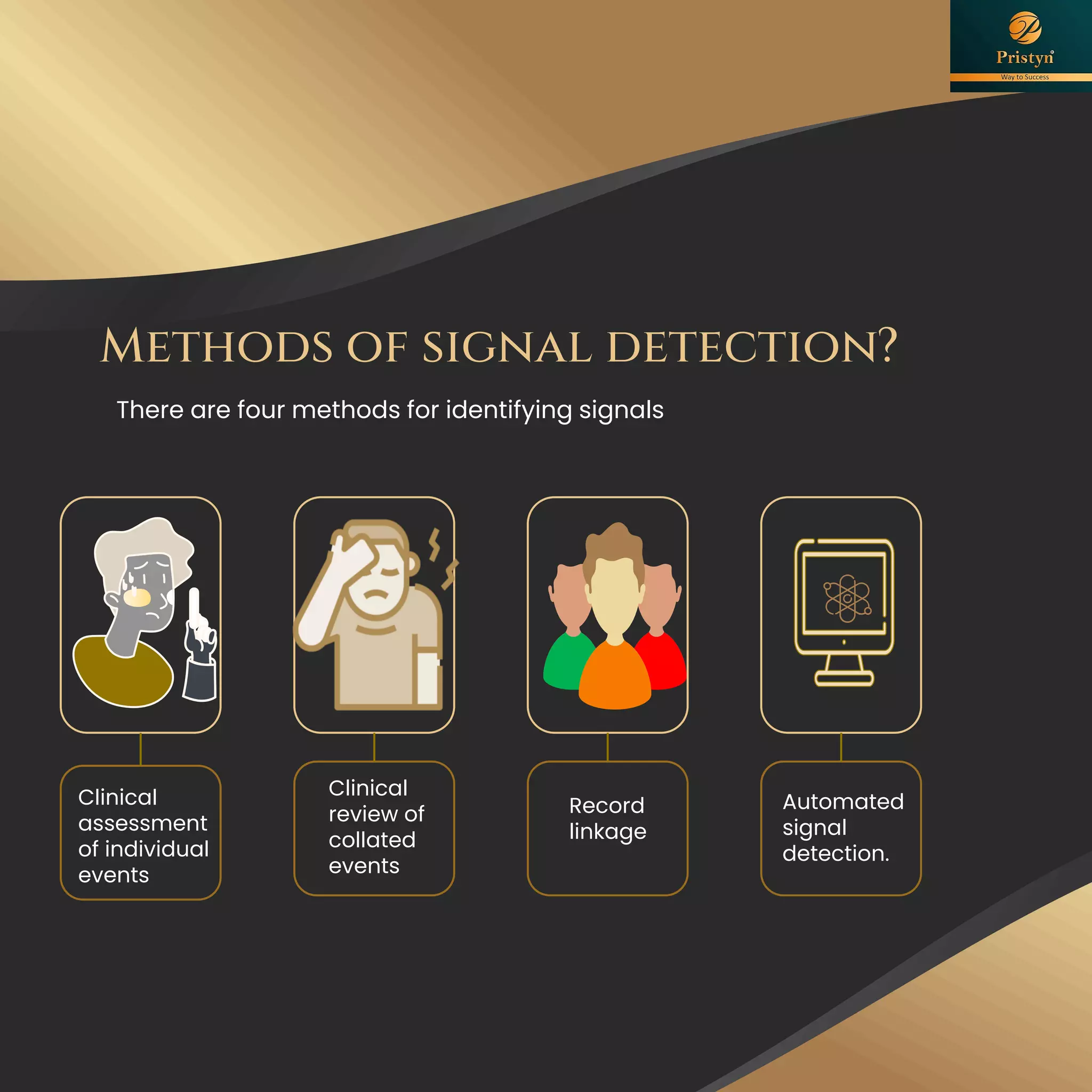
Methods of signal detection?
Clinical
assessment
of individual
events
Clinical
review of
collated
events
Record
linkage
Automated
signal
detection.
There are four methods for identifying signals
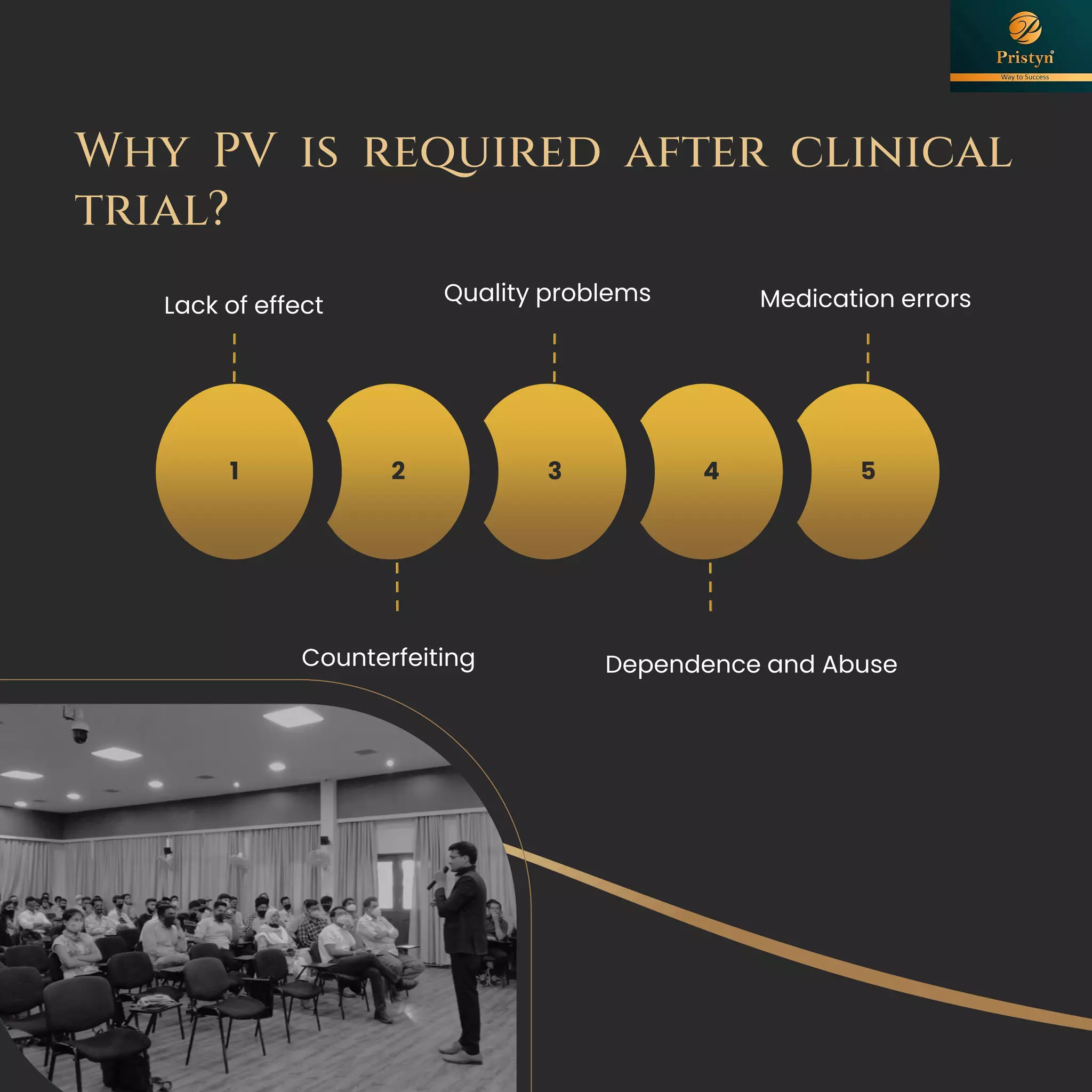
Why PV is required after clinical
trial?
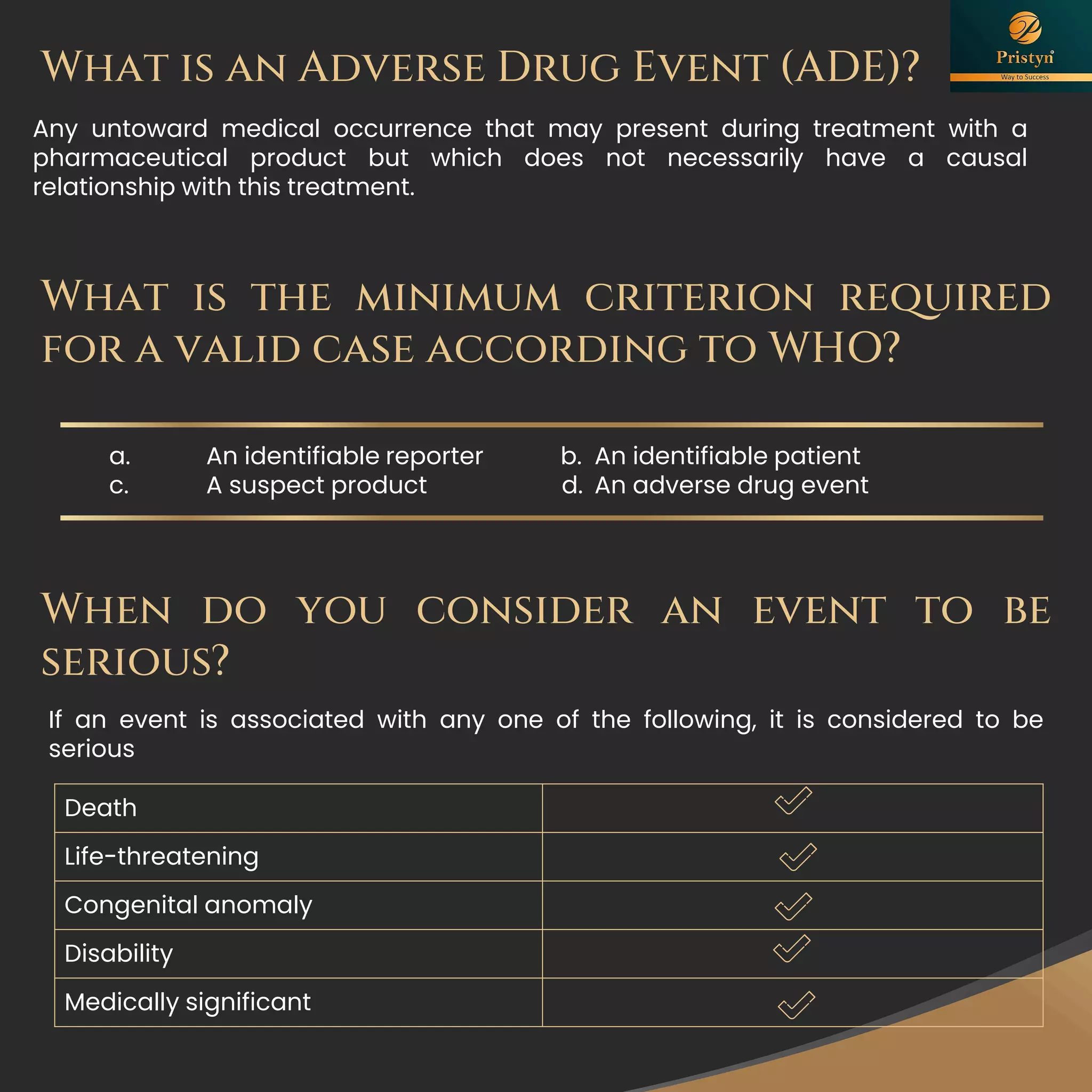
Any untoward medical occurrence that may present during treatment with a
pharmaceutical product but which does not necessarily have a causal
relationship with this treatment.
What is an Adverse Drug Event (ADE)?
What is the minimum criterion required
for a valid case according to WHO?
a. An identifiable reporter b. An identifiable patient
c. A suspect product d. An adverse drug event
When do you consider an event to be
serious?
If an event is associated with any one of the following, it is considered to be
serious
Death
Life-threatening
Congenital anomaly
Disability
Medically significant
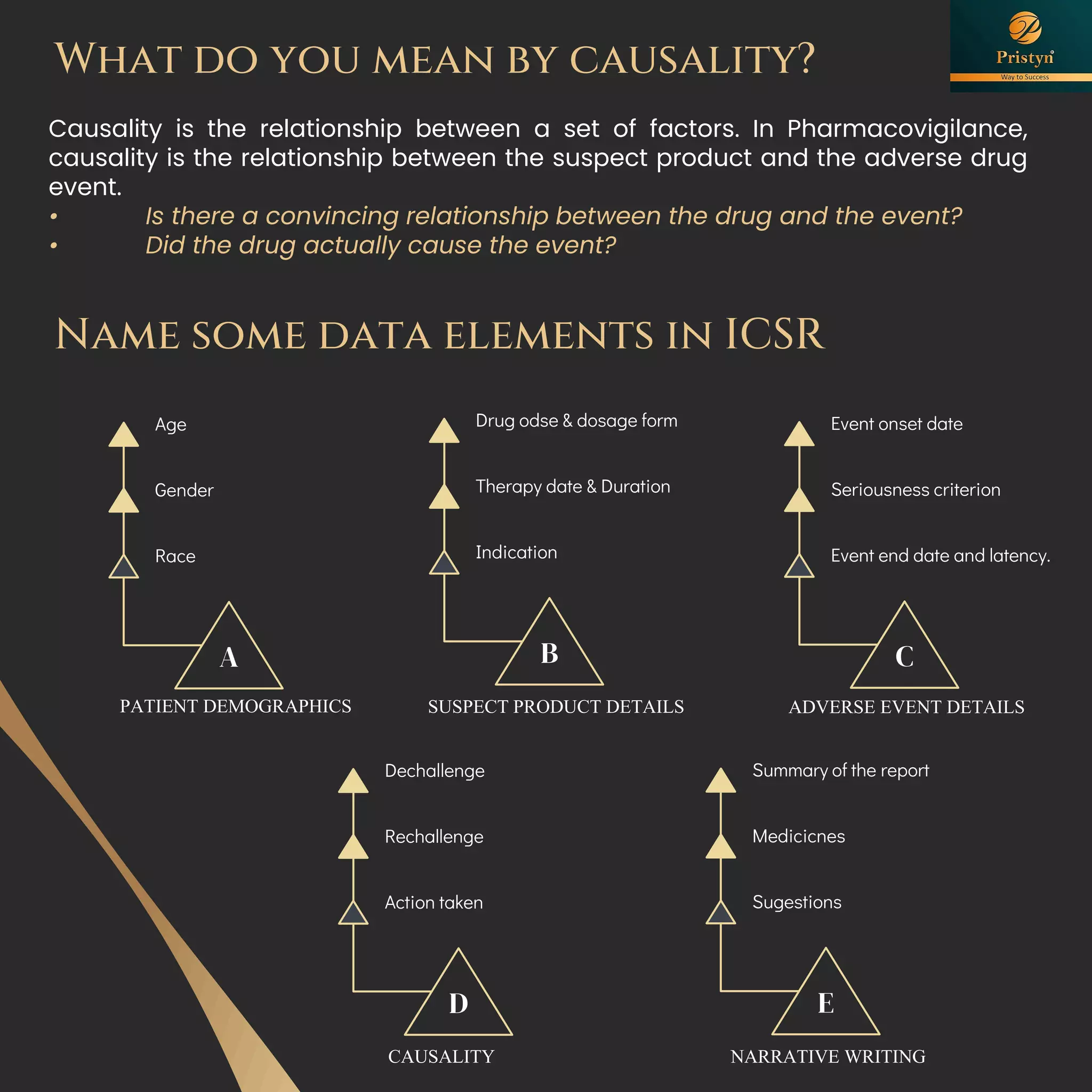
What do you mean by causality?
Causality is the relationship between a set of factors. In Pharmacovigilance,
causality is the relationship between the suspect product and the adverse drug
event.
• Is there a convincing relationship between the drug and the event?
• Did the drug actually cause the event?
Name some data elements in ICSR
Age
Gender
Race
A
Drug odse & dosage form
Therapy date & Duration
Indication
B
Event onset date
Seriousness criterion
Event end date and latency.
C
Dechallenge
Rechallenge
Action taken
D
Summary of the report
Medicicnes
Sugestions
E
PATIENT DEMOGRAPHICS SUSPECT PRODUCT DETAILS ADVERSE EVENT DETAILS
CAUSALITY NARRATIVE WRITING
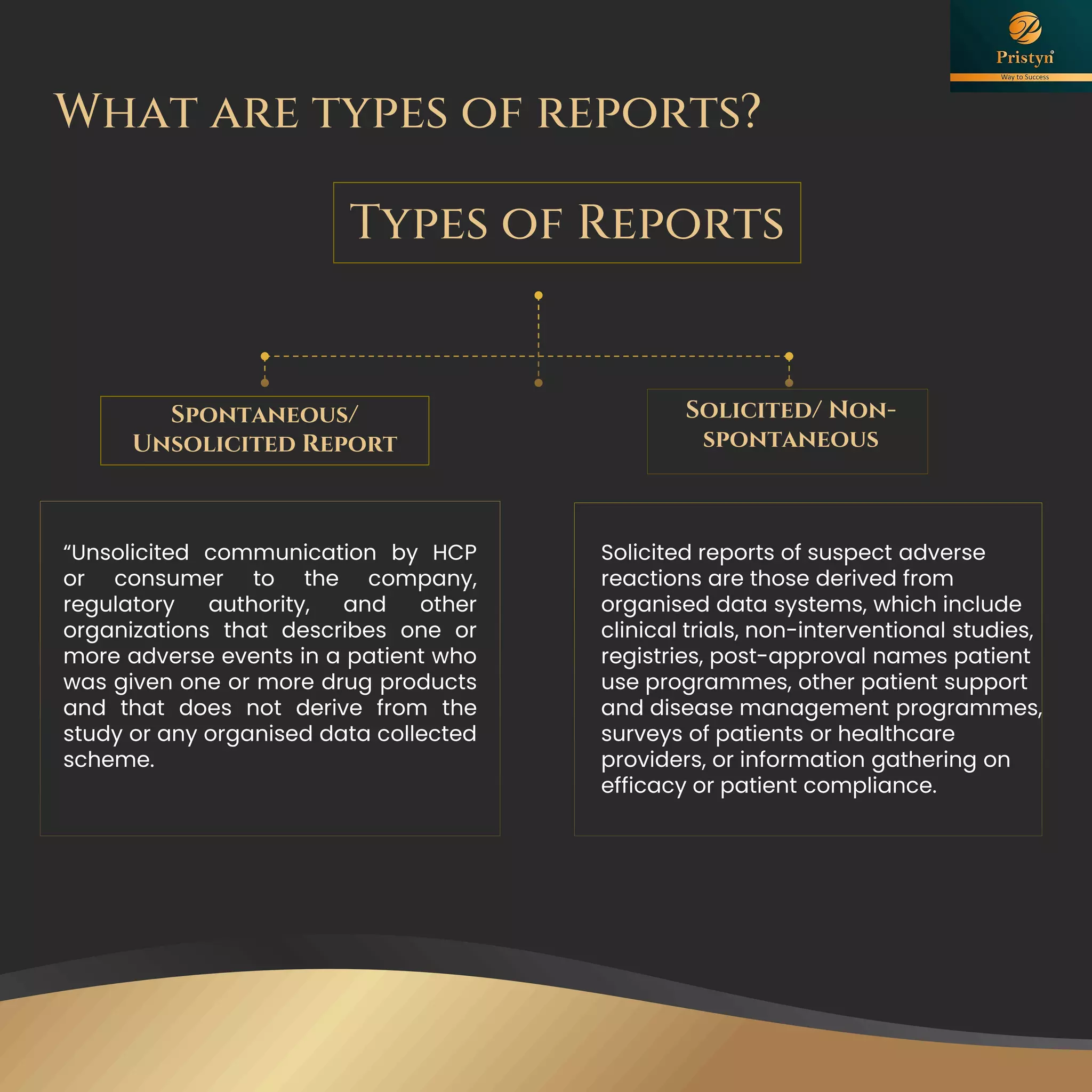
What are types of reports?
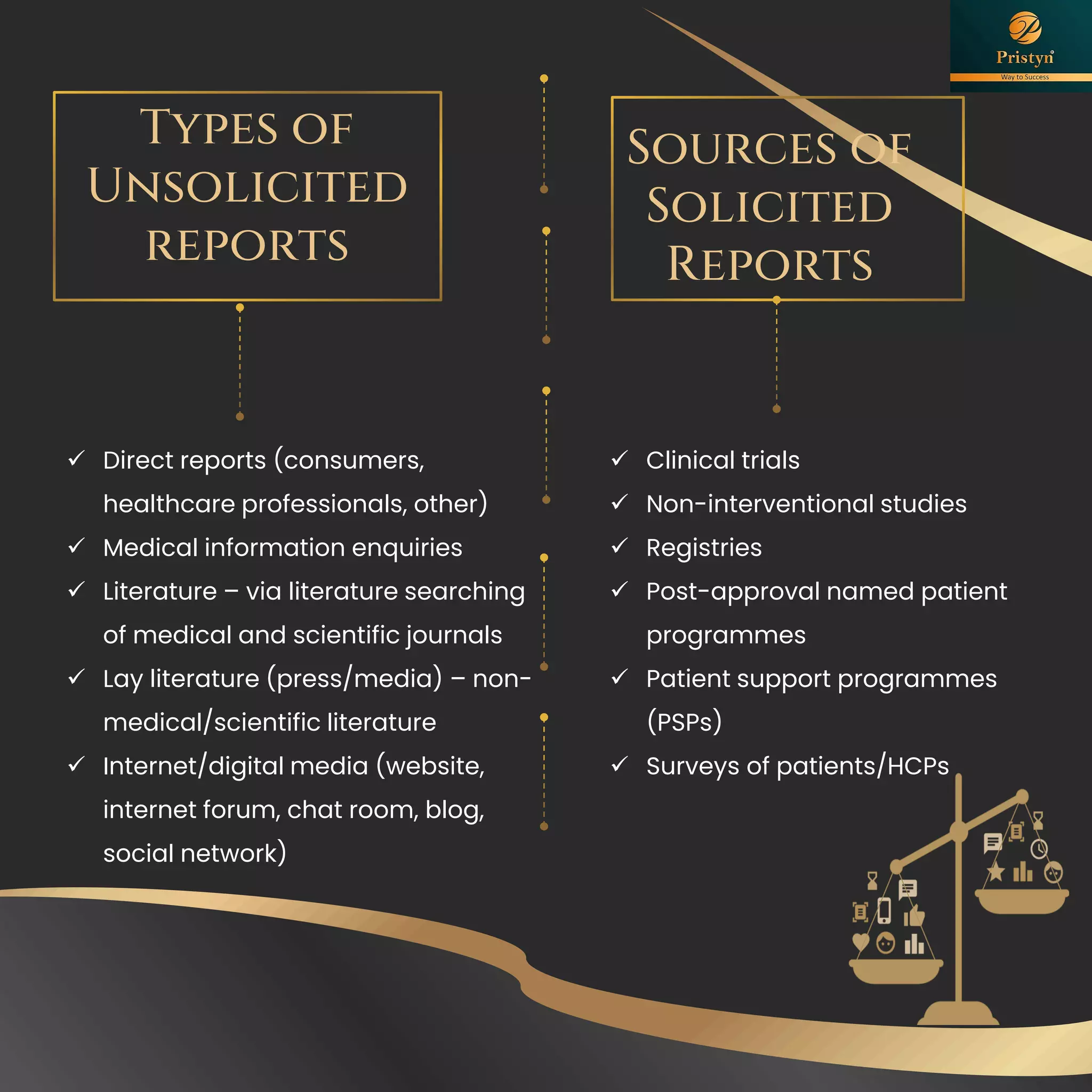
Types of
Unsolicited
reports
Sources of
Solicited
Reports
✓ Direct reports (consumers,
healthcare professionals, other)
✓ Medical information enquiries
✓ Literature – via literature searching
of medical and scientific journals
✓ Lay literature (press/media) – non-
medical/scientific literature
✓ Internet/digital media (website,
internet forum, chat room, blog,
social network)
✓ Clinical trials
✓ Non-interventional studies
✓ Registries
✓ Post-approval named patient
programmes
✓ Patient support programmes
(PSPs)
✓ Surveys of patients/HCPs
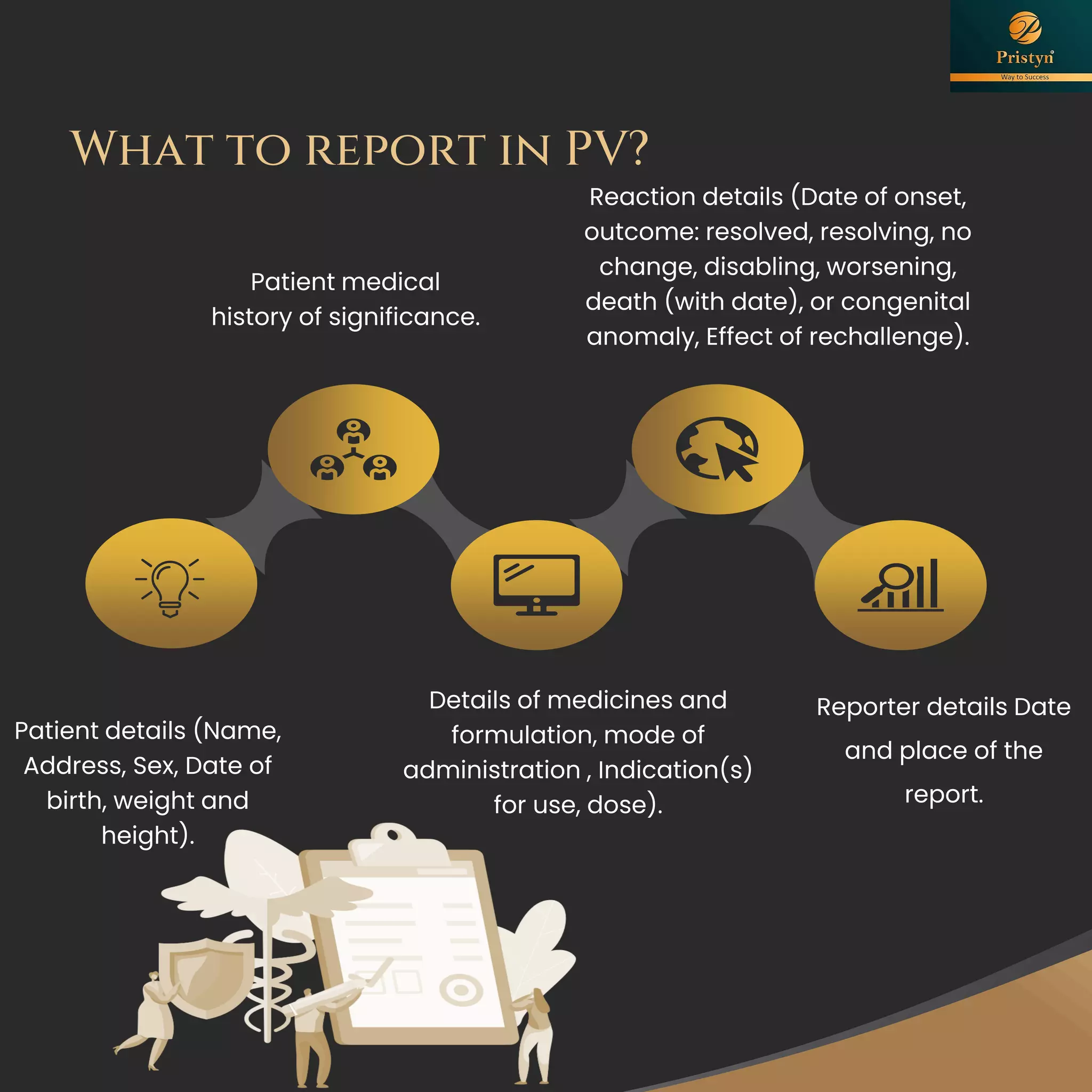
Reporter details Date
and place of the
report.
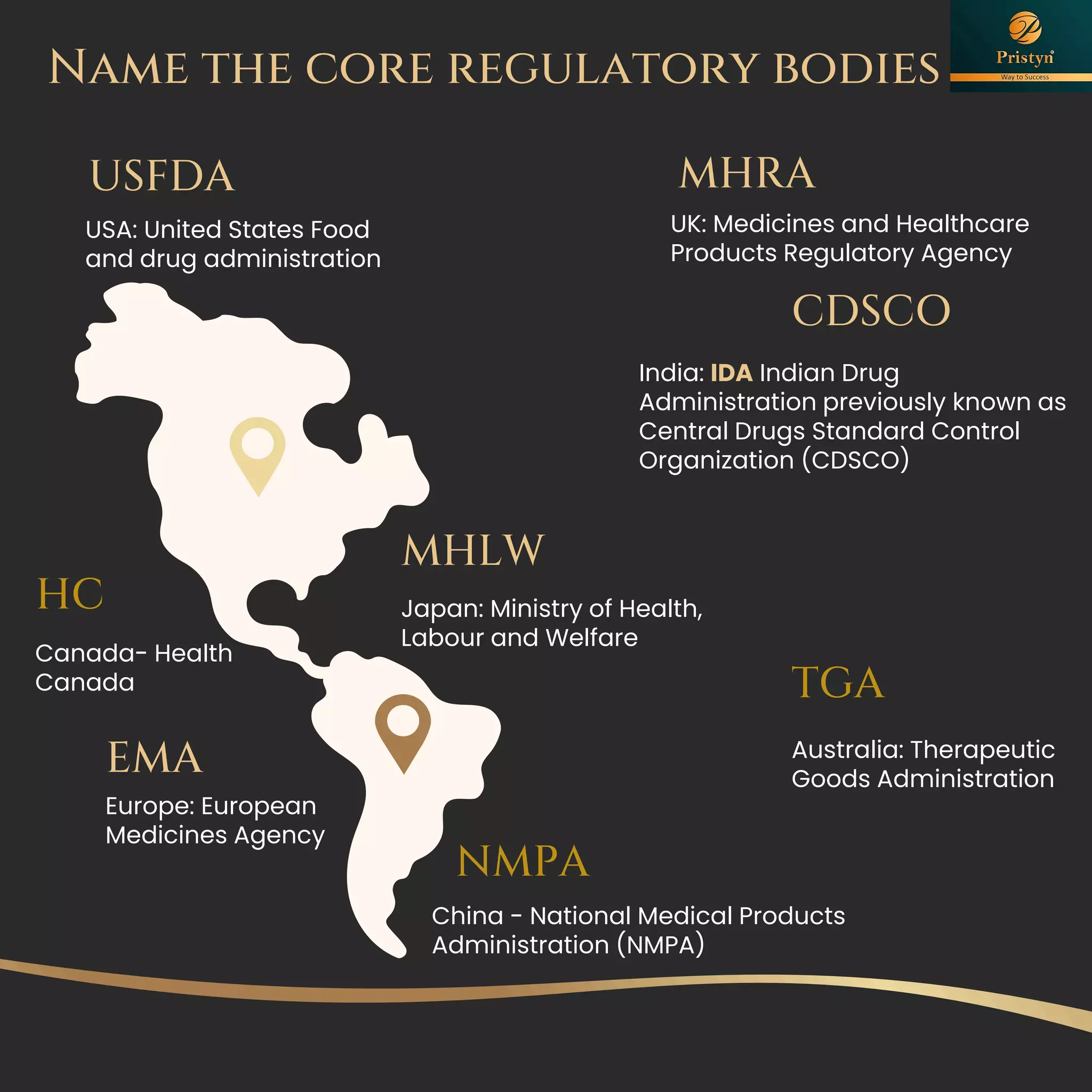
Name the core regulatory bodies
India: IDA Indian Drug
Administration previously known as
Central Drugs Standard Control
Organization (CDSCO)
CDSCO
Australia: Therapeutic
Goods Administration
TGA
USA: United States Food
and drug administration
USFDA
UK: Medicines and Healthcare
Products Regulatory Agency
MHRA
Europe: European
Medicines Agency
EMA
Canada- Health
Canada
HC
China - National Medical Products
Administration (NMPA)
NMPA
Japan: Ministry of Health,
Labour and Welfare
MHLW
What is Volume 9A?
Volume 9A brings together general guidance on the requirements, procedures,
roles and activities in the field of pharmacovigilance, for both Marketing
Authorization Holders (MAH) and Competent Authorities of medicinal products
for human use; it incorporates international agreements reached within the
framework of the International Conference on Harmonization (ICH).
Part I deals with Guidelines for Marketing
Authorization Holders;
Part II deals with Guidelines for Competent
Authorities and the Agency;
Part III provides the Guidelines for the
electronic exchange of Pharmacovigilance in
the EU.
Part IV provides Guidelines on
Pharmacovigilance communication.
Volume 9A is presented in four parts:
What do you know
about E2a, E2b and
E2c guidelines?
E2a: E2a guidelines give standard
definitions and terminology for key aspects
of clinical safety reporting. It also gives
guidance on mechanisms for handling
expedited (rapid) reporting of adverse drug
reactions in the investigational phase of
drug development.
E2b: E2b guidelines for the maintenance of clinical safety data management
and information about the data elements for transmission of Individual Case
Safety Reports.
E2c: E2c guidelines for the maintenance of clinical safety data management
and information about the Periodic Safety Update Reports for marketed
drugs.
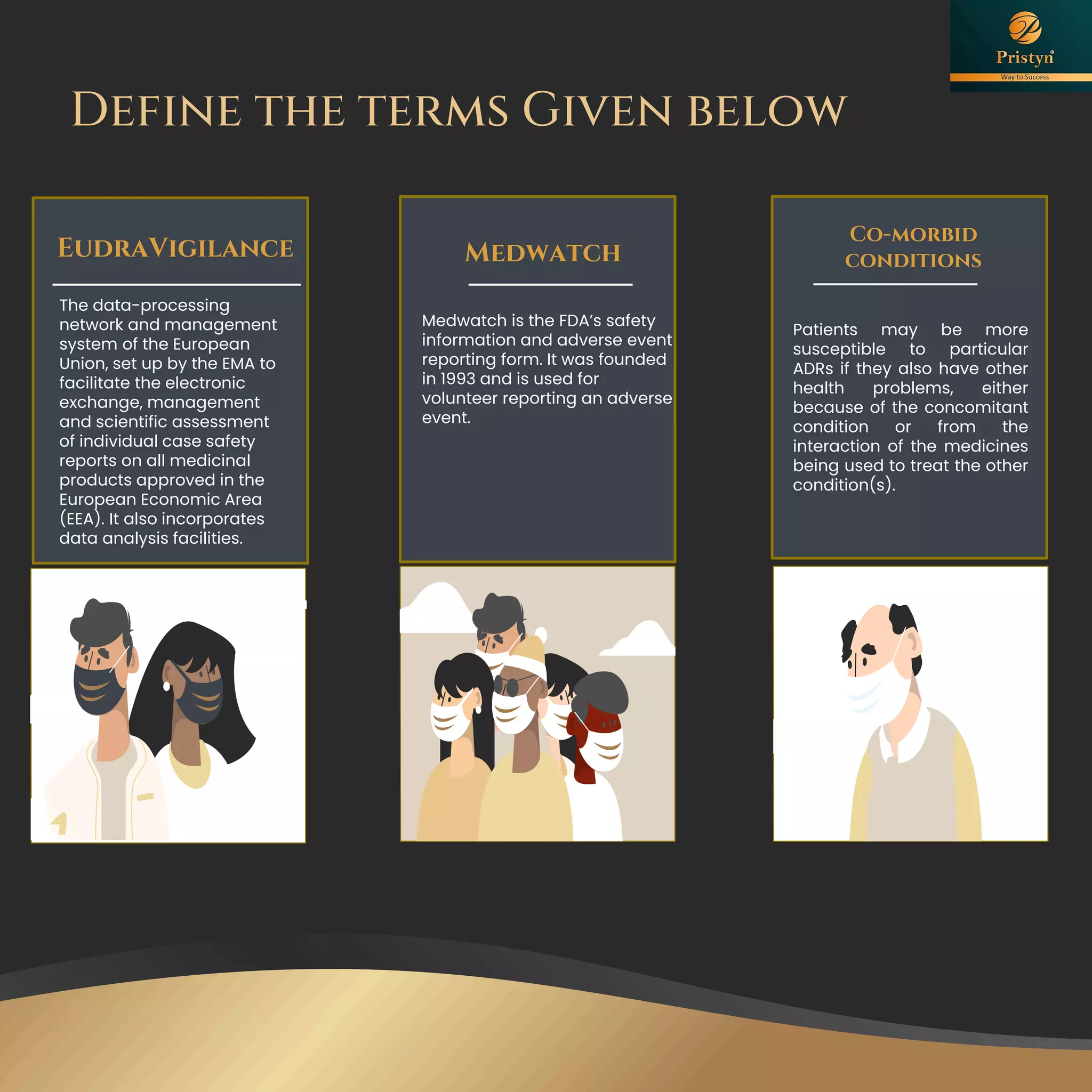
EudraVigilance
The data-processing
network and management
system of the European
Union, set up by the EMA to
facilitate the electronic
exchange, management
and scientific assessment
of individual case safety
reports on all medicinal
products approved in the
European Economic Area
(EEA). It also incorporates
data analysis facilities.
Medwatch is the FDA’s safety
information and adverse event
reporting form. It was founded
in 1993 and is used for
volunteer reporting an adverse
event.
Patients may be more
susceptible to particular
ADRs if they also have other
health problems, either
because of the concomitant
condition or from the
interaction of the medicines
being used to treat the other
condition(s).
Medwatch
Co-morbid
conditions
Define the terms Given below
When do you consider a case to be
medically confirmed?
A case is considered to be medically confirmed if it contains at least one
event confirmed or reported by an HCP (Health Care Professional).
Note: HCP can be a physician, nurse, pharmacist, coroner or psychologist.
What is CemFlow?
CemFlow is a tool maintained by the UMC for database management in cohort
event monitoring (CEM). It is web-based and the fields match the data elements
on the questionnaires. There are screens for patient demographics, treatment
initiation, treatment review and assessment of events. CemFlow is a tool for data
entry into an online database maintained by the UMC (Uppsala Monitoring Centre)
for CEM. CemFlow provides for entry of cohort data as well as the events.
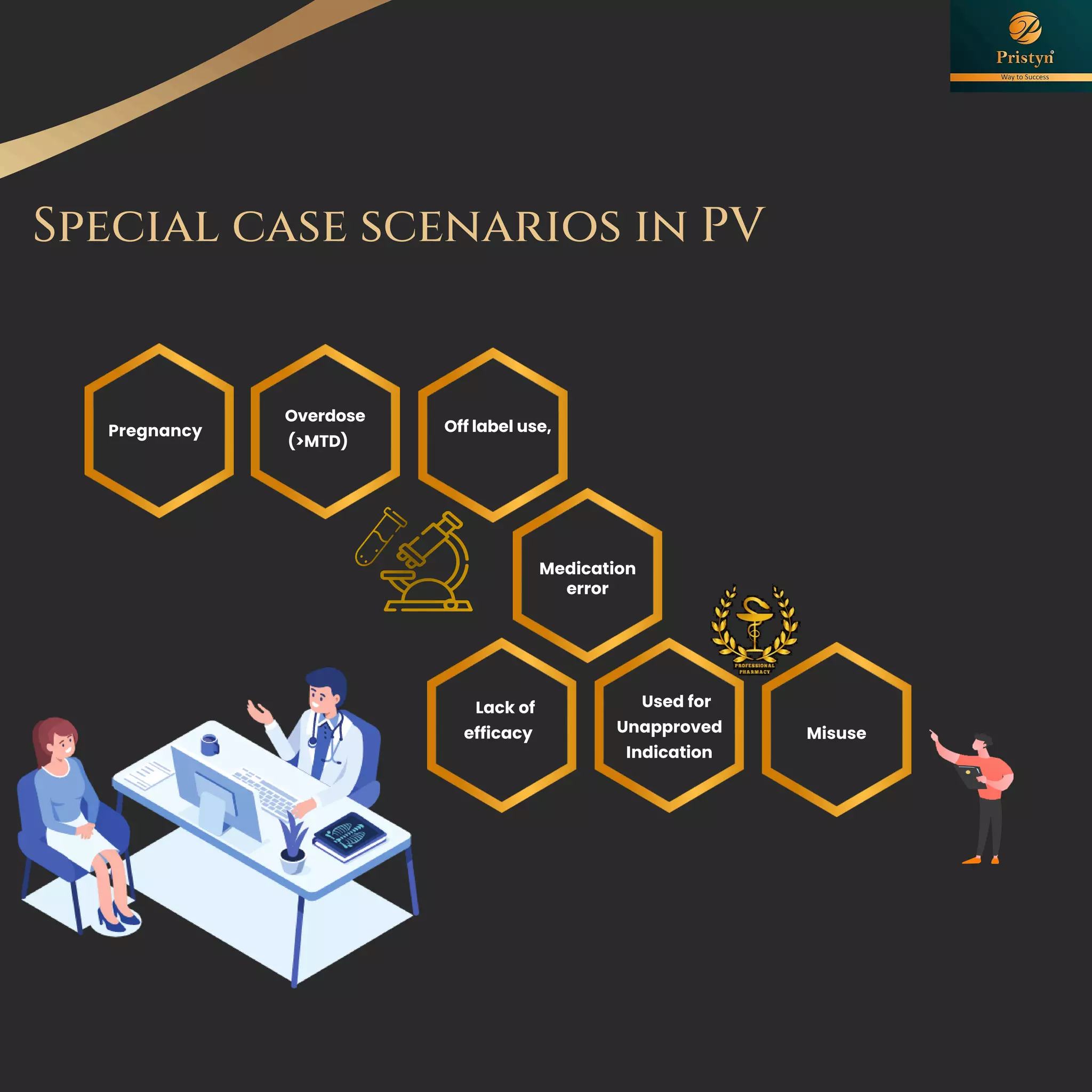
Pregnancy
Overdose
(>MTD)
Off label use,
Medication
error
Lack of
efficacy
Used for
Unapproved
Indication
Misuse
Special case scenarios in PV
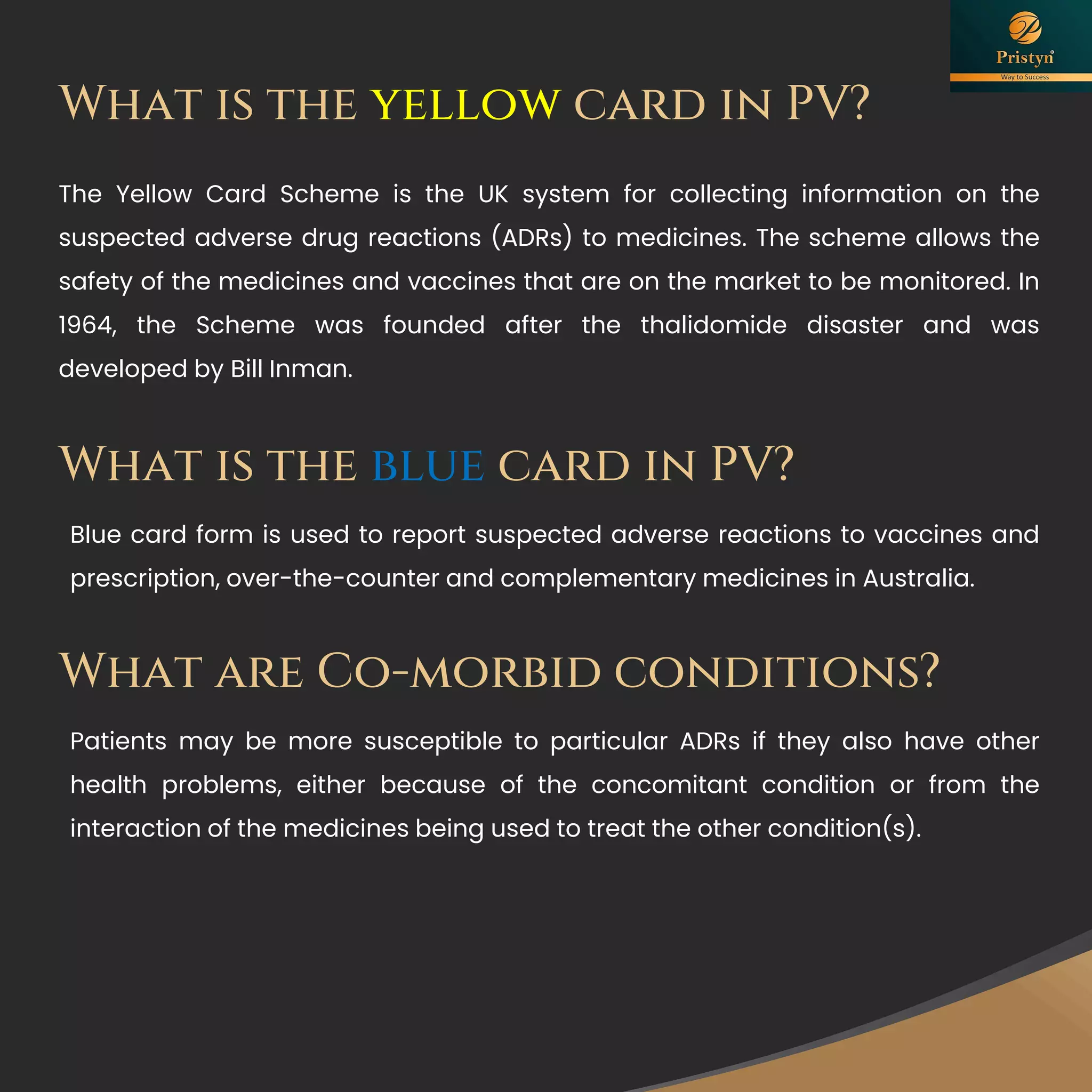
The Yellow Card Scheme is the UK system for collecting information on the
suspected adverse drug reactions (ADRs) to medicines. The scheme allows the
safety of the medicines and vaccines that are on the market to be monitored. In
1964, the Scheme was founded after the thalidomide disaster and was
developed by Bill Inman.
What is the yellow card in PV?
What is the blue card in PV?
Blue card form is used to report suspected adverse reactions to vaccines and
prescription, over-the-counter and complementary medicines in Australia.
What are Co-morbid conditions?
Patients may be more susceptible to particular ADRs if they also have other
health problems, either because of the concomitant condition or from the
interaction of the medicines being used to treat the other condition(s).
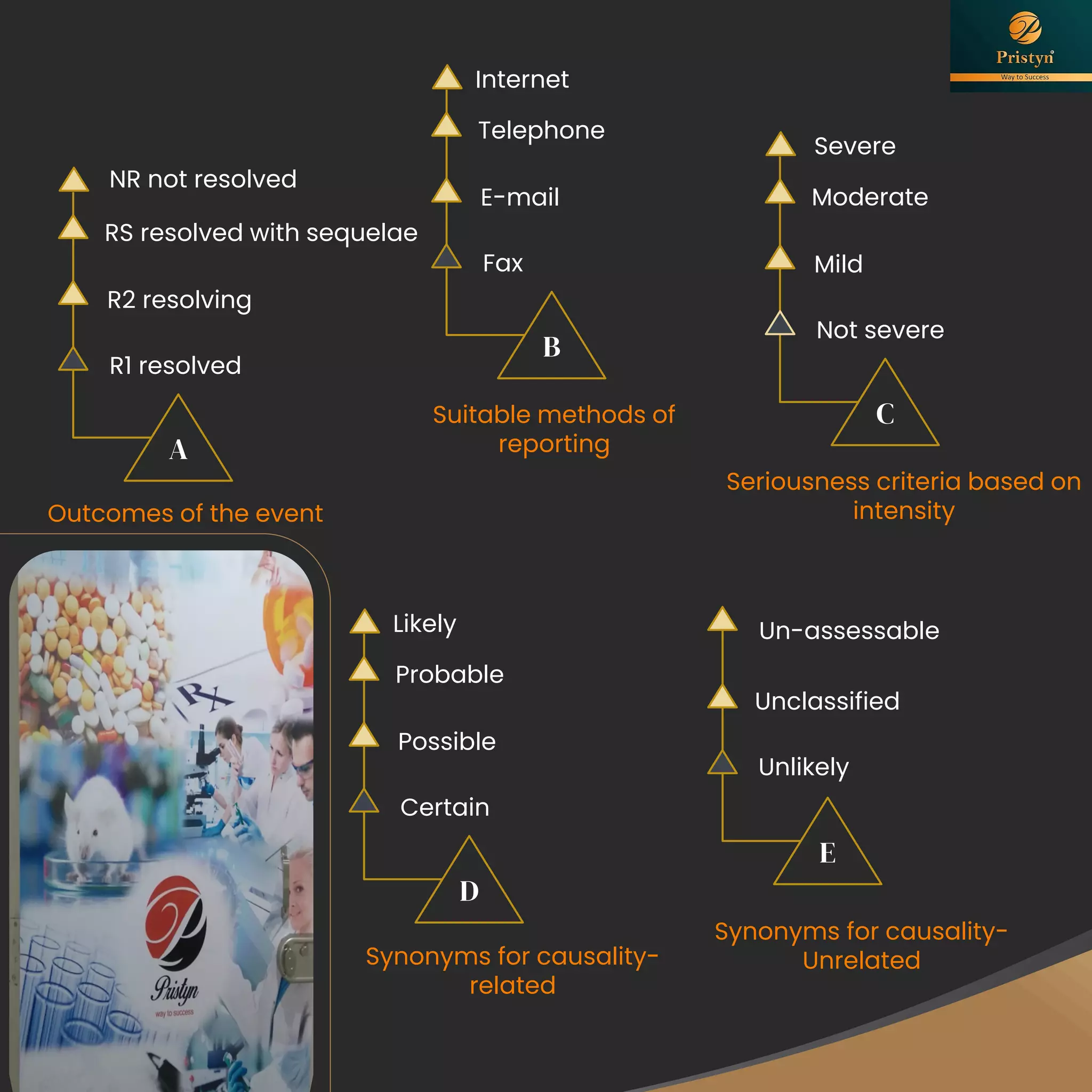
NR not resolved
RS resolved with sequelae
R2 resolving
R1 resolved
A
Outcomes of the event
Suitable methods of
reporting
Telephone
E-mail
Fax
B
Internet
Moderate
Mild
Not severe
C
Seriousness criteria based on
intensity
Severe
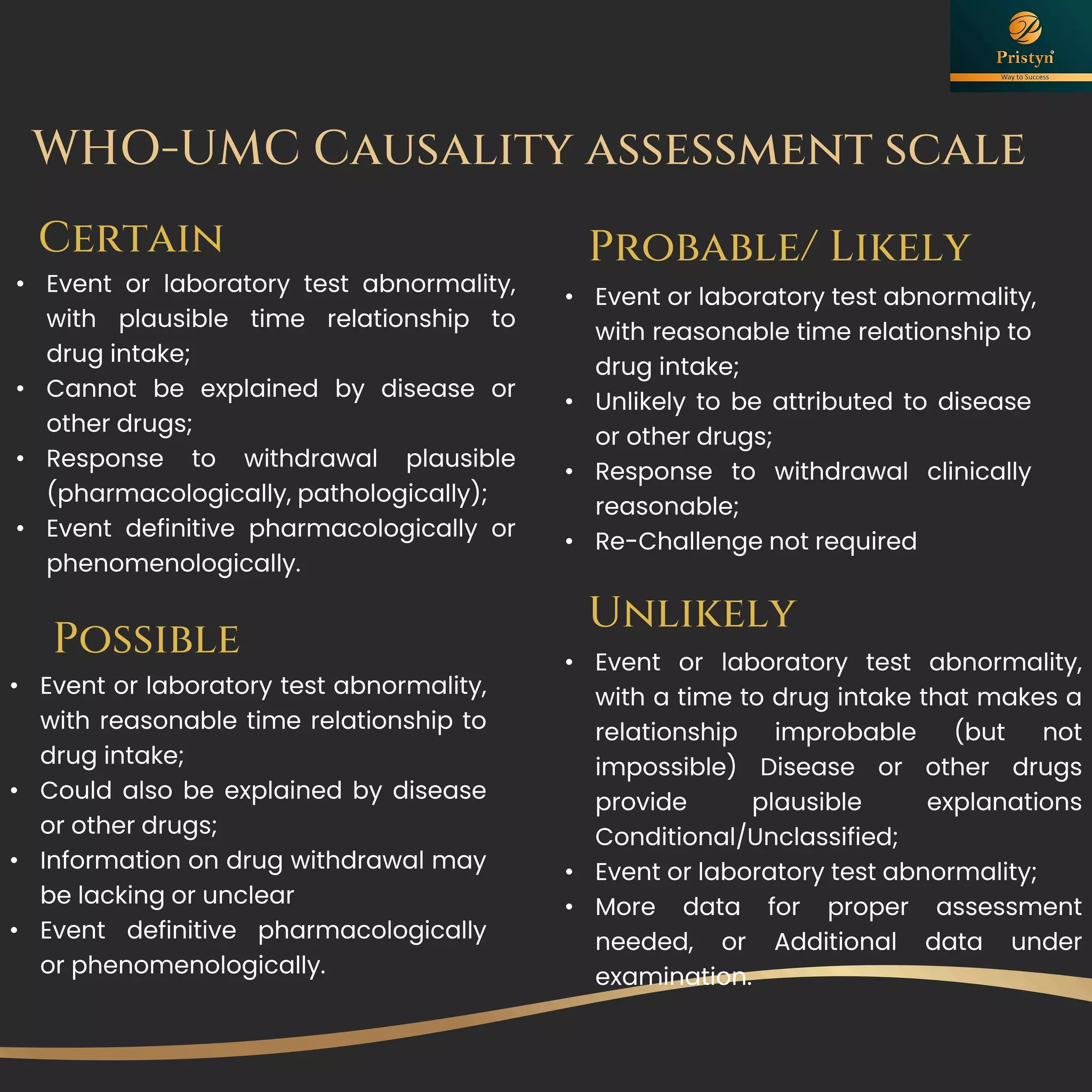
Probable
Possible
Certain
D
Likely
Synonyms for causality-
related
Synonyms for causality-
Unrelated
Un-assessable
Unclassified
Unlikely
E
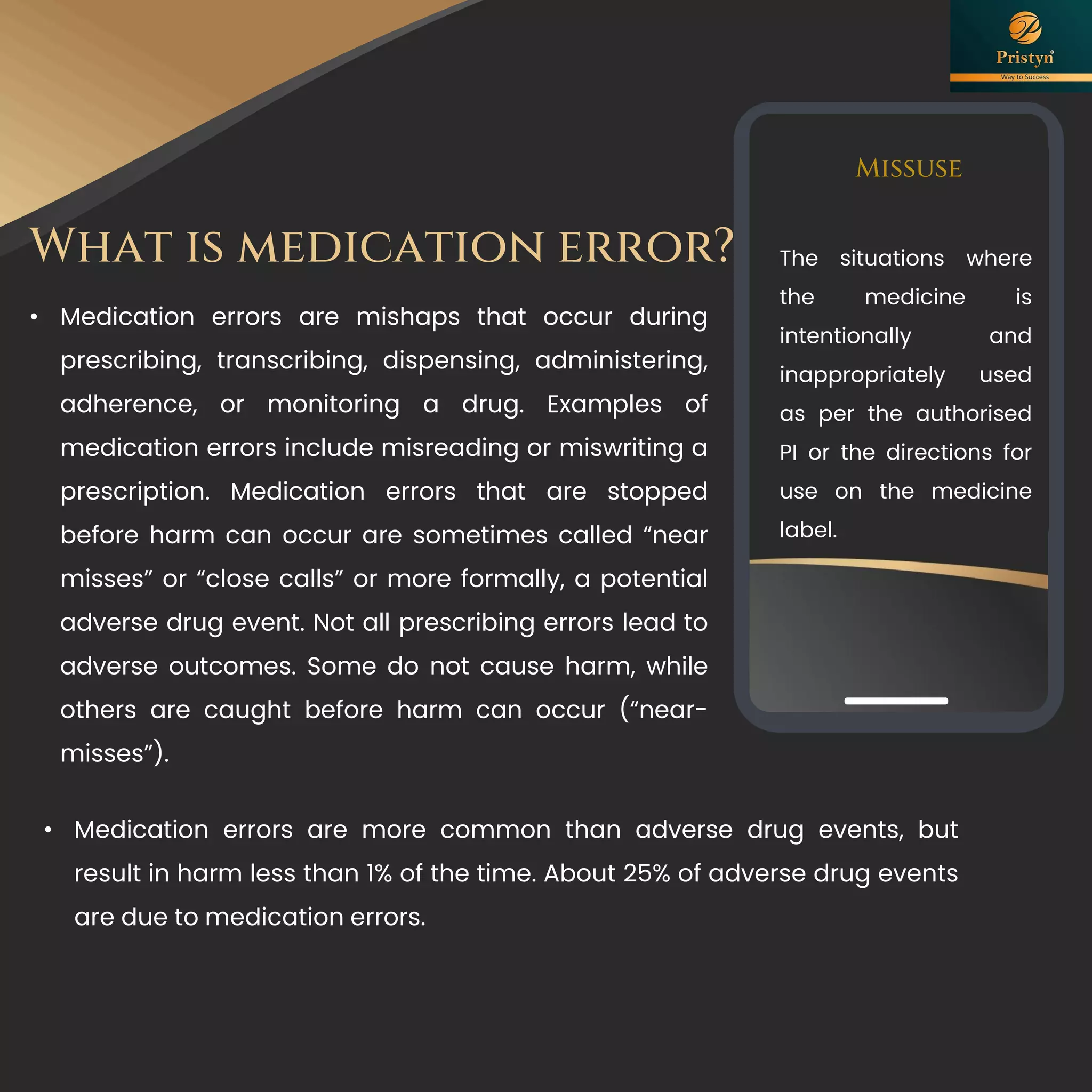
What is medication error?
Missuse
The situations where
the medicine is
intentionally and
inappropriately used
as per the authorised
PI or the directions for
use on the medicine
label.
• Medication errors are mishaps that occur during
prescribing, transcribing, dispensing, administering,
adherence, or monitoring a drug. Examples of
medication errors include misreading or miswriting a
prescription. Medication errors that are stopped
before harm can occur are sometimes called “near
misses” or “close calls” or more formally, a potential
adverse drug event. Not all prescribing errors lead to
adverse outcomes. Some do not cause harm, while
others are caught before harm can occur (“near-
misses”).
• Medication errors are more common than adverse drug events, but
result in harm less than 1% of the time. About 25% of adverse drug events
are due to medication errors.
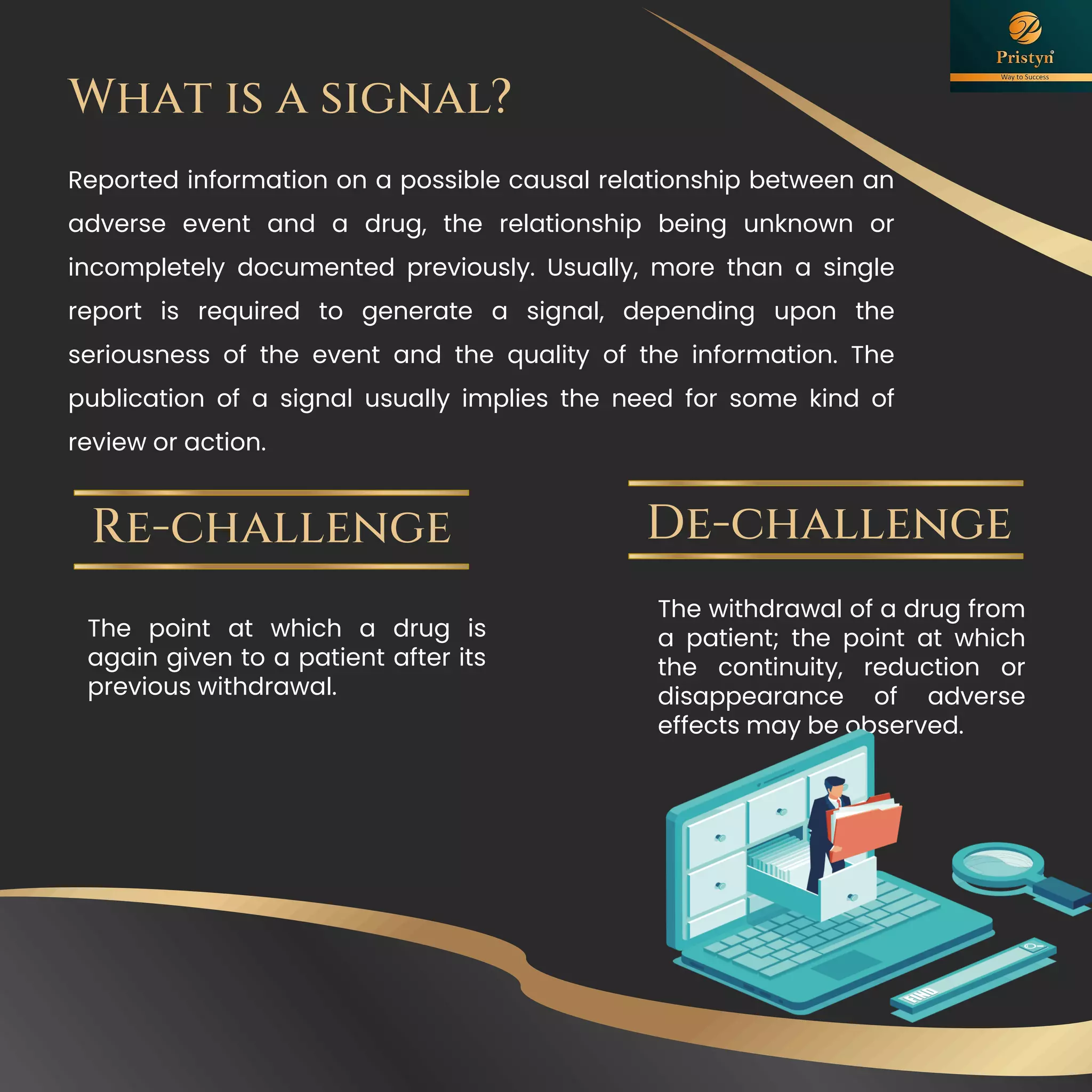
The point at which a drug is
again given to a patient after its
previous withdrawal.
Re-challenge
The withdrawal of a drug from
a patient; the point at which
the continuity, reduction or
disappearance of adverse
effects may be observed.
De-challenge
What is a signal?
Reported information on a possible causal relationship between an
adverse event and a drug, the relationship being unknown or
incompletely documented previously. Usually, more than a single
report is required to generate a signal, depending upon the
seriousness of the event and the quality of the information. The
publication of a signal usually implies the need for some kind of
review or action.
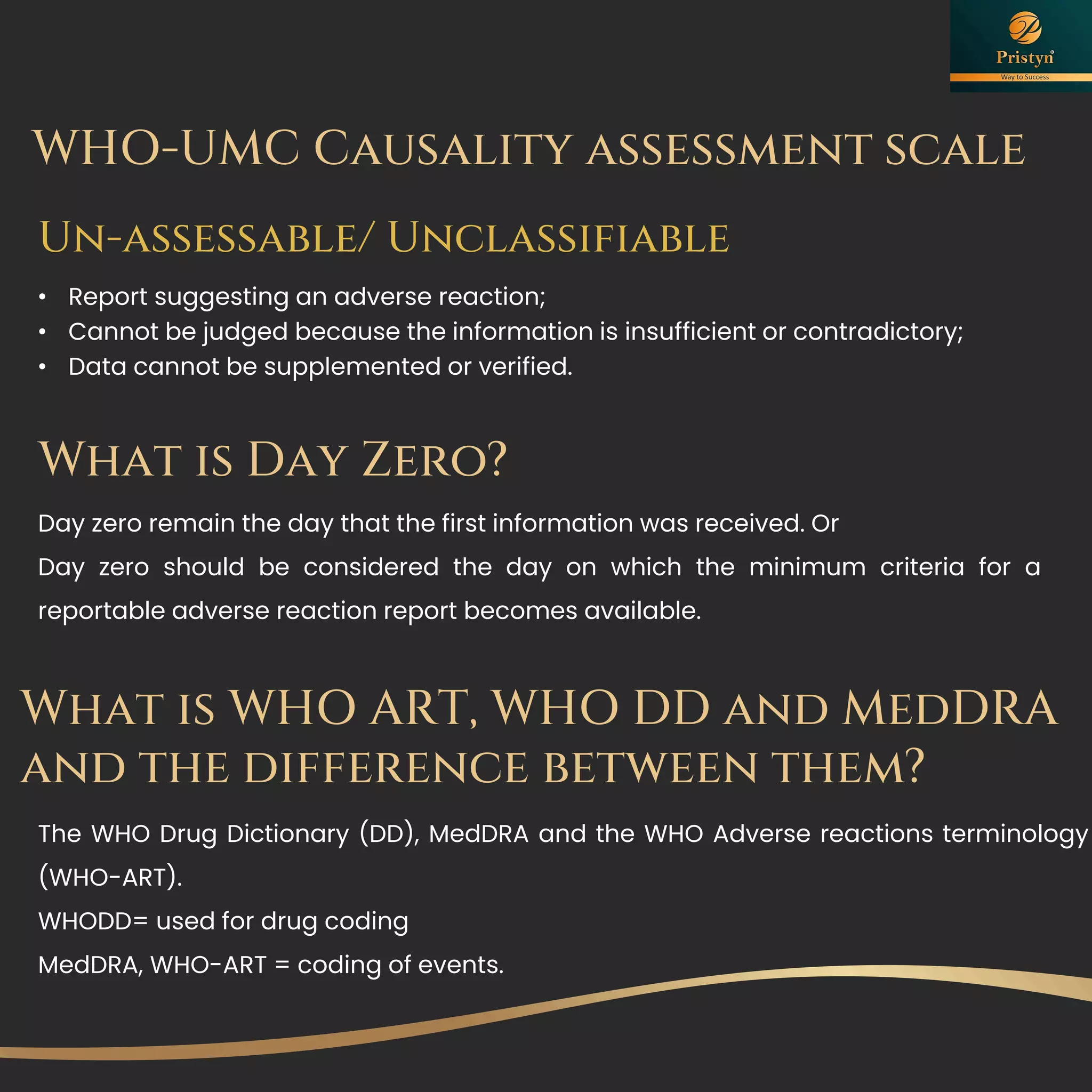
What is Day Zero?
Day zero remain the day that the first information was received. Or
Day zero should be considered the day on which the minimum criteria for a
reportable adverse reaction report becomes available.
The WHO Drug Dictionary (DD), MedDRA and the WHO Adverse reactions terminology
(WHO-ART).
WHODD= used for drug coding
MedDRA, WHO-ART = coding of events.
What is WHO ART, WHO DD and MedDRA
and the difference between them?
What is SUSAR?
USAR: An unexpected adverse reaction (UAR) is an adverse reaction that is not
consistent with the product information in the SPC.
A suspected unexpected serious adverse reaction (SUSAR) is any UAR that at any
dose
✓ Results in death
✓ Is life-threatening (i.e. the subject was at risk of death at the time of the
event)
✓ Refer to an event that hypothetically might have caused death if it were more
severed
✓ Requires hospitalisation or prolongation of
existing hospitalisation
✓ Results in persistent or significant disability
or incapacity
✓ Is a congenital anomaly or birth defect.
✓ The development of SUSAR is uncommon
(unexpected issue) observed during a
clinical trial and for which there is a
relationship with the experimental drug,
whatever the tested drug or its comparator.
Definitions
02.
Terms You Should Know
Before Applying For PV
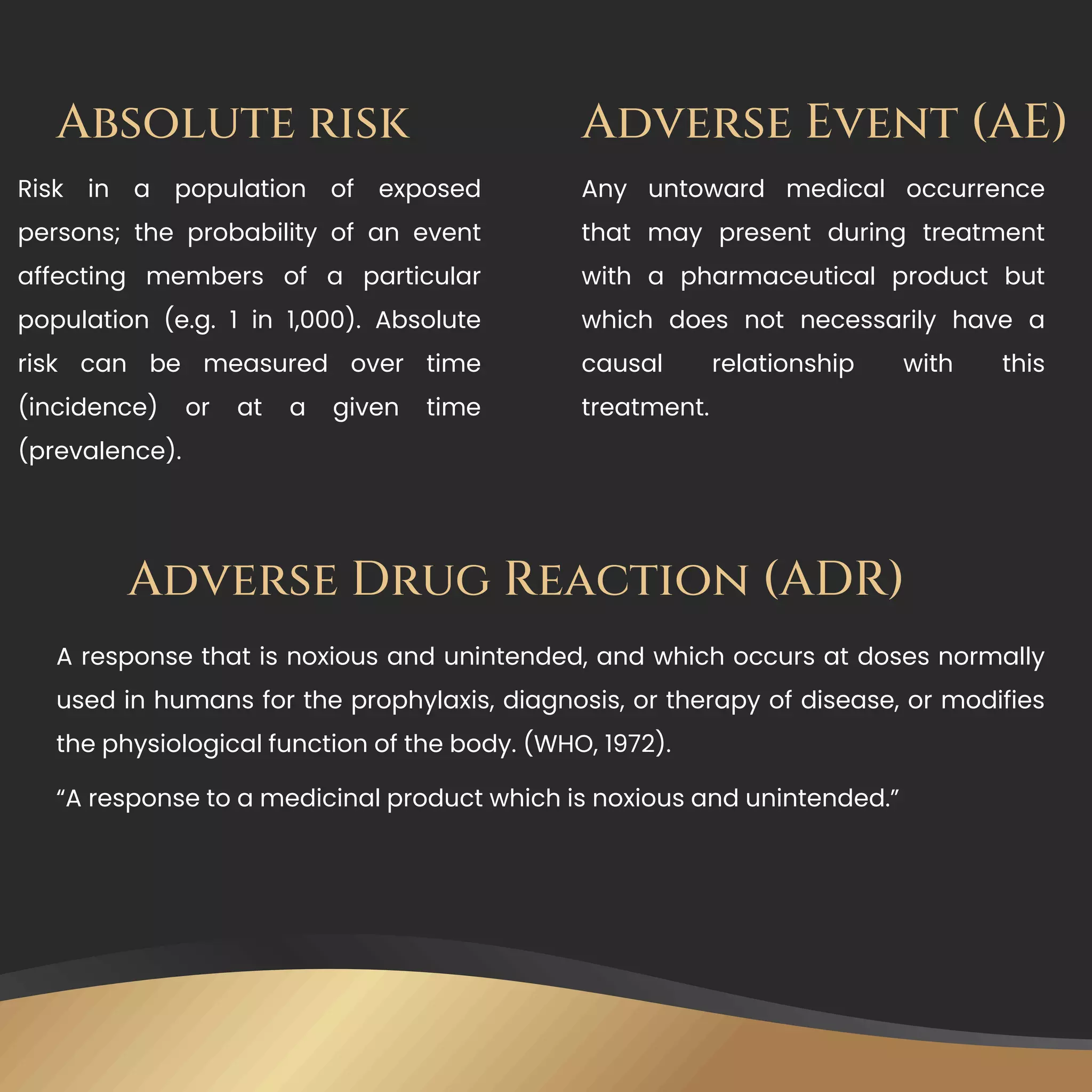
Absolute risk
Risk in a population of exposed
persons; the probability of an event
affecting members of a particular
population (e.g. 1 in 1,000). Absolute
risk can be measured over time
(incidence) or at a given time
(prevalence).
Adverse Event (AE)
Any untoward medical occurrence
that may present during treatment
with a pharmaceutical product but
which does not necessarily have a
causal relationship with this
treatment.
Adverse Drug Reaction (ADR)
A response that is noxious and unintended, and which occurs at doses normally
used in humans for the prophylaxis, diagnosis, or therapy of disease, or modifies
the physiological function of the body. (WHO, 1972).
“A response to a medicinal product which is noxious and unintended.”
Cohort Event Monitoring (CEM)
is a prospective, observational
study of events that occur
during the use of medicines,
for intensified follow-up of
selected medicinal products
phase. Patients are monitored
from the time they begin
treatment, and for a defined
period of time.
Association
Events are associated with time but not necessarily linked as cause and effect.
Cem-Flow
Software developed by UMC for collection and analysis of data in Cohort Event
Monitoring.
Biological products
Medical products prepared from biological material of human, animal or
microbiologic
Compliance
Faithful adherence by the patient to the prescriber’s instructions.
De-challenge
The withdrawal of a drug from a patient; the point at which the continuity,
reduction or disappearance of adverse effects may be observed.
Attributable risk
Data mining
A general term for computerised extraction of potentially interesting patterns
from large data sets is often based on statistical algorithms. A related term with
essentially the same meaning is ‘pattern discovery’. In pharmacovigilance, the
commonest application of data mining is so called disproportionality analysis,
for example using the Information component (IC).
Disproportionality analysis
Screening of ICSR databases for reporting rates which are higher than
expected. For drug- ADR pairs, common measures of disproportionality are the
Proportional Reporting Ratio (PRR), the Reporting Odds Ratio (ROR), The
Information Component (IC), and the Empirical Bayes Geometrical Mean
(EBGM). There are also disproportionality measures for drug-drug-ADR triplets,
such as Omega (Ω).
Critical terms
Some of the terms in WHO-ART are marked as ‘Critical Terms’. These terms
either refer to or might be indicative of serious disease states, and warrant
special attention, because of their possible association with the risk of serious
illness which may lead to more decisive action than reports on other terms
Effectiveness/risk
The balance between the rates of effectiveness of medicine versus the risk of
harm is a quantitative assessment of the merit of medicine used in routine
clinical practice. Comparative information between therapies is most useful.
This is more useful than the efficacy and hazard predictions from pre-
marketing information that is limited and based on selected subjects.
Efficacy
The ability of a drug to produce the intended effect as determined by scientific
methods, for example in pre-clinical research conditions (opposite of hazard).
Harm
The nature and extent of actual damage that could be caused by a drug. Not to
be confused with risk.
Epidemiology
It is the science concerned with the study of the factors
determining and influencing the frequency and distribution of
disease, injury and other health-related events and their causes
in a defined human population to establish programs to prevent
and control their development and spread.
Essential medicines
Essential medicines are those that satisfy the priority health care needs of the
population. They are selected with due regard to public health relevance,
evidence on efficacy and safety, and comparative cost-effectiveness.
Excipients
All materials included in making a pharmaceutical formulation (e.g. a tablet)
except the active drug substance(s).
Formulary
A listing of medicinal drugs with their uses, methods of administration,
available dose, dosage forms, side effects, etc, sometimes including their
formulas and methods of preparation.
Frequency of ADRs
In giving an estimate of the frequency of
ADRs the following standard categories
are recommended:
❖ Very common* > 10%
❖ Common (frequent) >1% and <10%
❖ Uncommon (infrequent) >0.1% and <
1%
❖ Rare >0.01% and <0.1%Very rare*
<0.01%
Generic (multisource product)
The term ‘generic product’ has somewhat different meanings in different
jurisdictions. Generic products may be marketed either under the non-
proprietary approved name or under a new brand (proprietary) name. They
are usually intended to be interchangeable with the innovator product, which
is usually manufactured without a license from the innovator company and
marketed after the expiry of the patent or other exclusivity rights.
Herbal medicine
Includes herbs, herbal materials, herbal preparations and finished herbal
products.
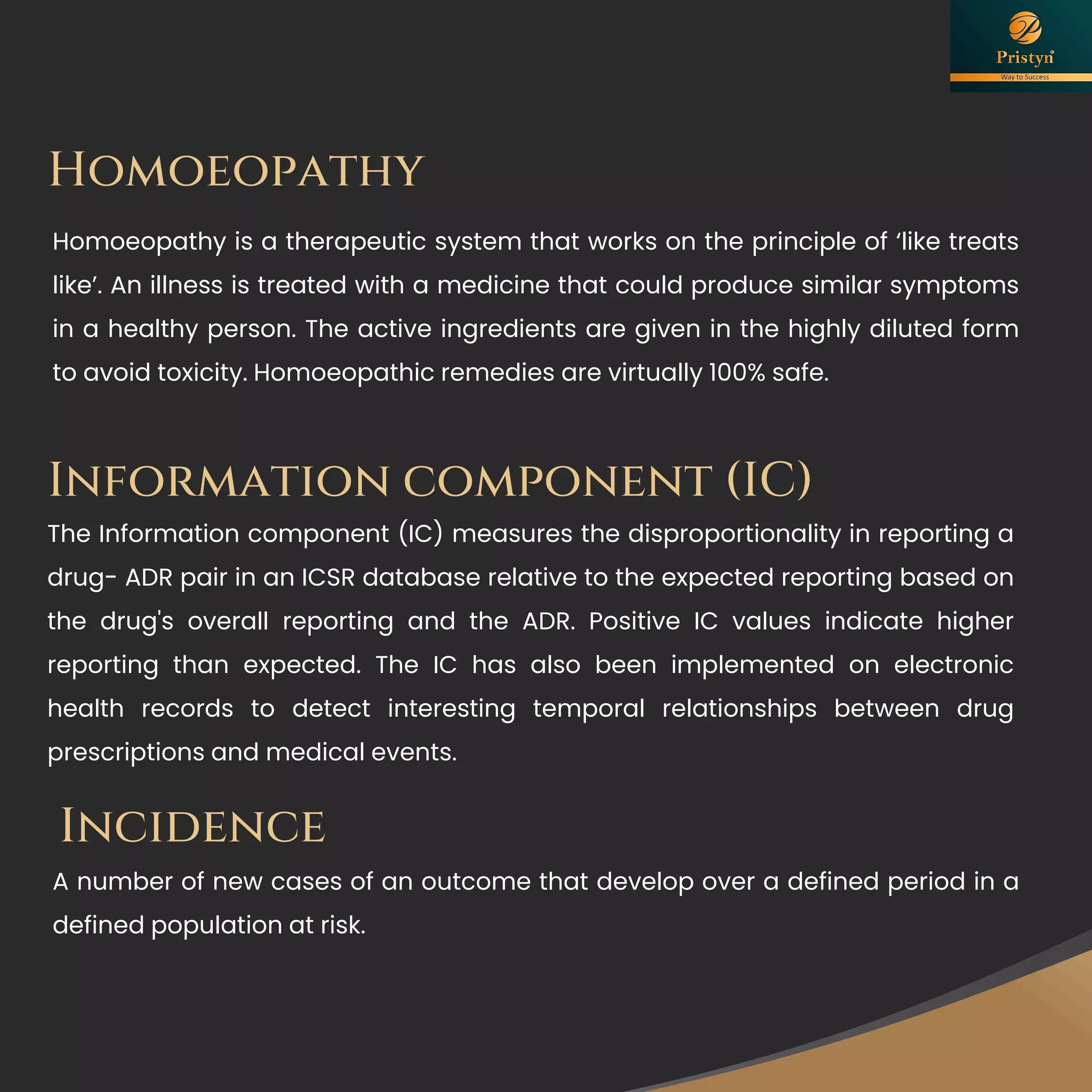
Homoeopathy
Homoeopathy is a therapeutic system that works on the principle of ‘like treats
like’. An illness is treated with a medicine that could produce similar symptoms
in a healthy person. The active ingredients are given in the highly diluted form
to avoid toxicity. Homoeopathic remedies are virtually 100% safe.
Incidence
A number of new cases of an outcome that develop over a defined period in a
defined population at risk.
Information component (IC)
The Information component (IC) measures the disproportionality in reporting a
drug- ADR pair in an ICSR database relative to the expected reporting based on
the drug's overall reporting and the ADR. Positive IC values indicate higher
reporting than expected. The IC has also been implemented on electronic
health records to detect interesting temporal relationships between drug
prescriptions and medical events.
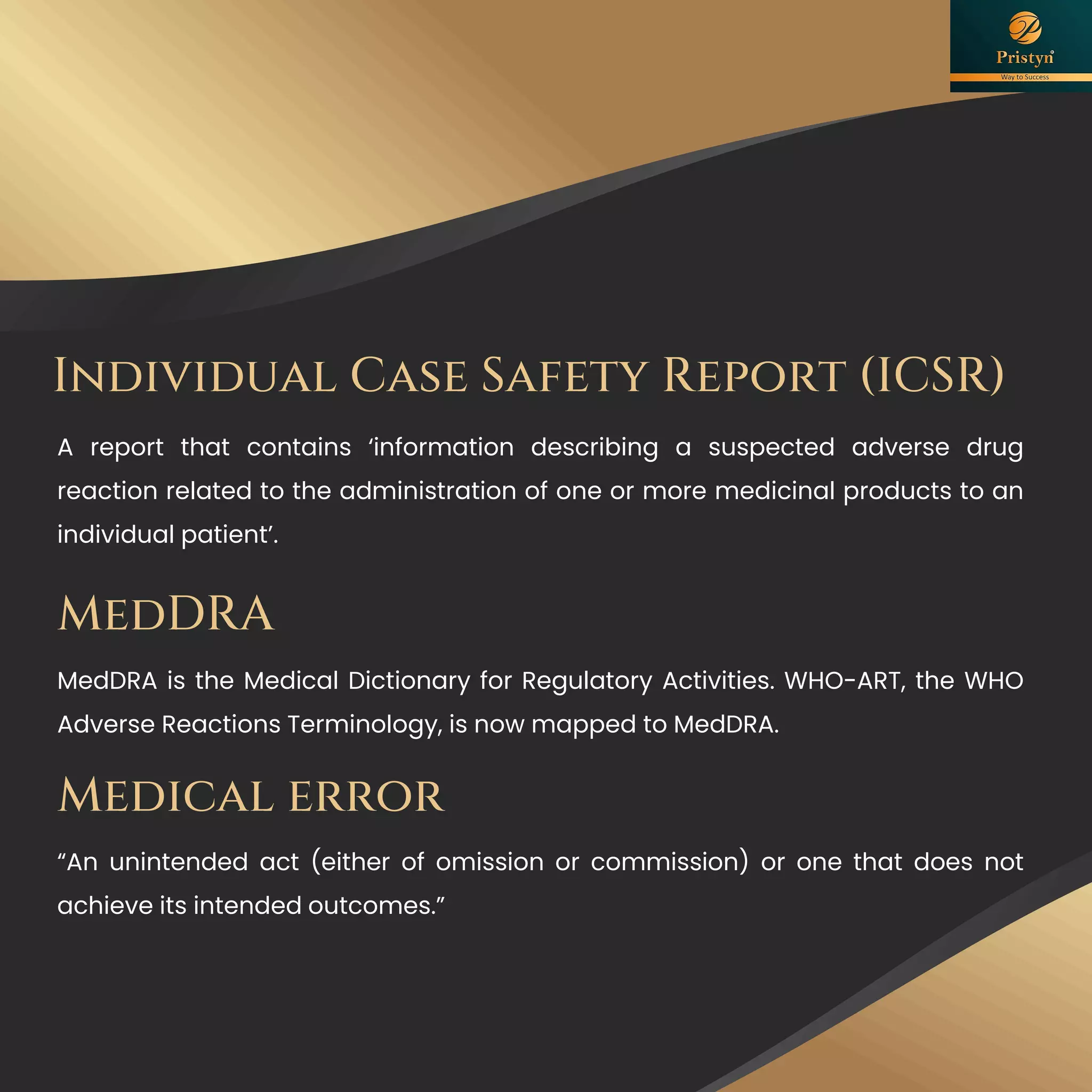
Individual Case Safety Report (ICSR)
A report that contains ‘information describing a suspected adverse drug
reaction related to the administration of one or more medicinal products to an
individual patient’.
MedDRA
MedDRA is the Medical Dictionary for Regulatory Activities. WHO-ART, the WHO
Adverse Reactions Terminology, is now mapped to MedDRA.
Medical error
“An unintended act (either of omission or commission) or one that does not
achieve its intended outcomes.”
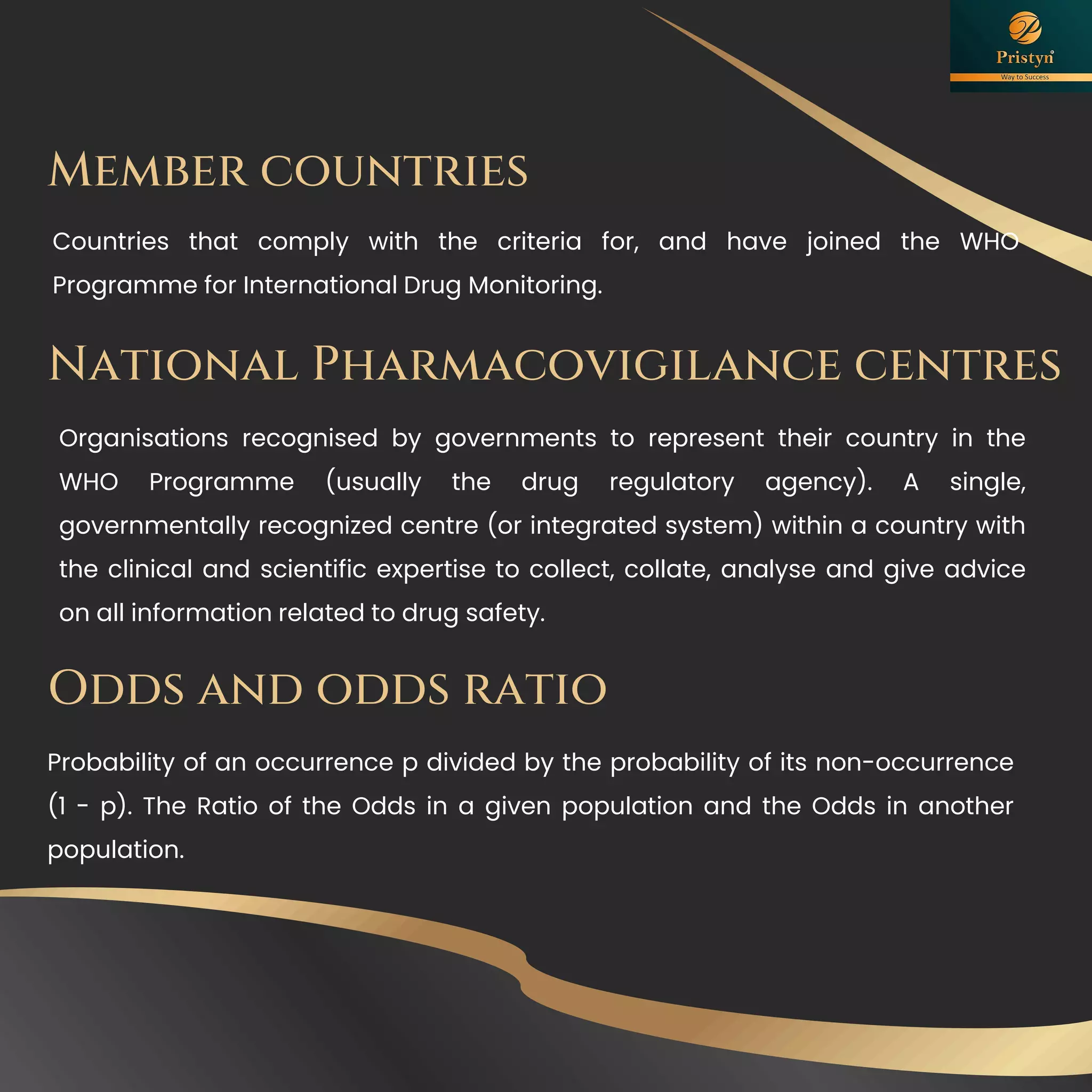
Member countries
Countries that comply with the criteria for, and have joined the WHO
Programme for International Drug Monitoring.
Odds and odds ratio
Probability of an occurrence p divided by the probability of its non-occurrence
(1 - p). The Ratio of the Odds in a given population and the Odds in another
population.
National Pharmacovigilance centres
Organisations recognised by governments to represent their country in the
WHO Programme (usually the drug regulatory agency). A single,
governmentally recognized centre (or integrated system) within a country with
the clinical and scientific expertise to collect, collate, analyse and give advice
on all information related to drug safety.
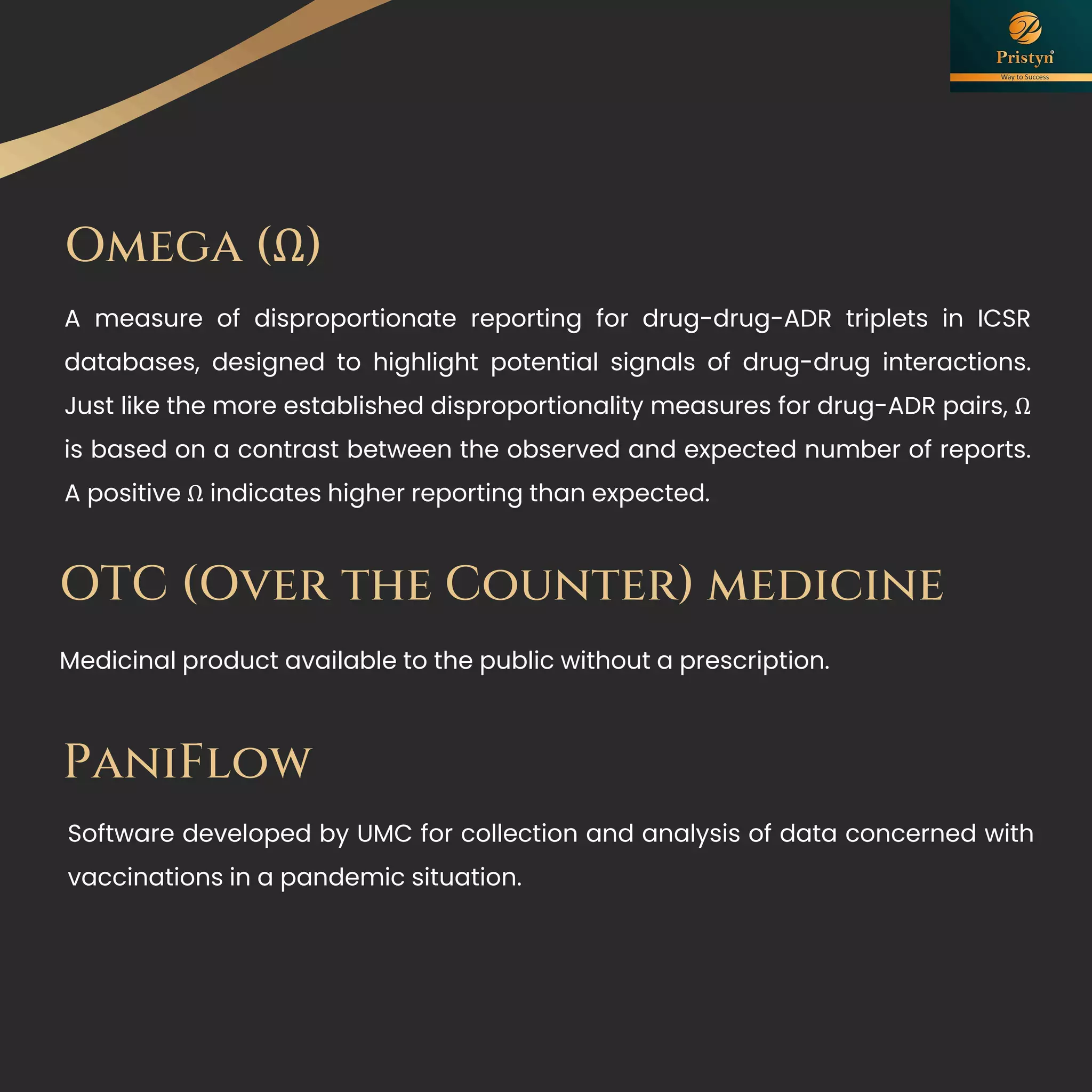
Omega (Ω)
A measure of disproportionate reporting for drug-drug-ADR triplets in ICSR
databases, designed to highlight potential signals of drug-drug interactions.
Just like the more established disproportionality measures for drug-ADR pairs, Ω
is based on a contrast between the observed and expected number of reports.
A positive Ω indicates higher reporting than expected.
Medicinal product available to the public without a prescription.
OTC (Over the Counter) medicine
PaniFlow
Software developed by UMC for collection and analysis of data concerned with
vaccinations in a pandemic situation.
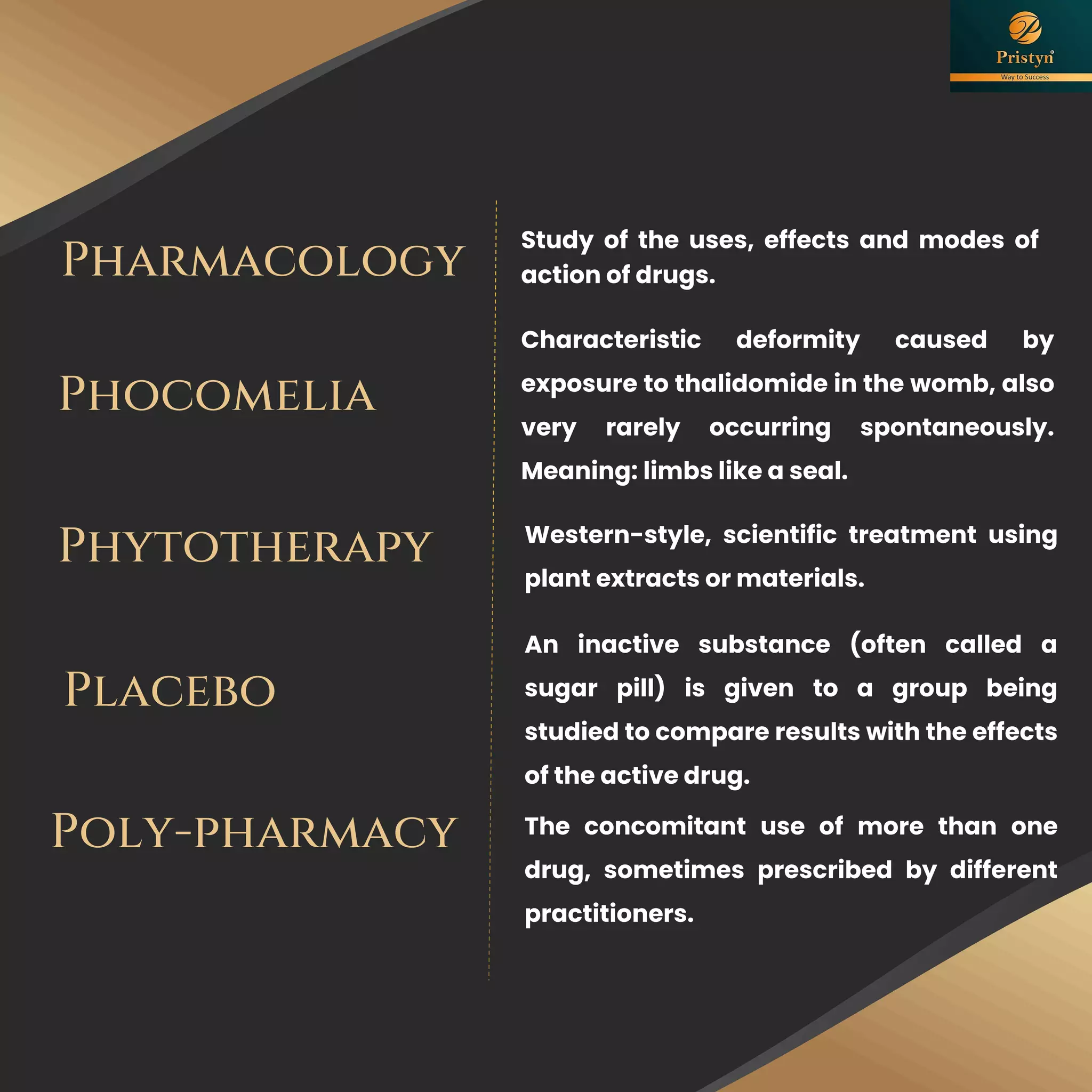
A systematic review of the global safety data became available to the
manufacturer of a marketed drug during a specific time period. Produced in an
internationally agreed format.
Periodic Safety Update Report (PSUR)
Pharmacoepidemiology
Study of the use and effects of drugs in large populations.
Pharmacology
Phocomelia
Phytotherapy
Placebo
Poly-pharmacy
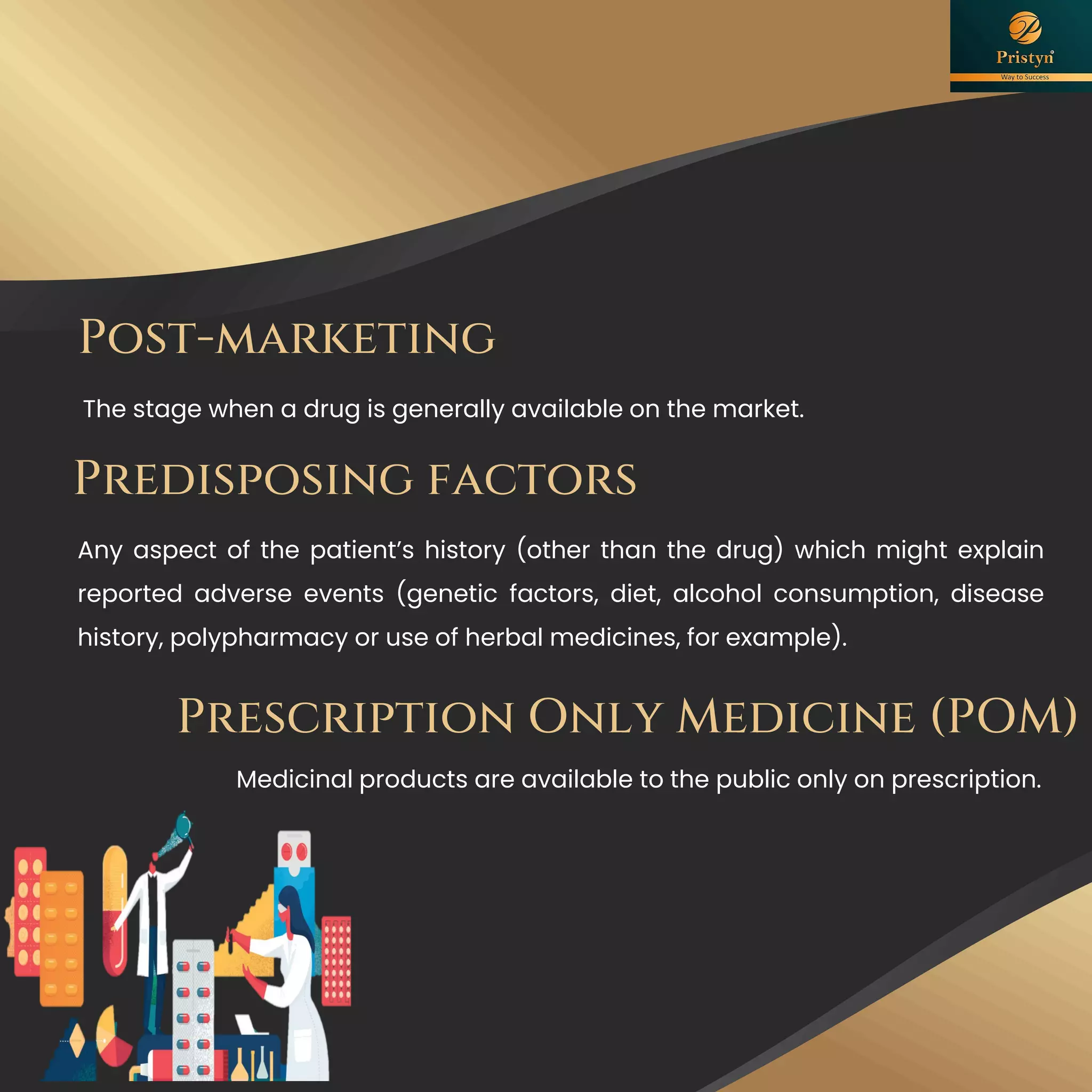
Post-marketing
The stage when a drug is generally available on the market.
Predisposing factors
Any aspect of the patient’s history (other than the drug) which might explain
reported adverse events (genetic factors, diet, alcohol consumption, disease
history, polypharmacy or use of herbal medicines, for example).
Prescription Only Medicine (POM)
Medicinal products are available to the public only on prescription.
Prescription Event Monitoring
(PEM)
The system created to monitor adverse drug events in a population. Prescribers
are requested to report all events, regardless of whether they are suspected
adverse events, for identified patients receiving a specified drug. Also more
accurately named Cohort Event Monitoring.
Prevalence
A number of existing cases of an outcome in a defined population at a given
point in time.
Rational drug use
An ideal of therapeutic practice in which drugs are prescribed and used in exact
accordance with the best understanding of their appropriateness for the indication
and the particular patient, and their benefit, harm effectiveness and risk.
Prophylaxis
Prevention or protection.
Record linkage
Method of assembling information contained in two or more records, e.g. In
different sets of medical charts, and vital records such as birth and death
certificates. This makes it possible to relate significant health events that are
remote from one another in time and place.
An ideal of therapeutic practice in which drugs are prescribed
and used in exact accordance with the best understanding of
their appropriateness for the indication and the particular
patient, and their benefit, harm effectiveness and risk.
Rational drug use
Reference risk
Risk in a population of unexposed persons; also called baseline risk. Reference
risk can be measured over time (incidence) or at a given time (prevalence).
The unexposed population refers to a reference population, as closely
comparable to the exposed population as possible, apart from the exposure.
Relative risk
Ratio of the risk in an exposed population (absolute risk) and the risk in an
unexposed population (reference risk). Relative risk is the result of relative
comparison between outcome frequency measurements, e.g. incidences.
The probability of harm being caused; the probability (chance, odds) of an
occurrence.
Risk
Regulatory authority
The legal authority in any country with the responsibility of
regulating all matters relating to drugs.
Any unintended effect of a pharmaceutical product occurring at a normal
dosage is related to the pharmacological properties of the drug.
Side effect
Serious Adverse Event or Reaction
A serious adverse event or reaction is any untoward medical occurrence that at
any dose:
❖ results in death;
❖ requires inpatient hospitalization or prolongation of existing hospitalization;
❖ results in persistent or significant disability/incapacity;
❖ is life-threatening.
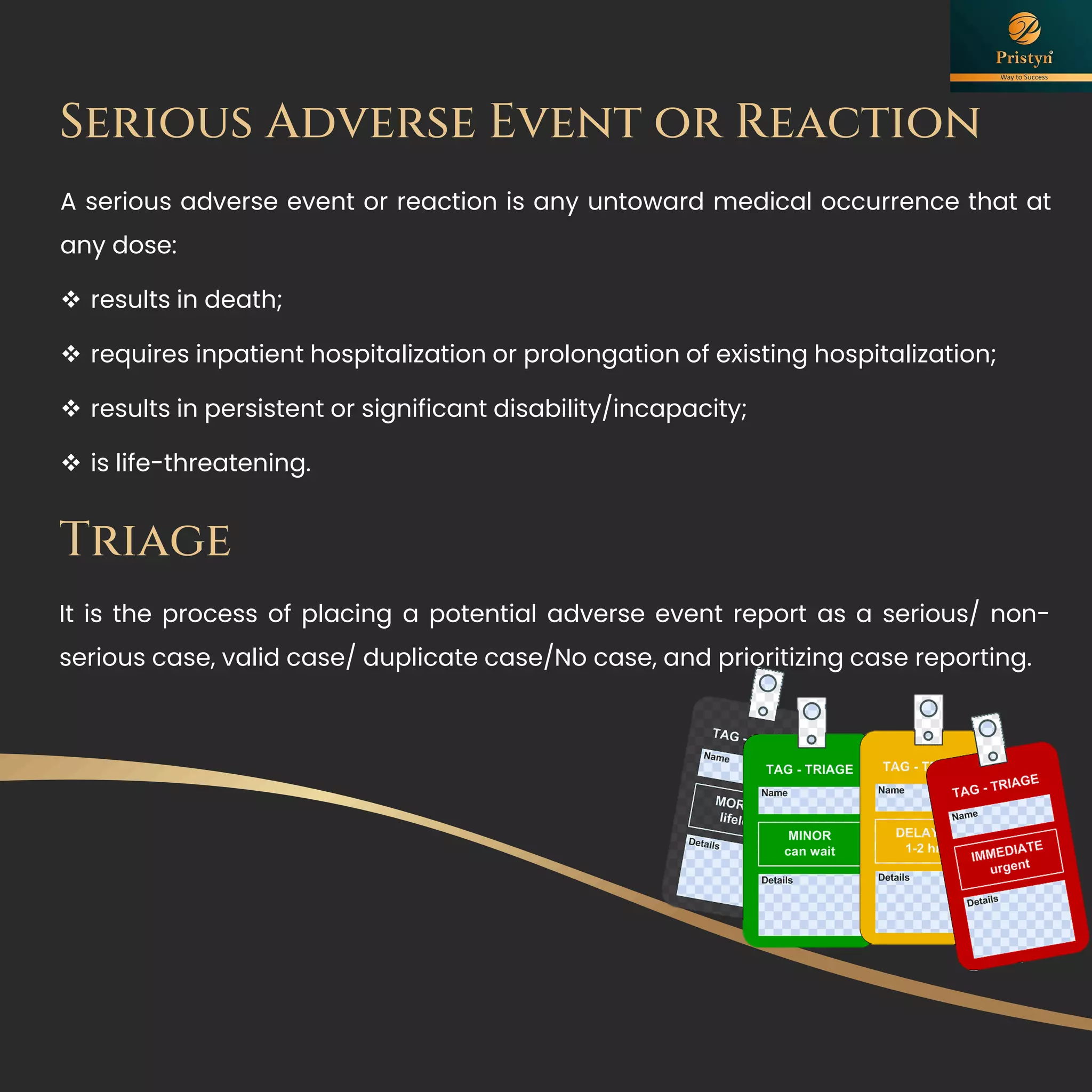
Triage
It is the process of placing a potential adverse event report as a serious/ non-
serious case, valid case/ duplicate case/No case, and prioritizing case reporting.
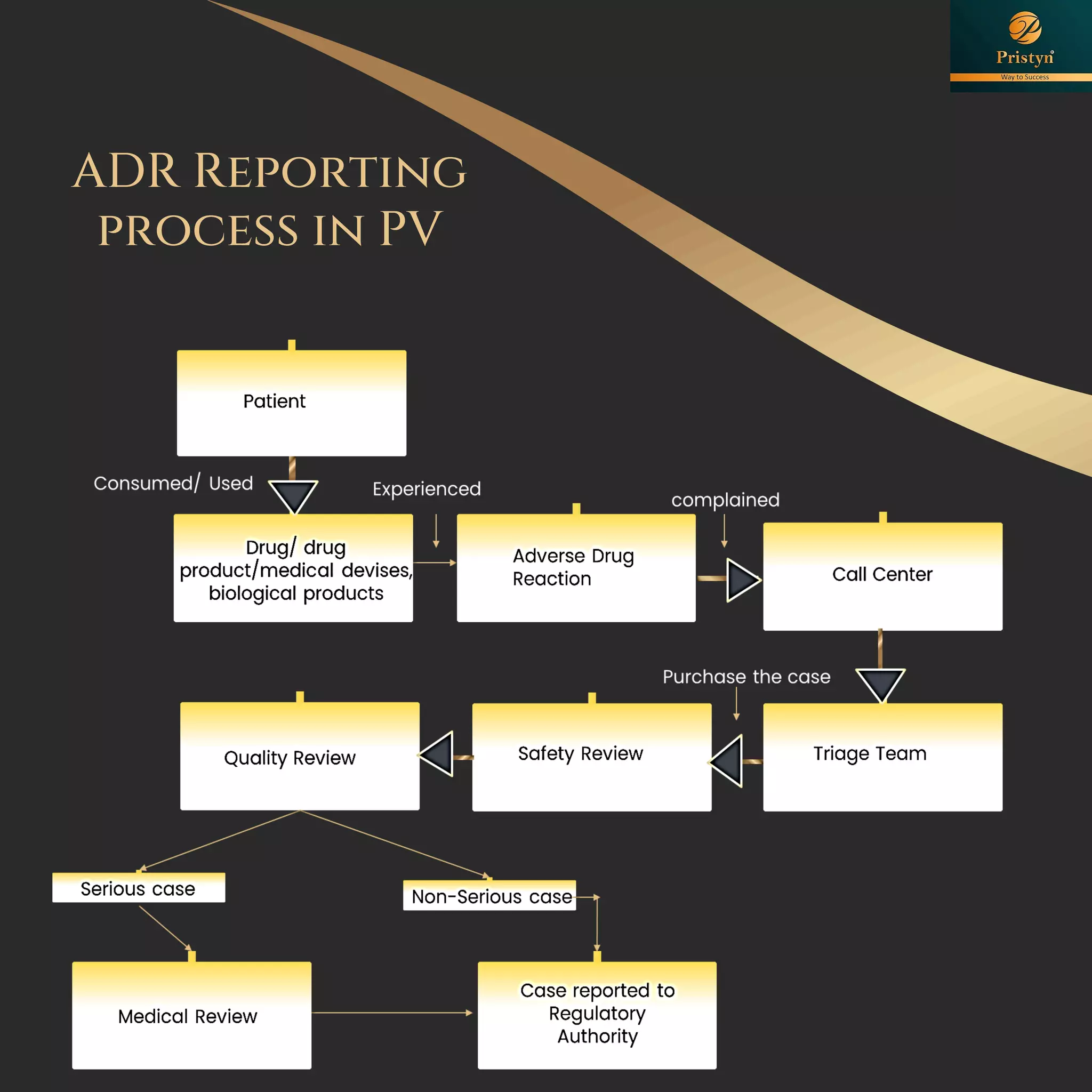
ADR Reporting
process in PV
Reported information on a possible causal relationship between an adverse
event and a drug, the relationship being unknown or incompletely
documented previously. Usually, more than a single report is required to
generate a signal, depending upon the seriousness of the event and the
quality of the information. The publication of a signal usually implies the need
for some kind of review or action.
Signal
Summary of Product Characteristics
(SPC)
A regulatory document is attached to the marketing authorization forms the
basis of the product information made available to prescribers and patients.
Spontaneous reporting
A System whereby case reports of adverse drug events are voluntarily
submitted from health professionals and pharmaceutical manufacturers to
the national regulatory authority.
Thalidomide
Drug was prescribed in the 1950s as a mild sleeping pill and remedy for morning
sickness for pregnant women. This led to serious birth defects and the start of
modern pharmacovigilance. Returning to favour in the treatment of serious
diseases such as cancer and leprosy.
Unexpected adverse reaction
An adverse reaction, the nature or severity of which is not consistent with
domestic labelling or market authorization, or expected from characteristics of
the drug.
Traditional medicines
Traditional medicine is the total of the knowledge, skills, and practices based on
the theories, beliefs, and experiences indigenous to different cultures, whether
explicable or not, used in the maintenance of health as well as in the prevention,
diagnosis, improvement or treatment of physical and mental illness.
VigiMed
Share point-based conferencing facility, exclusive to member countries of the
WHO Programme for International Drug Monitoring for fast communication of
topical pharmacovigilance issues.
A statistical tool within Vigi-Search with vast statistical material
calculated for all Drug- ADR pairs (combinations) available in
Vigi-Base. The main features include the disproportionality
measure (IC value) stratified in different ways and useful filter
capabilities.
VigiMine
VigiFlow
Vigi-Flow is a complete ICSR management system created and maintained by the
UMC. It is web-based and built to adhere to the ICH-E2B standard. It can be used
as the national database for countries in the WHO Programme as it incorporates
tools for report analysis and facilitates sending reports to Vigi-Base.
VigiBase
The name of the WHO Global ICSR Database.
VigiSearch
A search service for accessing ICSRs stored in the Vigi-Base database offered by
the UMC to national pharmacovigilance centres and other third-party inquirers.
WHO-ART
Terminology for coding clinical information concerning drug therapy. WHO-ART is
maintained by UMC.
WHO Drug Dictionary (WHO DD)
The WHO Drug Dictionary is an international classification of drugs providing
proprietary and non-proprietary names of medicinal products used in different
countries, together with all active ingredients.
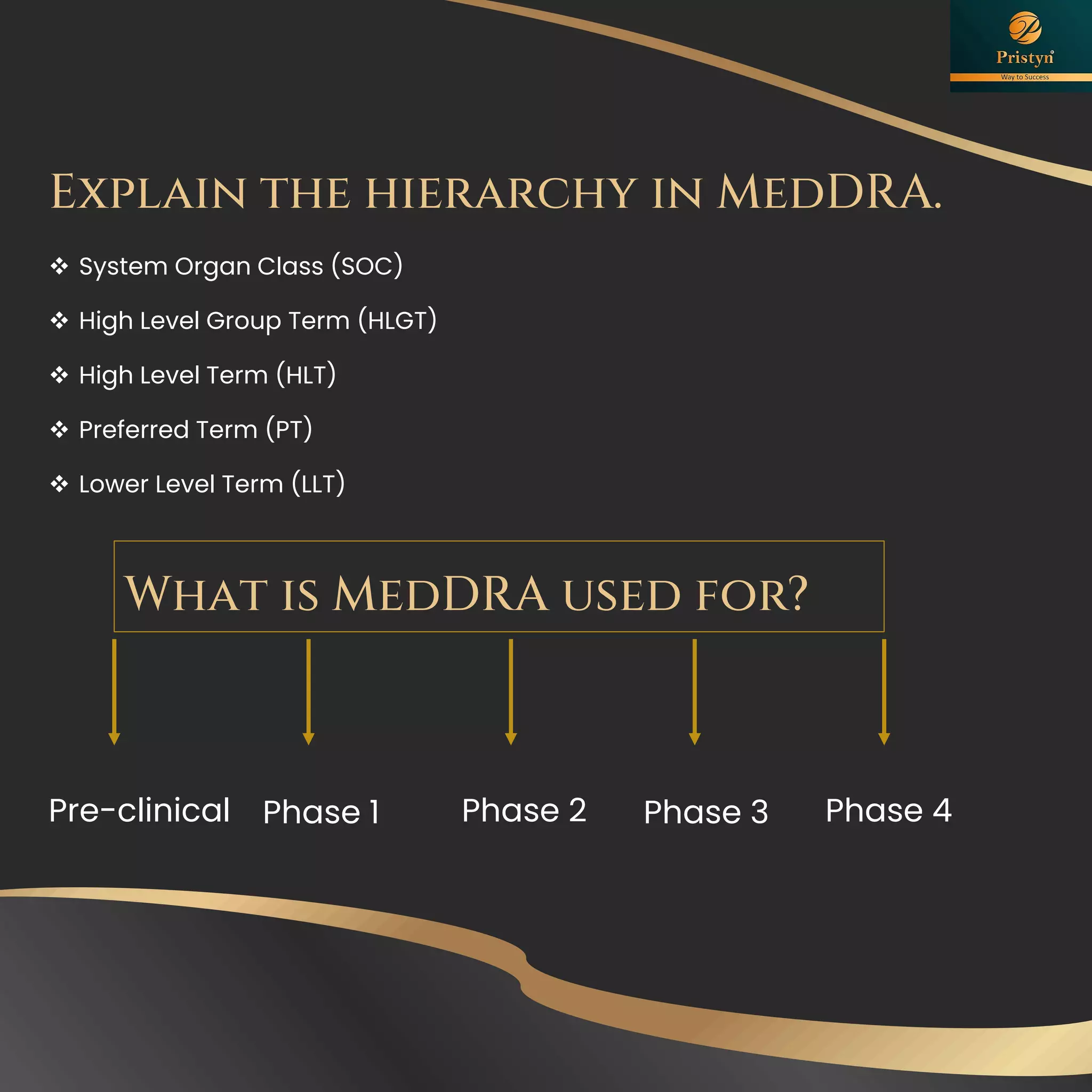
Explain the hierarchy in MedDRA.
❖ System Organ Class (SOC)
❖ High Level Group Term (HLGT)
❖ High Level Term (HLT)
❖ Preferred Term (PT)
❖ Lower Level Term (LLT)
What is MedDRA used for?
Pre-clinical Phase 1 Phase 2 Phase 3 Phase 4
Companies
list
03.
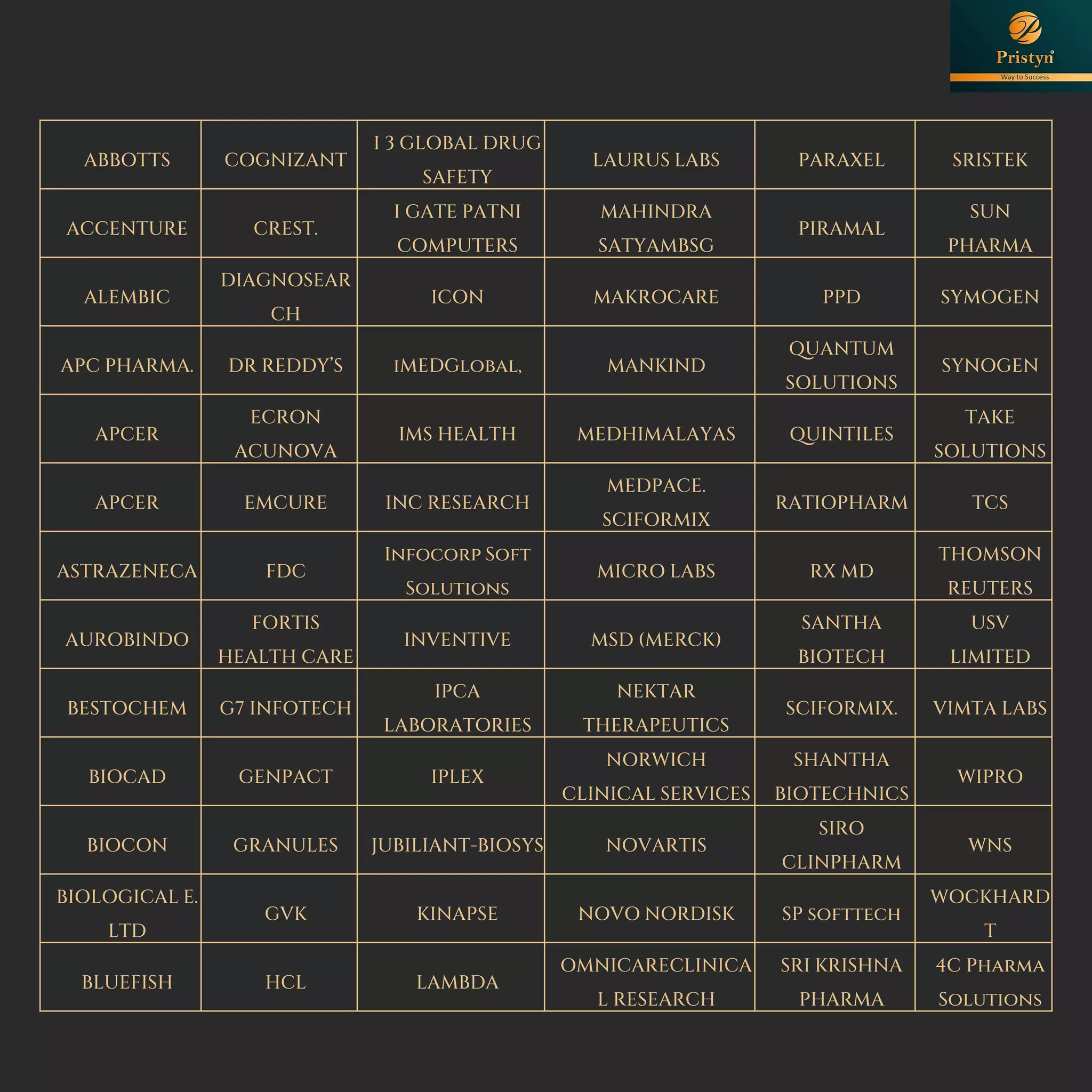
PAN India PV companies list
alphabetically
ABBOTTS COGNIZANT
I 3 GLOBAL DRUG
SAFETY
LAURUS LABS PARAXEL SRISTEK
ACCENTURE CREST.
I GATE PATNI
COMPUTERS
MAHINDRA
SATYAMBSG
PIRAMAL
SUN
PHARMA
ALEMBIC
DIAGNOSEAR
CH
ICON MAKROCARE PPD SYMOGEN
APC PHARMA. DR REDDY’S iMEDGlobal, MANKIND
QUANTUM
SOLUTIONS
SYNOGEN
APCER
ECRON
ACUNOVA
IMS HEALTH MEDHIMALAYAS QUINTILES
TAKE
SOLUTIONS
APCER EMCURE INC RESEARCH
MEDPACE.
SCIFORMIX
RATIOPHARM TCS
ASTRAZENECA FDC
Infocorp Soft
Solutions
MICRO LABS RX MD
THOMSON
REUTERS
AUROBINDO
FORTIS
HEALTH CARE
INVENTIVE MSD (MERCK)
SANTHA
BIOTECH
USV
LIMITED
BESTOCHEM G7 INFOTECH
IPCA
LABORATORIES
NEKTAR
THERAPEUTICS
SCIFORMIX. VIMTA LABS
BIOCAD GENPACT IPLEX
NORWICH
CLINICAL SERVICES
SHANTHA
BIOTECHNICS
WIPRO
BIOCON GRANULES JUBILIANT-BIOSYS NOVARTIS
SIRO
CLINPHARM
WNS
BIOLOGICAL E.
LTD
GVK KINAPSE NOVO NORDISK SP softtech
WOCKHARD
T
BLUEFISH HCL LAMBDA
OMNICARECLINICA
L RESEARCH
SRI KRISHNA
PHARMA
4C Pharma
Solutions
Important
For free Simple Guidance |Support| Mentorship
on jobs & business in India, Watch this short
video recorded by the government college
https://www.youtube.com/watch?v=UfB2fvTBM3w&t=659s
For Job Oriented Regular / Weekend /Online
Certified Industrial Training | Internship &
Short Term Courses with placements assistance
and guarantee. Kindly call us @ +91-9028839789.
Mumbai Pune Aurangabad Kolhapur Kerala
Online/Offline in the below cities of India.
Pharmacovigilance | Clinical Research | Clinical Data Management.
Drug Regulatory Affairs | Pharma Q.A / Q.C |Pharma Production.
Pharma Digital Marketing | R & D |Medical Coding.
Medical Transcription | Medical Writing |Research Publications.
Course In
Course In
Course In
Course In
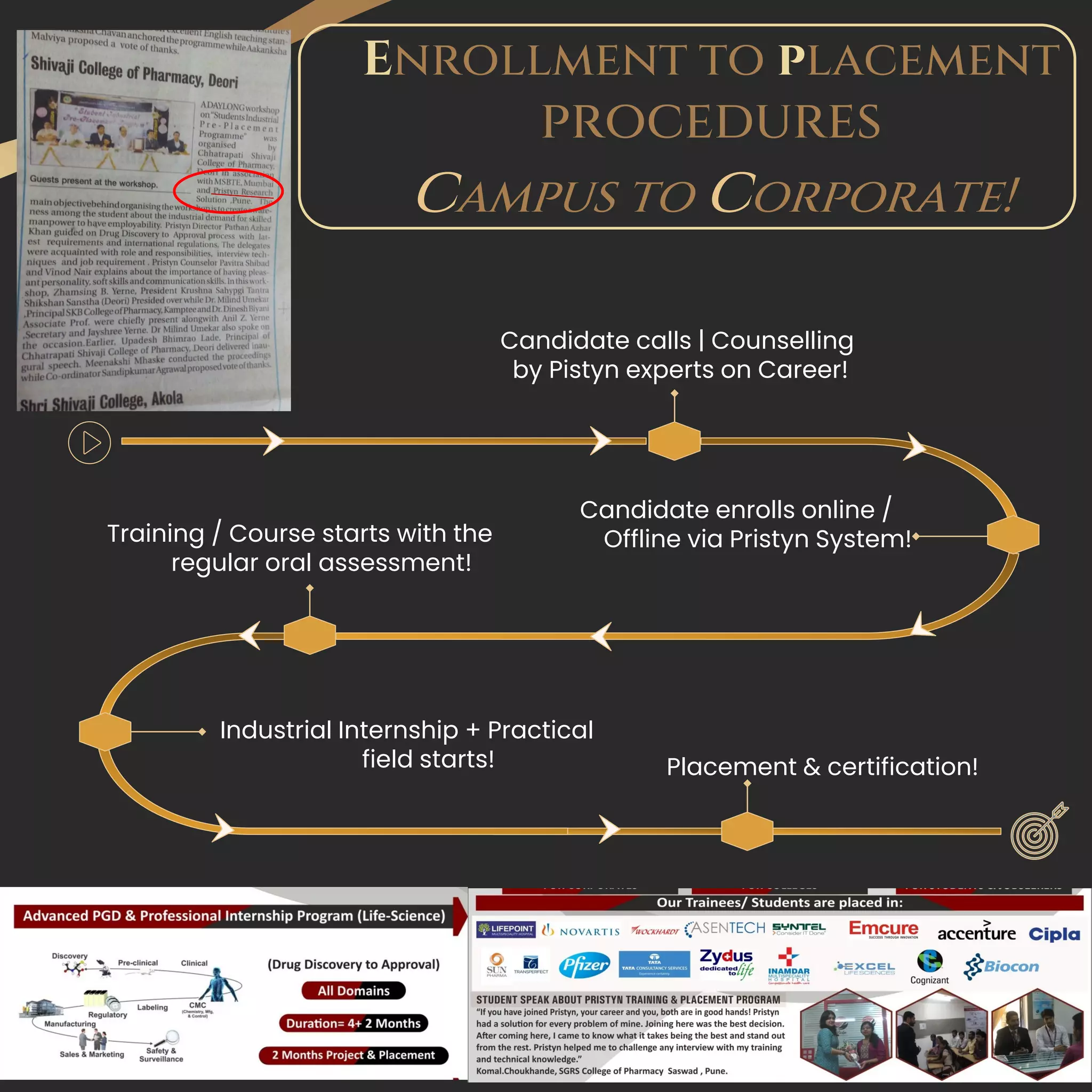
Candidate calls | Counselling
by Pistyn experts on Career!
Enrollment to placement
procedures
campus to corporate!
Candidate enrolls online /
Offline via Pristyn System!
Training / Course starts with the
regular oral assessment!
Industrial Internship + Practical
field starts! Placement & certification!
Training &
Placement
activities
Thank You

PHARMACOVIGILANCE COMMON JOB INTERVIEW QUESTIONS WITH ANSWERS-Updated IN 2022..pdf

  • 1.
    PHARMACOVIGILANCE Updated IN 2022:COMMON JOB INTERVIEW QUESTIONS WITH ANSWERS By Pristyn Research A quick Job interview short guide For Pharma and all Life science jobseekers. info.pristynresearch.com www.pristynresearch.com 9028839789 | 8999717656 All Medical | Biotech |Micro |B.Sc., M.Sc.
  • 2.
    For PV JobInterview with Answers questions 01. Different terms used in PV 02. DEFINITIONS 03. What are the contents? PAN India PV companies list alphabetically. Companies List
  • 3.
    Prepared BY C.E.O &FOUNDER Pristyn Research Solutions AZHER KHAN Scientific writer, Pristyn Research Solutions MRINAL R. GITE
  • 4.
    According to W.H.O-C.C.I.D.MThe science and activities related to the detection, assessment, understanding, prevention & Reporting of adverse effects or any other drug-related problem. What is Pharmacovigilance (PV)? To collect evidence - medicine-related problems. • To build Public confidence • Identification of risk factors • Quantifying risks • Understanding the concepts of ADR, Medical Errors, Public Health Significance, Regulatory Interventions, ADR Monitoring schemes. What are the objectives of PV?
  • 5.
    • Rapid identificationof events that are likely to affect adherence to treatment and determination of their rates, and identification of the risk factors that make these events more likely, to reduce their occurrence; • Identification of signals (i.e., possible causal relationships between an adverse event and a medicine; see Glossary) of ADRs of concern following the introduction of a new drug or drug combination; • Assessment of signals to evaluate causality, clinical relevance, frequency and distribution of ADRs in particular population groups; calculation of rates of events so that: a) Risk can be measured; b) The safety of different medicines can be compared and informed choices made; c) Risk factors can be identified; • Contribution to the assessment of benefit, harm, effectiveness and risk of medicines, leading to the prevention of harm and maximization of benefit; Aim of PV
  • 6.
    • Appropriate responseor action in terms of drug registration, drug use and/or training and education for health professionals and the public; • Measurement and evaluation of the outcome of the response or action taken (e.g. reduction in risk, improved medicine use, or improved outcome for patients experiencing a particular ADR); • Timely communication with and recommendations to authorities and the public; • Feedback to the clinicians who provided the information …..Continue…..
  • 7.
    What is Goalof PV? To ensure the benefits of the use of medicine. safeguard the health of the Indian population. International Society of PV (ISOP) This is an important international society. Their website gives information about meetings and training courses. What is MedDRA? MedDRA (Medical Dictionary for Regulatory Activities) is a standardised medical terminology, published by the International Council for Harmonisation, used in particular for coding cases of adverse effects in clinical study reports and PV databases, and to facilitate searches in these databases.
  • 8.
    Manage and relay drugsafety information Maintain current knowledge of global drug safety regulations Participate in the training of operational staff on drug safety issues Summarise clinical safety data, participate in meetings with potential and actual study sponsors Write narratives with medical input from a physician Quality control work of other staff in the department Take on any other task as assigned by the manager or within the capabilities of the Drug Safety Associate. Report SADRs to the Regulatory Authorities WHAT ARE THE Role of Drug Safety Associate ?
  • 9.
    1 2 3 Death/Life-threatening Events: 7 days OtherSerious Events: 15 days Non-serious Events: 90 days What are the due dates for safety reporting? Various manufacturers have set their timelines to avoid any late cases. Timelines change from one drug to another and also on basis of causality and seriousness
  • 10.
    What are thetypes of PV? Two types. 1. Active PV and 2. Passive PV
  • 11.
    Which are differentDatabases used in PV? 1 BaseCon – Safety Base Interchange 3 Ennov Group 5 Clinevo Safety 7 VigiBase 2 4 6 8 Oracle - Argus Safety Database AB Cube – Safety Easy Aris Global - ARISg/ Life Sphere Safety PvNET Beneficial effects? What should a narrative consist of? A narrative should consist of precise and concise information about the source of the report, patient demographics, patient’s medical history, concomitant medications, suspect product details and adverse event details in an orderly manner. The adverse effect of a drug should not be considered without into the account its beneficial effects.
  • 12.
    State the benefitsof PV program This program will increase the knowledge and importance of Pharmacovigilance in the drug discovery process and Clinical Research, Pharmacovigilance is becoming an important part of drug development as it deals with the patients’ safety & efficacy of drug results into new job avenues. The participants after the completion of this would have new economic pursuits as Pharmacovigilance potential opportunities & growth prospects are huge. Pharmacovigilance Programme of India (PVPI) - launched in July 2010. What are Data assessments in PV? 1 2 Aggregated assessment and interpretation 3 4 5 6
  • 13.
    WHAT PRODUCTS DOESPV COVER Medicines Herbal products Biologicals Blood Products Vaccines Traditional & supplementary products Cosmetics Veterinary & Tobacco vigilance Medical devices Which products are covered by PV?
  • 14.
    Methods of signaldetection? Clinical assessment of individual events Clinical review of collated events Record linkage Automated signal detection. There are four methods for identifying signals
  • 15.
    Why PV isrequired after clinical trial?
  • 16.
    Any untoward medicaloccurrence that may present during treatment with a pharmaceutical product but which does not necessarily have a causal relationship with this treatment. What is an Adverse Drug Event (ADE)? What is the minimum criterion required for a valid case according to WHO? a. An identifiable reporter b. An identifiable patient c. A suspect product d. An adverse drug event When do you consider an event to be serious? If an event is associated with any one of the following, it is considered to be serious Death Life-threatening Congenital anomaly Disability Medically significant
  • 17.
    What do youmean by causality? Causality is the relationship between a set of factors. In Pharmacovigilance, causality is the relationship between the suspect product and the adverse drug event. • Is there a convincing relationship between the drug and the event? • Did the drug actually cause the event? Name some data elements in ICSR Age Gender Race A Drug odse & dosage form Therapy date & Duration Indication B Event onset date Seriousness criterion Event end date and latency. C Dechallenge Rechallenge Action taken D Summary of the report Medicicnes Sugestions E PATIENT DEMOGRAPHICS SUSPECT PRODUCT DETAILS ADVERSE EVENT DETAILS CAUSALITY NARRATIVE WRITING
  • 18.
    What are typesof reports?
  • 19.
    Types of Unsolicited reports Sources of Solicited Reports ✓Direct reports (consumers, healthcare professionals, other) ✓ Medical information enquiries ✓ Literature – via literature searching of medical and scientific journals ✓ Lay literature (press/media) – non- medical/scientific literature ✓ Internet/digital media (website, internet forum, chat room, blog, social network) ✓ Clinical trials ✓ Non-interventional studies ✓ Registries ✓ Post-approval named patient programmes ✓ Patient support programmes (PSPs) ✓ Surveys of patients/HCPs
  • 20.
    Reporter details Date andplace of the report.
  • 21.
    Name the coreregulatory bodies India: IDA Indian Drug Administration previously known as Central Drugs Standard Control Organization (CDSCO) CDSCO Australia: Therapeutic Goods Administration TGA USA: United States Food and drug administration USFDA UK: Medicines and Healthcare Products Regulatory Agency MHRA Europe: European Medicines Agency EMA Canada- Health Canada HC China - National Medical Products Administration (NMPA) NMPA Japan: Ministry of Health, Labour and Welfare MHLW
  • 22.
    What is Volume9A? Volume 9A brings together general guidance on the requirements, procedures, roles and activities in the field of pharmacovigilance, for both Marketing Authorization Holders (MAH) and Competent Authorities of medicinal products for human use; it incorporates international agreements reached within the framework of the International Conference on Harmonization (ICH). Part I deals with Guidelines for Marketing Authorization Holders; Part II deals with Guidelines for Competent Authorities and the Agency; Part III provides the Guidelines for the electronic exchange of Pharmacovigilance in the EU. Part IV provides Guidelines on Pharmacovigilance communication. Volume 9A is presented in four parts:
  • 23.
    What do youknow about E2a, E2b and E2c guidelines? E2a: E2a guidelines give standard definitions and terminology for key aspects of clinical safety reporting. It also gives guidance on mechanisms for handling expedited (rapid) reporting of adverse drug reactions in the investigational phase of drug development. E2b: E2b guidelines for the maintenance of clinical safety data management and information about the data elements for transmission of Individual Case Safety Reports. E2c: E2c guidelines for the maintenance of clinical safety data management and information about the Periodic Safety Update Reports for marketed drugs.
  • 24.
    EudraVigilance The data-processing network andmanagement system of the European Union, set up by the EMA to facilitate the electronic exchange, management and scientific assessment of individual case safety reports on all medicinal products approved in the European Economic Area (EEA). It also incorporates data analysis facilities. Medwatch is the FDA’s safety information and adverse event reporting form. It was founded in 1993 and is used for volunteer reporting an adverse event. Patients may be more susceptible to particular ADRs if they also have other health problems, either because of the concomitant condition or from the interaction of the medicines being used to treat the other condition(s). Medwatch Co-morbid conditions Define the terms Given below
  • 25.
    When do youconsider a case to be medically confirmed? A case is considered to be medically confirmed if it contains at least one event confirmed or reported by an HCP (Health Care Professional). Note: HCP can be a physician, nurse, pharmacist, coroner or psychologist. What is CemFlow? CemFlow is a tool maintained by the UMC for database management in cohort event monitoring (CEM). It is web-based and the fields match the data elements on the questionnaires. There are screens for patient demographics, treatment initiation, treatment review and assessment of events. CemFlow is a tool for data entry into an online database maintained by the UMC (Uppsala Monitoring Centre) for CEM. CemFlow provides for entry of cohort data as well as the events.
  • 26.
    Pregnancy Overdose (>MTD) Off label use, Medication error Lackof efficacy Used for Unapproved Indication Misuse Special case scenarios in PV
  • 27.
    The Yellow CardScheme is the UK system for collecting information on the suspected adverse drug reactions (ADRs) to medicines. The scheme allows the safety of the medicines and vaccines that are on the market to be monitored. In 1964, the Scheme was founded after the thalidomide disaster and was developed by Bill Inman. What is the yellow card in PV? What is the blue card in PV? Blue card form is used to report suspected adverse reactions to vaccines and prescription, over-the-counter and complementary medicines in Australia. What are Co-morbid conditions? Patients may be more susceptible to particular ADRs if they also have other health problems, either because of the concomitant condition or from the interaction of the medicines being used to treat the other condition(s).
  • 28.
    NR not resolved RSresolved with sequelae R2 resolving R1 resolved A Outcomes of the event Suitable methods of reporting Telephone E-mail Fax B Internet Moderate Mild Not severe C Seriousness criteria based on intensity Severe Probable Possible Certain D Likely Synonyms for causality- related Synonyms for causality- Unrelated Un-assessable Unclassified Unlikely E
  • 29.
    What is medicationerror? Missuse The situations where the medicine is intentionally and inappropriately used as per the authorised PI or the directions for use on the medicine label. • Medication errors are mishaps that occur during prescribing, transcribing, dispensing, administering, adherence, or monitoring a drug. Examples of medication errors include misreading or miswriting a prescription. Medication errors that are stopped before harm can occur are sometimes called “near misses” or “close calls” or more formally, a potential adverse drug event. Not all prescribing errors lead to adverse outcomes. Some do not cause harm, while others are caught before harm can occur (“near- misses”). • Medication errors are more common than adverse drug events, but result in harm less than 1% of the time. About 25% of adverse drug events are due to medication errors.
  • 30.
    The point atwhich a drug is again given to a patient after its previous withdrawal. Re-challenge The withdrawal of a drug from a patient; the point at which the continuity, reduction or disappearance of adverse effects may be observed. De-challenge What is a signal? Reported information on a possible causal relationship between an adverse event and a drug, the relationship being unknown or incompletely documented previously. Usually, more than a single report is required to generate a signal, depending upon the seriousness of the event and the quality of the information. The publication of a signal usually implies the need for some kind of review or action.
  • 32.
    What is DayZero? Day zero remain the day that the first information was received. Or Day zero should be considered the day on which the minimum criteria for a reportable adverse reaction report becomes available. The WHO Drug Dictionary (DD), MedDRA and the WHO Adverse reactions terminology (WHO-ART). WHODD= used for drug coding MedDRA, WHO-ART = coding of events. What is WHO ART, WHO DD and MedDRA and the difference between them?
  • 33.
    What is SUSAR? USAR:An unexpected adverse reaction (UAR) is an adverse reaction that is not consistent with the product information in the SPC. A suspected unexpected serious adverse reaction (SUSAR) is any UAR that at any dose ✓ Results in death ✓ Is life-threatening (i.e. the subject was at risk of death at the time of the event) ✓ Refer to an event that hypothetically might have caused death if it were more severed ✓ Requires hospitalisation or prolongation of existing hospitalisation ✓ Results in persistent or significant disability or incapacity ✓ Is a congenital anomaly or birth defect. ✓ The development of SUSAR is uncommon (unexpected issue) observed during a clinical trial and for which there is a relationship with the experimental drug, whatever the tested drug or its comparator.
  • 34.
    Definitions 02. Terms You ShouldKnow Before Applying For PV
  • 35.
    Absolute risk Risk ina population of exposed persons; the probability of an event affecting members of a particular population (e.g. 1 in 1,000). Absolute risk can be measured over time (incidence) or at a given time (prevalence). Adverse Event (AE) Any untoward medical occurrence that may present during treatment with a pharmaceutical product but which does not necessarily have a causal relationship with this treatment. Adverse Drug Reaction (ADR) A response that is noxious and unintended, and which occurs at doses normally used in humans for the prophylaxis, diagnosis, or therapy of disease, or modifies the physiological function of the body. (WHO, 1972). “A response to a medicinal product which is noxious and unintended.”
  • 36.
    Cohort Event Monitoring(CEM) is a prospective, observational study of events that occur during the use of medicines, for intensified follow-up of selected medicinal products phase. Patients are monitored from the time they begin treatment, and for a defined period of time.
  • 37.
    Association Events are associatedwith time but not necessarily linked as cause and effect. Cem-Flow Software developed by UMC for collection and analysis of data in Cohort Event Monitoring. Biological products Medical products prepared from biological material of human, animal or microbiologic Compliance Faithful adherence by the patient to the prescriber’s instructions. De-challenge The withdrawal of a drug from a patient; the point at which the continuity, reduction or disappearance of adverse effects may be observed.
  • 38.
  • 39.
    Data mining A generalterm for computerised extraction of potentially interesting patterns from large data sets is often based on statistical algorithms. A related term with essentially the same meaning is ‘pattern discovery’. In pharmacovigilance, the commonest application of data mining is so called disproportionality analysis, for example using the Information component (IC). Disproportionality analysis Screening of ICSR databases for reporting rates which are higher than expected. For drug- ADR pairs, common measures of disproportionality are the Proportional Reporting Ratio (PRR), the Reporting Odds Ratio (ROR), The Information Component (IC), and the Empirical Bayes Geometrical Mean (EBGM). There are also disproportionality measures for drug-drug-ADR triplets, such as Omega (Ω). Critical terms Some of the terms in WHO-ART are marked as ‘Critical Terms’. These terms either refer to or might be indicative of serious disease states, and warrant special attention, because of their possible association with the risk of serious illness which may lead to more decisive action than reports on other terms
  • 40.
    Effectiveness/risk The balance betweenthe rates of effectiveness of medicine versus the risk of harm is a quantitative assessment of the merit of medicine used in routine clinical practice. Comparative information between therapies is most useful. This is more useful than the efficacy and hazard predictions from pre- marketing information that is limited and based on selected subjects. Efficacy The ability of a drug to produce the intended effect as determined by scientific methods, for example in pre-clinical research conditions (opposite of hazard). Harm The nature and extent of actual damage that could be caused by a drug. Not to be confused with risk.
  • 41.
    Epidemiology It is thescience concerned with the study of the factors determining and influencing the frequency and distribution of disease, injury and other health-related events and their causes in a defined human population to establish programs to prevent and control their development and spread. Essential medicines Essential medicines are those that satisfy the priority health care needs of the population. They are selected with due regard to public health relevance, evidence on efficacy and safety, and comparative cost-effectiveness. Excipients All materials included in making a pharmaceutical formulation (e.g. a tablet) except the active drug substance(s).
  • 42.
    Formulary A listing ofmedicinal drugs with their uses, methods of administration, available dose, dosage forms, side effects, etc, sometimes including their formulas and methods of preparation. Frequency of ADRs In giving an estimate of the frequency of ADRs the following standard categories are recommended: ❖ Very common* > 10% ❖ Common (frequent) >1% and <10% ❖ Uncommon (infrequent) >0.1% and < 1% ❖ Rare >0.01% and <0.1%Very rare* <0.01%
  • 43.
    Generic (multisource product) Theterm ‘generic product’ has somewhat different meanings in different jurisdictions. Generic products may be marketed either under the non- proprietary approved name or under a new brand (proprietary) name. They are usually intended to be interchangeable with the innovator product, which is usually manufactured without a license from the innovator company and marketed after the expiry of the patent or other exclusivity rights. Herbal medicine Includes herbs, herbal materials, herbal preparations and finished herbal products.
  • 44.
    Homoeopathy Homoeopathy is atherapeutic system that works on the principle of ‘like treats like’. An illness is treated with a medicine that could produce similar symptoms in a healthy person. The active ingredients are given in the highly diluted form to avoid toxicity. Homoeopathic remedies are virtually 100% safe. Incidence A number of new cases of an outcome that develop over a defined period in a defined population at risk. Information component (IC) The Information component (IC) measures the disproportionality in reporting a drug- ADR pair in an ICSR database relative to the expected reporting based on the drug's overall reporting and the ADR. Positive IC values indicate higher reporting than expected. The IC has also been implemented on electronic health records to detect interesting temporal relationships between drug prescriptions and medical events.
  • 45.
    Individual Case SafetyReport (ICSR) A report that contains ‘information describing a suspected adverse drug reaction related to the administration of one or more medicinal products to an individual patient’. MedDRA MedDRA is the Medical Dictionary for Regulatory Activities. WHO-ART, the WHO Adverse Reactions Terminology, is now mapped to MedDRA. Medical error “An unintended act (either of omission or commission) or one that does not achieve its intended outcomes.”
  • 46.
    Member countries Countries thatcomply with the criteria for, and have joined the WHO Programme for International Drug Monitoring. Odds and odds ratio Probability of an occurrence p divided by the probability of its non-occurrence (1 - p). The Ratio of the Odds in a given population and the Odds in another population. National Pharmacovigilance centres Organisations recognised by governments to represent their country in the WHO Programme (usually the drug regulatory agency). A single, governmentally recognized centre (or integrated system) within a country with the clinical and scientific expertise to collect, collate, analyse and give advice on all information related to drug safety.
  • 47.
    Omega (Ω) A measureof disproportionate reporting for drug-drug-ADR triplets in ICSR databases, designed to highlight potential signals of drug-drug interactions. Just like the more established disproportionality measures for drug-ADR pairs, Ω is based on a contrast between the observed and expected number of reports. A positive Ω indicates higher reporting than expected. Medicinal product available to the public without a prescription. OTC (Over the Counter) medicine PaniFlow Software developed by UMC for collection and analysis of data concerned with vaccinations in a pandemic situation.
  • 48.
    A systematic reviewof the global safety data became available to the manufacturer of a marketed drug during a specific time period. Produced in an internationally agreed format. Periodic Safety Update Report (PSUR) Pharmacoepidemiology Study of the use and effects of drugs in large populations.
  • 49.
  • 50.
    Post-marketing The stage whena drug is generally available on the market. Predisposing factors Any aspect of the patient’s history (other than the drug) which might explain reported adverse events (genetic factors, diet, alcohol consumption, disease history, polypharmacy or use of herbal medicines, for example). Prescription Only Medicine (POM) Medicinal products are available to the public only on prescription.
  • 51.
    Prescription Event Monitoring (PEM) Thesystem created to monitor adverse drug events in a population. Prescribers are requested to report all events, regardless of whether they are suspected adverse events, for identified patients receiving a specified drug. Also more accurately named Cohort Event Monitoring. Prevalence A number of existing cases of an outcome in a defined population at a given point in time. Rational drug use An ideal of therapeutic practice in which drugs are prescribed and used in exact accordance with the best understanding of their appropriateness for the indication and the particular patient, and their benefit, harm effectiveness and risk.
  • 52.
    Prophylaxis Prevention or protection. Recordlinkage Method of assembling information contained in two or more records, e.g. In different sets of medical charts, and vital records such as birth and death certificates. This makes it possible to relate significant health events that are remote from one another in time and place. An ideal of therapeutic practice in which drugs are prescribed and used in exact accordance with the best understanding of their appropriateness for the indication and the particular patient, and their benefit, harm effectiveness and risk. Rational drug use Reference risk Risk in a population of unexposed persons; also called baseline risk. Reference risk can be measured over time (incidence) or at a given time (prevalence). The unexposed population refers to a reference population, as closely comparable to the exposed population as possible, apart from the exposure.
  • 53.
    Relative risk Ratio ofthe risk in an exposed population (absolute risk) and the risk in an unexposed population (reference risk). Relative risk is the result of relative comparison between outcome frequency measurements, e.g. incidences. The probability of harm being caused; the probability (chance, odds) of an occurrence. Risk Regulatory authority The legal authority in any country with the responsibility of regulating all matters relating to drugs. Any unintended effect of a pharmaceutical product occurring at a normal dosage is related to the pharmacological properties of the drug. Side effect
  • 54.
    Serious Adverse Eventor Reaction A serious adverse event or reaction is any untoward medical occurrence that at any dose: ❖ results in death; ❖ requires inpatient hospitalization or prolongation of existing hospitalization; ❖ results in persistent or significant disability/incapacity; ❖ is life-threatening. Triage It is the process of placing a potential adverse event report as a serious/ non- serious case, valid case/ duplicate case/No case, and prioritizing case reporting.
  • 55.
  • 56.
    Reported information ona possible causal relationship between an adverse event and a drug, the relationship being unknown or incompletely documented previously. Usually, more than a single report is required to generate a signal, depending upon the seriousness of the event and the quality of the information. The publication of a signal usually implies the need for some kind of review or action. Signal Summary of Product Characteristics (SPC) A regulatory document is attached to the marketing authorization forms the basis of the product information made available to prescribers and patients. Spontaneous reporting A System whereby case reports of adverse drug events are voluntarily submitted from health professionals and pharmaceutical manufacturers to the national regulatory authority.
  • 57.
    Thalidomide Drug was prescribedin the 1950s as a mild sleeping pill and remedy for morning sickness for pregnant women. This led to serious birth defects and the start of modern pharmacovigilance. Returning to favour in the treatment of serious diseases such as cancer and leprosy. Unexpected adverse reaction An adverse reaction, the nature or severity of which is not consistent with domestic labelling or market authorization, or expected from characteristics of the drug. Traditional medicines Traditional medicine is the total of the knowledge, skills, and practices based on the theories, beliefs, and experiences indigenous to different cultures, whether explicable or not, used in the maintenance of health as well as in the prevention, diagnosis, improvement or treatment of physical and mental illness.
  • 58.
    VigiMed Share point-based conferencingfacility, exclusive to member countries of the WHO Programme for International Drug Monitoring for fast communication of topical pharmacovigilance issues. A statistical tool within Vigi-Search with vast statistical material calculated for all Drug- ADR pairs (combinations) available in Vigi-Base. The main features include the disproportionality measure (IC value) stratified in different ways and useful filter capabilities. VigiMine VigiFlow Vigi-Flow is a complete ICSR management system created and maintained by the UMC. It is web-based and built to adhere to the ICH-E2B standard. It can be used as the national database for countries in the WHO Programme as it incorporates tools for report analysis and facilitates sending reports to Vigi-Base.
  • 59.
    VigiBase The name ofthe WHO Global ICSR Database. VigiSearch A search service for accessing ICSRs stored in the Vigi-Base database offered by the UMC to national pharmacovigilance centres and other third-party inquirers. WHO-ART Terminology for coding clinical information concerning drug therapy. WHO-ART is maintained by UMC. WHO Drug Dictionary (WHO DD) The WHO Drug Dictionary is an international classification of drugs providing proprietary and non-proprietary names of medicinal products used in different countries, together with all active ingredients.
  • 60.
    Explain the hierarchyin MedDRA. ❖ System Organ Class (SOC) ❖ High Level Group Term (HLGT) ❖ High Level Term (HLT) ❖ Preferred Term (PT) ❖ Lower Level Term (LLT) What is MedDRA used for? Pre-clinical Phase 1 Phase 2 Phase 3 Phase 4
  • 61.
    Companies list 03. PAN India PVcompanies list alphabetically
  • 62.
    ABBOTTS COGNIZANT I 3GLOBAL DRUG SAFETY LAURUS LABS PARAXEL SRISTEK ACCENTURE CREST. I GATE PATNI COMPUTERS MAHINDRA SATYAMBSG PIRAMAL SUN PHARMA ALEMBIC DIAGNOSEAR CH ICON MAKROCARE PPD SYMOGEN APC PHARMA. DR REDDY’S iMEDGlobal, MANKIND QUANTUM SOLUTIONS SYNOGEN APCER ECRON ACUNOVA IMS HEALTH MEDHIMALAYAS QUINTILES TAKE SOLUTIONS APCER EMCURE INC RESEARCH MEDPACE. SCIFORMIX RATIOPHARM TCS ASTRAZENECA FDC Infocorp Soft Solutions MICRO LABS RX MD THOMSON REUTERS AUROBINDO FORTIS HEALTH CARE INVENTIVE MSD (MERCK) SANTHA BIOTECH USV LIMITED BESTOCHEM G7 INFOTECH IPCA LABORATORIES NEKTAR THERAPEUTICS SCIFORMIX. VIMTA LABS BIOCAD GENPACT IPLEX NORWICH CLINICAL SERVICES SHANTHA BIOTECHNICS WIPRO BIOCON GRANULES JUBILIANT-BIOSYS NOVARTIS SIRO CLINPHARM WNS BIOLOGICAL E. LTD GVK KINAPSE NOVO NORDISK SP softtech WOCKHARD T BLUEFISH HCL LAMBDA OMNICARECLINICA L RESEARCH SRI KRISHNA PHARMA 4C Pharma Solutions
  • 63.
    Important For free SimpleGuidance |Support| Mentorship on jobs & business in India, Watch this short video recorded by the government college https://www.youtube.com/watch?v=UfB2fvTBM3w&t=659s
  • 64.
    For Job OrientedRegular / Weekend /Online Certified Industrial Training | Internship & Short Term Courses with placements assistance and guarantee. Kindly call us @ +91-9028839789. Mumbai Pune Aurangabad Kolhapur Kerala Online/Offline in the below cities of India. Pharmacovigilance | Clinical Research | Clinical Data Management. Drug Regulatory Affairs | Pharma Q.A / Q.C |Pharma Production. Pharma Digital Marketing | R & D |Medical Coding. Medical Transcription | Medical Writing |Research Publications. Course In Course In Course In Course In
  • 68.
    Candidate calls |Counselling by Pistyn experts on Career! Enrollment to placement procedures campus to corporate! Candidate enrolls online / Offline via Pristyn System! Training / Course starts with the regular oral assessment! Industrial Internship + Practical field starts! Placement & certification!
  • 69.
  • 71.