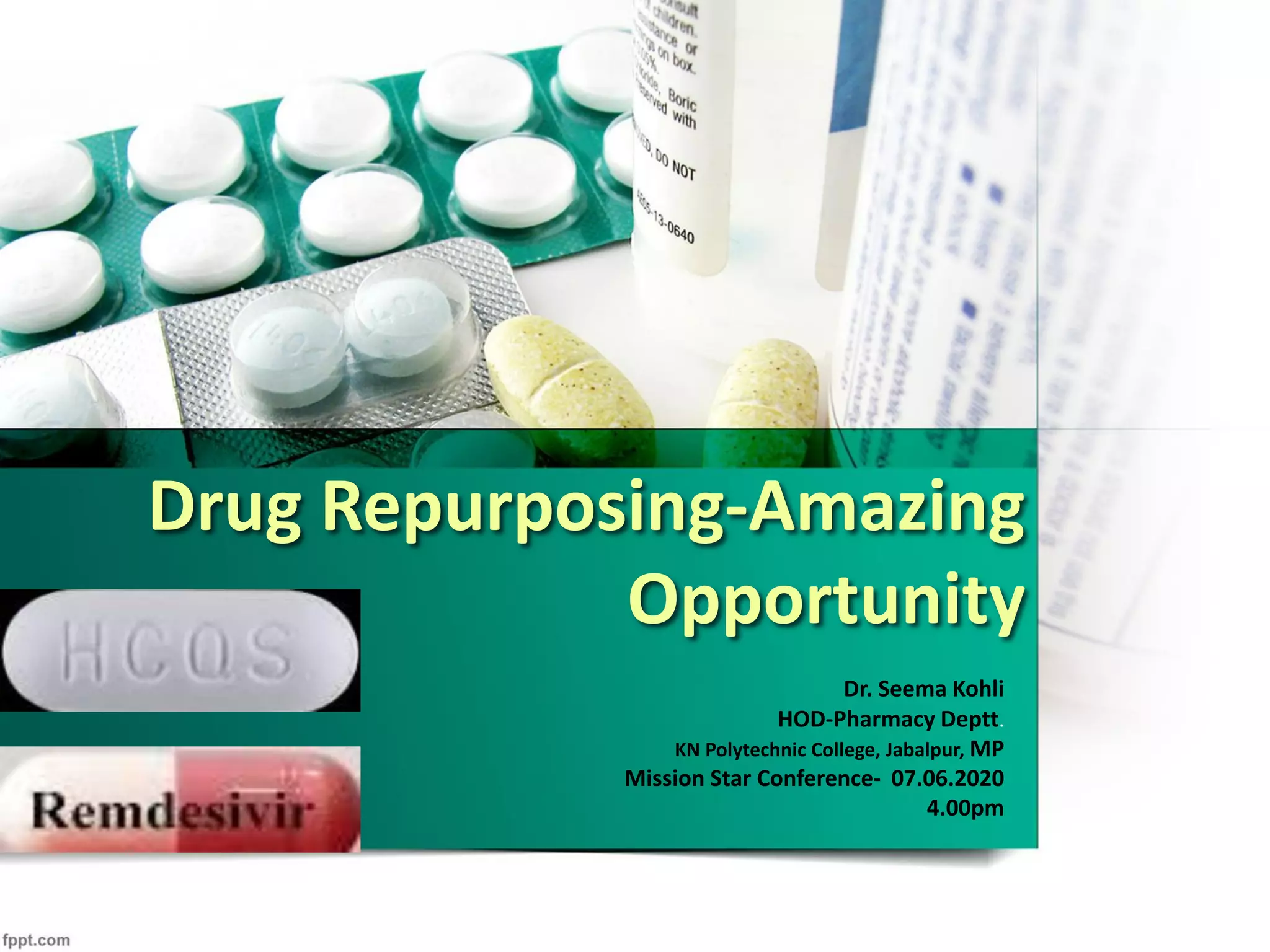
Drug Repurposing-Amazing
Opportunity
Dr. Seema Kohli
HOD-Pharmacy Deptt.
KN Polytechnic College, Jabalpur, MP
Mission Star Conference- 07.06.2020
4.00pm
Introduction
• Establishing other new medical usages for
already known drugs, including approved drugs.
• Drug repurposing or repositioning lies in
repurposing an active pharmaceutical
ingredient for a new indication that is already
on the market.
• Drug repurposing is a promising approach and is
mainly applied for the treatment of rare genetic
diseases, and it offers significant benefits to the
pharmaceutical industries.
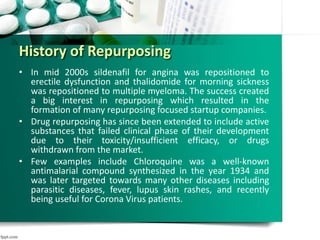
History of Repurposing
• In mid 2000s sildenafil for angina was repositioned to
erectile dysfunction and thalidomide for morning sickness
was repositioned to multiple myeloma. The success created
a big interest in repurposing which resulted in the
formation of many repurposing focused startup companies.
• Drug repurposing has since been extended to include active
substances that failed clinical phase of their development
due to their toxicity/insufficient efficacy, or drugs
withdrawn from the market.
• Few examples include Chloroquine was a well-known
antimalarial compound synthesized in the year 1934 and
was later targeted towards many other diseases including
parasitic diseases, fever, lupus skin rashes, and recently
being useful for Corona Virus patients.
Repurposing Definition
• "At its simplest, drug repurposing is taking an
existing drug and seeing whether it can be
used as an effective treatment for another
condition.“
• “Repurposing generally refers to studying
drugs that are already approved to treat one
disease or condition to see if they are safe and
effective for treating other diseases”.
Why Drug Repurposing
• The usual drug development process may delay the
translation of discovery from bench to bedside.
• The repurposing of 'old' drugs is an attractive
proposition because it involves the use of de-risked
compounds, with potentially lower overall
development costs and shorter development
timelines.
• Drug repurposing was initiated with expanding interest
from pharmaceutical organizations and the
recognizable proof of different cheminformatics and
bioinformatics findings.
• Out of these, nearly 10% of repurposed drugs were
approved by regulatory bodies and 70% are in various
stages of clinical development
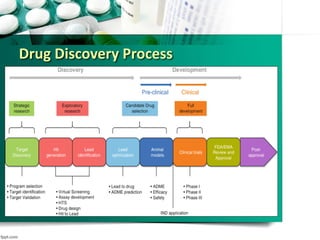
Drug Discovery Process
• Researchers identify particular cellular and genetic
factors that play a major role in each disease condition.
• The discovery and developmental stages of new drug
molecules include target identification (targeting
cellular and genetic markers associated with a particular
disease), target prioritization/validation (identification
of developed molecule that have an effect on selected
target), lead identification (molecules capable of
treating the disease), and lead optimization
(comparison of properties of various lead compounds
and selection of lead compound with the greatest
potential).
Drug Discovery Process
Drug Discovery & Drug Repurposing
• Preclinical studies which follow drug discovery ensure the safety of
the drug by laboratory and animal testing. After the preclinical
research, investigational new drug (IND) application is submitted to
FDA for permission to conduct clinical testing.
• Clinical research phase includes phase I, II and III studies and is mainly
to ensure safety and efficacy of drug in humans.
• Despite the huge investments and time-consuming processes, the
chances of the new drug molecule clearing all the drug approval
processes are often negligible.
• So, the drug manufacturing companies focus on other viable options
for drug research.
• Which defined drug repurposing as “studying the drugs that are
already approved to treat one disease or condition to see if they are
safe and effective for treating other diseases”.
• That is why drug repurposing is the need for all.
Pharmaceutical development
• Drug repurposing is an innovation stream of pharmaceutical
development that offers advantages for drug developers
along with safer medicines for patients.
• Several drugs have been successfully repositioned to a new
indication, with the most prominent of them being viagra
and thalidomide, which have generated historically high
revenues.
• Repurposing can be seen as a business opportunity for
pharmaceutical companies, weighing both challenges and
opportunities of repurposing.
• In addition, Repurposing can be extended profiling as a
lower-risk cost-effective repurposing model for
pharmaceutical companies and elucidate the novel
collaborative business opportunities that help to realize
repositioning of shelved and marketed compounds.
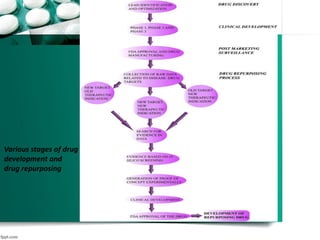
Various stages of drug
development and
drug repurposing
.
Nutraceuticals & Familial Dysautonomia
• Familial dysautonomia is a debilitating pediatric
disorder characterized by symptoms such as
cardiovascular problems, increased sensitivity to
pain and temperature, gastrointestinal dysfunction
and increased occurrence of pneumonia. If left
untreated, most children with the disease do not
live past the age of three.
• However, recent research have revealed that
common nutraceuticals can be combined to
prevent the mutated gene that causes FD from
being transcribed in patients’ brain cells. These
compounds include isoflavones, which are plant-
derived substances with estrogenic activity, and
EGCG, which is found in green tea .
CELEBREX (CELECOXIB) & COLORECTAL POLYPS
• The popular drug Celebrex known for its effectiveness in
osteoarthritis, a disease characterized by bone damage,
chronic pain, and decreased range of motion. The drug’s
mechanism of action involves selective inhibition of
COX-2 receptors, which cause inflammation in the body.
However, this condition is not the only one that can
come about when COX-2 receptors are overexpressed.
• Recent research has shown that COX-2 activity is
correlated with increased risk of colorectal cancers, and
that using drugs such as Celebrex can significantly
decrease the risk of additional polyp formation in
patients who have had colon cancer in the past).
Though Celebrex is not risk-free and carries with it some
chance of adverse cardiovascular reactions, the
discovery of its repurposed use has been a significant
milestone in colon cancer research.
METFORMIN & BREAST CANCER
• Metformin, a common diabetes drug that has
been manufactured at low cost for years, has a
long record of safety, effectiveness, and limited
side effects in diabetics.
• In the mid-2000s an interesting discovery was
made and published in the British Medical Journal:
patients taking metformin for diabetes saw a
significantly lowered risk for breast cancer .
Further investigation into this phenomenon is
ongoing at institution such as the Mayo Clinic and
University of Chicago, focusing on several other
types of cancer, as well .
METHROTREXATE & RHEUMATOID ARTHRITIS
(Dose adjustments to existing treatments)
The effects of certain drugs can vary greatly based on
dosage, making them ideal candidates for repurposing
research. Methrotrexate was developed as a
chemotherapy drug in the 1950s and has since been
administered at a very high dose to cancer patients.
At a low dose, and because of totally different
mechanisms of the drug, it has become a standard of
care for auto-immune diseases such as rheumatoid
arthritis . Researchers have since ironed the drug’s
alternative mechanisms through studies on juvenile
idiopathic arthritis .
THALIDOMIDE & MULTIPLE MYELOMA
(Dangerous originally, repurposed safely)
• One reason for the low success rate of novel drug
development is the high percentage of adverse side effects
found in late-stage clinical trials. However, failed drugs can be
repurposed for different diseases with new patient
populations that would not be affected by such side effects,
creating benefit for both pharmaceutical companies and for
patients.
• Most adults have heard about “thalidomide babies” born with
birth defects in the 1950s. however, they might not know that
this drug, developed as a treatment for morning sickness, has
some redeeming qualities. While it was dangerous in its initial
disease indication, this drug has been explored for its other
properties and has been proven effective in the treatment
of multiple myeloma, a devastating blood cancer and the
treatment of leprosy.
CHLOROQUINE & LUNG CANCER
(Combining new drugs with repurposed old drugs)
• Chloroquine, a drug that has historically been used
to treat malaria, has recently been combined with a
new drug, Tarceva, which kills lung cancer cells.
Tarceva only works for some patients, and the
cancer almost always becomes resistant after
prolonged exposure to the drug.
• However, the addition of chloroquine to the
treatment regimen appears to increase the number
of patients for whom Tarceva works, and helps it
work for longer.
RAPAMYCIN & PAEDIATRIC BLOOD DISEASE
(Repurposing generics for rare diseases)
• Rapamycin was just such a drug: originally
developed as a transplant anti-rejection drug,
it is now available generically.
• Through some fairly straightforward trials,
it was found to be an effective treatment for
the pediatric blood disease Autoimmune
Lymphoproliferative Syndrome (ALPS) due to
its immunosuppressant properties.
ITRACONAZOLE & CANCER
• The anti-fungal compound itraconazole was developed
in the 1980s, and suppresses fungal growth by inhibiting
membrane function in fungal cells . But a 2007 study
showed that the drug also has potent anti-cancer
properties .
• Further studies of itraconazole on its own, and
combined with other medicines, showed that it was an
effective treatment for cancers of the prostate, skin,
lungs, and other areas of the body. Clinical trials at
Johns Hopkins and Stanford University have yielded
positive results , and although the specific mechanisms
by which it works are unknown, this common antifungal
has made its way into the toolbox of oncologists across
the country.
ATRA & LEUKEMIA
• Another cancer treatment success story involves
the repurposing of all-trans retinoic acid (ATRA), a
chemical compound historically used in
medications that treat severe acne.
• Though it does not have anti-cancer properties
when used alone, ATRA has been combined with
traditional chemotherapy and to induce complete
remission in 90% of patients with acute
promyelocytic leukemia. The drug combination has
also been proven to significantly decrease the
chance of relapse among leukemia patients in
remission.
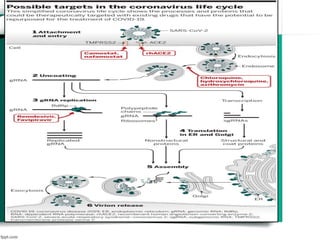
Drugs helpful in = Sars Cov2
• The US Food and Drug Administration (FDA)
approved limited emergency use for chloroquine and
hydroxychloroquine as a treatment for COVID-19.
• China has approved the use of Favilavir, an anti-viral
drug, as a treatment for coronavirus.
• The antiviral drug remdesivir gained emergency use
authorization (EUA) from the FDA on May 1, 2020,
based on preliminary data showing a faster time to
recovery of hospitalized patients with severe disease
Drug Repurposing in India
• Drug repurposing in India TB, HIV/AIDS, malaria, NTDs like
leprosy, lymphatic filariasis , visceral leishmaniasis ( kala-azar).
• Lifestyle diseases: diabetes, hypertension, IHD, cancers.
Reluctance of companies to invest in R&D of drugs for
infectious diseases and NTDs
• Drug repositioning in India Global initiatives based on public-
private partnership models: WHO special programme for
research and training in Tropical diseases (WHO/TDR)
Medicines for malaria venture, Global Alliance for TB Drug
Development, Drugs for Neglected Diseases.
• Paromomycin and miltefosine for kala-azar following trials in
India.
• Under the patent act of India, use of patent for a new
indication is not permissible for an already patented drug
Benefits of Drug Repurposing
• It’s Less Risky:
risks are better known and the chance of
failure due to adverse side effects is reduced.
• It’s Faster:
patients with terminal cancers, orphan
diseases, and other incurable conditions often
do not have a decade to spare.
• It’s Cheaper:
more patients will have access to and be able
to afford their repurposed medications
Barriers To Drug Repurposing
• Lack of Financial Incentives
• Undermines Existing Markets
• Legal and Intellectual Property Issue
• Still a Risky Business
• Scientists Rewarded for Originality
Conclusion
Drug repurposing is a promising approach and is
mainly applied for the treatment of rare genetic
diseases, and it offers significant benefits to the
pharmaceutical industries. In the current
economic climate, two factors may continue
impact into repurposing projects.
• the need to expand product pipelines with new
projects has become more acute, especially
with projects for which an element of the risk
has been removed.
• the pool of potential compounds abandoned for
strategic reasons is growing.
Conclusion
• Pharma industry is looking to explore the full
potential of their compounds at a much earlier
stage, perhaps even in late preclinical development,
offering additional opportunities for these
companies.
• Drug repurposing is expected to add value to the
product portfolio of the drug companies and
enhances the ability to bring new and affordable
treatment options for a number of serious and
neglected diseases.
• Since drug development involves multistage
process, time and money intense, thus, this type of
innovative ideas and novel concepts definitely will
expedite the drug development process.
References:
• Drug Repositioning (New Uses of Old Drugs) Dr. Amol
Khanapure, available at
http://www.authorstream.com/Presentation/doc18-
2055920-presentation1/
• D.J. Wallace, The history of antimalarials, Lupus5
(1_suppl) (1996) 2-3
• M. Schlitzer, Malaria chemotherapeutics part I: history of
antimalarial drug development, currently used
therapeutics, and drugs in clinical development,
ChemMedChem 2 (7) (2007) 944-986
• Rajesh Kumar a , Seetha Harilal, “Exploring the new
horizons of drug repurposing: A vital tool for turning hard
work into smart work”, European Journal of Medicinal
Chemistry, 182 (2019). 11602.
Continued…..
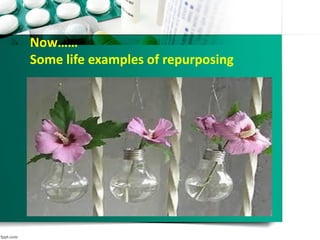
Now……
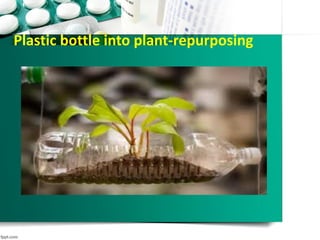
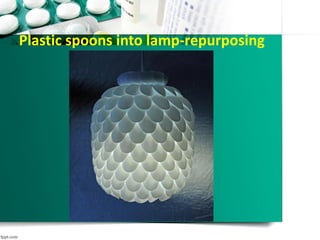
Some life examples of repurposing
Plastic bottle into plant-repurposing
Plastic spoons into lamp-repurposing
thank you
for listening

Drug Repurposing- Amazing Opportunity

  • 1.
    Drug Repurposing-Amazing Opportunity Dr. SeemaKohli HOD-Pharmacy Deptt. KN Polytechnic College, Jabalpur, MP Mission Star Conference- 07.06.2020 4.00pm
  • 2.
    Introduction • Establishing othernew medical usages for already known drugs, including approved drugs. • Drug repurposing or repositioning lies in repurposing an active pharmaceutical ingredient for a new indication that is already on the market. • Drug repurposing is a promising approach and is mainly applied for the treatment of rare genetic diseases, and it offers significant benefits to the pharmaceutical industries.
  • 3.
    History of Repurposing •In mid 2000s sildenafil for angina was repositioned to erectile dysfunction and thalidomide for morning sickness was repositioned to multiple myeloma. The success created a big interest in repurposing which resulted in the formation of many repurposing focused startup companies. • Drug repurposing has since been extended to include active substances that failed clinical phase of their development due to their toxicity/insufficient efficacy, or drugs withdrawn from the market. • Few examples include Chloroquine was a well-known antimalarial compound synthesized in the year 1934 and was later targeted towards many other diseases including parasitic diseases, fever, lupus skin rashes, and recently being useful for Corona Virus patients.
  • 4.
    Repurposing Definition • "Atits simplest, drug repurposing is taking an existing drug and seeing whether it can be used as an effective treatment for another condition.“ • “Repurposing generally refers to studying drugs that are already approved to treat one disease or condition to see if they are safe and effective for treating other diseases”.
  • 5.
    Why Drug Repurposing •The usual drug development process may delay the translation of discovery from bench to bedside. • The repurposing of 'old' drugs is an attractive proposition because it involves the use of de-risked compounds, with potentially lower overall development costs and shorter development timelines. • Drug repurposing was initiated with expanding interest from pharmaceutical organizations and the recognizable proof of different cheminformatics and bioinformatics findings. • Out of these, nearly 10% of repurposed drugs were approved by regulatory bodies and 70% are in various stages of clinical development
  • 6.
    Drug Discovery Process •Researchers identify particular cellular and genetic factors that play a major role in each disease condition. • The discovery and developmental stages of new drug molecules include target identification (targeting cellular and genetic markers associated with a particular disease), target prioritization/validation (identification of developed molecule that have an effect on selected target), lead identification (molecules capable of treating the disease), and lead optimization (comparison of properties of various lead compounds and selection of lead compound with the greatest potential).
  • 7.
  • 8.
    Drug Discovery &Drug Repurposing • Preclinical studies which follow drug discovery ensure the safety of the drug by laboratory and animal testing. After the preclinical research, investigational new drug (IND) application is submitted to FDA for permission to conduct clinical testing. • Clinical research phase includes phase I, II and III studies and is mainly to ensure safety and efficacy of drug in humans. • Despite the huge investments and time-consuming processes, the chances of the new drug molecule clearing all the drug approval processes are often negligible. • So, the drug manufacturing companies focus on other viable options for drug research. • Which defined drug repurposing as “studying the drugs that are already approved to treat one disease or condition to see if they are safe and effective for treating other diseases”. • That is why drug repurposing is the need for all.
  • 9.
    Pharmaceutical development • Drugrepurposing is an innovation stream of pharmaceutical development that offers advantages for drug developers along with safer medicines for patients. • Several drugs have been successfully repositioned to a new indication, with the most prominent of them being viagra and thalidomide, which have generated historically high revenues. • Repurposing can be seen as a business opportunity for pharmaceutical companies, weighing both challenges and opportunities of repurposing. • In addition, Repurposing can be extended profiling as a lower-risk cost-effective repurposing model for pharmaceutical companies and elucidate the novel collaborative business opportunities that help to realize repositioning of shelved and marketed compounds.
  • 10.
    Various stages ofdrug development and drug repurposing
  • 11.
  • 12.
    Nutraceuticals & FamilialDysautonomia • Familial dysautonomia is a debilitating pediatric disorder characterized by symptoms such as cardiovascular problems, increased sensitivity to pain and temperature, gastrointestinal dysfunction and increased occurrence of pneumonia. If left untreated, most children with the disease do not live past the age of three. • However, recent research have revealed that common nutraceuticals can be combined to prevent the mutated gene that causes FD from being transcribed in patients’ brain cells. These compounds include isoflavones, which are plant- derived substances with estrogenic activity, and EGCG, which is found in green tea .
  • 13.
    CELEBREX (CELECOXIB) &COLORECTAL POLYPS • The popular drug Celebrex known for its effectiveness in osteoarthritis, a disease characterized by bone damage, chronic pain, and decreased range of motion. The drug’s mechanism of action involves selective inhibition of COX-2 receptors, which cause inflammation in the body. However, this condition is not the only one that can come about when COX-2 receptors are overexpressed. • Recent research has shown that COX-2 activity is correlated with increased risk of colorectal cancers, and that using drugs such as Celebrex can significantly decrease the risk of additional polyp formation in patients who have had colon cancer in the past). Though Celebrex is not risk-free and carries with it some chance of adverse cardiovascular reactions, the discovery of its repurposed use has been a significant milestone in colon cancer research.
  • 14.
    METFORMIN & BREASTCANCER • Metformin, a common diabetes drug that has been manufactured at low cost for years, has a long record of safety, effectiveness, and limited side effects in diabetics. • In the mid-2000s an interesting discovery was made and published in the British Medical Journal: patients taking metformin for diabetes saw a significantly lowered risk for breast cancer . Further investigation into this phenomenon is ongoing at institution such as the Mayo Clinic and University of Chicago, focusing on several other types of cancer, as well .
  • 15.
    METHROTREXATE & RHEUMATOIDARTHRITIS (Dose adjustments to existing treatments) The effects of certain drugs can vary greatly based on dosage, making them ideal candidates for repurposing research. Methrotrexate was developed as a chemotherapy drug in the 1950s and has since been administered at a very high dose to cancer patients. At a low dose, and because of totally different mechanisms of the drug, it has become a standard of care for auto-immune diseases such as rheumatoid arthritis . Researchers have since ironed the drug’s alternative mechanisms through studies on juvenile idiopathic arthritis .
  • 16.
    THALIDOMIDE & MULTIPLEMYELOMA (Dangerous originally, repurposed safely) • One reason for the low success rate of novel drug development is the high percentage of adverse side effects found in late-stage clinical trials. However, failed drugs can be repurposed for different diseases with new patient populations that would not be affected by such side effects, creating benefit for both pharmaceutical companies and for patients. • Most adults have heard about “thalidomide babies” born with birth defects in the 1950s. however, they might not know that this drug, developed as a treatment for morning sickness, has some redeeming qualities. While it was dangerous in its initial disease indication, this drug has been explored for its other properties and has been proven effective in the treatment of multiple myeloma, a devastating blood cancer and the treatment of leprosy.
  • 17.
    CHLOROQUINE & LUNGCANCER (Combining new drugs with repurposed old drugs) • Chloroquine, a drug that has historically been used to treat malaria, has recently been combined with a new drug, Tarceva, which kills lung cancer cells. Tarceva only works for some patients, and the cancer almost always becomes resistant after prolonged exposure to the drug. • However, the addition of chloroquine to the treatment regimen appears to increase the number of patients for whom Tarceva works, and helps it work for longer.
  • 18.
    RAPAMYCIN & PAEDIATRICBLOOD DISEASE (Repurposing generics for rare diseases) • Rapamycin was just such a drug: originally developed as a transplant anti-rejection drug, it is now available generically. • Through some fairly straightforward trials, it was found to be an effective treatment for the pediatric blood disease Autoimmune Lymphoproliferative Syndrome (ALPS) due to its immunosuppressant properties.
  • 19.
    ITRACONAZOLE & CANCER •The anti-fungal compound itraconazole was developed in the 1980s, and suppresses fungal growth by inhibiting membrane function in fungal cells . But a 2007 study showed that the drug also has potent anti-cancer properties . • Further studies of itraconazole on its own, and combined with other medicines, showed that it was an effective treatment for cancers of the prostate, skin, lungs, and other areas of the body. Clinical trials at Johns Hopkins and Stanford University have yielded positive results , and although the specific mechanisms by which it works are unknown, this common antifungal has made its way into the toolbox of oncologists across the country.
  • 20.
    ATRA & LEUKEMIA •Another cancer treatment success story involves the repurposing of all-trans retinoic acid (ATRA), a chemical compound historically used in medications that treat severe acne. • Though it does not have anti-cancer properties when used alone, ATRA has been combined with traditional chemotherapy and to induce complete remission in 90% of patients with acute promyelocytic leukemia. The drug combination has also been proven to significantly decrease the chance of relapse among leukemia patients in remission.
  • 21.
    Drugs helpful in= Sars Cov2 • The US Food and Drug Administration (FDA) approved limited emergency use for chloroquine and hydroxychloroquine as a treatment for COVID-19. • China has approved the use of Favilavir, an anti-viral drug, as a treatment for coronavirus. • The antiviral drug remdesivir gained emergency use authorization (EUA) from the FDA on May 1, 2020, based on preliminary data showing a faster time to recovery of hospitalized patients with severe disease
  • 23.
    Drug Repurposing inIndia • Drug repurposing in India TB, HIV/AIDS, malaria, NTDs like leprosy, lymphatic filariasis , visceral leishmaniasis ( kala-azar). • Lifestyle diseases: diabetes, hypertension, IHD, cancers. Reluctance of companies to invest in R&D of drugs for infectious diseases and NTDs • Drug repositioning in India Global initiatives based on public- private partnership models: WHO special programme for research and training in Tropical diseases (WHO/TDR) Medicines for malaria venture, Global Alliance for TB Drug Development, Drugs for Neglected Diseases. • Paromomycin and miltefosine for kala-azar following trials in India. • Under the patent act of India, use of patent for a new indication is not permissible for an already patented drug
  • 24.
    Benefits of DrugRepurposing • It’s Less Risky: risks are better known and the chance of failure due to adverse side effects is reduced. • It’s Faster: patients with terminal cancers, orphan diseases, and other incurable conditions often do not have a decade to spare. • It’s Cheaper: more patients will have access to and be able to afford their repurposed medications
  • 25.
    Barriers To DrugRepurposing • Lack of Financial Incentives • Undermines Existing Markets • Legal and Intellectual Property Issue • Still a Risky Business • Scientists Rewarded for Originality
  • 26.
    Conclusion Drug repurposing isa promising approach and is mainly applied for the treatment of rare genetic diseases, and it offers significant benefits to the pharmaceutical industries. In the current economic climate, two factors may continue impact into repurposing projects. • the need to expand product pipelines with new projects has become more acute, especially with projects for which an element of the risk has been removed. • the pool of potential compounds abandoned for strategic reasons is growing.
  • 27.
    Conclusion • Pharma industryis looking to explore the full potential of their compounds at a much earlier stage, perhaps even in late preclinical development, offering additional opportunities for these companies. • Drug repurposing is expected to add value to the product portfolio of the drug companies and enhances the ability to bring new and affordable treatment options for a number of serious and neglected diseases. • Since drug development involves multistage process, time and money intense, thus, this type of innovative ideas and novel concepts definitely will expedite the drug development process.
  • 28.
    References: • Drug Repositioning(New Uses of Old Drugs) Dr. Amol Khanapure, available at http://www.authorstream.com/Presentation/doc18- 2055920-presentation1/ • D.J. Wallace, The history of antimalarials, Lupus5 (1_suppl) (1996) 2-3 • M. Schlitzer, Malaria chemotherapeutics part I: history of antimalarial drug development, currently used therapeutics, and drugs in clinical development, ChemMedChem 2 (7) (2007) 944-986 • Rajesh Kumar a , Seetha Harilal, “Exploring the new horizons of drug repurposing: A vital tool for turning hard work into smart work”, European Journal of Medicinal Chemistry, 182 (2019). 11602. Continued…..
  • 29.
  • 30.
    Plastic bottle intoplant-repurposing
  • 31.
    Plastic spoons intolamp-repurposing
  • 32.