Pharmaceutical Care
Practical Aspects
(Final year 20-21)
Pharmaceutical Care
• The concept of pharmacy practice took its roots in 1975 as,
“The care that a given patient requires and receives which assures
safe and rational drug usage”
– This concept laid the foundation of “Pharmaceutical Care”
[formally adopted in 1990]
• Pharmaceutical Care concept is the basis of modern days’ picture of
Pharmacy Practice with further room for specialized services (patient-
centered services).
• Pharmaceutical care is a patient-centered practice in which the practitioner
assumes responsibility for a patient's drug-related needs and is held accountable for
this commitment
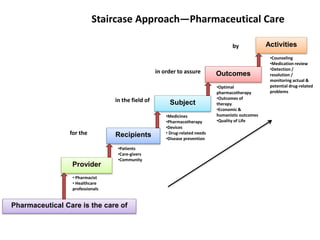
Staircase Approach—Pharmaceutical Care
Pharmaceutical Care is the care of
Activities
Outcomes
Subject
Recipients
Provider
for the
in the field of
in order to assure
by
• Pharmacist
• Healthcare
professionals
•Patients
•Care-givers
•Community
•Medicines
•Pharmacotherapy
•Devices
• Drug-related needs
•Disease prevention
•Optimal
pharmacotherapy
•Outcomes of
therapy
•Economic &
humanistic outcomes
•Quality of Life
•Counseling
•Medication review
•Detection /
resolution /
monitoring actual &
potential drug-related
problems
1. An overview of pharmaceutical care practice (already discussed
in 4th year)
2. Clinical and economic impact of pharmaceutical care practice
3. The practitioner’s responsibilities
4. The patient’s role
5. The patient’s medication experience
6. The assessment
7. Drug therapy problems
8. The care plan
9. Follow up evaluation
10. Ethical considerations in practice
11. Acquiring the knowledge you need to practice
12. The pharmacotherapy patient case presentation
13. Establishing a new pharmaceutical care practice
14. Standard of practice for pharmaceutical care
Clinical and economic impact of
pharmaceutical care practice
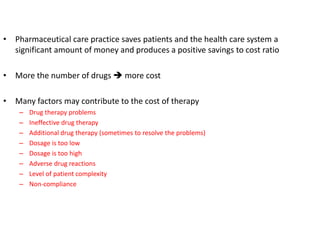
• Pharmaceutical care practice saves patients and the health care system a
significant amount of money and produces a positive savings to cost ratio
• More the number of drugs  more cost
• Many factors may contribute to the cost of therapy
– Drug therapy problems
– Ineffective drug therapy
– Additional drug therapy (sometimes to resolve the problems)
– Dosage is too low
– Dosage is too high
– Adverse drug reactions
– Level of patient complexity
– Non-compliance
• When a practitioner can save a substantial amount of money for healthcare syste,
and patient by
– clinic visit,
– employee work day,
– emergency room visit
• With the pharmaceutical care practitioner resolving drug therapy problems and
thus making
– patient's pharmacotherapy more effective and safe,
– physician office visits avoided (medication-related issues)
• One of the responsibilities of the pharmaceutical care practitioner is
– referring the patient to another practitioner if patient is in need of other expertise  saves
suffering and future problems and
– save the health care system a tremendous number of medical services (costs) in the future
Practitioner’s Responsibilities
The Practitioner's Philosophy of Practice
• A philosophy of practice is a set of values that guides the behavior of a
professional. It helps the practitioner determine what is important, how to set
priorities, and how to make clinical decisions and judgments. The philosophy of
practice prescribes how a practitioner should practice on a daily basis. It is a set of
rules the practitioner must follow to meet the standards of practice.
The Responsibility to Care
• Within the context of health, care derives from two different—but
complementary—concerns:
1. The technical dimensions of taking care of patients.
2. Caring for or about a particular patient, thereby demonstrating a concern for and
commitment to the well-being of another person, usually a stranger.
1. The pharmaceutical care practitioner's (PCP) responsibility is to determine that all
of the patient's drug-related needs are met at all times. This means that
(a) patient's drug therapy is used appropriately for each medical condition;
(b) most effective available;
(c) safest possible; and
(d) patient is able and willing to take the medication as intended
2. The PCP responsibilities include the
– identification,
– resolution, and
– prevention of drug therapy problems.
3. The PCP responsibilities to ensure
– goals of therapy are met for each of the patient's medical conditions and
– desired outcomes are achieved.
4. These responsibilities are fulfilled by caring for each patient as an individual in a
way that benefits the patient, minimizes harm, and is honest, fair, and ethical.
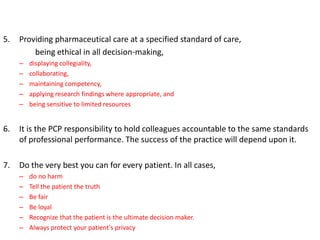
5. Providing pharmaceutical care at a specified standard of care,
being ethical in all decision-making,
– displaying collegiality,
– collaborating,
– maintaining competency,
– applying research findings where appropriate, and
– being sensitive to limited resources
6. It is the PCP responsibility to hold colleagues accountable to the same standards
of professional performance. The success of the practice will depend upon it.
7. Do the very best you can for every patient. In all cases,
– do no harm
– Tell the patient the truth
– Be fair
– Be loyal
– Recognize that the patient is the ultimate decision maker.
– Always protect your patient's privacy
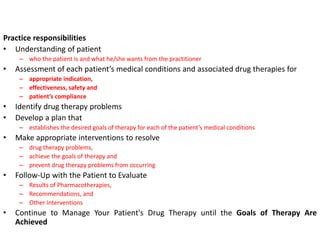
Practice responsibilities
• Understanding of patient
– who the patient is and what he/she wants from the practitioner
• Assessment of each patient’s medical conditions and associated drug therapies for
– appropriate indication,
– effectiveness, safety and
– patient’s compliance
• Identify drug therapy problems
• Develop a plan that
– establishes the desired goals of therapy for each of the patient’s medical conditions
• Make appropriate interventions to resolve
– drug therapy problems,
– achieve the goals of therapy and
– prevent drug therapy problems from occurring
• Follow-Up with the Patient to Evaluate
– Results of Pharmacotherapies,
– Recommendations, and
– Other Interventions
• Continue to Manage Your Patient's Drug Therapy until the Goals of Therapy Are
Achieved
Patient-Centered Approach
• Patient at the center of attention, at all times, in all situations, regardless of the
practitioner's demands, time constraints, or personality characteristics.
• Patient-centeredness prescribes the behavior of the practitioner toward the
patient during the patient care process.
• When thinking and acting in a caring manner with the patient at the center of the
practice, practitioners will:
• place the patients' needs, wants, and preferences before their own;
• serve as advocates and do what is best for the patient, regardless of what it
requires on their part;
• treat patients as individuals—be sensitive to cultures and belief systems, without
being patronizing or condescending;
• respect patients' time and priorities by committing full attention to them;
• remain conscious of patients' value system, and be prepared to identify and resolve
ethical dilemmas in an honest and straightforward manner.
The Patient's Role
• Establishing therapeutic relationship with the patient  Quality of care depends
on quality of relationship
• Strong relationship helps retrieval of necessary information from the patient for
clinical decision making
• Relationship—Brings values, experiences and expectations to the therapeutic
relationship
• Developing successful relationships involves skills that can learned and improved
daily
• Treating the patient in a confidential manner is the greatest respect afforded to
him /her
Therapeutic relationship
• The therapeutic relationship is a partnership or alliance between the practitioner
and the patient formed for the purpose of optimizing the patient's medication
experience
• The therapeutic relationship requires recognition of certain responsibilities on the
part of the patient and the practitioner. It is based on trust, respect, authenticity,
empathy, and commitment
Building the therapeutic relationship
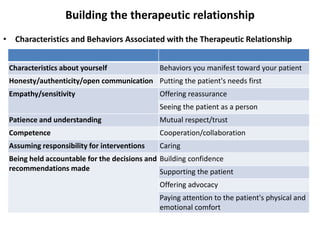
• Characteristics and Behaviors Associated with the Therapeutic Relationship
Characteristics about yourself Behaviors you manifest toward your patient
Honesty/authenticity/open communication Putting the patient's needs first
Empathy/sensitivity Offering reassurance
Seeing the patient as a person
Patience and understanding Mutual respect/trust
Competence Cooperation/collaboration
Assuming responsibility for interventions Caring
Being held accountable for the decisions and
recommendations made
Building confidence
Supporting the patient
Offering advocacy
Paying attention to the patient's physical and
emotional comfort
• The Impact of the Therapeutic Relationship
• The Patient as the Primary Source of Information
• The Patient as Decision Maker
• The Patient as Teacher
• The Patients' Rights and Responsibilities
• Patient expectations from practitioner
– what they want
– put their needs first before you own
– compassion and understanding of them as individuals
– Possess the Technical Knowledge and the Clinical Experience and Confidence It Takes to Apply that
Knowledge to Their Individual Case
– Receive the Appropriate Medication for their Medical Problems, and they Expect the Medication to
Work
– Be Realistic and Honest About What They Can Expect from Their Medications
– Their Advocate for All Their Drug-Related Needs
– Accountable for the Decisions You Make and the Advice You Give
– Know When to Refer Them to Someone with Different Expertise
The Patient's Responsibilities
1. accurate and complete information
2. establishment of goals of therapy
3. contribute to the care plan as agreed upon (act on the education and instructions
they received, collect important outcome parameters, keep appointments)
4. maintain a diary of medication use, signs, and symptoms, and test results if needed
to evaluate effectiveness, safety, and compliance
5. notify you of changes and/or problems with their drug therapy so you can act on
them before they become harmful
6. ask questions whenever they arise
General behaviors that will always impact the impression you have on your patients:
– Attend to your appearance and be conscious of the impact it has on the patient.
– Be conscious of the impact the appearance of your surroundings has on the patient.
– The vocabulary and language that you use to greet the patient will set the tone of the meeting.
– Listen and give attention to the patient, he/she will be expecting it
Issues of Confidentiality
• Maintaining a patient's privacy is the greatest test of the respect a practitioner
gives a patient
• Patient confidentiality has always been a concern in health care
Patient’s medication experience
The patient's medication experience is the sum of all the events a patient has in
his/her lifetime that involve drug therapy. This is the patient's personal experience
with medications.
This lived experience shapes the patient's attitudes, beliefs, and preferences about
drug therapy. It is these characteristics that principally determine a patient's
medication taking behavior
• The patient's medication experience consists of three related entities:
1. The patient's description of the experience he/she has had with medications;
2. A comprehensive medication history, including immunizations, allergies, adverse
drug reactions, and social drug use patterns;
3. A complete record of the patient's current medications and associated medical
conditions
ASSESSMENT
1. To determine if the patient's drug-related needs are being met and if any drug
therapy problems are present
2. Know your patient by understanding his/her medication experience before making
any decisions about his/her drug therapy
3. Elicit only relevant information necessary to make drug therapy decisions
4. Always assess the patient's drug-related needs in the same systematic order
– First determine if the indication is appropriate for the drug therapy
– Second, evaluate the effectiveness of the drug regimen for the indication
– Third, determine the level of safety of the drug regimen. Only after determining that the drug
therapy selected or being used by the patient is appropriately indicated, effective, and safe,
should you evaluate the patient's compliance with the medication
5. Documentation includes the clinician's assessment of how well the patient's drug-
related needs are being met and a description of the drug therapy problems
present
Purpose, Activities, and Responsibilities
• The purpose  to determine if a patient's drug-related needs are being met
• Activities & Responsibilities; the practitioner gathers, analyzes, researches, and
interprets information about the patient,
– medical conditions,
– patient's drug therapies
– drug-related needs whether they are taking medications or not
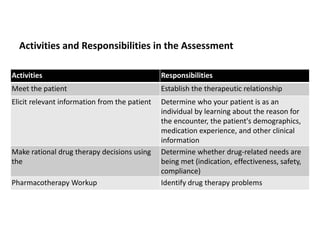
Activities Responsibilities
Meet the patient Establish the therapeutic relationship
Elicit relevant information from the patient Determine who your patient is as an
individual by learning about the reason for
the encounter, the patient's demographics,
medication experience, and other clinical
information
Make rational drug therapy decisions using
the
Determine whether drug-related needs are
being met (indication, effectiveness, safety,
compliance)
Pharmacotherapy Workup Identify drug therapy problems
Activities and Responsibilities in the Assessment
Standard of Care 1: Collection of Patient-Specific Information
Standard 1: The Practitioner Collects Relevant Patient-Specific Information to Use in
Decision-Making Concerning All Drug Therapies
Meeting the patient
Introducing yourself
Physical environment
Taking notes
Eliciting Information from the Patient
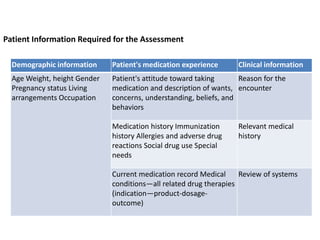
Patient Information Required for the Assessment
Demographic information Patient's medication experience Clinical information
Age Weight, height Gender
Pregnancy status Living
arrangements Occupation
Patient's attitude toward taking
medication and description of wants,
concerns, understanding, beliefs, and
behaviors
Reason for the
encounter
Medication history Immunization
history Allergies and adverse drug
reactions Social drug use Special
needs
Relevant medical
history
Current medication record Medical
conditions—all related drug therapies
(indication—product-dosage-
outcome)
Review of systems
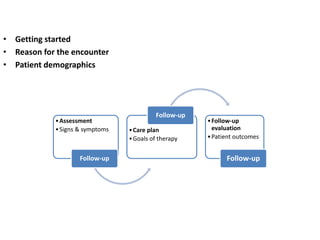
• Getting started
• Reason for the encounter
• Patient demographics
•Assessment
•Signs & symptoms
Follow-up
•Care plan
•Goals of therapy
Follow-up
•Follow-up
evaluation
•Patient outcomes
Follow-up
Drug therapy Problem
Drug Therapy Problems: Terminology
• A drug therapy problem is any undesirable event experienced by a patient which
involves, or is suspected to involve, drug therapy, and that interferes with achieving
the desired goals of therapy
Components of a Drug Therapy Problem
1. An undesirable event or risk of an event experienced by the patient. The problem
can take the form of a medical complaint, sign, symptom, diagnosis, disease,
illness, impairment, disability, abnormal laboratory value, or syndrome. The event
can be the result of physiological, psychological, sociocultural, or economic
conditions.
2. The drug therapy (products and/or dosage regimen) involved.
3. The relationship that exists (or is suspected to exist) between the undesirable
patient event and drug therapy.
This relationship can be
– the consequence of drug therapy, suggesting a direct association or even a
cause and effect relationship, or
– to require the addition or modification of drug therapy for its resolution or
prevention.
1. Identifying, resolving, and preventing drug therapy problems is the unique
contribution of the pharmaceutical care practitioner.
2. Identifying a drug therapy problem is a clinical judgment that requires that the
practitioner identify an association between the patient's medical condition and
the patient's pharmacotherapy.
3. Drug therapy problems can occur at every step of the medication use process
4. There are seven distinct categories of drug therapy problems
5. How the practitioner describes the drug therapy problem influences the selection
of interventions to resolve the problem
6. A correctly stated drug therapy problem includes (a) a description of the patient's
condition or problem; (b) the drug therapy involved; (c) the specific association
between the drug therapy and the patient's condition
7. Drug therapy problems should be evaluated for their severity, acuteness, and
significance to the patient to determine how quickly the resolution of the problem
must occur
8. When multiple drug therapy problems exist, prioritize them and begin with the
problem that is most important to the patient and/or is critical to the health of
the patient
9. Patients who have no drug therapy problems still require a care plan and follow-
up evaluation to ensure that the goals of therapy continue to be met and no new
drug therapy problems develop.
Drug therapy problem 1: Unnecessary drug therapy
Drug therapy problem 2: Needs additional drug therapy
Drug therapy problem 3: Ineffective drug
Drug therapy problem 4: Dosage too low
Drug therapy problem 5: Adverse Drug Reaction
Drug therapy problem 6: Dosage too high
Drug therapy problem 7: Non-compliance
The patient does not understand the instructions. The patient prefers not to take the
medication. The patient forgets to take the medication. The drug product is too
expensive for the patient. The patient cannot swallow or self-administer the drug
product appropriately. The drug product is not available for the patient.
Drug therapy problem 5: Adverse Drug Reaction
• The drug product causes an undesirable reaction that is not dose-related.
• A safer drug product is required due to risk factors.
• A drug interaction causes an undesirable reaction that is not dose-related.
• The dosage regimen was administered or changed too rapidly.
• The drug product causes an allergic reaction.
• The drug product is contraindicated due to risk factors.
Drug therapy problem 7: Non-compliance
• The patient does not understand the instructions.
• The patient prefers not to take the medication.
• The patient forgets to take the medication.
• The drug product is too expensive for the patient.
• The patient cannot swallow or self-administer the drug product appropriately.
• The drug product is not available for the patient.
Follow up evaluation
1. The purpose of the follow-up evaluation is to determine the patient's outcomes in
relation to the desired goals of therapy.
2. Parameters that reflect both effectiveness and drug safety must be evaluated.
3. The evaluation of effectiveness of pharmacotherapy includes measurable
improvement in clinical signs and symptoms and/or laboratory values.
4. The evaluation of the safety of pharmacotherapy includes evidence of adverse
drug reactions and/or toxicity.
5. Patient compliance and its influence on outcomes are determined during the
follow-up evaluation.
6. The outcome status of the patient's medical condition being treated or prevented
with drug therapy is determined and described.
7. The patient is reassessed to determine if any new drug therapy problems have
developed.
8. The follow-up evaluation is the step in which actual results and outcomes from
drug therapies are documented.
Purpose, Activities, and Responsibilities
Activities Responsibilities
Elicit clinical and/or laboratory evidence of
actual outcomes and compare them to goals of
therapy.
Evaluate effectiveness of pharmacotherapy.
Elicit clinical and/or laboratory evidence of
adverse effects or toxicity to determine safety
of drug therapy.
Evaluate safety of pharmacotherapy.
Document clinical status and any changes in
pharmacotherapy that are required.
Make a judgment as to the clinical status of the
condition being managed with
pharmacotherapy.
Assess patient for any new problems. Assess patient compliance and identify if any
new drug therapy problems have occurred.
Schedule next follow-up evaluation. Provide continuous care.
The Practitioner Evaluates the Patient's Outcomes and Determines the Patient's
Progress Toward the Achievement of the Goals of Therapy, Determines If Any
Safety or Compliance Issues Are Present, and Assesses Whether Any New Drug
Therapy Problems Have Developed
“No one cares how much you know, until they know how much you care”
• Measurement Criteria
1. The patient's outcomes from drug therapies and other interventions are
documented.
2. The effectiveness of drug therapies is evaluated, and the patient's status is
determined by comparing the outcomes within the expected timeframe to
achieve the goals of therapy.
3. The safety of the drug therapy is evaluated.
4. Patient compliance is evaluated.
5. The care plan is revised, as needed.
6. Revisions in the care plan are documented.
7. Evaluation is systematic and ongoing until all goals of therapy are achieved.
8. The patient, family and/or care-givers, and health care providers are involved in
the evaluation process, when appropriate.
Determining the Clinical Outcome Status
• The terminology used to describe clinical outcome status resulting from drug
therapies is precise and represents both the decisions and actions on the part of
the pharmaceutical care practitioner.
• The standard pharmacotherapy outcome status terms describe two characteristics
of the patient's drug therapy:
1. the progress, or lack of progress, in achieving the desired goals of therapy at the
time of the follow-up evaluation;
2. the action, if any, taken to adjust the patient's drug therapies.
Resolved
• The patient's desired goals of therapy have been successfully achieved, and drug
therapy can be discontinued.
• The use of the term resolved is intended to represent a final positive patient
outcome, and is most often applicable to acute medical conditions or illnesses.
• The action taken, in this case discontinuing the drug therapy, should be
documented in your patient's pharmaceutical care records along with the clinical
and/or laboratory evidence of the positive outcome
• Example Consider the case of a successful treatment of a community acquired
pneumonia in a 53-year male patient with a 10-day course of oral erythromycin
therapy at a dosage of 500 mg four times each day.
 By the end of the 10 days of antibiotics, the patient's temperature is back to
normal, he has stopped coughing, his white blood count is no longer elevated, and
the infiltrates originally seen on his chest x ray have cleared. He does not require
any further antibiotics past the original 10-day course of treatment. No additional
follow-up is needed as his pneumonia has resolved.
Stable
• The patient's goals of therapy have been achieved, and the same drug therapy will
be continued to optimally manage the patient's chronic disease. This is most
frequently the case when drug therapy is used to treat or prevent a chronic medical
condition or illness. In these cases, stabilizing the patient's clinical condition and/or
improving laboratory test results were the predetermined desired goals.
• Example In order to stabilize a 63 year old female patient's blood pressure within a
desired range of 110–120/70–80 within 2 months the practitioner initiates
pharmacotherapy with 50 mg of hydrochlorothiazide every morning, a sodium
restricted diet, and a low impact exercise program. At the 60-day follow-up
evaluation, the patient's blood pressure was 112/80 and her hypertension was
judged to be stable and no changes in hydrochlorothiazide dosage regimen were
made. The next follow-up evaluation might be planned to occur in 90 days to
reevaluate the continued success of the entire care plan.
Improved
• Measurable progress is being realized in achieving the patient's goals of therapy.
Goals have not been completely achieved at this time; however, no changes in drug
therapy will be implemented at this time because more time will be required to
observe the full benefit from this drug regimen.
• Example Consider a 55-year-old male patient whose depressive signs and
symptoms such as loss of energy and disturbances in sleep and eating patterns
have improved following an initial 3 weeks of drug therapy with 100 mg daily of the
antidepressant drug sertraline (Zoloft). Although his depressed mood and ability to
concentrate have still not fully responded, no changes in his dosage regimen will be
instituted at this time. In this case, an additional follow-up evaluation would be
scheduled for 4 weeks.
Partial improvement
• The evaluation indicates that some positive progress is being made in achieving the
patient's goals of therapy, but adjustments in drug therapy are necessary at this
time in order to fully meet all of the goals of therapy by the next scheduled follow-
up evaluation.
• Example A 47-year-old female patient whose arthritic pain has been somewhat
relieved following 2 weeks of therapy with ketoprofen (Orudis) 12.5 mg four times
daily, desires additional relief from her discomfort. The practitioner's evaluation
indicates that greater effectiveness might be realized by increasing the total daily
dosage of ketoprofen to 75 mg taken as 25 mg three times daily. The next follow-up
evaluation is scheduled to occur in two more weeks to determine if this adjustment
in the dosage regimen of the nonsteroidal anti-inflammatory medication produces
continued and/or additional relief for the patient without intolerable stomach
irritation, headache, or fluid retention.
Unimproved
• The practitioner's clinical evaluation is that, to date, little or no positive progress
has been made in achieving the patient's goals of therapy, but further
improvement is still anticipated given more time. Therefore, the patient's care plan
will not be altered at this time. Thus, the unimproved status evaluation is
dependent on the timing of the follow-up evaluation.
Example An adult male patient who is allergic to penicillin is started on erythromycin
250 mg orally four times a day for the treatment of a localized soft tissue infection
following a work-related injury to the right forearm. Twenty-four hours after
initiating erythromycin therapy the patient experiences some nausea from the
antibiotic, and the injured area on the arm is still inflamed and slightly swollen. The
practitioner reassures the patient about the nausea and provides him with a
suggestion as to how to minimize this undesirable side effect commonly associated
with erythromycin, and documents an evaluation of the current effectiveness of
therapy. The practitioner reports that although the arm is unimproved at this early
stage in therapy, no dosage changes are indicated, and that 3–5 days would be an
appropriate time to make another evaluation of the potential effectiveness of the
Worsened
• The practitioner's evaluation describes a decline in the health of the patient
despite an adequate therapeutic trial using the best possible drug therapy for this
individual. Because the goals of therapy are not being achieved, changes in the
patient's drug therapies are necessary at this time. The drug dosage may need to
be increased and/or additive or synergistic drug therapies might need to be added.
A future follow-up evaluation should be planned to examine the status of the
patient's condition once the changes in the care plan have been instituted.
• Example A 17-year-old athlete whose elbow stiffness and muscle pain have
progressively become more bothersome over the past 4 days despite the use of
acetaminophen 325 mg three times each day and ice packs. This worsening
condition might call for increasing the acetaminophen dosage and/or adding a
topical analgesic such as capsicum. Two days after increasing the acetaminophen
dosage to 1000 mg three times a day and adding topical capsicum, the practitioner
would follow-up again to determine the effectiveness in reducing the pain and
stiffness in this varsity athlete.
Failure
• The practitioner's evaluation indicates that the present care plan and associated
drug therapies have been given at adequate dosages and for an adequate amount
of time, yet they have failed to help the patient achieve the goals of therapy.
Therefore, the present therapy should be discontinued and alternate
pharmacotherapy initiated. In these situations, the desired outcomes have not
been realized and the initial treatment is considered to have failed.
• Example A 37-year-old female patient whose symptoms of seasonal allergic rhinitis
have not improved with 2 weeks of chlorpheniramine therapy at 24 mg per day.
Therefore, it will be discontinued, and new drug therapy initiated such as
loratadine (Claritin) 10 mg daily. The next follow-up evaluation is planned in 5 days
to examine the effectiveness of loratadine in controlling the patient's symptoms of
rhinitis.
Expired
• The fact that the patient dies while receiving drug therapy is documented in the
pharmaceutical care record. Any important observations about contributing
factors, especially if they are drug-related, should be noted.
Acquiring the Knowledge You
Need to Practice
1. The expertise of the pharmaceutical care practitioner is focused in the
disciplines of
a) pharmacology,
b) pharmacotherapy, and
c) pharmaceutical care practice.
2. The knowledge you will need to provide pharmaceutical care can be categorized
into three types:
a) knowledge about the patient,
b) knowledge about diseases, and
c) knowledge about drug therapies.
3. The scope of knowledge about patients can be grouped into
a) personal,
b) social, and
c) physiological information.
4. The scope of knowledge about diseases can be grouped into
a) characteristics of the disease,
b) intent of treatment, and
c) goals of therapy.
5. The scope of knowledge about drug therapies can be grouped into
1. characteristics of the drug,
2. actions of the drug in the patient, and
3. the outcomes of drug therapy
6. The knowledge you need can most effectively and efficiently be learned within
the structure of the Pharmacotherapy Workup and then applied in the patient
care process
7. The most useful approach to learning this knowledge is to begin with those
patient characteristics, diseases, and drug therapies that are most commonly
seen in practice
Becoming Familiar with What You Need to Know
The knowledge you must learn, integrate, and use in practice can be classified into
three broad categories:
 knowledge about patients,
 knowledge about diseases, and
 knowledge about drugs.
All three categories of knowledge are equally important, however your unique
expertise will lie in drug therapies. Because you will be using this knowledge to
make patient-specific decisions, you will always think about and
 apply it in a specific order:
 understand the patient;
 understand the patient's disease,
 illness, or medical condition; and
 understand the drug therapy used to treat the medical condition.
Although it will be necessary to gain knowledge in a number of different sciences, the
foundation of your knowledge will be
• how drugs work (pharmacology),
• how drugs are used to treat and prevent diseases (pharmacotherapy), and
• how we apply this knowledge to help patients (pharmaceutical care practice).
• It will be prudent to begin your learning with those patients, diseases, and drug
therapies that are most commonly encountered in practice.
• Do not try to learn everything immediately; start with the drug therapy problems
that patients experience most frequently.
• Build your expertise based upon what your patients need to know, and learn from
your patients
Common conditions need to be known
1. Hypertension
2. Hyperlipidemia
3. Osteoporosis prevention
4. Diabetes
5. Vitamin/dietary supplements
6. Allergic rhinitis
7. Depression
8. Esophagitis
9. Pain—general
10. Hypothyroidism
11. Asthma
12. Arthritis pain
13. Bronchitis
14. Sinusitis
15. Menopausal symptoms
16. Otitis media
17. Anxiety 18. Insomnia 19. Headache pain 20. Cardiac dysrhythmias
Pharmacotherapeutic Knowledge Needed for Pharmaceutical Care Practice
Characteristics of the drug
• Description of the drug Efficacy for an indication
• Dosage regimen for the drug
• Dose (initial and maintenance)
• Dosing interval Frequency Duration
• Pharmacology (action of the drug)
• Mechanism of action
• Sites of action
• Toxicology
• Contraindications
• Adverse effects
• Precautions
Activity of the drug in the patient
• Pharmaceutical process
• Bioavailability
• Physicochemical properties
• Formulations and dosage forms
• Methods of drug administrations
• Pharmacokinetic process Absorption Distribution Metabolism Elimination
• Pharmacodynamic process Impact of a drug on cell, tissue, or organ
• Time course of the effects
The outcomes of drug therapy
• Therapeutic process Effectiveness:
• The therapeutic effect—expected beneficial pharmacological effects of the drug on
the course of the patient's disease or illness
• Improvement in signs, symptoms, and/or laboratory findings
• Safety: Detrimental pharmacological effects of the drug on the patient
• Undesirable or harmful effects and adverse drug reactions
Acquiring the Clinical Skills You
Need to Practice
1. The clinical skills required to practice pharmaceutical care include
1. obtaining information from the patient,
2. applying knowledge to individual patients,
3. communicating with patients and colleagues, and
4. being reflective in practice.
2. Obtaining information from patients requires
1. observational,
2. interview, and
3. physical assessment skills
3. Applying knowledge to individual patients allows you to generate
1. hypotheses,
2. solve problems, and
3. make rational and logical decisions about the patient's pharmacotherapy.
4. Documenting the care provided in practice reflects commitment to
1. the patient,
2. adherence to practice standards, and
3. the desire to learn from clinical experience.
5. Reflective skills allow you to convert clinical experience into clinical knowledge
Obtaining Clinical Information from the Patient
• Observational Skills
• Interview Skills
• Listen with an Open Mind
• Listen with Empathy
• Becoming Efficient at Collecting Patient Information
• Collect Only the Information You Will Use
• Physical Assessment Skills
• Vital Signs
• Retrieving Information
• Communication Skills
• Patient-Focused Communication
• Written Correspondence with Patients
• Practitioner-Focused Communication
• Written Correspondence with Other Practitioners
Documentation in Practice
Refers to all the patient-specific information, the clinical decisions, and the patient
outcomes that are recorded for use in practice. This includes everything written
down in long-hand, or entered into a computer program that becomes data and is
used to facilitate the care of the patient
The Pharmaceutical Care Patient Chart
The patient chart is a record of the information collected by practitioners, the
decisions made, the actions taken, and the outcomes that result, at the time these
events occur
Guidelines for Documenting Pharmaceutical Care
• Timely
• Precise
• Concise
• Complete
Reasons to Document Care in Practice
Meeting the Documentation Standard for Patient Care
Being Effective and Efficient at Patient Care
Legal Purposes
Communication Purposes
Reimbursement Purposes
Patient Case Presentations and Reflection in Practice
Managing a Pharmaceutical Care Practice
Paper and Electronic Documentation
The Paper Chart
The Use of a Computerized Program
Learning to Be Reflective in Practice
(1) learn how to be reflective in practice to learn the most you can from every patient
experience and
(2) become proficient at presenting patient cases so you can learn from your
colleagues.
Pharmaceutical Care-1.pptx

Pharmaceutical Care-1.pptx

  • 1.
  • 2.
    Pharmaceutical Care • Theconcept of pharmacy practice took its roots in 1975 as, “The care that a given patient requires and receives which assures safe and rational drug usage” – This concept laid the foundation of “Pharmaceutical Care” [formally adopted in 1990] • Pharmaceutical Care concept is the basis of modern days’ picture of Pharmacy Practice with further room for specialized services (patient- centered services). • Pharmaceutical care is a patient-centered practice in which the practitioner assumes responsibility for a patient's drug-related needs and is held accountable for this commitment
  • 3.
    Staircase Approach—Pharmaceutical Care PharmaceuticalCare is the care of Activities Outcomes Subject Recipients Provider for the in the field of in order to assure by • Pharmacist • Healthcare professionals •Patients •Care-givers •Community •Medicines •Pharmacotherapy •Devices • Drug-related needs •Disease prevention •Optimal pharmacotherapy •Outcomes of therapy •Economic & humanistic outcomes •Quality of Life •Counseling •Medication review •Detection / resolution / monitoring actual & potential drug-related problems
  • 4.
    1. An overviewof pharmaceutical care practice (already discussed in 4th year) 2. Clinical and economic impact of pharmaceutical care practice 3. The practitioner’s responsibilities 4. The patient’s role 5. The patient’s medication experience 6. The assessment 7. Drug therapy problems 8. The care plan 9. Follow up evaluation 10. Ethical considerations in practice 11. Acquiring the knowledge you need to practice 12. The pharmacotherapy patient case presentation 13. Establishing a new pharmaceutical care practice 14. Standard of practice for pharmaceutical care
  • 5.
    Clinical and economicimpact of pharmaceutical care practice
  • 6.
    • Pharmaceutical carepractice saves patients and the health care system a significant amount of money and produces a positive savings to cost ratio • More the number of drugs  more cost • Many factors may contribute to the cost of therapy – Drug therapy problems – Ineffective drug therapy – Additional drug therapy (sometimes to resolve the problems) – Dosage is too low – Dosage is too high – Adverse drug reactions – Level of patient complexity – Non-compliance
  • 7.
    • When apractitioner can save a substantial amount of money for healthcare syste, and patient by – clinic visit, – employee work day, – emergency room visit • With the pharmaceutical care practitioner resolving drug therapy problems and thus making – patient's pharmacotherapy more effective and safe, – physician office visits avoided (medication-related issues) • One of the responsibilities of the pharmaceutical care practitioner is – referring the patient to another practitioner if patient is in need of other expertise  saves suffering and future problems and – save the health care system a tremendous number of medical services (costs) in the future
  • 8.
  • 9.
    The Practitioner's Philosophyof Practice • A philosophy of practice is a set of values that guides the behavior of a professional. It helps the practitioner determine what is important, how to set priorities, and how to make clinical decisions and judgments. The philosophy of practice prescribes how a practitioner should practice on a daily basis. It is a set of rules the practitioner must follow to meet the standards of practice. The Responsibility to Care • Within the context of health, care derives from two different—but complementary—concerns: 1. The technical dimensions of taking care of patients. 2. Caring for or about a particular patient, thereby demonstrating a concern for and commitment to the well-being of another person, usually a stranger.
  • 10.
    1. The pharmaceuticalcare practitioner's (PCP) responsibility is to determine that all of the patient's drug-related needs are met at all times. This means that (a) patient's drug therapy is used appropriately for each medical condition; (b) most effective available; (c) safest possible; and (d) patient is able and willing to take the medication as intended 2. The PCP responsibilities include the – identification, – resolution, and – prevention of drug therapy problems. 3. The PCP responsibilities to ensure – goals of therapy are met for each of the patient's medical conditions and – desired outcomes are achieved. 4. These responsibilities are fulfilled by caring for each patient as an individual in a way that benefits the patient, minimizes harm, and is honest, fair, and ethical.
  • 11.
    5. Providing pharmaceuticalcare at a specified standard of care, being ethical in all decision-making, – displaying collegiality, – collaborating, – maintaining competency, – applying research findings where appropriate, and – being sensitive to limited resources 6. It is the PCP responsibility to hold colleagues accountable to the same standards of professional performance. The success of the practice will depend upon it. 7. Do the very best you can for every patient. In all cases, – do no harm – Tell the patient the truth – Be fair – Be loyal – Recognize that the patient is the ultimate decision maker. – Always protect your patient's privacy
  • 12.
    Practice responsibilities • Understandingof patient – who the patient is and what he/she wants from the practitioner • Assessment of each patient’s medical conditions and associated drug therapies for – appropriate indication, – effectiveness, safety and – patient’s compliance • Identify drug therapy problems • Develop a plan that – establishes the desired goals of therapy for each of the patient’s medical conditions • Make appropriate interventions to resolve – drug therapy problems, – achieve the goals of therapy and – prevent drug therapy problems from occurring • Follow-Up with the Patient to Evaluate – Results of Pharmacotherapies, – Recommendations, and – Other Interventions • Continue to Manage Your Patient's Drug Therapy until the Goals of Therapy Are Achieved
  • 13.
    Patient-Centered Approach • Patientat the center of attention, at all times, in all situations, regardless of the practitioner's demands, time constraints, or personality characteristics. • Patient-centeredness prescribes the behavior of the practitioner toward the patient during the patient care process. • When thinking and acting in a caring manner with the patient at the center of the practice, practitioners will: • place the patients' needs, wants, and preferences before their own; • serve as advocates and do what is best for the patient, regardless of what it requires on their part; • treat patients as individuals—be sensitive to cultures and belief systems, without being patronizing or condescending; • respect patients' time and priorities by committing full attention to them; • remain conscious of patients' value system, and be prepared to identify and resolve ethical dilemmas in an honest and straightforward manner.
  • 14.
  • 15.
    • Establishing therapeuticrelationship with the patient  Quality of care depends on quality of relationship • Strong relationship helps retrieval of necessary information from the patient for clinical decision making • Relationship—Brings values, experiences and expectations to the therapeutic relationship • Developing successful relationships involves skills that can learned and improved daily • Treating the patient in a confidential manner is the greatest respect afforded to him /her
  • 16.
    Therapeutic relationship • Thetherapeutic relationship is a partnership or alliance between the practitioner and the patient formed for the purpose of optimizing the patient's medication experience • The therapeutic relationship requires recognition of certain responsibilities on the part of the patient and the practitioner. It is based on trust, respect, authenticity, empathy, and commitment
  • 17.
    Building the therapeuticrelationship • Characteristics and Behaviors Associated with the Therapeutic Relationship Characteristics about yourself Behaviors you manifest toward your patient Honesty/authenticity/open communication Putting the patient's needs first Empathy/sensitivity Offering reassurance Seeing the patient as a person Patience and understanding Mutual respect/trust Competence Cooperation/collaboration Assuming responsibility for interventions Caring Being held accountable for the decisions and recommendations made Building confidence Supporting the patient Offering advocacy Paying attention to the patient's physical and emotional comfort
  • 18.
    • The Impactof the Therapeutic Relationship • The Patient as the Primary Source of Information • The Patient as Decision Maker • The Patient as Teacher • The Patients' Rights and Responsibilities • Patient expectations from practitioner – what they want – put their needs first before you own – compassion and understanding of them as individuals – Possess the Technical Knowledge and the Clinical Experience and Confidence It Takes to Apply that Knowledge to Their Individual Case – Receive the Appropriate Medication for their Medical Problems, and they Expect the Medication to Work – Be Realistic and Honest About What They Can Expect from Their Medications – Their Advocate for All Their Drug-Related Needs – Accountable for the Decisions You Make and the Advice You Give – Know When to Refer Them to Someone with Different Expertise
  • 19.
    The Patient's Responsibilities 1.accurate and complete information 2. establishment of goals of therapy 3. contribute to the care plan as agreed upon (act on the education and instructions they received, collect important outcome parameters, keep appointments) 4. maintain a diary of medication use, signs, and symptoms, and test results if needed to evaluate effectiveness, safety, and compliance 5. notify you of changes and/or problems with their drug therapy so you can act on them before they become harmful 6. ask questions whenever they arise General behaviors that will always impact the impression you have on your patients: – Attend to your appearance and be conscious of the impact it has on the patient. – Be conscious of the impact the appearance of your surroundings has on the patient. – The vocabulary and language that you use to greet the patient will set the tone of the meeting. – Listen and give attention to the patient, he/she will be expecting it
  • 20.
    Issues of Confidentiality •Maintaining a patient's privacy is the greatest test of the respect a practitioner gives a patient • Patient confidentiality has always been a concern in health care
  • 21.
  • 22.
    The patient's medicationexperience is the sum of all the events a patient has in his/her lifetime that involve drug therapy. This is the patient's personal experience with medications. This lived experience shapes the patient's attitudes, beliefs, and preferences about drug therapy. It is these characteristics that principally determine a patient's medication taking behavior • The patient's medication experience consists of three related entities: 1. The patient's description of the experience he/she has had with medications; 2. A comprehensive medication history, including immunizations, allergies, adverse drug reactions, and social drug use patterns; 3. A complete record of the patient's current medications and associated medical conditions
  • 23.
  • 24.
    1. To determineif the patient's drug-related needs are being met and if any drug therapy problems are present 2. Know your patient by understanding his/her medication experience before making any decisions about his/her drug therapy 3. Elicit only relevant information necessary to make drug therapy decisions 4. Always assess the patient's drug-related needs in the same systematic order – First determine if the indication is appropriate for the drug therapy – Second, evaluate the effectiveness of the drug regimen for the indication – Third, determine the level of safety of the drug regimen. Only after determining that the drug therapy selected or being used by the patient is appropriately indicated, effective, and safe, should you evaluate the patient's compliance with the medication 5. Documentation includes the clinician's assessment of how well the patient's drug- related needs are being met and a description of the drug therapy problems present
  • 25.
    Purpose, Activities, andResponsibilities • The purpose  to determine if a patient's drug-related needs are being met • Activities & Responsibilities; the practitioner gathers, analyzes, researches, and interprets information about the patient, – medical conditions, – patient's drug therapies – drug-related needs whether they are taking medications or not
  • 26.
    Activities Responsibilities Meet thepatient Establish the therapeutic relationship Elicit relevant information from the patient Determine who your patient is as an individual by learning about the reason for the encounter, the patient's demographics, medication experience, and other clinical information Make rational drug therapy decisions using the Determine whether drug-related needs are being met (indication, effectiveness, safety, compliance) Pharmacotherapy Workup Identify drug therapy problems Activities and Responsibilities in the Assessment
  • 27.
    Standard of Care1: Collection of Patient-Specific Information Standard 1: The Practitioner Collects Relevant Patient-Specific Information to Use in Decision-Making Concerning All Drug Therapies Meeting the patient Introducing yourself Physical environment Taking notes Eliciting Information from the Patient
  • 28.
    Patient Information Requiredfor the Assessment Demographic information Patient's medication experience Clinical information Age Weight, height Gender Pregnancy status Living arrangements Occupation Patient's attitude toward taking medication and description of wants, concerns, understanding, beliefs, and behaviors Reason for the encounter Medication history Immunization history Allergies and adverse drug reactions Social drug use Special needs Relevant medical history Current medication record Medical conditions—all related drug therapies (indication—product-dosage- outcome) Review of systems
  • 29.
    • Getting started •Reason for the encounter • Patient demographics •Assessment •Signs & symptoms Follow-up •Care plan •Goals of therapy Follow-up •Follow-up evaluation •Patient outcomes Follow-up
  • 30.
  • 31.
    Drug Therapy Problems:Terminology • A drug therapy problem is any undesirable event experienced by a patient which involves, or is suspected to involve, drug therapy, and that interferes with achieving the desired goals of therapy Components of a Drug Therapy Problem 1. An undesirable event or risk of an event experienced by the patient. The problem can take the form of a medical complaint, sign, symptom, diagnosis, disease, illness, impairment, disability, abnormal laboratory value, or syndrome. The event can be the result of physiological, psychological, sociocultural, or economic conditions. 2. The drug therapy (products and/or dosage regimen) involved. 3. The relationship that exists (or is suspected to exist) between the undesirable patient event and drug therapy. This relationship can be – the consequence of drug therapy, suggesting a direct association or even a cause and effect relationship, or – to require the addition or modification of drug therapy for its resolution or prevention.
  • 32.
    1. Identifying, resolving,and preventing drug therapy problems is the unique contribution of the pharmaceutical care practitioner. 2. Identifying a drug therapy problem is a clinical judgment that requires that the practitioner identify an association between the patient's medical condition and the patient's pharmacotherapy. 3. Drug therapy problems can occur at every step of the medication use process 4. There are seven distinct categories of drug therapy problems 5. How the practitioner describes the drug therapy problem influences the selection of interventions to resolve the problem 6. A correctly stated drug therapy problem includes (a) a description of the patient's condition or problem; (b) the drug therapy involved; (c) the specific association between the drug therapy and the patient's condition
  • 33.
    7. Drug therapyproblems should be evaluated for their severity, acuteness, and significance to the patient to determine how quickly the resolution of the problem must occur 8. When multiple drug therapy problems exist, prioritize them and begin with the problem that is most important to the patient and/or is critical to the health of the patient 9. Patients who have no drug therapy problems still require a care plan and follow- up evaluation to ensure that the goals of therapy continue to be met and no new drug therapy problems develop.
  • 34.
    Drug therapy problem1: Unnecessary drug therapy Drug therapy problem 2: Needs additional drug therapy Drug therapy problem 3: Ineffective drug Drug therapy problem 4: Dosage too low Drug therapy problem 5: Adverse Drug Reaction Drug therapy problem 6: Dosage too high Drug therapy problem 7: Non-compliance The patient does not understand the instructions. The patient prefers not to take the medication. The patient forgets to take the medication. The drug product is too expensive for the patient. The patient cannot swallow or self-administer the drug product appropriately. The drug product is not available for the patient.
  • 35.
    Drug therapy problem5: Adverse Drug Reaction • The drug product causes an undesirable reaction that is not dose-related. • A safer drug product is required due to risk factors. • A drug interaction causes an undesirable reaction that is not dose-related. • The dosage regimen was administered or changed too rapidly. • The drug product causes an allergic reaction. • The drug product is contraindicated due to risk factors. Drug therapy problem 7: Non-compliance • The patient does not understand the instructions. • The patient prefers not to take the medication. • The patient forgets to take the medication. • The drug product is too expensive for the patient. • The patient cannot swallow or self-administer the drug product appropriately. • The drug product is not available for the patient.
  • 36.
  • 37.
    1. The purposeof the follow-up evaluation is to determine the patient's outcomes in relation to the desired goals of therapy. 2. Parameters that reflect both effectiveness and drug safety must be evaluated. 3. The evaluation of effectiveness of pharmacotherapy includes measurable improvement in clinical signs and symptoms and/or laboratory values. 4. The evaluation of the safety of pharmacotherapy includes evidence of adverse drug reactions and/or toxicity. 5. Patient compliance and its influence on outcomes are determined during the follow-up evaluation. 6. The outcome status of the patient's medical condition being treated or prevented with drug therapy is determined and described. 7. The patient is reassessed to determine if any new drug therapy problems have developed. 8. The follow-up evaluation is the step in which actual results and outcomes from drug therapies are documented.
  • 38.
    Purpose, Activities, andResponsibilities Activities Responsibilities Elicit clinical and/or laboratory evidence of actual outcomes and compare them to goals of therapy. Evaluate effectiveness of pharmacotherapy. Elicit clinical and/or laboratory evidence of adverse effects or toxicity to determine safety of drug therapy. Evaluate safety of pharmacotherapy. Document clinical status and any changes in pharmacotherapy that are required. Make a judgment as to the clinical status of the condition being managed with pharmacotherapy. Assess patient for any new problems. Assess patient compliance and identify if any new drug therapy problems have occurred. Schedule next follow-up evaluation. Provide continuous care.
  • 39.
    The Practitioner Evaluatesthe Patient's Outcomes and Determines the Patient's Progress Toward the Achievement of the Goals of Therapy, Determines If Any Safety or Compliance Issues Are Present, and Assesses Whether Any New Drug Therapy Problems Have Developed “No one cares how much you know, until they know how much you care”
  • 40.
    • Measurement Criteria 1.The patient's outcomes from drug therapies and other interventions are documented. 2. The effectiveness of drug therapies is evaluated, and the patient's status is determined by comparing the outcomes within the expected timeframe to achieve the goals of therapy. 3. The safety of the drug therapy is evaluated. 4. Patient compliance is evaluated. 5. The care plan is revised, as needed. 6. Revisions in the care plan are documented. 7. Evaluation is systematic and ongoing until all goals of therapy are achieved. 8. The patient, family and/or care-givers, and health care providers are involved in the evaluation process, when appropriate.
  • 41.
    Determining the ClinicalOutcome Status • The terminology used to describe clinical outcome status resulting from drug therapies is precise and represents both the decisions and actions on the part of the pharmaceutical care practitioner. • The standard pharmacotherapy outcome status terms describe two characteristics of the patient's drug therapy: 1. the progress, or lack of progress, in achieving the desired goals of therapy at the time of the follow-up evaluation; 2. the action, if any, taken to adjust the patient's drug therapies.
  • 42.
    Resolved • The patient'sdesired goals of therapy have been successfully achieved, and drug therapy can be discontinued. • The use of the term resolved is intended to represent a final positive patient outcome, and is most often applicable to acute medical conditions or illnesses. • The action taken, in this case discontinuing the drug therapy, should be documented in your patient's pharmaceutical care records along with the clinical and/or laboratory evidence of the positive outcome • Example Consider the case of a successful treatment of a community acquired pneumonia in a 53-year male patient with a 10-day course of oral erythromycin therapy at a dosage of 500 mg four times each day.  By the end of the 10 days of antibiotics, the patient's temperature is back to normal, he has stopped coughing, his white blood count is no longer elevated, and the infiltrates originally seen on his chest x ray have cleared. He does not require any further antibiotics past the original 10-day course of treatment. No additional follow-up is needed as his pneumonia has resolved.
  • 43.
    Stable • The patient'sgoals of therapy have been achieved, and the same drug therapy will be continued to optimally manage the patient's chronic disease. This is most frequently the case when drug therapy is used to treat or prevent a chronic medical condition or illness. In these cases, stabilizing the patient's clinical condition and/or improving laboratory test results were the predetermined desired goals. • Example In order to stabilize a 63 year old female patient's blood pressure within a desired range of 110–120/70–80 within 2 months the practitioner initiates pharmacotherapy with 50 mg of hydrochlorothiazide every morning, a sodium restricted diet, and a low impact exercise program. At the 60-day follow-up evaluation, the patient's blood pressure was 112/80 and her hypertension was judged to be stable and no changes in hydrochlorothiazide dosage regimen were made. The next follow-up evaluation might be planned to occur in 90 days to reevaluate the continued success of the entire care plan.
  • 44.
    Improved • Measurable progressis being realized in achieving the patient's goals of therapy. Goals have not been completely achieved at this time; however, no changes in drug therapy will be implemented at this time because more time will be required to observe the full benefit from this drug regimen. • Example Consider a 55-year-old male patient whose depressive signs and symptoms such as loss of energy and disturbances in sleep and eating patterns have improved following an initial 3 weeks of drug therapy with 100 mg daily of the antidepressant drug sertraline (Zoloft). Although his depressed mood and ability to concentrate have still not fully responded, no changes in his dosage regimen will be instituted at this time. In this case, an additional follow-up evaluation would be scheduled for 4 weeks.
  • 45.
    Partial improvement • Theevaluation indicates that some positive progress is being made in achieving the patient's goals of therapy, but adjustments in drug therapy are necessary at this time in order to fully meet all of the goals of therapy by the next scheduled follow- up evaluation. • Example A 47-year-old female patient whose arthritic pain has been somewhat relieved following 2 weeks of therapy with ketoprofen (Orudis) 12.5 mg four times daily, desires additional relief from her discomfort. The practitioner's evaluation indicates that greater effectiveness might be realized by increasing the total daily dosage of ketoprofen to 75 mg taken as 25 mg three times daily. The next follow-up evaluation is scheduled to occur in two more weeks to determine if this adjustment in the dosage regimen of the nonsteroidal anti-inflammatory medication produces continued and/or additional relief for the patient without intolerable stomach irritation, headache, or fluid retention.
  • 46.
    Unimproved • The practitioner'sclinical evaluation is that, to date, little or no positive progress has been made in achieving the patient's goals of therapy, but further improvement is still anticipated given more time. Therefore, the patient's care plan will not be altered at this time. Thus, the unimproved status evaluation is dependent on the timing of the follow-up evaluation. Example An adult male patient who is allergic to penicillin is started on erythromycin 250 mg orally four times a day for the treatment of a localized soft tissue infection following a work-related injury to the right forearm. Twenty-four hours after initiating erythromycin therapy the patient experiences some nausea from the antibiotic, and the injured area on the arm is still inflamed and slightly swollen. The practitioner reassures the patient about the nausea and provides him with a suggestion as to how to minimize this undesirable side effect commonly associated with erythromycin, and documents an evaluation of the current effectiveness of therapy. The practitioner reports that although the arm is unimproved at this early stage in therapy, no dosage changes are indicated, and that 3–5 days would be an appropriate time to make another evaluation of the potential effectiveness of the
  • 47.
    Worsened • The practitioner'sevaluation describes a decline in the health of the patient despite an adequate therapeutic trial using the best possible drug therapy for this individual. Because the goals of therapy are not being achieved, changes in the patient's drug therapies are necessary at this time. The drug dosage may need to be increased and/or additive or synergistic drug therapies might need to be added. A future follow-up evaluation should be planned to examine the status of the patient's condition once the changes in the care plan have been instituted. • Example A 17-year-old athlete whose elbow stiffness and muscle pain have progressively become more bothersome over the past 4 days despite the use of acetaminophen 325 mg three times each day and ice packs. This worsening condition might call for increasing the acetaminophen dosage and/or adding a topical analgesic such as capsicum. Two days after increasing the acetaminophen dosage to 1000 mg three times a day and adding topical capsicum, the practitioner would follow-up again to determine the effectiveness in reducing the pain and stiffness in this varsity athlete.
  • 48.
    Failure • The practitioner'sevaluation indicates that the present care plan and associated drug therapies have been given at adequate dosages and for an adequate amount of time, yet they have failed to help the patient achieve the goals of therapy. Therefore, the present therapy should be discontinued and alternate pharmacotherapy initiated. In these situations, the desired outcomes have not been realized and the initial treatment is considered to have failed. • Example A 37-year-old female patient whose symptoms of seasonal allergic rhinitis have not improved with 2 weeks of chlorpheniramine therapy at 24 mg per day. Therefore, it will be discontinued, and new drug therapy initiated such as loratadine (Claritin) 10 mg daily. The next follow-up evaluation is planned in 5 days to examine the effectiveness of loratadine in controlling the patient's symptoms of rhinitis.
  • 49.
    Expired • The factthat the patient dies while receiving drug therapy is documented in the pharmaceutical care record. Any important observations about contributing factors, especially if they are drug-related, should be noted.
  • 50.
    Acquiring the KnowledgeYou Need to Practice
  • 51.
    1. The expertiseof the pharmaceutical care practitioner is focused in the disciplines of a) pharmacology, b) pharmacotherapy, and c) pharmaceutical care practice. 2. The knowledge you will need to provide pharmaceutical care can be categorized into three types: a) knowledge about the patient, b) knowledge about diseases, and c) knowledge about drug therapies. 3. The scope of knowledge about patients can be grouped into a) personal, b) social, and c) physiological information. 4. The scope of knowledge about diseases can be grouped into a) characteristics of the disease, b) intent of treatment, and c) goals of therapy.
  • 52.
    5. The scopeof knowledge about drug therapies can be grouped into 1. characteristics of the drug, 2. actions of the drug in the patient, and 3. the outcomes of drug therapy 6. The knowledge you need can most effectively and efficiently be learned within the structure of the Pharmacotherapy Workup and then applied in the patient care process 7. The most useful approach to learning this knowledge is to begin with those patient characteristics, diseases, and drug therapies that are most commonly seen in practice
  • 53.
    Becoming Familiar withWhat You Need to Know The knowledge you must learn, integrate, and use in practice can be classified into three broad categories:  knowledge about patients,  knowledge about diseases, and  knowledge about drugs. All three categories of knowledge are equally important, however your unique expertise will lie in drug therapies. Because you will be using this knowledge to make patient-specific decisions, you will always think about and  apply it in a specific order:  understand the patient;  understand the patient's disease,  illness, or medical condition; and  understand the drug therapy used to treat the medical condition.
  • 54.
    Although it willbe necessary to gain knowledge in a number of different sciences, the foundation of your knowledge will be • how drugs work (pharmacology), • how drugs are used to treat and prevent diseases (pharmacotherapy), and • how we apply this knowledge to help patients (pharmaceutical care practice). • It will be prudent to begin your learning with those patients, diseases, and drug therapies that are most commonly encountered in practice. • Do not try to learn everything immediately; start with the drug therapy problems that patients experience most frequently. • Build your expertise based upon what your patients need to know, and learn from your patients
  • 55.
    Common conditions needto be known 1. Hypertension 2. Hyperlipidemia 3. Osteoporosis prevention 4. Diabetes 5. Vitamin/dietary supplements 6. Allergic rhinitis 7. Depression 8. Esophagitis 9. Pain—general 10. Hypothyroidism 11. Asthma 12. Arthritis pain 13. Bronchitis 14. Sinusitis 15. Menopausal symptoms 16. Otitis media 17. Anxiety 18. Insomnia 19. Headache pain 20. Cardiac dysrhythmias
  • 56.
    Pharmacotherapeutic Knowledge Neededfor Pharmaceutical Care Practice Characteristics of the drug • Description of the drug Efficacy for an indication • Dosage regimen for the drug • Dose (initial and maintenance) • Dosing interval Frequency Duration • Pharmacology (action of the drug) • Mechanism of action • Sites of action • Toxicology • Contraindications • Adverse effects • Precautions
  • 57.
    Activity of thedrug in the patient • Pharmaceutical process • Bioavailability • Physicochemical properties • Formulations and dosage forms • Methods of drug administrations • Pharmacokinetic process Absorption Distribution Metabolism Elimination • Pharmacodynamic process Impact of a drug on cell, tissue, or organ • Time course of the effects
  • 58.
    The outcomes ofdrug therapy • Therapeutic process Effectiveness: • The therapeutic effect—expected beneficial pharmacological effects of the drug on the course of the patient's disease or illness • Improvement in signs, symptoms, and/or laboratory findings • Safety: Detrimental pharmacological effects of the drug on the patient • Undesirable or harmful effects and adverse drug reactions
  • 59.
    Acquiring the ClinicalSkills You Need to Practice
  • 60.
    1. The clinicalskills required to practice pharmaceutical care include 1. obtaining information from the patient, 2. applying knowledge to individual patients, 3. communicating with patients and colleagues, and 4. being reflective in practice. 2. Obtaining information from patients requires 1. observational, 2. interview, and 3. physical assessment skills 3. Applying knowledge to individual patients allows you to generate 1. hypotheses, 2. solve problems, and 3. make rational and logical decisions about the patient's pharmacotherapy. 4. Documenting the care provided in practice reflects commitment to 1. the patient, 2. adherence to practice standards, and 3. the desire to learn from clinical experience. 5. Reflective skills allow you to convert clinical experience into clinical knowledge
  • 61.
    Obtaining Clinical Informationfrom the Patient • Observational Skills • Interview Skills • Listen with an Open Mind • Listen with Empathy • Becoming Efficient at Collecting Patient Information • Collect Only the Information You Will Use • Physical Assessment Skills • Vital Signs • Retrieving Information • Communication Skills • Patient-Focused Communication • Written Correspondence with Patients • Practitioner-Focused Communication • Written Correspondence with Other Practitioners
  • 62.
    Documentation in Practice Refersto all the patient-specific information, the clinical decisions, and the patient outcomes that are recorded for use in practice. This includes everything written down in long-hand, or entered into a computer program that becomes data and is used to facilitate the care of the patient The Pharmaceutical Care Patient Chart The patient chart is a record of the information collected by practitioners, the decisions made, the actions taken, and the outcomes that result, at the time these events occur Guidelines for Documenting Pharmaceutical Care • Timely • Precise • Concise • Complete
  • 63.
    Reasons to DocumentCare in Practice Meeting the Documentation Standard for Patient Care Being Effective and Efficient at Patient Care Legal Purposes Communication Purposes Reimbursement Purposes Patient Case Presentations and Reflection in Practice Managing a Pharmaceutical Care Practice Paper and Electronic Documentation The Paper Chart The Use of a Computerized Program Learning to Be Reflective in Practice (1) learn how to be reflective in practice to learn the most you can from every patient experience and (2) become proficient at presenting patient cases so you can learn from your colleagues.