Author:Author:
Bhavana. BBhavana. B
III BDSIII BDS
Guide:Guide:
Mr. G. HariprasadMr. G. Hariprasad
LecturerLecturer
ProfessorProfessor & HOD:& HOD:
Dr. R. RaghuramanDr. R. Raghuraman
Department of MicrobiologyDepartment of Microbiology
Meenakshi Ammal Dental CollegeMeenakshi Ammal Dental College
BACTERIOPHAGE THERAPY
“A Once and Future Solution”
DISCOVERY…
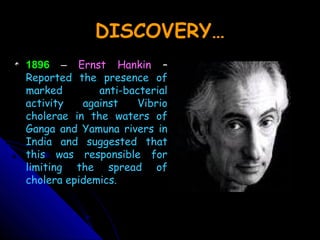
1896 – Ernst Hankin –
Reported the presence of
marked anti-bacterial
activity against Vibrio
cholerae in the waters of
Ganga and Yamuna rivers in
India and suggested that
this was responsible for
limiting the spread of
cholera epidemics.
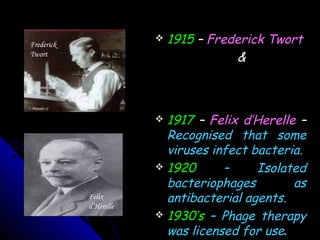
 1915 – Frederick Twort
&
 1917 – Felix d’Herelle –
Recognised that some
viruses infect bacteria.
 1920 – Isolated
bacteriophages as
antibacterial agents.
 1930’s – Phage therapy
was licensed for use.
Frederick
Twort
Felix
d’Herelle
EARLY 1940’s…..
Bacteriophage therapy was commercially used
in the early 1940’s (Eli Lilly Company – produced
7 phage products).
After the advent of antibiotics bacteriophage
therapy came to a halt in most of the world.
Widespread development of antibacterial
resistance provoked the need for new
antibiotics and alternative strategies.
This resulted in rediscovery of bacteriophage
therapy as a potent weapon against antibiotic
resistant bacteria.
“ONCE AND FUTURE SOLUTION!!!”
BACTERIOPHAGES ???
Simply called “Phages”.
Felix d’Herelle – proposed the name
“Bacteriophage” .
Derived from two words….
Bacteria
Phagein – ( to eat or devour in Greek )
Implies that phages ‘eat’ or ‘devour’ bacteria.
Bacterial viruses that invade bacterial cells
and cause bacterium to lyse.
Ubiquitous, obligate parasites.
Natural, self limiting antibiotics.
STRUCTURE OF BACTERIOPHAGE…
Properties of phages…
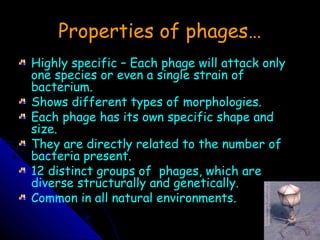
Highly specific – Each phage will attack only
one species or even a single strain of
bacterium.
Shows different types of morphologies.
Each phage has its own specific shape and
size.
They are directly related to the number of
bacteria present.
12 distinct groups of phages, which are
diverse structurally and genetically.
Common in all natural environments.
Different morphological forms…
Various shapes…
Filamentous
phages…..
Two main groups of phages…….
Lytic phages – Instructs the machinery in the
host cell to make more bacteriophages.
Lysogenic phages – Phages attach their
strands of genetic instructions to the DNA of
the bacteria. The phage DNA gets replicated
along with the bacteria generation by
generation.
Lytic phase of bacteriophages….
Lysogenic phase of Bacteriophages…..
Bacteriophage therapy???
Involves the use of phages or their products
as bioagents for the treatment or prophylaxis
of bacterial infectious diseases.
ADMINISTRATION OF PHAGES:
- orally through colon infusion
- as aerosols
- as injections: intradermal,
intravascular, intramuscular, intraduodenal,
intraperitoneal and even into lung, carotid
artery and pericardium.
Mechanism…..
Once administered….
Suitable host bacterium
It’s tail fibres bind to receptors
on to the
Injects its strand of genetic
material into the bacterial cell.
Bacteriophages
Meet
Two approaches to
bacteriophage therapy…..
Intact phage therapy
Therapies based on phage
components.
i.e., Lysin therapy
Intact phage therapy
Whole phage products are used
Used treat the infections of patients
with antibiotic resistant bacteria.
Advantage : ‘amplification factor’
One phage enters a bacterium and
replicates, releasing 10 to 100 phage
particles after lysis, which then go on to
enter and replicate in other bacteria
and so on.
Problem: Development of resistance to phage
attachment.
Solution: Cocktail of phages designed to
circumvent resistance.
Other approaches to whole phage therapy
are:
Use of phage deficient in their lytic
system – can infect, replicate within
and kill a target bacterium.
Use of whole phage as transport
vehicles for delivery of lethal genes
or chemically linked antibiotics, to
target bacteria.
“ Although whole phage
continue to generate interest as
an alternative to antibiotics,
focus is shifting to the use of
purified phage components as
antibacterial agents.”
Therapies based on phage
components
Phage components that target the bacterium
may provide boon to anti-infective research.
One of the most promising phage components
currently under development is a class of cell
wall hydrolases termed LYSINS.
Lysins are purified phage-encoded
peptidoglycan hydrolases that exhibit
immediate and strong bacteriolytic activity
when applied exogenously.
Applications of phage lysin therapy
 Bacillary Dysentery.
 Infections of skin and nasal mucosa
 Lung and Pleural infections.
 Inflammatory urologic disease
 Peritonitis, osteomyelitis and post-surgical
wound infections.
 Rhinitis, Pharyngitis
On therapy…
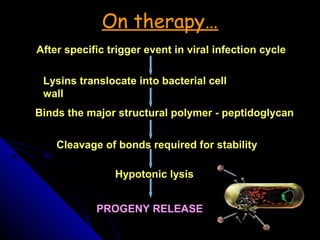
After specific trigger event in viral infection cycle
Lysins translocate into bacterial cell
wall
Binds the major structural polymer - peptidoglycan
Cleavage of bonds required for stability
Hypotonic lysis
PROGENY RELEASE
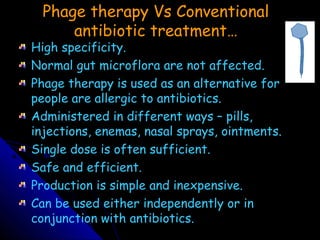
Phage therapy Vs Conventional
antibiotic treatment…
High specificity.
Normal gut microflora are not affected.
Phage therapy is used as an alternative for
people are allergic to antibiotics.
Administered in different ways – pills,
injections, enemas, nasal sprays, ointments.
Single dose is often sufficient.
Safe and efficient.
Production is simple and inexpensive.
Can be used either independently or in
conjunction with antibiotics.
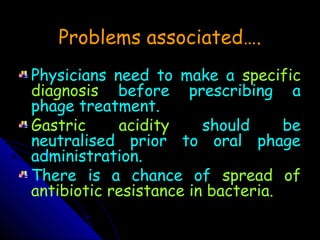
Problems associated….
Physicians need to make a specific
diagnosis before prescribing a
phage treatment.
Gastric acidity should be
neutralised prior to oral phage
administration.
There is a chance of spread of
antibiotic resistance in bacteria.
Why can’t
Phage therapy
be applied on
me???
Still a long way to go…..
AcknowledgementAcknowledgement
 Dr. P. Jayakumar, Principal ( MADC)Dr. P. Jayakumar, Principal ( MADC)
 Dr. Ambalavanan, Vice Principal (MADC)Dr. Ambalavanan, Vice Principal (MADC)
 Dr. Raghuraman, Head, Dept of MicrobiologyDr. Raghuraman, Head, Dept of Microbiology
 A. S. Smiline GirijaA. S. Smiline Girija
 G. S. ChamundeeswariG. S. Chamundeeswari
 Vijyashree PriyadharshiniVijyashree Priyadharshini
 G. HariprasadG. Hariprasad
Thank you………

PHAGE THERAPY-NEW

  • 2.
    Author:Author: Bhavana. BBhavana. B IIIBDSIII BDS Guide:Guide: Mr. G. HariprasadMr. G. Hariprasad LecturerLecturer ProfessorProfessor & HOD:& HOD: Dr. R. RaghuramanDr. R. Raghuraman Department of MicrobiologyDepartment of Microbiology Meenakshi Ammal Dental CollegeMeenakshi Ammal Dental College
  • 3.
    BACTERIOPHAGE THERAPY “A Onceand Future Solution”
  • 4.
    DISCOVERY… 1896 – ErnstHankin – Reported the presence of marked anti-bacterial activity against Vibrio cholerae in the waters of Ganga and Yamuna rivers in India and suggested that this was responsible for limiting the spread of cholera epidemics.
  • 5.
     1915 –Frederick Twort &  1917 – Felix d’Herelle – Recognised that some viruses infect bacteria.  1920 – Isolated bacteriophages as antibacterial agents.  1930’s – Phage therapy was licensed for use. Frederick Twort Felix d’Herelle
  • 6.
    EARLY 1940’s….. Bacteriophage therapywas commercially used in the early 1940’s (Eli Lilly Company – produced 7 phage products). After the advent of antibiotics bacteriophage therapy came to a halt in most of the world. Widespread development of antibacterial resistance provoked the need for new antibiotics and alternative strategies. This resulted in rediscovery of bacteriophage therapy as a potent weapon against antibiotic resistant bacteria. “ONCE AND FUTURE SOLUTION!!!”
  • 7.
    BACTERIOPHAGES ??? Simply called“Phages”. Felix d’Herelle – proposed the name “Bacteriophage” . Derived from two words…. Bacteria Phagein – ( to eat or devour in Greek ) Implies that phages ‘eat’ or ‘devour’ bacteria. Bacterial viruses that invade bacterial cells and cause bacterium to lyse. Ubiquitous, obligate parasites. Natural, self limiting antibiotics.
  • 8.
  • 9.
    Properties of phages… Highlyspecific – Each phage will attack only one species or even a single strain of bacterium. Shows different types of morphologies. Each phage has its own specific shape and size. They are directly related to the number of bacteria present. 12 distinct groups of phages, which are diverse structurally and genetically. Common in all natural environments.
  • 10.
  • 11.
  • 12.
    Two main groupsof phages……. Lytic phages – Instructs the machinery in the host cell to make more bacteriophages. Lysogenic phages – Phages attach their strands of genetic instructions to the DNA of the bacteria. The phage DNA gets replicated along with the bacteria generation by generation.
  • 13.
    Lytic phase ofbacteriophages….
  • 14.
    Lysogenic phase ofBacteriophages…..
  • 15.
    Bacteriophage therapy??? Involves theuse of phages or their products as bioagents for the treatment or prophylaxis of bacterial infectious diseases. ADMINISTRATION OF PHAGES: - orally through colon infusion - as aerosols - as injections: intradermal, intravascular, intramuscular, intraduodenal, intraperitoneal and even into lung, carotid artery and pericardium.
  • 16.
    Mechanism….. Once administered…. Suitable hostbacterium It’s tail fibres bind to receptors on to the Injects its strand of genetic material into the bacterial cell. Bacteriophages Meet
  • 17.
    Two approaches to bacteriophagetherapy….. Intact phage therapy Therapies based on phage components. i.e., Lysin therapy
  • 18.
    Intact phage therapy Wholephage products are used Used treat the infections of patients with antibiotic resistant bacteria. Advantage : ‘amplification factor’ One phage enters a bacterium and replicates, releasing 10 to 100 phage particles after lysis, which then go on to enter and replicate in other bacteria and so on.
  • 19.
    Problem: Development ofresistance to phage attachment. Solution: Cocktail of phages designed to circumvent resistance. Other approaches to whole phage therapy are: Use of phage deficient in their lytic system – can infect, replicate within and kill a target bacterium. Use of whole phage as transport vehicles for delivery of lethal genes or chemically linked antibiotics, to target bacteria.
  • 20.
    “ Although wholephage continue to generate interest as an alternative to antibiotics, focus is shifting to the use of purified phage components as antibacterial agents.”
  • 21.
    Therapies based onphage components Phage components that target the bacterium may provide boon to anti-infective research. One of the most promising phage components currently under development is a class of cell wall hydrolases termed LYSINS. Lysins are purified phage-encoded peptidoglycan hydrolases that exhibit immediate and strong bacteriolytic activity when applied exogenously.
  • 22.
    Applications of phagelysin therapy  Bacillary Dysentery.  Infections of skin and nasal mucosa  Lung and Pleural infections.  Inflammatory urologic disease  Peritonitis, osteomyelitis and post-surgical wound infections.  Rhinitis, Pharyngitis
  • 23.
    On therapy… After specifictrigger event in viral infection cycle Lysins translocate into bacterial cell wall Binds the major structural polymer - peptidoglycan Cleavage of bonds required for stability Hypotonic lysis PROGENY RELEASE
  • 24.
    Phage therapy VsConventional antibiotic treatment… High specificity. Normal gut microflora are not affected. Phage therapy is used as an alternative for people are allergic to antibiotics. Administered in different ways – pills, injections, enemas, nasal sprays, ointments. Single dose is often sufficient. Safe and efficient. Production is simple and inexpensive. Can be used either independently or in conjunction with antibiotics.
  • 25.
    Problems associated…. Physicians needto make a specific diagnosis before prescribing a phage treatment. Gastric acidity should be neutralised prior to oral phage administration. There is a chance of spread of antibiotic resistance in bacteria.
  • 26.
  • 27.
    Still a longway to go…..
  • 28.
    AcknowledgementAcknowledgement  Dr. P.Jayakumar, Principal ( MADC)Dr. P. Jayakumar, Principal ( MADC)  Dr. Ambalavanan, Vice Principal (MADC)Dr. Ambalavanan, Vice Principal (MADC)  Dr. Raghuraman, Head, Dept of MicrobiologyDr. Raghuraman, Head, Dept of Microbiology  A. S. Smiline GirijaA. S. Smiline Girija  G. S. ChamundeeswariG. S. Chamundeeswari  Vijyashree PriyadharshiniVijyashree Priyadharshini  G. HariprasadG. Hariprasad
  • 29.