ITTP
PERSPECTIVES IN CHILD
DEVELOPMENT
ABHAY PRASAD GIRI
CLASS 3
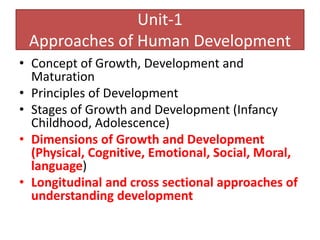
Unit-1
Approaches of Human Development
• Concept of Growth, Development and
Maturation
• Principles of Development
• Stages of Growth and Development (Infancy
Childhood, Adolescence)
• Dimensions of Growth and Development
(Physical, Cognitive, Emotional, Social, Moral,
language)
• Longitudinal and cross sectional approaches of
understanding development
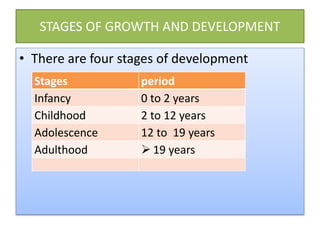
STAGES OF GROWTH AND DEVELOPMENT
• There are four stages of development
Stages period
Infancy 0 to 2 years
Childhood 2 to 12 years
Adolescence 12 to 19 years
Adulthood  19 years
• In all developmental period we have write
• Physical development
• Intellectual development
• Emotional development
• Social development
• Adulthood
• Early Adulthood (Ages 20–40)
• Middle Adulthood (Ages 40–60)
• Late adulthood (from 60 onwards)
• Physical development
Physical maturation is almost complete.
Only possibility of slightly increase of height and weight.
Physical abilities developed
Intellectual development
• Self-direction Adults feel the need to take responsibility for their
lives.
• Social development
• Multi-level responsibilities
Adult learners have a lot to juggle; family, friends, work, and the
need for personal quality time.
Emotional development:
• Emotions are more in stabilized and peak form of development.
These are occurred during dealing of different situations.
Aspects of development
• Physical development
• Cognitive development
• Emotional development
• Social development
• Moral development
• language development
Longitudinal and cross sectional approaches of understanding
development
Longitudinal cross sectional
Same child or same group is studied
at various stages of growth through
observation From time to time
Children of various stages of growth
are selected and observed in groups
at a same time
Over a period of time A single period of time
It takes decades to complete It takes less in comparison to
longitudinal

Perspective in child development.pptx

  • 1.
  • 2.
    Unit-1 Approaches of HumanDevelopment • Concept of Growth, Development and Maturation • Principles of Development • Stages of Growth and Development (Infancy Childhood, Adolescence) • Dimensions of Growth and Development (Physical, Cognitive, Emotional, Social, Moral, language) • Longitudinal and cross sectional approaches of understanding development
  • 3.
    STAGES OF GROWTHAND DEVELOPMENT • There are four stages of development Stages period Infancy 0 to 2 years Childhood 2 to 12 years Adolescence 12 to 19 years Adulthood  19 years
  • 4.
    • In alldevelopmental period we have write • Physical development • Intellectual development • Emotional development • Social development
  • 5.
    • Adulthood • EarlyAdulthood (Ages 20–40) • Middle Adulthood (Ages 40–60) • Late adulthood (from 60 onwards)
  • 6.
    • Physical development Physicalmaturation is almost complete. Only possibility of slightly increase of height and weight. Physical abilities developed Intellectual development • Self-direction Adults feel the need to take responsibility for their lives. • Social development • Multi-level responsibilities Adult learners have a lot to juggle; family, friends, work, and the need for personal quality time. Emotional development: • Emotions are more in stabilized and peak form of development. These are occurred during dealing of different situations.
  • 7.
    Aspects of development •Physical development • Cognitive development • Emotional development • Social development • Moral development • language development
  • 8.
    Longitudinal and crosssectional approaches of understanding development Longitudinal cross sectional Same child or same group is studied at various stages of growth through observation From time to time Children of various stages of growth are selected and observed in groups at a same time Over a period of time A single period of time It takes decades to complete It takes less in comparison to longitudinal