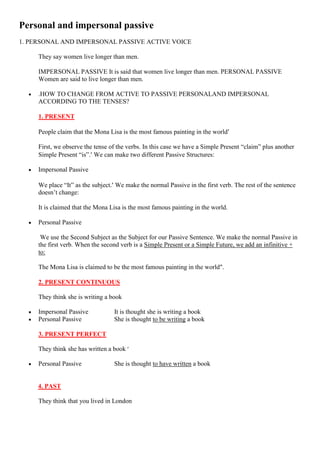
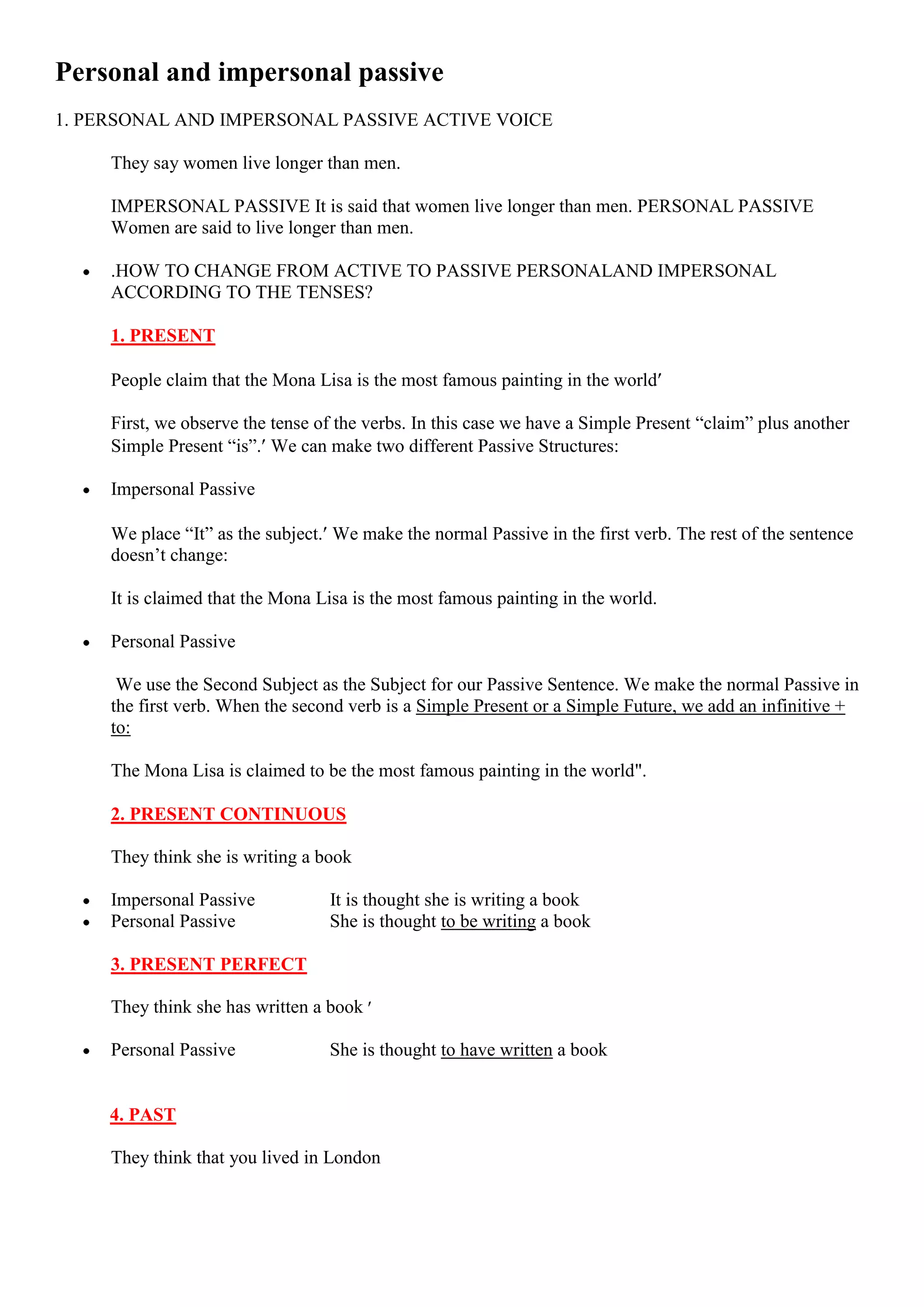
Personal and impersonal passive
1. PERSONAL AND IMPERSONAL PASSIVE ACTIVE VOICE

     They say women live longer than men.

     IMPERSONAL PASSIVE It is said that women live longer than men. PERSONAL PASSIVE
     Women are said to live longer than men.

     .HOW TO CHANGE FROM ACTIVE TO PASSIVE PERSONALAND IMPERSONAL
     ACCORDING TO THE TENSES?

     1. PRESENT

     People claim that the Mona Lisa is the most famous painting in the world

     First, we observe the tense of the verbs. In this case we have a Simple Present “claim” plus another
     Simple Present “is”. We can make two different Passive Structures:

     Impersonal Passive

     We place “It” as the subject. We make the normal Passive in the first verb. The rest of the sentence
     doesn’t change:

     It is claimed that the Mona Lisa is the most famous painting in the world.

     Personal Passive

      We use the Second Subject as the Subject for our Passive Sentence. We make the normal Passive in
     the first verb. When the second verb is a Simple Present or a Simple Future, we add an infinitive +
     to:

     The Mona Lisa is claimed to be the most famous painting in the world".

     2. PRESENT CONTINUOUS

     They think she is writing a book

     Impersonal Passive           It is thought she is writing a book
     Personal Passive             She is thought to be writing a book

     3. PRESENT PERFECT

     They think she has written a book

     Personal Passive             She is thought to have written a book


     4. PAST

     They think that you lived in London
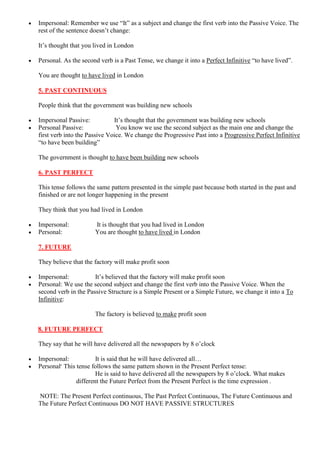
Impersonal: Remember we use “It” as a subject and change the first verb into the Passive Voice. The
rest of the sentence doesn’t change:

It’s thought that you lived in London

Personal. As the second verb is a Past Tense, we change it into a Perfect Infinitive “to have lived”.

You are thought to have lived in London

5. PAST CONTINUOUS

People think that the government was building new schools

Impersonal Passive:           It’s thought that the government was building new schools
Personal Passive:              You know we use the second subject as the main one and change the
first verb into the Passive Voice. We change the Progressive Past into a Progressive Perfect Infinitive
“to have been building”

The government is thought to have been building new schools

6. PAST PERFECT

This tense follows the same pattern presented in the simple past because both started in the past and
finished or are not longer happening in the present

They think that you had lived in London

Impersonal:           It is thought that you had lived in London
Personal:             You are thought to have lived in London

7. FUTURE

They believe that the factory will make profit soon

Impersonal:           It’s believed that the factory will make profit soon
Personal: We use the second subject and change the first verb into the Passive Voice. When the
second verb in the Passive Structure is a Simple Present or a Simple Future, we change it into a To
Infinitive:

                      The factory is believed to make profit soon

8. FUTURE PERFECT

They say that he will have delivered all the newspapers by 8 o’clock

Impersonal:           It is said that he will have delivered all…
Personal This tense follows the same pattern shown in the Present Perfect tense:
                      He is said to have delivered all the newspapers by 8 o’clock. What makes
              different the Future Perfect from the Present Perfect is the time expression .

NOTE: The Present Perfect continuous, The Past Perfect Continuous, The Future Continuous and
The Future Perfect Continuous DO NOT HAVE PASSIVE STRUCTURES

Personal and impersonal passive (theory)

  • 1.
    Personal and impersonalpassive 1. PERSONAL AND IMPERSONAL PASSIVE ACTIVE VOICE They say women live longer than men. IMPERSONAL PASSIVE It is said that women live longer than men. PERSONAL PASSIVE Women are said to live longer than men. .HOW TO CHANGE FROM ACTIVE TO PASSIVE PERSONALAND IMPERSONAL ACCORDING TO THE TENSES? 1. PRESENT People claim that the Mona Lisa is the most famous painting in the world First, we observe the tense of the verbs. In this case we have a Simple Present “claim” plus another Simple Present “is”. We can make two different Passive Structures: Impersonal Passive We place “It” as the subject. We make the normal Passive in the first verb. The rest of the sentence doesn’t change: It is claimed that the Mona Lisa is the most famous painting in the world. Personal Passive We use the Second Subject as the Subject for our Passive Sentence. We make the normal Passive in the first verb. When the second verb is a Simple Present or a Simple Future, we add an infinitive + to: The Mona Lisa is claimed to be the most famous painting in the world". 2. PRESENT CONTINUOUS They think she is writing a book Impersonal Passive It is thought she is writing a book Personal Passive She is thought to be writing a book 3. PRESENT PERFECT They think she has written a book Personal Passive She is thought to have written a book 4. PAST They think that you lived in London
  • 2.
    Impersonal: Remember weuse “It” as a subject and change the first verb into the Passive Voice. The rest of the sentence doesn’t change: It’s thought that you lived in London Personal. As the second verb is a Past Tense, we change it into a Perfect Infinitive “to have lived”. You are thought to have lived in London 5. PAST CONTINUOUS People think that the government was building new schools Impersonal Passive: It’s thought that the government was building new schools Personal Passive: You know we use the second subject as the main one and change the first verb into the Passive Voice. We change the Progressive Past into a Progressive Perfect Infinitive “to have been building” The government is thought to have been building new schools 6. PAST PERFECT This tense follows the same pattern presented in the simple past because both started in the past and finished or are not longer happening in the present They think that you had lived in London Impersonal: It is thought that you had lived in London Personal: You are thought to have lived in London 7. FUTURE They believe that the factory will make profit soon Impersonal: It’s believed that the factory will make profit soon Personal: We use the second subject and change the first verb into the Passive Voice. When the second verb in the Passive Structure is a Simple Present or a Simple Future, we change it into a To Infinitive: The factory is believed to make profit soon 8. FUTURE PERFECT They say that he will have delivered all the newspapers by 8 o’clock Impersonal: It is said that he will have delivered all… Personal This tense follows the same pattern shown in the Present Perfect tense: He is said to have delivered all the newspapers by 8 o’clock. What makes different the Future Perfect from the Present Perfect is the time expression . NOTE: The Present Perfect continuous, The Past Perfect Continuous, The Future Continuous and The Future Perfect Continuous DO NOT HAVE PASSIVE STRUCTURES