Abnormal Breathing Pattern
PARAMETERS OF ASSESING
• Rate
• Depth
• Rhythm
• Character
ABNORMAL BREATHING
PATTERNS
• Apnea
• Tachypnea
• Bradypnea
• Hyperventilation
• Kussmaul breathing
• Cheyne-Stokes breathing
• Obstructed breathing
1. APNEA
• Suspension of breathing.
• No movement of muscles of resp. and volume of lungs remains same
• No airflow into or out from the lungs
• Gaseous exchange & cellular resp. is not affected.
• Apnea can be achieved
1. Voluntarily (breath holding)
2. Mechanically-strangulation/choking
3. From neurological trauma
• Increased rate of breathing i.e. >20 breaths/min.
• Characterized by rapid, shallow breathing
• It is seen in following conditions
1. Fever
2. Compensatory resp.alkalosis
3. Respiratory insufficiency
4. Lesions to resp. centers in brain
5. Elevated diaphragm
BRADYPNEA
• Decreased rate of breathing ,i.e. <12 breaths/min.
• Characterized by slow, shallow breathing.
• It is see secondary to following conditions
1. Diabetic coma
2. Respiratory depression
3. Increased intra-cranial pressure
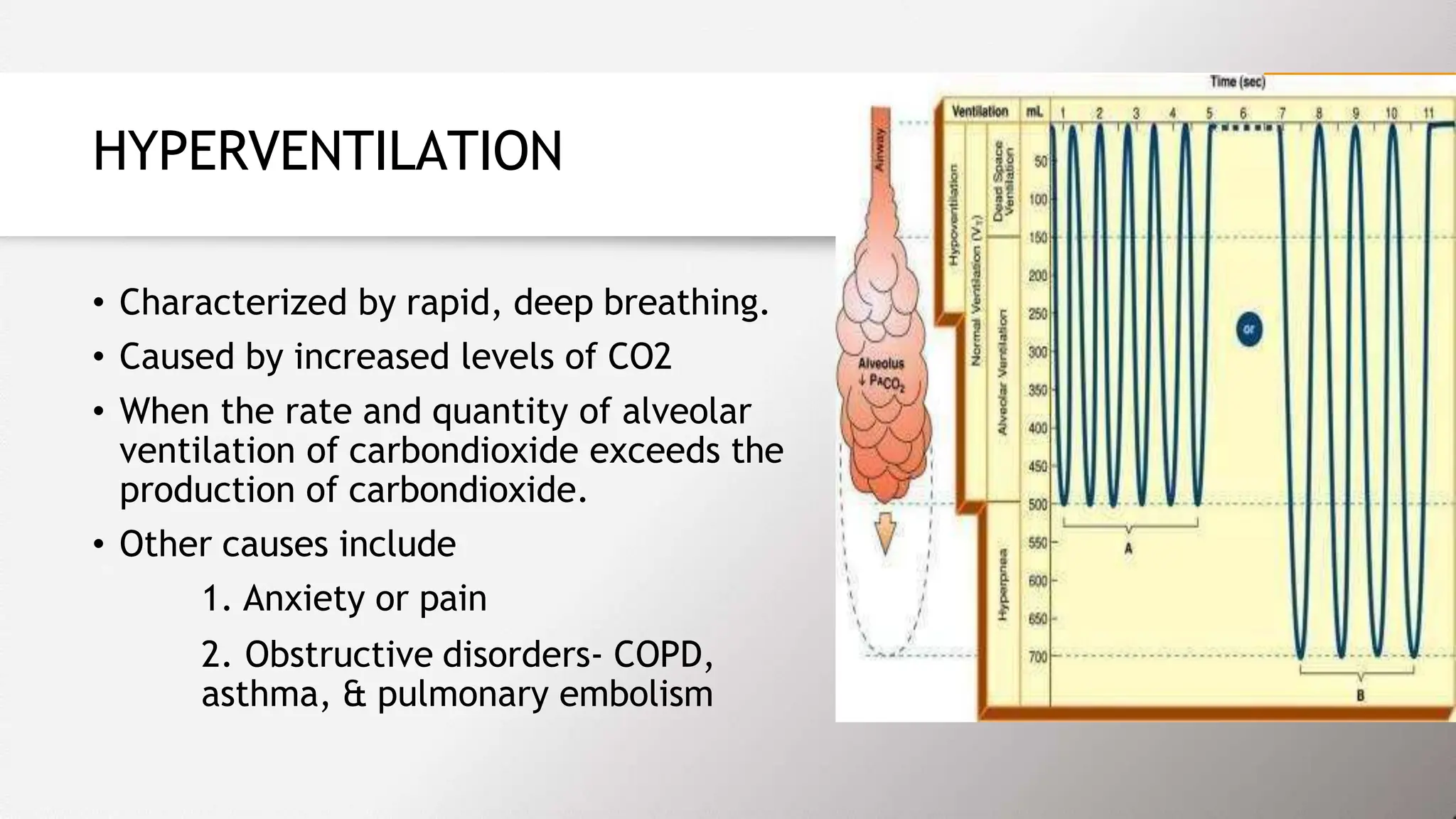
HYPERVENTILATION
• Characterized by rapid, deep breathing.
• Caused by increased levels of CO2
• When the rate and quantity of alveolar
ventilation of carbondioxide exceeds the
production of carbondioxide.
• Other causes include
1. Anxiety or pain
2. Obstructive disorders- COPD,
asthma, & pulmonary embolism
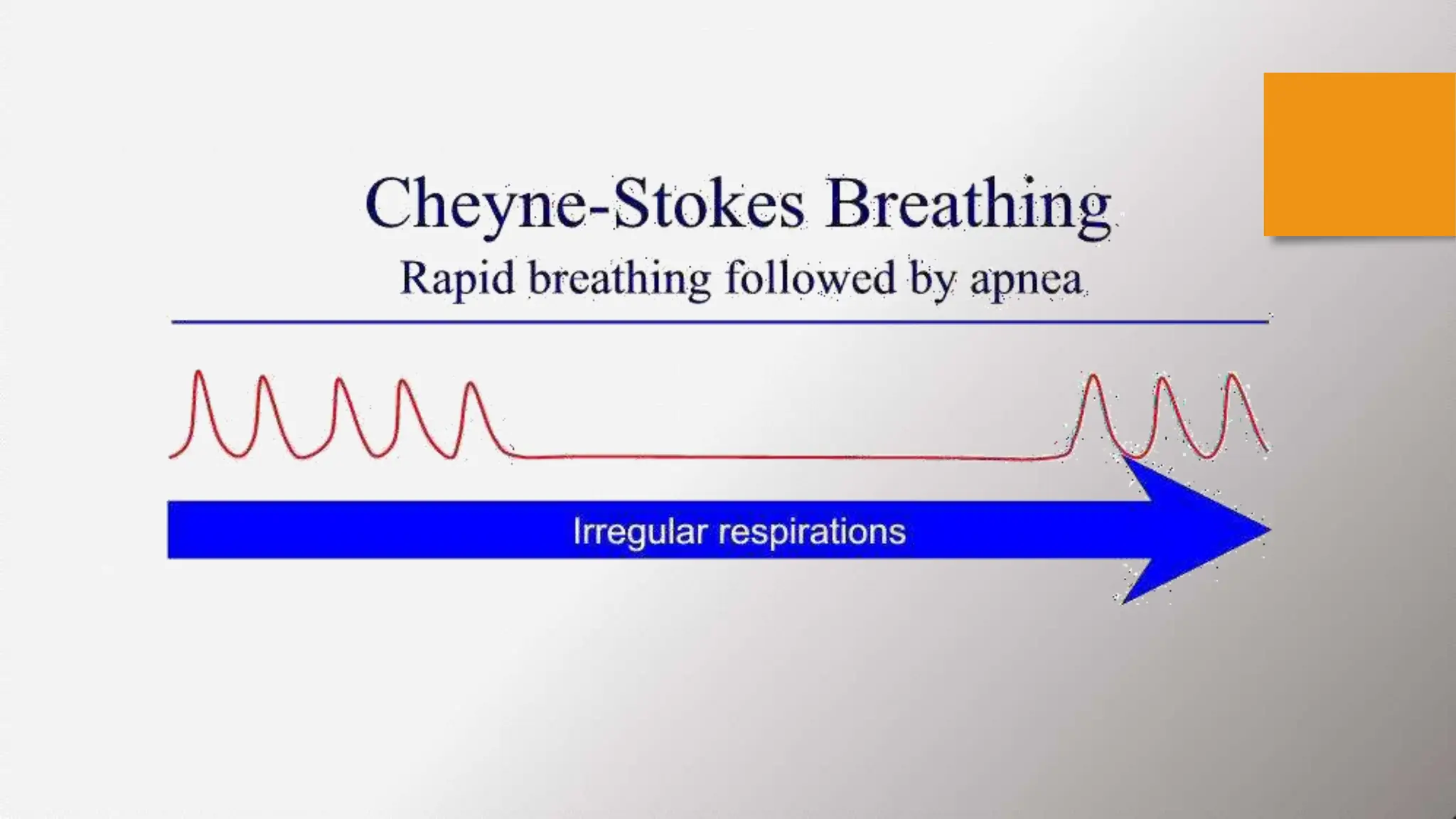
CHEYNE-STOKES BREATHING
• Also called as “periodic breathing”
• Characterized by alternate periods of tachypnea and apnea.
• Occurs as a compensation for changing serum pO2 & pCO2, and classically
seen in damage to pons where resp. centers are located
• Conditions:
1. Stroke
2. Traumatic brain injury
3. Heart failure
Causes for Hyperpnea nad Apnea
• Forced breathing oxygen level get increased and carbon dioxide
level decreases.
• Therefore respiratory center become inactive and cause Apnea.
• Accumulation of carbon dioxide lead to hypercapnia and hypoxia
• They activate respiratory center and cause increase in force of
breathing.
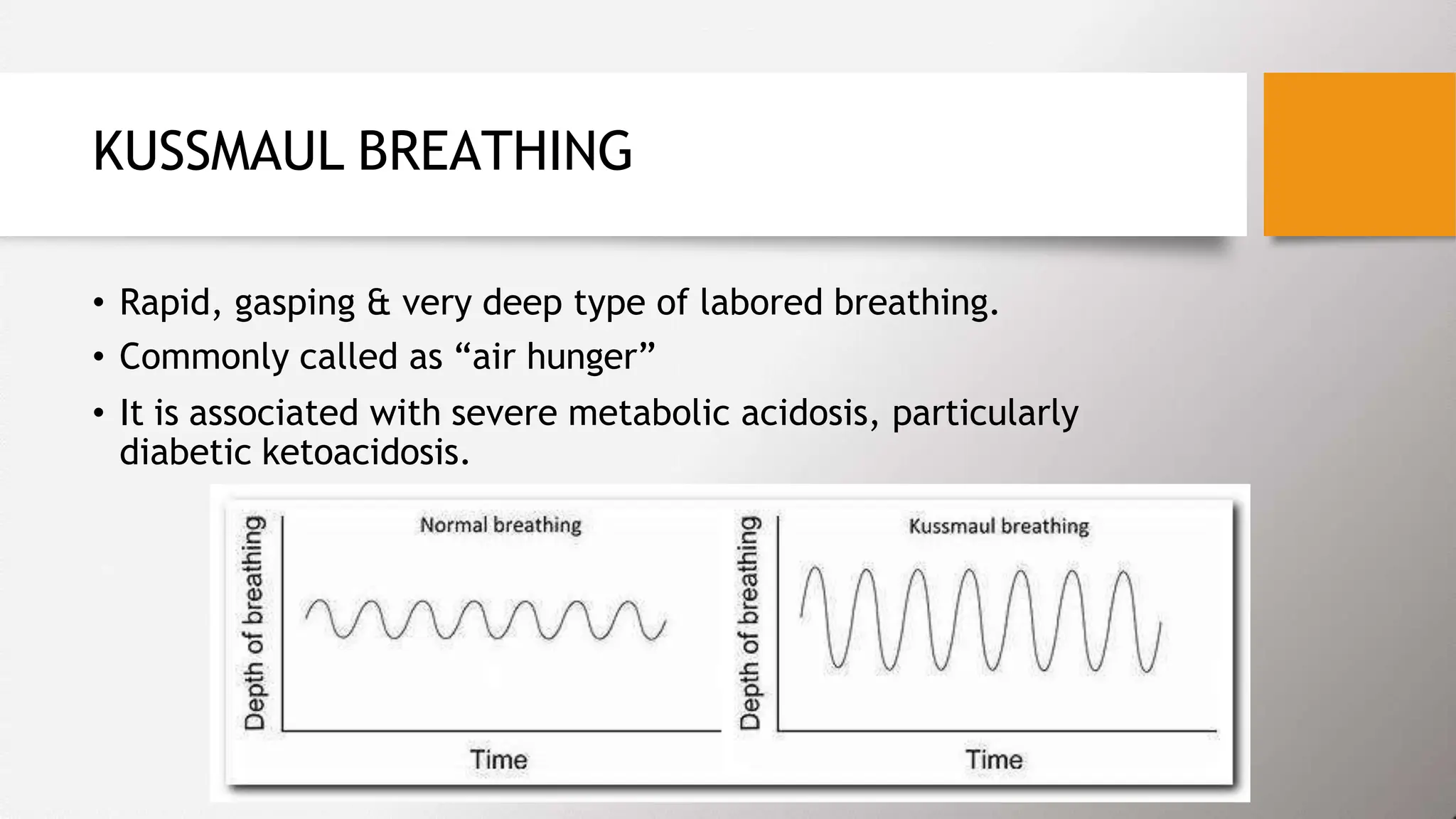
KUSSMAUL BREATHING
• Rapid, gasping & very deep type of labored breathing.
• Commonly called as “air hunger”
• It is associated with severe metabolic acidosis, particularly
diabetic ketoacidosis.
Obstructive Sleep Apnea (OSA)
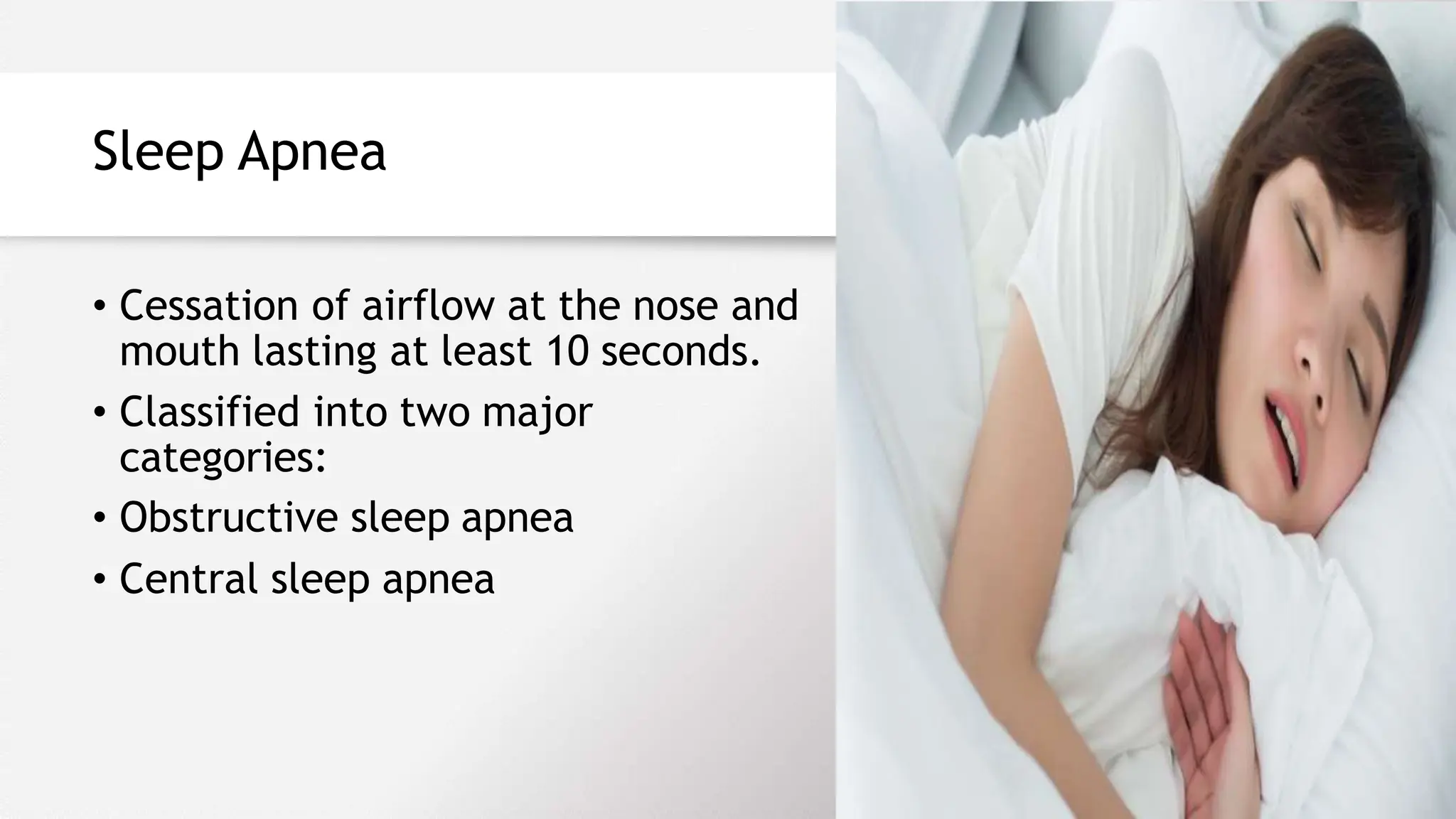
Sleep Apnea
• Cessation of airflow at the nose and
mouth lasting at least 10 seconds.
• Classified into two major
categories:
• Obstructive sleep apnea
• Central sleep apnea
Expressive daytime sleepiness (EDS)
Treatment Options
• Behavior modification
• Surgery
• Medications
• Continuous Positive Air Pressure - CPAP
• Oral devices
CPAP
abnormalbreathingpattern-200904070539.pptx

abnormalbreathingpattern-200904070539.pptx

  • 1.
  • 2.
    PARAMETERS OF ASSESING •Rate • Depth • Rhythm • Character
  • 3.
    ABNORMAL BREATHING PATTERNS • Apnea •Tachypnea • Bradypnea • Hyperventilation • Kussmaul breathing • Cheyne-Stokes breathing • Obstructed breathing
  • 4.
    1. APNEA • Suspensionof breathing. • No movement of muscles of resp. and volume of lungs remains same • No airflow into or out from the lungs • Gaseous exchange & cellular resp. is not affected. • Apnea can be achieved 1. Voluntarily (breath holding) 2. Mechanically-strangulation/choking 3. From neurological trauma
  • 5.
    • Increased rateof breathing i.e. >20 breaths/min. • Characterized by rapid, shallow breathing • It is seen in following conditions 1. Fever 2. Compensatory resp.alkalosis 3. Respiratory insufficiency 4. Lesions to resp. centers in brain 5. Elevated diaphragm
  • 6.
    BRADYPNEA • Decreased rateof breathing ,i.e. <12 breaths/min. • Characterized by slow, shallow breathing. • It is see secondary to following conditions 1. Diabetic coma 2. Respiratory depression 3. Increased intra-cranial pressure
  • 7.
    HYPERVENTILATION • Characterized byrapid, deep breathing. • Caused by increased levels of CO2 • When the rate and quantity of alveolar ventilation of carbondioxide exceeds the production of carbondioxide. • Other causes include 1. Anxiety or pain 2. Obstructive disorders- COPD, asthma, & pulmonary embolism
  • 8.
    CHEYNE-STOKES BREATHING • Alsocalled as “periodic breathing” • Characterized by alternate periods of tachypnea and apnea. • Occurs as a compensation for changing serum pO2 & pCO2, and classically seen in damage to pons where resp. centers are located • Conditions: 1. Stroke 2. Traumatic brain injury 3. Heart failure
  • 10.
    Causes for Hyperpneanad Apnea • Forced breathing oxygen level get increased and carbon dioxide level decreases. • Therefore respiratory center become inactive and cause Apnea. • Accumulation of carbon dioxide lead to hypercapnia and hypoxia • They activate respiratory center and cause increase in force of breathing.
  • 13.
    KUSSMAUL BREATHING • Rapid,gasping & very deep type of labored breathing. • Commonly called as “air hunger” • It is associated with severe metabolic acidosis, particularly diabetic ketoacidosis.
  • 17.
  • 18.
    Sleep Apnea • Cessationof airflow at the nose and mouth lasting at least 10 seconds. • Classified into two major categories: • Obstructive sleep apnea • Central sleep apnea
  • 20.
  • 21.
    Treatment Options • Behaviormodification • Surgery • Medications • Continuous Positive Air Pressure - CPAP • Oral devices
  • 22.