Performance and Rewards
Laura Rohde
August 21, 2019
2
Objectives
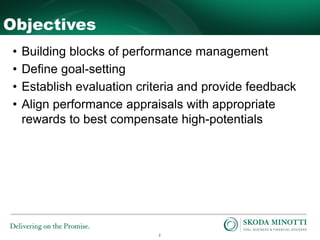
• Building blocks of performance management
• Define goal-setting
• Establish evaluation criteria and provide feedback
• Align performance appraisals with appropriate
rewards to best compensate high-potentials
3
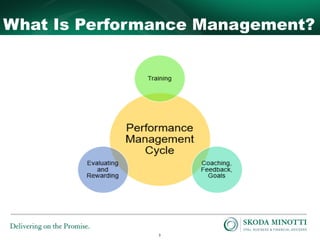
What Is Performance Management?
4
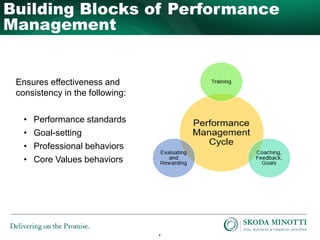
Ensures effectiveness and
consistency in the following:
• Performance standards
• Goal-setting
• Professional behaviors
• Core Values behaviors
Rewards and
Recognition
Building Blocks of Performance
Management
5
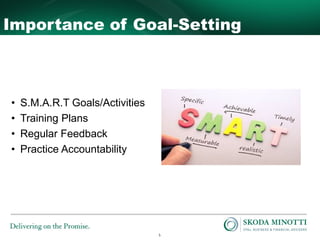
• S.M.A.R.T Goals/Activities
• Training Plans
• Regular Feedback
• Practice Accountability
Importance of Goal-Setting
6
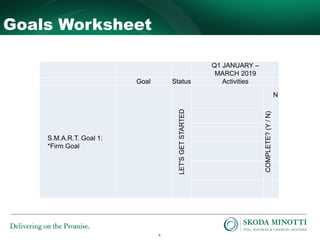
Q1 JANUARY –
MARCH 2019
Goal Status Activities
S.M.A.R.T. Goal 1:
*Firm Goal
LET'SGETSTARTED
COMPLETE?(Y/N)
N
Goals Worksheet
7
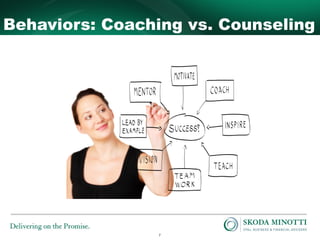
Behaviors: Coaching vs. Counseling
8
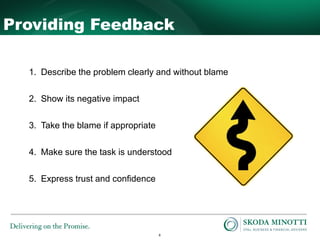
1. Describe the problem clearly and without blame
2. Show its negative impact
3. Take the blame if appropriate
4. Make sure the task is understood
5. Express trust and confidence
Providing Feedback
9
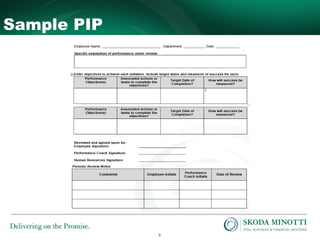
Sample PIP
10
1. Can you think of anything that you might be doing to contribute to
the problem?
2. What might you change to get a different result?
3. Do you think that you can work on these things?
4. Can I count on you to make the necessary changes?
5. What can the firm or I do to help support you in making this
change?
Gain Commitment to Change
Behavior
11
Evaluation Criteria
Exceeds
• Has great potential for leadership role
in the future
• Is strong in (insert skill)
• Shows promise in client interactions
• Seeks out responsibility and follows
through
• Goes beyond the call of duty
• Is highly motivated
• Shows great flexibility
• Has background in (insert area of
expertise) that is being underutilized
• Exhibits stellar performance
• Is ready to meet with clients directly
• Constantly seeks professional
development opportunities
• Demonstrates a high level of
confidence
• Contributes frequently in meetings and
impromptu gatherings
12
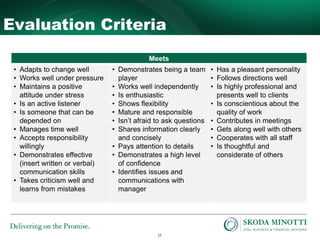
Evaluation Criteria
Meets
• Adapts to change well
• Works well under pressure
• Maintains a positive
attitude under stress
• Is an active listener
• Is someone that can be
depended on
• Manages time well
• Accepts responsibility
willingly
• Demonstrates effective
(insert written or verbal)
communication skills
• Takes criticism well and
learns from mistakes
• Demonstrates being a team
player
• Works well independently
• Is enthusiastic
• Shows flexibility
• Mature and responsible
• Isn’t afraid to ask questions
• Shares information clearly
and concisely
• Pays attention to details
• Demonstrates a high level
of confidence
• Identifies issues and
communications with
manager
• Has a pleasant personality
• Follows directions well
• Is highly professional and
presents well to clients
• Is conscientious about the
quality of work
• Contributes in meetings
• Gets along well with others
• Cooperates with all staff
• Is thoughtful and
considerate of others
13
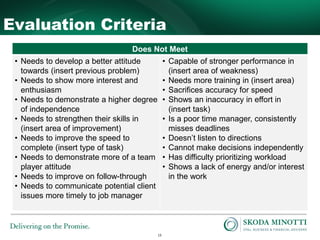
Evaluation Criteria
Does Not Meet
• Needs to develop a better attitude
towards (insert previous problem)
• Needs to show more interest and
enthusiasm
• Needs to demonstrate a higher degree
of independence
• Needs to strengthen their skills in
(insert area of improvement)
• Needs to improve the speed to
complete (insert type of task)
• Needs to demonstrate more of a team
player attitude
• Needs to improve on follow-through
• Needs to communicate potential client
issues more timely to job manager
• Capable of stronger performance in
(insert area of weakness)
• Needs more training in (insert area)
• Sacrifices accuracy for speed
• Shows an inaccuracy in effort in
(insert task)
• Is a poor time manager, consistently
misses deadlines
• Doesn’t listen to directions
• Cannot make decisions independently
• Has difficulty prioritizing workload
• Shows a lack of energy and/or interest
in the work
14
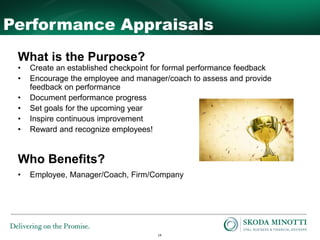
Performance Appraisals
What is the Purpose?
• Create an established checkpoint for formal performance feedback
• Encourage the employee and manager/coach to assess and provide
feedback on performance
• Document performance progress
• Set goals for the upcoming year
• Inspire continuous improvement
• Reward and recognize employees!
Who Benefits?
• Employee, Manager/Coach, Firm/Company
15
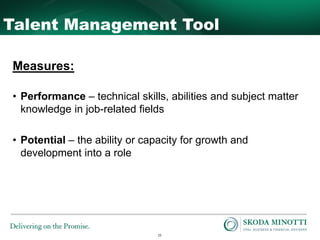
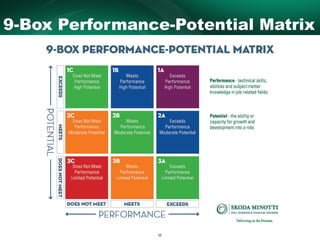
Talent Management Tool
Measures:
• Performance – technical skills, abilities and subject matter
knowledge in job-related fields
• Potential – the ability or capacity for growth and
development into a role
16
9-Box Performance-Potential Matrix
17
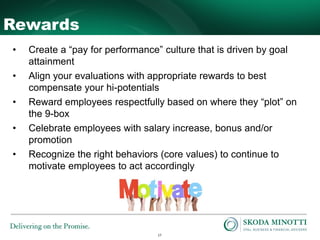
Rewards
• Create a “pay for performance” culture that is driven by goal
attainment
• Align your evaluations with appropriate rewards to best
compensate your hi-potentials
• Reward employees respectfully based on where they “plot” on
the 9-box
• Celebrate employees with salary increase, bonus and/or
promotion
• Recognize the right behaviors (core values) to continue to
motivate employees to act accordingly
18
Thank You
19
Contact
Laura Rohde
Managing Director of
HR Services
Skoda Minotti
lrohde@skodaminotti.com

Performance and Rewards

  • 1.
    Performance and Rewards LauraRohde August 21, 2019
  • 2.
    2 Objectives • Building blocksof performance management • Define goal-setting • Establish evaluation criteria and provide feedback • Align performance appraisals with appropriate rewards to best compensate high-potentials
  • 3.
  • 4.
    4 Ensures effectiveness and consistencyin the following: • Performance standards • Goal-setting • Professional behaviors • Core Values behaviors Rewards and Recognition Building Blocks of Performance Management
  • 5.
    5 • S.M.A.R.T Goals/Activities •Training Plans • Regular Feedback • Practice Accountability Importance of Goal-Setting
  • 6.
    6 Q1 JANUARY – MARCH2019 Goal Status Activities S.M.A.R.T. Goal 1: *Firm Goal LET'SGETSTARTED COMPLETE?(Y/N) N Goals Worksheet
  • 7.
  • 8.
    8 1. Describe theproblem clearly and without blame 2. Show its negative impact 3. Take the blame if appropriate 4. Make sure the task is understood 5. Express trust and confidence Providing Feedback
  • 9.
  • 10.
    10 1. Can youthink of anything that you might be doing to contribute to the problem? 2. What might you change to get a different result? 3. Do you think that you can work on these things? 4. Can I count on you to make the necessary changes? 5. What can the firm or I do to help support you in making this change? Gain Commitment to Change Behavior
  • 11.
    11 Evaluation Criteria Exceeds • Hasgreat potential for leadership role in the future • Is strong in (insert skill) • Shows promise in client interactions • Seeks out responsibility and follows through • Goes beyond the call of duty • Is highly motivated • Shows great flexibility • Has background in (insert area of expertise) that is being underutilized • Exhibits stellar performance • Is ready to meet with clients directly • Constantly seeks professional development opportunities • Demonstrates a high level of confidence • Contributes frequently in meetings and impromptu gatherings
  • 12.
    12 Evaluation Criteria Meets • Adaptsto change well • Works well under pressure • Maintains a positive attitude under stress • Is an active listener • Is someone that can be depended on • Manages time well • Accepts responsibility willingly • Demonstrates effective (insert written or verbal) communication skills • Takes criticism well and learns from mistakes • Demonstrates being a team player • Works well independently • Is enthusiastic • Shows flexibility • Mature and responsible • Isn’t afraid to ask questions • Shares information clearly and concisely • Pays attention to details • Demonstrates a high level of confidence • Identifies issues and communications with manager • Has a pleasant personality • Follows directions well • Is highly professional and presents well to clients • Is conscientious about the quality of work • Contributes in meetings • Gets along well with others • Cooperates with all staff • Is thoughtful and considerate of others
  • 13.
    13 Evaluation Criteria Does NotMeet • Needs to develop a better attitude towards (insert previous problem) • Needs to show more interest and enthusiasm • Needs to demonstrate a higher degree of independence • Needs to strengthen their skills in (insert area of improvement) • Needs to improve the speed to complete (insert type of task) • Needs to demonstrate more of a team player attitude • Needs to improve on follow-through • Needs to communicate potential client issues more timely to job manager • Capable of stronger performance in (insert area of weakness) • Needs more training in (insert area) • Sacrifices accuracy for speed • Shows an inaccuracy in effort in (insert task) • Is a poor time manager, consistently misses deadlines • Doesn’t listen to directions • Cannot make decisions independently • Has difficulty prioritizing workload • Shows a lack of energy and/or interest in the work
  • 14.
    14 Performance Appraisals What isthe Purpose? • Create an established checkpoint for formal performance feedback • Encourage the employee and manager/coach to assess and provide feedback on performance • Document performance progress • Set goals for the upcoming year • Inspire continuous improvement • Reward and recognize employees! Who Benefits? • Employee, Manager/Coach, Firm/Company
  • 15.
    15 Talent Management Tool Measures: •Performance – technical skills, abilities and subject matter knowledge in job-related fields • Potential – the ability or capacity for growth and development into a role
  • 16.
  • 17.
    17 Rewards • Create a“pay for performance” culture that is driven by goal attainment • Align your evaluations with appropriate rewards to best compensate your hi-potentials • Reward employees respectfully based on where they “plot” on the 9-box • Celebrate employees with salary increase, bonus and/or promotion • Recognize the right behaviors (core values) to continue to motivate employees to act accordingly
  • 18.
  • 19.
    19 Contact Laura Rohde Managing Directorof HR Services Skoda Minotti lrohde@skodaminotti.com