Perception, Attitude,
Values
and their impact
on Communication

By,
Rahina E K, Shruti Badiyal, Karan
Kushalappa, Veeresh, &
Suresh A M
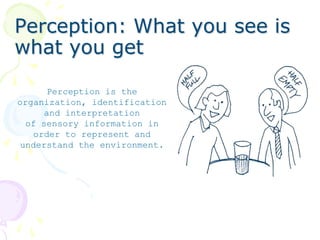
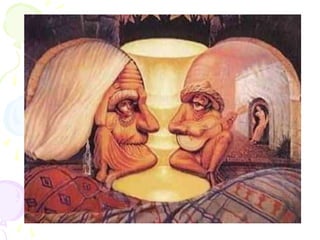
Perception: What you see is
what you get
Perception is the
organization, identification
and interpretation
of sensory information in
order to represent and
understand the environment.
Four Steps of the Perception Process
1. Selection: What attracts your attention?
2. Organization: Along with selecting information, we

must arrange it in some meaningful way
3. Interpretation: Classification
4. Negotiation: Sense-making occurs between people as
they influence one another’s perception
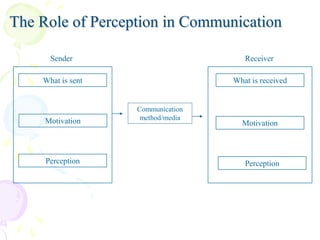
The Role of Perception in Communication
Sender

Receiver

What is sent

What is received

Motivation

Perception

Communication
method/media

Motivation

Perception
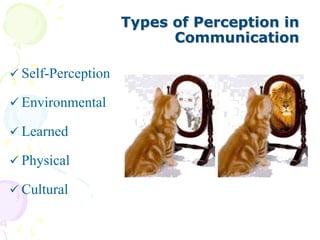
Types of Perception in
Communication
 Self-Perception

 Environmental
 Learned

 Physical
 Cultural
How might you increase your accuracy in
perception?
Perceive critically
Recognize your role in perception, avoid early conclusions, and
avoid mind reading.
Check your perceptions; describe what you see or hear and ask for
confirmation.
Reduce uncertainty: For example, by lurking before actively
participating in an Internet chat group, collecting information about
the person or situation, interacting and observing the situation.
Be culturally sensitive; recognize the differences between you and
others and also the differences among people from another culture.
Attitude
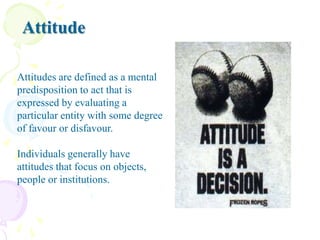
Attitudes are defined as a mental
predisposition to act that is
expressed by evaluating a
particular entity with some degree
of favour or disfavour.
Individuals generally have
attitudes that focus on objects,
people or institutions.
Attitudes are of two types
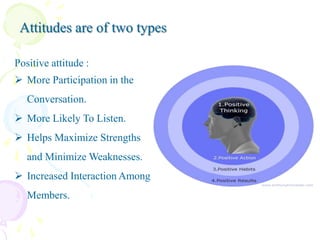
Positive attitude :
 More Participation in the
Conversation.
 More Likely To Listen.
 Helps Maximize Strengths
and Minimize Weaknesses.
 Increased Interaction Among
Members.
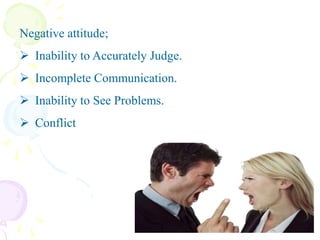
Negative attitude;
 Inability to Accurately Judge.
 Incomplete Communication.
 Inability to See Problems.
 Conflict
Values
Basic Conversations that a
specific mode of conduct or
end state of existence is
personally or socially
preferable to an opposite or
converse mode of conduct
or end state of existence.
Some common personal values are











Success
Accuracy
Beauty
Challenge
Friendship
Fun
Reliability
Respect for others
Results-oriented











Rule of Law
Safety
Satisfying others
Security
Self-reliance
Cleanliness, orderliness
Collaboration
Commitment
Communication
Few Examples of Values
I.

Leadership - The courage to lead from front and shape future.

II.

Balance- Maintaining Healthy life and work balance for workers. More on
Work Life Balance

III. Collaboration - Collaborating within and outside the company to give the
best.

IV. Passion - Putting the heart and mind in the work to get the best..
V.

Community - A sense of responsibility and contribution to society that
define our existence.
Perception, attitude, beliefs & values

Perception, attitude, beliefs & values

  • 1.
    Perception, Attitude, Values and theirimpact on Communication By, Rahina E K, Shruti Badiyal, Karan Kushalappa, Veeresh, & Suresh A M
  • 2.
    Perception: What yousee is what you get Perception is the organization, identification and interpretation of sensory information in order to represent and understand the environment.
  • 4.
    Four Steps ofthe Perception Process 1. Selection: What attracts your attention? 2. Organization: Along with selecting information, we must arrange it in some meaningful way 3. Interpretation: Classification 4. Negotiation: Sense-making occurs between people as they influence one another’s perception
  • 6.
    The Role ofPerception in Communication Sender Receiver What is sent What is received Motivation Perception Communication method/media Motivation Perception
  • 7.
    Types of Perceptionin Communication  Self-Perception  Environmental  Learned  Physical  Cultural
  • 8.
    How might youincrease your accuracy in perception? Perceive critically Recognize your role in perception, avoid early conclusions, and avoid mind reading. Check your perceptions; describe what you see or hear and ask for confirmation. Reduce uncertainty: For example, by lurking before actively participating in an Internet chat group, collecting information about the person or situation, interacting and observing the situation. Be culturally sensitive; recognize the differences between you and others and also the differences among people from another culture.
  • 9.
    Attitude Attitudes are definedas a mental predisposition to act that is expressed by evaluating a particular entity with some degree of favour or disfavour. Individuals generally have attitudes that focus on objects, people or institutions.
  • 10.
    Attitudes are oftwo types Positive attitude :  More Participation in the Conversation.  More Likely To Listen.  Helps Maximize Strengths and Minimize Weaknesses.  Increased Interaction Among Members.
  • 11.
    Negative attitude;  Inabilityto Accurately Judge.  Incomplete Communication.  Inability to See Problems.  Conflict
  • 12.
    Values Basic Conversations thata specific mode of conduct or end state of existence is personally or socially preferable to an opposite or converse mode of conduct or end state of existence.
  • 13.
    Some common personalvalues are          Success Accuracy Beauty Challenge Friendship Fun Reliability Respect for others Results-oriented          Rule of Law Safety Satisfying others Security Self-reliance Cleanliness, orderliness Collaboration Commitment Communication
  • 14.
    Few Examples ofValues I. Leadership - The courage to lead from front and shape future. II. Balance- Maintaining Healthy life and work balance for workers. More on Work Life Balance III. Collaboration - Collaborating within and outside the company to give the best. IV. Passion - Putting the heart and mind in the work to get the best.. V. Community - A sense of responsibility and contribution to society that define our existence.