Downloaded 553 times


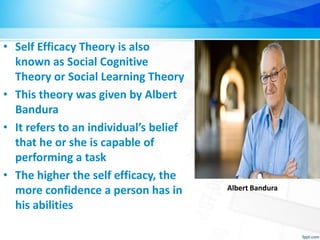
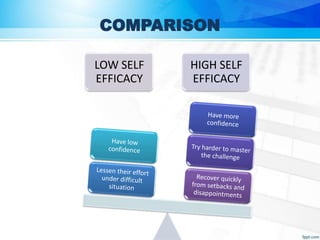
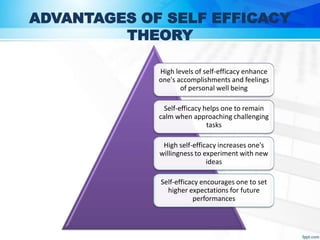

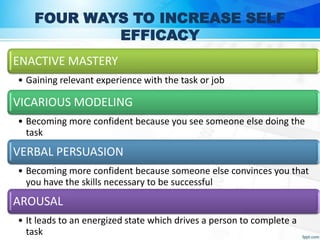
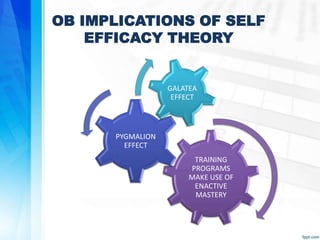
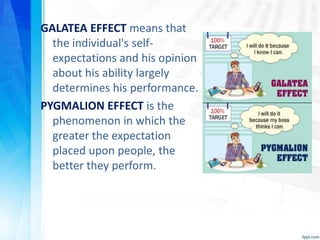




Self-efficacy theory, proposed by Albert Bandura, holds that an individual's belief in their own ability to complete tasks and reach goals (self-efficacy) influences their motivation and behavior. Higher self-efficacy leads to greater effort and persistence when facing challenges. Self-efficacy can be increased through enactive mastery experiences, vicarious learning by observing others, verbal persuasion, and managing arousal states. Training programs aim to boost self-efficacy through hands-on experiences. The Pygmalion and Galatea effects show that higher expectations lead to better performance outcomes.


