Download to read offline

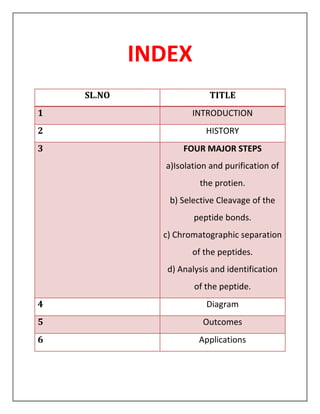
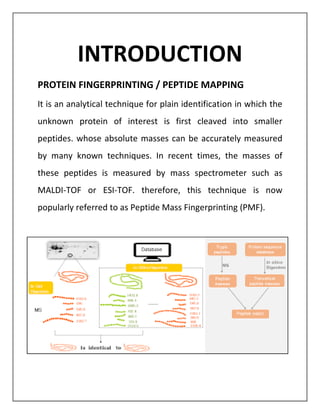
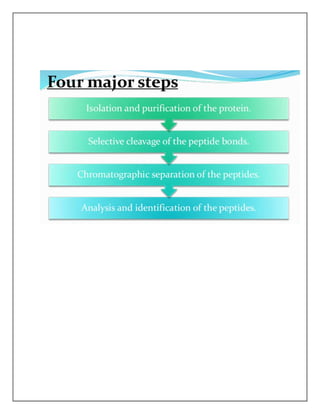
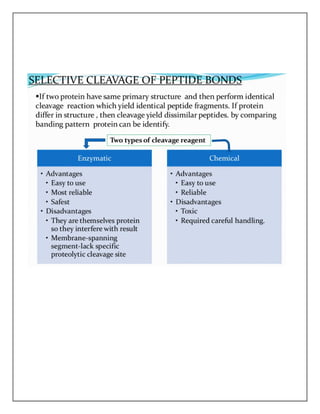
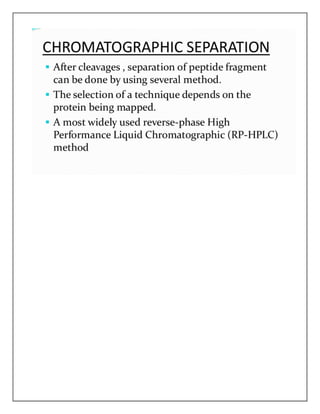
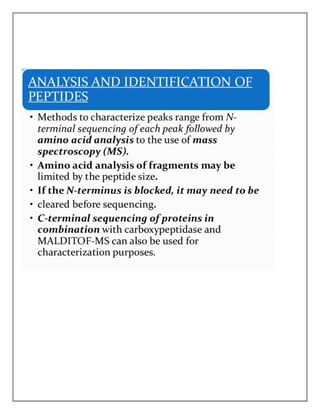
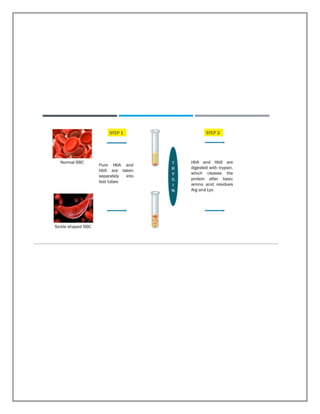
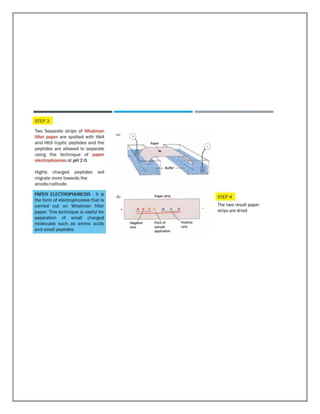
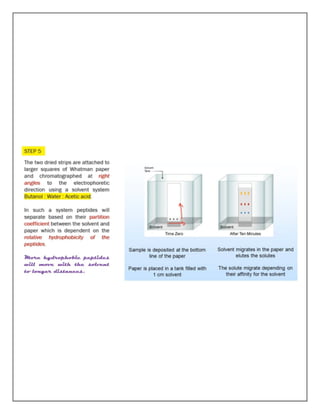
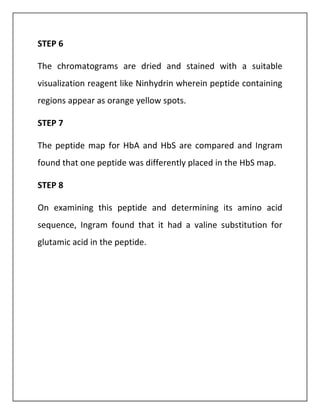
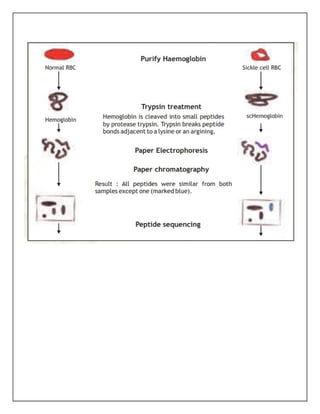

This document discusses protein fingerprinting (peptide mapping) as an analytical technique for protein identification. It involves cleaving a protein into peptides, separating the peptides, and analyzing them to generate a unique map or "fingerprint" for that protein. The technique was pioneered in the 1950s by Vernon Ingram to determine the difference between normal hemoglobin and sickle cell hemoglobin. He found that a single amino acid substitution was responsible for sickle cell disease. Peptide mapping is now commonly used in proteomics research to identify unknown proteins and compare similar proteins from different sources.


