PHYSICAL
EDUCATION
AND HEALTH
12
NATURE OF
DANCES
1. Dance as an art.
2.Why do people
dance?
3.Significant feature of
Dance
4.Features of Dance
5.Kinds of Dance
6.Elements of Dance
LEARNING
CONTENT:
• Dance is a performing art
form consisting of sequences
of movement, either
improvised or purposefully
selected. This movement has
aesthetic and often symbolic
value. Dance can be
categorized and described by
its choreography, by its
repertoire of movements, or
by its historical period or
place of origin.
DANCE
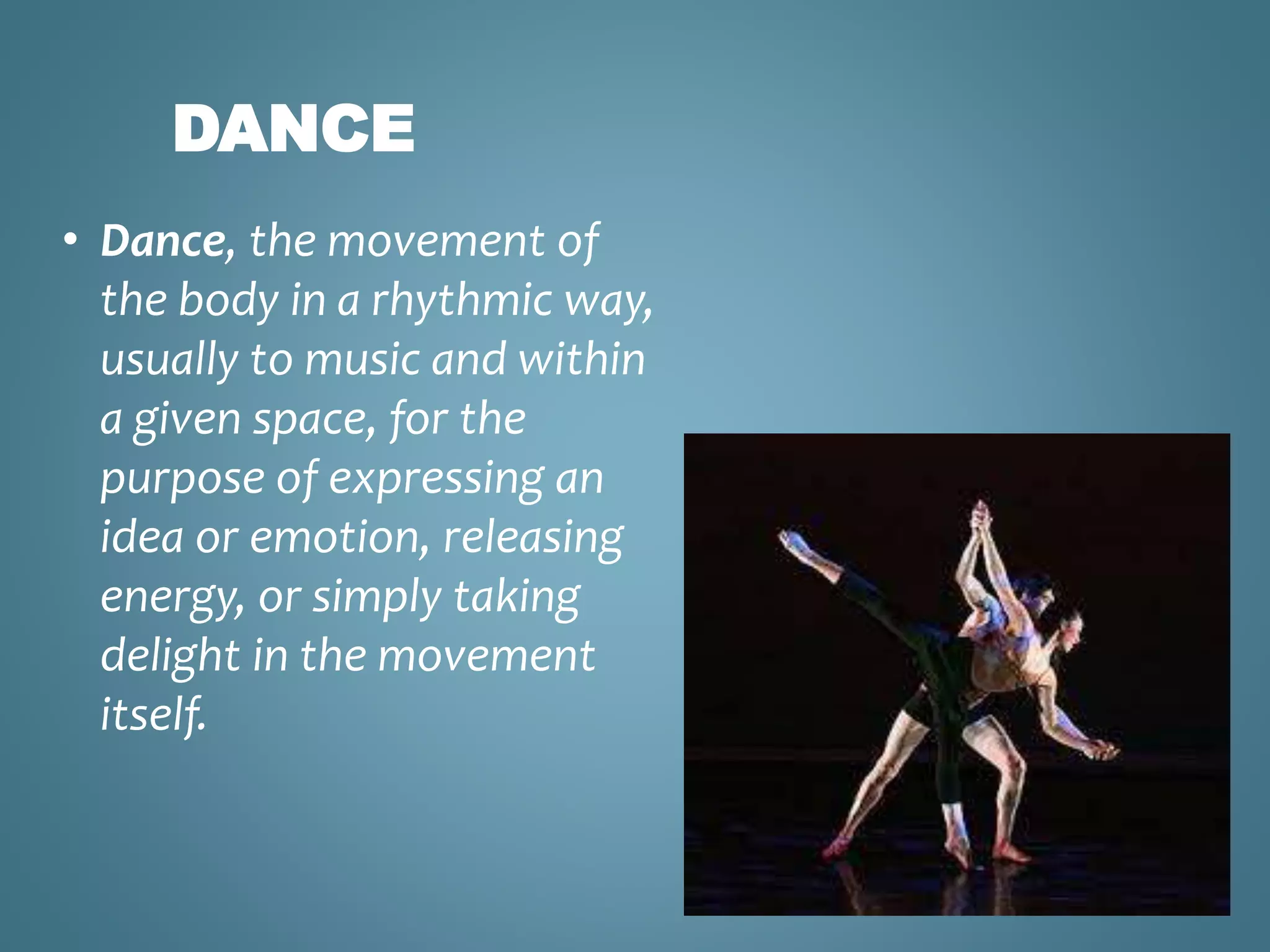
• Dance, the movement of
the body in a rhythmic way,
usually to music and within
a given space, for the
purpose of expressing an
idea or emotion, releasing
energy, or simply taking
delight in the movement
itself.
DANCE
IS DANCE IS AN
ART? WHY?
 Dance is a fully-fledged art form, belonging to
the 'performing arts', a goal in itself and a
means of allowing a human being to express
his inner feelings, thoughts and experiences.
 Dance is a natural form of self-expression: the
body expresses itself naturally and so
therefore does the spirit.
DANCE AS AN ART
 Dance is the art form in which human movement
becomes the medium for sensing, understanding,
and communicating ideas, feelings, and
experiences.
 Dance has its own content, vocabulary, skills, and
techniques, which must be understood and applied
to be proficient in the art.
 The elements of dance are the fundamental
concepts and vocabulary for developing movement
skills as well as understanding dance as an art form.
DANCE AS AN ART
IN WHAT
SPECIFIC THING
THAT DANCING
CAN BE
COMPARED?
1. It has been used in worship.
2. It plays a role in courtship.
3. It is an expression of joy in
one feels.
4. It brings magical powers to
people.
5. It serves to entertain others.
6. It provides personal and
effectiveness of
communication
WHY DO
PEOPLE
DANCE?
1.Movement within
the body which
includes the hands
and arms.
2.Movement of one
space to another.
TWO KINDS
OF
MOVEMENT
S IN DANCE
1.Music
2.Movement
3.Technique
4.Theme
5.Design
6.Properties and
costume
FEATURES
OF DANCE
• an art of sound in
time that expresses
ideas and emotions in
significant forms
through the elements
of rhythm, melody,
harmony, and color.
MUSIC
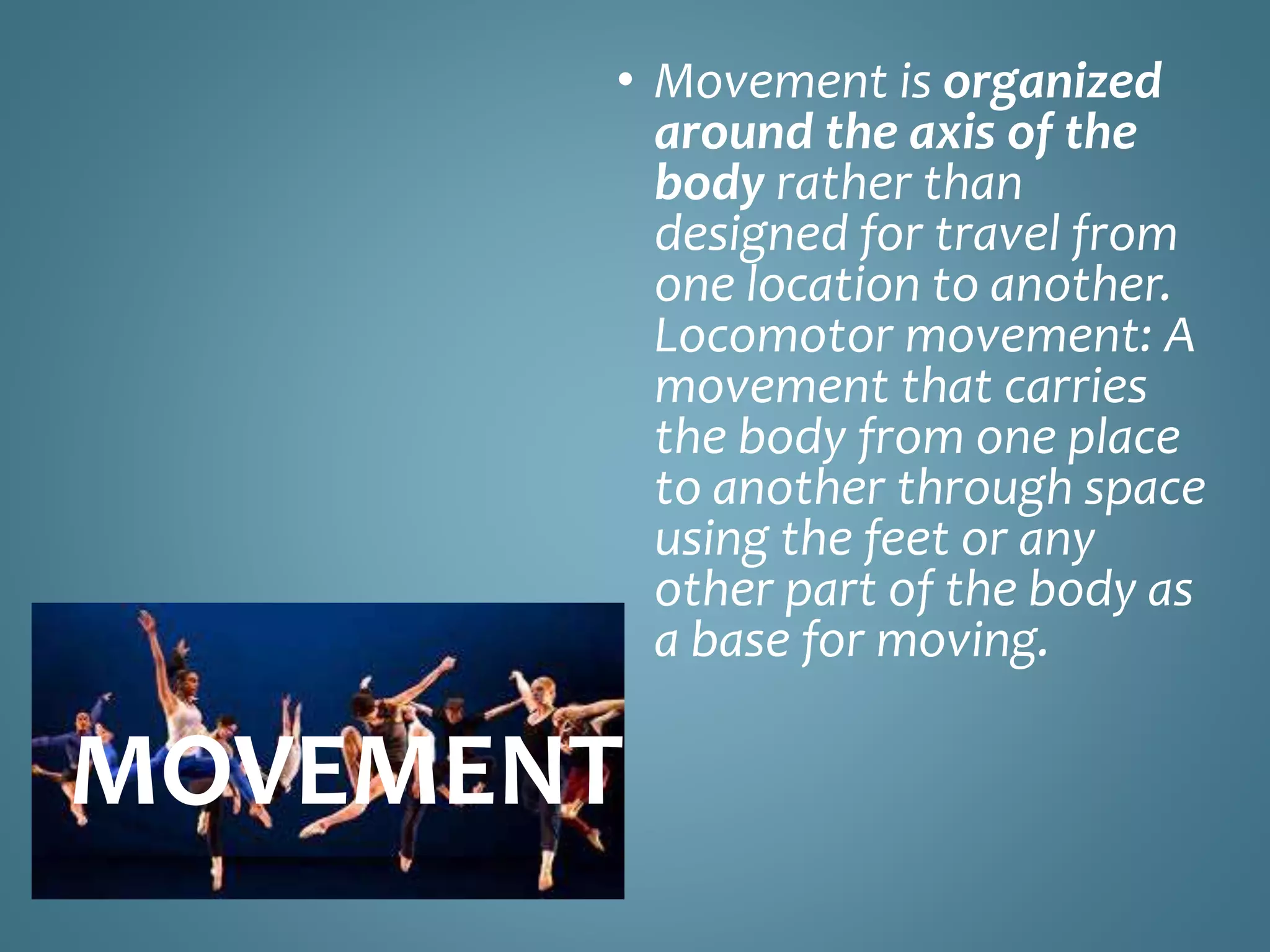
• Movement is organized
around the axis of the
body rather than
designed for travel from
one location to another.
Locomotor movement: A
movement that carries
the body from one place
to another through space
using the feet or any
other part of the body as
a base for moving.
MOVEMENT
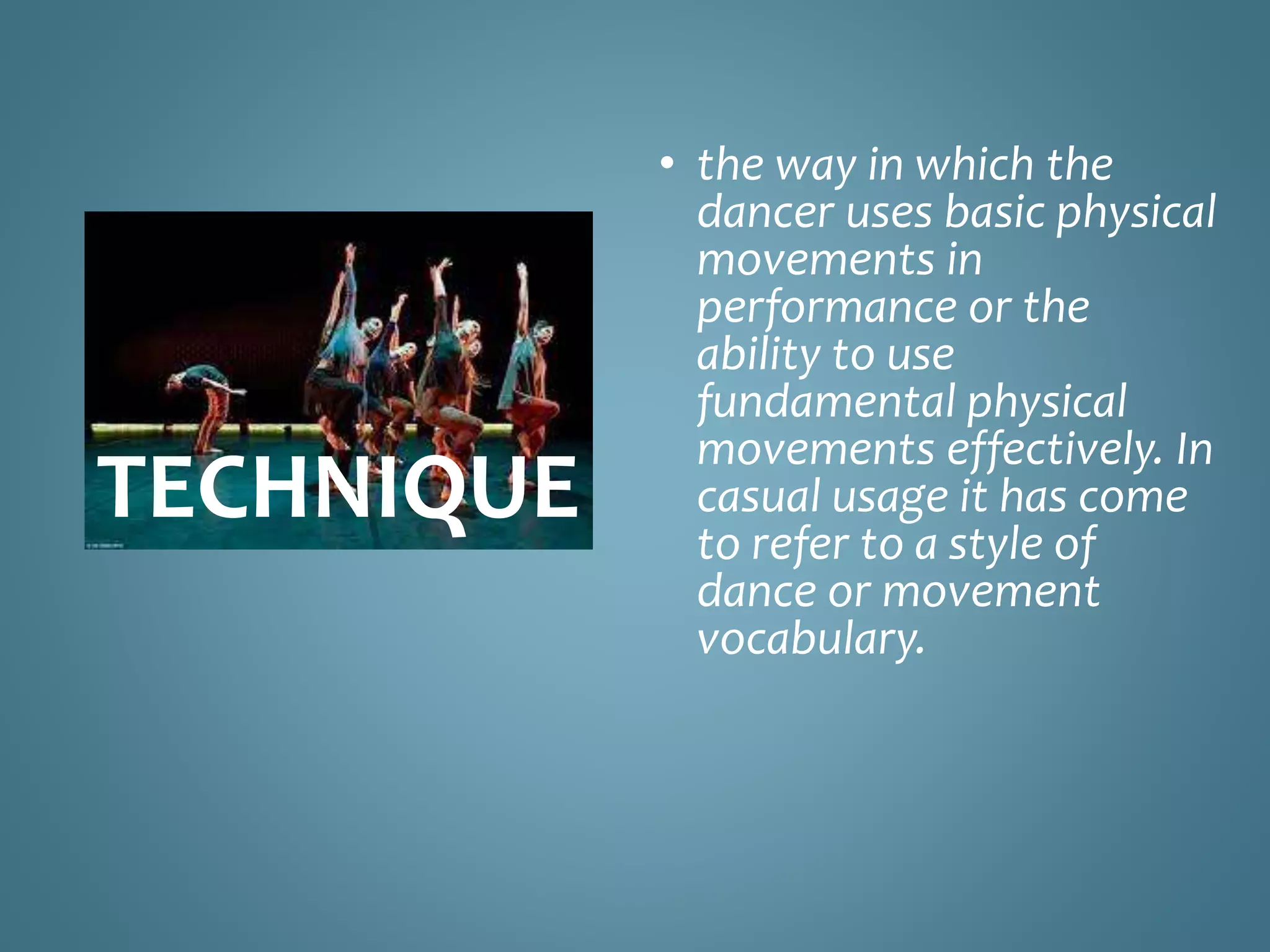
• the way in which the
dancer uses basic physical
movements in
performance or the
ability to use
fundamental physical
movements effectively. In
casual usage it has come
to refer to a style of
dance or movement
vocabulary.
TECHNIQUE
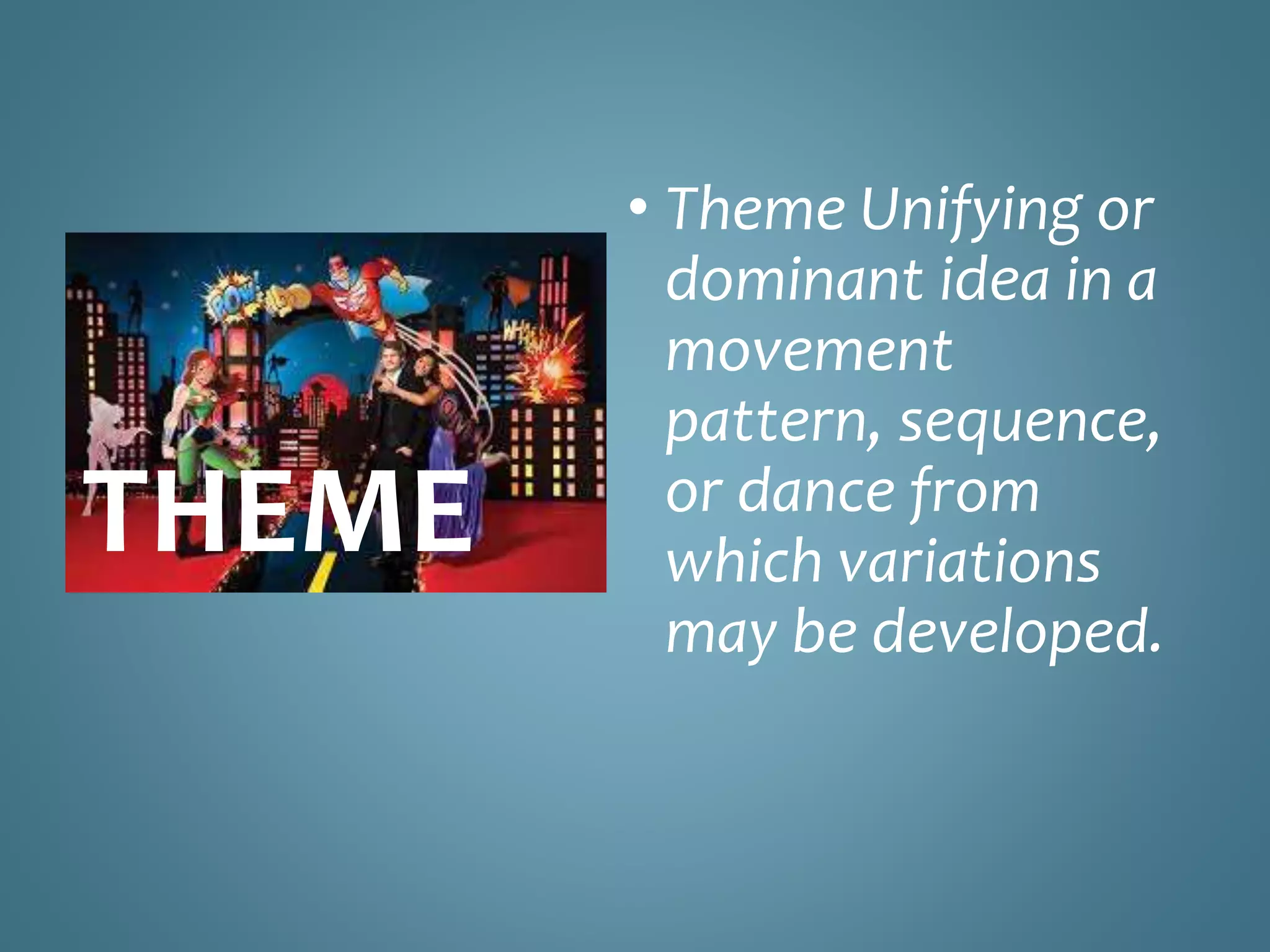
• Theme Unifying or
dominant idea in a
movement
pattern, sequence,
or dance from
which variations
may be developed.
THEME
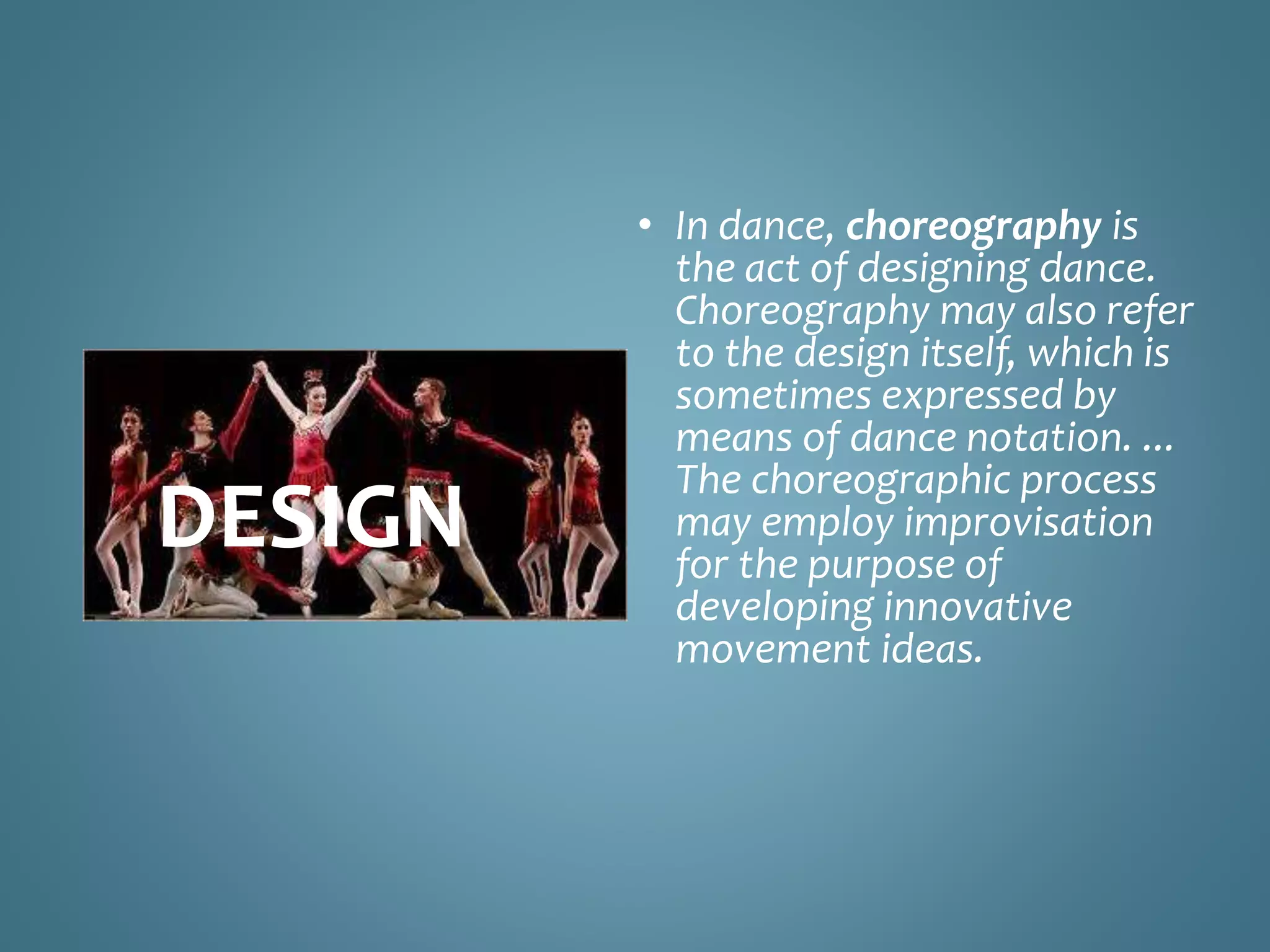
• In dance, choreography is
the act of designing dance.
Choreography may also refer
to the design itself, which is
sometimes expressed by
means of dance notation. ...
The choreographic process
may employ improvisation
for the purpose of
developing innovative
movement ideas.
DESIGN
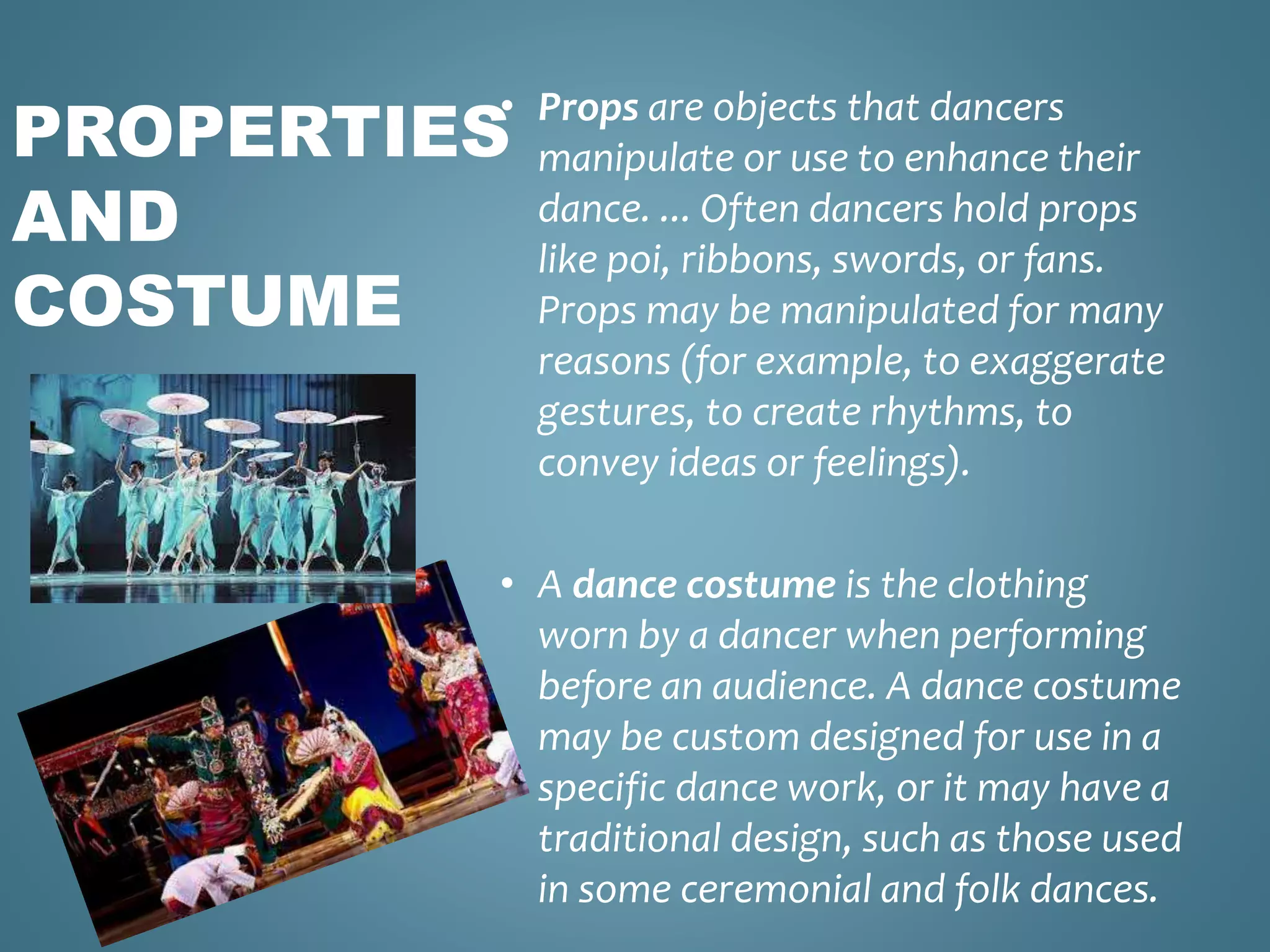
• Props are objects that dancers
manipulate or use to enhance their
dance. ... Often dancers hold props
like poi, ribbons, swords, or fans.
Props may be manipulated for many
reasons (for example, to exaggerate
gestures, to create rhythms, to
convey ideas or feelings).
• A dance costume is the clothing
worn by a dancer when performing
before an audience. A dance costume
may be custom designed for use in a
specific dance work, or it may have a
traditional design, such as those used
in some ceremonial and folk dances.
PROPERTIES
AND
COSTUME

P.E.H-12-Introduction to Dances.pptx

  • 1.
  • 2.
  • 3.
    1. Dance asan art. 2.Why do people dance? 3.Significant feature of Dance 4.Features of Dance 5.Kinds of Dance 6.Elements of Dance LEARNING CONTENT:
  • 4.
    • Dance isa performing art form consisting of sequences of movement, either improvised or purposefully selected. This movement has aesthetic and often symbolic value. Dance can be categorized and described by its choreography, by its repertoire of movements, or by its historical period or place of origin. DANCE
  • 5.
    • Dance, themovement of the body in a rhythmic way, usually to music and within a given space, for the purpose of expressing an idea or emotion, releasing energy, or simply taking delight in the movement itself. DANCE
  • 6.
    IS DANCE ISAN ART? WHY?
  • 7.
     Dance isa fully-fledged art form, belonging to the 'performing arts', a goal in itself and a means of allowing a human being to express his inner feelings, thoughts and experiences.  Dance is a natural form of self-expression: the body expresses itself naturally and so therefore does the spirit. DANCE AS AN ART
  • 8.
     Dance isthe art form in which human movement becomes the medium for sensing, understanding, and communicating ideas, feelings, and experiences.  Dance has its own content, vocabulary, skills, and techniques, which must be understood and applied to be proficient in the art.  The elements of dance are the fundamental concepts and vocabulary for developing movement skills as well as understanding dance as an art form. DANCE AS AN ART
  • 9.
    IN WHAT SPECIFIC THING THATDANCING CAN BE COMPARED?
  • 10.
    1. It hasbeen used in worship. 2. It plays a role in courtship. 3. It is an expression of joy in one feels. 4. It brings magical powers to people. 5. It serves to entertain others. 6. It provides personal and effectiveness of communication WHY DO PEOPLE DANCE?
  • 11.
    1.Movement within the bodywhich includes the hands and arms. 2.Movement of one space to another. TWO KINDS OF MOVEMENT S IN DANCE
  • 12.
  • 13.
    • an artof sound in time that expresses ideas and emotions in significant forms through the elements of rhythm, melody, harmony, and color. MUSIC
  • 14.
    • Movement isorganized around the axis of the body rather than designed for travel from one location to another. Locomotor movement: A movement that carries the body from one place to another through space using the feet or any other part of the body as a base for moving. MOVEMENT
  • 15.
    • the wayin which the dancer uses basic physical movements in performance or the ability to use fundamental physical movements effectively. In casual usage it has come to refer to a style of dance or movement vocabulary. TECHNIQUE
  • 16.
    • Theme Unifyingor dominant idea in a movement pattern, sequence, or dance from which variations may be developed. THEME
  • 17.
    • In dance,choreography is the act of designing dance. Choreography may also refer to the design itself, which is sometimes expressed by means of dance notation. ... The choreographic process may employ improvisation for the purpose of developing innovative movement ideas. DESIGN
  • 18.
    • Props areobjects that dancers manipulate or use to enhance their dance. ... Often dancers hold props like poi, ribbons, swords, or fans. Props may be manipulated for many reasons (for example, to exaggerate gestures, to create rhythms, to convey ideas or feelings). • A dance costume is the clothing worn by a dancer when performing before an audience. A dance costume may be custom designed for use in a specific dance work, or it may have a traditional design, such as those used in some ceremonial and folk dances. PROPERTIES AND COSTUME