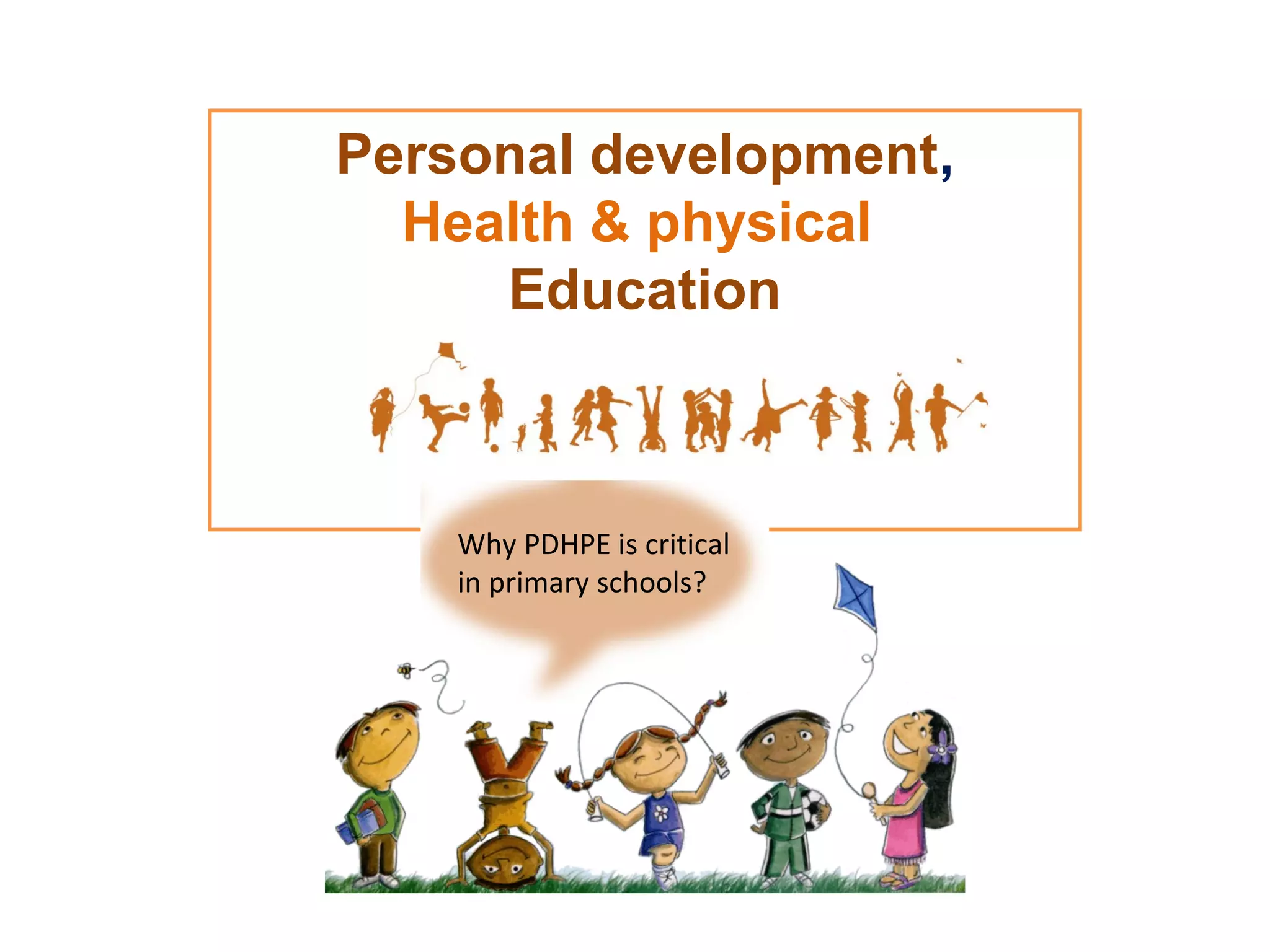
Personal development,
Health & physical
Education

Why PDHPE is critical
in primary schools?
Benefits of PDHPE
‘The aim of PD-H-PE is to develop in students the
knowledge and understanding, skills and values and
attitudes needed to lead healthy, active and fulfilling
lives.’ (PD-H-PE K-6 syllabus p.8)
It is proven that “Students who are well nourished and
physically active are better able to reach their academic
potential and exhibit positive behaviours in the classroom”
(NSW Auditor-General's Report Physical activity in
government)
Holistic Being
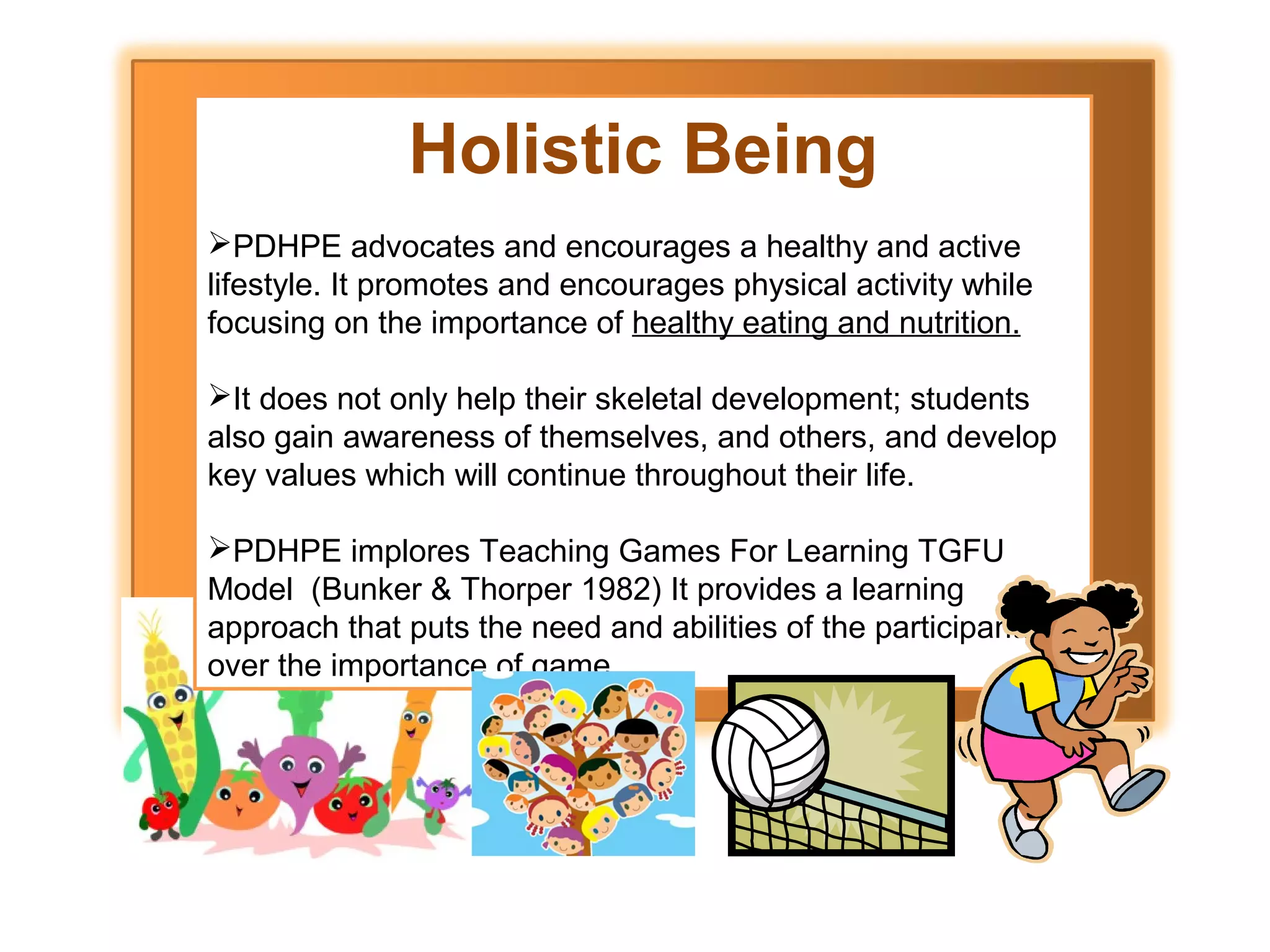
PDHPE advocates and encourages a healthy and active
lifestyle. It promotes and encourages physical activity while
focusing on the importance of healthy eating and nutrition.
It does not only help their skeletal development; students
also gain awareness of themselves, and others, and develop
key values which will continue throughout their life.
PDHPE implores Teaching Games For Learning TGFU
Model (Bunker & Thorper 1982) It provides a learning
approach that puts the need and abilities of the participants
over the importance of game.
PDHPE Syllabus
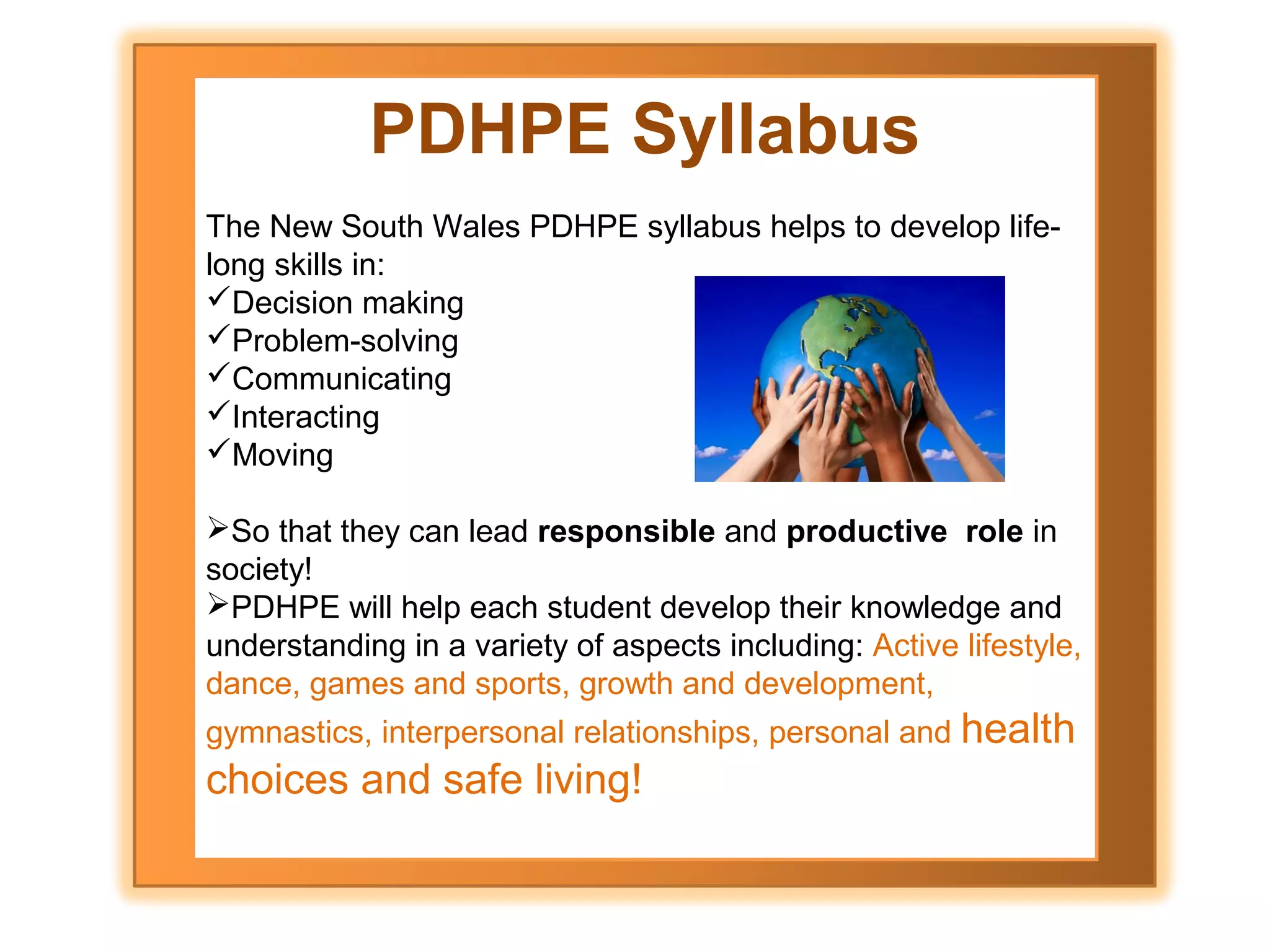
The New South Wales PDHPE syllabus helps to develop lifelong skills in:
Decision making
Problem-solving
Communicating
Interacting
Moving
So that they can lead responsible and productive role in
society!
PDHPE will help each student develop their knowledge and
understanding in a variety of aspects including: Active lifestyle,
dance, games and sports, growth and development,
gymnastics, interpersonal relationships, personal and health

choices and safe living!
Our responsibility
Parents, Teachers and Educating system plays an
important role in our children’s lives; lets work together to
bring about change and make PDHPE an important part of
our children’s schooling lives!

Statistics
NSW Department of Health’s 2010 Schools Physical Activity and Nutrition
Survey shows that an estimated 22 million children under the age of five
are overweight
31% of children are not meeting the requirement of 60 minutes of
moderate and vigorous physical activity each day.
Physical activity and education is declining in schools worldwide
References
Bunker, D., & Thorpe, R. (2007). A model for the teaching of games. Bulletin of
Physical Education, 10, 9-16.
PD-H-PE K-6, (1999) Personal Development, Health and Physical Education
(PDHPE) K-6 PDHPE Syllabus, www.boardofstudies.nsw.edu.au
NSW Department of Health’s 2010 Schools Physical Activity and Nutrition
Survey (SPANS)
NSW Auditor-General's Report Physical activity in government primary schools,
cited in:
www.audit.nsw.gov.au/.../05_PAB_Physical_Activity_Introduction.pdf.au
References
Bunker, D., & Thorpe, R. (2007). A model for the teaching of games. Bulletin of
Physical Education, 10, 9-16.
PD-H-PE K-6, (1999) Personal Development, Health and Physical Education
(PDHPE) K-6 PDHPE Syllabus, www.boardofstudies.nsw.edu.au
NSW Department of Health’s 2010 Schools Physical Activity and Nutrition
Survey (SPANS)
NSW Auditor-General's Report Physical activity in government primary schools,
cited in:
www.audit.nsw.gov.au/.../05_PAB_Physical_Activity_Introduction.pdf.au

Pdhpe

  • 1.
    Personal development, Health &physical Education Why PDHPE is critical in primary schools?
  • 2.
    Benefits of PDHPE ‘Theaim of PD-H-PE is to develop in students the knowledge and understanding, skills and values and attitudes needed to lead healthy, active and fulfilling lives.’ (PD-H-PE K-6 syllabus p.8) It is proven that “Students who are well nourished and physically active are better able to reach their academic potential and exhibit positive behaviours in the classroom” (NSW Auditor-General's Report Physical activity in government)
  • 3.
    Holistic Being PDHPE advocatesand encourages a healthy and active lifestyle. It promotes and encourages physical activity while focusing on the importance of healthy eating and nutrition. It does not only help their skeletal development; students also gain awareness of themselves, and others, and develop key values which will continue throughout their life. PDHPE implores Teaching Games For Learning TGFU Model (Bunker & Thorper 1982) It provides a learning approach that puts the need and abilities of the participants over the importance of game.
  • 4.
    PDHPE Syllabus The NewSouth Wales PDHPE syllabus helps to develop lifelong skills in: Decision making Problem-solving Communicating Interacting Moving So that they can lead responsible and productive role in society! PDHPE will help each student develop their knowledge and understanding in a variety of aspects including: Active lifestyle, dance, games and sports, growth and development, gymnastics, interpersonal relationships, personal and health choices and safe living!
  • 5.
    Our responsibility Parents, Teachersand Educating system plays an important role in our children’s lives; lets work together to bring about change and make PDHPE an important part of our children’s schooling lives! Statistics NSW Department of Health’s 2010 Schools Physical Activity and Nutrition Survey shows that an estimated 22 million children under the age of five are overweight 31% of children are not meeting the requirement of 60 minutes of moderate and vigorous physical activity each day. Physical activity and education is declining in schools worldwide
  • 6.
    References Bunker, D., &Thorpe, R. (2007). A model for the teaching of games. Bulletin of Physical Education, 10, 9-16. PD-H-PE K-6, (1999) Personal Development, Health and Physical Education (PDHPE) K-6 PDHPE Syllabus, www.boardofstudies.nsw.edu.au NSW Department of Health’s 2010 Schools Physical Activity and Nutrition Survey (SPANS) NSW Auditor-General's Report Physical activity in government primary schools, cited in: www.audit.nsw.gov.au/.../05_PAB_Physical_Activity_Introduction.pdf.au
  • 7.
    References Bunker, D., &Thorpe, R. (2007). A model for the teaching of games. Bulletin of Physical Education, 10, 9-16. PD-H-PE K-6, (1999) Personal Development, Health and Physical Education (PDHPE) K-6 PDHPE Syllabus, www.boardofstudies.nsw.edu.au NSW Department of Health’s 2010 Schools Physical Activity and Nutrition Survey (SPANS) NSW Auditor-General's Report Physical activity in government primary schools, cited in: www.audit.nsw.gov.au/.../05_PAB_Physical_Activity_Introduction.pdf.au