The importance of PDHPE in Primary
Schools
Mr. John-Christian Pingol 6P
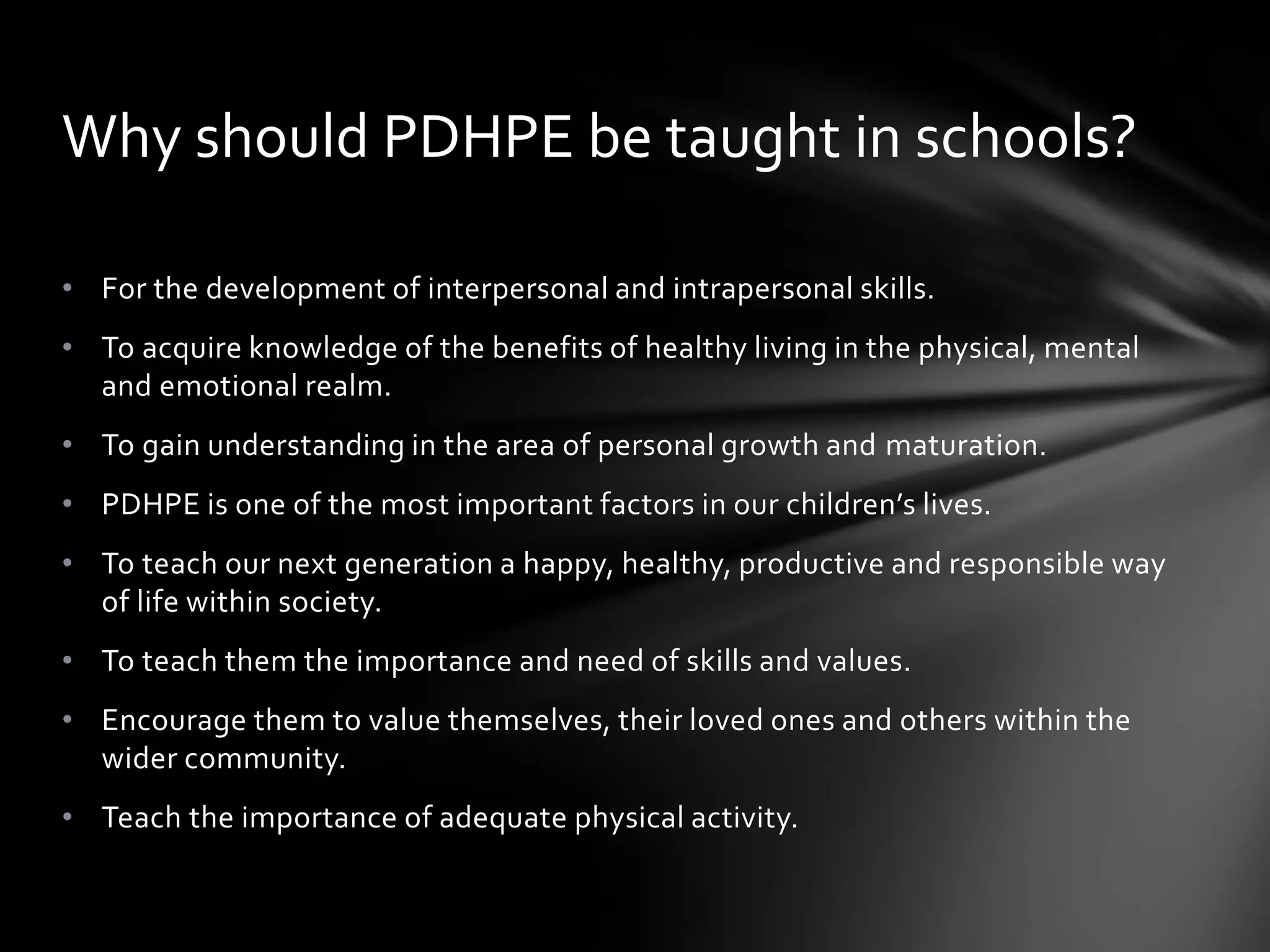
Why should PDHPE be taught in schools?
• For the development of interpersonal and intrapersonal skills.
• To acquire knowledge of the benefits of healthy living in the physical, mental
and emotional realm.
• To gain understanding in the area of personal growth and maturation.

• PDHPE is one of the most important factors in our children’s lives.
• To teach our next generation a happy, healthy, productive and responsible way
of life within society.
• To teach them the importance and need of skills and values.

• Encourage them to value themselves, their loved ones and others within the
wider community.
• Teach the importance of adequate physical activity.
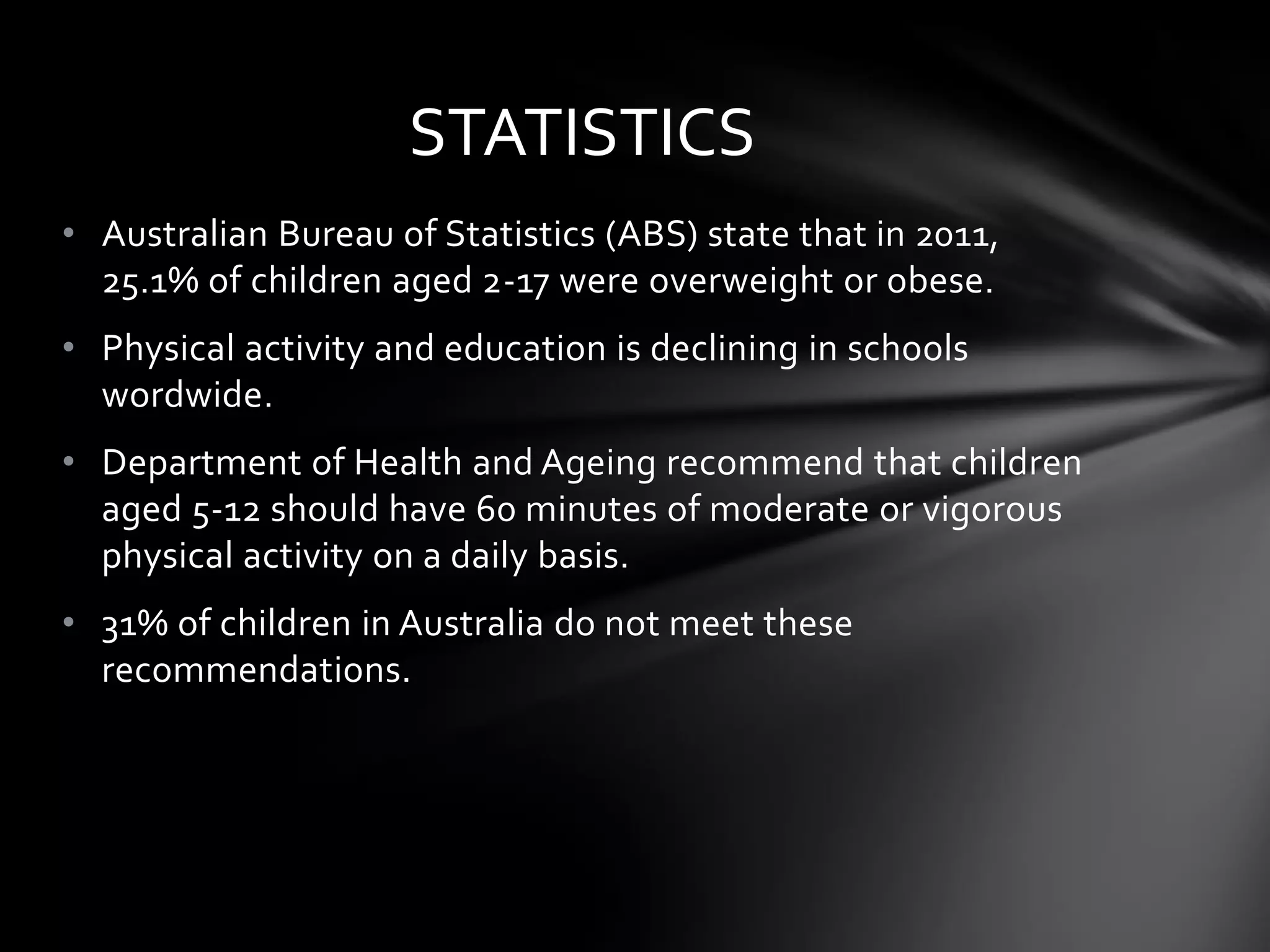
STATISTICS
• Australian Bureau of Statistics (ABS) state that in 2011,
25.1% of children aged 2-17 were overweight or obese.
• Physical activity and education is declining in schools
wordwide.
• Department of Health and Ageing recommend that children
aged 5-12 should have 60 minutes of moderate or vigorous
physical activity on a daily basis.
• 31% of children in Australia do not meet these
recommendations.
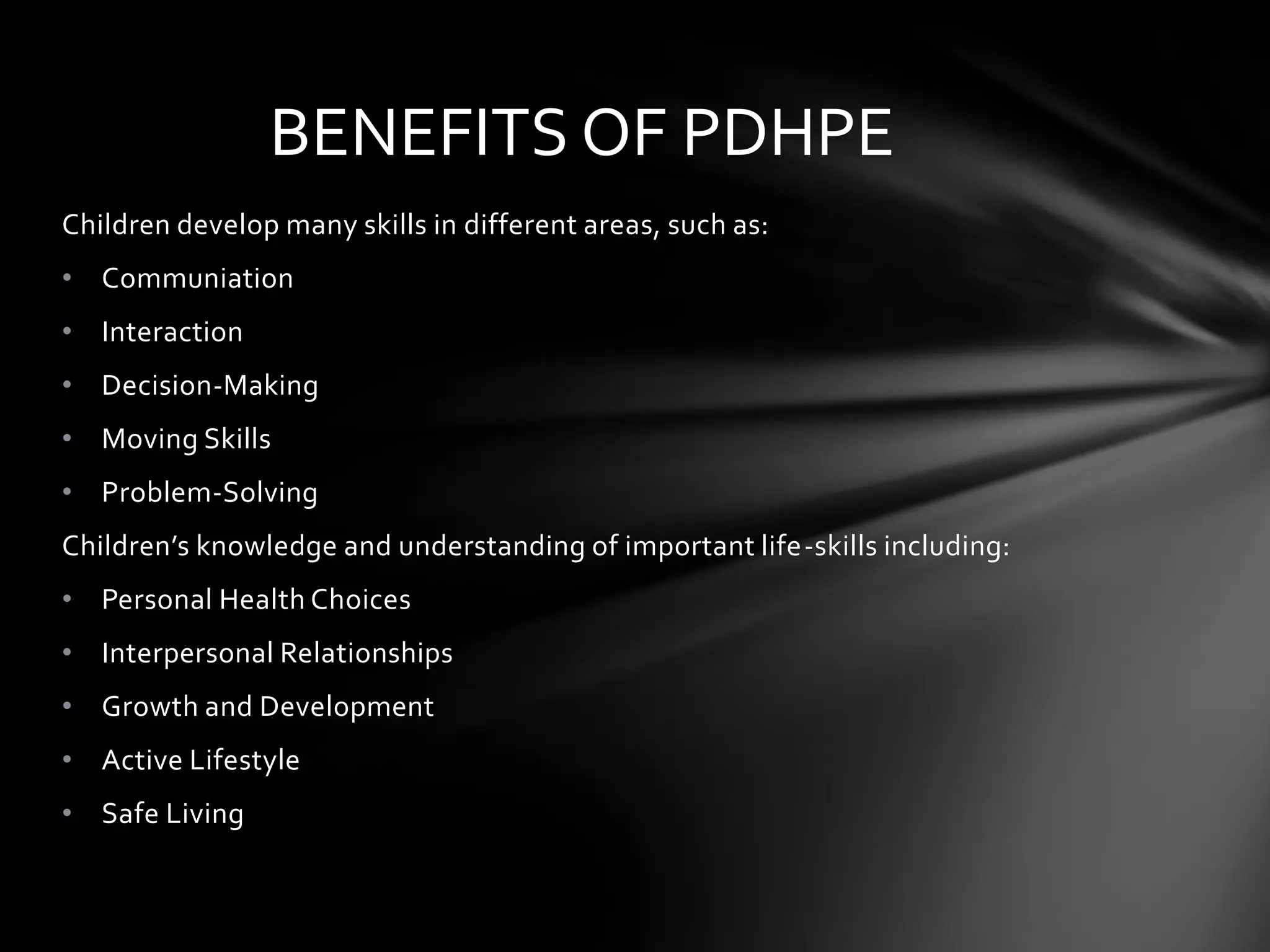
BENEFITS OF PDHPE
Children develop many skills in different areas, such as:
• Communiation
• Interaction
• Decision-Making
• Moving Skills
• Problem-Solving
Children’s knowledge and understanding of important life-skills including:
• Personal Health Choices
• Interpersonal Relationships
• Growth and Development
• Active Lifestyle
• Safe Living
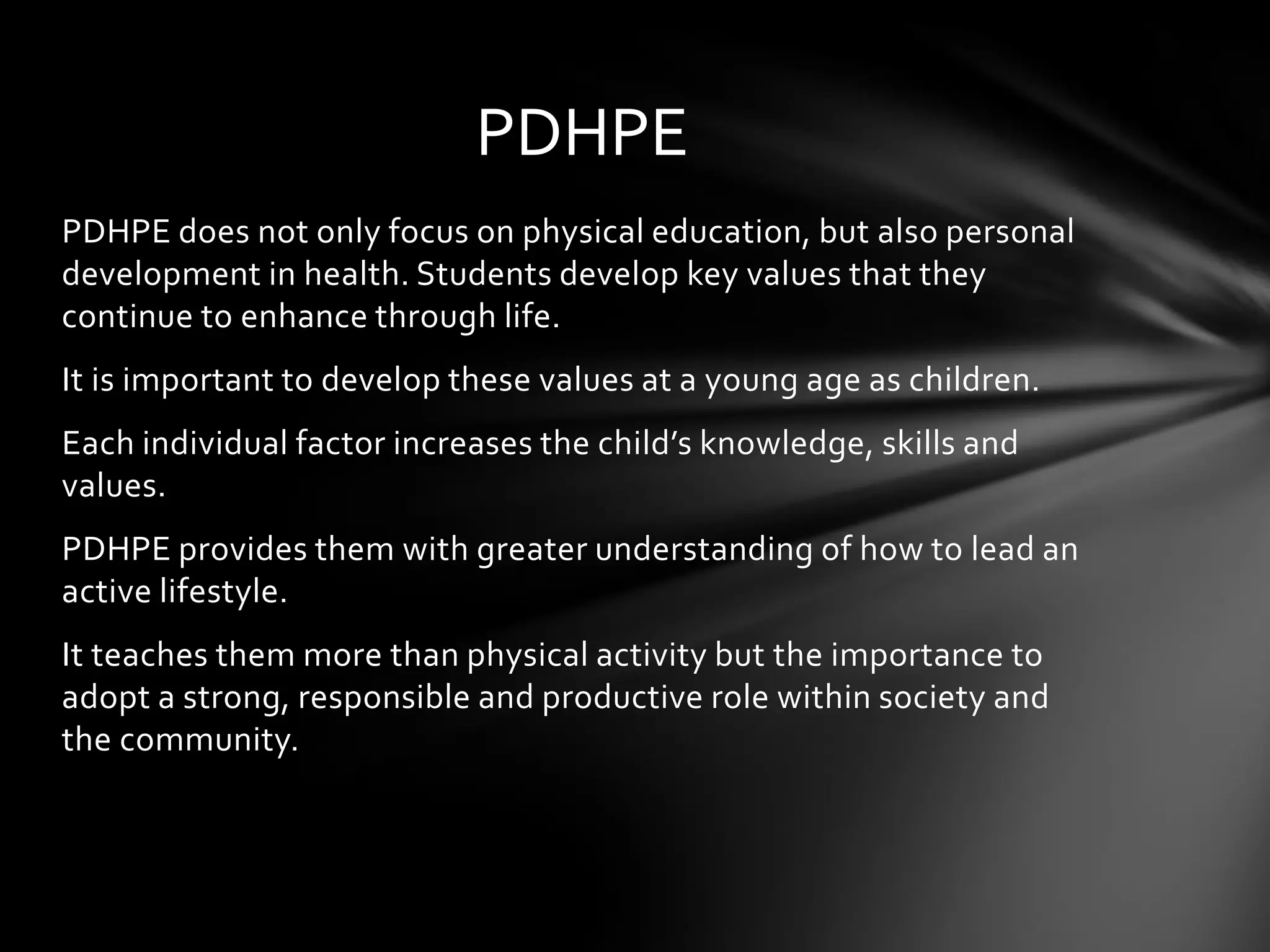
PDHPE
PDHPE does not only focus on physical education, but also personal
development in health. Students develop key values that they
continue to enhance through life.
It is important to develop these values at a young age as children.
Each individual factor increases the child’s knowledge, skills and
values.
PDHPE provides them with greater understanding of how to lead an
active lifestyle.
It teaches them more than physical activity but the importance to
adopt a strong, responsible and productive role within society and
the community.
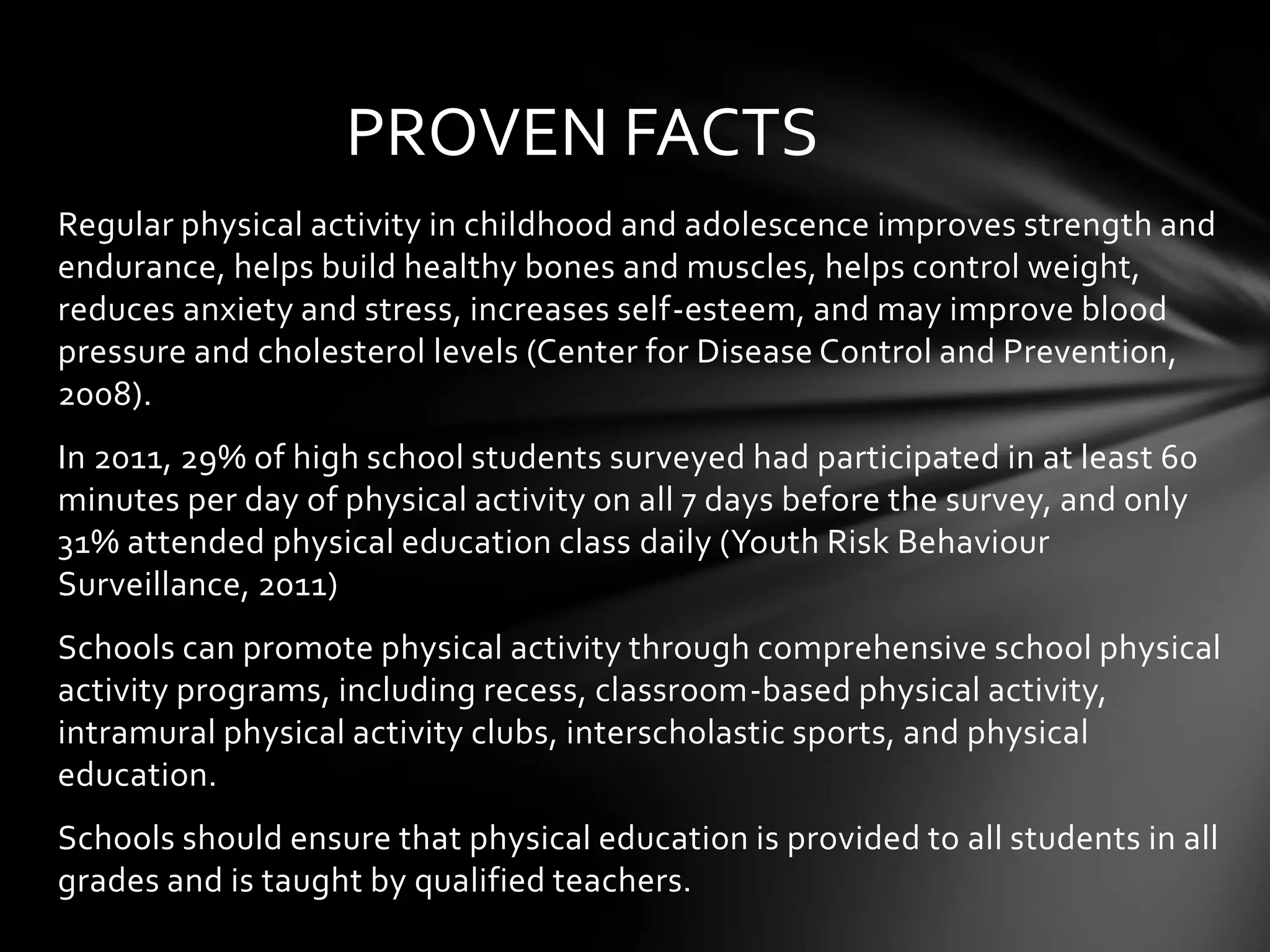
PROVEN FACTS
Regular physical activity in childhood and adolescence improves strength and
endurance, helps build healthy bones and muscles, helps control weight,
reduces anxiety and stress, increases self-esteem, and may improve blood
pressure and cholesterol levels (Center for Disease Control and Prevention,
2008).
In 2011, 29% of high school students surveyed had participated in at least 60
minutes per day of physical activity on all 7 days before the survey, and only
31% attended physical education class daily (Youth Risk Behaviour
Surveillance, 2011)
Schools can promote physical activity through comprehensive school physical
activity programs, including recess, classroom-based physical activity,
intramural physical activity clubs, interscholastic sports, and physical
education.
Schools should ensure that physical education is provided to all students in all
grades and is taught by qualified teachers.
LET’S GET “PHASE A” IN ACTION
This is where you come in:

• PDHPE is essential in all primary schools and it helps students throughout
their life in many different aspects.

• The lack of importance placed on the PDHPE subject is an issue which
needs to be changed.

• PDHPE is an important factor in our children’s lives
Reference List
Board of Studies NSW (2007). Personal development, health and physical
education k-6 syllabus retrieved from:
k6.boardofstudies.nsw.edu.au/files/pdhpe/k6_pdhpe_syl.pdf
Department of Health and Human Services. Physical Activity Guidelines
Advisory Committee report. Washington, DC: U.S. Department of Health and
Human Services, 2008.

Department of Health and Human Services. 2008 Physical Activity Guidelines
for Americans. Washington, DC: U.S. Department of Health and Human
Services; 2008.
CDC. Youth Risk Behavior Surveillance—United States,
2011. MMWR2012;61(SS-4).

Pdhpe rationale

  • 1.
    The importance ofPDHPE in Primary Schools Mr. John-Christian Pingol 6P
  • 2.
    Why should PDHPEbe taught in schools? • For the development of interpersonal and intrapersonal skills. • To acquire knowledge of the benefits of healthy living in the physical, mental and emotional realm. • To gain understanding in the area of personal growth and maturation. • PDHPE is one of the most important factors in our children’s lives. • To teach our next generation a happy, healthy, productive and responsible way of life within society. • To teach them the importance and need of skills and values. • Encourage them to value themselves, their loved ones and others within the wider community. • Teach the importance of adequate physical activity.
  • 3.
    STATISTICS • Australian Bureauof Statistics (ABS) state that in 2011, 25.1% of children aged 2-17 were overweight or obese. • Physical activity and education is declining in schools wordwide. • Department of Health and Ageing recommend that children aged 5-12 should have 60 minutes of moderate or vigorous physical activity on a daily basis. • 31% of children in Australia do not meet these recommendations.
  • 4.
    BENEFITS OF PDHPE Childrendevelop many skills in different areas, such as: • Communiation • Interaction • Decision-Making • Moving Skills • Problem-Solving Children’s knowledge and understanding of important life-skills including: • Personal Health Choices • Interpersonal Relationships • Growth and Development • Active Lifestyle • Safe Living
  • 5.
    PDHPE PDHPE does notonly focus on physical education, but also personal development in health. Students develop key values that they continue to enhance through life. It is important to develop these values at a young age as children. Each individual factor increases the child’s knowledge, skills and values. PDHPE provides them with greater understanding of how to lead an active lifestyle. It teaches them more than physical activity but the importance to adopt a strong, responsible and productive role within society and the community.
  • 6.
    PROVEN FACTS Regular physicalactivity in childhood and adolescence improves strength and endurance, helps build healthy bones and muscles, helps control weight, reduces anxiety and stress, increases self-esteem, and may improve blood pressure and cholesterol levels (Center for Disease Control and Prevention, 2008). In 2011, 29% of high school students surveyed had participated in at least 60 minutes per day of physical activity on all 7 days before the survey, and only 31% attended physical education class daily (Youth Risk Behaviour Surveillance, 2011) Schools can promote physical activity through comprehensive school physical activity programs, including recess, classroom-based physical activity, intramural physical activity clubs, interscholastic sports, and physical education. Schools should ensure that physical education is provided to all students in all grades and is taught by qualified teachers.
  • 7.
    LET’S GET “PHASEA” IN ACTION This is where you come in: • PDHPE is essential in all primary schools and it helps students throughout their life in many different aspects. • The lack of importance placed on the PDHPE subject is an issue which needs to be changed. • PDHPE is an important factor in our children’s lives
  • 8.
    Reference List Board ofStudies NSW (2007). Personal development, health and physical education k-6 syllabus retrieved from: k6.boardofstudies.nsw.edu.au/files/pdhpe/k6_pdhpe_syl.pdf Department of Health and Human Services. Physical Activity Guidelines Advisory Committee report. Washington, DC: U.S. Department of Health and Human Services, 2008. Department of Health and Human Services. 2008 Physical Activity Guidelines for Americans. Washington, DC: U.S. Department of Health and Human Services; 2008. CDC. Youth Risk Behavior Surveillance—United States, 2011. MMWR2012;61(SS-4).