DRAMA
Prepared by
Ratri Wahyuningtyas
136332049
What is drama?
 Derives

from Greek >> draein
 Meaning >> to do or to act
 Imitating human action (mimesis),
involving plot, characters, action
(Aristotle)
 Drama is any kind of acting
Inside Drama
 Lead

us to the discovery and reflections about
personality, circumstances, desires, anxiety, hopes
and dreams
 Sometimes contains about political and social issues
at the time
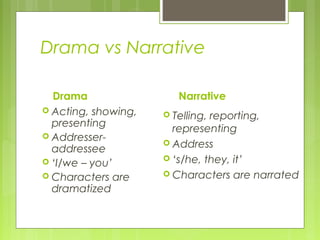
Drama vs Narrative
Drama
 Acting, showing,
presenting
 Addresseraddressee
 ‘I/we – you’
 Characters are
dramatized

Narrative
 Telling,

reporting,
representing
 Address
 ‘s/he, they, it’
 Characters are narrated
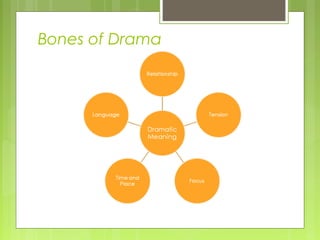
Bones of Drama
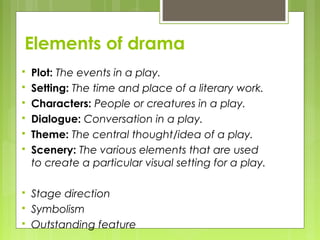
Elements of drama











Plot: The events in a play.
Setting: The time and place of a literary work.
Characters: People or creatures in a play.
Dialogue: Conversation in a play.
Theme: The central thought/idea of a play.
Scenery: The various elements that are used
to create a particular visual setting for a play.
Stage direction
Symbolism
Outstanding feature
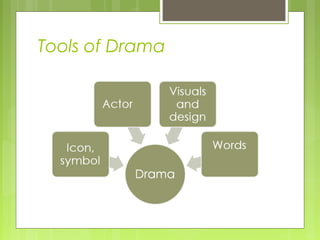
Tools of Drama
Various of Drama
1. Tragedy






Tragic action, usually about tragic action of noble
people committing mistake and end up with
death after undergoing intense suffering.
All tragedies are finished with death (according
to Lord Byron)
Talks about grief, finality, associated with death
Characters: usually upper class characters, high
fame individual
 Action:

serious and important, doing important
matter, done by people who count on (having
important role)
 Men’s assumption of great mistake he had made,
suffers then die
 Things cohere in tragedy >> hero usually does some
deed and suffers as a consequence
 Example: Oedipus the King
Errors according to Aristotle
1.
2.
3.
4.

Hamartia (errors) >> makes great mistakes and
suffers much
Hybris (bullying, abuse of power)
Peripeteia (reversal) >> when the action happens
unintended
Anagnorisis (recognition, discovery) >> clearing up
something by revealing some unknown facts
2. Comedy
 Dramatic

form
 Dramatized some absurdity of human
nature but not destructive of self or others
 No great disaster will occur, turns out
happily for the chief character
 Ended by marriage (according to Lord
Byron)
 It is about joy and celebration of new life
>> marriage, reunion
 Characters:

lowborn persons
 Action: done by unimportant laughable person,
who makes mistake that do not cause us pain
 Exposes stupid action and renewal
Shakespeare’s Midsummer Night’s Dream
Kinds of Dramatic Comedy
 Romantic

Comedy >> usually tells about love affair
went not as smooth as expected, but finally ends
happily.
Shakespeare’s As You Like It
 Satiric Comedy >> mocks political issues or
philosophical doctrines by making ridiculous the
violators of its standards of morals or matters.
Aristophanes’ The Alchemist
Kinds of Dramatic Comedy
 The

Comedy of Manners >> form of comedy that
reflects the life, ideals and manner of social class
society.
Shakespeare's Much Ado About Nothing
 Farce : form of Dramatic comedy which entertains
audience without any intentions or hidden agenda;
seek out fun for fun’s sake. Example: Charlie
Chaplin, Woody Allen
3. Tragicomedy
 Presented

serious action through a tragic
disaster to protagonist and added
reversal condition which ends happily
 Combination of characters and plot of
tragedy and comedy
 Plays with double plots; one serious and
one comic
 Character:

middle and lower class

characters
 Example: Shakespeare’s Merchant of
Venice
THANK
YOU

Drama

  • 1.
  • 2.
    What is drama? Derives from Greek >> draein  Meaning >> to do or to act  Imitating human action (mimesis), involving plot, characters, action (Aristotle)  Drama is any kind of acting
  • 3.
    Inside Drama  Lead usto the discovery and reflections about personality, circumstances, desires, anxiety, hopes and dreams  Sometimes contains about political and social issues at the time
  • 4.
    Drama vs Narrative Drama Acting, showing, presenting  Addresseraddressee  ‘I/we – you’  Characters are dramatized Narrative  Telling, reporting, representing  Address  ‘s/he, they, it’  Characters are narrated
  • 5.
  • 6.
    Elements of drama          Plot:The events in a play. Setting: The time and place of a literary work. Characters: People or creatures in a play. Dialogue: Conversation in a play. Theme: The central thought/idea of a play. Scenery: The various elements that are used to create a particular visual setting for a play. Stage direction Symbolism Outstanding feature
  • 7.
  • 8.
  • 9.
    1. Tragedy     Tragic action,usually about tragic action of noble people committing mistake and end up with death after undergoing intense suffering. All tragedies are finished with death (according to Lord Byron) Talks about grief, finality, associated with death Characters: usually upper class characters, high fame individual
  • 10.
     Action: serious andimportant, doing important matter, done by people who count on (having important role)  Men’s assumption of great mistake he had made, suffers then die  Things cohere in tragedy >> hero usually does some deed and suffers as a consequence  Example: Oedipus the King
  • 11.
    Errors according toAristotle 1. 2. 3. 4. Hamartia (errors) >> makes great mistakes and suffers much Hybris (bullying, abuse of power) Peripeteia (reversal) >> when the action happens unintended Anagnorisis (recognition, discovery) >> clearing up something by revealing some unknown facts
  • 12.
    2. Comedy  Dramatic form Dramatized some absurdity of human nature but not destructive of self or others  No great disaster will occur, turns out happily for the chief character  Ended by marriage (according to Lord Byron)  It is about joy and celebration of new life >> marriage, reunion
  • 13.
     Characters: lowborn persons Action: done by unimportant laughable person, who makes mistake that do not cause us pain  Exposes stupid action and renewal Shakespeare’s Midsummer Night’s Dream
  • 14.
    Kinds of DramaticComedy  Romantic Comedy >> usually tells about love affair went not as smooth as expected, but finally ends happily. Shakespeare’s As You Like It  Satiric Comedy >> mocks political issues or philosophical doctrines by making ridiculous the violators of its standards of morals or matters. Aristophanes’ The Alchemist
  • 15.
    Kinds of DramaticComedy  The Comedy of Manners >> form of comedy that reflects the life, ideals and manner of social class society. Shakespeare's Much Ado About Nothing  Farce : form of Dramatic comedy which entertains audience without any intentions or hidden agenda; seek out fun for fun’s sake. Example: Charlie Chaplin, Woody Allen
  • 16.
    3. Tragicomedy  Presented seriousaction through a tragic disaster to protagonist and added reversal condition which ends happily  Combination of characters and plot of tragedy and comedy  Plays with double plots; one serious and one comic
  • 17.
     Character: middle andlower class characters  Example: Shakespeare’s Merchant of Venice
  • 18.