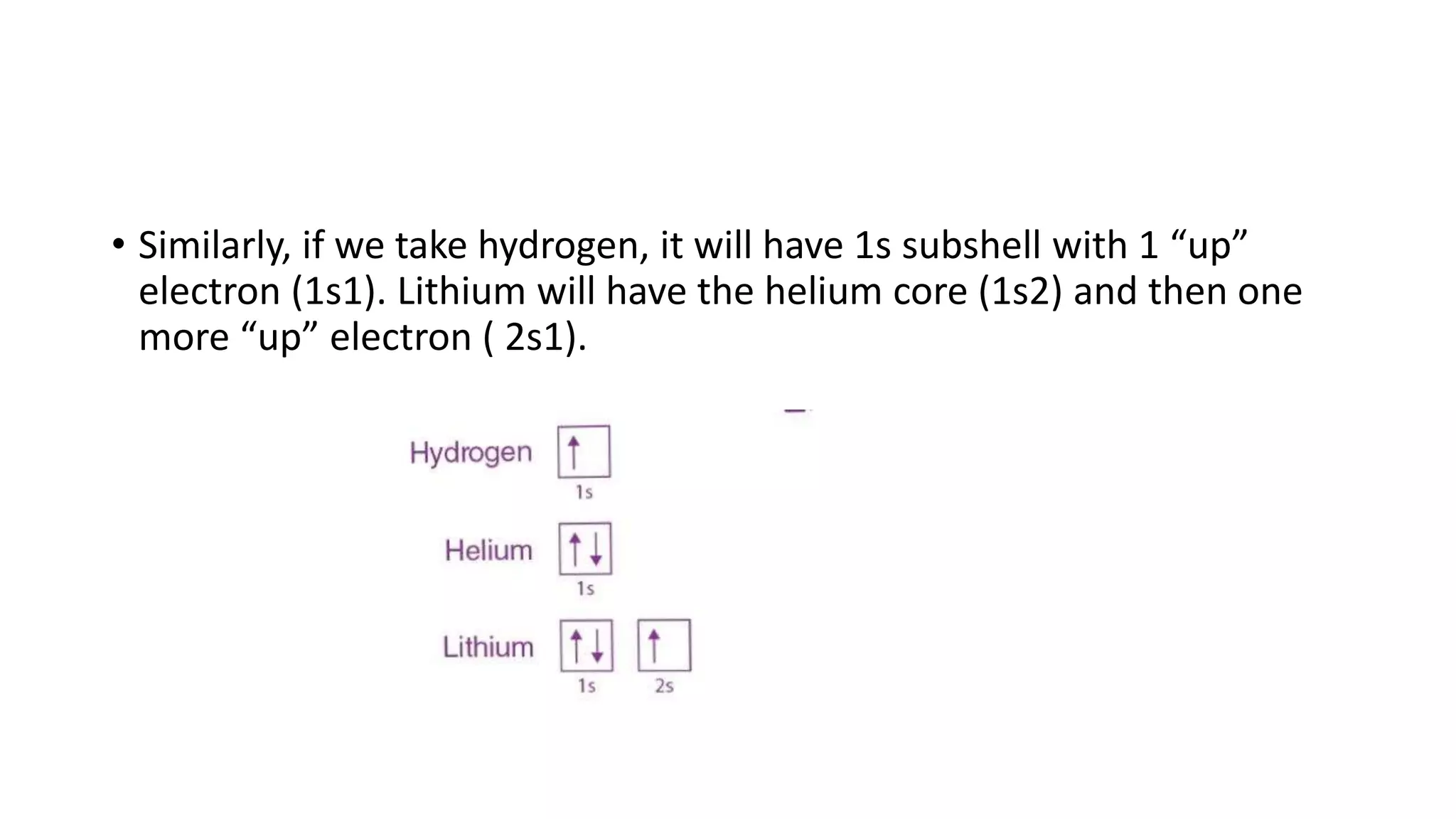
Wolfgang Pauli formulated the Pauli Exclusion Principle in 1925, for which he received the Nobel Prize in 1945. The principle states that no two electrons in an atom can have the same set of quantum numbers, meaning each electron must have its own unique spin state. This explains the electron configurations of atoms and the periodic table. The principle is fundamental to quantum mechanics and is important for understanding chemical bonding and the properties of solids.