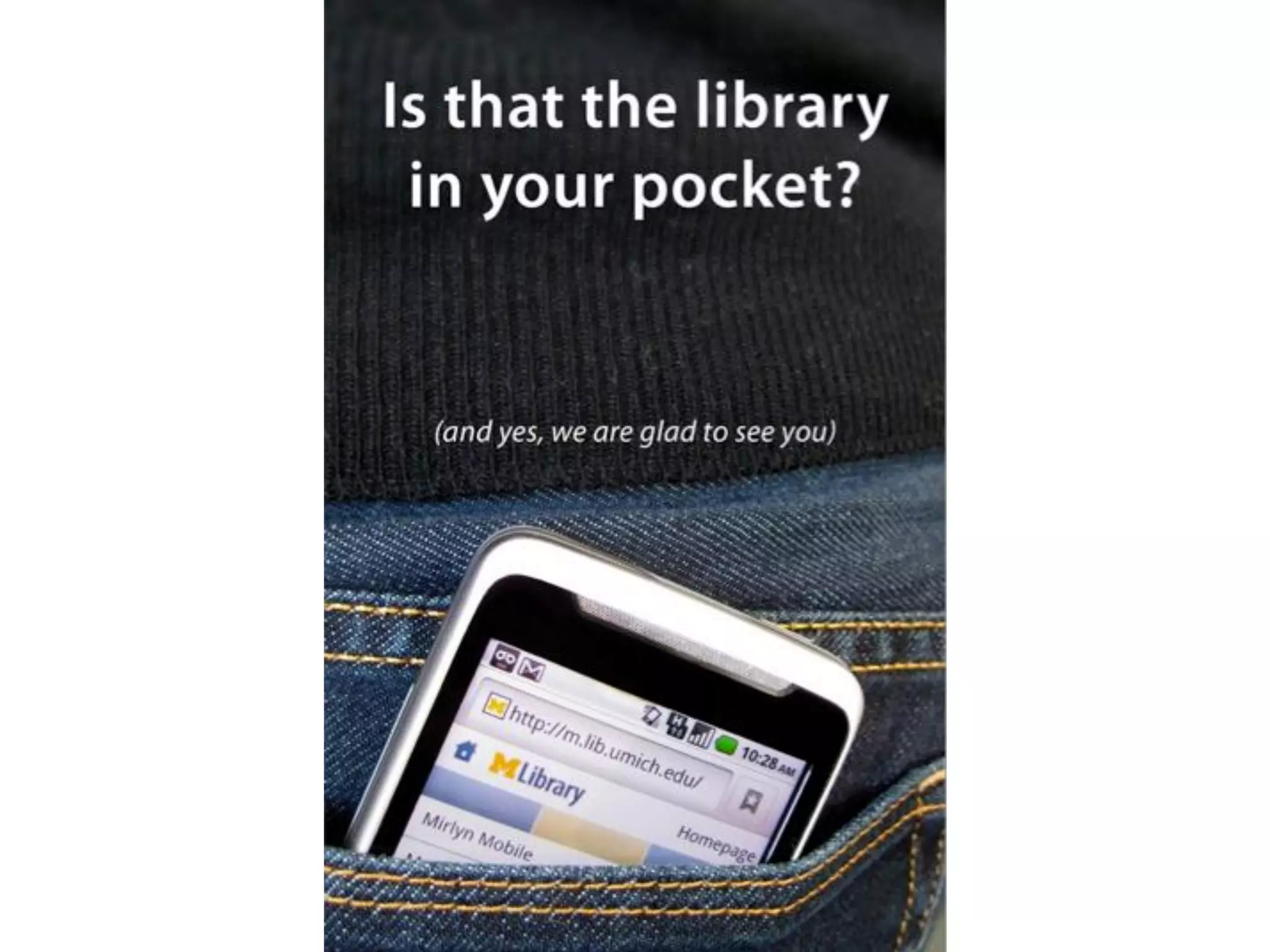
Libraries in the Age of
        Google
       Paul N. Courant
      Wolverine Caucus
         Lansing, MI
        17 April 2012
Introduction:
Revolutions in the
     Library
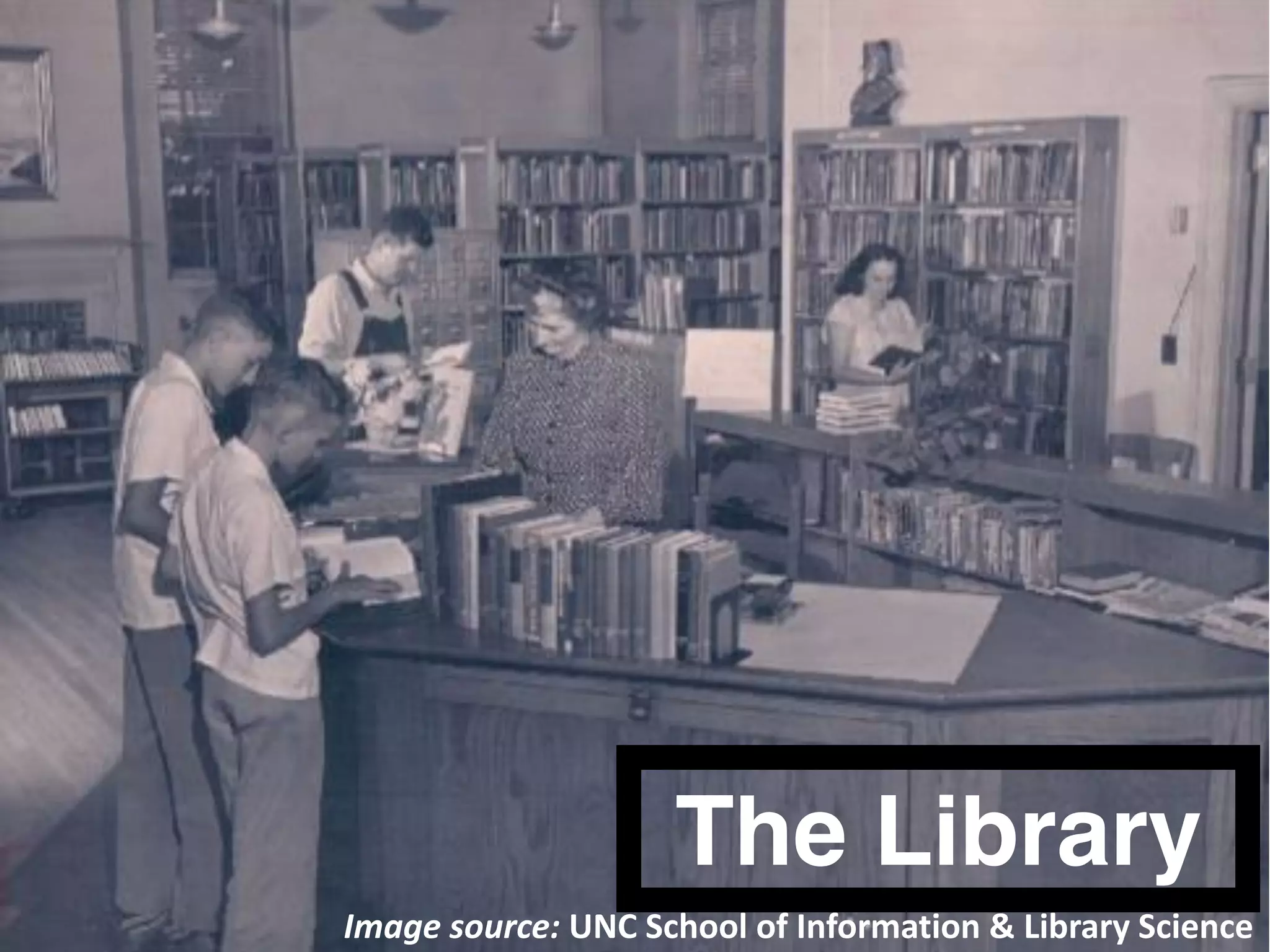
The Library
Image  source:  UNC  School  of  Information  &  Library  Science  
What does the
Academic Library do?
 Supports scholarship
 -   Provides relevant information/materials
     to students and faculty
 -   Provides reliable, stable, approximately
     permanent access to the scholarly
     record and associated source material.
     Authentic and secure.
 Used to go together, now not so much.
Publication and
               Scholarship
    Ideas must be conveyed to qualify as ideas

     Books                            Polls
                        Experiments

           Statistics
                                Articles
 Reports

And without libraries, that which we know (knew)
                    gets lost
Progress
You can t make it or sustain it without a
library
In fact, you can t do much without a
library*


*I get to define do, much, and
 library
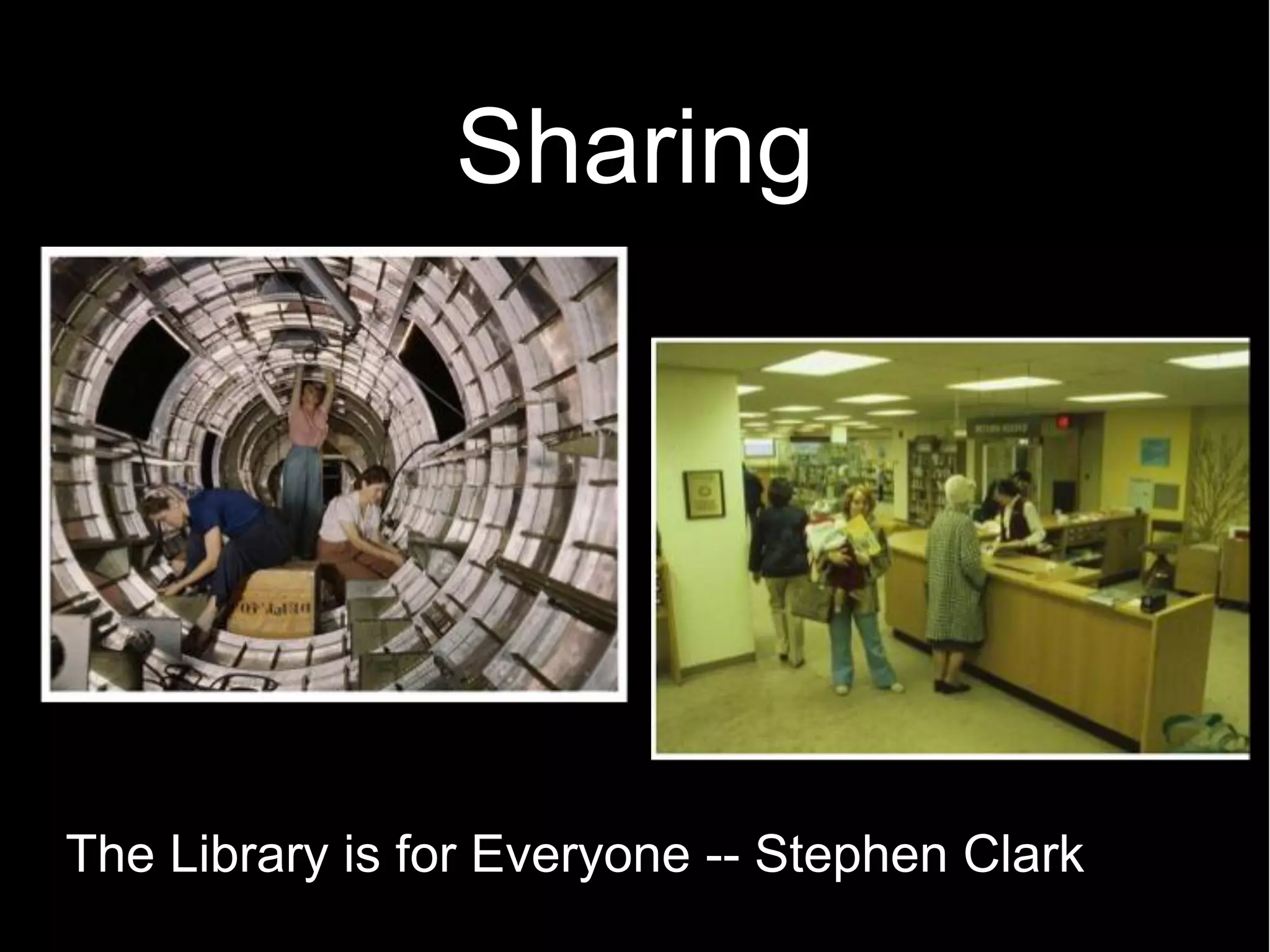
Sharing


The Library is for Everyone -- Stephen Clark
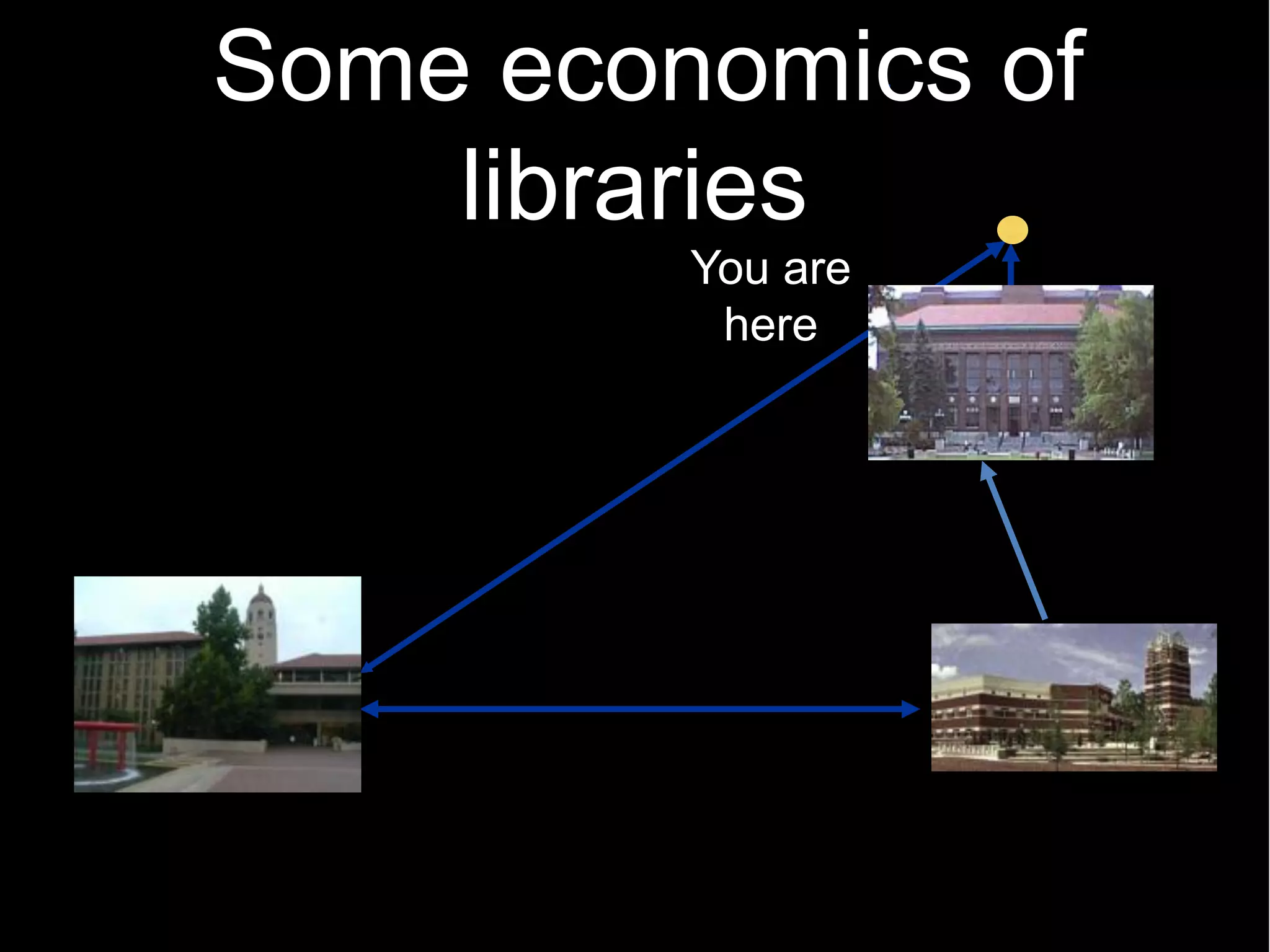
Some economics of
    libraries
         You are
          here
What does this mean?
                  Cost for libraries:
                  relatively high
Cost for users:
relatively low     - Building
                   - Infrastructure
 - Time
                   - Maintenance
 - Research
                   - Staff
 - Travel
                   - Acquisitions
                   - And so on...
Public Goods
Samuelson on public goods:
      Each individual s consumption of that good leads to
no subtraction from any other individual s consumption of
that good.

Jefferson on information:
    Its peculiar character, too, is that no one possesses the
   less, because every other possesses the whole of it. He
who receives an idea from me, receives instruction himself
without lessening mine; as he who lights his taper at mine,
                       receives light without darkening me.

          Inventions then cannot, in nature, be a subject of
                                                  property.
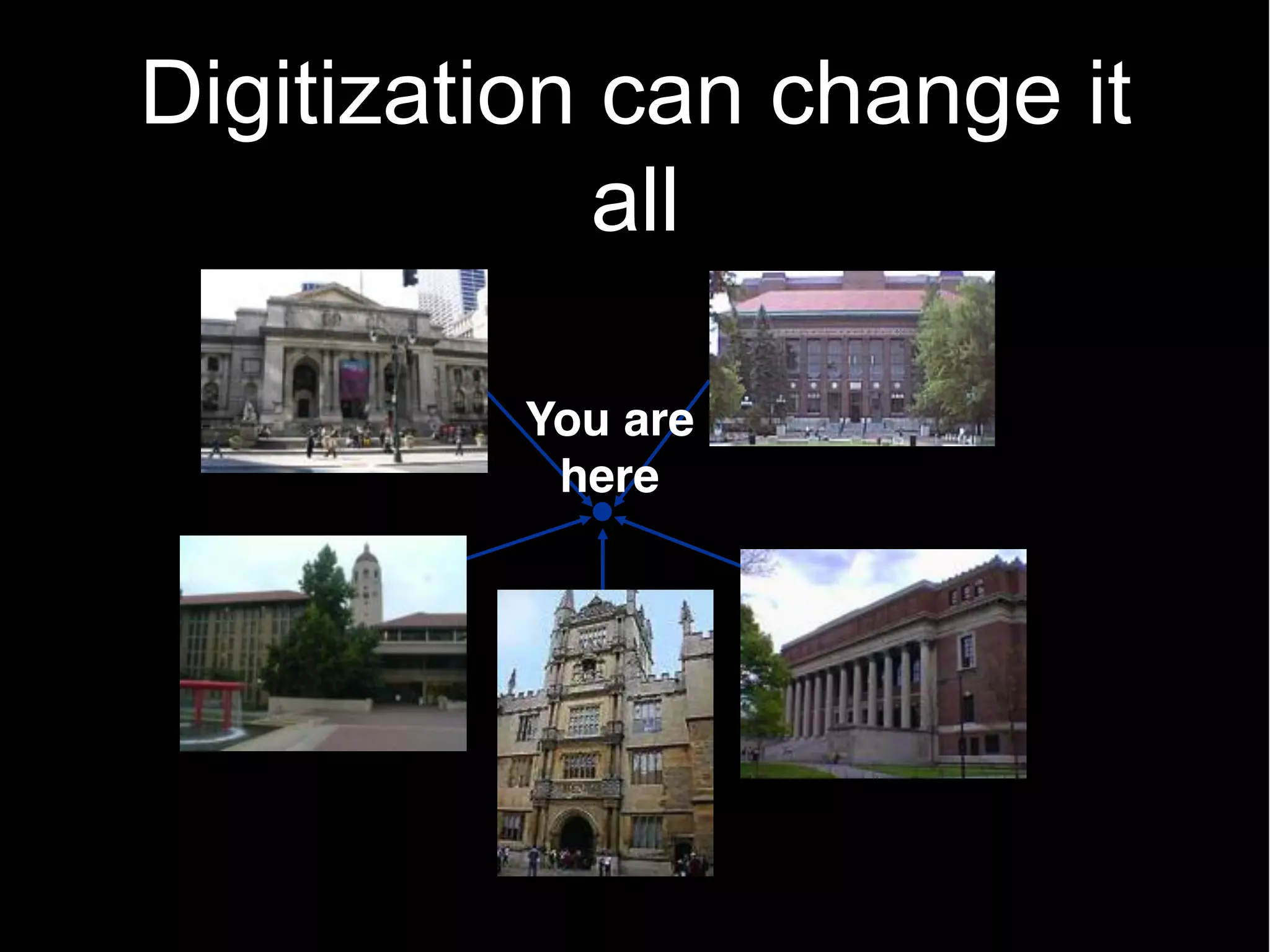
Digitization can change it
             all

          You are
           here
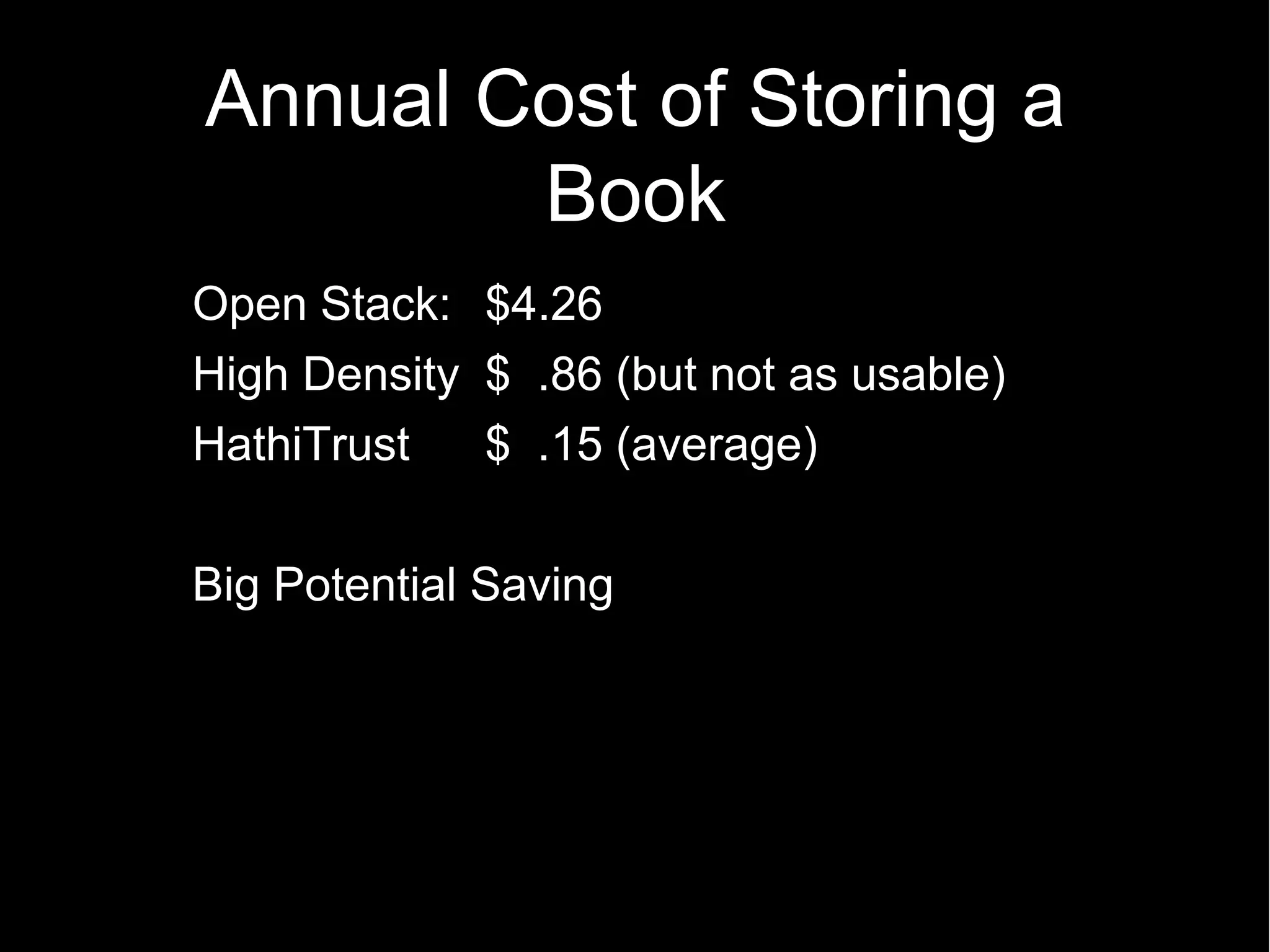
Annual Cost of Storing a
        Book
Open Stack: $4.26
High Density $ .86 (but not as usable)
HathiTrust   $ .15 (average)

Big Potential Saving
A fact about our world

 Except  for  the  most  
 arcane  materials  and  
users,  that  which  is  not  
 available  online  will  
  simply  not  be  read.  
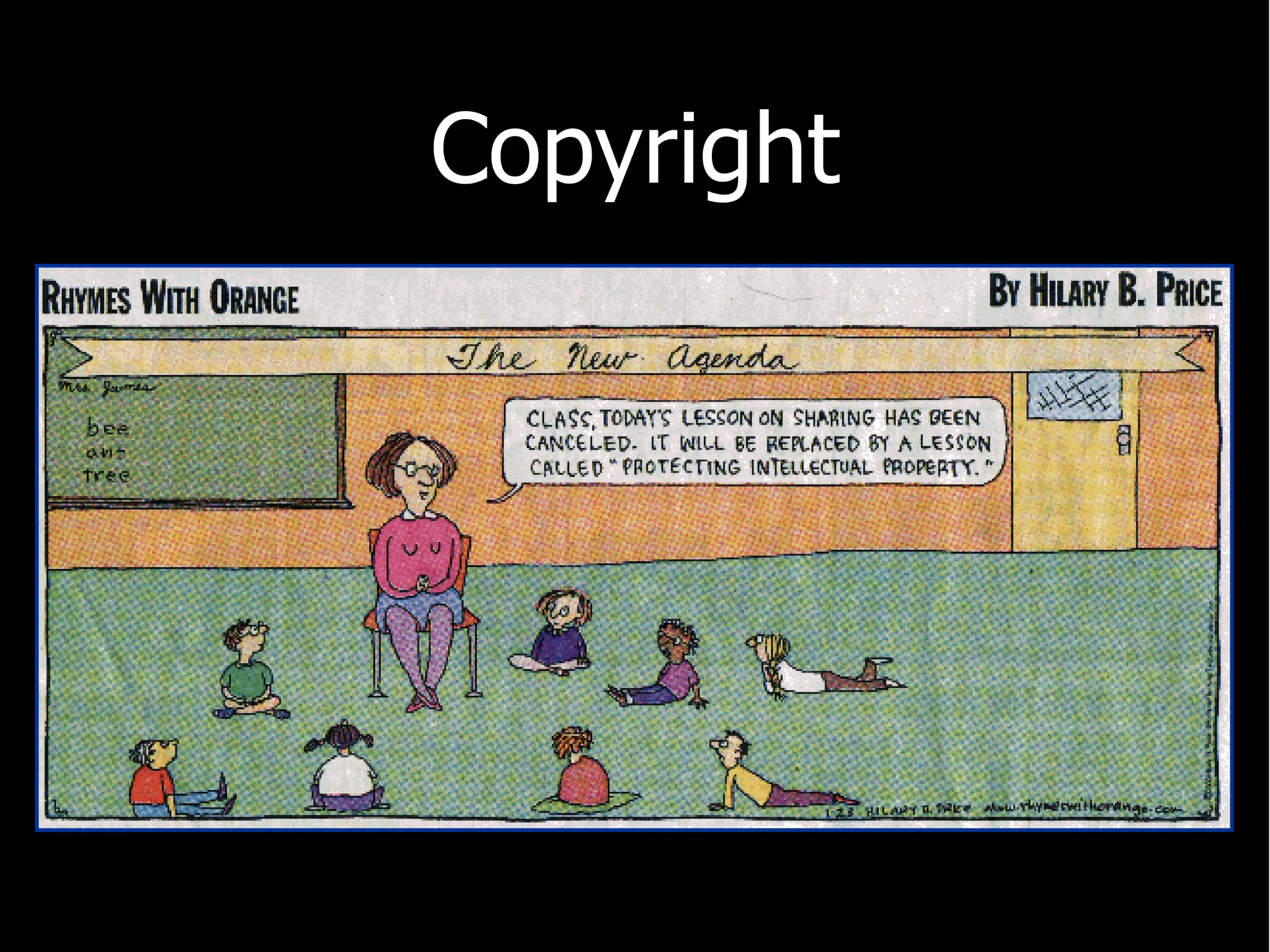
Copyright
The goal of copyright
                                                               promote  the  
             Progress  of  Science  and  the  useful  Arts,  by  securing  for  
           limited  times  to  Authors  and  Inventors  the  exclusive  right  
                      to  their  respective  Writings  and  Discoveries  .  .  .   


                                      United  States  Constitution,  Article  I  

The  original  requirements  for  gaining  copyright  
protection  (i.e.,  registration,  publication,  &  limited  scope  
and  endurance)  were  more  consistent  with   learning   
and  promoting  access  than  with  promoting  property.  
Copyright  
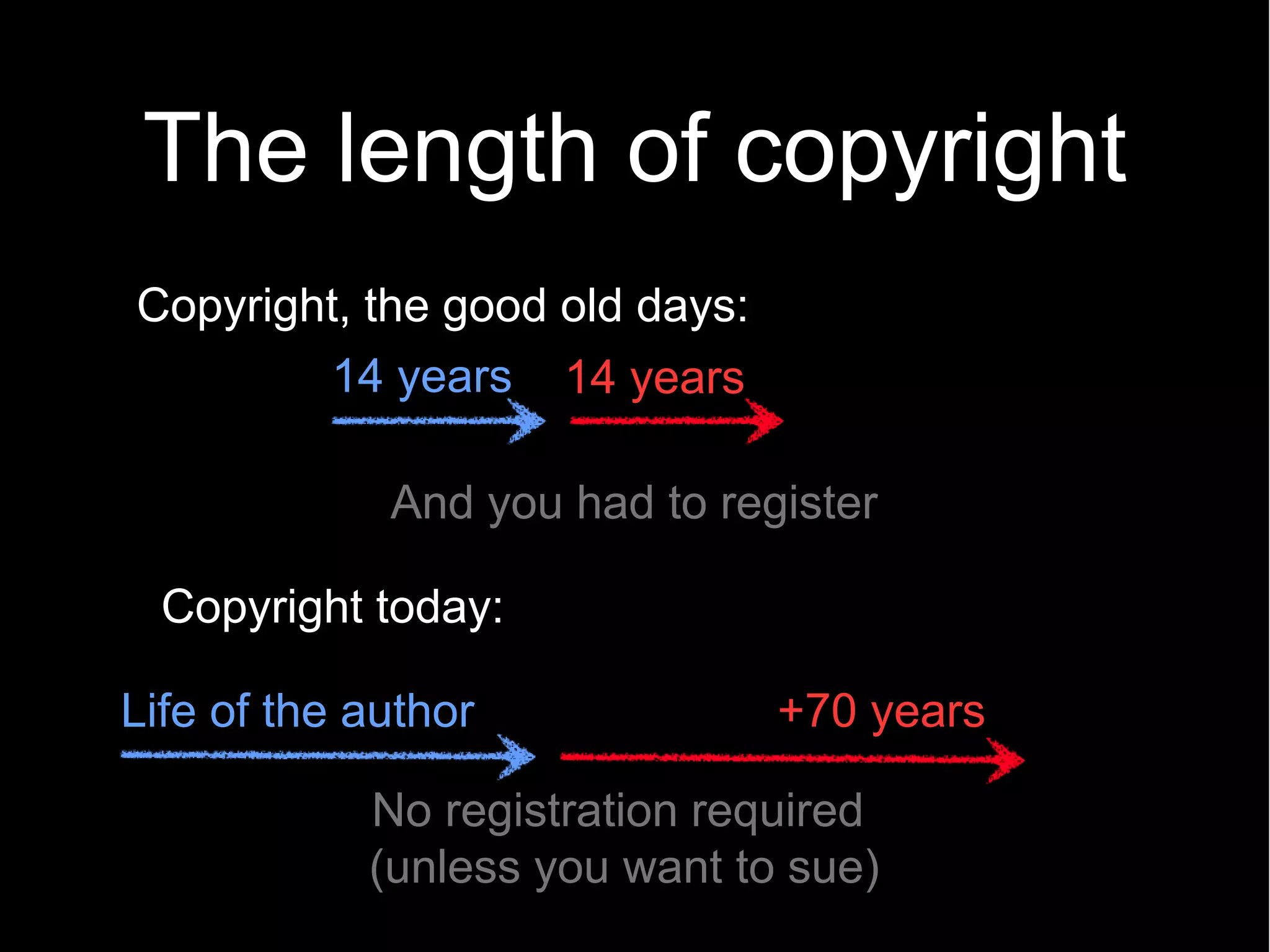
The length of copyright
Copyright, the good old days:
        14 years 14 years

             And you had to register

  Copyright today:

Life of the author              +70 years

            No registration required
            (unless you want to sue)
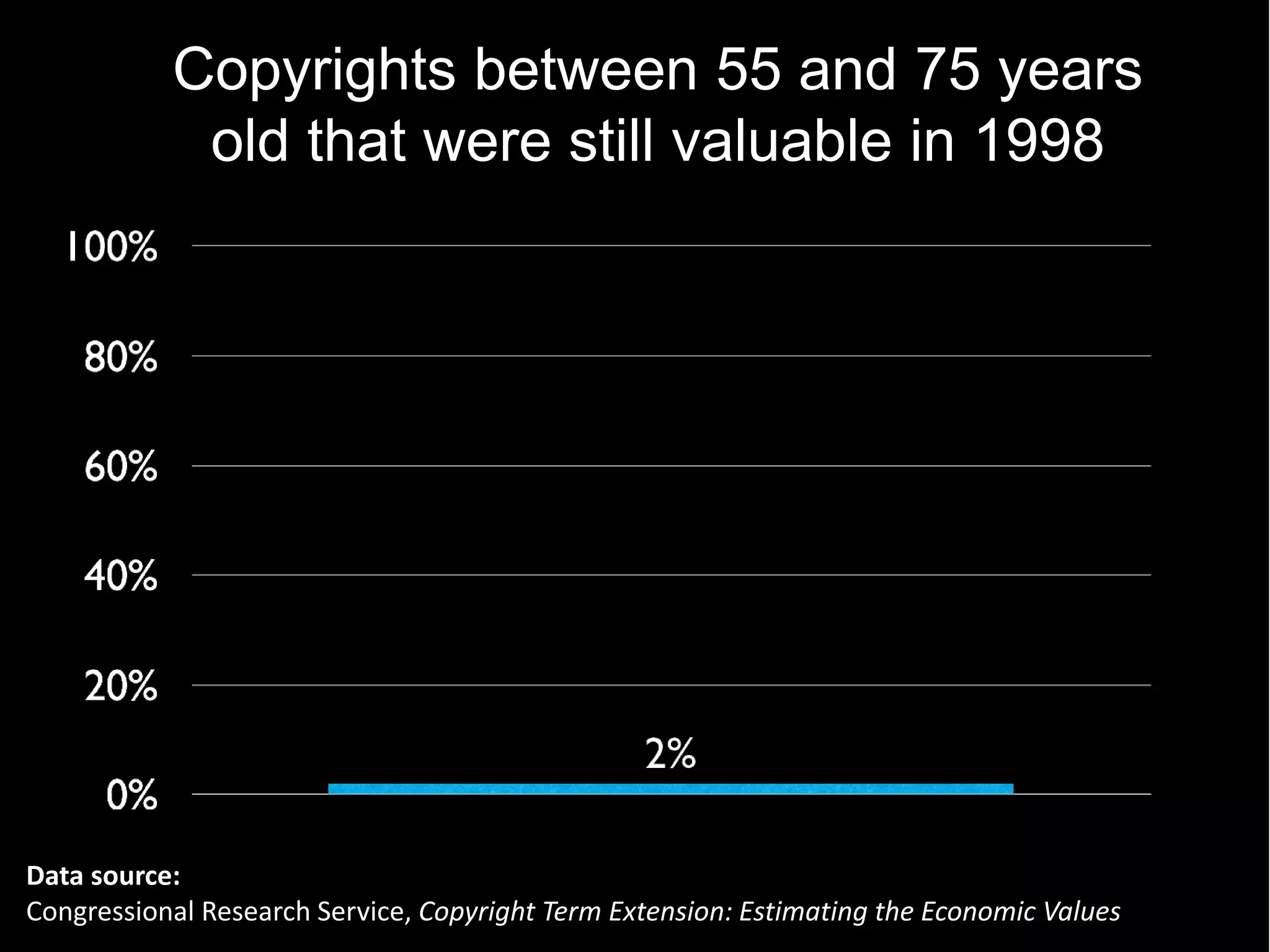
Copyrights between 55 and 75 years
              old that were still valuable in 1998


Data  source:  
Congressional  Research  Service,  Copyright  Term  Extension:  Estimating  the  Economic  Values  
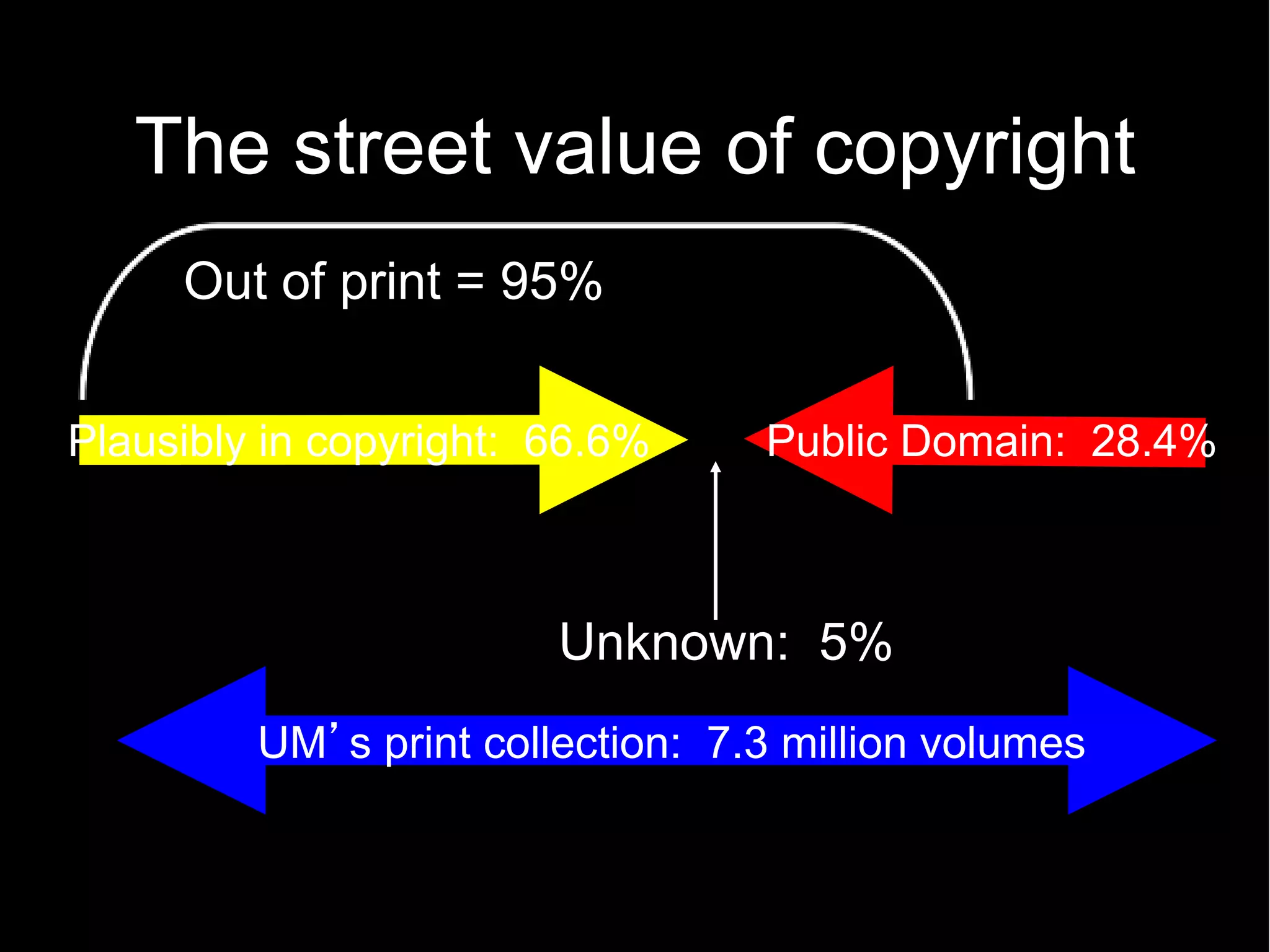
The street value of copyright
     Out of print = 95%


Plausibly in copyright: 66.6%     Public Domain: 28.4%


                        Unknown: 5%
         UM s print collection: 7.3 million volumes
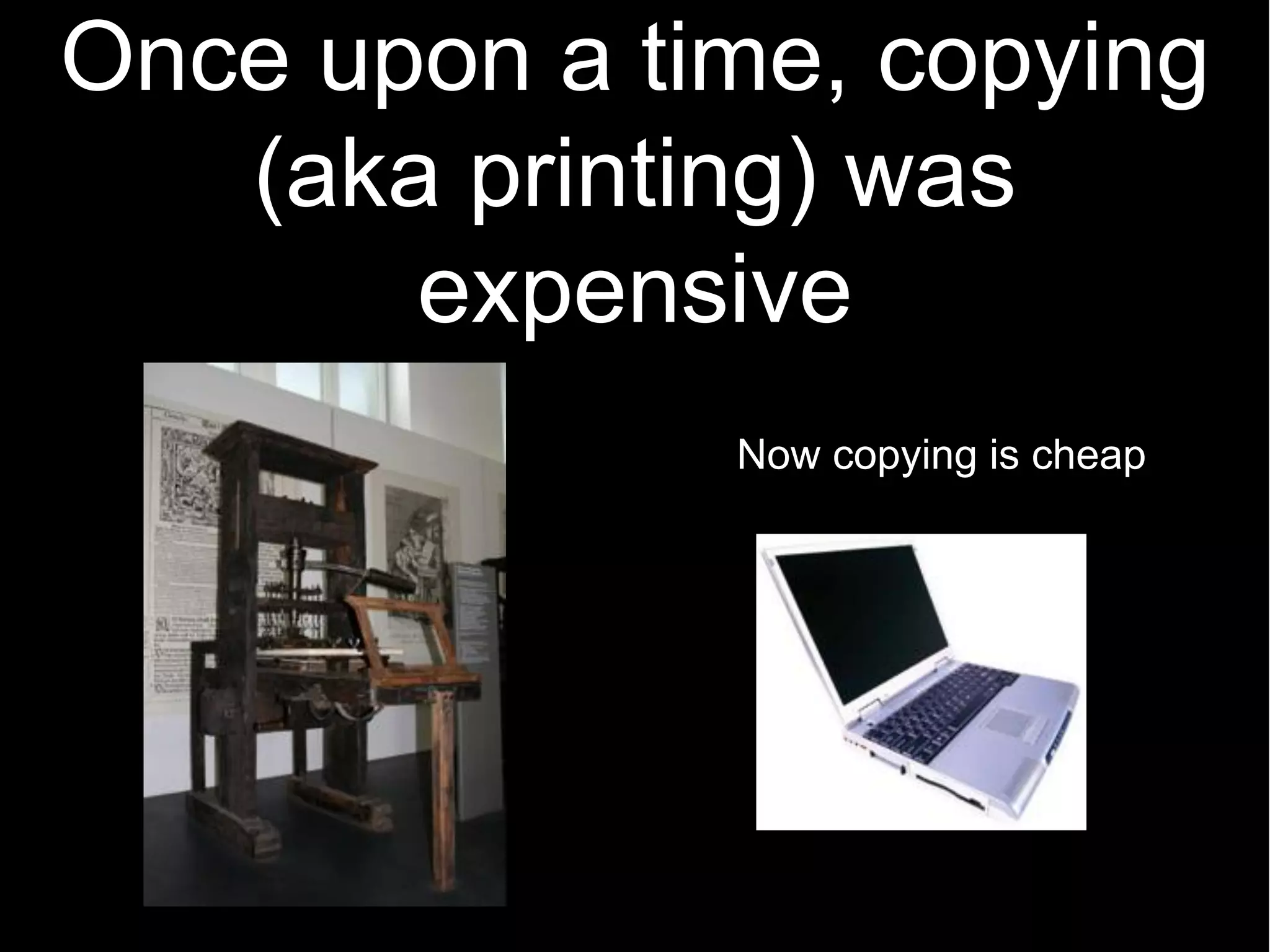
Once upon a time, copying
   (aka printing) was
       expensive
              Now copying is cheap
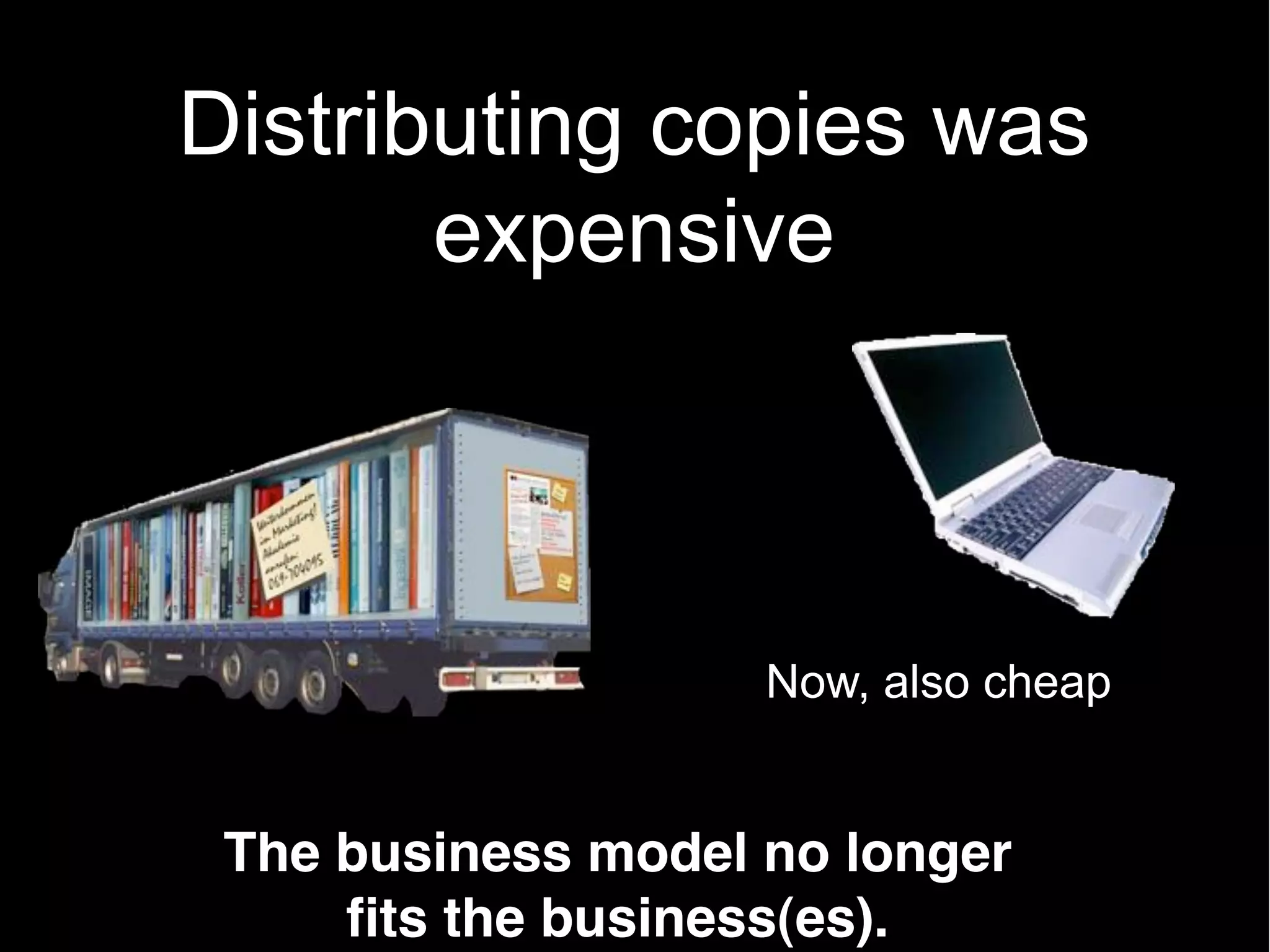
Distributing copies was
       expensive


                    Now, also cheap


 The business model no longer
     fits the business(es).
Cheap copying ought to help
Publication facilitates collaboration,
standing on the shoulders of both giants
and the vertically challenged, which is the
fundamental method

And new information technology greatly
reduces the cost of publication, improving
access across time and space . . . .
Google & HathiTrust
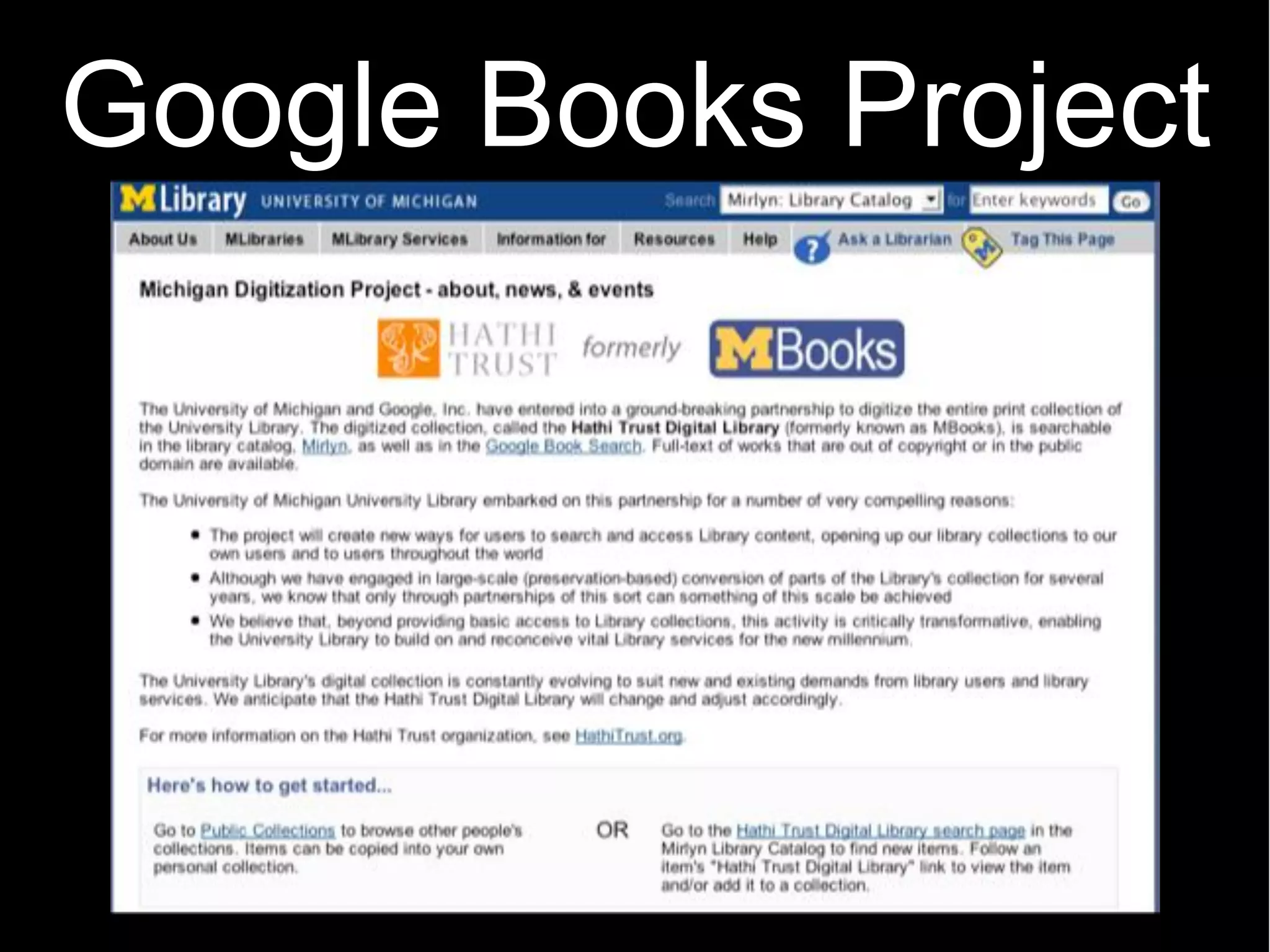
Google Books Project
Google Settlement
Access for our Campus
Public Benefits
- Print Disabilities
- Public Library Kiosks
- Browsing in the Bookstore
Research Corpus
Collection Management
Google Settlement
       Controversy

Monopoly
Orphan Works
Pipe Dreams of Various Flavors
- Nonprofits should & would have done it
- Should have been public policy
Current state of play
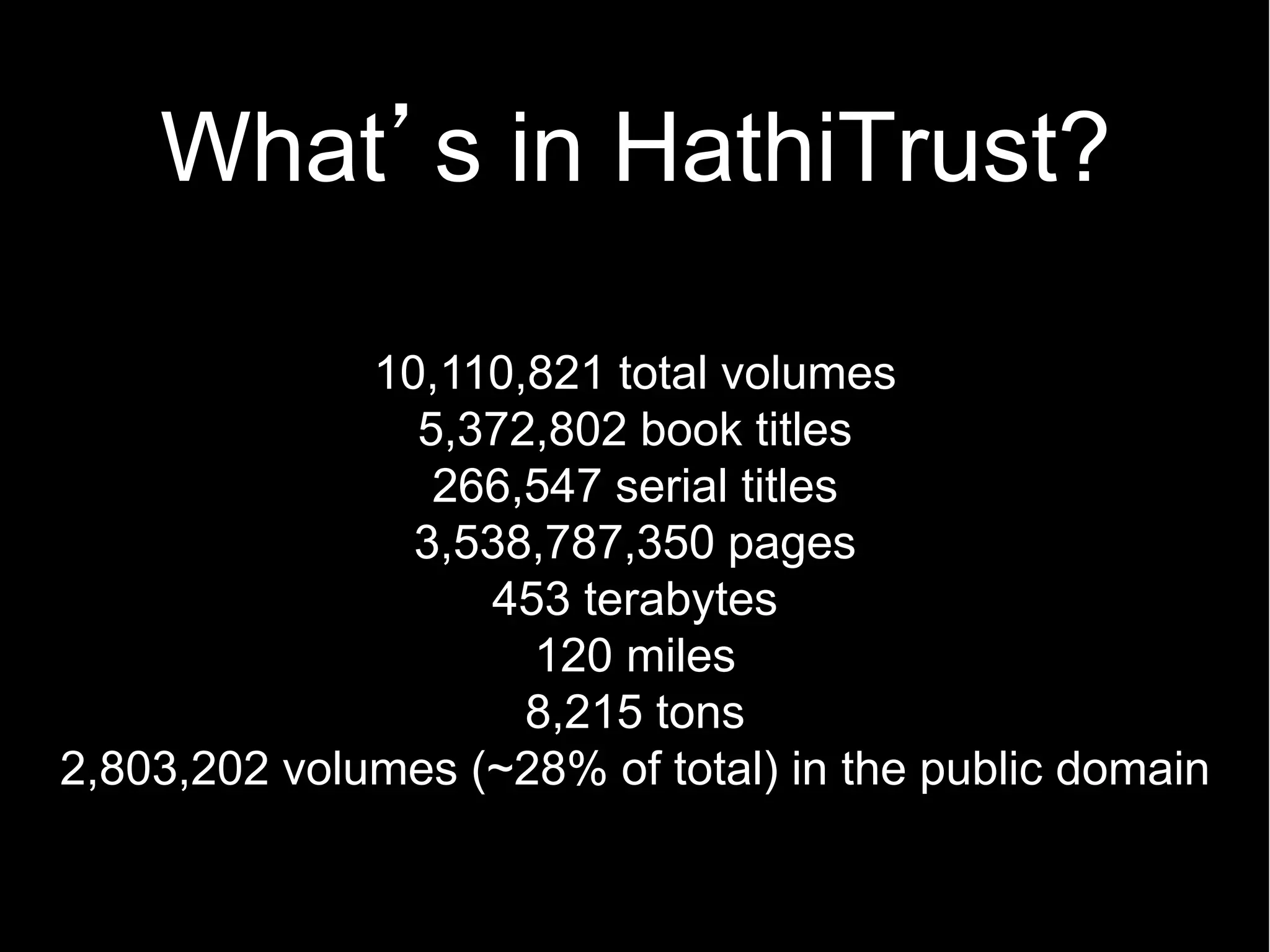
What s in HathiTrust?

              10,110,821 total volumes
                5,372,802 book titles
                 266,547 serial titles
                3,538,787,350 pages
                   453 terabytes
                     120 miles
                     8,215 tons
2,803,202 volumes (~28% of total) in the public domain
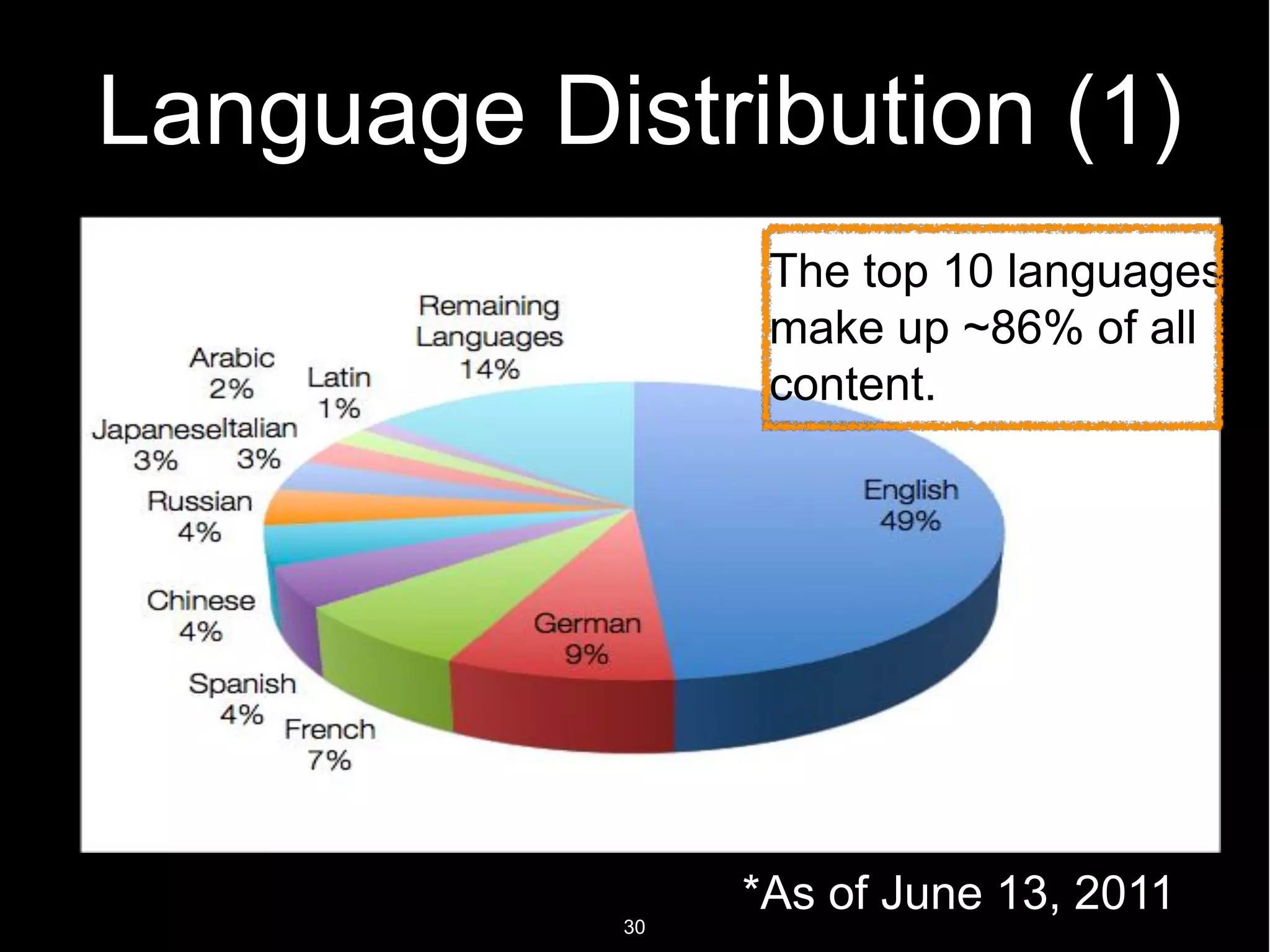
Language Distribution (1)
                  The top 10 languages
                  make up ~86% of all
                  content.


                 *As of June 13, 2011
            30
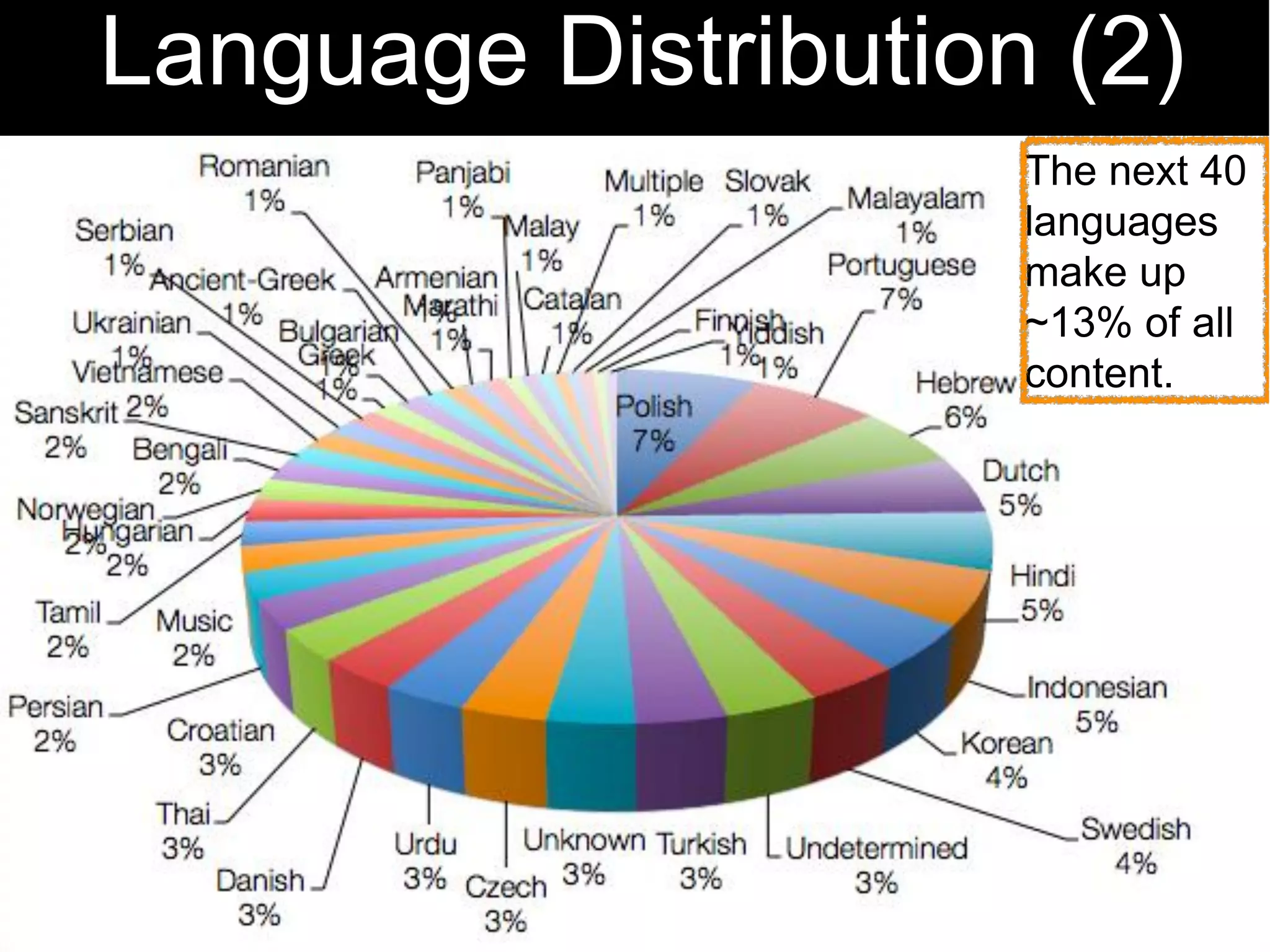
Language Distribution (2)
                        The next 40
                        languages
                        make up
                        ~13% of all
                        content.


            31    *As of June 13, 2011
The Future
Challenges
Intellectual property environment
Technology and Scale
Rising journal prices, especially in Science,
Technology and Medicine
Problem of preservation and future access with
licensing
New Responsibilities
- Large data sets
- Web 2.0 (e.g. Facebook, Twitter, Flickr,
  YouTube)
Opportunities
Scholarship benefits from easy sharing
We are the information experts in the
Information Age, and hard problems require
expertise
If we can organize to cover costs, the sky is
the limit
No matter what, Michigan will be a leader
What to Do
    Revise the rights environment to exploit the technology
    Revise individual libraries missions to exploit the
    technology
-   Sharing and scale
-   Local layers on top
-   (cataloging as poster child)

    Digitize wherever possible, and use digital copies
    wherever appropriate and legal
-   Information to Artifact continuum
    Preserve and curate the old and the new
    (Display the treasures)
    Create Institutions to Support Collaboration
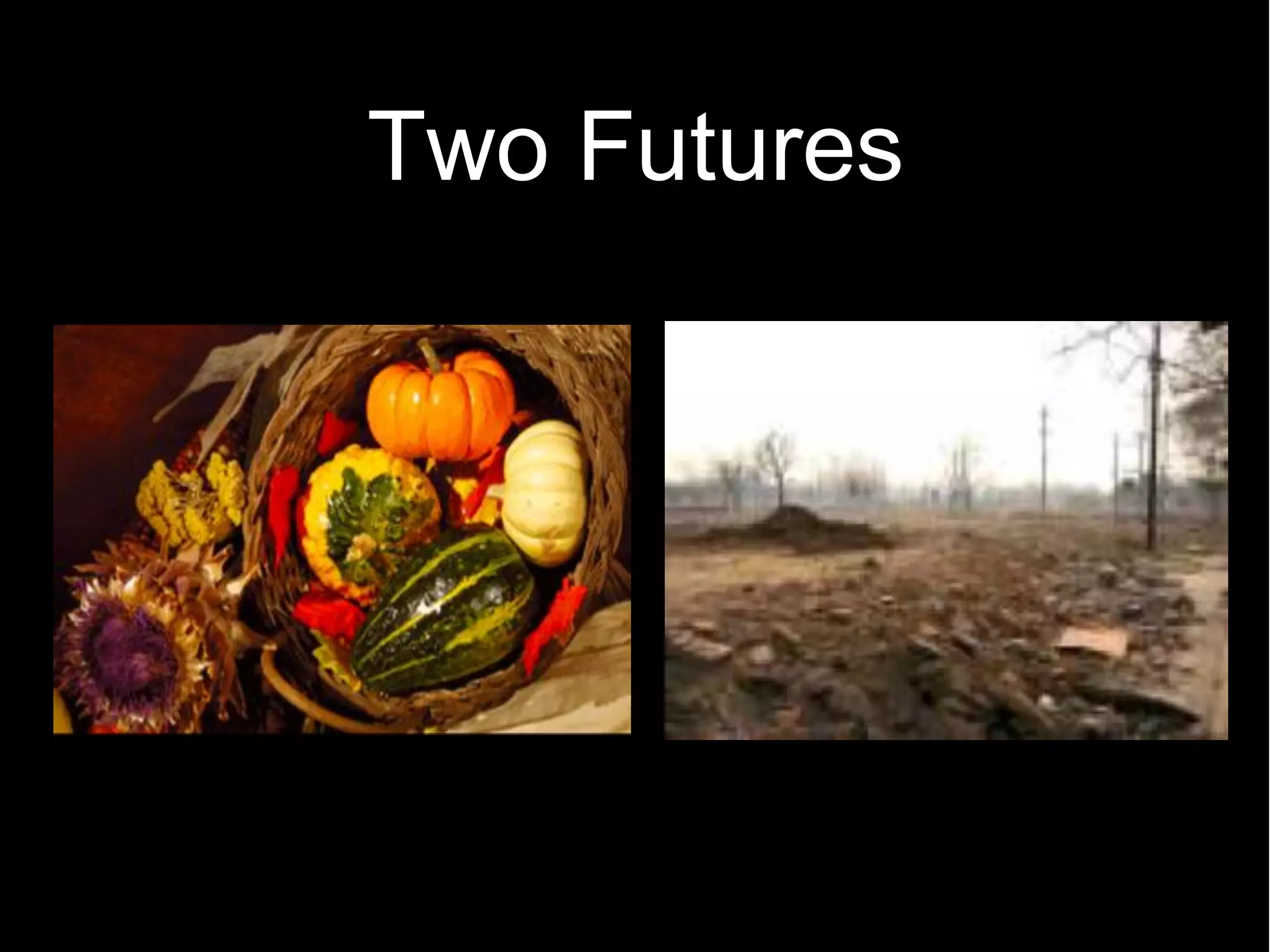
Two Futures
Thank you
pnc@umich.edu

April 2012 Wolverine Caucus Event Featuring Paul N. Courant

  • 1.
    Libraries in theAge of Google Paul N. Courant Wolverine Caucus Lansing, MI 17 April 2012
  • 2.
  • 3.
    The Library Image  source: UNC  School  of  Information  &  Library  Science  
  • 4.
    What does the AcademicLibrary do? Supports scholarship - Provides relevant information/materials to students and faculty - Provides reliable, stable, approximately permanent access to the scholarly record and associated source material. Authentic and secure. Used to go together, now not so much.
  • 5.
    Publication and Scholarship Ideas must be conveyed to qualify as ideas Books Polls Experiments Statistics Articles Reports And without libraries, that which we know (knew) gets lost
  • 6.
    Progress You can tmake it or sustain it without a library In fact, you can t do much without a library* *I get to define do, much, and library
  • 7.
    Sharing The Library isfor Everyone -- Stephen Clark
  • 8.
    Some economics of libraries You are here
  • 9.
    What does thismean? Cost for libraries: relatively high Cost for users: relatively low - Building - Infrastructure - Time - Maintenance - Research - Staff - Travel - Acquisitions - And so on...
  • 10.
    Public Goods Samuelson onpublic goods: Each individual s consumption of that good leads to no subtraction from any other individual s consumption of that good. Jefferson on information: Its peculiar character, too, is that no one possesses the less, because every other possesses the whole of it. He who receives an idea from me, receives instruction himself without lessening mine; as he who lights his taper at mine, receives light without darkening me. Inventions then cannot, in nature, be a subject of property.
  • 11.
    Digitization can changeit all You are here
  • 12.
    Annual Cost ofStoring a Book Open Stack: $4.26 High Density $ .86 (but not as usable) HathiTrust $ .15 (average) Big Potential Saving
  • 14.
    A fact aboutour world Except  for  the  most   arcane  materials  and   users,  that  which  is  not   available  online  will   simply  not  be  read.  
  • 15.
  • 16.
    The goal ofcopyright promote  the   Progress  of  Science  and  the  useful  Arts,  by  securing  for   limited  times  to  Authors  and  Inventors  the  exclusive  right   to  their  respective  Writings  and  Discoveries  .  .  .     United  States  Constitution,  Article  I   The  original  requirements  for  gaining  copyright   protection  (i.e.,  registration,  publication,  &  limited  scope   and  endurance)  were  more  consistent  with   learning   and  promoting  access  than  with  promoting  property.  
  • 17.
  • 18.
    The length ofcopyright Copyright, the good old days: 14 years 14 years And you had to register Copyright today: Life of the author +70 years No registration required (unless you want to sue)
  • 19.
    Copyrights between 55and 75 years old that were still valuable in 1998 Data  source:   Congressional  Research  Service,  Copyright  Term  Extension:  Estimating  the  Economic  Values  
  • 20.
    The street valueof copyright Out of print = 95% Plausibly in copyright: 66.6% Public Domain: 28.4% Unknown: 5% UM s print collection: 7.3 million volumes
  • 21.
    Once upon atime, copying (aka printing) was expensive Now copying is cheap
  • 22.
    Distributing copies was expensive Now, also cheap The business model no longer fits the business(es).
  • 23.
    Cheap copying oughtto help Publication facilitates collaboration, standing on the shoulders of both giants and the vertically challenged, which is the fundamental method And new information technology greatly reduces the cost of publication, improving access across time and space . . . .
  • 24.
  • 25.
  • 26.
    Google Settlement Access forour Campus Public Benefits - Print Disabilities - Public Library Kiosks - Browsing in the Bookstore Research Corpus Collection Management
  • 27.
    Google Settlement Controversy Monopoly Orphan Works Pipe Dreams of Various Flavors - Nonprofits should & would have done it - Should have been public policy Current state of play
  • 29.
    What s inHathiTrust? 10,110,821 total volumes 5,372,802 book titles 266,547 serial titles 3,538,787,350 pages 453 terabytes 120 miles 8,215 tons 2,803,202 volumes (~28% of total) in the public domain
  • 30.
    Language Distribution (1) The top 10 languages make up ~86% of all content. *As of June 13, 2011 30
  • 31.
    Language Distribution (2) The next 40 languages make up ~13% of all content. 31 *As of June 13, 2011
  • 32.
  • 33.
    Challenges Intellectual property environment Technologyand Scale Rising journal prices, especially in Science, Technology and Medicine Problem of preservation and future access with licensing New Responsibilities - Large data sets - Web 2.0 (e.g. Facebook, Twitter, Flickr, YouTube)
  • 34.
    Opportunities Scholarship benefits fromeasy sharing We are the information experts in the Information Age, and hard problems require expertise If we can organize to cover costs, the sky is the limit No matter what, Michigan will be a leader
  • 35.
    What to Do Revise the rights environment to exploit the technology Revise individual libraries missions to exploit the technology - Sharing and scale - Local layers on top - (cataloging as poster child) Digitize wherever possible, and use digital copies wherever appropriate and legal - Information to Artifact continuum Preserve and curate the old and the new (Display the treasures) Create Institutions to Support Collaboration
  • 36.
  • 37.