from openness to abundance glyn moody
openness is winning against what? against being closed
against refusal to share digital artefacts
against artifical scarcity of information
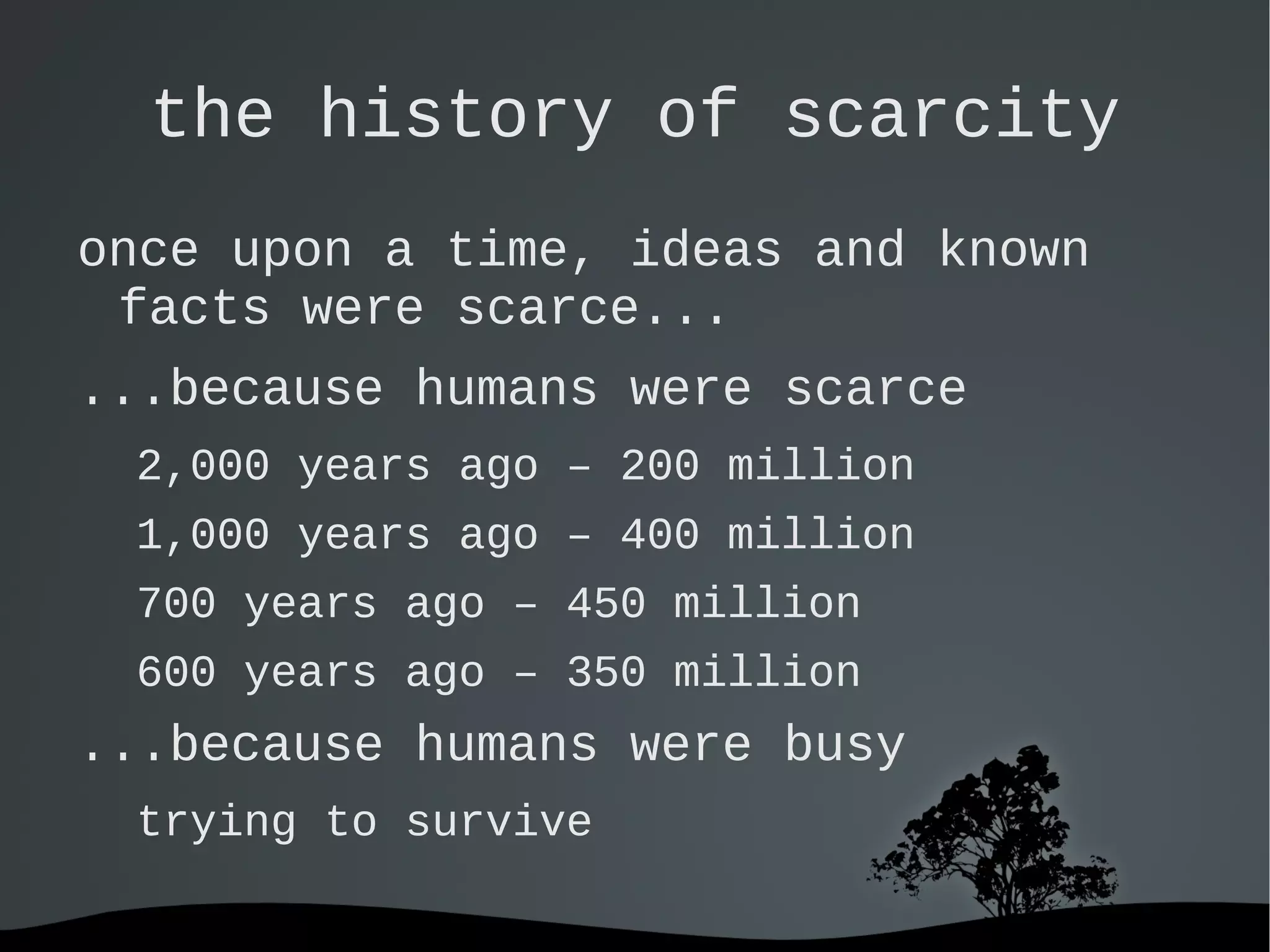
the history of scarcity once upon a time, ideas and known facts were scarce...
...because humans were scarce 2,000 years ago – 200 million
1,000 years ago – 400 million
700 years ago – 450 million
600 years ago – 350 million ...because humans were busy trying to survive
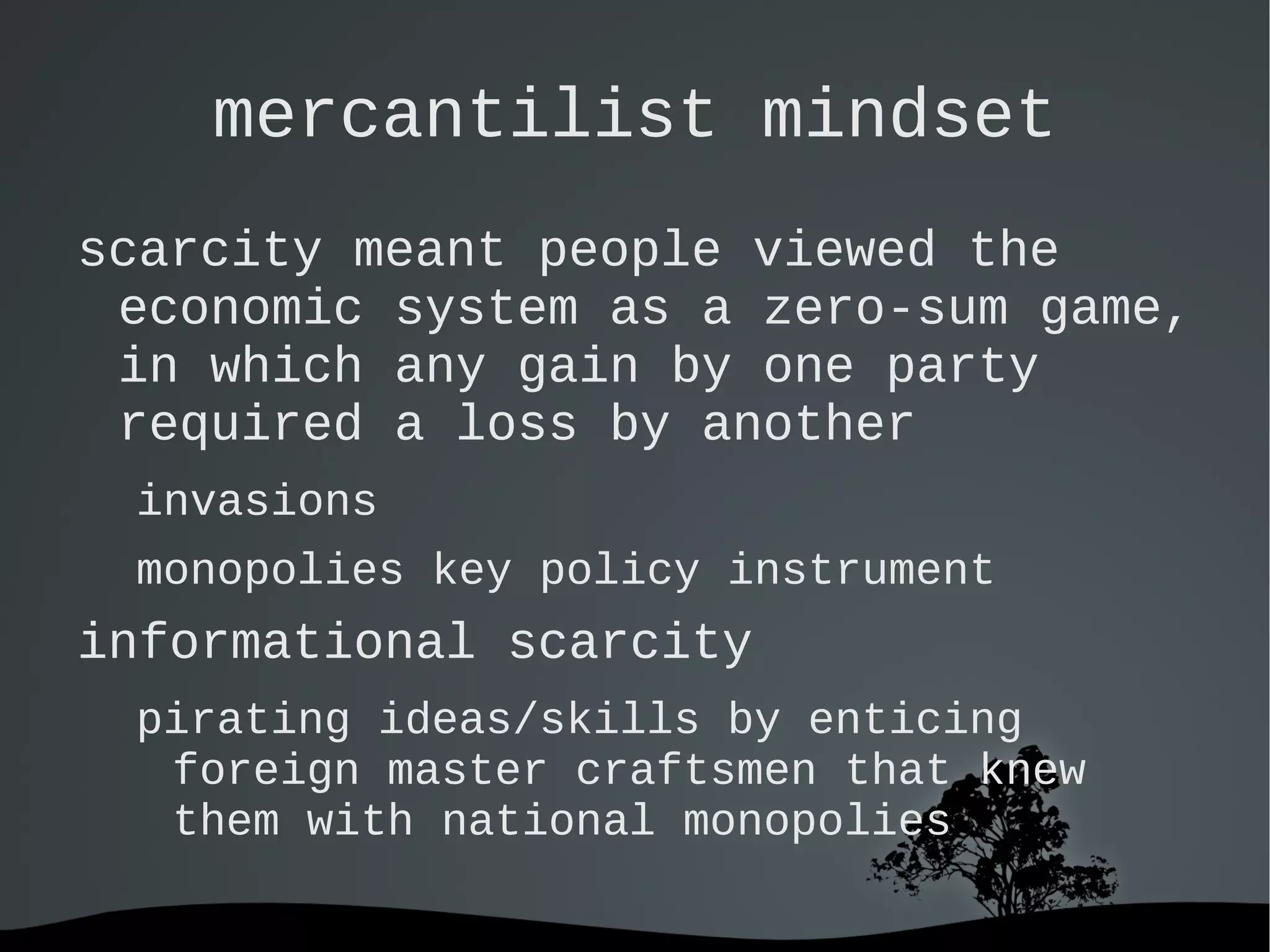
mercantilist mindset scarcity meant people viewed the economic system as a zero-sum game, in which any gain by one party required a loss by another invasions
monopolies key policy instrument informational scarcity pirating ideas/skills by enticing foreign master craftsmen that knew them with national monopolies
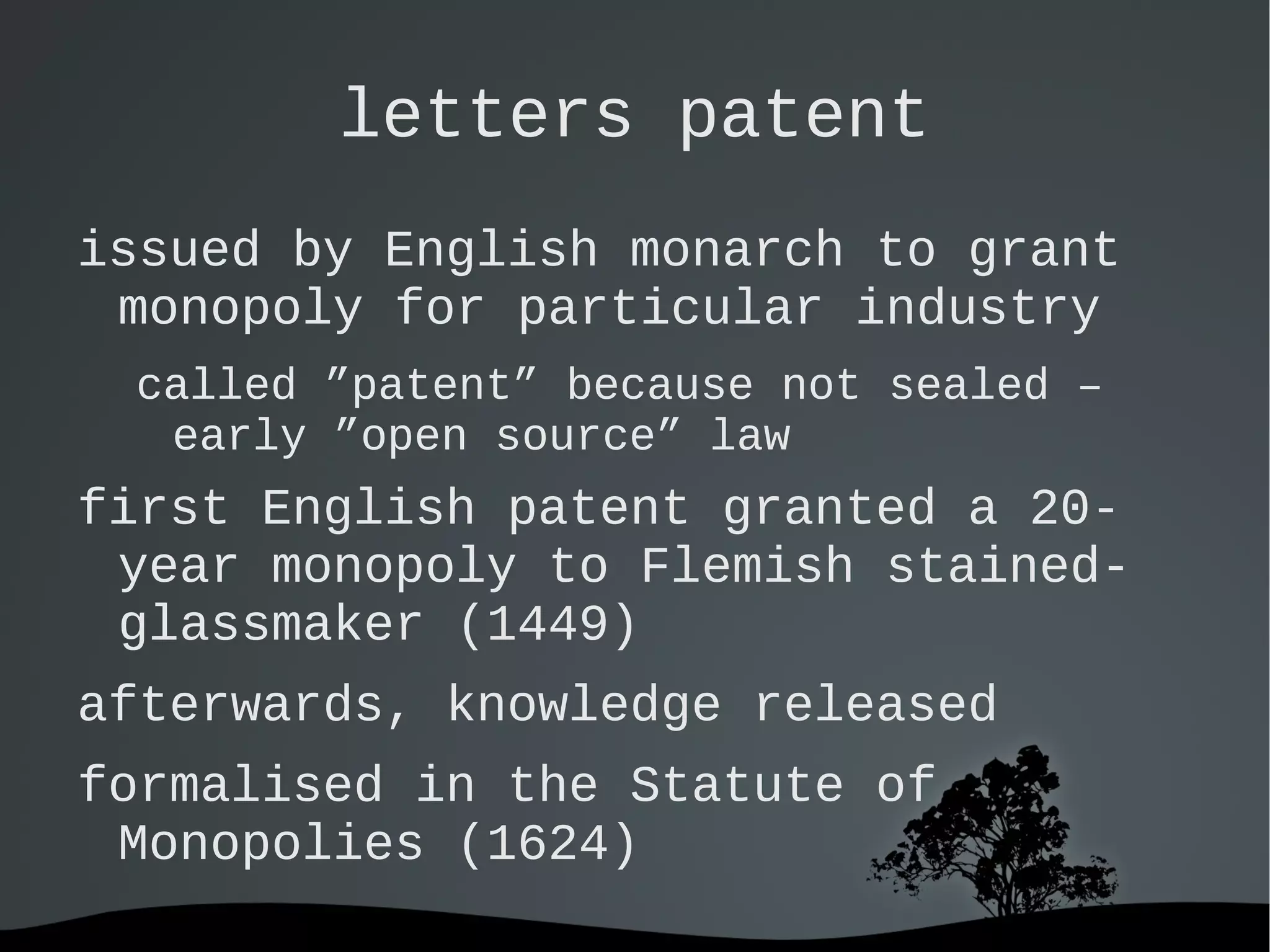
letters patent issued by English monarch to grant monopoly for particular industry called ”patent” because not sealed – early ”open source” law first English patent granted a 20-year monopoly to Flemish stained- glassmaker (1449)
afterwards, knowledge released
formalised in the Statute of Monopolies (1624)
17 th -century invention very few inventors
very few inventions
trade secrets easy to keep (trade guilds)
in an age of inventive scarcity, patent monopolies made sense as a mercantilist incentive to encourage new inventions
to get them revealed for wider use, rather than hoarded
21 st -century invention today, we have an abundance of inventors and invention, as the creaking patent system shows in 2009, 482,871 patent applications filed with USPTO; 135,000 in Europe abundant monopolies impede progress, rather than promoting it independent invention problem
patent thickets
software patent problems most litigated – causing much of the backlog of cases in US 3% in 1984, 26% in 2002 total US profit annually was $100 million for 1996-1999
the total cost of litigating in US was $3.9 billion per year
software patents = overall net loss of $3.8 billion per year
gene patent problems 4,000 of 24,000 human genes have been patented in US (2004)
3,000,000 genome-related patents filed
”patent-stacking” allows single DNA sequence to be patented in several ways
whole-genome scan: impossible with the huge number of gene patents
”copy right” key invention: movable type (1457)
in 16 th  and 17 th  century England, the Stationers' Company had exclusive and perpetual state monopoly over producing printed copies of every registered book (their ”copy right”)
aim was to *control* what was printed by establishing responsibility - instrument of censorship
Statute of Anne (1710) ” An Act for the Encouragement of Learning”
gave limited monopoly (14 years + 14 year extension)
text became freely available after that period – created modern public domain
strongly influenced US copyright law

Glyn Moody - from openness to abundance