The Patristic 
Period 
c. 100 - 500AD
• Extends from the death of John to around the 
time of the collapse of the Roman Empire 
- called Patristic because "pater" is the Latin 
word for "father“ 
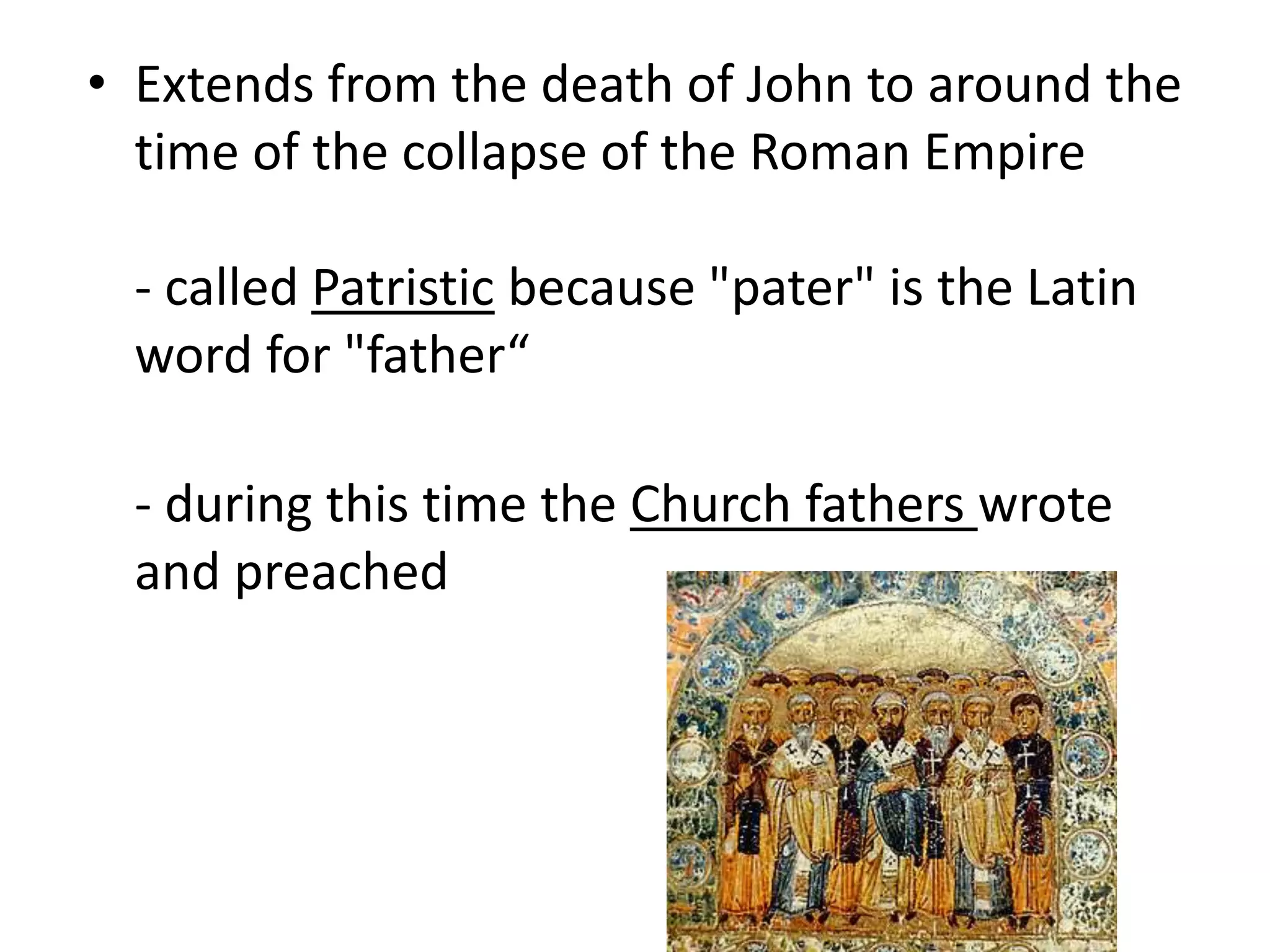
- during this time the Church fathers wrote 
and preached
Important events of the Patristic Period: 
* @ 196AD - the Didache 
- "The Teaching of the Twelve Apostles“ 
- oldest surviving written catechism 
- has three main sections: 
- Christian ethics 
- sacraments and rituals 
- Church organization
• @ 292AD - Emperor Diocletian divided the 
Roman Empire into East and West 
- under Diocletian Christians were persecuted, 
almost to the point of elimination
• @ 313AD - Emperor Constantine 
issued the Edict of Milan 
- the practice of Christianity was 
made legal by this document 
- over time, Christianity became the official 
religion of the Roman Empire
TERMS: 
1. hermit - a person who lives a simple life of 
poverty, alone in prayer and sacrifice 
2. monk - lives alone, but joins other monks in 
sacrament and prayer 
3. heresy - a false religious teaching 
4. heretic - a person who teaches or believes a false 
teaching
5. dissension - strong disagreement 
6. apostasy - total desertion of one's religion 
7. schism - division within the Church 
8. ecumenical - pertaining to the whole Church 
9. synod - a meeting of local bishops
* After Roman persecution had stopped, the 
Church had to deal with a series of heresies. 
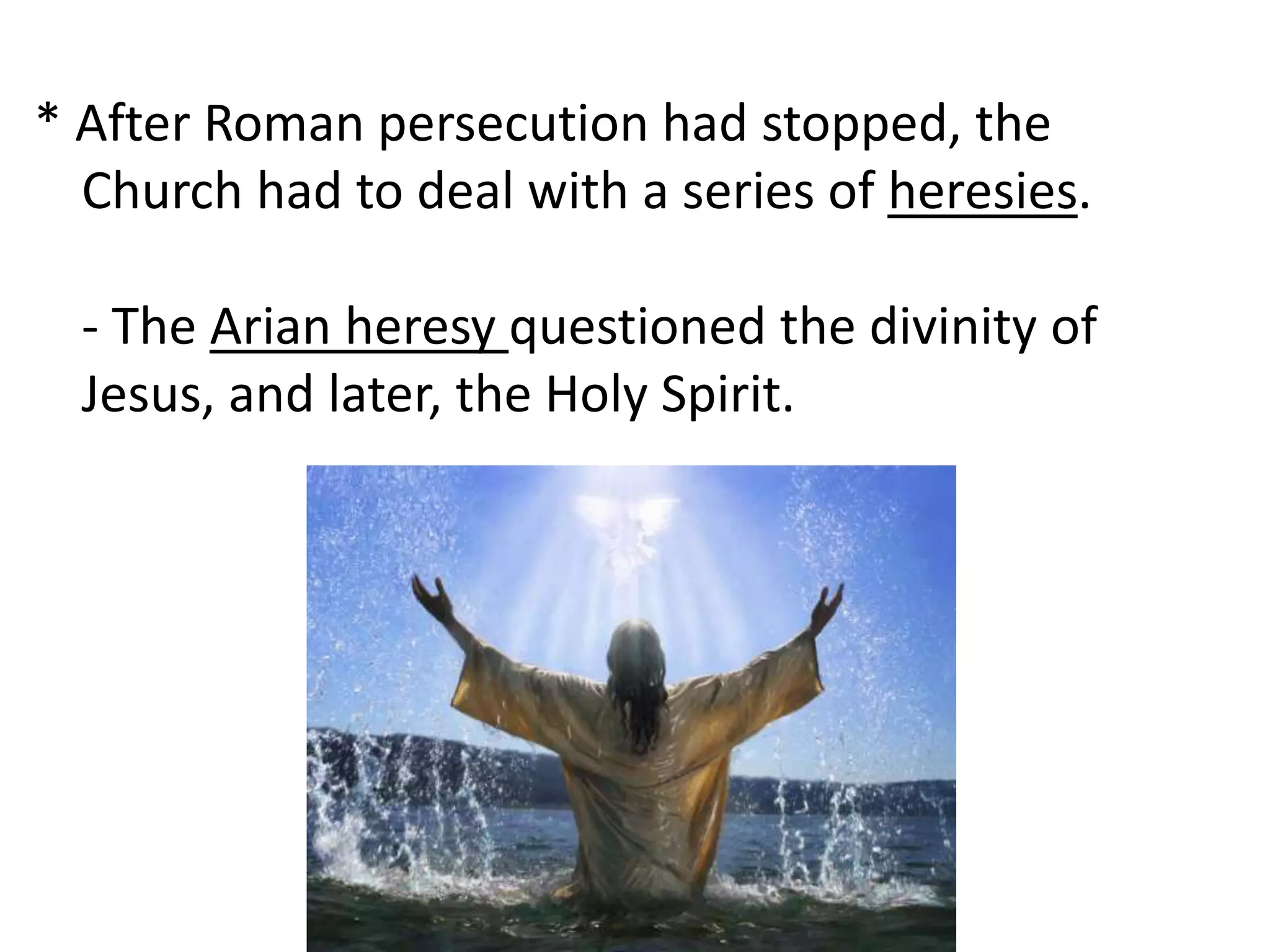
- The Arian heresy questioned the divinity of 
Jesus, and later, the Holy Spirit.
- an ecumenical council was called in 325AD in 
Nicea. This was the Council of Nicea 
- every Catholic bishop in the world was 
invited 
- the bishops composed the Nicene Creed, 
expressing the divinity and humanity of Jesus 
- in 381AD, the Council of Constantinople 
expanded the Creed and defined the nature of 
the Holy Spirit
• In 431AD, the Council of Ephesus was held 
- Nestorius was spreading a heresy that 
questioned the role of Mary 
- at the Council of Ephesus the bishops 
declared that Mary was the Mother of God
• The challenge of these heresies helped the 
Church: 
- clarify beliefs in the Creed 
- establish the challenge of the scripture 
- establish rituals of the sacraments
• Thinkers and teachers during this period were the 
Church Fathers. They include: 
- St. Athanasius - defended 
Jesus' divinity against 
the Arian heresy 
- St. Basil - worked to 
improve the relationship 
between the East and 
the West
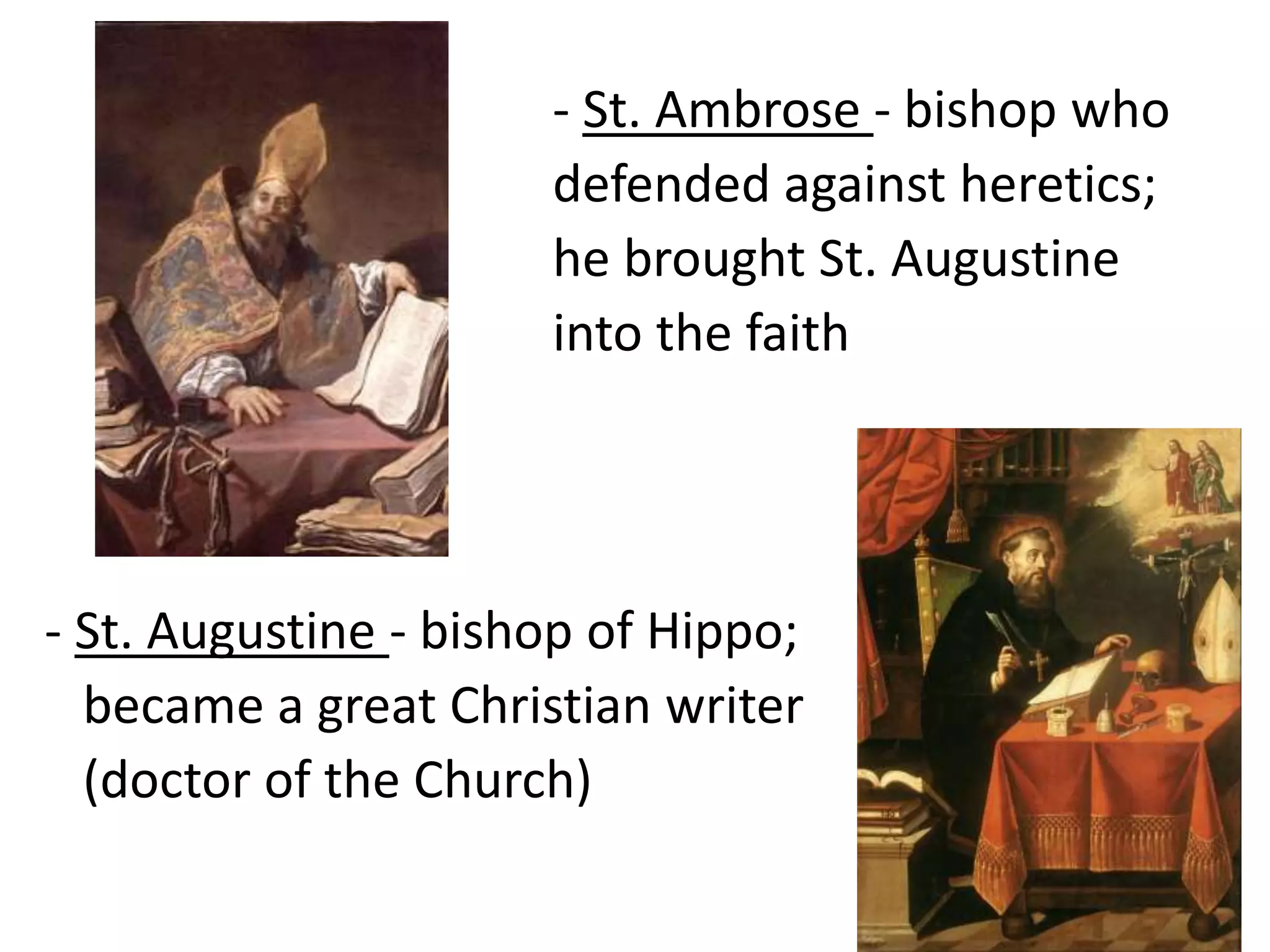
- St. Ambrose - bishop who 
defended against heretics; 
he brought St. Augustine 
into the faith 
- St. Augustine - bishop of Hippo; 
became a great Christian writer 
(doctor of the Church)
- St. Jerome - translated the bible from original 
languages into Latin. His bible was called the 
Vulgate

Patristic relgrade8 (1)

  • 1.
    The Patristic Period c. 100 - 500AD
  • 2.
    • Extends fromthe death of John to around the time of the collapse of the Roman Empire - called Patristic because "pater" is the Latin word for "father“ - during this time the Church fathers wrote and preached
  • 3.
    Important events ofthe Patristic Period: * @ 196AD - the Didache - "The Teaching of the Twelve Apostles“ - oldest surviving written catechism - has three main sections: - Christian ethics - sacraments and rituals - Church organization
  • 4.
    • @ 292AD- Emperor Diocletian divided the Roman Empire into East and West - under Diocletian Christians were persecuted, almost to the point of elimination
  • 5.
    • @ 313AD- Emperor Constantine issued the Edict of Milan - the practice of Christianity was made legal by this document - over time, Christianity became the official religion of the Roman Empire
  • 6.
    TERMS: 1. hermit- a person who lives a simple life of poverty, alone in prayer and sacrifice 2. monk - lives alone, but joins other monks in sacrament and prayer 3. heresy - a false religious teaching 4. heretic - a person who teaches or believes a false teaching
  • 7.
    5. dissension -strong disagreement 6. apostasy - total desertion of one's religion 7. schism - division within the Church 8. ecumenical - pertaining to the whole Church 9. synod - a meeting of local bishops
  • 8.
    * After Romanpersecution had stopped, the Church had to deal with a series of heresies. - The Arian heresy questioned the divinity of Jesus, and later, the Holy Spirit.
  • 9.
    - an ecumenicalcouncil was called in 325AD in Nicea. This was the Council of Nicea - every Catholic bishop in the world was invited - the bishops composed the Nicene Creed, expressing the divinity and humanity of Jesus - in 381AD, the Council of Constantinople expanded the Creed and defined the nature of the Holy Spirit
  • 10.
    • In 431AD,the Council of Ephesus was held - Nestorius was spreading a heresy that questioned the role of Mary - at the Council of Ephesus the bishops declared that Mary was the Mother of God
  • 11.
    • The challengeof these heresies helped the Church: - clarify beliefs in the Creed - establish the challenge of the scripture - establish rituals of the sacraments
  • 12.
    • Thinkers andteachers during this period were the Church Fathers. They include: - St. Athanasius - defended Jesus' divinity against the Arian heresy - St. Basil - worked to improve the relationship between the East and the West
  • 13.
    - St. Ambrose- bishop who defended against heretics; he brought St. Augustine into the faith - St. Augustine - bishop of Hippo; became a great Christian writer (doctor of the Church)
  • 14.
    - St. Jerome- translated the bible from original languages into Latin. His bible was called the Vulgate