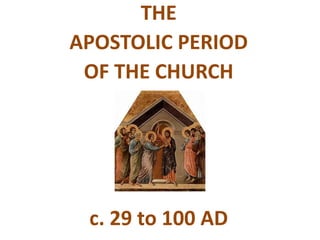
THE 
APOSTOLIC PERIOD 
OF THE CHURCH 
c. 29 to 100 AD
c. 29 AD – the death, resurrection and ascension of 
Jesus 
c. 100 AD – The death of the last Apostle, John (at 
Ephesus) 
 This period is called Apostolic because the Apostles 
were alive and preaching during this time 
The primary source for information about this 
period is Acts of the Apostles, considered to be a 
continuation of Luke’s account.
The birth of the Church at Pentecost 
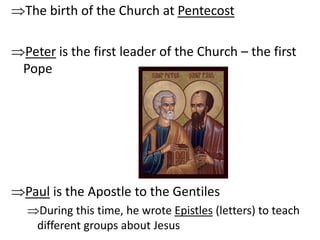
Peter is the first leader of the Church – the first 
Pope 
Paul is the Apostle to the Gentiles 
During this time, he wrote Epistles (letters) to teach 
different groups about Jesus
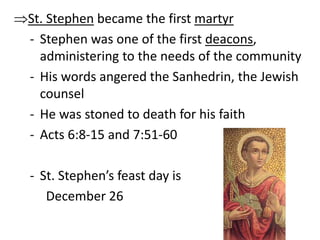
St. Stephen became the first martyr 
- Stephen was one of the first deacons, 
administering to the needs of the community 
- His words angered the Sanhedrin, the Jewish 
counsel 
- He was stoned to death for his faith 
- Acts 6:8-15 and 7:51-60 
- St. Stephen’s feast day is 
December 26
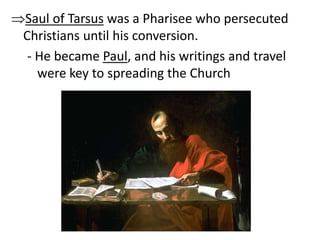
Saul of Tarsus was a Pharisee who persecuted 
Christians until his conversion. 
- He became Paul, and his writings and travel 
were key to spreading the Church
The early Christians were considered a Jewish 
sect (branch) 
- They followed Jewish laws and traditions 
- They did not mix with Gentiles (non-Jews) 
Peter had a vision that let him understand that 
baptism was for all people, not only those born into 
Judaism 
Peter formed a church at Antioch, where the 
disciples are first called Christians 
Paul journeyed to Cyprus, Asia Minor, and all 
around the Mediterranean Sea
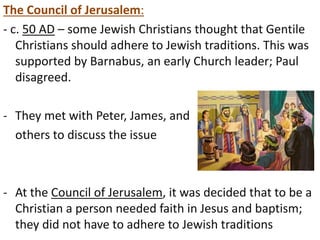
The Council of Jerusalem: 
- c. 50 AD – some Jewish Christians thought that Gentile 
Christians should adhere to Jewish traditions. This was 
supported by Barnabus, an early Church leader; Paul 
disagreed. 
- They met with Peter, James, and 
others to discuss the issue 
- At the Council of Jerusalem, it was decided that to be a 
Christian a person needed faith in Jesus and baptism; 
they did not have to adhere to Jewish traditions
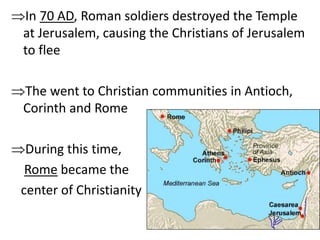
In 70 AD, Roman soldiers destroyed the Temple 
at Jerusalem, causing the Christians of Jerusalem 
to flee 
The went to Christian communities in Antioch, 
Corinth and Rome 
During this time, 
Rome became the 
center of Christianity
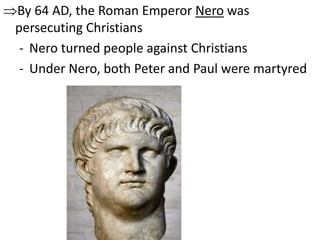
By 64 AD, the Roman Emperor Nero was 
persecuting Christians 
- Nero turned people against Christians 
- Under Nero, both Peter and Paul were martyred
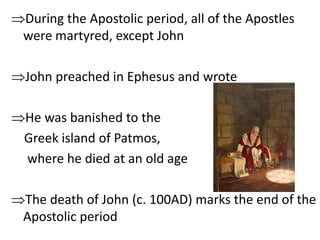
During the Apostolic period, all of the Apostles 
were martyred, except John 
John preached in Ephesus and wrote 
He was banished to the 
Greek island of Patmos, 
where he died at an old age 
The death of John (c. 100AD) marks the end of the 
Apostolic period

Apostolic period

  • 1.
    THE APOSTOLIC PERIOD OF THE CHURCH c. 29 to 100 AD
  • 2.
    c. 29 AD– the death, resurrection and ascension of Jesus c. 100 AD – The death of the last Apostle, John (at Ephesus)  This period is called Apostolic because the Apostles were alive and preaching during this time The primary source for information about this period is Acts of the Apostles, considered to be a continuation of Luke’s account.
  • 3.
    The birth ofthe Church at Pentecost Peter is the first leader of the Church – the first Pope Paul is the Apostle to the Gentiles During this time, he wrote Epistles (letters) to teach different groups about Jesus
  • 4.
    St. Stephen becamethe first martyr - Stephen was one of the first deacons, administering to the needs of the community - His words angered the Sanhedrin, the Jewish counsel - He was stoned to death for his faith - Acts 6:8-15 and 7:51-60 - St. Stephen’s feast day is December 26
  • 5.
    Saul of Tarsuswas a Pharisee who persecuted Christians until his conversion. - He became Paul, and his writings and travel were key to spreading the Church
  • 6.
    The early Christianswere considered a Jewish sect (branch) - They followed Jewish laws and traditions - They did not mix with Gentiles (non-Jews) Peter had a vision that let him understand that baptism was for all people, not only those born into Judaism Peter formed a church at Antioch, where the disciples are first called Christians Paul journeyed to Cyprus, Asia Minor, and all around the Mediterranean Sea
  • 7.
    The Council ofJerusalem: - c. 50 AD – some Jewish Christians thought that Gentile Christians should adhere to Jewish traditions. This was supported by Barnabus, an early Church leader; Paul disagreed. - They met with Peter, James, and others to discuss the issue - At the Council of Jerusalem, it was decided that to be a Christian a person needed faith in Jesus and baptism; they did not have to adhere to Jewish traditions
  • 8.
    In 70 AD,Roman soldiers destroyed the Temple at Jerusalem, causing the Christians of Jerusalem to flee The went to Christian communities in Antioch, Corinth and Rome During this time, Rome became the center of Christianity
  • 9.
    By 64 AD,the Roman Emperor Nero was persecuting Christians - Nero turned people against Christians - Under Nero, both Peter and Paul were martyred
  • 10.
    During the Apostolicperiod, all of the Apostles were martyred, except John John preached in Ephesus and wrote He was banished to the Greek island of Patmos, where he died at an old age The death of John (c. 100AD) marks the end of the Apostolic period