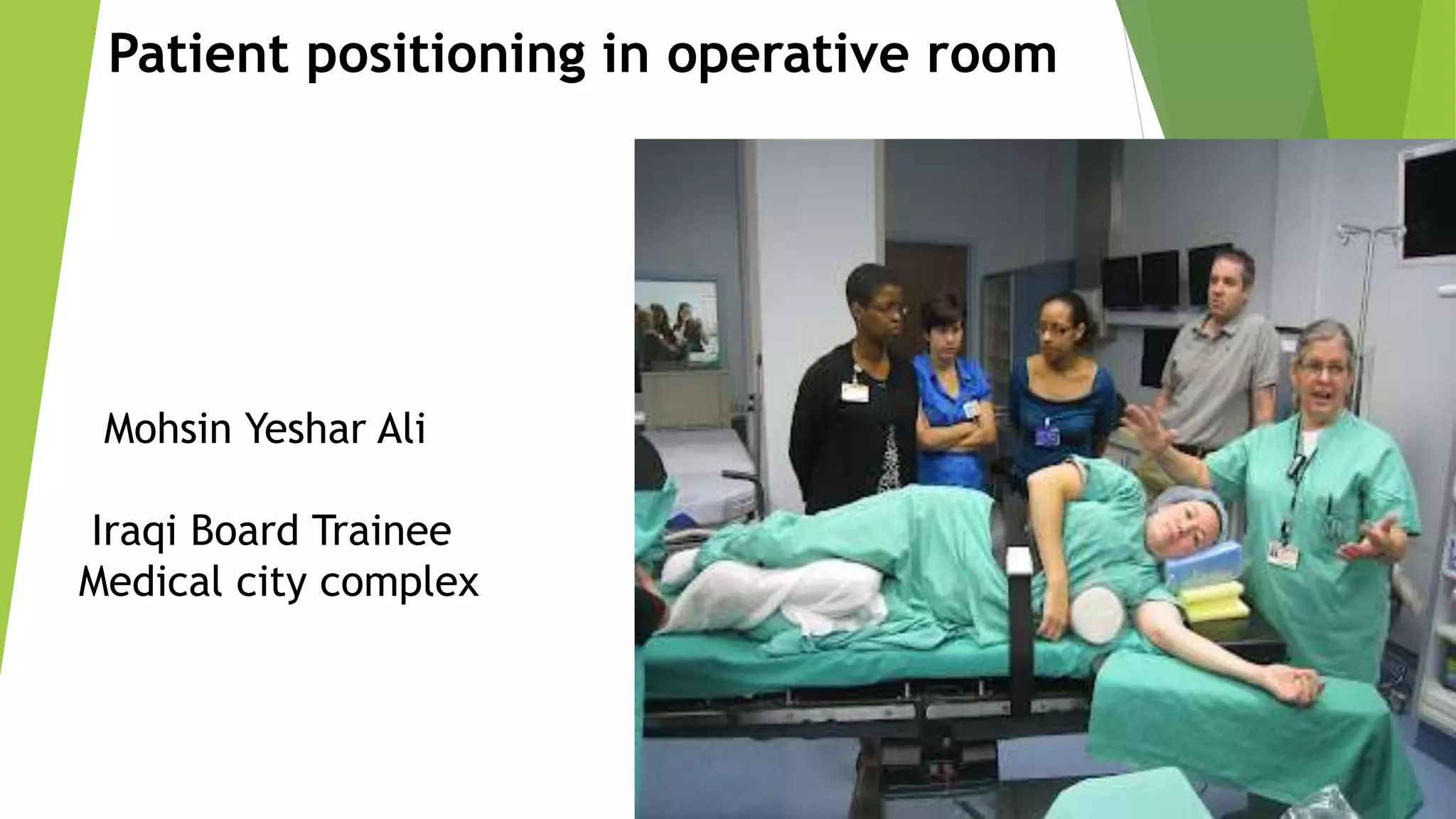
Patient positioning in operative room
Mohsin Yeshar Ali
Iraqi Board Trainee
Medical city complex
Introduction
 The orthopaedic surgeon is responsible for the well-being
of the whole patient, not just the limb or spinal segment
undergoing surgery.
 Proper patient positioning is an often overlooked, yet
critical, step in surgical preparation.
 In addition to providing adequate exposure during the
procedure, careful positioning can minimize the risk of
perioperative complications. Optimal positioning varies
with the procedure being performed, the preference of
the surgeon, and the body habitus of the patient.
Matsen et al.4 analyzed 464 closed malpractice claims in
orthopaedic surgery and described a total of twenty-four
malpractice cases, including patients being dropped, skin
ulceration, and failure to protect structures outside the
surgical field.
AIM AND OBJECTIVES
• To provide knowledge on common surgical position
of patient in during surgery
• To identify and develop awareness of potential
complication in patient positioning
• To practice measure to avoid injuries and others
complication to patient during surgery
• To promote safety and safe guarding patient well-
being during intra-operative period
The goals of patient positioning include
• providing exposure of the surgical site.
• maintaining the patient’s comfort and privacy.
• providing access to intravenous (IV) lines and monitoring equipment.
• allowing for optimal ventilation by maintaining a patent airway and avoiding
constriction or pressure on the chest or abdomen.
• maintaining circulation and protecting muscles, nerves, bony prominences,
joints, skin, and vital organs from injury.
• observing and protecting fingers, toes, and genitals; and
• stabilizing the patient to prevent unintended shifting or movement.
UNDERSTANDING BODILY SYSTEM
 INTEGUMENTARY SYSTEM
 Forces include pressure, shear, friction and
maceration
 VASCULAR SYSTEM
 Dilation of peripheral vessels lead to drop in BP
 Venous compression predispose to thrombosis
 NERVOUS SYSTEM
 CNS depression due to anaesthetic drugs
 Pressure on nerves may lead to temporary or
permanent damage
UNDERSTANDING BODILY SYSTEM
 RESPIRATORY SYSTEM
Alteration in diaphragmatic movements and
lung expansion
Inadequate tissue oxygenation and perfusion
 MUSCULOSKELETAL SYSTEM
May resulted in joint damage, muscle stretch,
strain and dislocation
Potential of pressure formation
BONY PROMINENCES
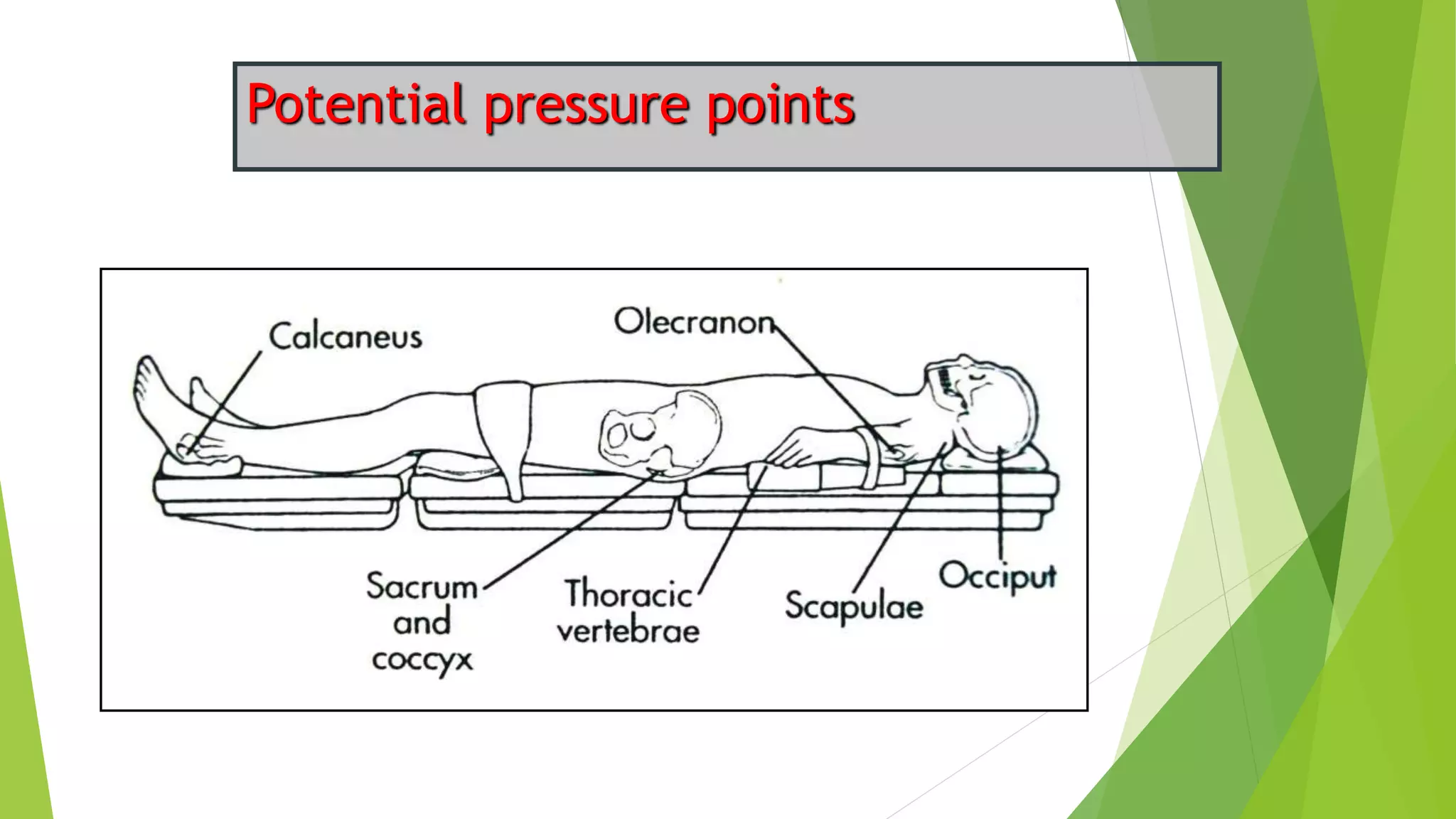
 Occiput
 Peri - orbital arch
 Zygomatic Arch
 Mastoid region
 Acromion process
 Scapulae
 Thoracic vertebrae
 Iliac crest
 Greater trochanter
 Medial or lateral femoral epicondyles
 Tibial condyles
 Malleolus
 Olecranon
 Sacrum and coccyx
 Patella
 Calcaneus
ASSOCIATED RISK PATIENT FACTOR
 ADVANCED AGE
 NUTRITIONAL STATUS
 RESPIRATORY DISORDER
 CIRCULATORY DISEASE
 OBESE PATIENT
 CHRONIC IMMOBILITY
 PRESCRIBED MEDICATIONS
 UNDERLYING MEDICAL PROBLEMS
 NATURE OF SURGERY
ASSESSMENT
 The team should assess the following prior to positioning of the patient:
• Procedure length
• Surgeon’s preference of position
• Required position for procedure
• Anesthesia to be administered
• Patient’s risk factors
• age, weight, skin condition, mobility/limitations, pre-existing conditions, etc.
• Patient’s privacy and medical needs
• Basics of anatomy & physiology
Team Responsibilities
 Physician: -Optimal procedural exposure
 Anesthesia: -Physiologic requirements , Position timing
 Nursing: -Safe transfer using adequate personnel -Use
of adequate padding and positioning aids -Provide an
ongoing assessment
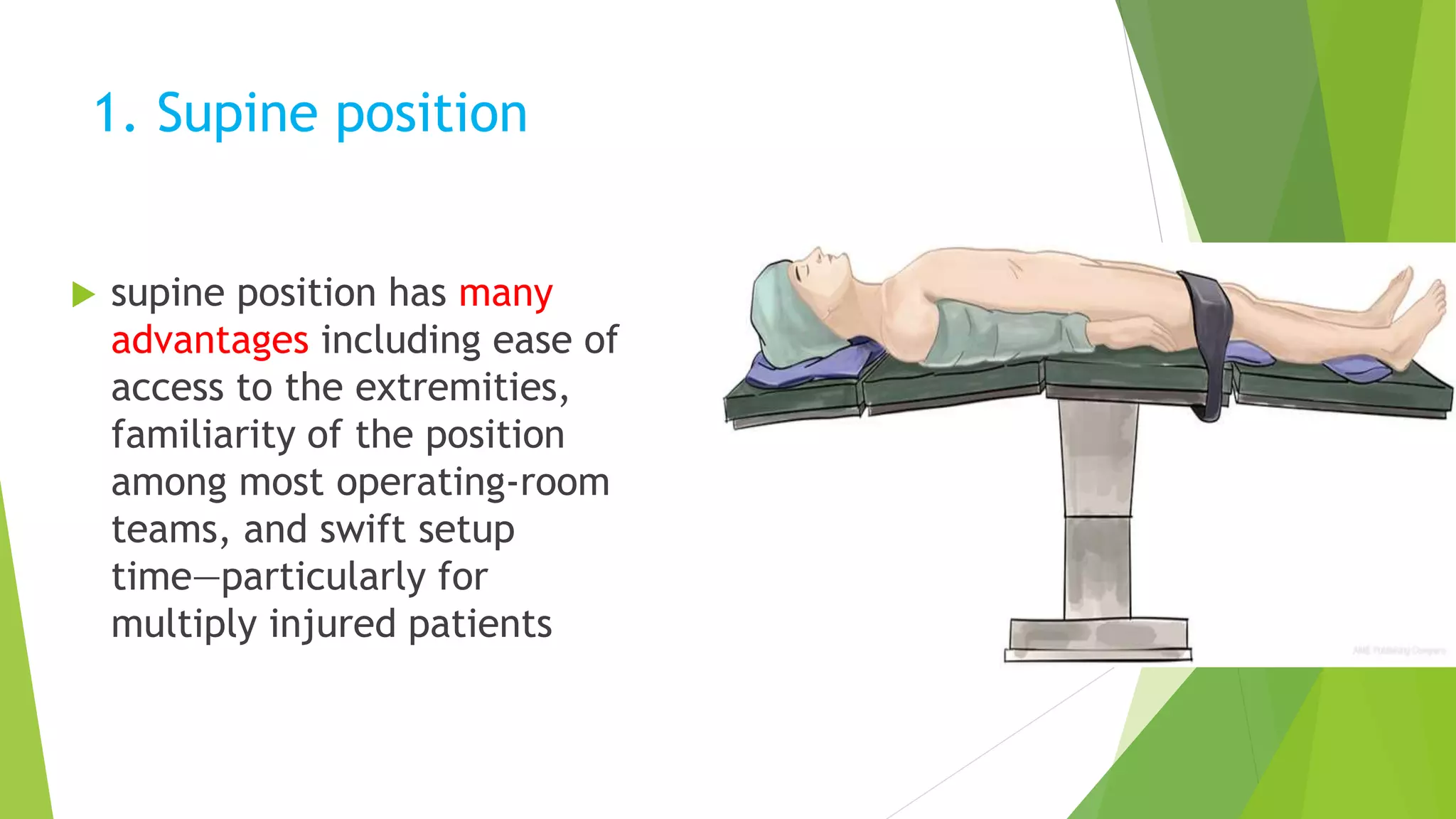
1. Supine position
 supine position has many
advantages including ease of
access to the extremities,
familiarity of the position
among most operating-room
teams, and swift setup
time—particularly for
multiply injured patients
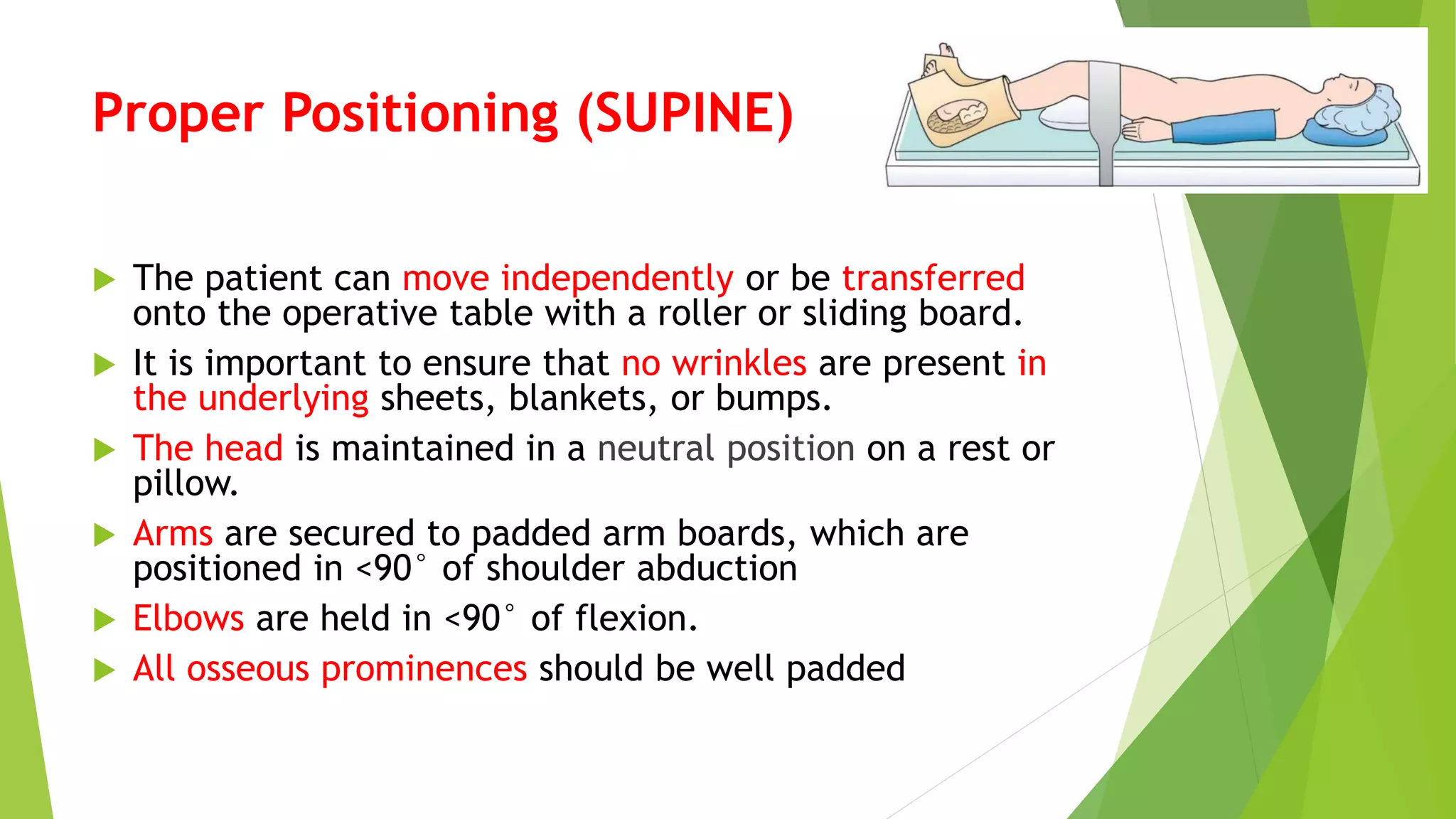
Proper Positioning (SUPINE)
 The patient can move independently or be transferred
onto the operative table with a roller or sliding board.
 It is important to ensure that no wrinkles are present in
the underlying sheets, blankets, or bumps.
 The head is maintained in a neutral position on a rest or
pillow.
 Arms are secured to padded arm boards, which are
positioned in <90° of shoulder abduction
 Elbows are held in <90° of flexion.
 All osseous prominences should be well padded
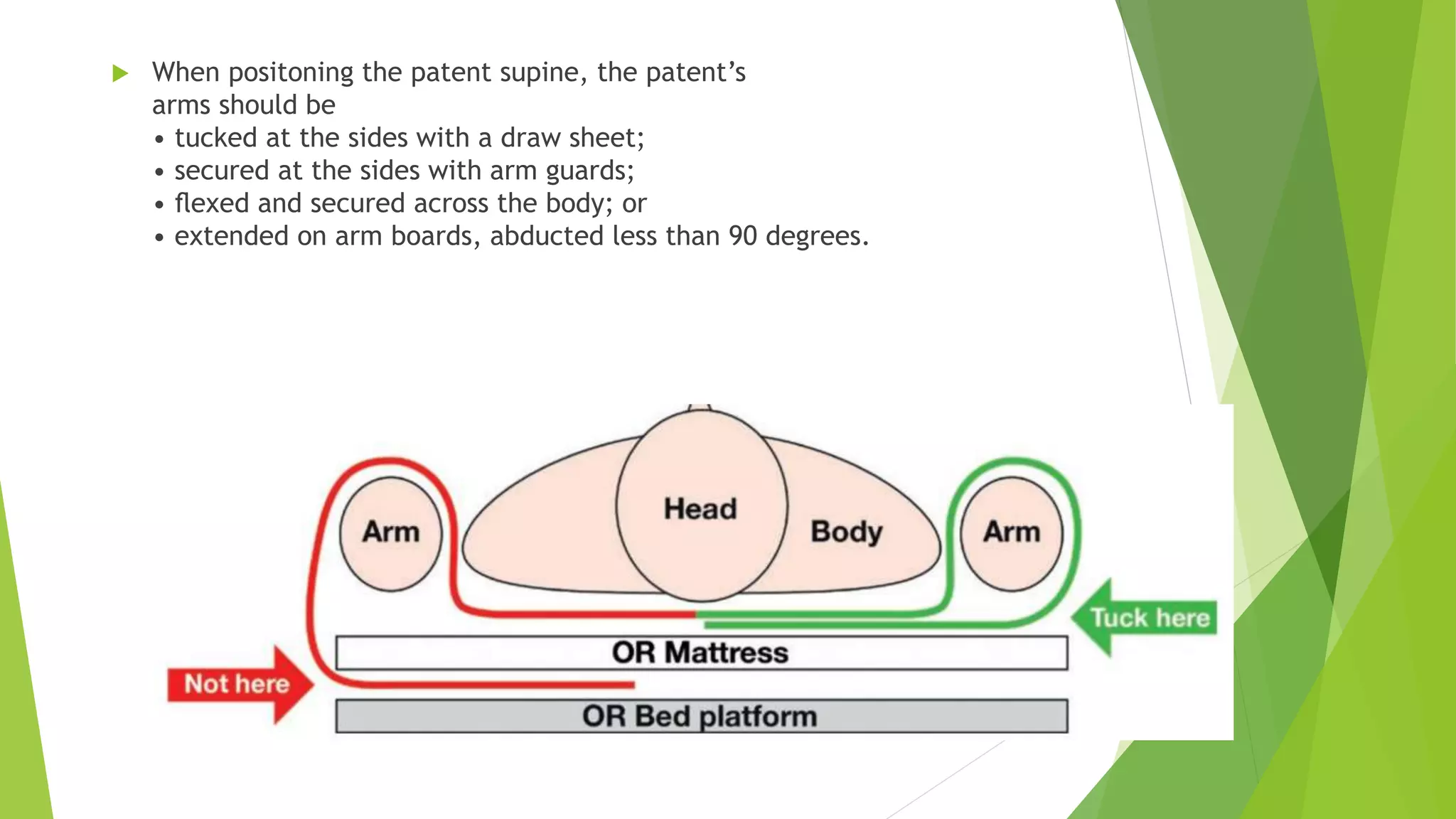
Potential pressure points
 When positoning the patent supine, the patent’s
arms should be
• tucked at the sides with a draw sheet;
• secured at the sides with arm guards;
• flexed and secured across the body; or
• extended on arm boards, abducted less than 90 degrees.
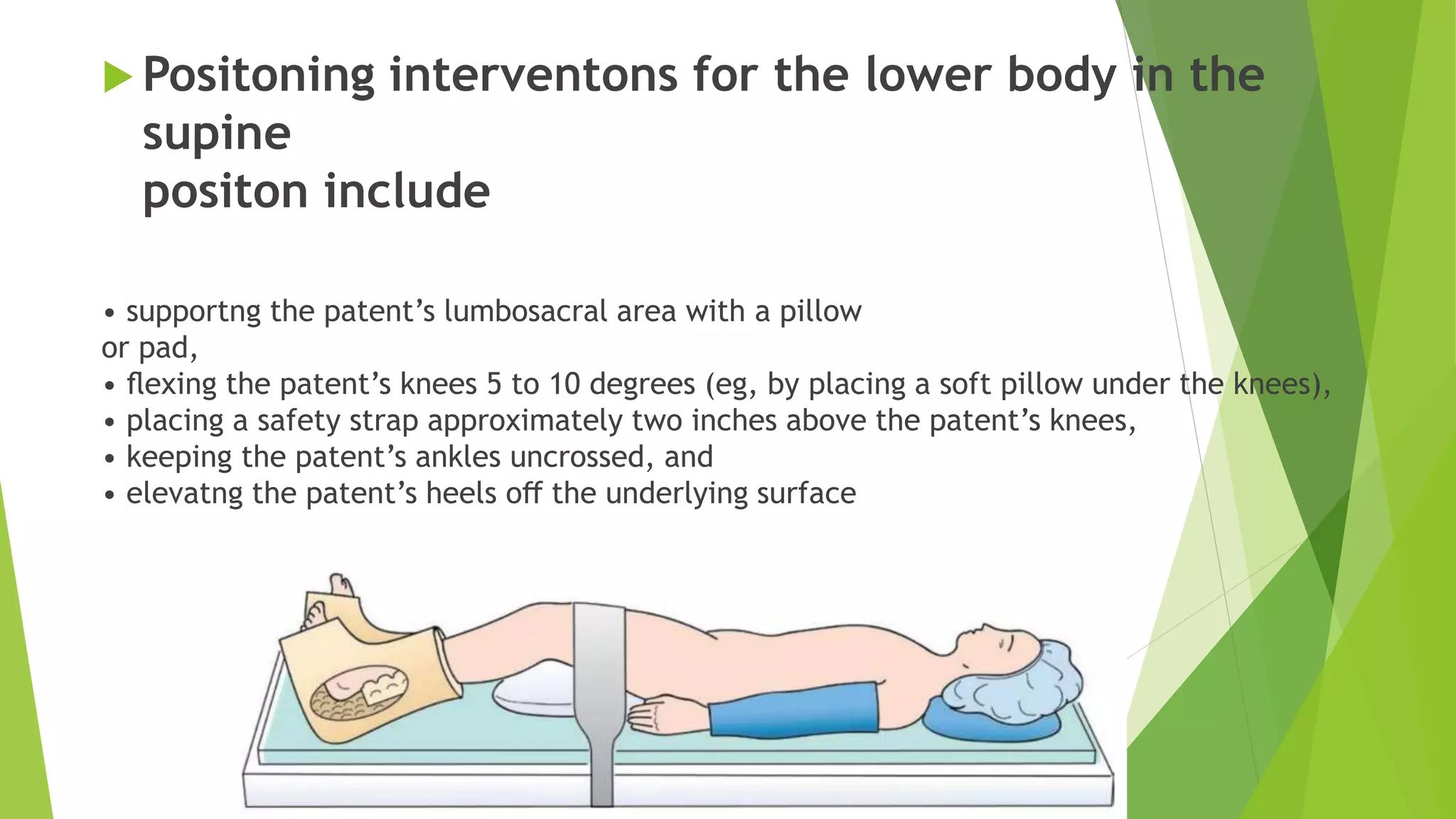
 Positoning interventons for the lower body in the
supine
positon include
• supportng the patent’s lumbosacral area with a pillow
or pad,
• flexing the patent’s knees 5 to 10 degrees (eg, by placing a soft pillow under the knees),
• placing a safety strap approximately two inches above the patent’s knees,
• keeping the patent’s ankles uncrossed, and
• elevatng the patent’s heels off the underlying surface
Positioning Complications and
Prevention
 Lateral rotation of the head intraoperatively places the brachial plexus under
increased traction
 Peripheral nerve injuries are best prevented by securing a neutral head
position and ensuring that arms are not placed into abduction of > 90°.
 The ulnar nerve is most commonly injured.
 Proper positioning of the upper extremities minimizes pressure in the ulnar
groove.
 Flexion of the elbow should not be >90°, and the forearm should be neutral or
slightly supinated. This position helps to avoid compression at the cubital
tunnel by the retinaculum.
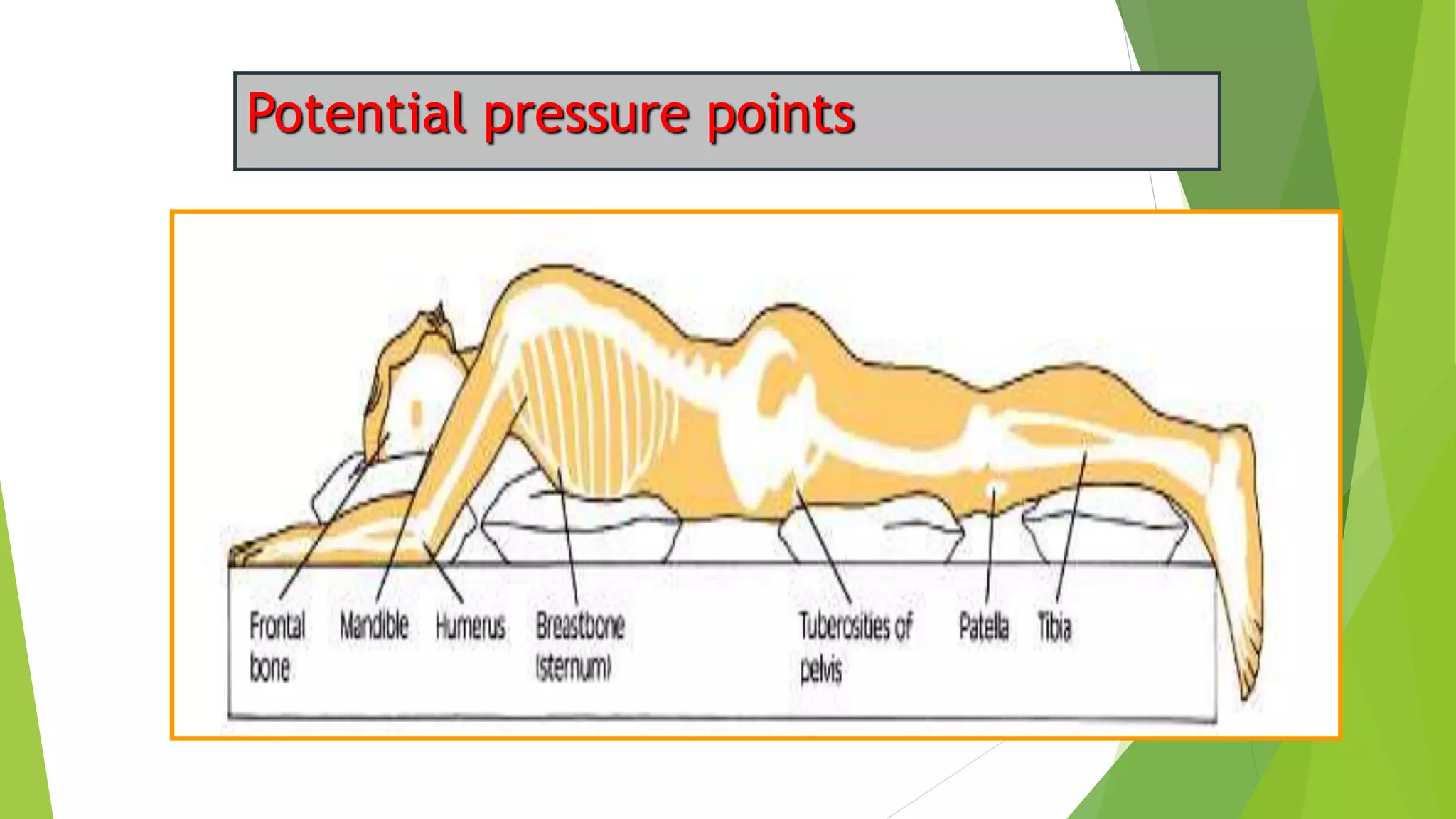
2. PRONE POSITION
The main indication for the
prone position is posterior
spinal surgery; however, it is
also utilized for procedures
that require access to the
posterior aspect of the
extremities.
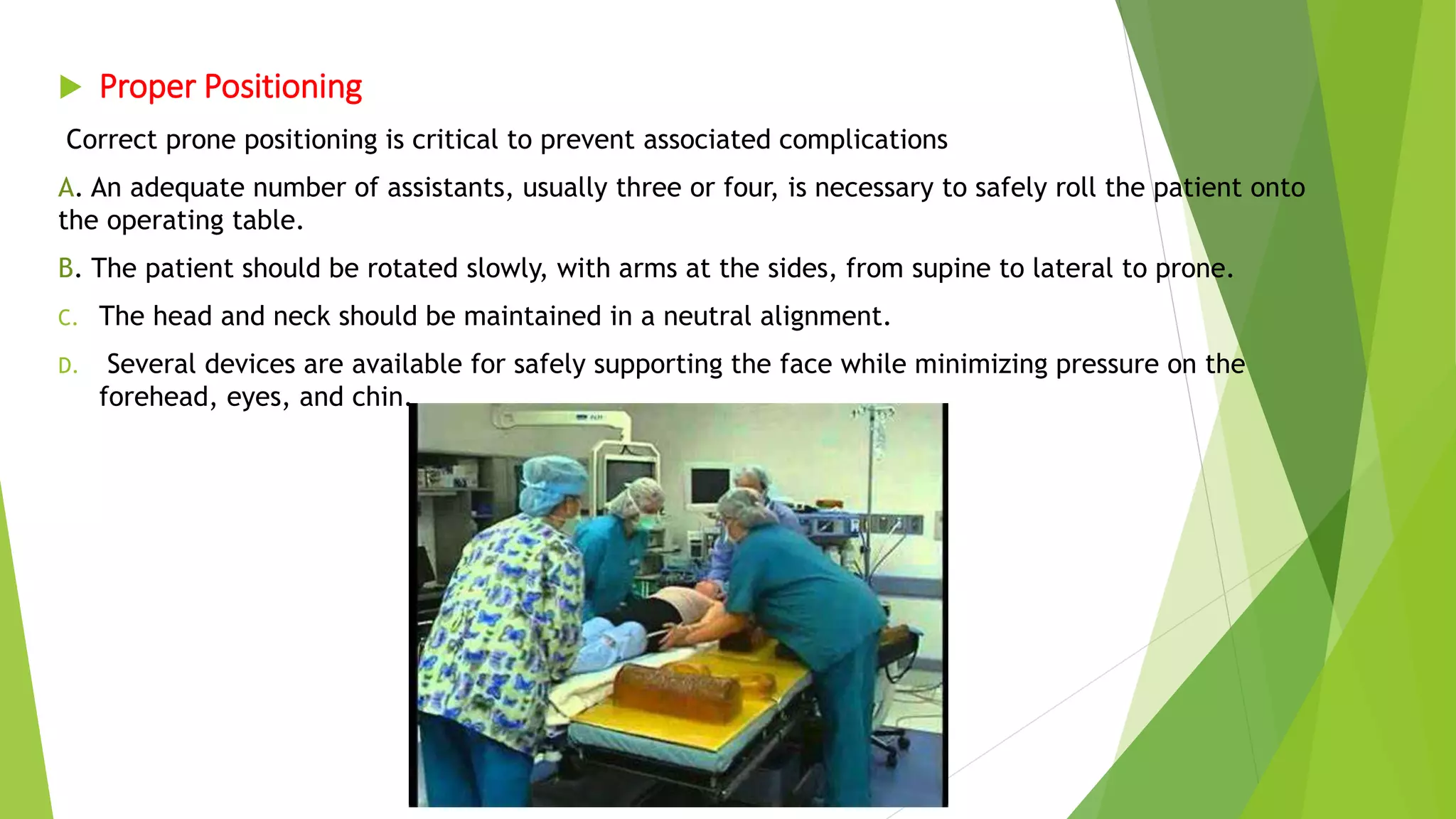
 Proper Positioning
Correct prone positioning is critical to prevent associated complications
A. An adequate number of assistants, usually three or four, is necessary to safely roll the patient onto
the operating table.
B. The patient should be rotated slowly, with arms at the sides, from supine to lateral to prone.
C. The head and neck should be maintained in a neutral alignment.
D. Several devices are available for safely supporting the face while minimizing pressure on the
forehead, eyes, and chin.
C. The patient’s arms can either be placed onto padded arm boards in
£90° of shoulder abduction or secured against the sides of the body.
D. A well-padded roll should be placed under the thorax and pelvis. These
rolls aid ventilation by allowing the abdomen to rest freely without
excessive pressure.
E. Osseous prominences are well padded. The patient may be tilted into
slight reverse Trendelenburg (10° to 15°), which decreases intraocular
pressure and facial edema.
F. Make sure the patient’s breasts, abdomen, and genitals are free from
torsion or pressure
Potential pressure points
 Positioning Complications
1 Dropping the patient during transport,
2. loss of airway or vascular access,
3. pressure necrosis of skin, nipple ischemia,
4. inferior vena cava compression,
5. compartment syndrome,
6. corneal abrasion, ischemic optic neuropathy, central retinal artery occlusion,
7. peripheral nerve injury
8. increased bleeding in the surgical field
9. increase the risk of acute kidney injury
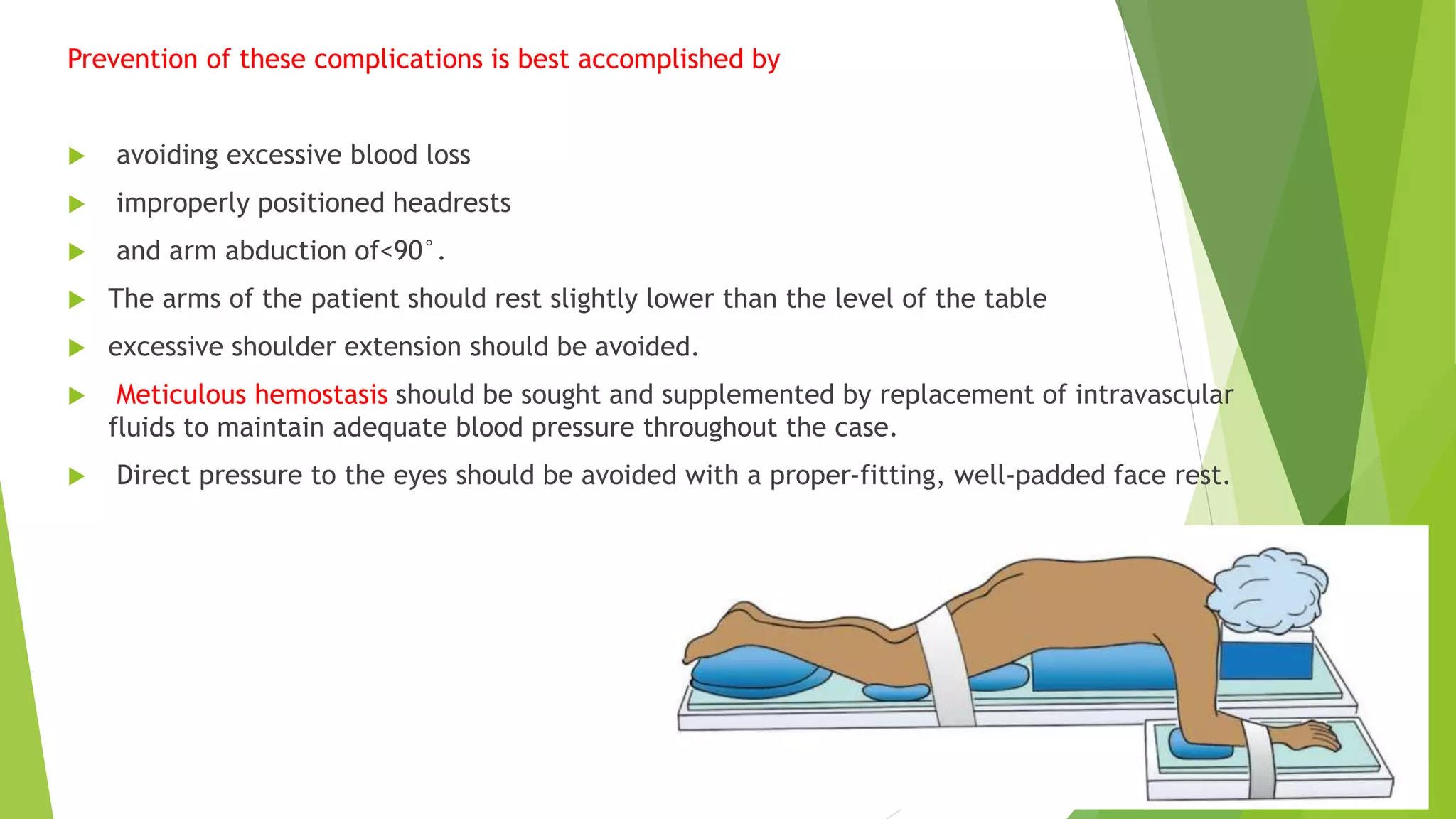
Prevention of these complications is best accomplished by
 avoiding excessive blood loss
 improperly positioned headrests
 and arm abduction of<90°.
 The arms of the patient should rest slightly lower than the level of the table
 excessive shoulder extension should be avoided.
 Meticulous hemostasis should be sought and supplemented by replacement of intravascular
fluids to maintain adequate blood pressure throughout the case.
 Direct pressure to the eyes should be avoided with a proper-fitting, well-padded face rest.
3. Lateral Position
 commonly used for procedures that involve the hip or shoulder. In this
position, the patient is placed on the nonoperative side (eg, for a left total
hip arthroplasty, the patient would be placed in the right lateral position).
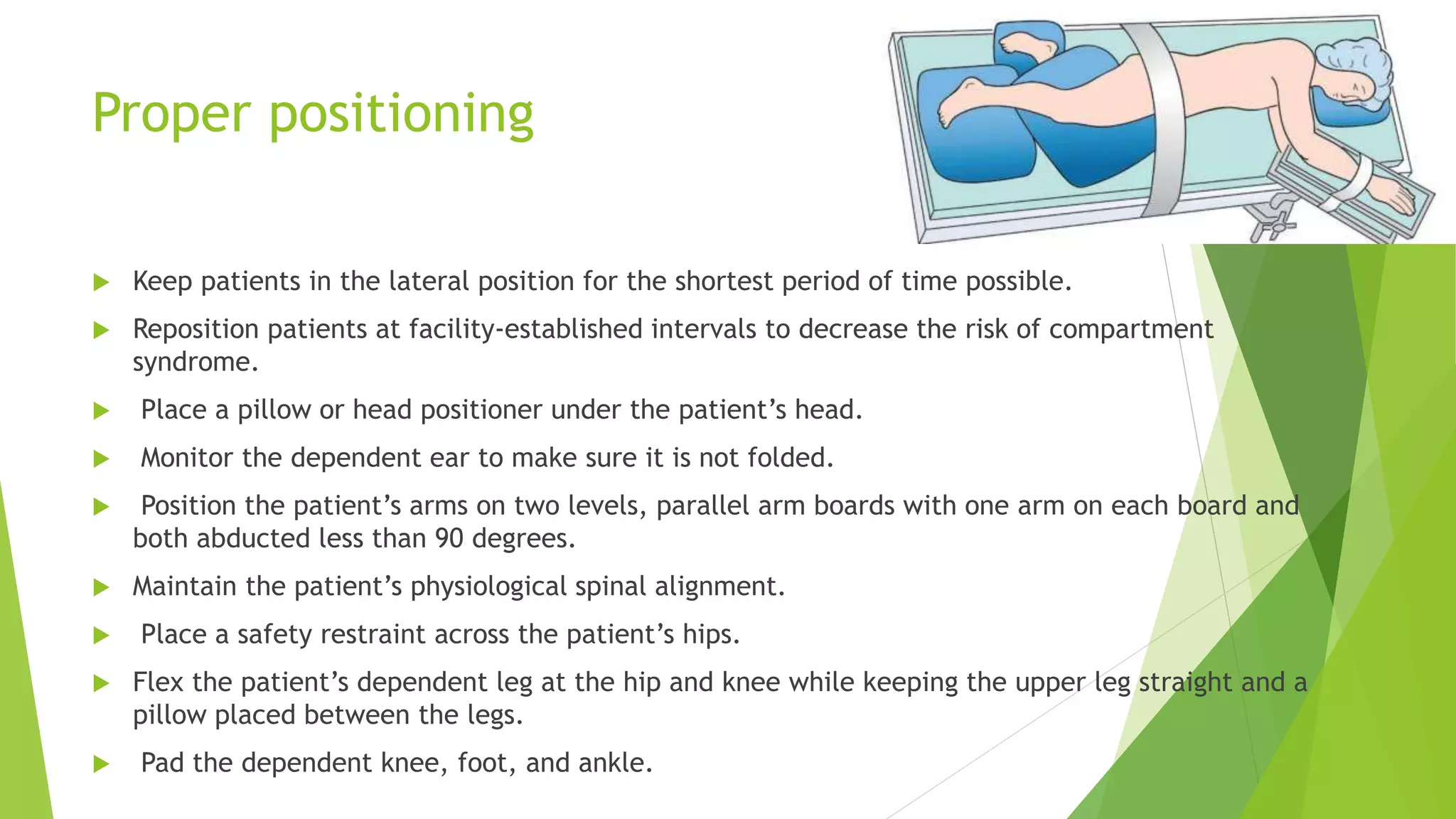
Proper positioning
 Keep patients in the lateral position for the shortest period of time possible.
 Reposition patients at facility-established intervals to decrease the risk of compartment
syndrome.
 Place a pillow or head positioner under the patient’s head.
 Monitor the dependent ear to make sure it is not folded.
 Position the patient’s arms on two levels, parallel arm boards with one arm on each board and
both abducted less than 90 degrees.
 Maintain the patient’s physiological spinal alignment.
 Place a safety restraint across the patient’s hips.
 Flex the patient’s dependent leg at the hip and knee while keeping the upper leg straight and a
pillow placed between the legs.
 Pad the dependent knee, foot, and ankle.
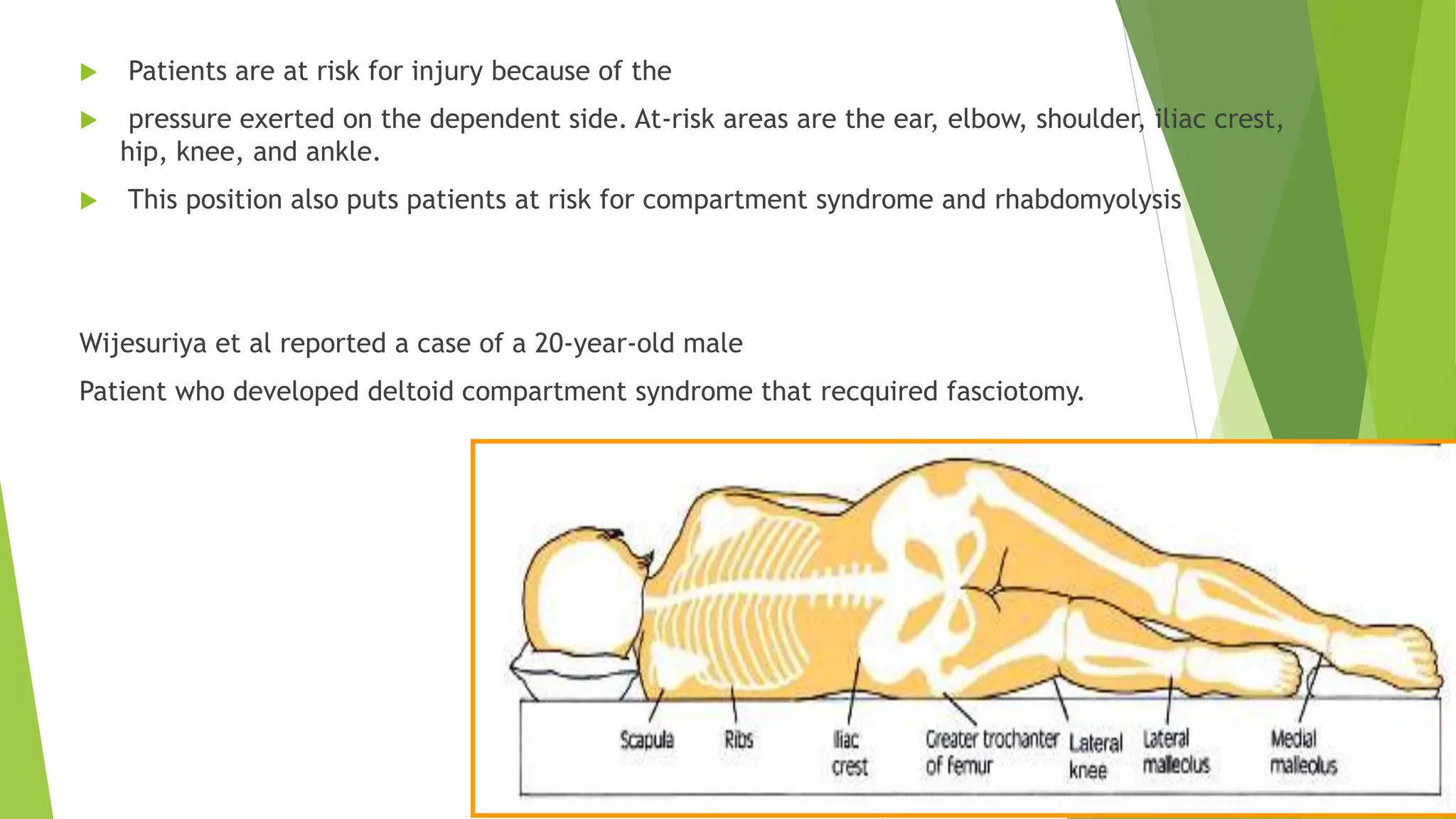
 Patients are at risk for injury because of the
 pressure exerted on the dependent side. At-risk areas are the ear, elbow, shoulder, iliac crest,
hip, knee, and ankle.
 This position also puts patients at risk for compartment syndrome and rhabdomyolysis
Wijesuriya et al reported a case of a 20-year-old male
Patient who developed deltoid compartment syndrome that recquired fasciotomy.
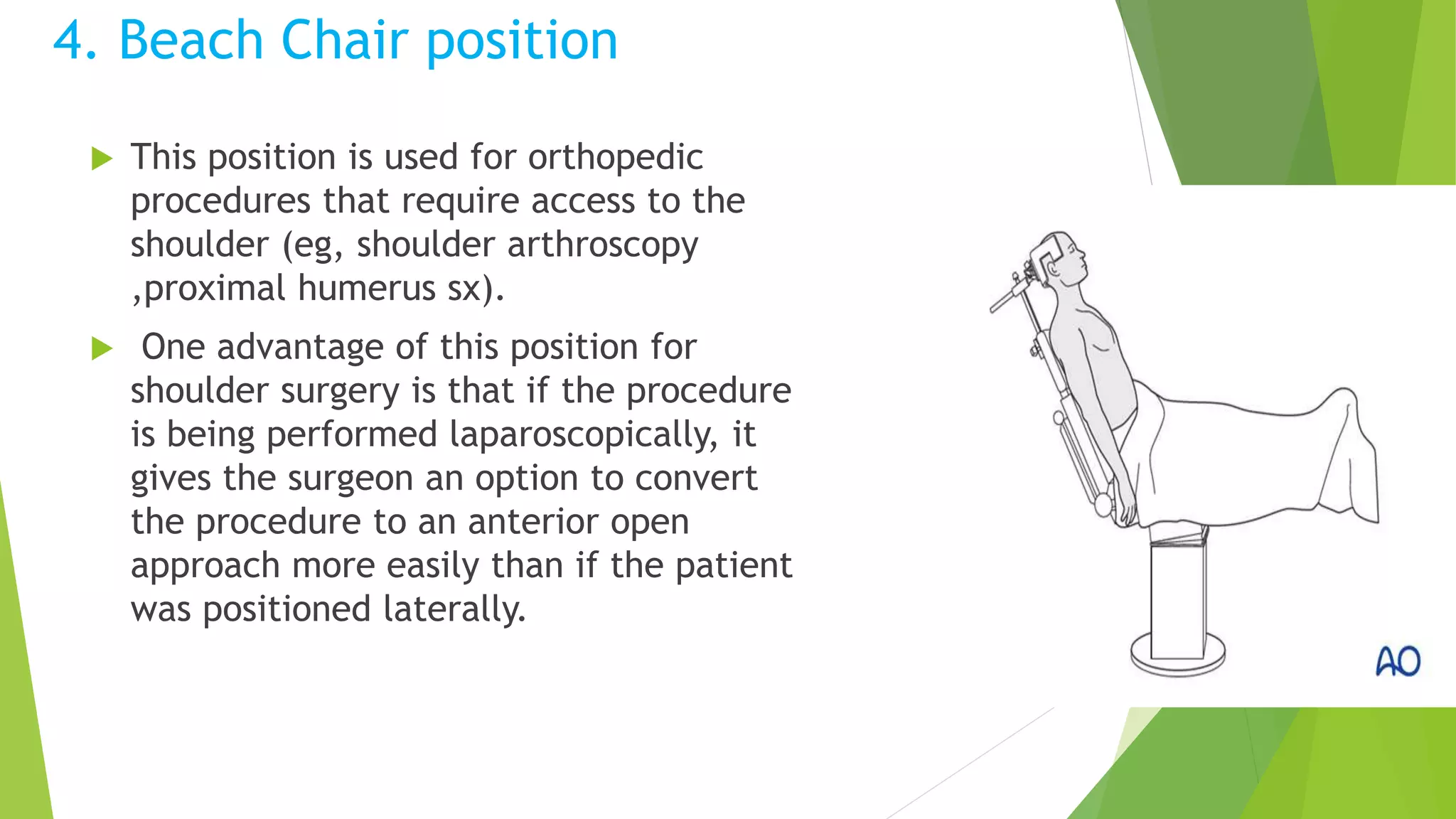
4. Beach Chair position
 This position is used for orthopedic
procedures that require access to the
shoulder (eg, shoulder arthroscopy
,proximal humerus sx).
 One advantage of this position for
shoulder surgery is that if the procedure
is being performed laparoscopically, it
gives the surgeon an option to convert
the procedure to an anterior open
approach more easily than if the patient
was positioned laterally.
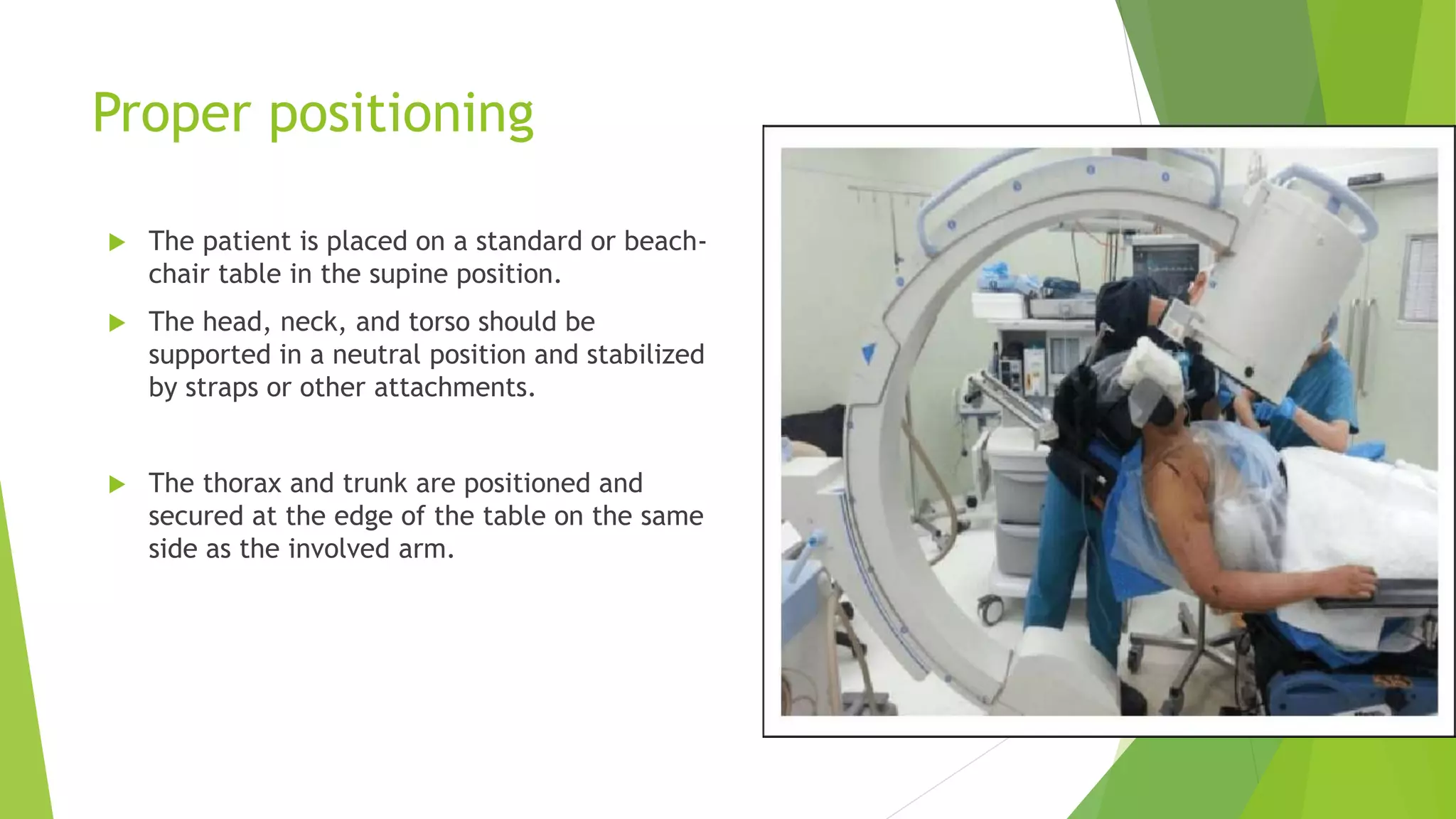
Proper positioning
 The patient is placed on a standard or beach-
chair table in the supine position.
 The head, neck, and torso should be
supported in a neutral position and stabilized
by straps or other attachments.
 The thorax and trunk are positioned and
secured at the edge of the table on the same
side as the involved arm.
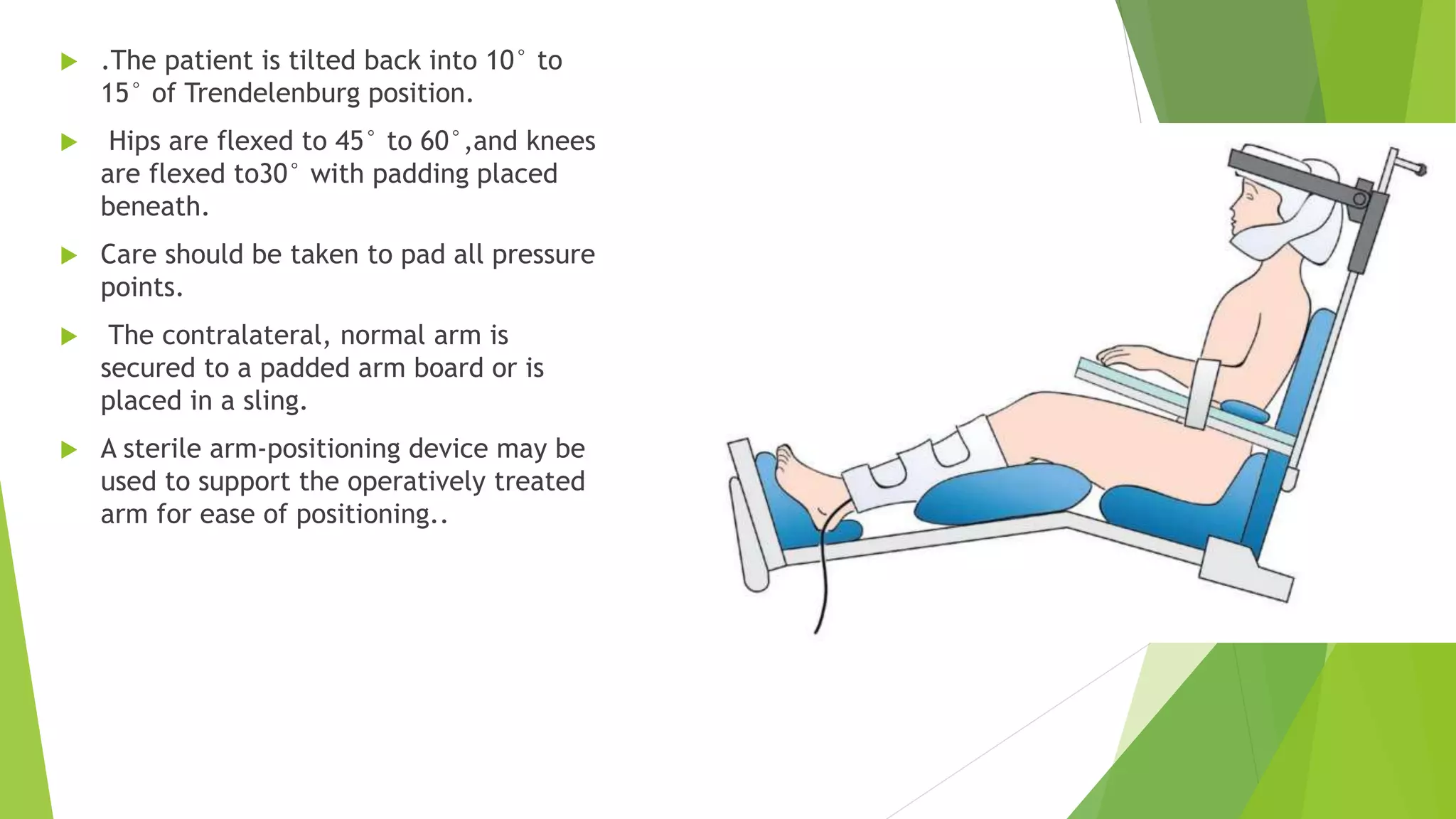
 .The patient is tilted back into 10° to
15° of Trendelenburg position.
 Hips are flexed to 45° to 60°,and knees
are flexed to30° with padding placed
beneath.
 Care should be taken to pad all pressure
points.
 The contralateral, normal arm is
secured to a padded arm board or is
placed in a sling.
 A sterile arm-positioning device may be
used to support the operatively treated
arm for ease of positioning..
Positioning Complications
1. hypotensive bradycardic events,
Hypotensive bradycardic events are best prevented by aggressive treatment of fluid
deficits and blood loss, by avoiding the use of anesthetics containing epinephrine, and by
utilizing intraoperative beta-blockers
2. venous air embolism,
3. hypoglossal nerve palsy, and neurapraxia of cutaneous nerves of the cervical plexus
4. hyperextension or rotation of the head can decrease vertebral artery blood flow,
which exacerbates infarcts of the posterior cerebral circulation
This can be prevented by securing the head and neck in a properly stabilized, neutral
position
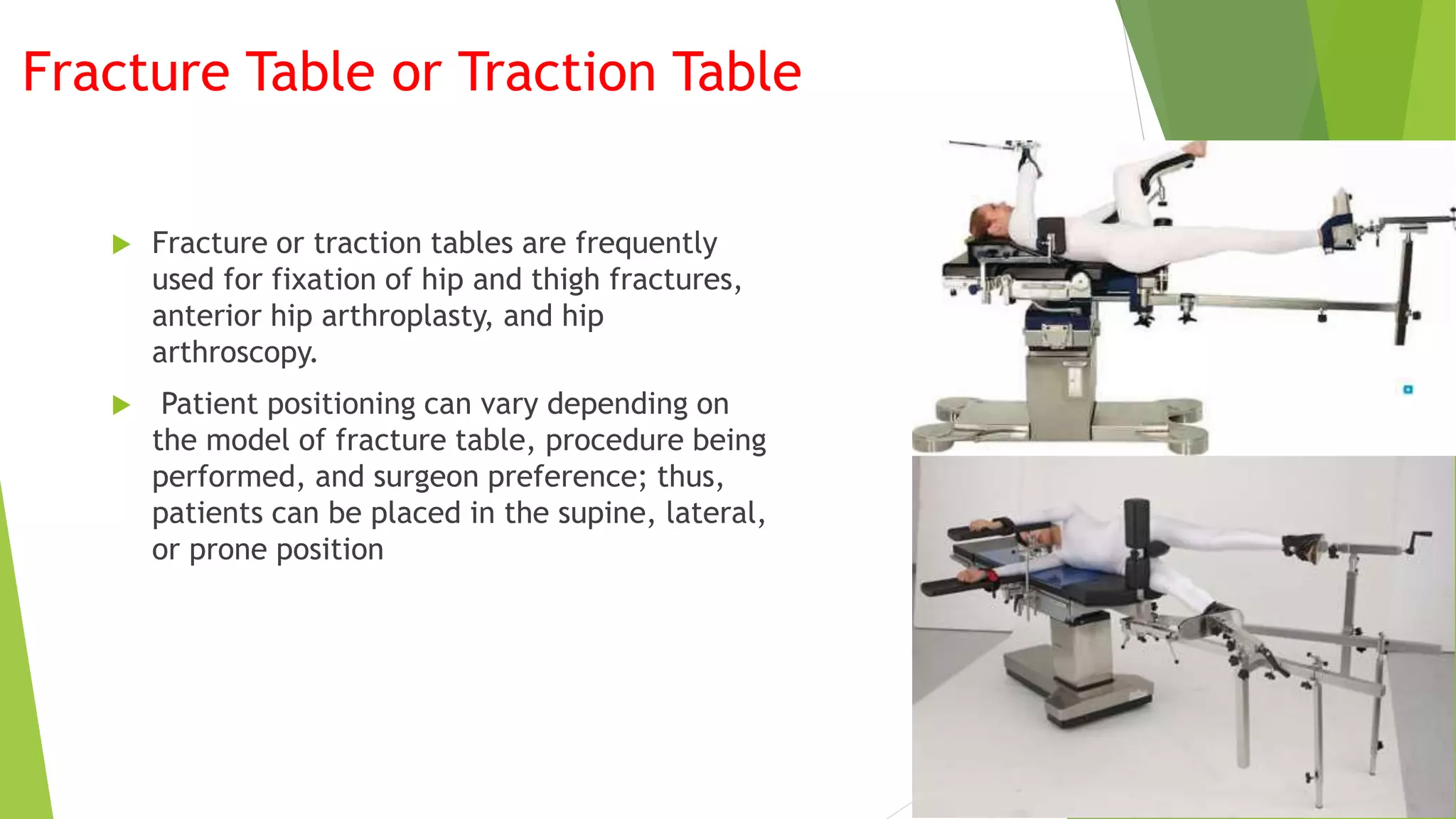
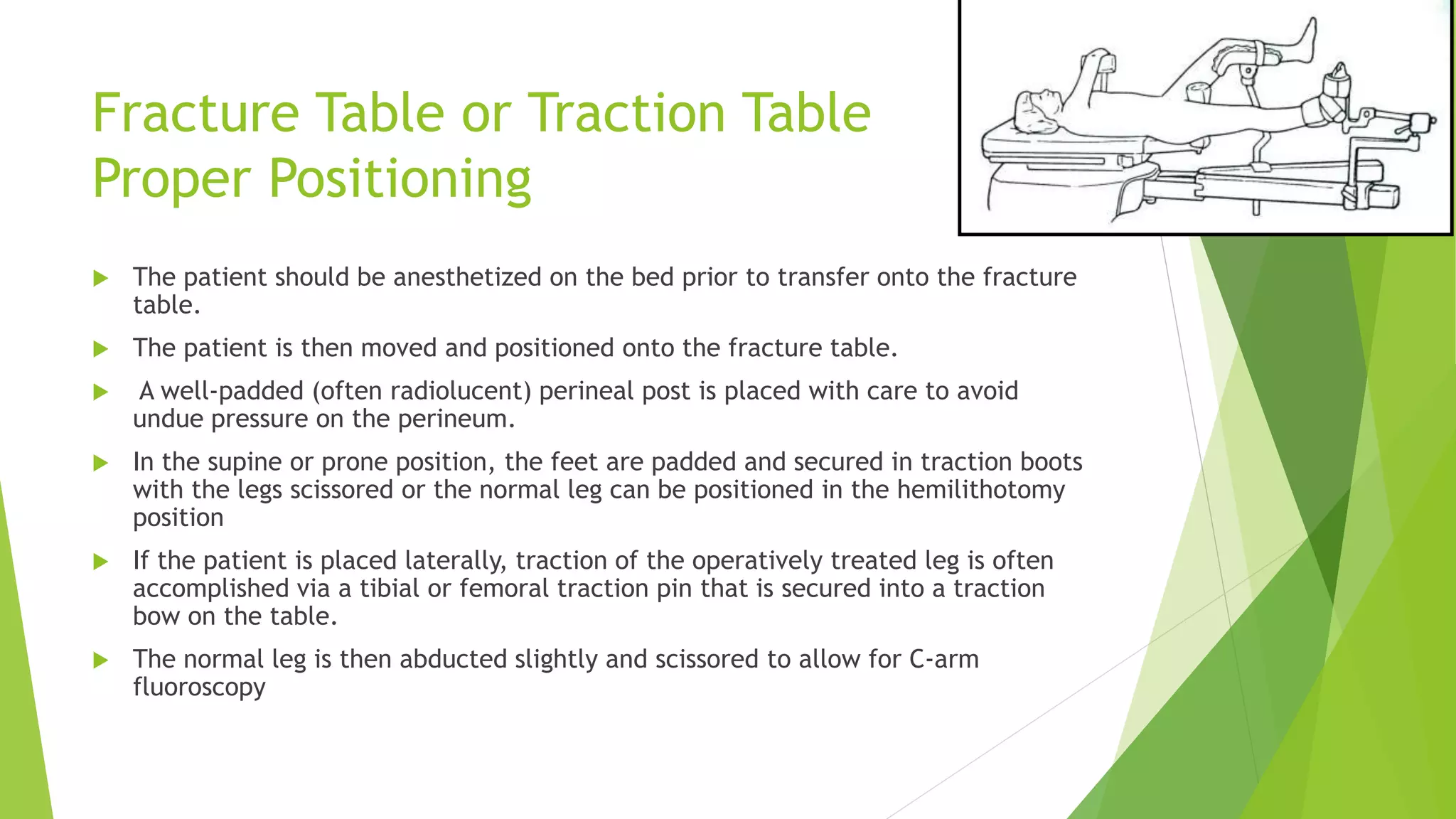
Fracture Table or Traction Table
 Fracture or traction tables are frequently
used for fixation of hip and thigh fractures,
anterior hip arthroplasty, and hip
arthroscopy.
 Patient positioning can vary depending on
the model of fracture table, procedure being
performed, and surgeon preference; thus,
patients can be placed in the supine, lateral,
or prone position
Fracture Table or Traction Table
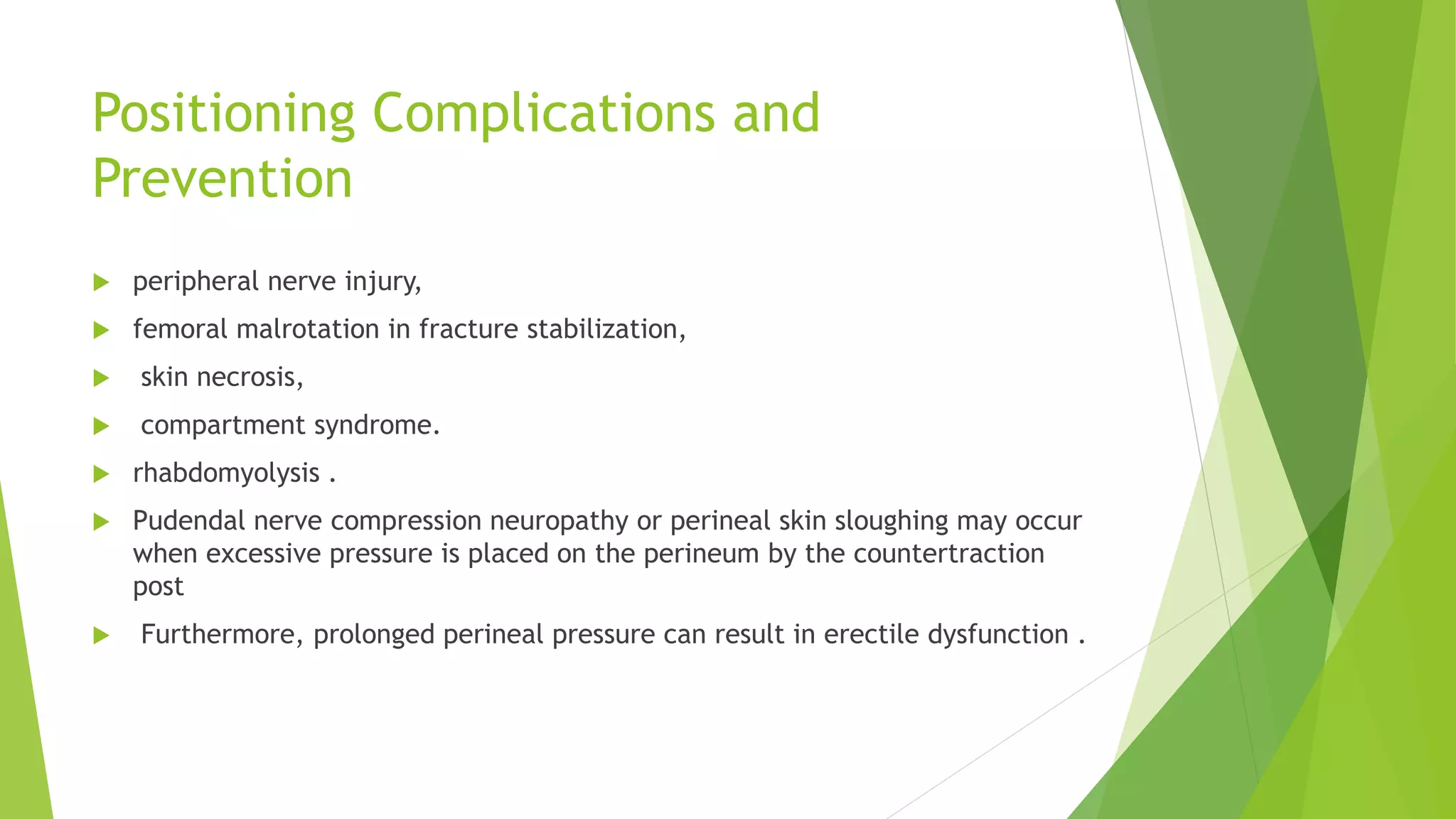
Proper Positioning
 The patient should be anesthetized on the bed prior to transfer onto the fracture
table.
 The patient is then moved and positioned onto the fracture table.
 A well-padded (often radiolucent) perineal post is placed with care to avoid
undue pressure on the perineum.
 In the supine or prone position, the feet are padded and secured in traction boots
with the legs scissored or the normal leg can be positioned in the hemilithotomy
position
 If the patient is placed laterally, traction of the operatively treated leg is often
accomplished via a tibial or femoral traction pin that is secured into a traction
bow on the table.
 The normal leg is then abducted slightly and scissored to allow for C-arm
fluoroscopy
Positioning Complications and
Prevention
 peripheral nerve injury,
 femoral malrotation in fracture stabilization,
 skin necrosis,
 compartment syndrome.
 rhabdomyolysis .
 Pudendal nerve compression neuropathy or perineal skin sloughing may occur
when excessive pressure is placed on the perineum by the countertraction
post
 Furthermore, prolonged perineal pressure can result in erectile dysfunction .
 These complications are best prevented
 by adequate padding, release of traction when no longer
required, and/or periodic release of traction
intraoperatively.
 Malposition of the perineal post with the patient in the
lateral position can result in traumatic rhabdomyolysis,
which presents clinically as anuria and respiratory
distress. This is avoided by accurate post placement and
sufficient padding.
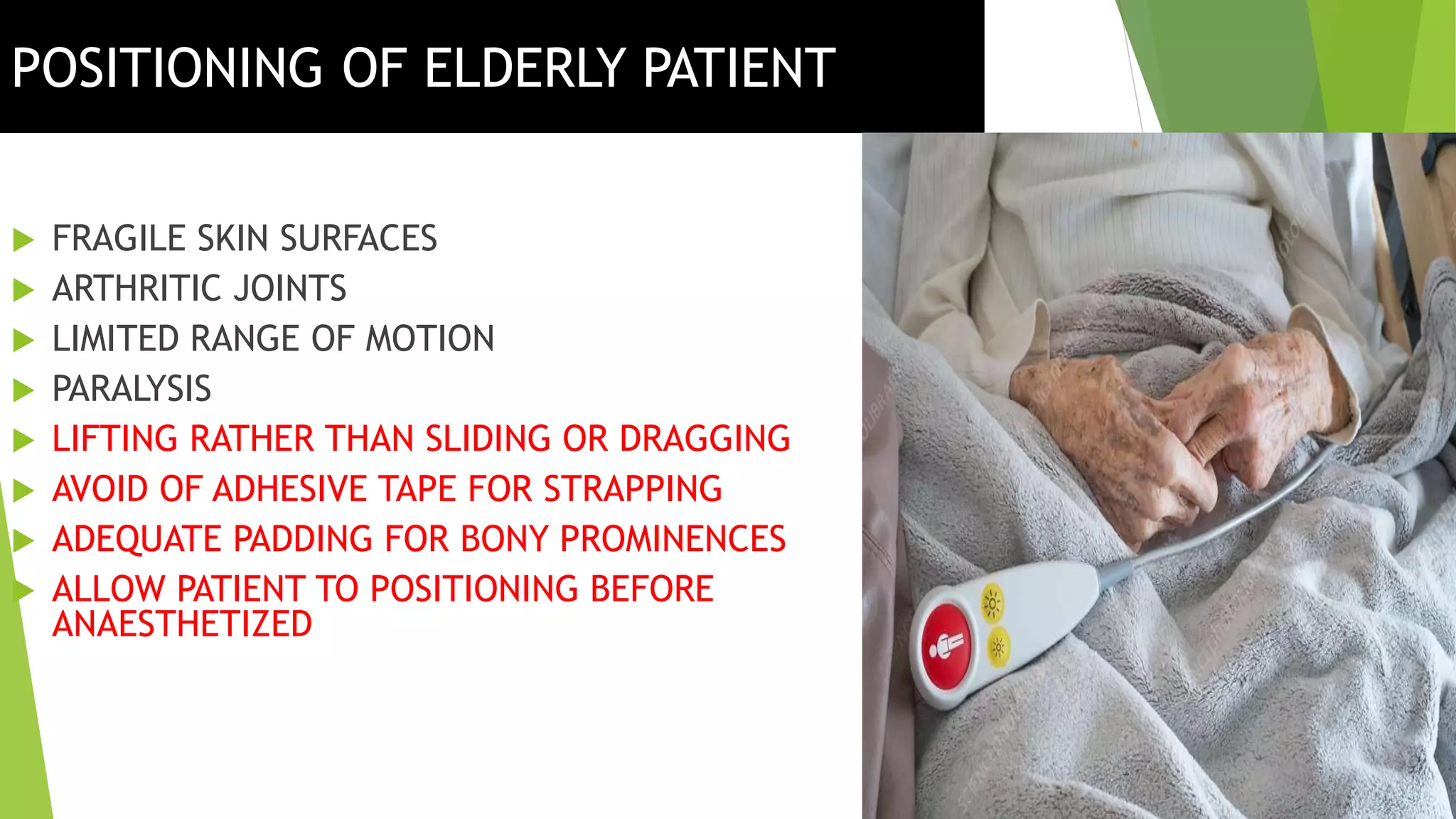
POSITIONING OF ELDERLY PATIENT
 FRAGILE SKIN SURFACES
 ARTHRITIC JOINTS
 LIMITED RANGE OF MOTION
 PARALYSIS
 LIFTING RATHER THAN SLIDING OR DRAGGING
 AVOID OF ADHESIVE TAPE FOR STRAPPING
 ADEQUATE PADDING FOR BONY PROMINENCES
 ALLOW PATIENT TO POSITIONING BEFORE
ANAESTHETIZED
The Obese Patient
 The operative table should be rated to handle
the weight of the patient.
 it is possible to place two tables side by side in
opposite orientations
 Alternatively,tables may be placed side by side in
a slightly staggered position. The tables are
secured together with a strap or tape.
 Excess adipose tissue can make osseous
landmarks difficult to identify.
 Exposure problems can be combated
preoperatively by retracting soft tissues with
cloth tape or preparing a larger sterile field.
The Obese Patient
 The lateral decubitus position for hip and lower extremity surgery is an excellent
choice for obese patients because it allows for displacement of the soft tissue,
furthermore, this position allows for greater access to the hip and thigh as tissue
is displaced by gravity.
 The use of additional assistants should be considered for retraction or handling of
instruments.
 Increased body mass creates a deeper surgical field, and headlamps or extended
instruments should be utilized when appropriate
Positioning Complications in obese patient
 pressure ischemia-related complications
 peroneal compartment syndrome
 Brachial plexus palsies
 gluteal compartment syndrome with resultant sciatic nerve palsy
 Anterior interosseous nerve palsy.
 It has also been reported that perioperative ulnar nerve palsy occurs more frequently in
obese patients
 The placement of adequate padding is necessary to avoid these complications, which may
require the assistance of additional operative personnel to properly maneuver and position
the patient during placement.
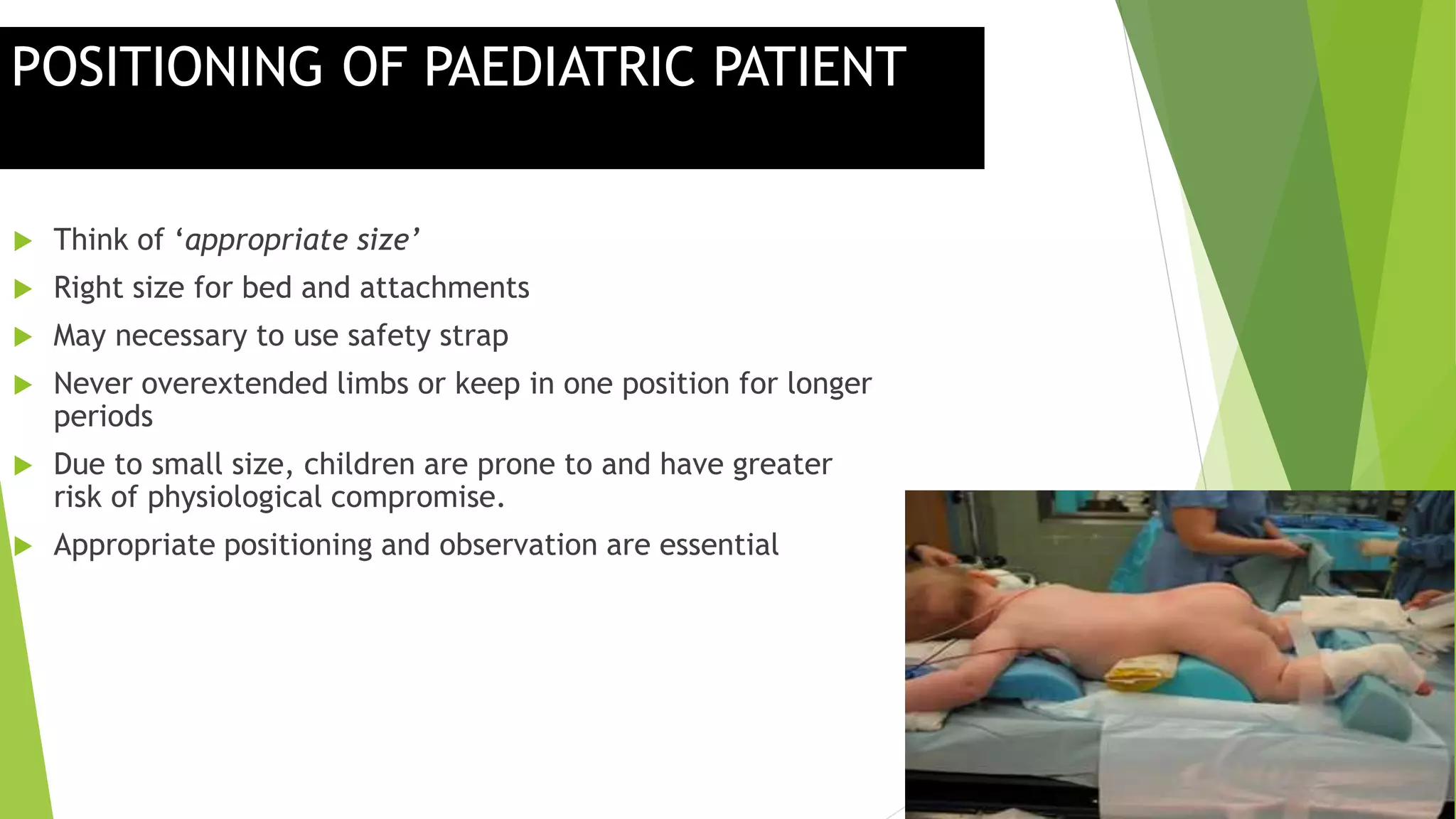
POSITIONING OF PAEDIATRIC PATIENT
 Think of ‘appropriate size’
 Right size for bed and attachments
 May necessary to use safety strap
 Never overextended limbs or keep in one position for longer
periods
 Due to small size, children are prone to and have greater
risk of physiological compromise.
 Appropriate positioning and observation are essential
Pressure Ulcers
 Pressure ulcers occur when external pressure exceeds the normal capillary filling pressure of approximately
32 mmHg. Local blood flow is occluded, which causes tissue ischemia and subsequent necrosis.
risk factors
1. Long procedure time
2. Diabetes
3. Elderly
4. Malnutrition
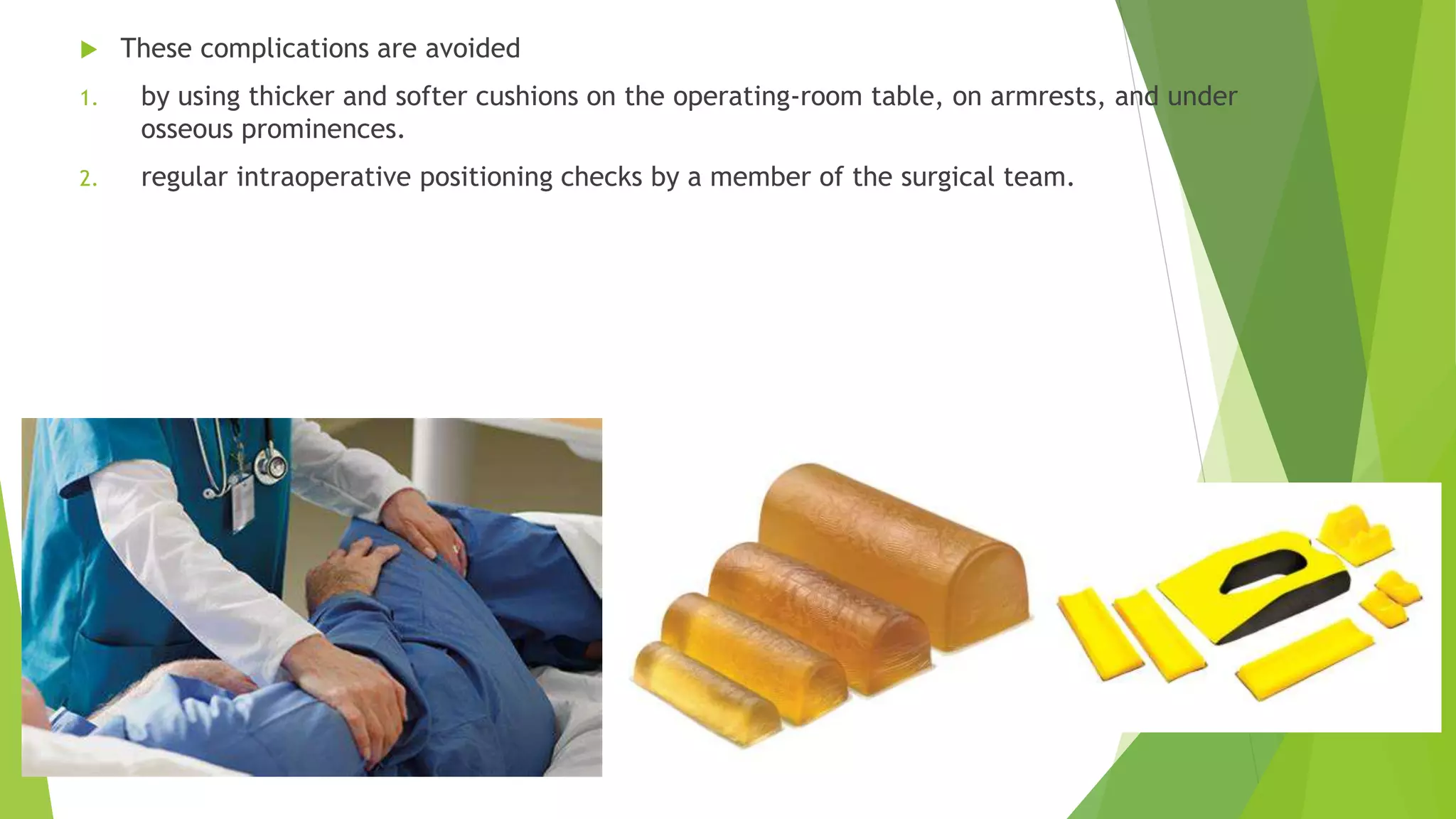
 These complications are avoided
1. by using thicker and softer cushions on the operating-room table, on armrests, and under
osseous prominences.
2. regular intraoperative positioning checks by a member of the surgical team.
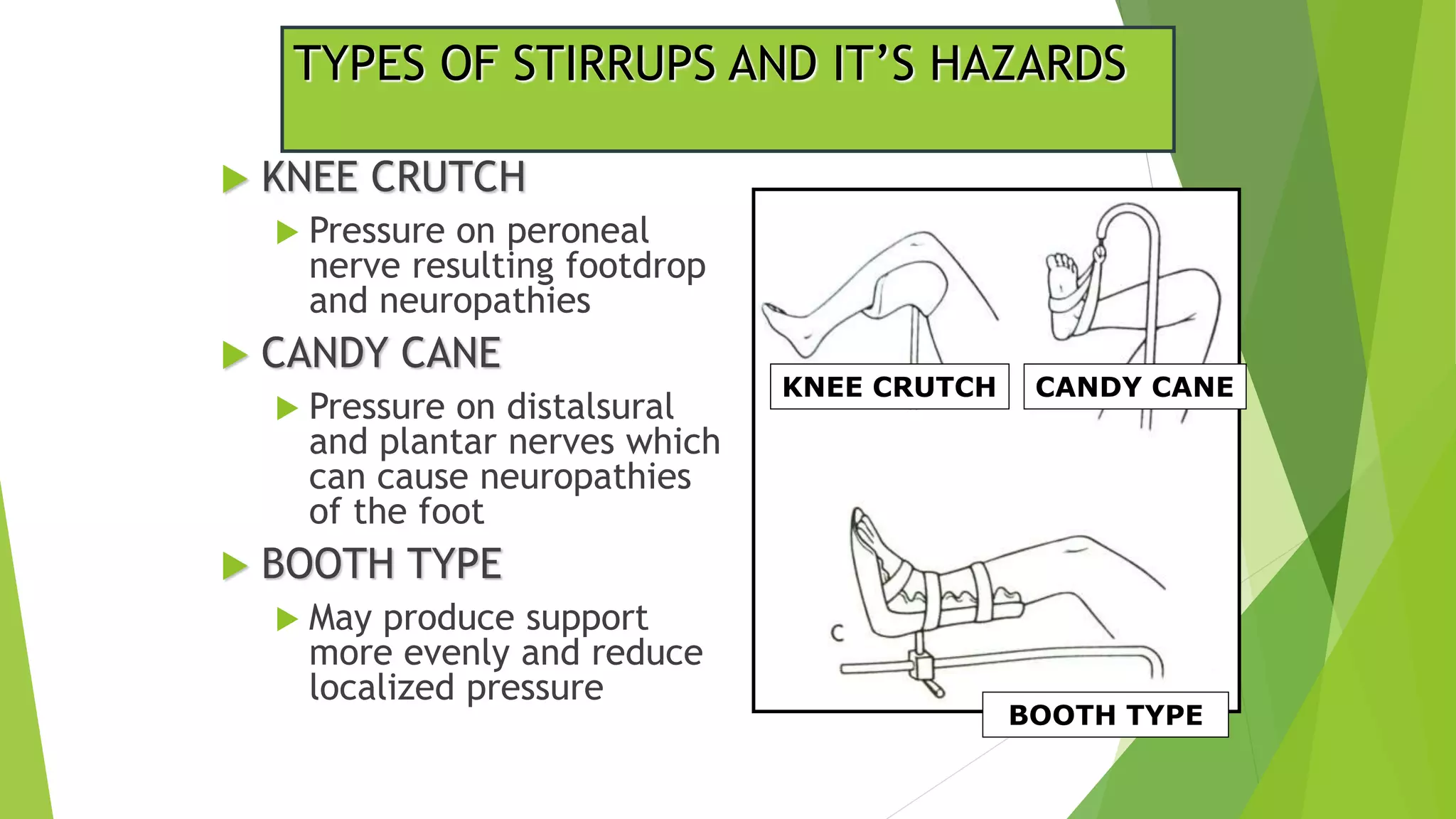
TYPES OF STIRRUPS AND IT’S HAZARDS
 KNEE CRUTCH
 Pressure on peroneal
nerve resulting footdrop
and neuropathies
 CANDY CANE
 Pressure on distalsural
and plantar nerves which
can cause neuropathies
of the foot
 BOOTH TYPE
 May produce support
more evenly and reduce
localized pressure
KNEE CRUTCH
BOOTH TYPE
CANDY CANE
patient positioning in operative room.pptx

patient positioning in operative room.pptx

  • 1.
    Patient positioning inoperative room Mohsin Yeshar Ali Iraqi Board Trainee Medical city complex
  • 2.
    Introduction  The orthopaedicsurgeon is responsible for the well-being of the whole patient, not just the limb or spinal segment undergoing surgery.  Proper patient positioning is an often overlooked, yet critical, step in surgical preparation.  In addition to providing adequate exposure during the procedure, careful positioning can minimize the risk of perioperative complications. Optimal positioning varies with the procedure being performed, the preference of the surgeon, and the body habitus of the patient.
  • 3.
    Matsen et al.4analyzed 464 closed malpractice claims in orthopaedic surgery and described a total of twenty-four malpractice cases, including patients being dropped, skin ulceration, and failure to protect structures outside the surgical field.
  • 4.
    AIM AND OBJECTIVES •To provide knowledge on common surgical position of patient in during surgery • To identify and develop awareness of potential complication in patient positioning • To practice measure to avoid injuries and others complication to patient during surgery • To promote safety and safe guarding patient well- being during intra-operative period
  • 5.
    The goals ofpatient positioning include • providing exposure of the surgical site. • maintaining the patient’s comfort and privacy. • providing access to intravenous (IV) lines and monitoring equipment. • allowing for optimal ventilation by maintaining a patent airway and avoiding constriction or pressure on the chest or abdomen. • maintaining circulation and protecting muscles, nerves, bony prominences, joints, skin, and vital organs from injury. • observing and protecting fingers, toes, and genitals; and • stabilizing the patient to prevent unintended shifting or movement.
  • 6.
    UNDERSTANDING BODILY SYSTEM INTEGUMENTARY SYSTEM  Forces include pressure, shear, friction and maceration  VASCULAR SYSTEM  Dilation of peripheral vessels lead to drop in BP  Venous compression predispose to thrombosis  NERVOUS SYSTEM  CNS depression due to anaesthetic drugs  Pressure on nerves may lead to temporary or permanent damage
  • 7.
    UNDERSTANDING BODILY SYSTEM RESPIRATORY SYSTEM Alteration in diaphragmatic movements and lung expansion Inadequate tissue oxygenation and perfusion  MUSCULOSKELETAL SYSTEM May resulted in joint damage, muscle stretch, strain and dislocation Potential of pressure formation
  • 8.
    BONY PROMINENCES  Occiput Peri - orbital arch  Zygomatic Arch  Mastoid region  Acromion process  Scapulae  Thoracic vertebrae  Iliac crest  Greater trochanter  Medial or lateral femoral epicondyles  Tibial condyles  Malleolus  Olecranon  Sacrum and coccyx  Patella  Calcaneus
  • 9.
    ASSOCIATED RISK PATIENTFACTOR  ADVANCED AGE  NUTRITIONAL STATUS  RESPIRATORY DISORDER  CIRCULATORY DISEASE  OBESE PATIENT  CHRONIC IMMOBILITY  PRESCRIBED MEDICATIONS  UNDERLYING MEDICAL PROBLEMS  NATURE OF SURGERY
  • 10.
    ASSESSMENT  The teamshould assess the following prior to positioning of the patient: • Procedure length • Surgeon’s preference of position • Required position for procedure • Anesthesia to be administered • Patient’s risk factors • age, weight, skin condition, mobility/limitations, pre-existing conditions, etc. • Patient’s privacy and medical needs • Basics of anatomy & physiology
  • 11.
    Team Responsibilities  Physician:-Optimal procedural exposure  Anesthesia: -Physiologic requirements , Position timing  Nursing: -Safe transfer using adequate personnel -Use of adequate padding and positioning aids -Provide an ongoing assessment
  • 12.
    1. Supine position supine position has many advantages including ease of access to the extremities, familiarity of the position among most operating-room teams, and swift setup time—particularly for multiply injured patients
  • 13.
    Proper Positioning (SUPINE) The patient can move independently or be transferred onto the operative table with a roller or sliding board.  It is important to ensure that no wrinkles are present in the underlying sheets, blankets, or bumps.  The head is maintained in a neutral position on a rest or pillow.  Arms are secured to padded arm boards, which are positioned in <90° of shoulder abduction  Elbows are held in <90° of flexion.  All osseous prominences should be well padded
  • 14.
  • 15.
     When positoningthe patent supine, the patent’s arms should be • tucked at the sides with a draw sheet; • secured at the sides with arm guards; • flexed and secured across the body; or • extended on arm boards, abducted less than 90 degrees.
  • 16.
     Positoning interventonsfor the lower body in the supine positon include • supportng the patent’s lumbosacral area with a pillow or pad, • flexing the patent’s knees 5 to 10 degrees (eg, by placing a soft pillow under the knees), • placing a safety strap approximately two inches above the patent’s knees, • keeping the patent’s ankles uncrossed, and • elevatng the patent’s heels off the underlying surface
  • 17.
    Positioning Complications and Prevention Lateral rotation of the head intraoperatively places the brachial plexus under increased traction  Peripheral nerve injuries are best prevented by securing a neutral head position and ensuring that arms are not placed into abduction of > 90°.  The ulnar nerve is most commonly injured.  Proper positioning of the upper extremities minimizes pressure in the ulnar groove.  Flexion of the elbow should not be >90°, and the forearm should be neutral or slightly supinated. This position helps to avoid compression at the cubital tunnel by the retinaculum.
  • 18.
    2. PRONE POSITION Themain indication for the prone position is posterior spinal surgery; however, it is also utilized for procedures that require access to the posterior aspect of the extremities.
  • 19.
     Proper Positioning Correctprone positioning is critical to prevent associated complications A. An adequate number of assistants, usually three or four, is necessary to safely roll the patient onto the operating table. B. The patient should be rotated slowly, with arms at the sides, from supine to lateral to prone. C. The head and neck should be maintained in a neutral alignment. D. Several devices are available for safely supporting the face while minimizing pressure on the forehead, eyes, and chin.
  • 20.
    C. The patient’sarms can either be placed onto padded arm boards in £90° of shoulder abduction or secured against the sides of the body. D. A well-padded roll should be placed under the thorax and pelvis. These rolls aid ventilation by allowing the abdomen to rest freely without excessive pressure. E. Osseous prominences are well padded. The patient may be tilted into slight reverse Trendelenburg (10° to 15°), which decreases intraocular pressure and facial edema. F. Make sure the patient’s breasts, abdomen, and genitals are free from torsion or pressure
  • 21.
  • 22.
     Positioning Complications 1Dropping the patient during transport, 2. loss of airway or vascular access, 3. pressure necrosis of skin, nipple ischemia, 4. inferior vena cava compression, 5. compartment syndrome, 6. corneal abrasion, ischemic optic neuropathy, central retinal artery occlusion, 7. peripheral nerve injury 8. increased bleeding in the surgical field 9. increase the risk of acute kidney injury
  • 23.
    Prevention of thesecomplications is best accomplished by  avoiding excessive blood loss  improperly positioned headrests  and arm abduction of<90°.  The arms of the patient should rest slightly lower than the level of the table  excessive shoulder extension should be avoided.  Meticulous hemostasis should be sought and supplemented by replacement of intravascular fluids to maintain adequate blood pressure throughout the case.  Direct pressure to the eyes should be avoided with a proper-fitting, well-padded face rest.
  • 24.
    3. Lateral Position commonly used for procedures that involve the hip or shoulder. In this position, the patient is placed on the nonoperative side (eg, for a left total hip arthroplasty, the patient would be placed in the right lateral position).
  • 25.
    Proper positioning  Keeppatients in the lateral position for the shortest period of time possible.  Reposition patients at facility-established intervals to decrease the risk of compartment syndrome.  Place a pillow or head positioner under the patient’s head.  Monitor the dependent ear to make sure it is not folded.  Position the patient’s arms on two levels, parallel arm boards with one arm on each board and both abducted less than 90 degrees.  Maintain the patient’s physiological spinal alignment.  Place a safety restraint across the patient’s hips.  Flex the patient’s dependent leg at the hip and knee while keeping the upper leg straight and a pillow placed between the legs.  Pad the dependent knee, foot, and ankle.
  • 26.
     Patients areat risk for injury because of the  pressure exerted on the dependent side. At-risk areas are the ear, elbow, shoulder, iliac crest, hip, knee, and ankle.  This position also puts patients at risk for compartment syndrome and rhabdomyolysis Wijesuriya et al reported a case of a 20-year-old male Patient who developed deltoid compartment syndrome that recquired fasciotomy.
  • 27.
    4. Beach Chairposition  This position is used for orthopedic procedures that require access to the shoulder (eg, shoulder arthroscopy ,proximal humerus sx).  One advantage of this position for shoulder surgery is that if the procedure is being performed laparoscopically, it gives the surgeon an option to convert the procedure to an anterior open approach more easily than if the patient was positioned laterally.
  • 28.
    Proper positioning  Thepatient is placed on a standard or beach- chair table in the supine position.  The head, neck, and torso should be supported in a neutral position and stabilized by straps or other attachments.  The thorax and trunk are positioned and secured at the edge of the table on the same side as the involved arm.
  • 29.
     .The patientis tilted back into 10° to 15° of Trendelenburg position.  Hips are flexed to 45° to 60°,and knees are flexed to30° with padding placed beneath.  Care should be taken to pad all pressure points.  The contralateral, normal arm is secured to a padded arm board or is placed in a sling.  A sterile arm-positioning device may be used to support the operatively treated arm for ease of positioning..
  • 30.
    Positioning Complications 1. hypotensivebradycardic events, Hypotensive bradycardic events are best prevented by aggressive treatment of fluid deficits and blood loss, by avoiding the use of anesthetics containing epinephrine, and by utilizing intraoperative beta-blockers 2. venous air embolism, 3. hypoglossal nerve palsy, and neurapraxia of cutaneous nerves of the cervical plexus 4. hyperextension or rotation of the head can decrease vertebral artery blood flow, which exacerbates infarcts of the posterior cerebral circulation This can be prevented by securing the head and neck in a properly stabilized, neutral position
  • 31.
    Fracture Table orTraction Table  Fracture or traction tables are frequently used for fixation of hip and thigh fractures, anterior hip arthroplasty, and hip arthroscopy.  Patient positioning can vary depending on the model of fracture table, procedure being performed, and surgeon preference; thus, patients can be placed in the supine, lateral, or prone position
  • 32.
    Fracture Table orTraction Table Proper Positioning  The patient should be anesthetized on the bed prior to transfer onto the fracture table.  The patient is then moved and positioned onto the fracture table.  A well-padded (often radiolucent) perineal post is placed with care to avoid undue pressure on the perineum.  In the supine or prone position, the feet are padded and secured in traction boots with the legs scissored or the normal leg can be positioned in the hemilithotomy position  If the patient is placed laterally, traction of the operatively treated leg is often accomplished via a tibial or femoral traction pin that is secured into a traction bow on the table.  The normal leg is then abducted slightly and scissored to allow for C-arm fluoroscopy
  • 33.
    Positioning Complications and Prevention peripheral nerve injury,  femoral malrotation in fracture stabilization,  skin necrosis,  compartment syndrome.  rhabdomyolysis .  Pudendal nerve compression neuropathy or perineal skin sloughing may occur when excessive pressure is placed on the perineum by the countertraction post  Furthermore, prolonged perineal pressure can result in erectile dysfunction .
  • 34.
     These complicationsare best prevented  by adequate padding, release of traction when no longer required, and/or periodic release of traction intraoperatively.  Malposition of the perineal post with the patient in the lateral position can result in traumatic rhabdomyolysis, which presents clinically as anuria and respiratory distress. This is avoided by accurate post placement and sufficient padding.
  • 35.
    POSITIONING OF ELDERLYPATIENT  FRAGILE SKIN SURFACES  ARTHRITIC JOINTS  LIMITED RANGE OF MOTION  PARALYSIS  LIFTING RATHER THAN SLIDING OR DRAGGING  AVOID OF ADHESIVE TAPE FOR STRAPPING  ADEQUATE PADDING FOR BONY PROMINENCES  ALLOW PATIENT TO POSITIONING BEFORE ANAESTHETIZED
  • 36.
    The Obese Patient The operative table should be rated to handle the weight of the patient.  it is possible to place two tables side by side in opposite orientations  Alternatively,tables may be placed side by side in a slightly staggered position. The tables are secured together with a strap or tape.  Excess adipose tissue can make osseous landmarks difficult to identify.  Exposure problems can be combated preoperatively by retracting soft tissues with cloth tape or preparing a larger sterile field.
  • 37.
    The Obese Patient The lateral decubitus position for hip and lower extremity surgery is an excellent choice for obese patients because it allows for displacement of the soft tissue, furthermore, this position allows for greater access to the hip and thigh as tissue is displaced by gravity.  The use of additional assistants should be considered for retraction or handling of instruments.  Increased body mass creates a deeper surgical field, and headlamps or extended instruments should be utilized when appropriate
  • 38.
    Positioning Complications inobese patient  pressure ischemia-related complications  peroneal compartment syndrome  Brachial plexus palsies  gluteal compartment syndrome with resultant sciatic nerve palsy  Anterior interosseous nerve palsy.  It has also been reported that perioperative ulnar nerve palsy occurs more frequently in obese patients  The placement of adequate padding is necessary to avoid these complications, which may require the assistance of additional operative personnel to properly maneuver and position the patient during placement.
  • 39.
    POSITIONING OF PAEDIATRICPATIENT  Think of ‘appropriate size’  Right size for bed and attachments  May necessary to use safety strap  Never overextended limbs or keep in one position for longer periods  Due to small size, children are prone to and have greater risk of physiological compromise.  Appropriate positioning and observation are essential
  • 40.
    Pressure Ulcers  Pressureulcers occur when external pressure exceeds the normal capillary filling pressure of approximately 32 mmHg. Local blood flow is occluded, which causes tissue ischemia and subsequent necrosis. risk factors 1. Long procedure time 2. Diabetes 3. Elderly 4. Malnutrition
  • 41.
     These complicationsare avoided 1. by using thicker and softer cushions on the operating-room table, on armrests, and under osseous prominences. 2. regular intraoperative positioning checks by a member of the surgical team.
  • 42.
    TYPES OF STIRRUPSAND IT’S HAZARDS  KNEE CRUTCH  Pressure on peroneal nerve resulting footdrop and neuropathies  CANDY CANE  Pressure on distalsural and plantar nerves which can cause neuropathies of the foot  BOOTH TYPE  May produce support more evenly and reduce localized pressure KNEE CRUTCH BOOTH TYPE CANDY CANE