PATHOPHYSIOLOGY OF
AUB
Rajakumar N
Roll no 98
Normal menstrual hemostasis
• Localised vasoconstriction mediated by
prostaglandin F2α
• Platelet aggregation
• Platelet plug formation with fibrin
• Endometrial regeneration following
menstruation
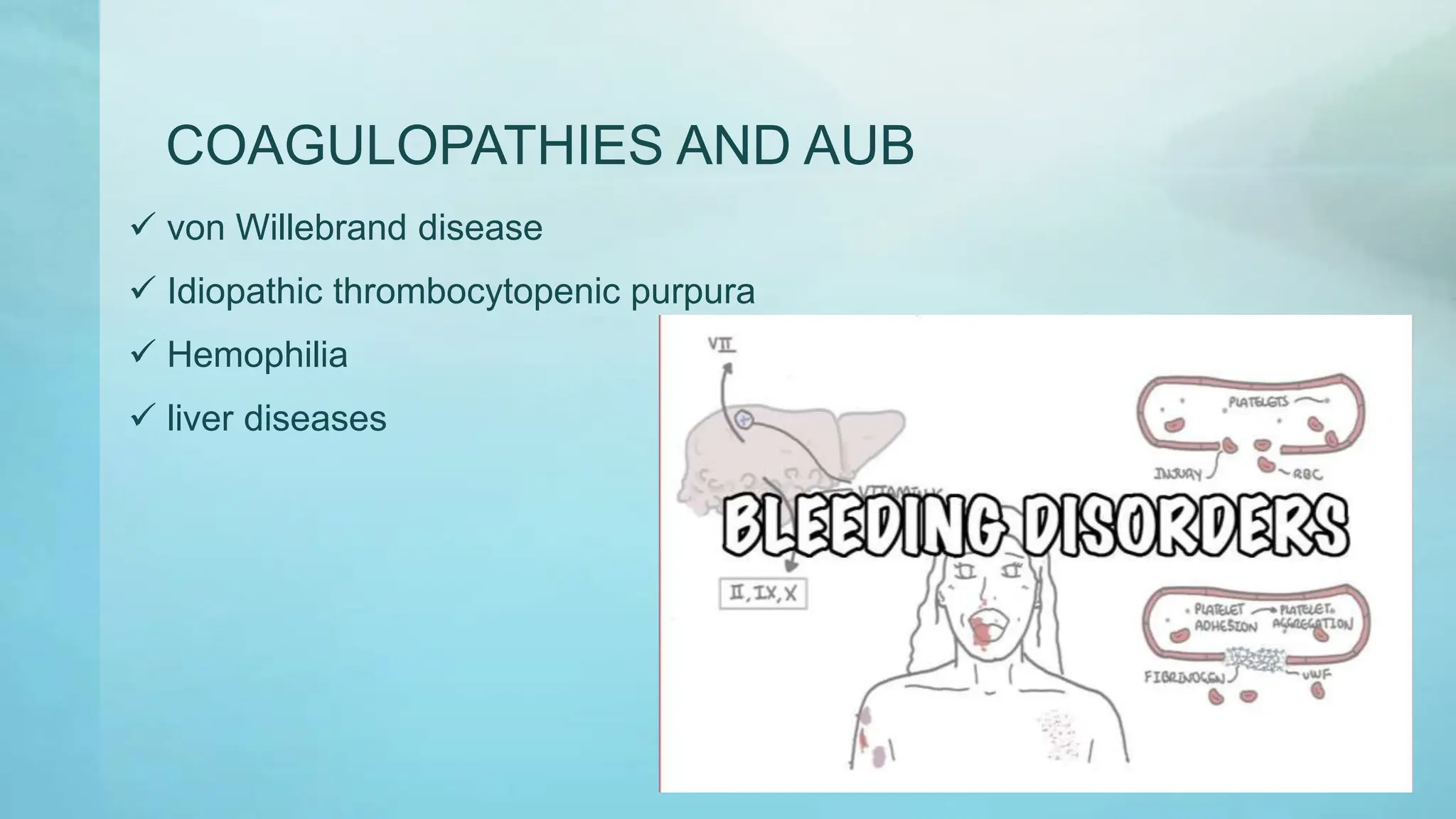
COAGULOPATHIES AND AUB
 von Willebrand disease
 Idiopathic thrombocytopenic purpura
 Hemophilia
 liver diseases
OVULATORY DYSFUNCTION AND AUB
OVULATORY BLEEDING (
20%)
ANOVULATORY BLEEDING ( 80%)
IRREGULAR RIPENING OF
ENDOMETRIUM
IRREGULAR SHEDDING OF
ENDOMETRIUM
IRREGULAR SHEDDING
• HALBAN DISEASE
• Persistent corpus luteum in absence of
pregnancy
• Endometrial shedding is continued for a
variable period with simultaneous failure
of endometrial regeneration
• Menstruation comes on time , but
prolonged and not heavy
• Progestogen suppress bleeding but it
need to be taken in tapering dose for 20
days to complete the cycle
IRREGULAR RIPENING
• Ovulatory bleeding due to deficient corpus luteal function
• Secretion of both estrogen and progesterone is inadequate to
support the endometrial growth
• Breakthrough bleeding occurs before actual menstruation in form of
spotting or brownish discharge
• Progestogen given during late luteal phase cures spotting
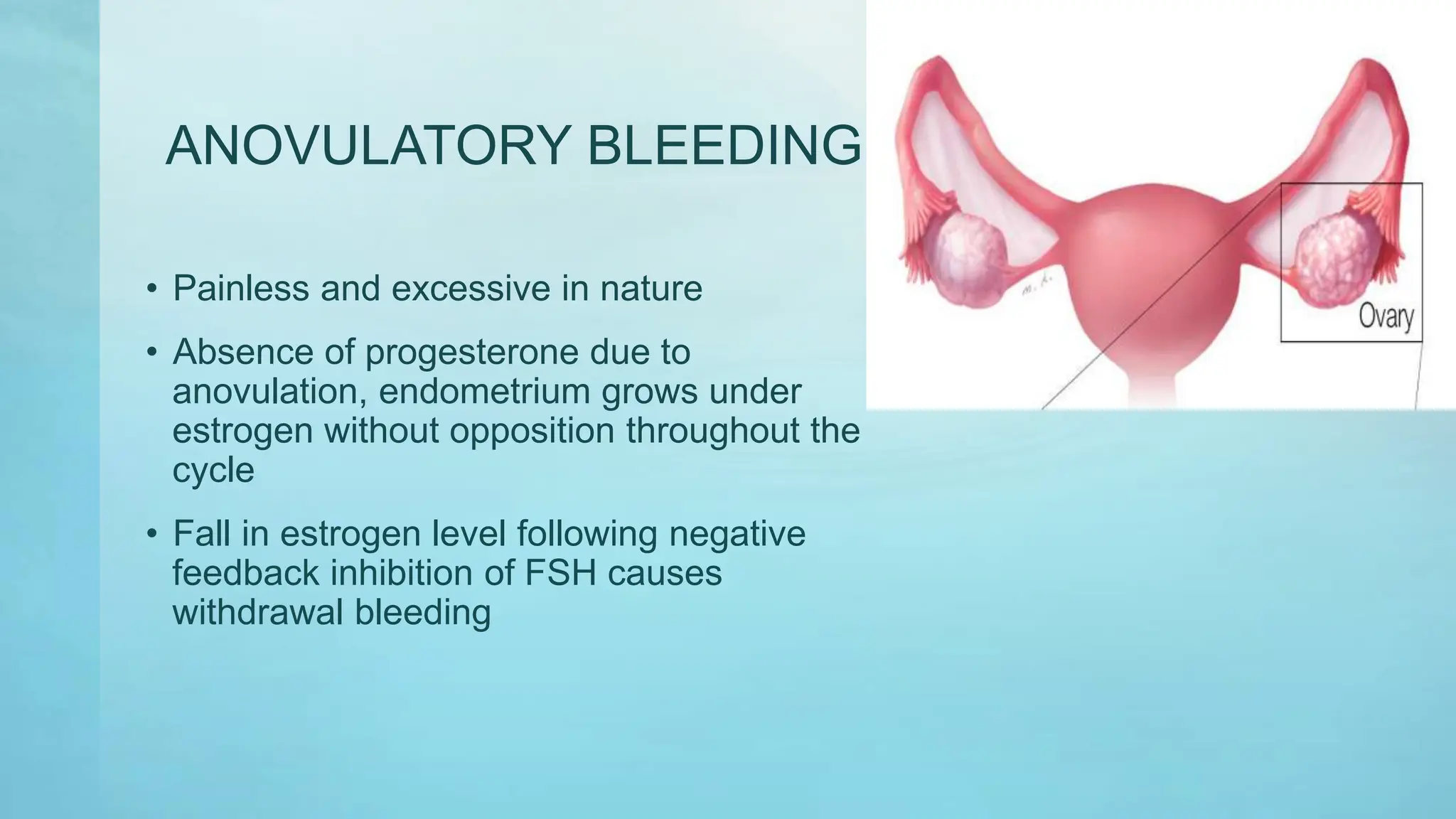
ANOVULATORY BLEEDING
• Painless and excessive in nature
• Absence of progesterone due to
anovulation, endometrium grows under
estrogen without opposition throughout the
cycle
• Fall in estrogen level following negative
feedback inhibition of FSH causes
withdrawal bleeding
METROPATHIA HAEMORRHAGICA
 Metropathia haemorrhagica is a specialised form of anovulatory AUB between
40 and 45 years
 Continuous painless vaginal bleeding sometimes starting at the menses, or
preceded by 6 – 8 weeks of amenorrhoea or preceded by menorrhagia
Pathology:
1. Mild hyperplasia up to 25mm
2. Endometrium is thick, polypoidal and thin polypi projects into uterine cavity
3. Swiss cheese appearance – cystic glandular hyperplasia of endometrium
4. Absence of secretory endometrium with absence of cork screw glands
5. One or both ovaries may contain a cyst not larger than 5 cm but corpus
luteum is absent
SWISS CHEESE PATTERN
ENDOMETRIAL AUB ( AUB – E )
• Defect in local endometrial hemostasis secondary to abnormal
secretion of prostaglandins
• In rare cases, it is due to tubercular endometritis , infections
particularly chlamydial infection
IATROGENIC AUB ( AUB – I )
 Intrauterine contraceptive devices like CU – T
 Progestogen only pills
 they may cause unscheduled breakthrough
bleeding
 Post tubal sterilization bleeding is found in 15%
of cases but exact etiology is unknown
Drugs like anticoagulants, phenothiazine, TCAs ,
Tamoxifen
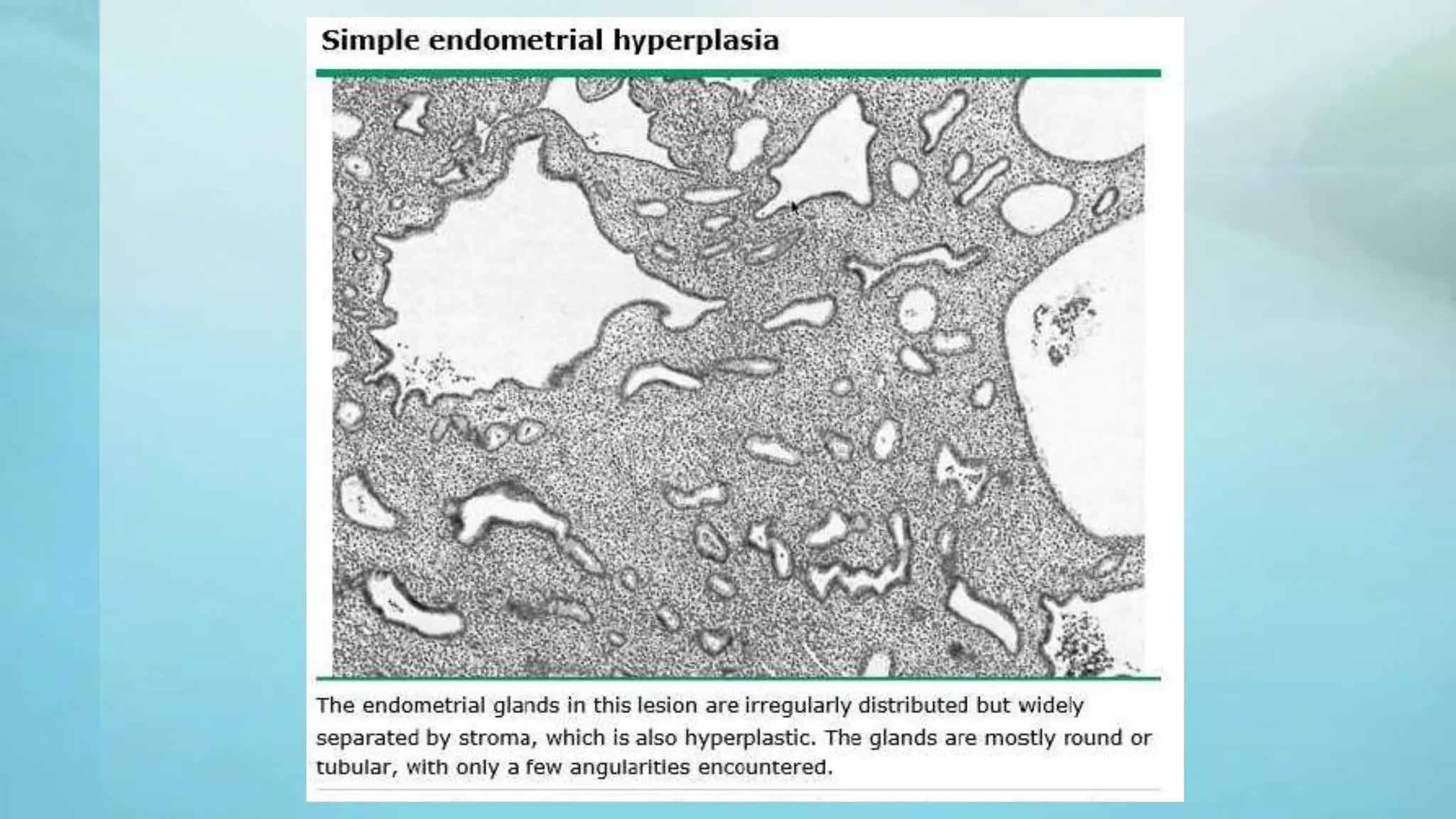
ENDOMETRIAL HYPERPLASIA
Associated with
• Anovulatory cycles
• Metropathia haemorrhagica
• Obesity
• PCOD
• Tamoxifen
• HRT without progestogen after menopause
• Feminizing tumors of ovary
• Endometrial hyperplasia in these conditions can be
1. simple hyperplasia
2. glandular hyperplasia
3. atypical
• High risk of association with endometrial carcinoma which may
also cause AUB
ADENOMATOUS ENDOMETRIAL POLYP
Associated with
1. endometrial hyperplasia in anovulatory
cycle
2. diffuse polyposis in metropathia
hemorrhagica
3. submucous myomatous polyp which is
pedunculated protruding into uterine cavity
or projects through external os of cervix
LEIOMYOMA
• Most commonly AUB is associated with
intramural / submucosal myoma
• Excessive aromatase activity causes
hyper-estrogenism
• Progressive menorrhagia is due to
increased vascularity and endometrial
hyperplasia
AUB - N
• A V malformations
• Varicose veins of uterine vessels
• Myohyperplasia
• Cervicitis
• Pelvic inflammatory disease
PATHOPHYSIOLOGY OF AUB.pptx

PATHOPHYSIOLOGY OF AUB.pptx

  • 1.
  • 2.
    Normal menstrual hemostasis •Localised vasoconstriction mediated by prostaglandin F2α • Platelet aggregation • Platelet plug formation with fibrin • Endometrial regeneration following menstruation
  • 3.
    COAGULOPATHIES AND AUB von Willebrand disease  Idiopathic thrombocytopenic purpura  Hemophilia  liver diseases
  • 4.
    OVULATORY DYSFUNCTION ANDAUB OVULATORY BLEEDING ( 20%) ANOVULATORY BLEEDING ( 80%) IRREGULAR RIPENING OF ENDOMETRIUM IRREGULAR SHEDDING OF ENDOMETRIUM
  • 5.
    IRREGULAR SHEDDING • HALBANDISEASE • Persistent corpus luteum in absence of pregnancy • Endometrial shedding is continued for a variable period with simultaneous failure of endometrial regeneration • Menstruation comes on time , but prolonged and not heavy • Progestogen suppress bleeding but it need to be taken in tapering dose for 20 days to complete the cycle
  • 6.
    IRREGULAR RIPENING • Ovulatorybleeding due to deficient corpus luteal function • Secretion of both estrogen and progesterone is inadequate to support the endometrial growth • Breakthrough bleeding occurs before actual menstruation in form of spotting or brownish discharge • Progestogen given during late luteal phase cures spotting
  • 7.
    ANOVULATORY BLEEDING • Painlessand excessive in nature • Absence of progesterone due to anovulation, endometrium grows under estrogen without opposition throughout the cycle • Fall in estrogen level following negative feedback inhibition of FSH causes withdrawal bleeding
  • 8.
    METROPATHIA HAEMORRHAGICA  Metropathiahaemorrhagica is a specialised form of anovulatory AUB between 40 and 45 years  Continuous painless vaginal bleeding sometimes starting at the menses, or preceded by 6 – 8 weeks of amenorrhoea or preceded by menorrhagia Pathology: 1. Mild hyperplasia up to 25mm 2. Endometrium is thick, polypoidal and thin polypi projects into uterine cavity 3. Swiss cheese appearance – cystic glandular hyperplasia of endometrium 4. Absence of secretory endometrium with absence of cork screw glands 5. One or both ovaries may contain a cyst not larger than 5 cm but corpus luteum is absent
  • 9.
  • 10.
    ENDOMETRIAL AUB (AUB – E ) • Defect in local endometrial hemostasis secondary to abnormal secretion of prostaglandins • In rare cases, it is due to tubercular endometritis , infections particularly chlamydial infection
  • 11.
    IATROGENIC AUB (AUB – I )  Intrauterine contraceptive devices like CU – T  Progestogen only pills  they may cause unscheduled breakthrough bleeding  Post tubal sterilization bleeding is found in 15% of cases but exact etiology is unknown Drugs like anticoagulants, phenothiazine, TCAs , Tamoxifen
  • 12.
    ENDOMETRIAL HYPERPLASIA Associated with •Anovulatory cycles • Metropathia haemorrhagica • Obesity • PCOD • Tamoxifen • HRT without progestogen after menopause • Feminizing tumors of ovary
  • 13.
    • Endometrial hyperplasiain these conditions can be 1. simple hyperplasia 2. glandular hyperplasia 3. atypical • High risk of association with endometrial carcinoma which may also cause AUB
  • 16.
    ADENOMATOUS ENDOMETRIAL POLYP Associatedwith 1. endometrial hyperplasia in anovulatory cycle 2. diffuse polyposis in metropathia hemorrhagica 3. submucous myomatous polyp which is pedunculated protruding into uterine cavity or projects through external os of cervix
  • 17.
    LEIOMYOMA • Most commonlyAUB is associated with intramural / submucosal myoma • Excessive aromatase activity causes hyper-estrogenism • Progressive menorrhagia is due to increased vascularity and endometrial hyperplasia
  • 18.
    AUB - N •A V malformations • Varicose veins of uterine vessels • Myohyperplasia • Cervicitis • Pelvic inflammatory disease