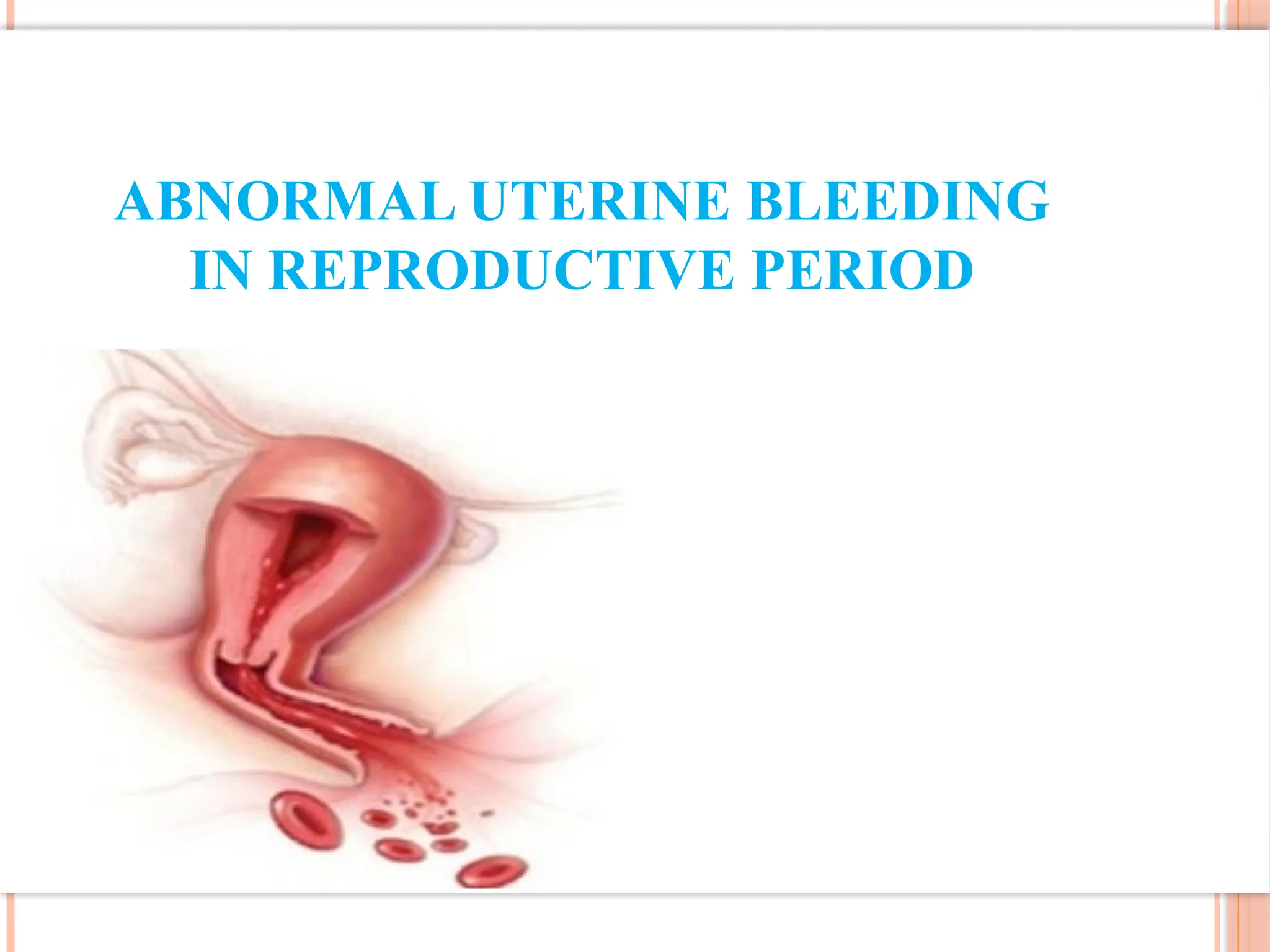
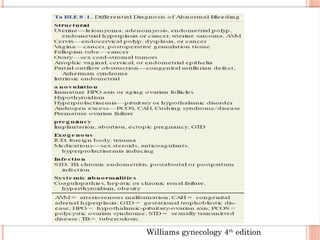
ABNORMAL UTERINE BLEEDING
IN REPRODUCTIVE PERIOD
INTRODUCTION
 Definition: bleeding from the uterine body that is abnormal in
frequency, duration and amount arising in the absence of
pregnancy.
 Worlwide prevalence : 3-30%
 The reasons for the wide spectrum of estimates are unclear but vary with
age, being higher in adolescents and in the fifth decade of life, and
varying somewhat with country of origin.
 Approximately one third of women are affected at some time in their life.
 In India, the prevalence of AUB is around 17.9%
FIGO., 2018
FOGSI, GCPR., 2016
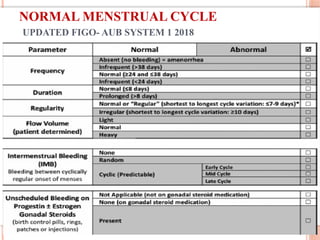
NORMAL MENSTRUAL CYCLE
UPDATED FIGO- AUB SYSTEM 1 2018
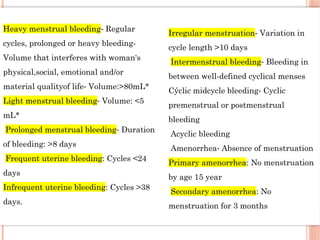
Heavy menstrual bleeding Regular
⁃
cycles, prolonged or heavy bleeding-
Volume that interferes with woman's
physical,social, emotional and/or
material qualityof life Volume:>80mL*
⁃
Light menstrual bleeding Volume: <5
⁃
mL*
Prolonged menstrual bleeding Duration
⁃
of bleeding: >8 days
Frequent uterine bleeding: Cycles <24
days
Infrequent uterine bleeding: Cycles >38
days.
Irregular menstruation Variation in
⁃
cycle length >10 days
Intermenstrual bleeding Bleeding in
⁃
between well-defined cyclical menses
Cýclic midcycle bleeding Cyclic
⁃
premenstrual or postmenstrual
bleeding
Acyclic bleeding
Amenorrhea Absence of menstruation
⁃
Primary amenorrhea: No menstruation
by age 15 year
Secondary amenorrhea: No
menstruation for 3 months
 Intermenstrual bleeding (IMB) occurs between clearly defined cyclical
and predictable menses.
 Such bleeding may occur at random times or may manifest in a
predictable fashion at the same day in each cycle.
 Heavy menstrual bleeding (HMB) , a symptom (not a diagnosis)
defined as excessive menstrual blood loss, which interferes with a
women’s physical, social, emotional and/or material quality of life.
(Definition proposed by UK National institute for health and care excellence and adopted by FIGO)
FIGO guidelines ., 2018
Pathophysiology
 Physiological mechanism of hemostasis in normal menstruation are:
• Platelet adhesion formation
• Formation of platelet plug with fibrin to seal the bleeding vessels
• Localized vasoconstriction
• Regeneration of endometrium
• Biochemical mechanisms involved are:
– Increased endometrial ratio of PGF2 a / PGE2. PGF2a causes vasoconstriction
– Progesterone increases the level of PGF2 a from arachidonic acid
– Endothelin (a powerful vasoconstrictor) is also increased.
– In anovulatory cycles there is decreased synthesis of PGF2 a and the ratio of PGF2 a /
PGE2 is low.
PG-F2alpha & thromboxane – vasoconstrictors
PGE2 & PGI2 - vasodilators
Infancy Prepubertal Adolescent Reproductive Perimenopausal Postmenopausal
Maternal
estrogen
withdrawal
Vulvovaginitis Anovulation Exogenous Anovulation Atrophy
Vaginal foreign
body
Exogenous
hormone
use
Pregnancy Fibroids Endometrial polyp
Precocious
puberty
Pregnancy Anovulation Polyps Endometrial
cancer
Tumor Coagulopat
hy
Fibroids Thyroid
dysfunction
Hormonal therapy
Polyps Other tumors:
vulvar, vaginal,
cervical
Thyroid
dysfunction
CAUSES OF AUB BY AGE GROUP
Berek $ Novak’s 16th
edition
ACUTE VERSUS CHRONIC NON-GESTATIONALAUB IN THE
REPRODUCTIVE YEARS
• CHRONIC AUB is defined as bleeding from the uterine corpus that is
abnormal in duration, volume, frequency and/ or regularity and has been
present for preceding 6 months.
• ACUTE AUB is defined as an episode of heavy bleeding that, in the opinion
of the clinician, is of sufficient quantity to require immediate intervention to
minimize or prevent further blood loss.
• Acute heavy menstrual bleeding may present in the context of existing chronic
AUB or can occur in the absence of such a background history.
FIGO guidelines ., 2018
FIGO Classification System for Causes
of Abnormal Uterine Bleeding in the
Reproductive Years
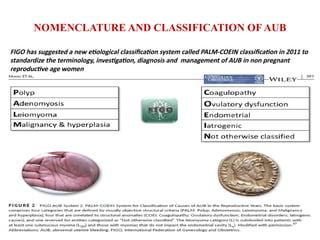
NOMENCLATURE AND CLASSIFICATION OF AUB
FIGO has suggested a new etiological classification system called PALM-COEIN classification in 2011 to
standardize the terminology, investigation, diagnosis and management of AUB in non pregnant
reproductive age women
AUB-P ; POLYPS (8-35 %)
• Endometrial polyp are soft, fleshy intrauterine growths, composed of
endometrial glands, fibrous stroma, and surface epithelium
• Most commonly found in reproductive-age Women
• Present with HMB, AUB, IMB or postcoital bleeding.
• The exact cause of polyps is unknown, but possible etiologies include genetic,
biochemical, and hormonal factors
• Estrogen and progesterone have been implicated in their growth, and higher
receptor levels are noted within polyps compared with adjacent normal
endometrium
• These hormones elongate endometrial glands, stromal tissue, and spiral arteries,
leading to the characteristic polypoid appearance.
Diagnosis
• The main diagnostic tools for endometrial polyp evaluation
TVS with color Doppler, SIS, and hysteroscopy.
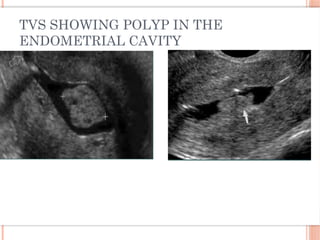
• TVS - endometrial polyp may appear as a nonspecific endometrial thickening
or as a round or elongated hyperechoic focal mass within the endometrial cavity.
• TVS can be augmented with color Doppler.
• Endometrial polyps typically have only one arterial feeding vessel, whereas
submucous leiomyomas generally received blood flow from several vessels
arising from the inner myometrium
Williams gynecology 4th
edition
TVS SHOWING POLYP IN THE
ENDOMETRIAL CAVITY
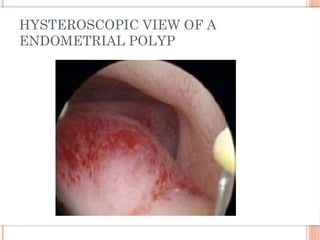
HYSTEROSCOPIC VIEW OF A
ENDOMETRIAL POLYP
AUB –A ADENOMYOSIS
 Prevalence of adenomyosis varies widely, ranging from 5 % to 70 %
 It is defined as growth of endometrial tissue in the myometrium
(beneath the endometrial myometrial junction)
 It is difficult to accurately determine the incidence of adenomyosis since the
diagnosis can only be made with certainty by microscopic examination of the
uterus
 Gold standard for the diagnosis of adenomyosis - histological examination -
presence of endometrial tissue more than 2.5 mm below the endomyometrial
junction or a junctional zone thickness of more than 12 mm
INVESTIGATIONS
 The diagnosis can be made on the basis of sonographic findings.
 The sonographic appearance of adenomyosis is partly related to the absolute
presence of heterotopic endometrial tissue in the myometrium and partly due to the
myometrial hypertrophy.
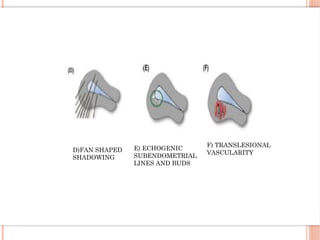
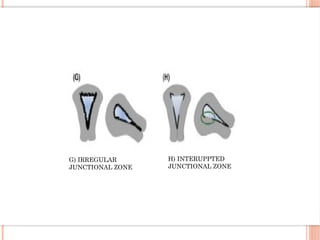
 MUSA – Morphological Uterus Sonographic Assesment group suggest eight
criteria based on transvaginal sonography for the diagnosis of AUB-A Presence
of 2 or more of these diagnostic criteria are highly suggestive of diagnosis of
adenomyosis
FIGO guidelines ., 2018
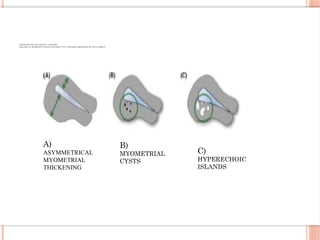
ADENOMYOSIS DIAGNOSTIC CRITERIA
GRAPHICAL REPRESENTATIONS OF EIGHT TVUS CRITERIA PROPOSED BY MUSA GROUP
A)
ASYMMETRICAL
MYOMETRIAL
THICKENING
B)
MYOMETRIAL
CYSTS
C)
HYPERECHOIC
ISLANDS
E) ECHOGENIC
SUBENDOMETRIAL
LINES AND BUDS
F) TRANSLESIONAL
VASCULARITY
D)FAN SHAPED
SHADOWING
G) IRREGULAR
JUNCTIONAL ZONE
H) INTERUPPTED
JUNCTIONAL ZONE
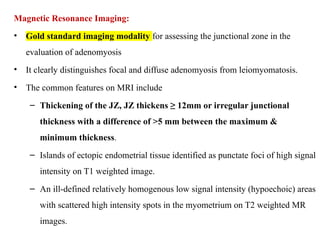
Magnetic Resonance Imaging:
• Gold standard imaging modality for assessing the junctional zone in the
evaluation of adenomyosis
• It clearly distinguishes focal and diffuse adenomyosis from leiomyomatosis.
• The common features on MRI include
– Thickening of the JZ, JZ thickens ≥ 12mm or irregular junctional
thickness with a difference of >5 mm between the maximum &
minimum thickness.
– Islands of ectopic endometrial tissue identified as punctate foci of high signal
intensity on T1 weighted image.
– An ill-defined relatively homogenous low signal intensity (hypoechoic) areas
with scattered high intensity spots in the myometrium on T2 weighted MR
images.
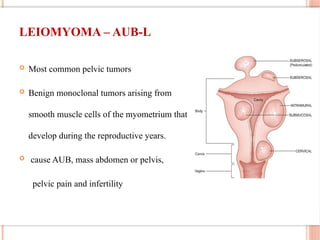
LEIOMYOMA – AUB-L
 Most common pelvic tumors
 Benign monoclonal tumors arising from
smooth muscle cells of the myometrium that
develop during the reproductive years.
 cause AUB, mass abdomen or pelvis,
pelvic pain and infertility
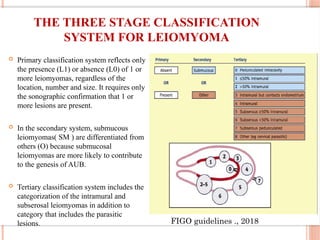
THE THREE STAGE CLASSIFICATION
SYSTEM FOR LEIOMYOMA
 Primary classification system reflects only
the presence (L1) or absence (L0) of 1 or
more leiomyomas, regardless of the
location, number and size. It requires only
the sonographic confirmation that 1 or
more lesions are present.
 In the secondary system, submucous
leiomyomas( SM ) are differentiated from
others (O) because submucosal
leiomyomas are more likely to contribute
to the genesis of AUB.
 Tertiary classification system includes the
categorization of the intramural and
subserosal leiomyomas in addition to
category that includes the parasitic
lesions. FIGO guidelines ., 2018
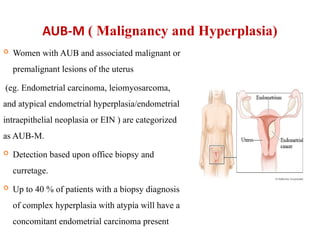
AUB-M ( Malignancy and Hyperplasia)
 Women with AUB and associated malignant or
premalignant lesions of the uterus
(eg. Endometrial carcinoma, leiomyosarcoma,
and atypical endometrial hyperplasia/endometrial
intraepithelial neoplasia or EIN ) are categorized
as AUB-M.
 Detection based upon office biopsy and
curretage.
 Up to 40 % of patients with a biopsy diagnosis
of complex hyperplasia with atypia will have a
concomitant endometrial carcinoma present
AUB- C ( COAGULOPATHY )
 The term coagulopathy includes the spectrum of systemic disorders of
hemostasis that may be associated with AUB.
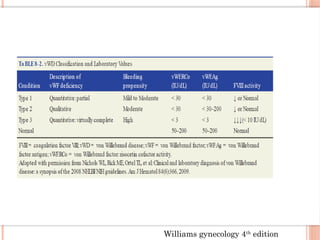
 Up to 13% of women with heavy menstrual bleeding have some variant of von
Willebrand disease and up to 20% of women may have an underlying
coagulation disorder (ACOG Practice Bulletin no. 557, 2013)
 The onset of heavy menses at menarche is often the first sign of von
willebrand disease (ACOG., 2020)
 Etiologies
 Von Willebrand’s disease- most common.
 Platelet dysfunction
 Factor XI deficiency
 Factor X deficiency
 Women with AUB associated with the use of anticoagulants are now
considered ( FIGO 2018 revision ) iatrogenic and are included in AUB-I
AUB-O ( OVULATORY DYSFUNCTION )
 manifest as a combination of unpredictable timing of bleeding and variable
amount of flow
 ranges from amenorrhea, through extremely light and infrequent bleeding to
episodes of unpredictable and extreme HMB requiring medical or surgical
intervention.
 Etiology-
Polycystic ovarian syndrome, hypothyroidism, hyperprolactinemia, mental
stress, anorexia, obesity, weight loss, or extreme exercise, adolescence,
menopause transition.
FIGO guidelines ., 2018
ANOVULATORY AUB
 Responsible for 80-90% of AUB
 Characterized be irregular cycles, short cycles with scanty flow or amenorrhea
of few months followed by heavy bleeding
 It is due to hormonal imbalance and due to alteration of HPO axis
 Seen more commonly in adolescents girls, in PCOS, around menopause,
following pregnancy and during lactation
 Pathogenesis:
 Due to anovulation, there is unopposed estrogenic stimulation of the endometrium,
causing persistent proliferation and hyperplasia of the endometrium, followed by
estrogenic withdrawal bleeding which is painless, irregular and prolonged
 Progesterone is responsible for secretion of PGF2a and thromboxane which causes
vasoconstriction
 Lack of progesterone is responsible for deficiency of PGF2a and relative increase ion
vasodilator PGE2 and prostacyclin, leads to painless and heavy menstrual bleeding
AUB-E ( ENDOMETRIAL )
 When AUB occurs in the context of predictable and cyclic menstrual
bleeding, typical of ovulatory cycles and when no other cause is identified,
the mechanism is probably a disorder of the endometrium. Diagnosed by
EXCLUSION.
 Primary disorder of the mechanisms regulating hemostatic mechanisms of the
endometrium.
 Deficiency of local production of vasoconstrictors- endothelin-1 and
prostaglandin F 2.
 Excessive production of plasminogen activators.
 Increased local production of vasodialators- prostaglandin E 2 and
prostacyclin I2
 Disorders of the endometrial repair (inflammation)- chlamydial infection.
FIGO guidelines ., 2018
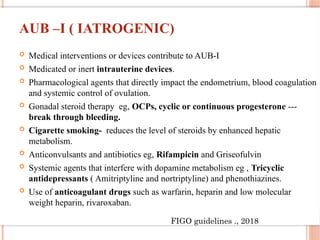
AUB –I ( IATROGENIC)
 Medical interventions or devices contribute to AUB-I
 Medicated or inert intrauterine devices.
 Pharmacological agents that directly impact the endometrium, blood coagulation
and systemic control of ovulation.
 Gonadal steroid therapy eg, OCPs, cyclic or continuous progesterone ---
break through bleeding.
 Cigarette smoking- reduces the level of steroids by enhanced hepatic
metabolism.
 Anticonvulsants and antibiotics eg, Rifampicin and Griseofulvin
 Systemic agents that interfere with dopamine metabolism eg , Tricyclic
antidepressants ( Amitriptyline and nortriptyline) and phenothiazines.
 Use of anticoagulant drugs such as warfarin, heparin and low molecular
weight heparin, rivaroxaban.
FIGO guidelines ., 2018
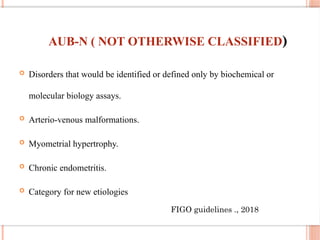
AUB-N ( NOT OTHERWISE CLASSIFIED)
 Disorders that would be identified or defined only by biochemical or
molecular biology assays.
 Arterio-venous malformations.
 Myometrial hypertrophy.
 Chronic endometritis.
 Category for new etiologies
FIGO guidelines ., 2018
EVALUATION OF A CASE OF AUB
 History
 It is important to rule out pregnancy in any woman presenting with AUB
in the reproductive age group.
 Other key points include:
 Normal cyclicity, amount and duration of menstrual flow prior to onset of
complaints.
 Duration of complaint and abnormality one is suffering from.
 Associated complaint of pain or lump abdomen, vaginal discharge, fever.
 History of use of contraceptives, medicines like anticoagulants, tamoxifen.
 History suggestive of thyroid disorder
 History of diabetes mellitus, hypertension.
 Family history of malignancy.
FOGSI GCPR ., 2016
Determination of coagulation disorder
screening instrument for coagulopathies in women with HMB.
DETERMINATION OF COAGULATION
DISORDER CONTD.:
 This structured history based instrument is 90 % sensitive for the
presence of a coagulopathy in women with the symptom of HMB.
 Patients with a positive screening result should be considered for
further evaluation including consultation with a hematologist.
 Vwf
 Ristocetin CoF
 aPTT
 PT
 Factor VIII
FIGO guidelines ., 2018
FOGSI GCPR ., 2016
EXAMINATION
 It is important to record the following findings:
 Vitals including pulse rate, blood pressure, respiratory rate especially in cases
of acute AUB.
 Body Mass Index.
 State of pallor, presence of cyanosis, clubbing, icterus, pedal edema and
lymph nodes
 Thyroid enlargement.
 Acne, hirsutism
 Breast examination.
 Abdominal examination to look for palpable masses
 Speculum examination to look for source and amount of bleeding, nature of
vaginal discharge and state of cervix and vagina. Take PAP smear if indicated.
 Vaginal or rectal to confirm the abdominal and speculum findings.
FOGSI GCPR ., 2016
INVESTIGATIONS
 Blood Tests
 Urine pregnancy test or serum Beta HCG to rule out pregnancy related
event.
 Complete blood count including haemoglobin, haematocrit and platelet
count to assess the status of anaemia and coagulability.
 Coagulation profile including bleeding time, clotting time, partial
thromboplastin time, activated partial thromboplastin time, von
Willebrand factor assay, ristocetin factor assay and factor VIII activity is
indicated in women with positive screen for coagulopathies in
consultation with a haematologist.
 Thyroid stimulating hormone and liver function test if clinically
indicated.
FOGSI GCPR ., 2016
IMAGING
 Ultrasonography is mandatory in AUB to evaluate uterus, adnexa and
endometrial thickness
 Doppler ultrasonography: In suspected arteriovenous malformation, malignancy
cases and to differentiate between fibroid and adenomyomas
 3D-USG: For evaluating intra myometrial lesion in selected patients for fibroid
mapping
 Hysteroscopy: For diagnosis and characterization of intrauterine abnormalities
 SIS: If intracavitary lesion is suspected and hysteroscopy is not available
 MRI: To differentiate between fibroids and adenomyomas and for mapping exact
location of fibroids while planning conservative surgery and prior to therapeutic
embolization for fibroids
FOGSI GCPR ., 2016
EVALUATION OF THE ENDOMETRIUM
 Endometrial sampling is not required for all patients with AUB.
 Selection for endometrial sampling is based on a combination of risk factors for
the presence of premalignant or malignant changes.
 Age > 40 years
 In women < 40 years with high risk factors for carcinoma endometrium -
irregular bleeding, obesity associated with hypertension, PCOS, diabetes,
endometrial thickness > 12 mm, family history of malignancy of
ovary/breast/endometrium/colon, use of tamoxifen for HRT or breast cancer,
late menopause, HNPCC, AUB unresponsive to medical treatment.
 Evaluation for chlamydial infections.
FOGSI GCPR ., 2016
• Endometrial aspiration should be the preferred procedure for obtaining
endometrial sample for histopathology.
• If endometrium is thick on imaging, but HPE is inadequate or atrophic,
hysteroscopy should be performed to rule out polyps
• Dilatation and curettage should not be the procedure of choice for
endometrial assessment
FOGSI GCPR ., 2016
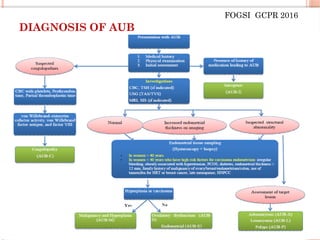
DIAGNOSIS OF AUB
FOGSI GCPR 2016
48
MANAGEMENT
 Medical management should be initial treatment for most
patients
 Need for surgery is based on various factors (stability of
patient, severity of bleed, contraindications to medical
management, underlying cause)
 Type of surgery dependent on above + desire for future
fertility
FIGO guidelines ., 2018
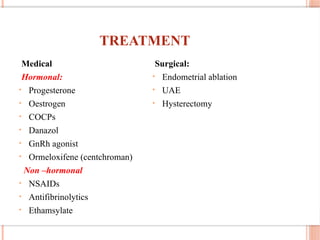
TREATMENT
Medical
Hormonal:
• Progesterone
• Oestrogen
• COCPs
• Danazol
• GnRh agonist
• Ormeloxifene (centchroman)
Non –hormonal
• NSAIDs
• Antifibrinolytics
• Ethamsylate
Surgical:
• Endometrial ablation
• UAE
• Hysterectomy
CONJUGATED EQUINE ESTROGEN(CEE)
 High dose estrogen therapy is useful in controlling acute bleeding episodes
because it promotes rapid endometrial growth to cover denuded endometrial
surface
 Stimulating vasospasm of uterine arteries
 Promotes platelet aggregation and capillary clotting
 Increases fibrinogen, factor V, and factor XI
 Increases the production of estrogen and progesterone receptors
 Usually used in the intravenous or oral form for acute heavy bleeding
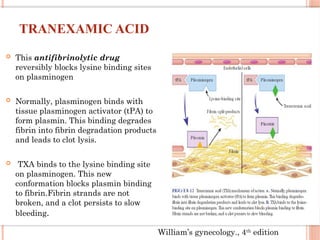
TRANEXAMIC ACID
 This antifibrinolytic drug
reversibly blocks lysine binding sites
on plasminogen
 Normally, plasminogen binds with
tissue plasminogen activator (tPA) to
form plasmin. This binding degrades
fibrin into fibrin degradation products
and leads to clot lysis.
 TXA binds to the lysine binding site
on plasminogen. This new
conformation blocks plasmin binding
to fibrin.Fibrin strands are not
broken, and a clot persists to slow
bleeding.
William’s gynecology., 4th
edition
TRANEXAMIC ACID
 Approved by FDA to treat HMB
 Reduce MBL by 30-55%
 Cost effective when compared with other NSAIDS and when compared with
LNG-IUS
 Contra-indication: History of thromboembolism
 Dosage:
• 1.3g 3x daily from onset of bleeding up to 5 days
• 10 mg/kg IV every 8 hr in acute AUB
William’s gynecology., 4th
edition
NONSTEROIDALANTI INFLAMMATORY
‐
DRUGS (NSAIDS)
 Within the endometrium, cyclooxygenase (COX) converts arachidonic acid
into prostaglandins
 NSAIDs reduces prostaglandins synthesis by inhibing COX.
 Alter the equilibrium between:
 Thromboxane A2 – vasoconstriction/platelet aggregation
 Prostacyclin – vasodilation and prevents platelet aggregation
 NSAIDs reduce MBL by 25%
 NSAIDs are most effective if used with menses onset or just prior to its onset
and continued throughout its duration
 Improvement of dysmenorrhea, headache, or nausea are the added benefits.
William’s gynecology., 4th
edition
NONSTEROIDALANTI INFLAMMATORY
‐
DRUGS (NSAIDS)
Patients with bleeding disorders or platelet function abnormalities should
avoid nonsteroidal antiinflammatory drugs because of their effect on
platelet aggregation and their interaction with drugs that might affect liver
function and the production of clotting factors
William’s gynecology., 4th
edition
PROGESTOGEN ONLY
‐
FORMULATIONS
 Common preparation used are norethisterone acetate and
medroxyprogesterone acetate
 It halts the endometrium growth and allow for an organized sloughing
 Inhibits the growth of the endometrium by triggering apoptosis
 Inhibits angiogenesis
 It stmulates the enzyme (17- beta hydroxy steroid dehydrogenase) that promote
conversion of estradiol to estrone (less potent).
 Increases the endometrial ratio of PGF2 alpha / PGE2 and Thromboxane
PROGESTOGEN ONLY FORMULATIONS
‐
Dosing options
 To stop acute bleeding Norethisterone 5mg tab are used thrice daily till
bleeding stops
 Cyclic progesterone therapy –
 Typically efficacious for anovulatory bleeding in pubertal and
perimenopausal women,
 Medroxyprogesterone 5-10 mg / norethisterone 5-10mg for 21 days
starting from day 5-25 every month for 3-6 cycles
PROGESTOGEN ONLY FORMULATIONS
‐
 Continuous progesterone:
 Given in those patients who cannot tolerate heavy withdrawal bleeding
and are anaemic
 Endometrial hyperplasia does not respond to luteal phase progesterone
hence, treatment with continuous progesterone for 3-6 months is effective
 Various continuous preparations may be used. Oral, long acting
intramuscular injections, DMPA implants, progesterone only pills are
effective to reduce menstrual blood loss
 DMPA causes endometrial thinning to atrophic levels, which causes
amenorrhea with intermittent spotting (hence not popular)
Mirena IUD/LNG IUD system
 Release daily doses of 20 micrograms of LNG
 Effective for 5 years
Effects:
 Prevent endometrial proliferation
 Thicken cervical mucus
 Suppress ovulation
 May be an alternative to hysterectomy in some patients.
 Recommended as first line therapy in the absence of any structural or
histological abnormality. (NICE., 2007)
LNG IUD SYSTEM
 Contraindications
 Abnormal uterine cavity, and reproductive tract infection
 Side effects;
 BTB in the first cycles, 20% develop amenorrhea within 1 yr
COMBINED ORAL
CONTRACEPTIVES
 Usually a combined oral pills containing 30microgm ethinyl estradiol with
progesterone is given cyclically from 5th
to 25th
day of cycle for 3-6 months
 Causes endometrial atrophy, diminished prostaglandin synthesis and decreased
endometrial fibrinolysis
 Useful for both ovulatory and anovulatory bleeding
 Reduces menstrual volume by about 50%
COMBINED ORAL CONTRACEPTIVES
 To stop or slow a heavy period, a “TAPER” can be performed
with any of the low dose monophasic pills.
 The treatment begins with 3-4 tablets per day till bleeding
stops, and then gradual tapering to 2 tablets per day for the
next 3 days, and then 1 pill per day until pack is finished and
withdrawal bleeding begins
 The patient can be started on one tablet per day of OCPs for next
3-4 cycles or can be started on cyclic progestin therapy if
estrogens are contraindicated
 Also treat associated dysmenorrhea and provide added
contraception
 Side effects; headache, migraine, weight gain, breast tenderness,
nausea, cholestatic jaundice, hypertension, thrombotic episodes.
ORMELOXIFENE (CENTCHROMAN)
 A selective estrogen receptor modulator usually used as an oral
contraceptive
 In AUB dose is 60 mg twice weekly for 3-6 months
GNRH ANALOGUE:
 Synthetic peptide that acts like a natural GnRH but with longer biological half
life.
 Cause pituitary down-regulation, severe hypoestrogenism, endometrial atrophy
and amenorrhea
 Dose: leuprolide acetate (3.75mg) or goserelin (3.6mg) subcutaneously every
28 days for 3-6 months
 Side effects: amenorrhea and menopause like symptoms, (bone loss, hot
flushes and dryness of vagina)
 Usually used for short term before surgery
 If given for more than 6 months add back therapy should be given such as
estrogen, progesterone or tibolone
 Pretreatment with a gonadotrophin-releasing hormone analogue before
hysterectomy and myomectomy should be considered if uterine fibroids are
causing an enlarged or distorted uterus. [NICE, 2007, amended 2020]
ANDROGENS
 Danazol
• A derivative of the synthetic steroid 17α-ethinyl testosterone
• Its net effect creates a hypoestrogenic and hyperandrogenic environment to
induce endometrial atrophy.
• Menstrual loss is reduced by approximately half , and it may even induce
amenorrhea.
 Dose: 100 to 200 mg orally daily
 Has significant androgenic and hypoestrogenic side effects that include
weight gain, bone loss, oily skin, and acne. Thus, reserved as a second-line drug or
short-term use prior to surgery
William’s gynecology., 4th
edition
MANAGEMENT OF ACUTE AUB
 Assess for the signs of hypovolemia & hemodynamic instability
 If in hypovolemic shock: Resuscitate with iv fluids and blood transfusion
 Blood transfusion is indicated in women with severe anaemia (Hb <7 gm%).
 The management strategy is to control the present episode of heavy bleeding and
to reduce menstrual blood loss in subsequent cycles.
ACOG, 2020
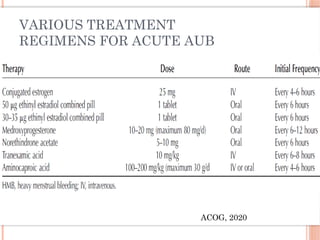
VARIOUS TREATMENT
REGIMENS FOR ACUTE AUB
ACOG, 2020
MANAGEMENT OF ACUTE AUB
 The first-line options in acute AUB include intravenous conjugated estrogen
and oral contraceptive tapers.
 If bleeding is not controllled with these agents, additional augmentation
agents may be considered, including tranexamic acid or aminocaproic acid
 After immediate stabilization with intravenous conjugated estrogen, patients
should be transitioned to an oral contraceptive taper with the goal to titrate down
eventually to one pill per day.
 For the patient who is not a candidate for estrogen therapy, progesterone only
pills can be considered. High-dose progesterone can be delivered orally, with
most pill tapers focusing on norethindrone-acetate, medroxyprogesterone, or
norethindrone alone
ACOG, 2020
MANAGEMENT OF ACUTE AUB
 For patients with limited intestinal absorption, injectable depot
medroxyprogesterone acetate (150 mg intramuscularly or 104 mg
subcutaneously) can be administered, with plans for additional backup use of
antifibrinolytics or oral progesterone-only pills
 For patients who are anticoagulated, reversal or halting of anticoagulants briefly
in the acute setting to manage heavy bleeding may be necessary and should be
discussed with a hematologist.
 Intrauterine insertion of a Foley’s catheter and tamponade by inflating its bulb
with saline has been shown to control the bleeding effectively in select cases.
 Once the acute episode of bleeding has been controlled, further treatment of AUB
depends on the aetiology based on the PALM-COEIN classification.
ACOG, 2020
70
CHRONIC TREATMENT
CONSIDERATIONS
• Etiology and severity of bleeding (eg, anemia, interference with daily
activities)
• Associated symptoms (eg, pelvic pain, infertility)
• Contraceptive needs or plans for future pregnancy
• Contraindications to hormonal or other medications
• Medical co-morbidities
• Patient preferences regarding medical versus surgical and short-term
versus long-term therapy and a careful assessment of risks vs benefits
based on patients medical condition.
MANAGEMENT OF CHRONIC AUB
 Treatment of anemia is by giving hematinics
 Life style modification with weight reduction, diet and exercise in case of
PCOS related AUB
 Medical treatment is the mainstay of treatment and should be tried in all
cases of AUB
MANAGEMENT OF AUB-P
 Hysteroscopic polypectomy followed by its histopathological examination
(HPE) is the definitive treatment option.
 If the HPE report confirms a benign lesion and the patient is not desirous of
fertility, Levonorgestrel- Intrauterine system (LNG-IUS) may be considered.
 If the HPE report is suggestive of malignancy, the woman should be managed as
a case of AUB-M.
FOGSI GCPR., 2016
MANAGEMENT OF AUB-A
 In women with AUB-A, desirous of preserving fertility but unwilling for
immediate conception, progestogens especially LNG-IUS is recommended as
first-line therapy.
 In patients with AUB-A, desirous of preserving fertility and resistant to
LNG-IUS/ unwilling to use LNG-IUS, gonadotropin releasing hormone
(GnRH) agonists with add-back therapy is recommended as second-line
therapy
 Combined oral contraceptives, danazol, NSAIDs, and progestogens can be
offered for symptomatic relief where LNG-IUS and GnRH agonists cannot be
indicated
 In case of failure/refusal for medical management, vaginal or laparoscopic
hysterectomy FOGSI GCPR., 2016
MANAGEMENT OF AUB-L
 Management of fibroid should be individualized depending upon age, parity,
symptoms, fertility desire, size and location of the myoma
 Medical management offered for small myoma (<4cm) and to delay or avoid
hysterectomy
 Myomectomy is performed for large fibroids causing fertility. It can be
performed by laparoscopy or laparotomy (large fibroids), and by hysteroscopy
(submucous type 0-2, small myoma of <4 cm size)
 If family is completed and age is more than 40 years with large symptomatic
fibroids hysterectomy is treatment of choice
MANAGEMENT OF AUB-M
 In AUB-M with endometrial malignancy, standard protocol for management of
malignancy should be followed
 In AUB-M with endometrial hyperplasia with atypia, hysterectomy is the
standard treatment.
 In AUB-M with endometrial hyperplasia without atypia, LNG-IUS can be
considered as first-line therapy; oral progestins can be used if LNG-IUS is
contraindicated or if patient is unwilling for LNG-IUS
FOGSI GCPR., 2016
MANAGEMENT OF AUB-C
 Tranexamic acid is the first line treatment (in the dose of maximum 1gm 6
hourly) followed by oral contraceptives or LNG-IUS as a second line therapy.
 In cases of persistent heavy bleeding in women with Von-Willebrand disease,
desmopressin can be given in consultation with haematologist.
 Recombinant factor VIII, von Willebrand factor or specific factors may also be
required in cases of uncontrolled heavy vaginal bleeding not responding to usual
medical treatments.
 NSAIDs are strictly contraindicated in these cases, owing to their adverse
effects on platelets and liver functions.
FOGSI GCPR., 2016
MANAGEMENT OF AUB-O
 Oral contraceptives for a total duration of 6-12 months are considered the first
line of therapy
 Norethisterone cyclically (for 21 days) is given as initial therapy in acute episodes
of bleeding for short-term management of 3 months.
 Cyclical luteal phase progestins are not recommended.
 LNG-IUS can also be offered.
 The success of any of the available treatment options should be assessed after a
year to evaluate the need to continue or discontinue the treatment or to decide for
hysterectomy.
FOGSI GCPR., 2016
Management of AUB-E (Endometrial):
 Similar to the management of AUB-O
Management of AUB-I (Iatrogenic causes):
 Whenever possible, medications causing AUB should be changed to other
alternatives, if no alternatives are available, LNG-IUS is recommended
FOGSI GCPR., 2016
MANAGEMENT OF AUB-N
 LNG-IUS is recommended as first-line therapy to reduce menstrual bleeding
 In patients with AUB-N desirous of continued fertility, in whom, LNG-IUS are
contraindicated, use of COCs are recommended as second line therapy
 Non-hormonal options such as NSAIDs and tranexamic acid are recommended
for cyclical AUB.
 When medical or conservative surgical treatments (such as ablation) have failed
or are contraindicated, GnRH agonists along with add-back hormone therapy are
recommended, while hysterectomy is suggested as last resort
 Uterine Artery embolization is recommended for A-V malformations
FOGSI GCPR., 2016
TREATMENT FOR WOMEN WITH NO IDENTIFIED
PATHOLOGY, FIBROID LESS THAN 3 CM IN DIAMETER, OR
SUSPECTED OR DIAGNOSED ADENOMYOSIS
 Consider an LNG-IUS as the first line treatment for AUB
 If a woman declines an LNG-IUS or is not suitable, consider the following
pharmacologic treatment
 Non-hormonal:
 Tranexamic acids, NSAIDs
 Hormonal:
 COCs or cyclical progesterone
NICE Guideline ., 2018
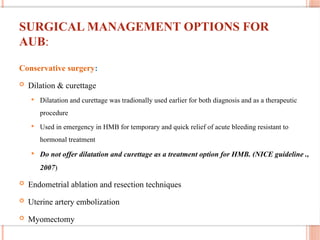
SURGICAL MANAGEMENT OPTIONS FOR
AUB:
Conservative surgery:
 Dilation & curettage
 Dilatation and curettage was tradionally used earlier for both diagnosis and as a therapeutic
procedure
 Used in emergency in HMB for temporary and quick relief of acute bleeding resistant to
hormonal treatment
 Do not offer dilatation and curettage as a treatment option for HMB. (NICE guideline .,
2007)
 Endometrial ablation and resection techniques
 Uterine artery embolization
 Myomectomy
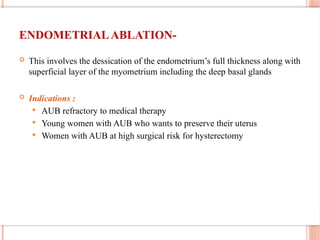
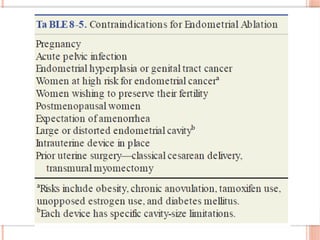
ENDOMETRIALABLATION-
 This involves the dessication of the endometrium’s full thickness along with
superficial layer of the myometrium including the deep basal glands
 Indications :
 AUB refractory to medical therapy
 Young women with AUB who wants to preserve their uterus
 Women with AUB at high surgical risk for hysterectomy
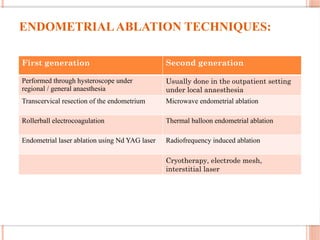
ENDOMETRIALABLATION TECHNIQUES:
First generation Second generation
Performed through hysteroscope under
regional / general anaesthesia
Usually done in the outpatient setting
under local anaesthesia
Transcervical resection of the endometrium Microwave endometrial ablation
Rollerball electrocoagulation Thermal balloon endometrial ablation
Endometrial laser ablation using Nd YAG laser Radiofrequency induced ablation
Cryotherapy, electrode mesh,
interstitial laser
Definitive surgery:
 Hysterectomy
 Indications of hysterectomy in AUB:
 Failure of medical treatment
 Failure of conservative surgery
 In older women with completed family and severe AUB
MODERN MODALITIES OF
MANAGEMENT
Hysteroscopic approach:
 In modern times hysteroscopy is one of the mainstay in the diagnosis as well
as in treatment of AUB
 With the development of miniaturization of instruments (3.5mm or smaller),
safety of distension media and effective local anaesthesia, hysteroscopy is a
fast, effective and much more precise procedure to detect causes of AUB and
plan treatment
 NICE guideline recommend outpatient hysteroscopy to women with HMB if
their history suggests submucosal fibroids, polyps or endometrial pathology
(2018)
 Appropriate diagnosis and treatment can be provided in an outpatient settings
utilizing a one stop approach. It includes combination of key history taking,
examination, TVS and hysteroscopy, if indicated at the same visit.
MODERN MODALITIES OF MANAGEMENT:
RADIOLOGICAL INTERVENTIONS:
Uterine Artery Embolization (UAE)
 An angiographic interventional procedure in which polyvinyl alcohol particles or
other synthetic particulate emboli are delivered into both uterine arteries
obstructing blood flow in uterine arteries to produce ischaemia and necrosis of
myoma and adenomyoma
MRI Guided High Intensity Focussed Ultrasound
 Under MRI , high intensity ultrasound energy is focussed on the myoma to
produce heat causing coagulative necrosis
 Indicated in myoma of size ranging from 3cm to 10 cm
 A 3 hour long session may be required to treat a fibroid of approx 7-8 cm size
SUMMARY
 AUB is common among women worlwide
 A detailed history is an important first step in evaluating a women who
presents with AUB
 The etiologies of AUB should be classified based on the PALM–COEIN
system
 Treatment is based on etiology, desire for future fertility and medical
morbidities
 Medical management should be the initial treatment for most patients, if
clinically appropriate.
 The need for surgical treatment is based on the clinical stability of the patient,
the severity of bleeding, contraindications to medical management, the
patient’s lack of response to medical management, and the underlying medical
condition of the patient.
QUESTIONS ???
1. In premenarchal girls, which of the following is the
most common source of bleeding
 Ovary
 Uterus
 Vagina
 Urethra
1. In premenarchal girls, which of the following is the
most common source of bleeding
 Ovary
 Uterus
 Vagina
 Urethra
2. Which layer of the endometrium sloughs and therefore is
responsible for menstrual bleeding
 Spiral
 Radial
 Basalis
 Functionalis
 2..Which layer of the endometrium sloughs and therefore
is responsible for menstrual bleeding
 Spiral
 Radial
 Basalis
 Functionalis
 3.Control of blood loss during menses involves which of
the following mechanisms
 Thrombus formation
 Platelet aggregation
 Vasoconstriction of endometrial arteries
 All of the above
 3..Control of blood loss during menses involves which of
the following mechanisms
 Thrombus formation
 Platelet aggregation
 Vasoconstriction of endometrial arteries
 All of the above
 4..According to FIGO 2018 , endometrial sampling to
assess AUB in NOT recommended for a women with
which of the following characteristics
 Is 35 years old
 Has failed medical management
 Has persistent abnormal uterine bleeding
 Has history of unopposed estrogen exposure
 4..According to FIGO 2018 , endometrial sampling to
assess AUB in NOT recommended for a women with
which of the following characteristics
 Is 35 years old
 Has failed medical management
 Has persistent abnormal uterine bleeding
 Has history of unopposed estrogen exposure
Answer: ≥ 45 years old
 5..Which cause of AUB is NOT represented in the
FIGO, 2018 classification acronym PALM-COIEN
 Leiomyoma
 Malignancy
 Iatrogenic
 Not yet classified
 5..Which cause of AUB is NOT represented in the
FIGO, 2018 classification acronym PALM-COIEN
 Leiomyoma
 Malignancy
 Iatrogenic
 Not yet classified
Answer : N stands for Not otherwise classified
 6..A patient present to the emergency department with a 1 day history of heavy
vaginal bleeding . She is tachycardic but not hypotensive and vitals are stable.
Physical examination reveals bleeding from the external cervical os and continued
pooling of blood in the vagina. Laboratory studies reveal she is anaemic. which of
the following is the most appropriate first line agent to attempt control of her acute
uterine bleeding
 Iv estrogen
 Oral tranexamic acid
 GnRH agonist
 COCs taper
 6..A patient present to the emergency department with a 1 day history of heavy
vaginal bleeding . She is tachycardic but not hypotensive and vitals are stable.
Physical examination reveals bleeding from the external cervical os and continued
pooling of blood in the vagina. Laboratory studies reveal she is anaemic. which of
the following is the most appropriate first line agent to attempt control of her acute
uterine bleeding
 Iv estrogen
 Oral tranexamic acid
 GnRH agonist
 COCs taper
THANK YOU
Williams gynecology 4th
edition
Williams gynecology 4th
edition

Abnormal Uterine Bleeding aiims patna gyn

  • 1.
    ABNORMAL UTERINE BLEEDING INREPRODUCTIVE PERIOD
  • 2.
    INTRODUCTION  Definition: bleedingfrom the uterine body that is abnormal in frequency, duration and amount arising in the absence of pregnancy.  Worlwide prevalence : 3-30%  The reasons for the wide spectrum of estimates are unclear but vary with age, being higher in adolescents and in the fifth decade of life, and varying somewhat with country of origin.  Approximately one third of women are affected at some time in their life.  In India, the prevalence of AUB is around 17.9% FIGO., 2018 FOGSI, GCPR., 2016
  • 3.
    NORMAL MENSTRUAL CYCLE UPDATEDFIGO- AUB SYSTEM 1 2018
  • 4.
    Heavy menstrual bleedingRegular ⁃ cycles, prolonged or heavy bleeding- Volume that interferes with woman's physical,social, emotional and/or material qualityof life Volume:>80mL* ⁃ Light menstrual bleeding Volume: <5 ⁃ mL* Prolonged menstrual bleeding Duration ⁃ of bleeding: >8 days Frequent uterine bleeding: Cycles <24 days Infrequent uterine bleeding: Cycles >38 days. Irregular menstruation Variation in ⁃ cycle length >10 days Intermenstrual bleeding Bleeding in ⁃ between well-defined cyclical menses Cýclic midcycle bleeding Cyclic ⁃ premenstrual or postmenstrual bleeding Acyclic bleeding Amenorrhea Absence of menstruation ⁃ Primary amenorrhea: No menstruation by age 15 year Secondary amenorrhea: No menstruation for 3 months
  • 5.
     Intermenstrual bleeding(IMB) occurs between clearly defined cyclical and predictable menses.  Such bleeding may occur at random times or may manifest in a predictable fashion at the same day in each cycle.  Heavy menstrual bleeding (HMB) , a symptom (not a diagnosis) defined as excessive menstrual blood loss, which interferes with a women’s physical, social, emotional and/or material quality of life. (Definition proposed by UK National institute for health and care excellence and adopted by FIGO) FIGO guidelines ., 2018
  • 6.
    Pathophysiology  Physiological mechanismof hemostasis in normal menstruation are: • Platelet adhesion formation • Formation of platelet plug with fibrin to seal the bleeding vessels • Localized vasoconstriction • Regeneration of endometrium • Biochemical mechanisms involved are: – Increased endometrial ratio of PGF2 a / PGE2. PGF2a causes vasoconstriction – Progesterone increases the level of PGF2 a from arachidonic acid – Endothelin (a powerful vasoconstrictor) is also increased. – In anovulatory cycles there is decreased synthesis of PGF2 a and the ratio of PGF2 a / PGE2 is low. PG-F2alpha & thromboxane – vasoconstrictors PGE2 & PGI2 - vasodilators
  • 7.
    Infancy Prepubertal AdolescentReproductive Perimenopausal Postmenopausal Maternal estrogen withdrawal Vulvovaginitis Anovulation Exogenous Anovulation Atrophy Vaginal foreign body Exogenous hormone use Pregnancy Fibroids Endometrial polyp Precocious puberty Pregnancy Anovulation Polyps Endometrial cancer Tumor Coagulopat hy Fibroids Thyroid dysfunction Hormonal therapy Polyps Other tumors: vulvar, vaginal, cervical Thyroid dysfunction CAUSES OF AUB BY AGE GROUP Berek $ Novak’s 16th edition
  • 8.
    ACUTE VERSUS CHRONICNON-GESTATIONALAUB IN THE REPRODUCTIVE YEARS • CHRONIC AUB is defined as bleeding from the uterine corpus that is abnormal in duration, volume, frequency and/ or regularity and has been present for preceding 6 months. • ACUTE AUB is defined as an episode of heavy bleeding that, in the opinion of the clinician, is of sufficient quantity to require immediate intervention to minimize or prevent further blood loss. • Acute heavy menstrual bleeding may present in the context of existing chronic AUB or can occur in the absence of such a background history. FIGO guidelines ., 2018
  • 9.
    FIGO Classification Systemfor Causes of Abnormal Uterine Bleeding in the Reproductive Years
  • 10.
    NOMENCLATURE AND CLASSIFICATIONOF AUB FIGO has suggested a new etiological classification system called PALM-COEIN classification in 2011 to standardize the terminology, investigation, diagnosis and management of AUB in non pregnant reproductive age women
  • 11.
    AUB-P ; POLYPS(8-35 %) • Endometrial polyp are soft, fleshy intrauterine growths, composed of endometrial glands, fibrous stroma, and surface epithelium • Most commonly found in reproductive-age Women • Present with HMB, AUB, IMB or postcoital bleeding. • The exact cause of polyps is unknown, but possible etiologies include genetic, biochemical, and hormonal factors • Estrogen and progesterone have been implicated in their growth, and higher receptor levels are noted within polyps compared with adjacent normal endometrium • These hormones elongate endometrial glands, stromal tissue, and spiral arteries, leading to the characteristic polypoid appearance.
  • 12.
    Diagnosis • The maindiagnostic tools for endometrial polyp evaluation TVS with color Doppler, SIS, and hysteroscopy. • TVS - endometrial polyp may appear as a nonspecific endometrial thickening or as a round or elongated hyperechoic focal mass within the endometrial cavity. • TVS can be augmented with color Doppler. • Endometrial polyps typically have only one arterial feeding vessel, whereas submucous leiomyomas generally received blood flow from several vessels arising from the inner myometrium Williams gynecology 4th edition
  • 13.
    TVS SHOWING POLYPIN THE ENDOMETRIAL CAVITY
  • 14.
    HYSTEROSCOPIC VIEW OFA ENDOMETRIAL POLYP
  • 15.
    AUB –A ADENOMYOSIS Prevalence of adenomyosis varies widely, ranging from 5 % to 70 %  It is defined as growth of endometrial tissue in the myometrium (beneath the endometrial myometrial junction)  It is difficult to accurately determine the incidence of adenomyosis since the diagnosis can only be made with certainty by microscopic examination of the uterus  Gold standard for the diagnosis of adenomyosis - histological examination - presence of endometrial tissue more than 2.5 mm below the endomyometrial junction or a junctional zone thickness of more than 12 mm
  • 16.
    INVESTIGATIONS  The diagnosiscan be made on the basis of sonographic findings.  The sonographic appearance of adenomyosis is partly related to the absolute presence of heterotopic endometrial tissue in the myometrium and partly due to the myometrial hypertrophy.  MUSA – Morphological Uterus Sonographic Assesment group suggest eight criteria based on transvaginal sonography for the diagnosis of AUB-A Presence of 2 or more of these diagnostic criteria are highly suggestive of diagnosis of adenomyosis FIGO guidelines ., 2018
  • 17.
    ADENOMYOSIS DIAGNOSTIC CRITERIA GRAPHICALREPRESENTATIONS OF EIGHT TVUS CRITERIA PROPOSED BY MUSA GROUP A) ASYMMETRICAL MYOMETRIAL THICKENING B) MYOMETRIAL CYSTS C) HYPERECHOIC ISLANDS
  • 18.
    E) ECHOGENIC SUBENDOMETRIAL LINES ANDBUDS F) TRANSLESIONAL VASCULARITY D)FAN SHAPED SHADOWING
  • 19.
    G) IRREGULAR JUNCTIONAL ZONE H)INTERUPPTED JUNCTIONAL ZONE
  • 20.
    Magnetic Resonance Imaging: •Gold standard imaging modality for assessing the junctional zone in the evaluation of adenomyosis • It clearly distinguishes focal and diffuse adenomyosis from leiomyomatosis. • The common features on MRI include – Thickening of the JZ, JZ thickens ≥ 12mm or irregular junctional thickness with a difference of >5 mm between the maximum & minimum thickness. – Islands of ectopic endometrial tissue identified as punctate foci of high signal intensity on T1 weighted image. – An ill-defined relatively homogenous low signal intensity (hypoechoic) areas with scattered high intensity spots in the myometrium on T2 weighted MR images.
  • 21.
    LEIOMYOMA – AUB-L Most common pelvic tumors  Benign monoclonal tumors arising from smooth muscle cells of the myometrium that develop during the reproductive years.  cause AUB, mass abdomen or pelvis, pelvic pain and infertility
  • 22.
    THE THREE STAGECLASSIFICATION SYSTEM FOR LEIOMYOMA  Primary classification system reflects only the presence (L1) or absence (L0) of 1 or more leiomyomas, regardless of the location, number and size. It requires only the sonographic confirmation that 1 or more lesions are present.  In the secondary system, submucous leiomyomas( SM ) are differentiated from others (O) because submucosal leiomyomas are more likely to contribute to the genesis of AUB.  Tertiary classification system includes the categorization of the intramural and subserosal leiomyomas in addition to category that includes the parasitic lesions. FIGO guidelines ., 2018
  • 23.
    AUB-M ( Malignancyand Hyperplasia)  Women with AUB and associated malignant or premalignant lesions of the uterus (eg. Endometrial carcinoma, leiomyosarcoma, and atypical endometrial hyperplasia/endometrial intraepithelial neoplasia or EIN ) are categorized as AUB-M.  Detection based upon office biopsy and curretage.  Up to 40 % of patients with a biopsy diagnosis of complex hyperplasia with atypia will have a concomitant endometrial carcinoma present
  • 24.
    AUB- C (COAGULOPATHY )  The term coagulopathy includes the spectrum of systemic disorders of hemostasis that may be associated with AUB.  Up to 13% of women with heavy menstrual bleeding have some variant of von Willebrand disease and up to 20% of women may have an underlying coagulation disorder (ACOG Practice Bulletin no. 557, 2013)  The onset of heavy menses at menarche is often the first sign of von willebrand disease (ACOG., 2020)  Etiologies  Von Willebrand’s disease- most common.  Platelet dysfunction  Factor XI deficiency  Factor X deficiency  Women with AUB associated with the use of anticoagulants are now considered ( FIGO 2018 revision ) iatrogenic and are included in AUB-I
  • 25.
    AUB-O ( OVULATORYDYSFUNCTION )  manifest as a combination of unpredictable timing of bleeding and variable amount of flow  ranges from amenorrhea, through extremely light and infrequent bleeding to episodes of unpredictable and extreme HMB requiring medical or surgical intervention.  Etiology- Polycystic ovarian syndrome, hypothyroidism, hyperprolactinemia, mental stress, anorexia, obesity, weight loss, or extreme exercise, adolescence, menopause transition. FIGO guidelines ., 2018
  • 26.
    ANOVULATORY AUB  Responsiblefor 80-90% of AUB  Characterized be irregular cycles, short cycles with scanty flow or amenorrhea of few months followed by heavy bleeding  It is due to hormonal imbalance and due to alteration of HPO axis  Seen more commonly in adolescents girls, in PCOS, around menopause, following pregnancy and during lactation  Pathogenesis:  Due to anovulation, there is unopposed estrogenic stimulation of the endometrium, causing persistent proliferation and hyperplasia of the endometrium, followed by estrogenic withdrawal bleeding which is painless, irregular and prolonged  Progesterone is responsible for secretion of PGF2a and thromboxane which causes vasoconstriction  Lack of progesterone is responsible for deficiency of PGF2a and relative increase ion vasodilator PGE2 and prostacyclin, leads to painless and heavy menstrual bleeding
  • 27.
    AUB-E ( ENDOMETRIAL)  When AUB occurs in the context of predictable and cyclic menstrual bleeding, typical of ovulatory cycles and when no other cause is identified, the mechanism is probably a disorder of the endometrium. Diagnosed by EXCLUSION.  Primary disorder of the mechanisms regulating hemostatic mechanisms of the endometrium.  Deficiency of local production of vasoconstrictors- endothelin-1 and prostaglandin F 2.  Excessive production of plasminogen activators.  Increased local production of vasodialators- prostaglandin E 2 and prostacyclin I2  Disorders of the endometrial repair (inflammation)- chlamydial infection. FIGO guidelines ., 2018
  • 28.
    AUB –I (IATROGENIC)  Medical interventions or devices contribute to AUB-I  Medicated or inert intrauterine devices.  Pharmacological agents that directly impact the endometrium, blood coagulation and systemic control of ovulation.  Gonadal steroid therapy eg, OCPs, cyclic or continuous progesterone --- break through bleeding.  Cigarette smoking- reduces the level of steroids by enhanced hepatic metabolism.  Anticonvulsants and antibiotics eg, Rifampicin and Griseofulvin  Systemic agents that interfere with dopamine metabolism eg , Tricyclic antidepressants ( Amitriptyline and nortriptyline) and phenothiazines.  Use of anticoagulant drugs such as warfarin, heparin and low molecular weight heparin, rivaroxaban. FIGO guidelines ., 2018
  • 29.
    AUB-N ( NOTOTHERWISE CLASSIFIED)  Disorders that would be identified or defined only by biochemical or molecular biology assays.  Arterio-venous malformations.  Myometrial hypertrophy.  Chronic endometritis.  Category for new etiologies FIGO guidelines ., 2018
  • 30.
    EVALUATION OF ACASE OF AUB  History  It is important to rule out pregnancy in any woman presenting with AUB in the reproductive age group.  Other key points include:  Normal cyclicity, amount and duration of menstrual flow prior to onset of complaints.  Duration of complaint and abnormality one is suffering from.  Associated complaint of pain or lump abdomen, vaginal discharge, fever.  History of use of contraceptives, medicines like anticoagulants, tamoxifen.  History suggestive of thyroid disorder  History of diabetes mellitus, hypertension.  Family history of malignancy. FOGSI GCPR ., 2016
  • 31.
    Determination of coagulationdisorder screening instrument for coagulopathies in women with HMB.
  • 32.
    DETERMINATION OF COAGULATION DISORDERCONTD.:  This structured history based instrument is 90 % sensitive for the presence of a coagulopathy in women with the symptom of HMB.  Patients with a positive screening result should be considered for further evaluation including consultation with a hematologist.  Vwf  Ristocetin CoF  aPTT  PT  Factor VIII FIGO guidelines ., 2018 FOGSI GCPR ., 2016
  • 33.
    EXAMINATION  It isimportant to record the following findings:  Vitals including pulse rate, blood pressure, respiratory rate especially in cases of acute AUB.  Body Mass Index.  State of pallor, presence of cyanosis, clubbing, icterus, pedal edema and lymph nodes  Thyroid enlargement.  Acne, hirsutism  Breast examination.  Abdominal examination to look for palpable masses  Speculum examination to look for source and amount of bleeding, nature of vaginal discharge and state of cervix and vagina. Take PAP smear if indicated.  Vaginal or rectal to confirm the abdominal and speculum findings. FOGSI GCPR ., 2016
  • 34.
    INVESTIGATIONS  Blood Tests Urine pregnancy test or serum Beta HCG to rule out pregnancy related event.  Complete blood count including haemoglobin, haematocrit and platelet count to assess the status of anaemia and coagulability.  Coagulation profile including bleeding time, clotting time, partial thromboplastin time, activated partial thromboplastin time, von Willebrand factor assay, ristocetin factor assay and factor VIII activity is indicated in women with positive screen for coagulopathies in consultation with a haematologist.  Thyroid stimulating hormone and liver function test if clinically indicated. FOGSI GCPR ., 2016
  • 35.
    IMAGING  Ultrasonography ismandatory in AUB to evaluate uterus, adnexa and endometrial thickness  Doppler ultrasonography: In suspected arteriovenous malformation, malignancy cases and to differentiate between fibroid and adenomyomas  3D-USG: For evaluating intra myometrial lesion in selected patients for fibroid mapping  Hysteroscopy: For diagnosis and characterization of intrauterine abnormalities  SIS: If intracavitary lesion is suspected and hysteroscopy is not available  MRI: To differentiate between fibroids and adenomyomas and for mapping exact location of fibroids while planning conservative surgery and prior to therapeutic embolization for fibroids FOGSI GCPR ., 2016
  • 36.
    EVALUATION OF THEENDOMETRIUM  Endometrial sampling is not required for all patients with AUB.  Selection for endometrial sampling is based on a combination of risk factors for the presence of premalignant or malignant changes.  Age > 40 years  In women < 40 years with high risk factors for carcinoma endometrium - irregular bleeding, obesity associated with hypertension, PCOS, diabetes, endometrial thickness > 12 mm, family history of malignancy of ovary/breast/endometrium/colon, use of tamoxifen for HRT or breast cancer, late menopause, HNPCC, AUB unresponsive to medical treatment.  Evaluation for chlamydial infections. FOGSI GCPR ., 2016
  • 37.
    • Endometrial aspirationshould be the preferred procedure for obtaining endometrial sample for histopathology. • If endometrium is thick on imaging, but HPE is inadequate or atrophic, hysteroscopy should be performed to rule out polyps • Dilatation and curettage should not be the procedure of choice for endometrial assessment FOGSI GCPR ., 2016
  • 38.
  • 39.
    48 MANAGEMENT  Medical managementshould be initial treatment for most patients  Need for surgery is based on various factors (stability of patient, severity of bleed, contraindications to medical management, underlying cause)  Type of surgery dependent on above + desire for future fertility FIGO guidelines ., 2018
  • 40.
    TREATMENT Medical Hormonal: • Progesterone • Oestrogen •COCPs • Danazol • GnRh agonist • Ormeloxifene (centchroman) Non –hormonal • NSAIDs • Antifibrinolytics • Ethamsylate Surgical: • Endometrial ablation • UAE • Hysterectomy
  • 41.
    CONJUGATED EQUINE ESTROGEN(CEE) High dose estrogen therapy is useful in controlling acute bleeding episodes because it promotes rapid endometrial growth to cover denuded endometrial surface  Stimulating vasospasm of uterine arteries  Promotes platelet aggregation and capillary clotting  Increases fibrinogen, factor V, and factor XI  Increases the production of estrogen and progesterone receptors  Usually used in the intravenous or oral form for acute heavy bleeding
  • 42.
    TRANEXAMIC ACID  Thisantifibrinolytic drug reversibly blocks lysine binding sites on plasminogen  Normally, plasminogen binds with tissue plasminogen activator (tPA) to form plasmin. This binding degrades fibrin into fibrin degradation products and leads to clot lysis.  TXA binds to the lysine binding site on plasminogen. This new conformation blocks plasmin binding to fibrin.Fibrin strands are not broken, and a clot persists to slow bleeding. William’s gynecology., 4th edition
  • 43.
    TRANEXAMIC ACID  Approvedby FDA to treat HMB  Reduce MBL by 30-55%  Cost effective when compared with other NSAIDS and when compared with LNG-IUS  Contra-indication: History of thromboembolism  Dosage: • 1.3g 3x daily from onset of bleeding up to 5 days • 10 mg/kg IV every 8 hr in acute AUB William’s gynecology., 4th edition
  • 44.
    NONSTEROIDALANTI INFLAMMATORY ‐ DRUGS (NSAIDS) Within the endometrium, cyclooxygenase (COX) converts arachidonic acid into prostaglandins  NSAIDs reduces prostaglandins synthesis by inhibing COX.  Alter the equilibrium between:  Thromboxane A2 – vasoconstriction/platelet aggregation  Prostacyclin – vasodilation and prevents platelet aggregation  NSAIDs reduce MBL by 25%  NSAIDs are most effective if used with menses onset or just prior to its onset and continued throughout its duration  Improvement of dysmenorrhea, headache, or nausea are the added benefits. William’s gynecology., 4th edition
  • 45.
    NONSTEROIDALANTI INFLAMMATORY ‐ DRUGS (NSAIDS) Patientswith bleeding disorders or platelet function abnormalities should avoid nonsteroidal antiinflammatory drugs because of their effect on platelet aggregation and their interaction with drugs that might affect liver function and the production of clotting factors William’s gynecology., 4th edition
  • 46.
    PROGESTOGEN ONLY ‐ FORMULATIONS  Commonpreparation used are norethisterone acetate and medroxyprogesterone acetate  It halts the endometrium growth and allow for an organized sloughing  Inhibits the growth of the endometrium by triggering apoptosis  Inhibits angiogenesis  It stmulates the enzyme (17- beta hydroxy steroid dehydrogenase) that promote conversion of estradiol to estrone (less potent).  Increases the endometrial ratio of PGF2 alpha / PGE2 and Thromboxane
  • 47.
    PROGESTOGEN ONLY FORMULATIONS ‐ Dosingoptions  To stop acute bleeding Norethisterone 5mg tab are used thrice daily till bleeding stops  Cyclic progesterone therapy –  Typically efficacious for anovulatory bleeding in pubertal and perimenopausal women,  Medroxyprogesterone 5-10 mg / norethisterone 5-10mg for 21 days starting from day 5-25 every month for 3-6 cycles
  • 48.
    PROGESTOGEN ONLY FORMULATIONS ‐ Continuous progesterone:  Given in those patients who cannot tolerate heavy withdrawal bleeding and are anaemic  Endometrial hyperplasia does not respond to luteal phase progesterone hence, treatment with continuous progesterone for 3-6 months is effective  Various continuous preparations may be used. Oral, long acting intramuscular injections, DMPA implants, progesterone only pills are effective to reduce menstrual blood loss  DMPA causes endometrial thinning to atrophic levels, which causes amenorrhea with intermittent spotting (hence not popular)
  • 49.
    Mirena IUD/LNG IUDsystem  Release daily doses of 20 micrograms of LNG  Effective for 5 years Effects:  Prevent endometrial proliferation  Thicken cervical mucus  Suppress ovulation  May be an alternative to hysterectomy in some patients.  Recommended as first line therapy in the absence of any structural or histological abnormality. (NICE., 2007)
  • 50.
    LNG IUD SYSTEM Contraindications  Abnormal uterine cavity, and reproductive tract infection  Side effects;  BTB in the first cycles, 20% develop amenorrhea within 1 yr
  • 51.
    COMBINED ORAL CONTRACEPTIVES  Usuallya combined oral pills containing 30microgm ethinyl estradiol with progesterone is given cyclically from 5th to 25th day of cycle for 3-6 months  Causes endometrial atrophy, diminished prostaglandin synthesis and decreased endometrial fibrinolysis  Useful for both ovulatory and anovulatory bleeding  Reduces menstrual volume by about 50%
  • 52.
    COMBINED ORAL CONTRACEPTIVES To stop or slow a heavy period, a “TAPER” can be performed with any of the low dose monophasic pills.  The treatment begins with 3-4 tablets per day till bleeding stops, and then gradual tapering to 2 tablets per day for the next 3 days, and then 1 pill per day until pack is finished and withdrawal bleeding begins  The patient can be started on one tablet per day of OCPs for next 3-4 cycles or can be started on cyclic progestin therapy if estrogens are contraindicated  Also treat associated dysmenorrhea and provide added contraception  Side effects; headache, migraine, weight gain, breast tenderness, nausea, cholestatic jaundice, hypertension, thrombotic episodes.
  • 53.
    ORMELOXIFENE (CENTCHROMAN)  Aselective estrogen receptor modulator usually used as an oral contraceptive  In AUB dose is 60 mg twice weekly for 3-6 months
  • 54.
    GNRH ANALOGUE:  Syntheticpeptide that acts like a natural GnRH but with longer biological half life.  Cause pituitary down-regulation, severe hypoestrogenism, endometrial atrophy and amenorrhea  Dose: leuprolide acetate (3.75mg) or goserelin (3.6mg) subcutaneously every 28 days for 3-6 months  Side effects: amenorrhea and menopause like symptoms, (bone loss, hot flushes and dryness of vagina)  Usually used for short term before surgery  If given for more than 6 months add back therapy should be given such as estrogen, progesterone or tibolone  Pretreatment with a gonadotrophin-releasing hormone analogue before hysterectomy and myomectomy should be considered if uterine fibroids are causing an enlarged or distorted uterus. [NICE, 2007, amended 2020]
  • 55.
    ANDROGENS  Danazol • Aderivative of the synthetic steroid 17α-ethinyl testosterone • Its net effect creates a hypoestrogenic and hyperandrogenic environment to induce endometrial atrophy. • Menstrual loss is reduced by approximately half , and it may even induce amenorrhea.  Dose: 100 to 200 mg orally daily  Has significant androgenic and hypoestrogenic side effects that include weight gain, bone loss, oily skin, and acne. Thus, reserved as a second-line drug or short-term use prior to surgery William’s gynecology., 4th edition
  • 56.
    MANAGEMENT OF ACUTEAUB  Assess for the signs of hypovolemia & hemodynamic instability  If in hypovolemic shock: Resuscitate with iv fluids and blood transfusion  Blood transfusion is indicated in women with severe anaemia (Hb <7 gm%).  The management strategy is to control the present episode of heavy bleeding and to reduce menstrual blood loss in subsequent cycles. ACOG, 2020
  • 57.
    VARIOUS TREATMENT REGIMENS FORACUTE AUB ACOG, 2020
  • 58.
    MANAGEMENT OF ACUTEAUB  The first-line options in acute AUB include intravenous conjugated estrogen and oral contraceptive tapers.  If bleeding is not controllled with these agents, additional augmentation agents may be considered, including tranexamic acid or aminocaproic acid  After immediate stabilization with intravenous conjugated estrogen, patients should be transitioned to an oral contraceptive taper with the goal to titrate down eventually to one pill per day.  For the patient who is not a candidate for estrogen therapy, progesterone only pills can be considered. High-dose progesterone can be delivered orally, with most pill tapers focusing on norethindrone-acetate, medroxyprogesterone, or norethindrone alone ACOG, 2020
  • 59.
    MANAGEMENT OF ACUTEAUB  For patients with limited intestinal absorption, injectable depot medroxyprogesterone acetate (150 mg intramuscularly or 104 mg subcutaneously) can be administered, with plans for additional backup use of antifibrinolytics or oral progesterone-only pills  For patients who are anticoagulated, reversal or halting of anticoagulants briefly in the acute setting to manage heavy bleeding may be necessary and should be discussed with a hematologist.  Intrauterine insertion of a Foley’s catheter and tamponade by inflating its bulb with saline has been shown to control the bleeding effectively in select cases.  Once the acute episode of bleeding has been controlled, further treatment of AUB depends on the aetiology based on the PALM-COEIN classification. ACOG, 2020
  • 60.
    70 CHRONIC TREATMENT CONSIDERATIONS • Etiologyand severity of bleeding (eg, anemia, interference with daily activities) • Associated symptoms (eg, pelvic pain, infertility) • Contraceptive needs or plans for future pregnancy • Contraindications to hormonal or other medications • Medical co-morbidities • Patient preferences regarding medical versus surgical and short-term versus long-term therapy and a careful assessment of risks vs benefits based on patients medical condition.
  • 61.
    MANAGEMENT OF CHRONICAUB  Treatment of anemia is by giving hematinics  Life style modification with weight reduction, diet and exercise in case of PCOS related AUB  Medical treatment is the mainstay of treatment and should be tried in all cases of AUB
  • 62.
    MANAGEMENT OF AUB-P Hysteroscopic polypectomy followed by its histopathological examination (HPE) is the definitive treatment option.  If the HPE report confirms a benign lesion and the patient is not desirous of fertility, Levonorgestrel- Intrauterine system (LNG-IUS) may be considered.  If the HPE report is suggestive of malignancy, the woman should be managed as a case of AUB-M. FOGSI GCPR., 2016
  • 63.
    MANAGEMENT OF AUB-A In women with AUB-A, desirous of preserving fertility but unwilling for immediate conception, progestogens especially LNG-IUS is recommended as first-line therapy.  In patients with AUB-A, desirous of preserving fertility and resistant to LNG-IUS/ unwilling to use LNG-IUS, gonadotropin releasing hormone (GnRH) agonists with add-back therapy is recommended as second-line therapy  Combined oral contraceptives, danazol, NSAIDs, and progestogens can be offered for symptomatic relief where LNG-IUS and GnRH agonists cannot be indicated  In case of failure/refusal for medical management, vaginal or laparoscopic hysterectomy FOGSI GCPR., 2016
  • 64.
    MANAGEMENT OF AUB-L Management of fibroid should be individualized depending upon age, parity, symptoms, fertility desire, size and location of the myoma  Medical management offered for small myoma (<4cm) and to delay or avoid hysterectomy  Myomectomy is performed for large fibroids causing fertility. It can be performed by laparoscopy or laparotomy (large fibroids), and by hysteroscopy (submucous type 0-2, small myoma of <4 cm size)  If family is completed and age is more than 40 years with large symptomatic fibroids hysterectomy is treatment of choice
  • 65.
    MANAGEMENT OF AUB-M In AUB-M with endometrial malignancy, standard protocol for management of malignancy should be followed  In AUB-M with endometrial hyperplasia with atypia, hysterectomy is the standard treatment.  In AUB-M with endometrial hyperplasia without atypia, LNG-IUS can be considered as first-line therapy; oral progestins can be used if LNG-IUS is contraindicated or if patient is unwilling for LNG-IUS FOGSI GCPR., 2016
  • 66.
    MANAGEMENT OF AUB-C Tranexamic acid is the first line treatment (in the dose of maximum 1gm 6 hourly) followed by oral contraceptives or LNG-IUS as a second line therapy.  In cases of persistent heavy bleeding in women with Von-Willebrand disease, desmopressin can be given in consultation with haematologist.  Recombinant factor VIII, von Willebrand factor or specific factors may also be required in cases of uncontrolled heavy vaginal bleeding not responding to usual medical treatments.  NSAIDs are strictly contraindicated in these cases, owing to their adverse effects on platelets and liver functions. FOGSI GCPR., 2016
  • 67.
    MANAGEMENT OF AUB-O Oral contraceptives for a total duration of 6-12 months are considered the first line of therapy  Norethisterone cyclically (for 21 days) is given as initial therapy in acute episodes of bleeding for short-term management of 3 months.  Cyclical luteal phase progestins are not recommended.  LNG-IUS can also be offered.  The success of any of the available treatment options should be assessed after a year to evaluate the need to continue or discontinue the treatment or to decide for hysterectomy. FOGSI GCPR., 2016
  • 68.
    Management of AUB-E(Endometrial):  Similar to the management of AUB-O Management of AUB-I (Iatrogenic causes):  Whenever possible, medications causing AUB should be changed to other alternatives, if no alternatives are available, LNG-IUS is recommended FOGSI GCPR., 2016
  • 69.
    MANAGEMENT OF AUB-N LNG-IUS is recommended as first-line therapy to reduce menstrual bleeding  In patients with AUB-N desirous of continued fertility, in whom, LNG-IUS are contraindicated, use of COCs are recommended as second line therapy  Non-hormonal options such as NSAIDs and tranexamic acid are recommended for cyclical AUB.  When medical or conservative surgical treatments (such as ablation) have failed or are contraindicated, GnRH agonists along with add-back hormone therapy are recommended, while hysterectomy is suggested as last resort  Uterine Artery embolization is recommended for A-V malformations FOGSI GCPR., 2016
  • 70.
    TREATMENT FOR WOMENWITH NO IDENTIFIED PATHOLOGY, FIBROID LESS THAN 3 CM IN DIAMETER, OR SUSPECTED OR DIAGNOSED ADENOMYOSIS  Consider an LNG-IUS as the first line treatment for AUB  If a woman declines an LNG-IUS or is not suitable, consider the following pharmacologic treatment  Non-hormonal:  Tranexamic acids, NSAIDs  Hormonal:  COCs or cyclical progesterone NICE Guideline ., 2018
  • 71.
    SURGICAL MANAGEMENT OPTIONSFOR AUB: Conservative surgery:  Dilation & curettage  Dilatation and curettage was tradionally used earlier for both diagnosis and as a therapeutic procedure  Used in emergency in HMB for temporary and quick relief of acute bleeding resistant to hormonal treatment  Do not offer dilatation and curettage as a treatment option for HMB. (NICE guideline ., 2007)  Endometrial ablation and resection techniques  Uterine artery embolization  Myomectomy
  • 72.
    ENDOMETRIALABLATION-  This involvesthe dessication of the endometrium’s full thickness along with superficial layer of the myometrium including the deep basal glands  Indications :  AUB refractory to medical therapy  Young women with AUB who wants to preserve their uterus  Women with AUB at high surgical risk for hysterectomy
  • 73.
    ENDOMETRIALABLATION TECHNIQUES: First generationSecond generation Performed through hysteroscope under regional / general anaesthesia Usually done in the outpatient setting under local anaesthesia Transcervical resection of the endometrium Microwave endometrial ablation Rollerball electrocoagulation Thermal balloon endometrial ablation Endometrial laser ablation using Nd YAG laser Radiofrequency induced ablation Cryotherapy, electrode mesh, interstitial laser
  • 75.
    Definitive surgery:  Hysterectomy Indications of hysterectomy in AUB:  Failure of medical treatment  Failure of conservative surgery  In older women with completed family and severe AUB
  • 76.
    MODERN MODALITIES OF MANAGEMENT Hysteroscopicapproach:  In modern times hysteroscopy is one of the mainstay in the diagnosis as well as in treatment of AUB  With the development of miniaturization of instruments (3.5mm or smaller), safety of distension media and effective local anaesthesia, hysteroscopy is a fast, effective and much more precise procedure to detect causes of AUB and plan treatment  NICE guideline recommend outpatient hysteroscopy to women with HMB if their history suggests submucosal fibroids, polyps or endometrial pathology (2018)  Appropriate diagnosis and treatment can be provided in an outpatient settings utilizing a one stop approach. It includes combination of key history taking, examination, TVS and hysteroscopy, if indicated at the same visit.
  • 77.
    MODERN MODALITIES OFMANAGEMENT: RADIOLOGICAL INTERVENTIONS: Uterine Artery Embolization (UAE)  An angiographic interventional procedure in which polyvinyl alcohol particles or other synthetic particulate emboli are delivered into both uterine arteries obstructing blood flow in uterine arteries to produce ischaemia and necrosis of myoma and adenomyoma MRI Guided High Intensity Focussed Ultrasound  Under MRI , high intensity ultrasound energy is focussed on the myoma to produce heat causing coagulative necrosis  Indicated in myoma of size ranging from 3cm to 10 cm  A 3 hour long session may be required to treat a fibroid of approx 7-8 cm size
  • 78.
    SUMMARY  AUB iscommon among women worlwide  A detailed history is an important first step in evaluating a women who presents with AUB  The etiologies of AUB should be classified based on the PALM–COEIN system  Treatment is based on etiology, desire for future fertility and medical morbidities  Medical management should be the initial treatment for most patients, if clinically appropriate.  The need for surgical treatment is based on the clinical stability of the patient, the severity of bleeding, contraindications to medical management, the patient’s lack of response to medical management, and the underlying medical condition of the patient.
  • 79.
  • 80.
    1. In premenarchalgirls, which of the following is the most common source of bleeding  Ovary  Uterus  Vagina  Urethra
  • 81.
    1. In premenarchalgirls, which of the following is the most common source of bleeding  Ovary  Uterus  Vagina  Urethra
  • 82.
    2. Which layerof the endometrium sloughs and therefore is responsible for menstrual bleeding  Spiral  Radial  Basalis  Functionalis
  • 83.
     2..Which layerof the endometrium sloughs and therefore is responsible for menstrual bleeding  Spiral  Radial  Basalis  Functionalis
  • 84.
     3.Control ofblood loss during menses involves which of the following mechanisms  Thrombus formation  Platelet aggregation  Vasoconstriction of endometrial arteries  All of the above
  • 85.
     3..Control ofblood loss during menses involves which of the following mechanisms  Thrombus formation  Platelet aggregation  Vasoconstriction of endometrial arteries  All of the above
  • 86.
     4..According toFIGO 2018 , endometrial sampling to assess AUB in NOT recommended for a women with which of the following characteristics  Is 35 years old  Has failed medical management  Has persistent abnormal uterine bleeding  Has history of unopposed estrogen exposure
  • 87.
     4..According toFIGO 2018 , endometrial sampling to assess AUB in NOT recommended for a women with which of the following characteristics  Is 35 years old  Has failed medical management  Has persistent abnormal uterine bleeding  Has history of unopposed estrogen exposure Answer: ≥ 45 years old
  • 88.
     5..Which causeof AUB is NOT represented in the FIGO, 2018 classification acronym PALM-COIEN  Leiomyoma  Malignancy  Iatrogenic  Not yet classified
  • 89.
     5..Which causeof AUB is NOT represented in the FIGO, 2018 classification acronym PALM-COIEN  Leiomyoma  Malignancy  Iatrogenic  Not yet classified Answer : N stands for Not otherwise classified
  • 90.
     6..A patientpresent to the emergency department with a 1 day history of heavy vaginal bleeding . She is tachycardic but not hypotensive and vitals are stable. Physical examination reveals bleeding from the external cervical os and continued pooling of blood in the vagina. Laboratory studies reveal she is anaemic. which of the following is the most appropriate first line agent to attempt control of her acute uterine bleeding  Iv estrogen  Oral tranexamic acid  GnRH agonist  COCs taper
  • 91.
     6..A patientpresent to the emergency department with a 1 day history of heavy vaginal bleeding . She is tachycardic but not hypotensive and vitals are stable. Physical examination reveals bleeding from the external cervical os and continued pooling of blood in the vagina. Laboratory studies reveal she is anaemic. which of the following is the most appropriate first line agent to attempt control of her acute uterine bleeding  Iv estrogen  Oral tranexamic acid  GnRH agonist  COCs taper
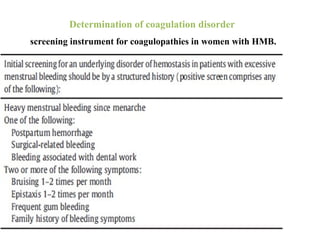
  • 92.
  • 93.
  • 94.

Editor's Notes

  • #48 Studies are limited for treatments of acute AUB