Ephraim Imhotep Zulu, BSc BMS, MSc Path
University of Zambia
School of Health Sciences,
Dept. of Biomedical Sciences,
Pathology
Lecture #15
Endocrine Pathology
Procedural document:
Rare disease nomenclature in English
www.orpha.net www.orphadata.org
Lecture Outline
• Diseases of the Pituitary Gland
• Diseases of the Thyroid Gland
• Diseases of the Parathyroid Glands
• Diseases of the endocrine pancreas
• Diseases of the adrenal glands
• Multiple Endocrine Neoplasia Syndromes (MEN)
Tuesday, July 30, 2024 Ephraim Zulu - PATHOLOGY 2
Learning Objectives:
At the end of this lecture, the student is expected to
• Know and understand the aetiology, and pathogenesis/pathophysiology of
common diseases of the endocrine system
• Appreciate the risk factors associated with common endocrine diseases
• Appreciate the clinical features and complications associated with common
endocrine diseases
• Differentiate/Compare and Contrast the following pairs of terms:
• Hyperpituitarism vs. Hypopituitarism
• Hyperthyroidism vs. Hypothyroidism
• Type 1 diabetes vs. Type 2 diabetes
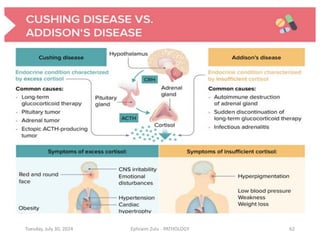
• Cushing syndrome vs. Addison's Disease
Tuesday, July 30, 2024 Ephraim Zulu - PATHOLOGY 3
Tuesday, July 30, 2024 Ephraim Zulu - PATHOLOGY 4
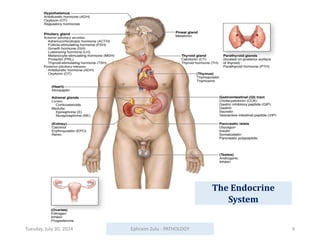
The Endocrine
System
Synopsis
• The endocrine system contains a highly integrated and widely distributed
group of organs that orchestrates a state of metabolic equilibrium, between
the various tissues of the body.
• In endocrine signaling, the secreted molecules, which are frequently called
hormones, act on target cells distant from their site of synthesis.
• Endocrine diseases can be generally classified as
• (1) diseases of underproduction or overproduction of hormones and their
resulting biochemical and clinical consequences, and
• (2) diseases associated with the development of mass lesions, which may
be nonfunctional or may be associated with overproduction or
underproduction of hormones.
Tuesday, July 30, 2024 Ephraim Zulu - PATHOLOGY 5
Hyperpituitarism & Pituitary Adenomas
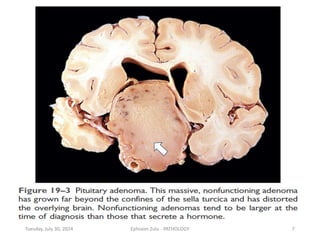
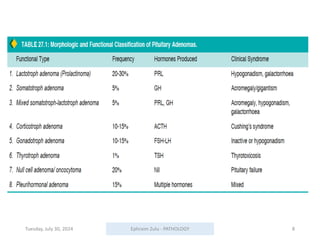
• The most common cause of hyperpituitarism is an adenoma arising in
the anterior lobe.
• Pituitary adenomas can be functional (i.e., associated with hormone
excess and clinical manifestations thereof) or silent (i.e. demonstration
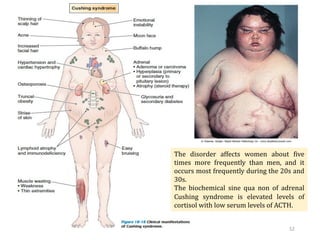
of hormone production at the tissue level only, without clinical
manifestations of hormone excess).
• Pituitary adenomas may also be hormone negative.
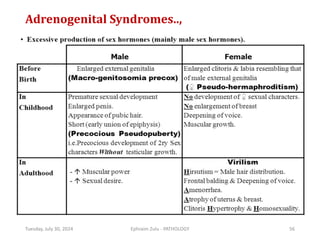
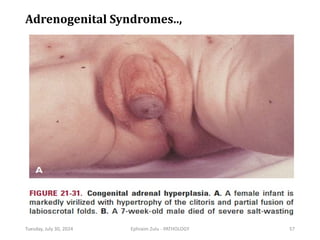
• Pituitary adenomas are usually found in adults, with a peak incidence
from the 30s to the 50s.
Tuesday, July 30, 2024 Ephraim Zulu - PATHOLOGY 6
Diseases of the Pituitary Gland
Tuesday, July 30, 2024 Ephraim Zulu - PATHOLOGY 7
Tuesday, July 30, 2024 Ephraim Zulu - PATHOLOGY 8
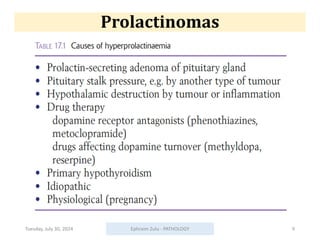
Prolactinomas
Tuesday, July 30, 2024 Ephraim Zulu - PATHOLOGY 9
Tuesday, July 30, 2024 Ephraim Zulu - PATHOLOGY 10
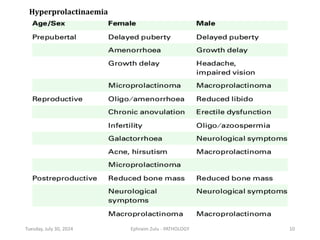
Hyperprolactinaemia
Tuesday, July 30, 2024 Ephraim Zulu - PATHOLOGY 11
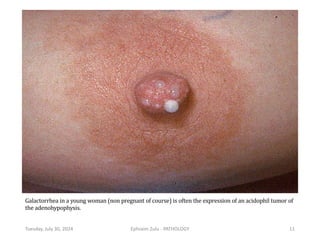
Galactorrhea in a young woman (non pregnant of course) is often the expression of an acidophil tumor of
the adenohypophysis.
Somatotroph Adenomas
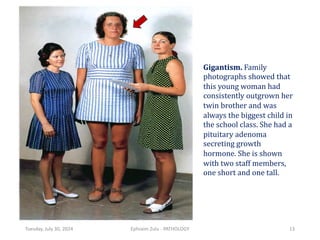
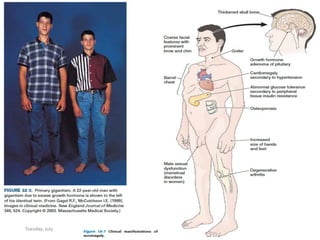
• If a growth hormone-secreting adenoma occurs before the
epiphyses close, as is the case in prepubertal children, excessive
levels of growth hormone result in gigantism.
• This is characterized by a generalized increase in body size, with
disproportionately long arms and legs.
• If elevated levels of growth hormone persist, or present after
closure of the epiphyses, individuals develop acromegaly, in
which growth is most conspicuous in soft tissues, skin, and
viscera and in the bones of the face, hands, and feet.
Tuesday, July 30, 2024 Ephraim Zulu - PATHOLOGY 12
Tuesday, July 30, 2024 Ephraim Zulu - PATHOLOGY 13
Gigantism. Family
photographs showed that
this young woman had
consistently outgrown her
twin brother and was
always the biggest child in
the school class. She had a
pituitary adenoma
secreting growth
hormone. She is shown
with two staff members,
one short and one tall.
Tuesday, July 30, 2024 Ephraim Zulu - PATHOLOGY 14
Tuesday, July 30, 2024 Ephraim Zulu - PATHOLOGY 15
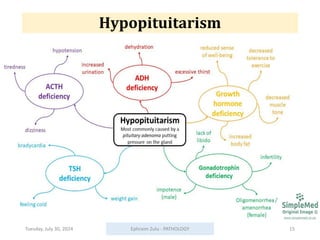
Hypopituitarism
• Thyroid hormone has diverse cellular effects,
including up-regulation of carbohydrate and lipid
catabolism and stimulation of protein synthesis
in a wide range of cells.
• The net result of these processes is an increase in
the basal metabolic rate.
Tuesday, July 30, 2024 Ephraim Zulu - PATHOLOGY 16
Diseases of the Thyroid Gland
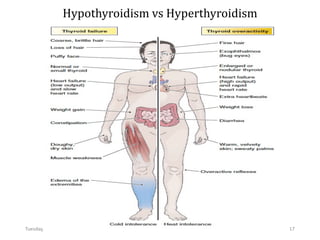
Hypothyroidism vs Hyperthyroidism
Tuesday, July 30, 2024 Ephraim Zulu - PATHOLOGY 17
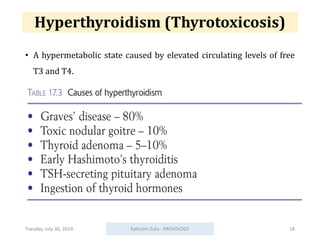
Hyperthyroidism (Thyrotoxicosis)
• A hypermetabolic state caused by elevated circulating levels of free
T3 and T4.
Tuesday, July 30, 2024 Ephraim Zulu - PATHOLOGY 18
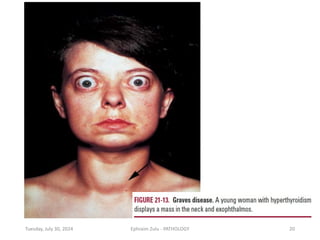
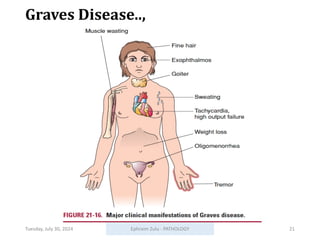
Graves Disease
• Is the most common cause of endogenous hyperthyroidism.
• An autoimmune disorder in which a variety of antibodies may be
present in the serum
• Genetic factors are important in the causation of Graves disease.
• Has a peak incidence between the ages of 20 and 40, with women
being affected as much as seven times more commonly than men.
• Laboratory findings in Graves disease include elevated serum free T4
and T3 and depressed serum TSH.
Tuesday, July 30, 2024 Ephraim Zulu - PATHOLOGY 19
Tuesday, July 30, 2024 Ephraim Zulu - PATHOLOGY 20
Tuesday, July 30, 2024 Ephraim Zulu - PATHOLOGY 21
Graves Disease..,
Hypothyroidism
•The clinical manifestations include cretinism and
myxedema.
•Cretinism refers to hypothyroidism developing in infancy
or early childhood.
•Hypothyroidism developing in older children and adults
results in a condition known as myxedema or Gull disease.
Tuesday, July 30, 2024 Ephraim Zulu - PATHOLOGY 22
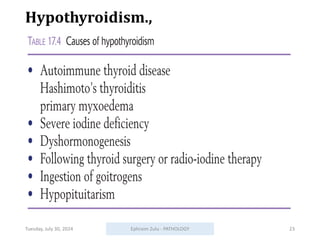
Hypothyroidism.,
Tuesday, July 30, 2024 Ephraim Zulu - PATHOLOGY 23
cholesterol levels increase the risk of cardiovascular disease.
(B)
TABLE 17.4 Causes of hypothyroidism
• Autoimmune thyroid disease
Hashimoto’s thyroiditis
primary myxoedema
• Severe iodine deficiency
• Dyshormonogenesis
• Following thyroid surgery or radio-iodine therapy
• Ingestion of goitrogens
• Hypopituitarism
Tuesday, July 30, 2024 Ephraim Zulu - PATHOLOGY 24
407
clinical syndrome
lating T3 and T4. The
saccharides accumu-
produce the typical
general features of
re 17.22. If hypothy-
hysical growth and
metimes irreversibly;
Cretinism may be
e diet contains insuf-
hesis. Sporadic cases
of thyroid tissue, or
nthesis.
hypothyroidism in
ow), but occasional
surgical removal of
ng T3 and T4
oiditis, an
Occasionally it may
goitre may develop
rmed toxic nodular
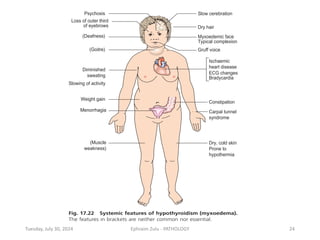
Fig. 17.22 Systemic features of hypothyroidism (myxoedema).
The features in brackets are neither common nor essential.
Slow cerebration
Dry hair
Myxoedemic face
Typical complexion
Gruff voice
Ischaemic
heart disease
ECG changes
Bradycardia
Constipation
Carpal tunnel
syndrome
Dry, cold skin
Prone to
hypothermia
Psychosis
Loss of outer third
of eyebrows
(Deafness)
(Goitre)
Diminished
sweating
Weight gain
Menorrhagia
(Muscle
weakness)
Slowing of activity
Tuesday, July 30, 2024 Ephraim Zulu - PATHOLOGY 25
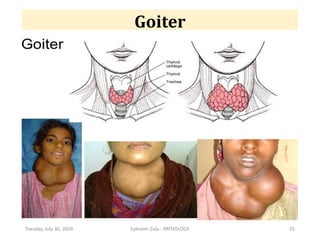
Goiter
Tuesday, July 30, 2024 Ephraim Zulu - PATHOLOGY 26
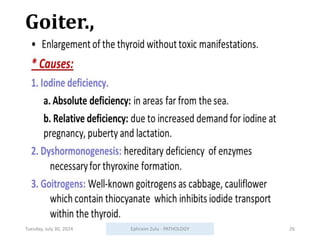
Goiter.,
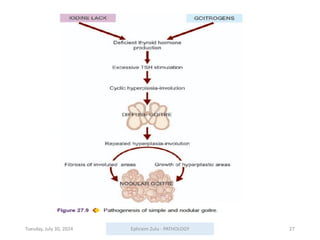
Tuesday, July 30, 2024 Ephraim Zulu - PATHOLOGY 27
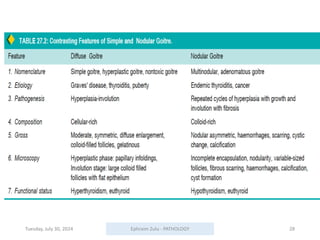
Tuesday, July 30, 2024 Ephraim Zulu - PATHOLOGY 28
Neoplasms of the Thyroid
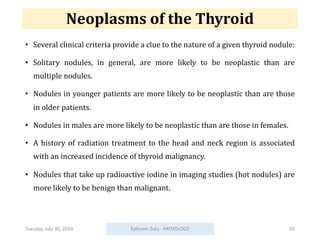
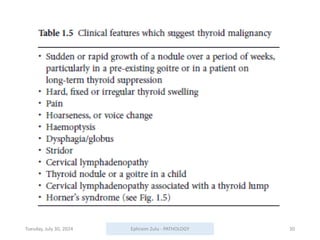
• Several clinical criteria provide a clue to the nature of a given thyroid nodule:
• Solitary nodules, in general, are more likely to be neoplastic than are
multiple nodules.
• Nodules in younger patients are more likely to be neoplastic than are those
in older patients.
• Nodules in males are more likely to be neoplastic than are those in females.
• A history of radiation treatment to the head and neck region is associated
with an increased incidence of thyroid malignancy.
• Nodules that take up radioactive iodine in imaging studies (hot nodules) are
more likely to be benign than malignant.
Tuesday, July 30, 2024 Ephraim Zulu - PATHOLOGY 29
Tuesday, July 30, 2024 Ephraim Zulu - PATHOLOGY 30
Tuesday, July 30, 2024 Ephraim Zulu - PATHOLOGY 31
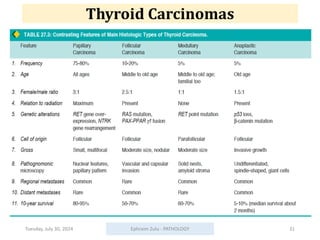
Thyroid Carcinomas
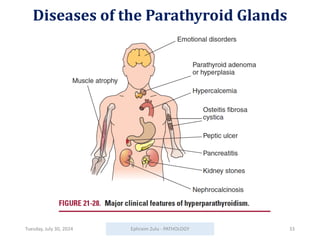
Diseases of the Parathyroid Glands
• The activity of the parathyroids is controlled by the level of free
(ionized) calcium in the bloodstream rather than by trophic
hormones secreted by the hypothalamus and pituitary.
• Tumors of the parathyroid glands, unlike thyroid tumors, usually
come to attention because of excessive secretion of parathyroid
hormone (PTH) rather than mass effects.
Tuesday, July 30, 2024 Ephraim Zulu - PATHOLOGY 32
Diseases of the Parathyroid Glands
Tuesday, July 30, 2024 Ephraim Zulu - PATHOLOGY 33
Tuesday, July 30, 2024 Ephraim Zulu - PATHOLOGY 34
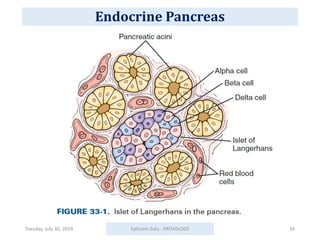
Endocrine Pancreas
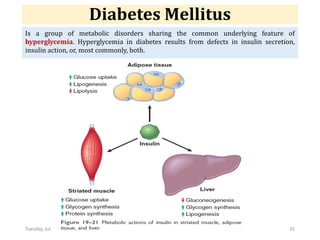
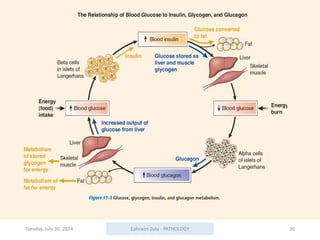
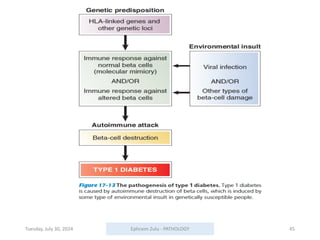
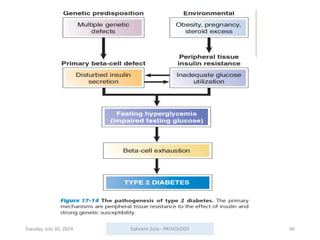
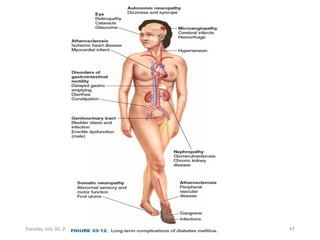
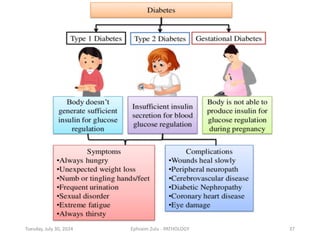
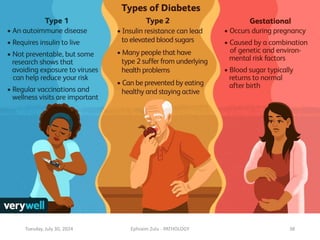
Diabetes Mellitus
Is a group of metabolic disorders sharing the common underlying feature of
hyperglycemia. Hyperglycemia in diabetes results from defects in insulin secretion,
insulin action, or, most commonly, both.
Tuesday, July 30, 2024 Ephraim Zulu - PATHOLOGY 35
Tuesday, July 30, 2024 Ephraim Zulu - PATHOLOGY 36
Tuesday, July 30, 2024 Ephraim Zulu - PATHOLOGY 37
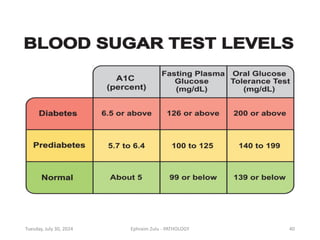
Tuesday, July 30, 2024 Ephraim Zulu - PATHOLOGY 38
Tuesday, July 30, 2024 Ephraim Zulu - PATHOLOGY 39
Tuesday, July 30, 2024 Ephraim Zulu - PATHOLOGY 40
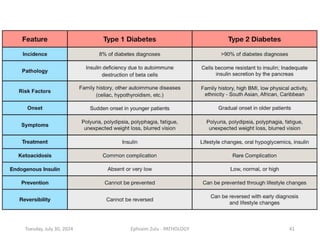
Tuesday, July 30, 2024 Ephraim Zulu - PATHOLOGY 41
Tuesday, July 30, 2024 Ephraim Zulu - PATHOLOGY 42
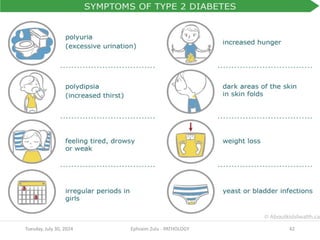
Tuesday, July 30, 2024 Ephraim Zulu - PATHOLOGY 43
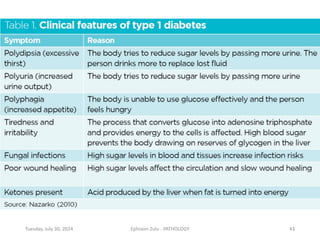
Tuesday, July 30, 2024 Ephraim Zulu - PATHOLOGY 44
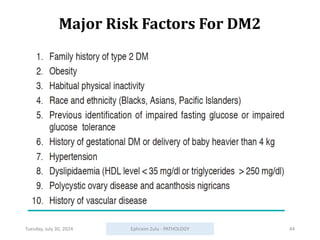
Major Risk Factors For DM2
Tuesday, July 30, 2024 Ephraim Zulu - PATHOLOGY 45
Tuesday, July 30, 2024 Ephraim Zulu - PATHOLOGY 46
Tuesday, July 30, 2024 Ephraim Zulu - PATHOLOGY 47
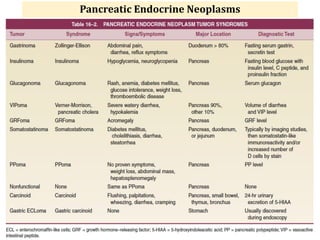
Pancreatic Endocrine Neoplasms
• AKA "islet cell tumors," are rare in comparison with
tumors of the exocrine pancreas, accounting for only 2%
of all pancreatic neoplasms.
• They are most common in adults, may be single or
multiple, and benign or malignant, the latter
metastasizing to lymph nodes and liver.
• Pancreatic endocrine neoplasms have a propensity to
elaborate pancreatic hormones, but some may be totally
nonfunctional.
Tuesday, July 30, 2024 Ephraim Zulu - PATHOLOGY 48
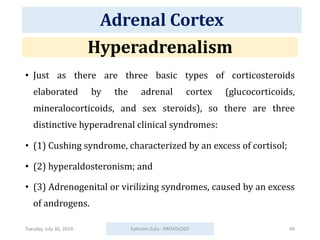
Hyperadrenalism
• Just as there are three basic types of corticosteroids
elaborated by the adrenal cortex (glucocorticoids,
mineralocorticoids, and sex steroids), so there are three
distinctive hyperadrenal clinical syndromes:
• (1) Cushing syndrome, characterized by an excess of cortisol;
• (2) hyperaldosteronism; and
• (3) Adrenogenital or virilizing syndromes, caused by an excess
of androgens.
Tuesday, July 30, 2024 Ephraim Zulu - PATHOLOGY 49
Adrenal Cortex
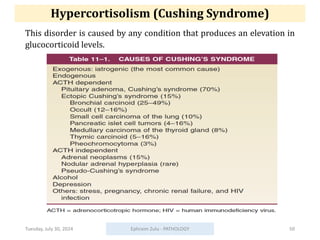
Hypercortisolism (Cushing Syndrome)
This disorder is caused by any condition that produces an elevation in
glucocorticoid levels.
Tuesday, July 30, 2024 Ephraim Zulu - PATHOLOGY 50
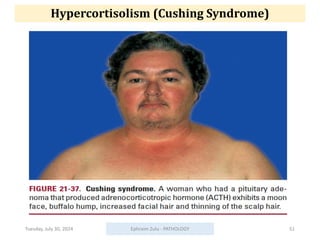
Hypercortisolism (Cushing Syndrome)
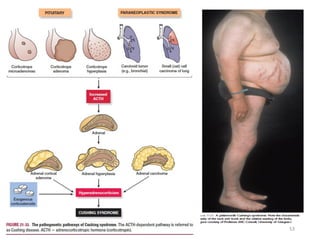
Tuesday, July 30, 2024 Ephraim Zulu - PATHOLOGY 51
Tuesday, July 30, 2024 Ephraim Zulu - PATHOLOGY 52
The disorder affects women about five
times more frequently than men, and it
occurs most frequently during the 20s and
30s.
The biochemical sine qua non of adrenal
Cushing syndrome is elevated levels of
cortisol with low serum levels of ACTH.
Tuesday, July 30, 2024 Ephraim Zulu - PATHOLOGY 53
Tuesday, July 30, 2024 Ephraim Zulu - PATHOLOGY 54
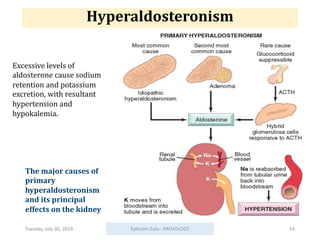
The major causes of
primary
hyperaldosteronism
and its principal
effects on the kidney
Hyperaldosteronism
Excessive levels of
aldosterone cause sodium
retention and potassium
excretion, with resultant
hypertension and
hypokalemia.
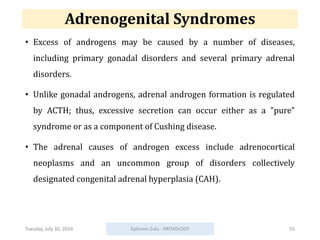
Adrenogenital Syndromes
• Excess of androgens may be caused by a number of diseases,
including primary gonadal disorders and several primary adrenal
disorders.
• Unlike gonadal androgens, adrenal androgen formation is regulated
by ACTH; thus, excessive secretion can occur either as a "pure"
syndrome or as a component of Cushing disease.
• The adrenal causes of androgen excess include adrenocortical
neoplasms and an uncommon group of disorders collectively
designated congenital adrenal hyperplasia (CAH).
Tuesday, July 30, 2024 Ephraim Zulu - PATHOLOGY 55
Adrenogenital Syndromes..,
Tuesday, July 30, 2024 Ephraim Zulu - PATHOLOGY 56
Adrenogenital Syndromes..,
Tuesday, July 30, 2024 Ephraim Zulu - PATHOLOGY 57
Adrenogenital Syndromes..,
Tuesday, July 30, 2024 Ephraim Zulu - PATHOLOGY 58
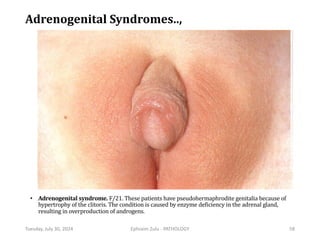
• Adrenogenital syndrome. F/21. These patients have pseudohermaphrodite genitalia because of
hypertrophy of the clitoris. The condition is caused by enzyme deficiency in the adrenal gland,
resulting in overproduction of androgens.
Adrenogenital Syndromes..,
Tuesday, July 30, 2024 Ephraim Zulu - PATHOLOGY 59
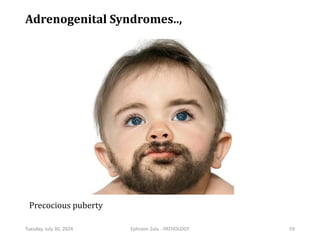
Precocious puberty
Tuesday, July 30, 2024 Ephraim Zulu - PATHOLOGY 60
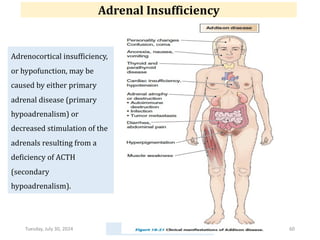
Adrenocortical insufficiency,
or hypofunction, may be
caused by either primary
adrenal disease (primary
hypoadrenalism) or
decreased stimulation of the
adrenals resulting from a
deficiency of ACTH
(secondary
hypoadrenalism).
Adrenal Insufficiency
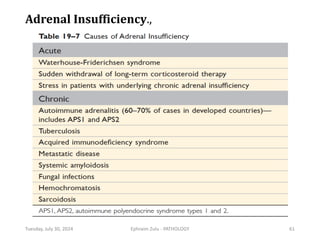
Adrenal Insufficiency.,
Tuesday, July 30, 2024 Ephraim Zulu - PATHOLOGY 61
Tuesday, July 30, 2024 Ephraim Zulu - PATHOLOGY 62
Adrenocortical Neoplasms
• Functional adrenal neoplasms may be responsible for any of the various
forms of hyperadrenalism.
• While functional adenomas are most commonly associated with
hyperaldosteronism and with Cushing syndrome, a virilizing neoplasm is
more likely to be a carcinoma.
• Adrenocortical carcinomas are rare neoplasms that may occur at any age.
• Two rare inherited causes of adrenal cortical carcinomas include the Li-
Fraumeni syndrome and the Beckwith-Wiedemann syndrome.
• The median patient survival is about 2 years.
Tuesday, July 30, 2024 Ephraim Zulu - PATHOLOGY 63
Multiple Endocrine Neoplasia Syndromes (MEN)
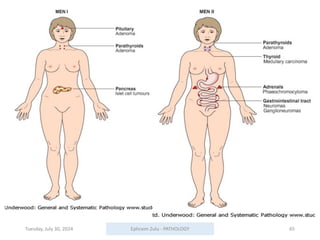
• Are a group of inherited diseases resulting in proliferative lesions
(hyperplasias, adenomas, and carcinomas) of multiple endocrine
organs.
• endocrine tumors arising in the context of MEN syndromes have
certain distinctive features that contrast with their sporadic
counterparts:
• These tumors occur at a younger age than sporadic cancers. They
arise in multiple endocrine organs, either synchronously or
metachronously. Even in one organ, the tumors are often multifocal.
• These tumors are usually more aggressive and recur in a higher
proportion of cases than similar endocrine tumors that occur
sporadically.
Tuesday, July 30, 2024 Ephraim Zulu - PATHOLOGY 64
Tuesday, July 30, 2024 Ephraim Zulu - PATHOLOGY 65
References & Credits
Tuesday, July 30, 2024 Ephraim Zulu - PATHOLOGY
• Barone J, Castro M.A. (2016), USMLE Step 1 Pathology Lecture Notes, Published by Kaplan
Medical, a division of Kaplan, Inc. 750 Third Avenue, New York, NY 10017: ISBN: 978-1-
5062-0772-8
• Cooke A.R, Stewart B (2004) Colour Atlas of Anatomical Pathology (3rd Edition) Elsevier
Science Limited Churchill Livingstone, UK
• Harsh Mohan, (2010). Textbook of Pathology (6th Edition). Jaypee brothers medical
publishers (p) ltd, India
• Juan Rosai, (2011), Rosai and Ackerman's Surgical Pathology. 11th edition Elsevier
Science Limited Churchill Livingstone, UK
• Levison D.A., Reid R, Burt A.D., Harrison D.J., Fleming S., (2008), Muir’s Textbook of
Pathology, 14th Edition, Edward Arnold (Publishers) Ltd
• Riede U.N, and Werner M, (2004). Color Atlas of Pathology. Pathologic Principles ·
Associated Diseases · Sequela. Thieme, Stuttgart - New York, USA
• Robbins SL and Kumar V (2013). Basic Pathology (9th Edition).WB Saunders Co. London.
• Rubin E, Rubin R, Strayer D.S. (2012) Rubin`s Pathology: Clinicopathologic Foundations
of Medicine (6th Edition), Lippincott Williams & Wilkins, a Wolters Kluwer business.
Philadelphia, PA.
• Underwood, J.C.E and Cross, S. S (2009). General and Systematic Pathology (5th Edition).
Churchill-Livingstone, Edinburgh. ISBN: 978 0443068881
66
References & Credits
Tuesday, July 30, 2024 Ephraim Zulu - PATHOLOGY
End of Lecture
Ephraim Imhotep Zulu
Pathology
67

PATHOLOGY - 15 - Endocrine Pathology.pdf

  • 1.
    Ephraim Imhotep Zulu,BSc BMS, MSc Path University of Zambia School of Health Sciences, Dept. of Biomedical Sciences, Pathology Lecture #15 Endocrine Pathology Procedural document: Rare disease nomenclature in English www.orpha.net www.orphadata.org
  • 2.
    Lecture Outline • Diseasesof the Pituitary Gland • Diseases of the Thyroid Gland • Diseases of the Parathyroid Glands • Diseases of the endocrine pancreas • Diseases of the adrenal glands • Multiple Endocrine Neoplasia Syndromes (MEN) Tuesday, July 30, 2024 Ephraim Zulu - PATHOLOGY 2
  • 3.
    Learning Objectives: At theend of this lecture, the student is expected to • Know and understand the aetiology, and pathogenesis/pathophysiology of common diseases of the endocrine system • Appreciate the risk factors associated with common endocrine diseases • Appreciate the clinical features and complications associated with common endocrine diseases • Differentiate/Compare and Contrast the following pairs of terms: • Hyperpituitarism vs. Hypopituitarism • Hyperthyroidism vs. Hypothyroidism • Type 1 diabetes vs. Type 2 diabetes • Cushing syndrome vs. Addison's Disease Tuesday, July 30, 2024 Ephraim Zulu - PATHOLOGY 3
  • 4.
    Tuesday, July 30,2024 Ephraim Zulu - PATHOLOGY 4 The Endocrine System
  • 5.
    Synopsis • The endocrinesystem contains a highly integrated and widely distributed group of organs that orchestrates a state of metabolic equilibrium, between the various tissues of the body. • In endocrine signaling, the secreted molecules, which are frequently called hormones, act on target cells distant from their site of synthesis. • Endocrine diseases can be generally classified as • (1) diseases of underproduction or overproduction of hormones and their resulting biochemical and clinical consequences, and • (2) diseases associated with the development of mass lesions, which may be nonfunctional or may be associated with overproduction or underproduction of hormones. Tuesday, July 30, 2024 Ephraim Zulu - PATHOLOGY 5
  • 6.
    Hyperpituitarism & PituitaryAdenomas • The most common cause of hyperpituitarism is an adenoma arising in the anterior lobe. • Pituitary adenomas can be functional (i.e., associated with hormone excess and clinical manifestations thereof) or silent (i.e. demonstration of hormone production at the tissue level only, without clinical manifestations of hormone excess). • Pituitary adenomas may also be hormone negative. • Pituitary adenomas are usually found in adults, with a peak incidence from the 30s to the 50s. Tuesday, July 30, 2024 Ephraim Zulu - PATHOLOGY 6 Diseases of the Pituitary Gland
  • 7.
    Tuesday, July 30,2024 Ephraim Zulu - PATHOLOGY 7
  • 8.
    Tuesday, July 30,2024 Ephraim Zulu - PATHOLOGY 8
  • 9.
    Prolactinomas Tuesday, July 30,2024 Ephraim Zulu - PATHOLOGY 9
  • 10.
    Tuesday, July 30,2024 Ephraim Zulu - PATHOLOGY 10 Hyperprolactinaemia
  • 11.
    Tuesday, July 30,2024 Ephraim Zulu - PATHOLOGY 11 Galactorrhea in a young woman (non pregnant of course) is often the expression of an acidophil tumor of the adenohypophysis.
  • 12.
    Somatotroph Adenomas • Ifa growth hormone-secreting adenoma occurs before the epiphyses close, as is the case in prepubertal children, excessive levels of growth hormone result in gigantism. • This is characterized by a generalized increase in body size, with disproportionately long arms and legs. • If elevated levels of growth hormone persist, or present after closure of the epiphyses, individuals develop acromegaly, in which growth is most conspicuous in soft tissues, skin, and viscera and in the bones of the face, hands, and feet. Tuesday, July 30, 2024 Ephraim Zulu - PATHOLOGY 12
  • 13.
    Tuesday, July 30,2024 Ephraim Zulu - PATHOLOGY 13 Gigantism. Family photographs showed that this young woman had consistently outgrown her twin brother and was always the biggest child in the school class. She had a pituitary adenoma secreting growth hormone. She is shown with two staff members, one short and one tall.
  • 14.
    Tuesday, July 30,2024 Ephraim Zulu - PATHOLOGY 14
  • 15.
    Tuesday, July 30,2024 Ephraim Zulu - PATHOLOGY 15 Hypopituitarism
  • 16.
    • Thyroid hormonehas diverse cellular effects, including up-regulation of carbohydrate and lipid catabolism and stimulation of protein synthesis in a wide range of cells. • The net result of these processes is an increase in the basal metabolic rate. Tuesday, July 30, 2024 Ephraim Zulu - PATHOLOGY 16 Diseases of the Thyroid Gland
  • 17.
    Hypothyroidism vs Hyperthyroidism Tuesday,July 30, 2024 Ephraim Zulu - PATHOLOGY 17
  • 18.
    Hyperthyroidism (Thyrotoxicosis) • Ahypermetabolic state caused by elevated circulating levels of free T3 and T4. Tuesday, July 30, 2024 Ephraim Zulu - PATHOLOGY 18
  • 19.
    Graves Disease • Isthe most common cause of endogenous hyperthyroidism. • An autoimmune disorder in which a variety of antibodies may be present in the serum • Genetic factors are important in the causation of Graves disease. • Has a peak incidence between the ages of 20 and 40, with women being affected as much as seven times more commonly than men. • Laboratory findings in Graves disease include elevated serum free T4 and T3 and depressed serum TSH. Tuesday, July 30, 2024 Ephraim Zulu - PATHOLOGY 19
  • 20.
    Tuesday, July 30,2024 Ephraim Zulu - PATHOLOGY 20
  • 21.
    Tuesday, July 30,2024 Ephraim Zulu - PATHOLOGY 21 Graves Disease..,
  • 22.
    Hypothyroidism •The clinical manifestationsinclude cretinism and myxedema. •Cretinism refers to hypothyroidism developing in infancy or early childhood. •Hypothyroidism developing in older children and adults results in a condition known as myxedema or Gull disease. Tuesday, July 30, 2024 Ephraim Zulu - PATHOLOGY 22
  • 23.
    Hypothyroidism., Tuesday, July 30,2024 Ephraim Zulu - PATHOLOGY 23 cholesterol levels increase the risk of cardiovascular disease. (B) TABLE 17.4 Causes of hypothyroidism • Autoimmune thyroid disease Hashimoto’s thyroiditis primary myxoedema • Severe iodine deficiency • Dyshormonogenesis • Following thyroid surgery or radio-iodine therapy • Ingestion of goitrogens • Hypopituitarism
  • 24.
    Tuesday, July 30,2024 Ephraim Zulu - PATHOLOGY 24 407 clinical syndrome lating T3 and T4. The saccharides accumu- produce the typical general features of re 17.22. If hypothy- hysical growth and metimes irreversibly; Cretinism may be e diet contains insuf- hesis. Sporadic cases of thyroid tissue, or nthesis. hypothyroidism in ow), but occasional surgical removal of ng T3 and T4 oiditis, an Occasionally it may goitre may develop rmed toxic nodular Fig. 17.22 Systemic features of hypothyroidism (myxoedema). The features in brackets are neither common nor essential. Slow cerebration Dry hair Myxoedemic face Typical complexion Gruff voice Ischaemic heart disease ECG changes Bradycardia Constipation Carpal tunnel syndrome Dry, cold skin Prone to hypothermia Psychosis Loss of outer third of eyebrows (Deafness) (Goitre) Diminished sweating Weight gain Menorrhagia (Muscle weakness) Slowing of activity
  • 25.
    Tuesday, July 30,2024 Ephraim Zulu - PATHOLOGY 25 Goiter
  • 26.
    Tuesday, July 30,2024 Ephraim Zulu - PATHOLOGY 26 Goiter.,
  • 27.
    Tuesday, July 30,2024 Ephraim Zulu - PATHOLOGY 27
  • 28.
    Tuesday, July 30,2024 Ephraim Zulu - PATHOLOGY 28
  • 29.
    Neoplasms of theThyroid • Several clinical criteria provide a clue to the nature of a given thyroid nodule: • Solitary nodules, in general, are more likely to be neoplastic than are multiple nodules. • Nodules in younger patients are more likely to be neoplastic than are those in older patients. • Nodules in males are more likely to be neoplastic than are those in females. • A history of radiation treatment to the head and neck region is associated with an increased incidence of thyroid malignancy. • Nodules that take up radioactive iodine in imaging studies (hot nodules) are more likely to be benign than malignant. Tuesday, July 30, 2024 Ephraim Zulu - PATHOLOGY 29
  • 30.
    Tuesday, July 30,2024 Ephraim Zulu - PATHOLOGY 30
  • 31.
    Tuesday, July 30,2024 Ephraim Zulu - PATHOLOGY 31 Thyroid Carcinomas
  • 32.
    Diseases of theParathyroid Glands • The activity of the parathyroids is controlled by the level of free (ionized) calcium in the bloodstream rather than by trophic hormones secreted by the hypothalamus and pituitary. • Tumors of the parathyroid glands, unlike thyroid tumors, usually come to attention because of excessive secretion of parathyroid hormone (PTH) rather than mass effects. Tuesday, July 30, 2024 Ephraim Zulu - PATHOLOGY 32
  • 33.
    Diseases of theParathyroid Glands Tuesday, July 30, 2024 Ephraim Zulu - PATHOLOGY 33
  • 34.
    Tuesday, July 30,2024 Ephraim Zulu - PATHOLOGY 34 Endocrine Pancreas
  • 35.
    Diabetes Mellitus Is agroup of metabolic disorders sharing the common underlying feature of hyperglycemia. Hyperglycemia in diabetes results from defects in insulin secretion, insulin action, or, most commonly, both. Tuesday, July 30, 2024 Ephraim Zulu - PATHOLOGY 35
  • 36.
    Tuesday, July 30,2024 Ephraim Zulu - PATHOLOGY 36
  • 37.
    Tuesday, July 30,2024 Ephraim Zulu - PATHOLOGY 37
  • 38.
    Tuesday, July 30,2024 Ephraim Zulu - PATHOLOGY 38
  • 39.
    Tuesday, July 30,2024 Ephraim Zulu - PATHOLOGY 39
  • 40.
    Tuesday, July 30,2024 Ephraim Zulu - PATHOLOGY 40
  • 41.
    Tuesday, July 30,2024 Ephraim Zulu - PATHOLOGY 41
  • 42.
    Tuesday, July 30,2024 Ephraim Zulu - PATHOLOGY 42
  • 43.
    Tuesday, July 30,2024 Ephraim Zulu - PATHOLOGY 43
  • 44.
    Tuesday, July 30,2024 Ephraim Zulu - PATHOLOGY 44 Major Risk Factors For DM2
  • 45.
    Tuesday, July 30,2024 Ephraim Zulu - PATHOLOGY 45
  • 46.
    Tuesday, July 30,2024 Ephraim Zulu - PATHOLOGY 46
  • 47.
    Tuesday, July 30,2024 Ephraim Zulu - PATHOLOGY 47
  • 48.
    Pancreatic Endocrine Neoplasms •AKA "islet cell tumors," are rare in comparison with tumors of the exocrine pancreas, accounting for only 2% of all pancreatic neoplasms. • They are most common in adults, may be single or multiple, and benign or malignant, the latter metastasizing to lymph nodes and liver. • Pancreatic endocrine neoplasms have a propensity to elaborate pancreatic hormones, but some may be totally nonfunctional. Tuesday, July 30, 2024 Ephraim Zulu - PATHOLOGY 48
  • 49.
    Hyperadrenalism • Just asthere are three basic types of corticosteroids elaborated by the adrenal cortex (glucocorticoids, mineralocorticoids, and sex steroids), so there are three distinctive hyperadrenal clinical syndromes: • (1) Cushing syndrome, characterized by an excess of cortisol; • (2) hyperaldosteronism; and • (3) Adrenogenital or virilizing syndromes, caused by an excess of androgens. Tuesday, July 30, 2024 Ephraim Zulu - PATHOLOGY 49 Adrenal Cortex
  • 50.
    Hypercortisolism (Cushing Syndrome) Thisdisorder is caused by any condition that produces an elevation in glucocorticoid levels. Tuesday, July 30, 2024 Ephraim Zulu - PATHOLOGY 50
  • 51.
    Hypercortisolism (Cushing Syndrome) Tuesday,July 30, 2024 Ephraim Zulu - PATHOLOGY 51
  • 52.
    Tuesday, July 30,2024 Ephraim Zulu - PATHOLOGY 52 The disorder affects women about five times more frequently than men, and it occurs most frequently during the 20s and 30s. The biochemical sine qua non of adrenal Cushing syndrome is elevated levels of cortisol with low serum levels of ACTH.
  • 53.
    Tuesday, July 30,2024 Ephraim Zulu - PATHOLOGY 53
  • 54.
    Tuesday, July 30,2024 Ephraim Zulu - PATHOLOGY 54 The major causes of primary hyperaldosteronism and its principal effects on the kidney Hyperaldosteronism Excessive levels of aldosterone cause sodium retention and potassium excretion, with resultant hypertension and hypokalemia.
  • 55.
    Adrenogenital Syndromes • Excessof androgens may be caused by a number of diseases, including primary gonadal disorders and several primary adrenal disorders. • Unlike gonadal androgens, adrenal androgen formation is regulated by ACTH; thus, excessive secretion can occur either as a "pure" syndrome or as a component of Cushing disease. • The adrenal causes of androgen excess include adrenocortical neoplasms and an uncommon group of disorders collectively designated congenital adrenal hyperplasia (CAH). Tuesday, July 30, 2024 Ephraim Zulu - PATHOLOGY 55
  • 56.
    Adrenogenital Syndromes.., Tuesday, July30, 2024 Ephraim Zulu - PATHOLOGY 56
  • 57.
    Adrenogenital Syndromes.., Tuesday, July30, 2024 Ephraim Zulu - PATHOLOGY 57
  • 58.
    Adrenogenital Syndromes.., Tuesday, July30, 2024 Ephraim Zulu - PATHOLOGY 58 • Adrenogenital syndrome. F/21. These patients have pseudohermaphrodite genitalia because of hypertrophy of the clitoris. The condition is caused by enzyme deficiency in the adrenal gland, resulting in overproduction of androgens.
  • 59.
    Adrenogenital Syndromes.., Tuesday, July30, 2024 Ephraim Zulu - PATHOLOGY 59 Precocious puberty
  • 60.
    Tuesday, July 30,2024 Ephraim Zulu - PATHOLOGY 60 Adrenocortical insufficiency, or hypofunction, may be caused by either primary adrenal disease (primary hypoadrenalism) or decreased stimulation of the adrenals resulting from a deficiency of ACTH (secondary hypoadrenalism). Adrenal Insufficiency
  • 61.
    Adrenal Insufficiency., Tuesday, July30, 2024 Ephraim Zulu - PATHOLOGY 61
  • 62.
    Tuesday, July 30,2024 Ephraim Zulu - PATHOLOGY 62
  • 63.
    Adrenocortical Neoplasms • Functionaladrenal neoplasms may be responsible for any of the various forms of hyperadrenalism. • While functional adenomas are most commonly associated with hyperaldosteronism and with Cushing syndrome, a virilizing neoplasm is more likely to be a carcinoma. • Adrenocortical carcinomas are rare neoplasms that may occur at any age. • Two rare inherited causes of adrenal cortical carcinomas include the Li- Fraumeni syndrome and the Beckwith-Wiedemann syndrome. • The median patient survival is about 2 years. Tuesday, July 30, 2024 Ephraim Zulu - PATHOLOGY 63
  • 64.
    Multiple Endocrine NeoplasiaSyndromes (MEN) • Are a group of inherited diseases resulting in proliferative lesions (hyperplasias, adenomas, and carcinomas) of multiple endocrine organs. • endocrine tumors arising in the context of MEN syndromes have certain distinctive features that contrast with their sporadic counterparts: • These tumors occur at a younger age than sporadic cancers. They arise in multiple endocrine organs, either synchronously or metachronously. Even in one organ, the tumors are often multifocal. • These tumors are usually more aggressive and recur in a higher proportion of cases than similar endocrine tumors that occur sporadically. Tuesday, July 30, 2024 Ephraim Zulu - PATHOLOGY 64
  • 65.
    Tuesday, July 30,2024 Ephraim Zulu - PATHOLOGY 65
  • 66.
    References & Credits Tuesday,July 30, 2024 Ephraim Zulu - PATHOLOGY • Barone J, Castro M.A. (2016), USMLE Step 1 Pathology Lecture Notes, Published by Kaplan Medical, a division of Kaplan, Inc. 750 Third Avenue, New York, NY 10017: ISBN: 978-1- 5062-0772-8 • Cooke A.R, Stewart B (2004) Colour Atlas of Anatomical Pathology (3rd Edition) Elsevier Science Limited Churchill Livingstone, UK • Harsh Mohan, (2010). Textbook of Pathology (6th Edition). Jaypee brothers medical publishers (p) ltd, India • Juan Rosai, (2011), Rosai and Ackerman's Surgical Pathology. 11th edition Elsevier Science Limited Churchill Livingstone, UK • Levison D.A., Reid R, Burt A.D., Harrison D.J., Fleming S., (2008), Muir’s Textbook of Pathology, 14th Edition, Edward Arnold (Publishers) Ltd • Riede U.N, and Werner M, (2004). Color Atlas of Pathology. Pathologic Principles · Associated Diseases · Sequela. Thieme, Stuttgart - New York, USA • Robbins SL and Kumar V (2013). Basic Pathology (9th Edition).WB Saunders Co. London. • Rubin E, Rubin R, Strayer D.S. (2012) Rubin`s Pathology: Clinicopathologic Foundations of Medicine (6th Edition), Lippincott Williams & Wilkins, a Wolters Kluwer business. Philadelphia, PA. • Underwood, J.C.E and Cross, S. S (2009). General and Systematic Pathology (5th Edition). Churchill-Livingstone, Edinburgh. ISBN: 978 0443068881 66 References & Credits
  • 67.
    Tuesday, July 30,2024 Ephraim Zulu - PATHOLOGY End of Lecture Ephraim Imhotep Zulu Pathology 67