

PATHOGENESIS
      of HIV

 RAJA ZAHIDAH BINTI RAJA ISMAIL
  ANIS NABILA BINTI MD NOR
  FARINA BINTI NOR HASHIMI
MUHAMMAD FATTAH BIN FAZEL
PATHOGENESIS
    of HIV

Entering The Information Slide
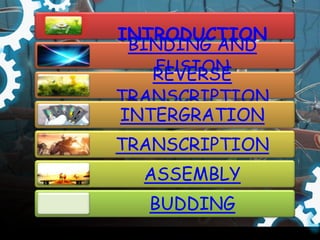
INTRODUCTION
 BINDING AND
   FUSION
   REVERSE
TRANSCRIPTION
INTERGRATION
TRANSCRIPTION
  ASSEMBLY
  BUDDING
INTRODUCTION

• Definition of Pathogenesis

Pathogenesis: The development of a
 disease and the chain of events leading
 to that disease.
INTRODUCTION

 Infection is transmitted when the virus
 enters the bloodstream or tissues of a
 person and comes into contact with a
 suitable host cell, principally the CD4 T
 Lymphocytes
HIV infected cells are more infective than
 a cell free virus
HOW HIV ENTER THE HOST
CELL?
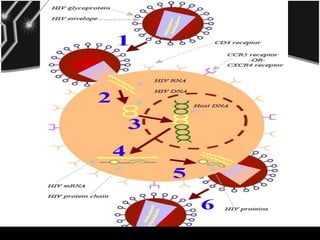
HIV enter the host cell via
  mechanism which are:
• Binding and fusion
• Reverse transcription
• Integration
• Transcription
• Assembly
• Budding
1) Binding and Fusion
HIV begins its life cycle when it
 binds to a CD4 receptor and one of
 two co-receptor on the surface of a
 CD4+ T-lymphocyte a.k.a T-helper
 cell.
The virus then fuses with the host
 cell
After fusion, the virus releases
 RNA, its genetic material, into host
 cell
Terms :
• CD4 receptor is a protein present on
  the outside of infection-fighting white
  blood cell
• Function : Helps in T cell recognition of a
  foreign antigen. Also the binding site for
  HIV.
• Co- receptor: In addition for HIV to
  binding a CD4 receptor to get into a cell
• T-lymphocyte : A type of white blood
  cell that detects and fight foreign
  invaders of the body
2) REVERSE TRANSCRIPTION


An HIV enzyme called reverse
 transcriptase
 It converts the single stranded HIV
 RNA to double-stranded HIV DNA
3) INTEGRATION
 The newly formed HIV DNA (doubled-
 stranded DNA) enters the host cell’s
 nucleus,
 HIV enzyme called integrase ‘hides’ the
 HIV DNA within the host cell’s own DNA
The integrated HIV DNA is called provirus
Provirus may remain inactive for several
 years and producing few or no new
 copies of HIV
4) TRANSCRIPTION
 The host cell receives a signal to
 become active.
The provirus uses a host enzyme
 called RNA polymerase to create
 copies of the HIV genomic material
 as shorter strands of RNA called
 messenger RNA(Mrna)
The mRNA is used as a blueprint to
 make long chains of HIV proteins
5) ASSEMBLY
 An HIV enzyme called protease cuts
 the long chains of HIV proteins into
 smaller individual proteins.
 The smaller HIV proteins come
 together with copies of HIV’s RNA
 genetic material.
 Then a new virus particle is
 assembled
6) BUDDING
 The newly assembled virus pushes
 out (‘buds’) from the host cell
 During budding, the new virus
 steals part of the cells outer
 envelope.
 This envelope acts a covering is
 studded with protein/sugar
 combinations called HIV
 glycoproteins.
6) BUDDING


These HIV glycoproteins are
 necessarry for the virus to bind CD4
 and co-receptors
 the new copies of HIV can now
 move on to infect other cells.
REFERENCE
http://aidsinfo.nih.gov/contentfiles/
 HIVLifeCycle_FS_en.pdf
http://www.slideworld.org/slidesho
 w.aspx/Pathogenesis-of-HIV-ppt-
 2847180
 Pearson International Edition,
 Campbell, Reece Biology Eighth
 Edition.
In matter of style, swim with the current.
In matter of principle, stand like a rock.
Pathogenesis Hiv Slide

Pathogenesis Hiv Slide

  • 1.
    PATHOGENESIS of HIV  RAJA ZAHIDAH BINTI RAJA ISMAIL ANIS NABILA BINTI MD NOR FARINA BINTI NOR HASHIMI MUHAMMAD FATTAH BIN FAZEL
  • 2.
    PATHOGENESIS of HIV Entering The Information Slide
  • 3.
    INTRODUCTION BINDING AND FUSION REVERSE TRANSCRIPTION INTERGRATION TRANSCRIPTION ASSEMBLY BUDDING
  • 4.
    INTRODUCTION • Definition ofPathogenesis Pathogenesis: The development of a disease and the chain of events leading to that disease.
  • 5.
    INTRODUCTION  Infection istransmitted when the virus enters the bloodstream or tissues of a person and comes into contact with a suitable host cell, principally the CD4 T Lymphocytes HIV infected cells are more infective than a cell free virus
  • 6.
    HOW HIV ENTERTHE HOST CELL? HIV enter the host cell via mechanism which are: • Binding and fusion • Reverse transcription • Integration • Transcription • Assembly • Budding
  • 8.
    1) Binding andFusion HIV begins its life cycle when it binds to a CD4 receptor and one of two co-receptor on the surface of a CD4+ T-lymphocyte a.k.a T-helper cell. The virus then fuses with the host cell After fusion, the virus releases RNA, its genetic material, into host cell
  • 9.
    Terms : • CD4receptor is a protein present on the outside of infection-fighting white blood cell • Function : Helps in T cell recognition of a foreign antigen. Also the binding site for HIV. • Co- receptor: In addition for HIV to binding a CD4 receptor to get into a cell • T-lymphocyte : A type of white blood cell that detects and fight foreign invaders of the body
  • 10.
    2) REVERSE TRANSCRIPTION AnHIV enzyme called reverse transcriptase  It converts the single stranded HIV RNA to double-stranded HIV DNA
  • 11.
    3) INTEGRATION  Thenewly formed HIV DNA (doubled- stranded DNA) enters the host cell’s nucleus,  HIV enzyme called integrase ‘hides’ the HIV DNA within the host cell’s own DNA The integrated HIV DNA is called provirus Provirus may remain inactive for several years and producing few or no new copies of HIV
  • 12.
    4) TRANSCRIPTION  Thehost cell receives a signal to become active. The provirus uses a host enzyme called RNA polymerase to create copies of the HIV genomic material as shorter strands of RNA called messenger RNA(Mrna) The mRNA is used as a blueprint to make long chains of HIV proteins
  • 13.
    5) ASSEMBLY  AnHIV enzyme called protease cuts the long chains of HIV proteins into smaller individual proteins.  The smaller HIV proteins come together with copies of HIV’s RNA genetic material.  Then a new virus particle is assembled
  • 14.
    6) BUDDING  Thenewly assembled virus pushes out (‘buds’) from the host cell  During budding, the new virus steals part of the cells outer envelope.  This envelope acts a covering is studded with protein/sugar combinations called HIV glycoproteins.
  • 15.
    6) BUDDING These HIVglycoproteins are necessarry for the virus to bind CD4 and co-receptors  the new copies of HIV can now move on to infect other cells.
  • 16.
  • 17.
    In matter ofstyle, swim with the current. In matter of principle, stand like a rock.

Editor's Notes

  • #9 Types of T-cell Helper (CD4 + T)CytotoxicMemoryRegulatoryNatural Killer