LESSON 2
EXPRESSIONISM
PRESENTED BY: JOHNNE ERIKA FAMORCAN
ACTIVITY 1.1
GIVE YOUR THOUGHTS ABOUT THE FOLLOWING QUESTIONS BELOW IN A
1/2 SHEET OF PAPER.
5 POINTS EACH
WHEN IS MUSIC EXPRESSIVE FOR YOU?
WHEN IS MUSIC PLEASING AND BEAUTIFUL FOR YOU?
HOW DOES MUSIC ELICIT EMOTION?
1.
2.
3.
EXPRESSIONISM
•Melody was not absent during the 20th century.
•Melodic compositions has been less important.
•It gave an abstract form called Expressionism.
• Highly expressive style
• Expressed disturbed condition of the mind.
EXPRESSIONISM
• German’s reaction to French impressionism.
• Expressionism is better performed with
instruments than sung.
• Expressionism composers:
–New methods of composition
–New performance techniques –New concepts of
music theory
ESTIMATED ANNOUNCE DATES
MUSICAL
STYLES
1.
Expression of subjective feeling
2.
Expression of alienation
3.
Expression of anxiety.
AAI | Pro X
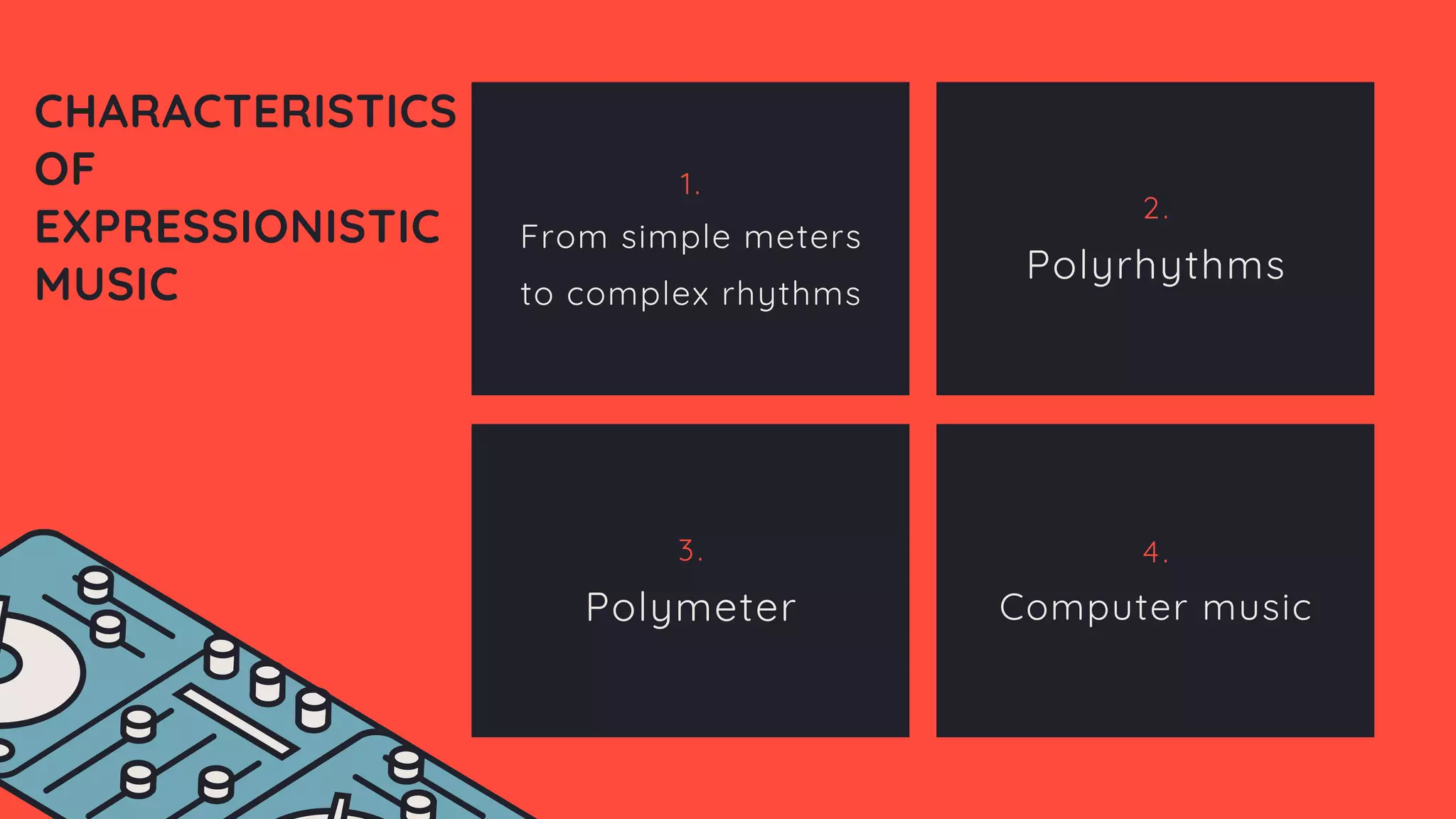
1.
From simple meters
to complex rhythms
2.
Polyrhythms
3.
Polymeter
4.
Computer music
CHARACTERISTICS
OF
EXPRESSIONISTIC
MUSIC
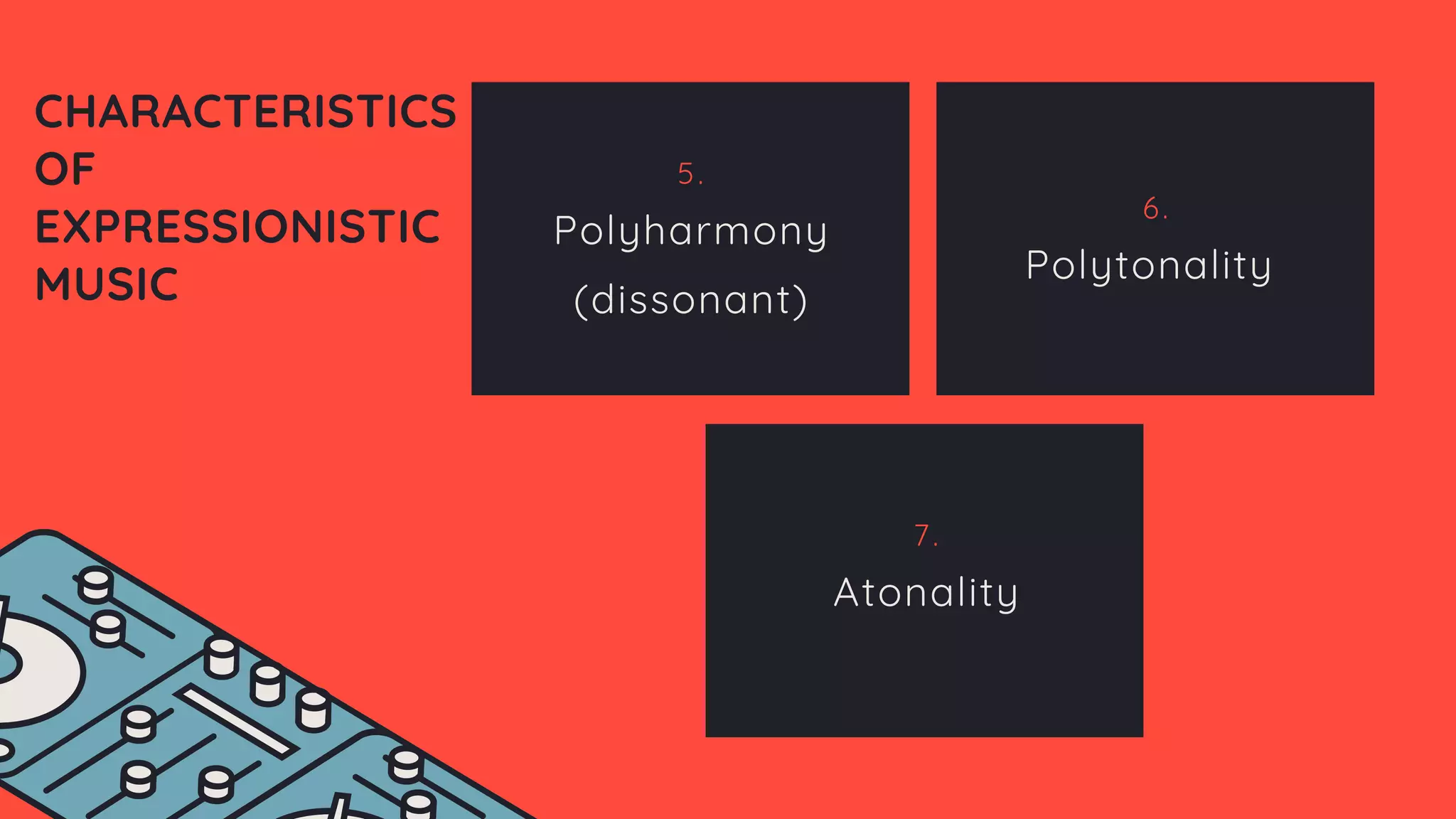
5.
Polyharmony
(dissonant)
6.
Polytonality
7.
Atonality
CHARACTERISTICS
OF
EXPRESSIONISTIC
MUSIC
ESTIMATED
ANNOUNCE DATES
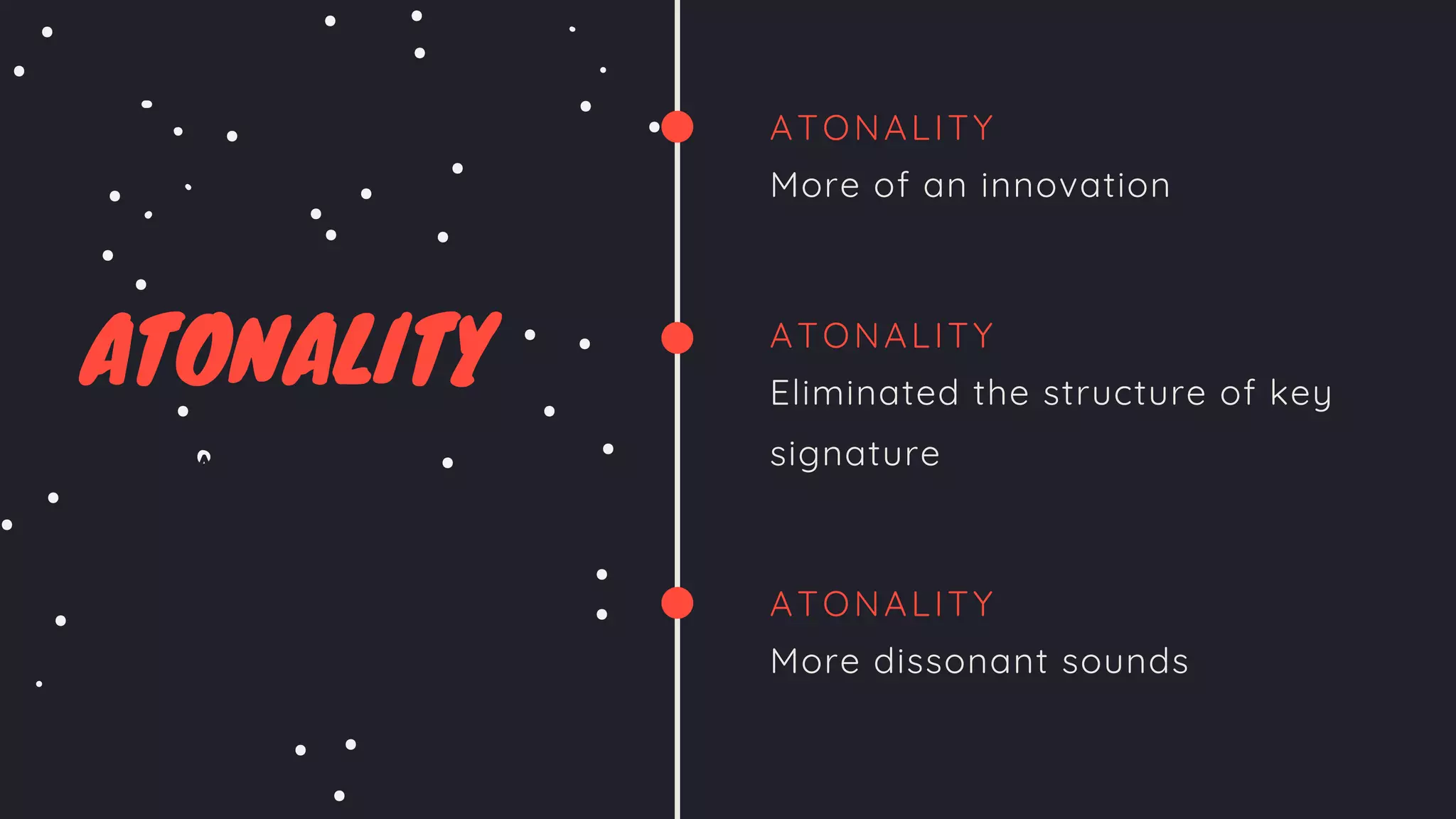
ATONALITY
ATONALITY
More of an innovation
ATONALITY
Eliminated the structure of key
signature
ATONALITY
More dissonant sounds
AAI | Pro X
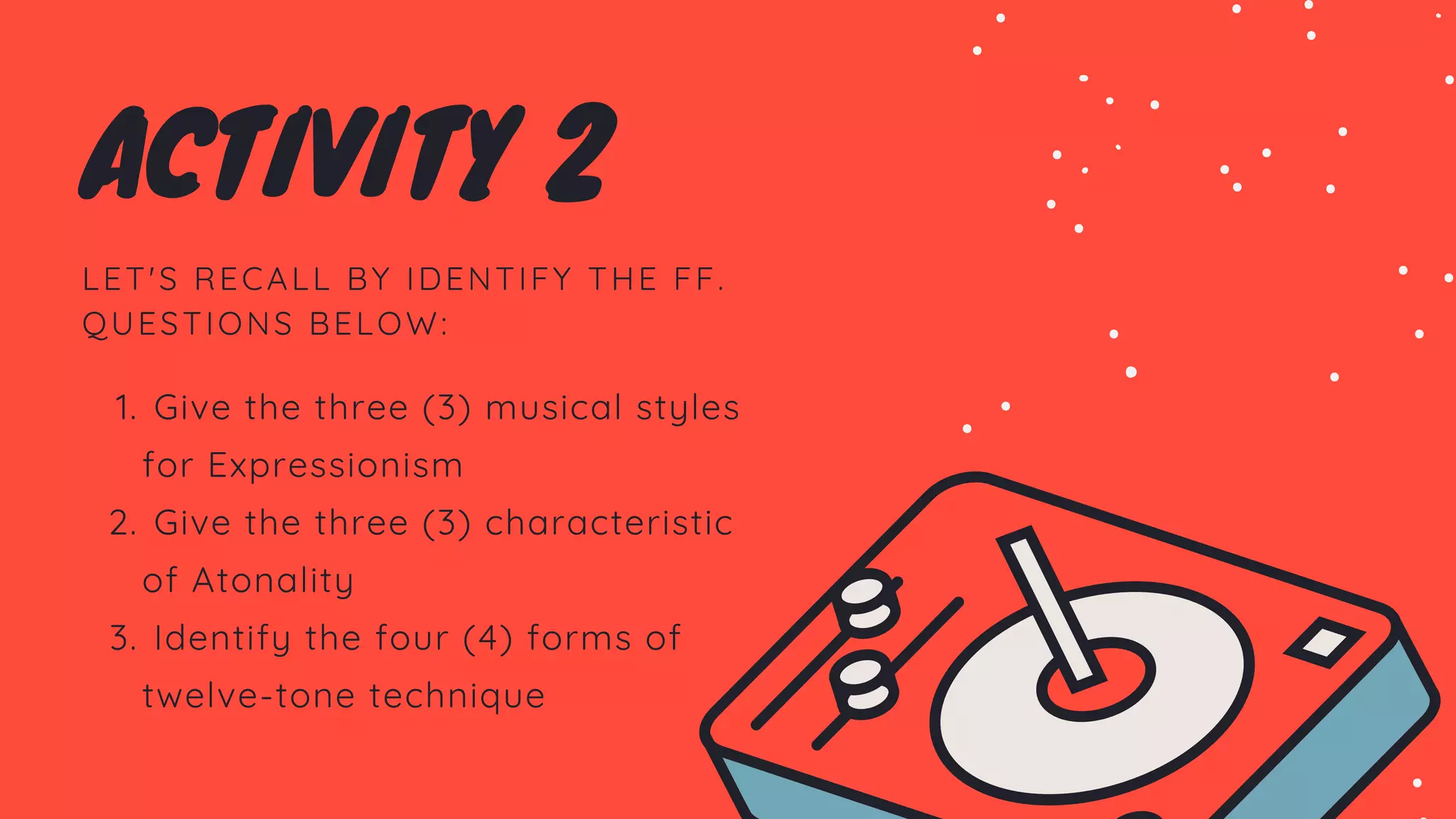
LET'S RECALL BY IDENTIFY THE FF.
QUESTIONS BELOW:
Give the three (3) musical styles
for Expressionism
Give the three (3) characteristic
of Atonality
Identify the four (4) forms of
twelve-tone technique
1.
2.
3.
ACTIVITY 2
EXPRESSIONISTIC
COMPOSERS
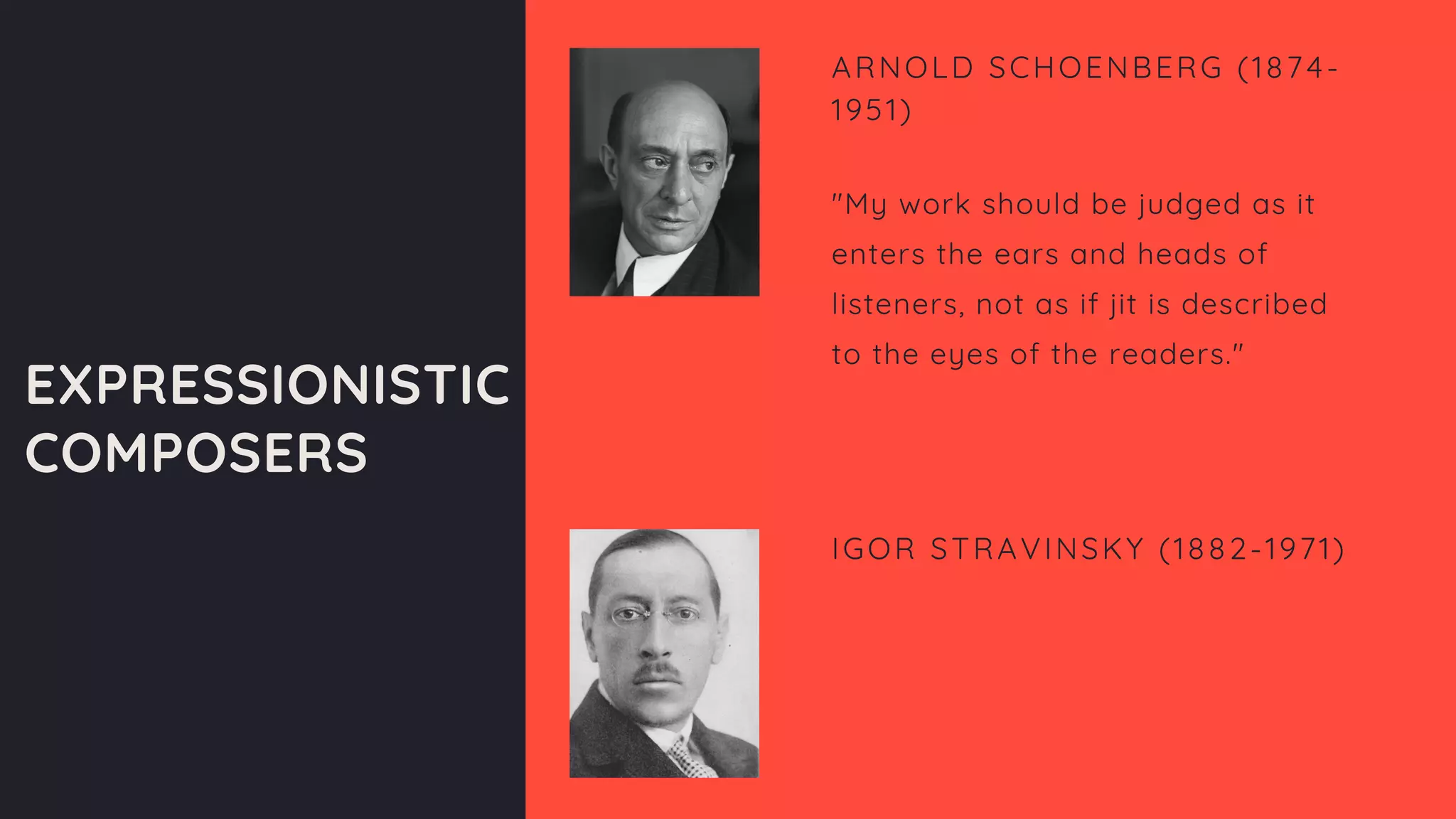
ARNOLD SCHOENBERG (1874-
1951)
Award-Winning Artist
"My work should be judged as it
enters the ears and heads of
listeners, not as if jit is described
to the eyes of the readers."
IGOR STRAVINSKY (1882-1971)
Guitarist
Producer
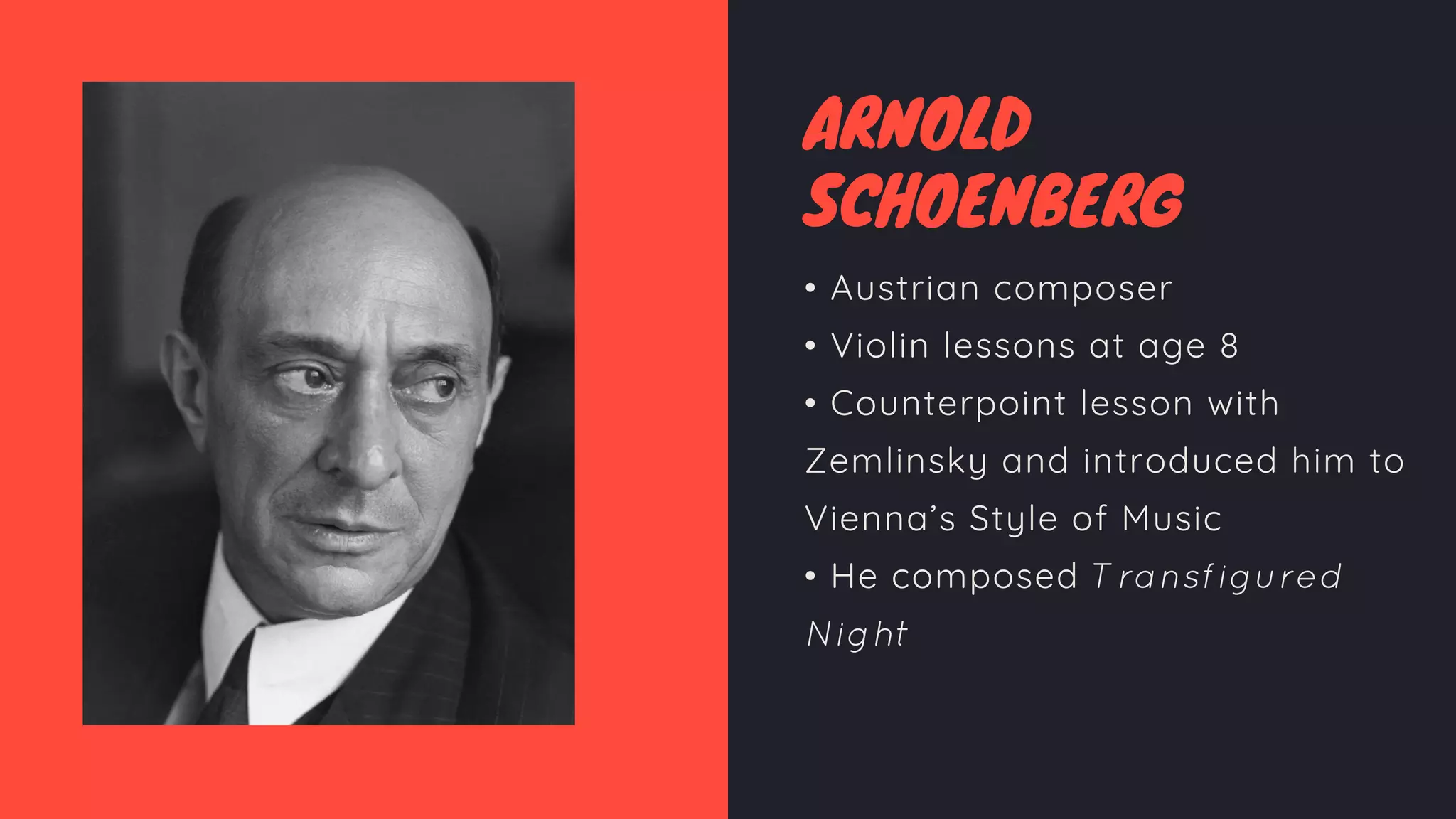
ARNOLD
SCHOENBERG
• Austrian composer
• Violin lessons at age 8
• Counterpoint lesson with
Zemlinsky and introduced him to
Vienna’s Style of Music
• He composed Transfigured
Night
TWELVE-TONE TECHNIQUE
BY ARNOLD SCHOENBERG
• It is the arrangement of 12 chromatic pitches in
series that provides the melodic and harmonic
basis for a music composition.
–Prime
–Inversion
–Retrograde
–Retrograde Inversion
TWELVE-TONE TECHNIQUE
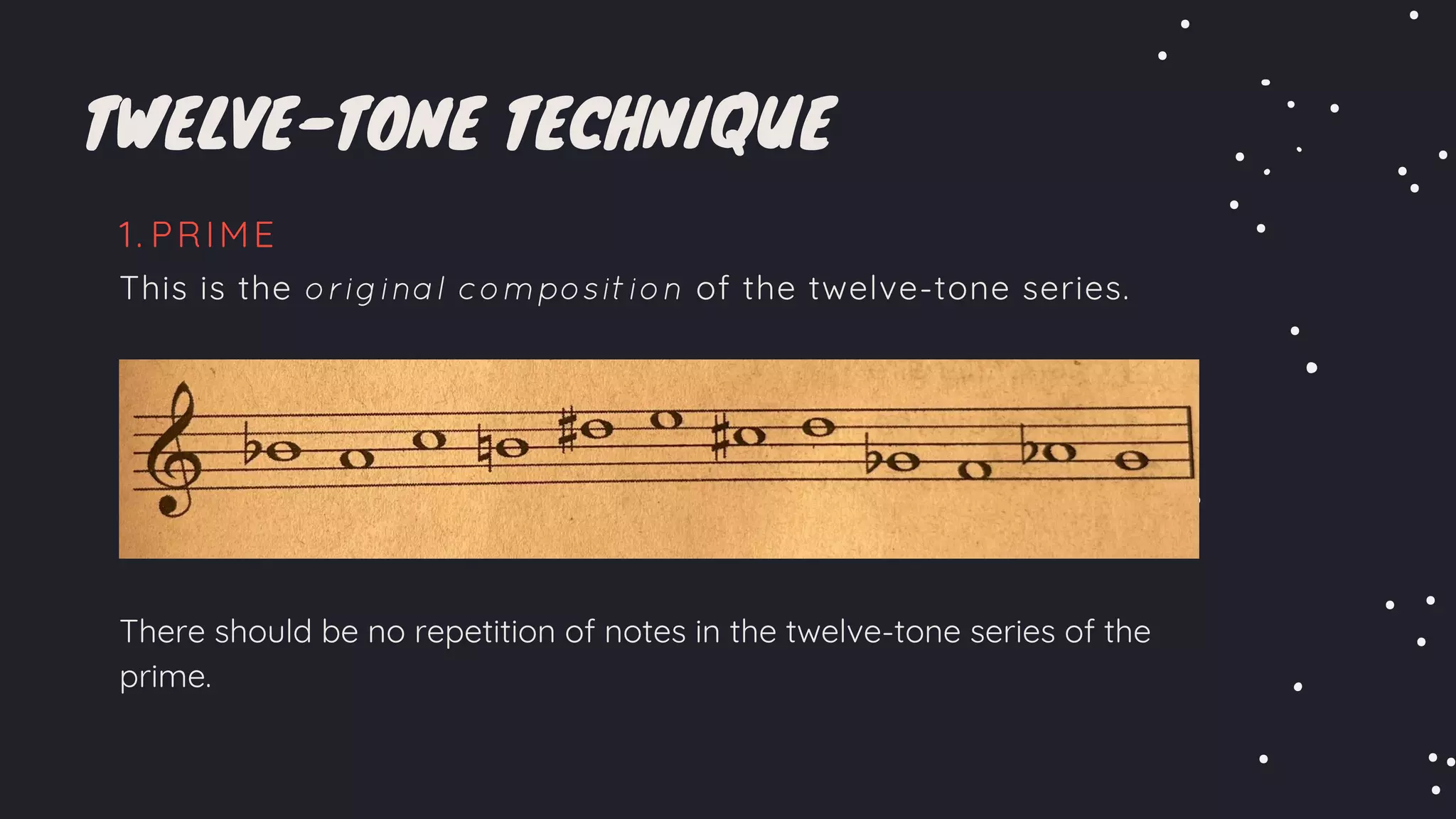
PRIME
1.
This is the original composition of the twelve-tone series.
There should be no repetition of notes in the twelve-tone series of the
prime.
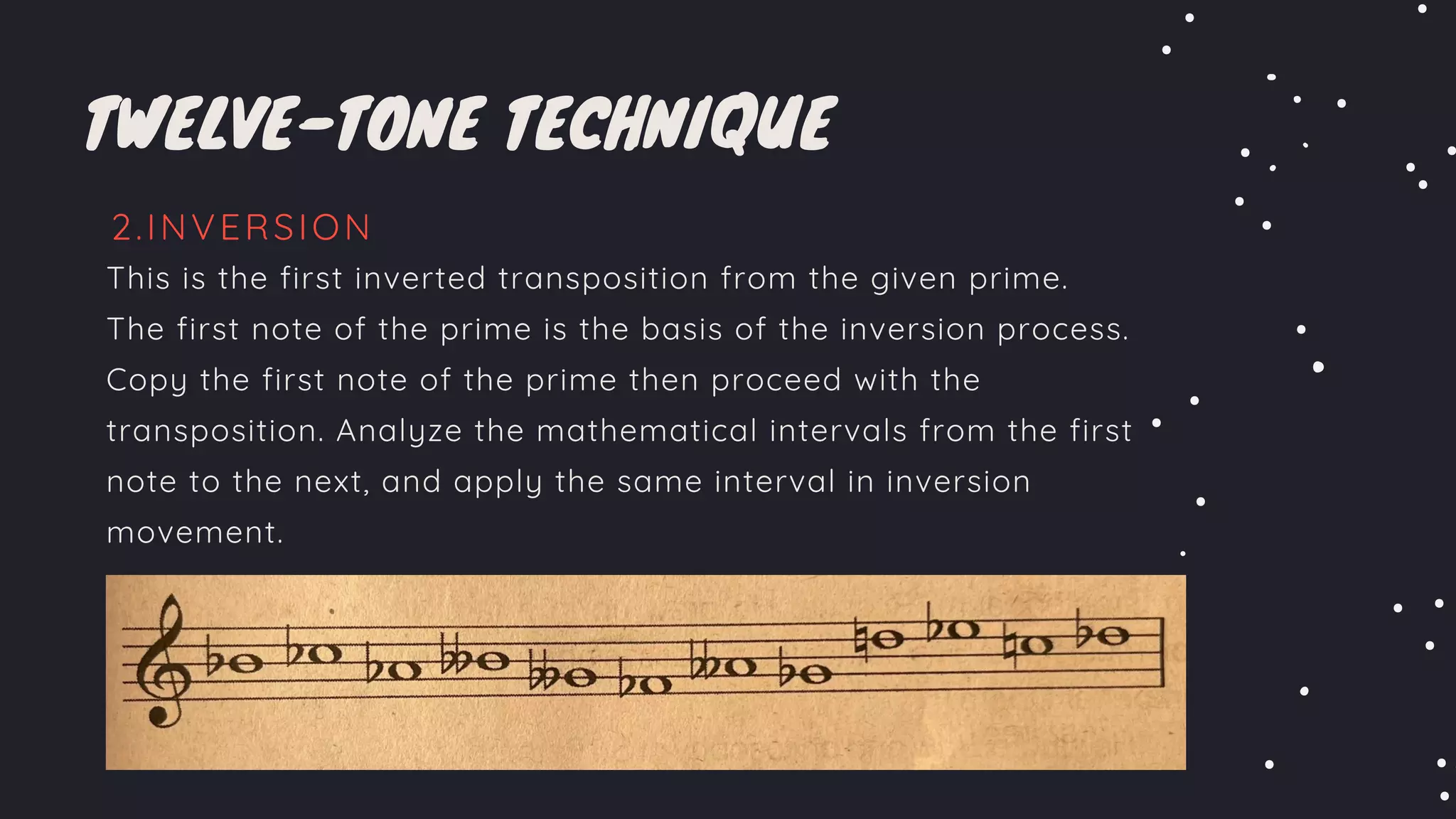
This is the first inverted transposition from the given prime.
The first note of the prime is the basis of the inversion process.
Copy the first note of the prime then proceed with the
transposition. Analyze the mathematical intervals from the first
note to the next, and apply the same interval in inversion
movement.
TWELVE-TONE TECHNIQUE
2.INVERSION
TWELVE-TONE TECHNIQUE
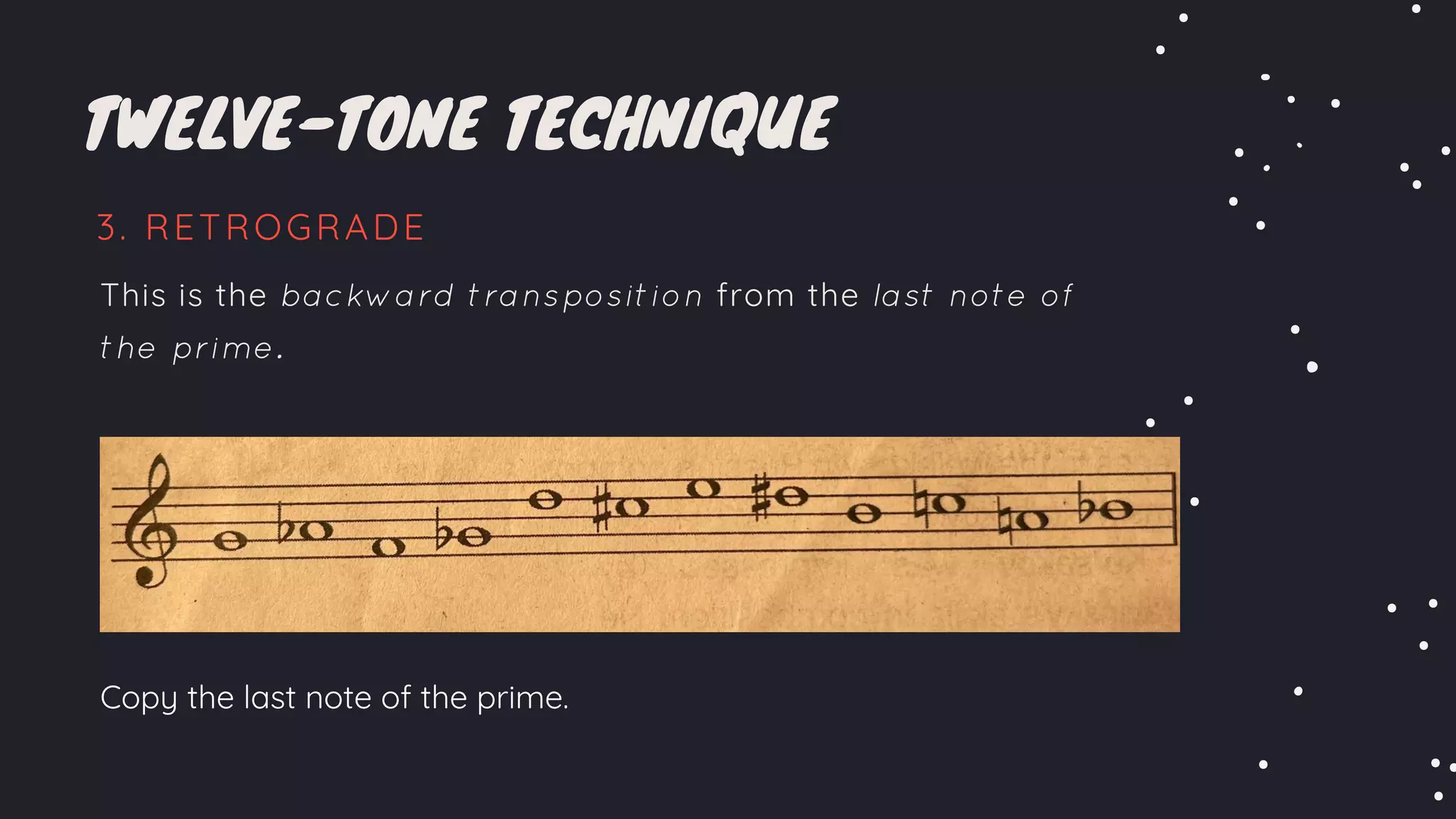
3. RETROGRADE
This is the backward transposition from the last note of
the prime.
Copy the last note of the prime.
TWELVE-TONE TECHNIQUE
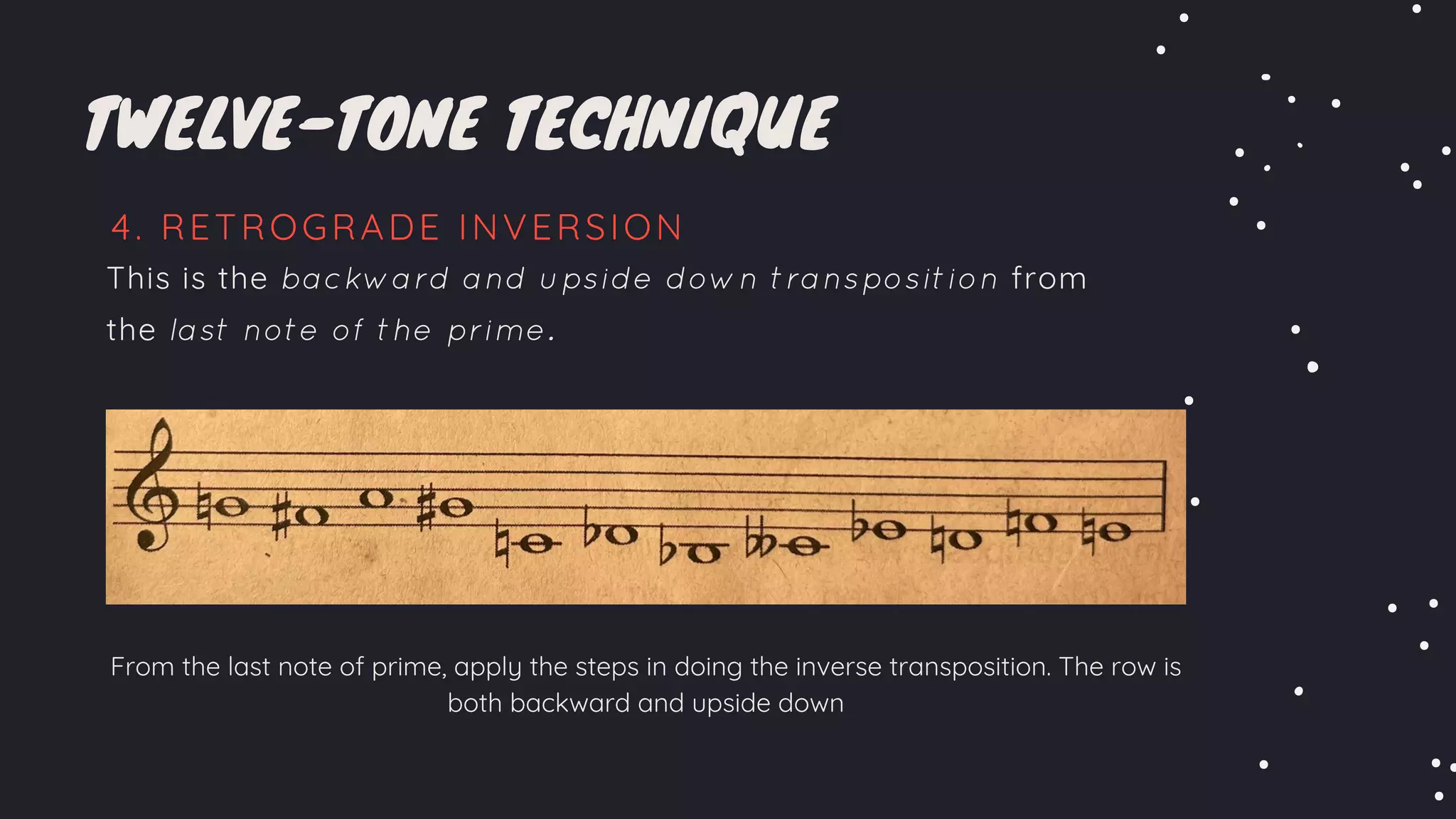
4. RETROGRADE INVERSION
This is the backward and upside down transposition from
the last note of the prime.
From the last note of prime, apply the steps in doing the inverse transposition. The row is
both backward and upside down
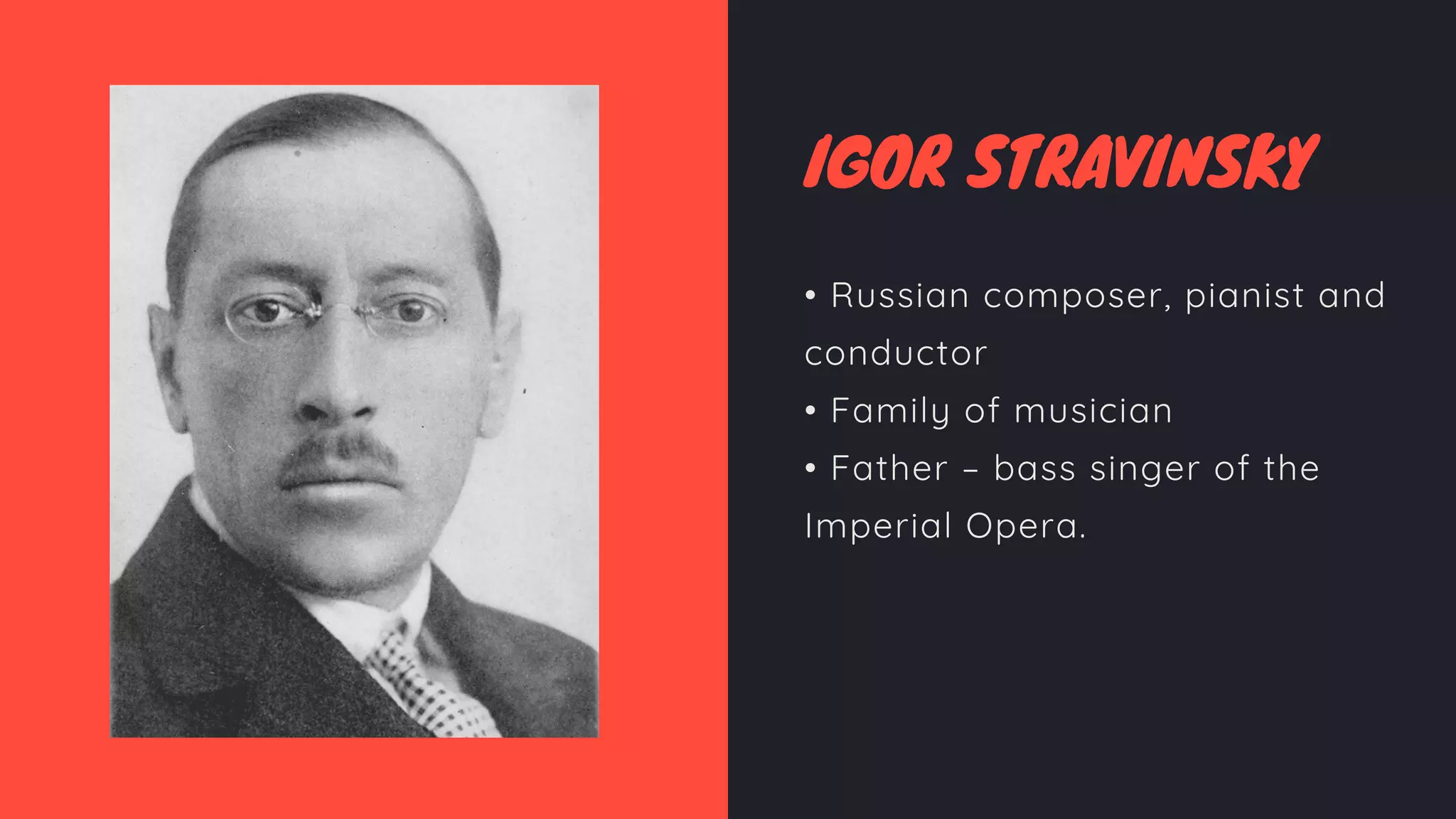
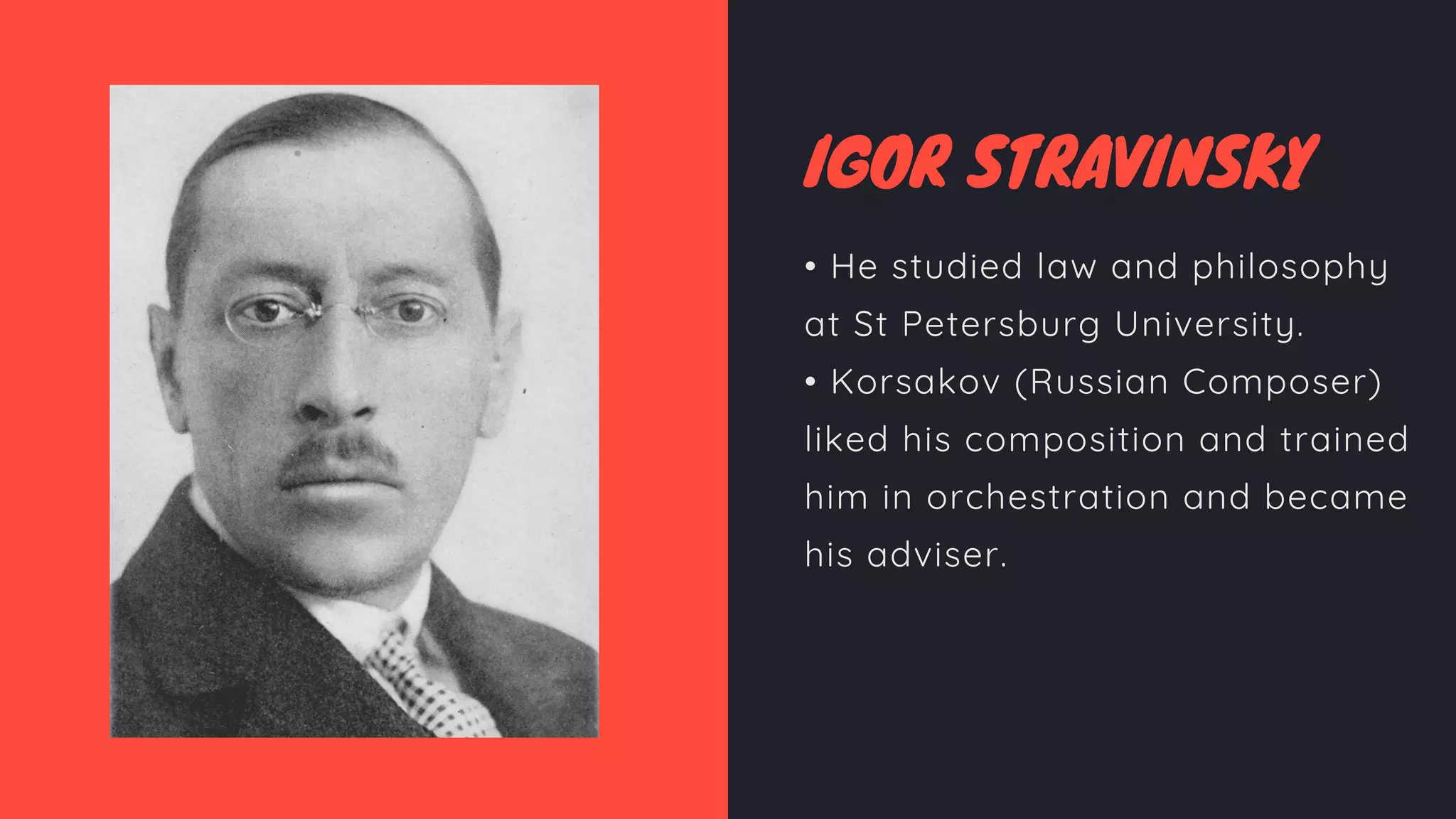
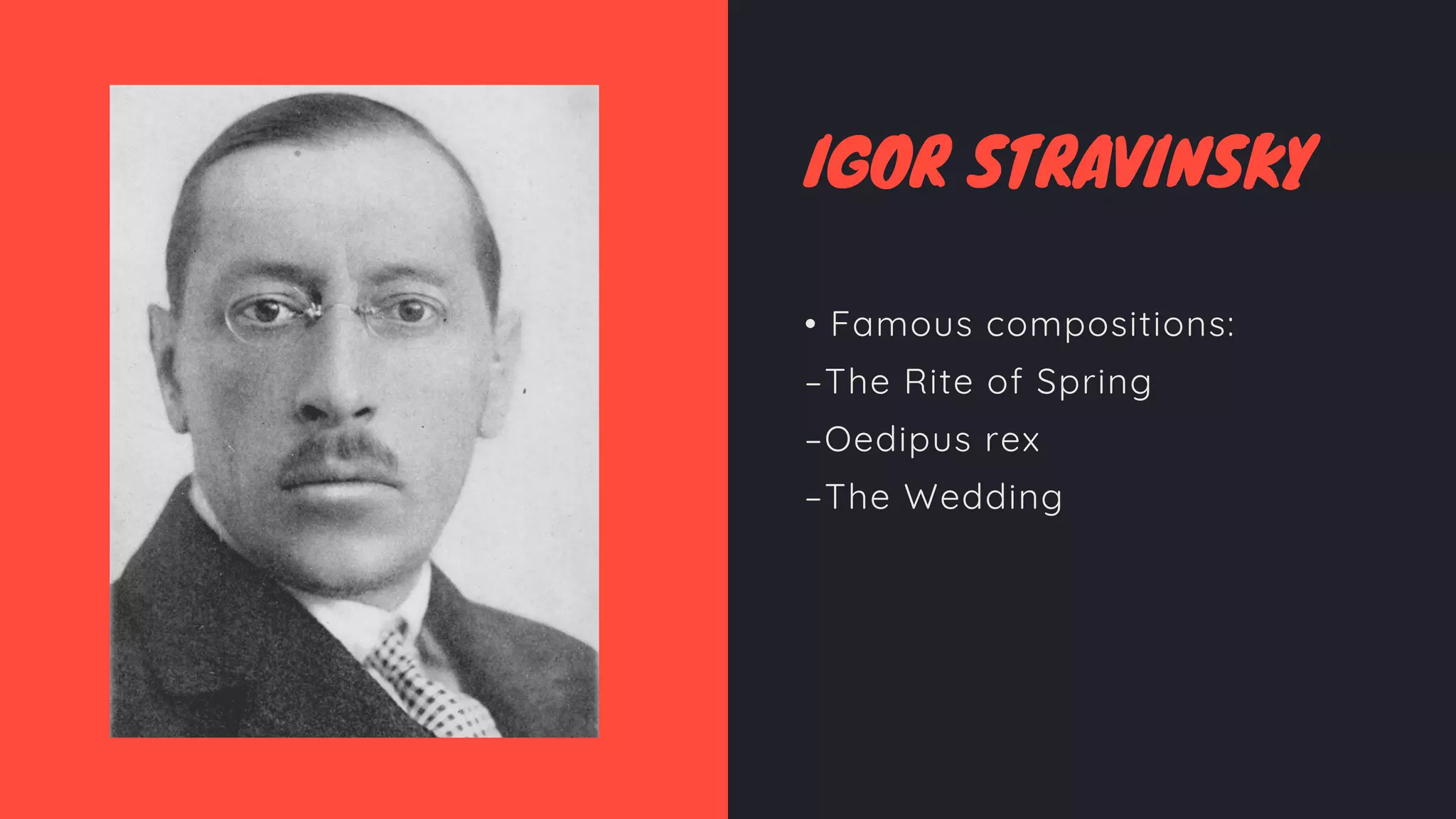
IGOR STRAVINSKY
• Russian composer, pianist and
conductor
• Family of musician
• Father – bass singer of the
Imperial Opera.
IGOR STRAVINSKY
• He studied law and philosophy
at St Petersburg University.
• Korsakov (Russian Composer)
liked his composition and trained
him in orchestration and became
his adviser.
IGOR STRAVINSKY
• Famous compositions:
–The Rite of Spring
–Oedipus rex
–The Wedding
GIVE YOUR INSIGHTS BY
ANSWERING THE FF. QUESTIONS
BELOW ON A 1/2 SHEET OF PAPER:
5 POINTS EACH
How does the style of
Expressionistic music affect you
as a listener?
Did your personal preference
for music changed? If yes, how?
If not, why?
1.
2.
ACTIVITY 3
FINAL WORDS
Music is the
movement of
sound to reach
the soul for the
education of its
virtue.
PLATO
LESSON 2 EXPRESSIONISM.pdf

  • 1.
  • 2.
    ACTIVITY 1.1 GIVE YOURTHOUGHTS ABOUT THE FOLLOWING QUESTIONS BELOW IN A 1/2 SHEET OF PAPER. 5 POINTS EACH WHEN IS MUSIC EXPRESSIVE FOR YOU? WHEN IS MUSIC PLEASING AND BEAUTIFUL FOR YOU? HOW DOES MUSIC ELICIT EMOTION? 1. 2. 3.
  • 3.
    EXPRESSIONISM •Melody was notabsent during the 20th century. •Melodic compositions has been less important. •It gave an abstract form called Expressionism. • Highly expressive style • Expressed disturbed condition of the mind.
  • 4.
    EXPRESSIONISM • German’s reactionto French impressionism. • Expressionism is better performed with instruments than sung. • Expressionism composers: –New methods of composition –New performance techniques –New concepts of music theory
  • 5.
    ESTIMATED ANNOUNCE DATES MUSICAL STYLES 1. Expressionof subjective feeling 2. Expression of alienation 3. Expression of anxiety. AAI | Pro X
  • 6.
    1. From simple meters tocomplex rhythms 2. Polyrhythms 3. Polymeter 4. Computer music CHARACTERISTICS OF EXPRESSIONISTIC MUSIC
  • 7.
  • 8.
    ESTIMATED ANNOUNCE DATES ATONALITY ATONALITY More ofan innovation ATONALITY Eliminated the structure of key signature ATONALITY More dissonant sounds AAI | Pro X
  • 9.
    LET'S RECALL BYIDENTIFY THE FF. QUESTIONS BELOW: Give the three (3) musical styles for Expressionism Give the three (3) characteristic of Atonality Identify the four (4) forms of twelve-tone technique 1. 2. 3. ACTIVITY 2
  • 10.
    EXPRESSIONISTIC COMPOSERS ARNOLD SCHOENBERG (1874- 1951) Award-WinningArtist "My work should be judged as it enters the ears and heads of listeners, not as if jit is described to the eyes of the readers." IGOR STRAVINSKY (1882-1971) Guitarist Producer
  • 11.
    ARNOLD SCHOENBERG • Austrian composer •Violin lessons at age 8 • Counterpoint lesson with Zemlinsky and introduced him to Vienna’s Style of Music • He composed Transfigured Night
  • 12.
    TWELVE-TONE TECHNIQUE BY ARNOLDSCHOENBERG • It is the arrangement of 12 chromatic pitches in series that provides the melodic and harmonic basis for a music composition. –Prime –Inversion –Retrograde –Retrograde Inversion
  • 13.
    TWELVE-TONE TECHNIQUE PRIME 1. This isthe original composition of the twelve-tone series. There should be no repetition of notes in the twelve-tone series of the prime.
  • 14.
    This is thefirst inverted transposition from the given prime. The first note of the prime is the basis of the inversion process. Copy the first note of the prime then proceed with the transposition. Analyze the mathematical intervals from the first note to the next, and apply the same interval in inversion movement. TWELVE-TONE TECHNIQUE 2.INVERSION
  • 15.
    TWELVE-TONE TECHNIQUE 3. RETROGRADE Thisis the backward transposition from the last note of the prime. Copy the last note of the prime.
  • 16.
    TWELVE-TONE TECHNIQUE 4. RETROGRADEINVERSION This is the backward and upside down transposition from the last note of the prime. From the last note of prime, apply the steps in doing the inverse transposition. The row is both backward and upside down
  • 17.
    IGOR STRAVINSKY • Russiancomposer, pianist and conductor • Family of musician • Father – bass singer of the Imperial Opera.
  • 18.
    IGOR STRAVINSKY • Hestudied law and philosophy at St Petersburg University. • Korsakov (Russian Composer) liked his composition and trained him in orchestration and became his adviser.
  • 19.
    IGOR STRAVINSKY • Famouscompositions: –The Rite of Spring –Oedipus rex –The Wedding
  • 20.
    GIVE YOUR INSIGHTSBY ANSWERING THE FF. QUESTIONS BELOW ON A 1/2 SHEET OF PAPER: 5 POINTS EACH How does the style of Expressionistic music affect you as a listener? Did your personal preference for music changed? If yes, how? If not, why? 1. 2. ACTIVITY 3
  • 21.
    FINAL WORDS Music isthe movement of sound to reach the soul for the education of its virtue. PLATO