Participle
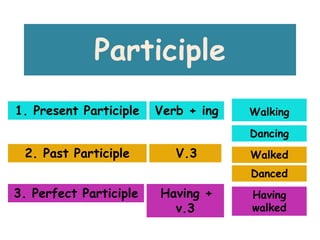
1. Present Participle

Verb + ing

Walking

Dancing

2. Past Participle

V.3

Walked
Danced

3. Perfect Participle

Having +
v.3

Having
walked
Participle
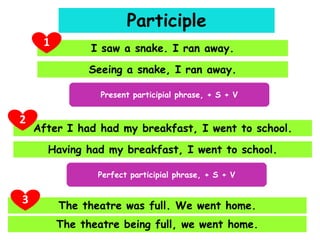
1

I saw a snake. I ran away.
Seeing a snake, I ran away.
Present participial phrase, + S + V

2

After I had had my breakfast, I went to school.
Having had my breakfast, I went to school.
Perfect participial phrase, + S + V

3

The theatre was full. We went home.
The theatre being full, we went home.
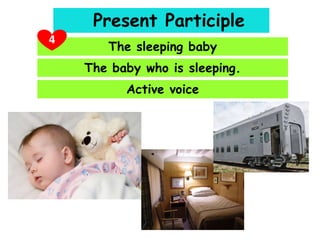
Present Participle
4

The sleeping baby
The baby who is sleeping.
Active voice
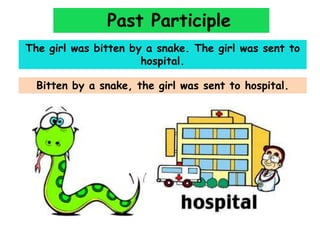
Past Participle
The girl was bitten by a snake. The girl was sent to
hospital.

Bitten by a snake, the girl was sent to hospital.
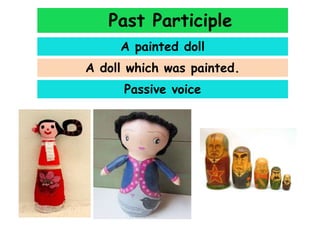
Past Participle
A painted doll
A doll which was painted.
Passive voice
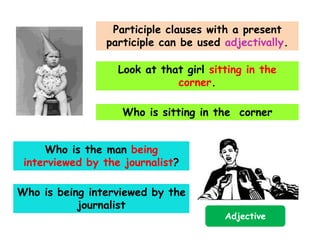
Participle clauses with a present
participle can be used adjectivally.
Look at that girl sitting in the
corner.
Who is sitting in the corner
Who is the man being
interviewed by the journalist?

Who is being interviewed by the
journalist

Adjective
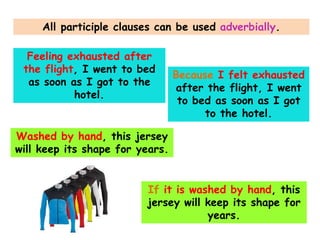
All participle clauses can be used adverbially.
Feeling exhausted after
the flight, I went to bed
as soon as I got to the
hotel.

Because I felt exhausted
after the flight, I went
to bed as soon as I got
to the hotel.

Washed by hand, this jersey
will keep its shape for years.
If it is washed by hand, this
jersey will keep its shape for
years.
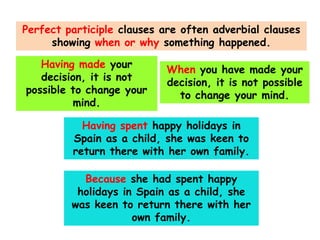
Perfect participle clauses are often adverbial clauses
showing when or why something happened.
Having made your
decision, it is not
possible to change your
mind.

When you have made your
decision, it is not possible
to change your mind.

Having spent happy holidays in
Spain as a child, she was keen to
return there with her own family.
Because she had spent happy
holidays in Spain as a child, she
was keen to return there with her
own family.
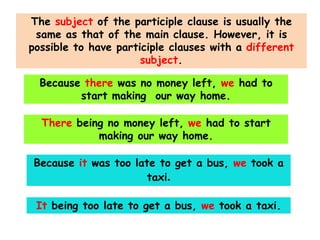
The subject of the participle clause is usually the
same as that of the main clause. However, it is
possible to have participle clauses with a different
subject.

Because there was no money left, we had to
start making our way home.
There being no money left, we had to start
making our way home.
Because it was too late to get a bus, we took a
taxi.
It being too late to get a bus, we took a taxi.
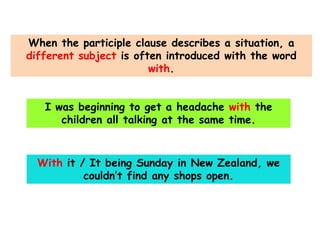
When the participle clause describes a situation, a
different subject is often introduced with the word
with.
I was beginning to get a headache with the
children all talking at the same time.

With it / It being Sunday in New Zealand, we
couldn’t find any shops open.

Participle (1)

  • 1.
    Participle 1. Present Participle Verb+ ing Walking Dancing 2. Past Participle V.3 Walked Danced 3. Perfect Participle Having + v.3 Having walked
  • 2.
    Participle 1 I saw asnake. I ran away. Seeing a snake, I ran away. Present participial phrase, + S + V 2 After I had had my breakfast, I went to school. Having had my breakfast, I went to school. Perfect participial phrase, + S + V 3 The theatre was full. We went home. The theatre being full, we went home.
  • 3.
    Present Participle 4 The sleepingbaby The baby who is sleeping. Active voice
  • 4.
    Past Participle The girlwas bitten by a snake. The girl was sent to hospital. Bitten by a snake, the girl was sent to hospital.
  • 5.
    Past Participle A painteddoll A doll which was painted. Passive voice
  • 6.
    Participle clauses witha present participle can be used adjectivally. Look at that girl sitting in the corner. Who is sitting in the corner Who is the man being interviewed by the journalist? Who is being interviewed by the journalist Adjective
  • 7.
    All participle clausescan be used adverbially. Feeling exhausted after the flight, I went to bed as soon as I got to the hotel. Because I felt exhausted after the flight, I went to bed as soon as I got to the hotel. Washed by hand, this jersey will keep its shape for years. If it is washed by hand, this jersey will keep its shape for years.
  • 8.
    Perfect participle clausesare often adverbial clauses showing when or why something happened. Having made your decision, it is not possible to change your mind. When you have made your decision, it is not possible to change your mind. Having spent happy holidays in Spain as a child, she was keen to return there with her own family. Because she had spent happy holidays in Spain as a child, she was keen to return there with her own family.
  • 9.
    The subject ofthe participle clause is usually the same as that of the main clause. However, it is possible to have participle clauses with a different subject. Because there was no money left, we had to start making our way home. There being no money left, we had to start making our way home. Because it was too late to get a bus, we took a taxi. It being too late to get a bus, we took a taxi.
  • 10.
    When the participleclause describes a situation, a different subject is often introduced with the word with. I was beginning to get a headache with the children all talking at the same time. With it / It being Sunday in New Zealand, we couldn’t find any shops open.