Presented By: Muhammad HaiderAli
Roll No: 43
TOPIC:
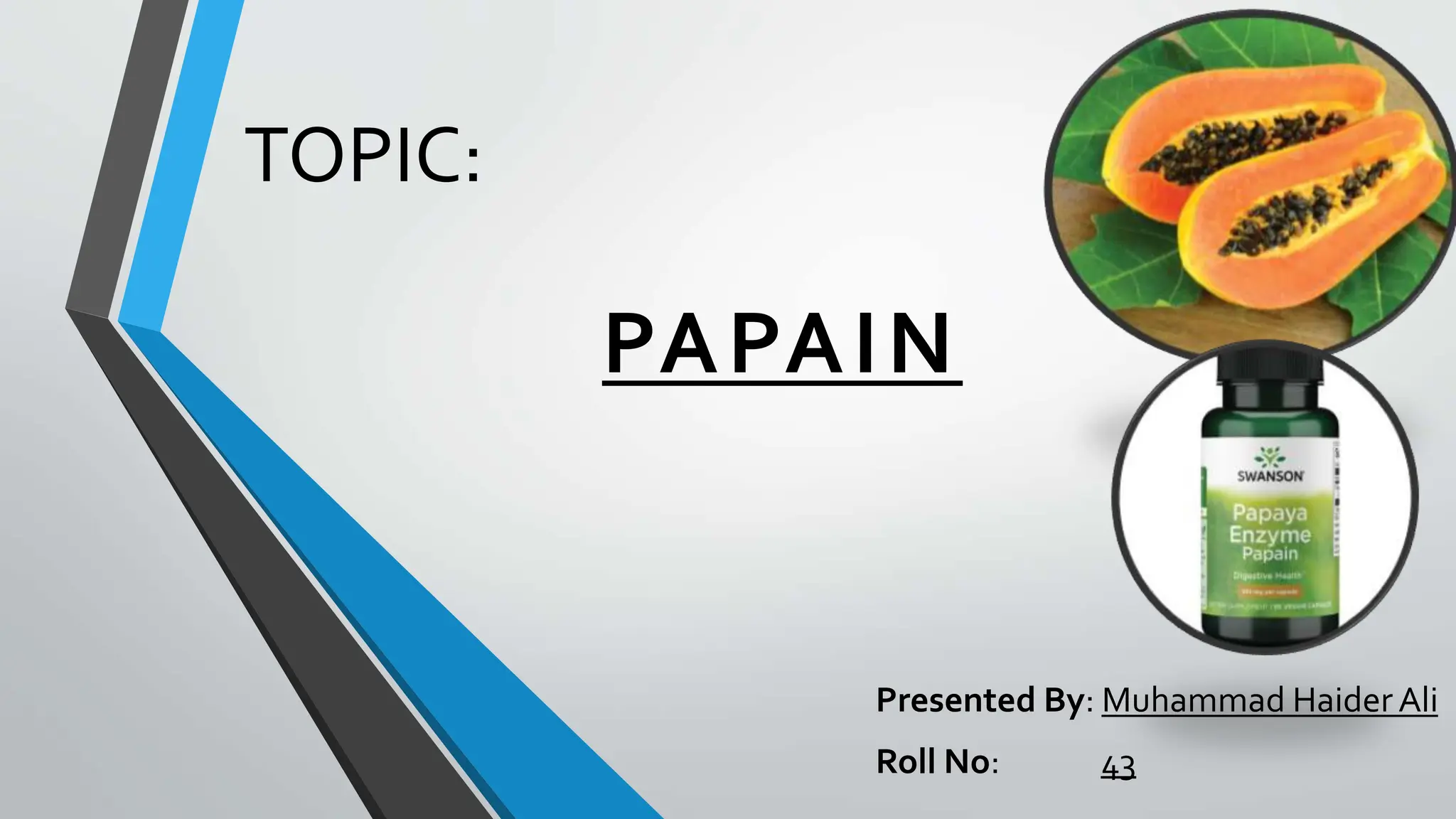
PAPAIN
Introduction
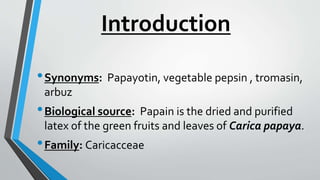
•Synonyms: Papayotin, vegetable pepsin , tromasin,
arbuz
•Biological source: Papain is the dried and purified
latex of the green fruits and leaves of Carica papaya.
•Family: Caricacceae
Chemical Constituents
• Chymopapain
• Pseudocarpain
• Lysozyme
• Carpain
• Papaya Peptidases
• Carbohydrates
• Water
• Minerals (e.g., calcium, magnesium)
Papain Preparation
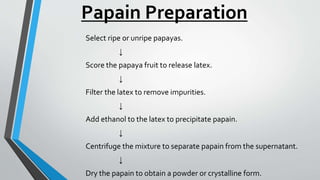
Select ripe or unripe papayas.
↓
Score the papaya fruit to release latex.
↓
Filter the latex to remove impurities.
↓
Add ethanol to the latex to precipitate papain.
↓
Centrifuge the mixture to separate papain from the supernatant.
↓
Dry the papain to obtain a powder or crystalline form.
Uses of Papain
•Used to prevent adhesions
•In infected wounds
•Internally as protein digestant
•For tenderizing beef
•Treatment of Dyspepsia
•Pharyngeal and Laryngeal disorders
•Intestinal and Gastric disorders
Test
Papain is reacted with a gelatin solution at 80°C in
the presence of an activating cysteine chloral
hydrate solution for an hour.The solution is cooled
to 4°C for long time.
Adulteration
Commercial papain is often adulterated with
arrowroot starch, dried milk of cactus, rice flour and
pepsin.
Papain

Papain

  • 1.
    Presented By: MuhammadHaiderAli Roll No: 43 TOPIC: PAPAIN
  • 2.
    Introduction •Synonyms: Papayotin, vegetablepepsin , tromasin, arbuz •Biological source: Papain is the dried and purified latex of the green fruits and leaves of Carica papaya. •Family: Caricacceae
  • 3.
    Chemical Constituents • Chymopapain •Pseudocarpain • Lysozyme • Carpain • Papaya Peptidases • Carbohydrates • Water • Minerals (e.g., calcium, magnesium)
  • 4.
    Papain Preparation Select ripeor unripe papayas. ↓ Score the papaya fruit to release latex. ↓ Filter the latex to remove impurities. ↓ Add ethanol to the latex to precipitate papain. ↓ Centrifuge the mixture to separate papain from the supernatant. ↓ Dry the papain to obtain a powder or crystalline form.
  • 5.
    Uses of Papain •Usedto prevent adhesions •In infected wounds •Internally as protein digestant •For tenderizing beef •Treatment of Dyspepsia •Pharyngeal and Laryngeal disorders •Intestinal and Gastric disorders
  • 6.
    Test Papain is reactedwith a gelatin solution at 80°C in the presence of an activating cysteine chloral hydrate solution for an hour.The solution is cooled to 4°C for long time.
  • 7.
    Adulteration Commercial papain isoften adulterated with arrowroot starch, dried milk of cactus, rice flour and pepsin.