KARAGANDA STATE MEDICAL
UNIVERSITY
DEPARTMENT :- PATHOLOGICAL ANATOMY NO. – 2
TOPIC – PANCREATITIS AND PERITONITIS
MADE BY – SAINI VIJAY KUMAR
(3016 a)
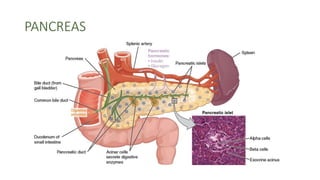
PANCREAS
PANCREAS ANATOMY
2 Parts -
• Exocrine
• Endocrine
Length – 15cm
Weight – 100gm
• Subdivided into 3 topographic
zones:-
1. Head
2. Body
3. Tail
Pancreatitis
PANCREATITIS
• It is inflammation of pancreas.
• Acinic cell injury
Classification -
Acute pancreatitis
Chronic pancreatitis
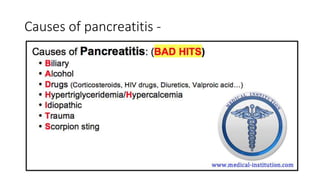
Causes of pancreatitis -
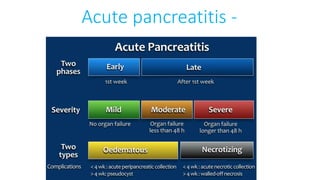
Acute pancreatitis -
• This condition occurs in adults between the age of 40 and 70 years .
• It is common in females than males.
• Onset – sudden
Signs and symptoms
• Abdominal pain (cardinal symptom)
• Anorexia
• Diarrhea
• Fever
• Rapid pulse
• Nausea
• Vomiting
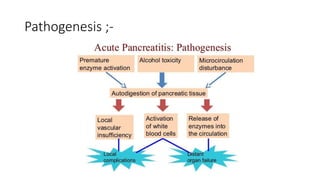
Pathogenesis ;-
Complication -
Systemic complication –
1) Chemical and bacterial peritonitis
2) Endotoxic shock
3) Acute and renal failure
Local complication –
1) Pancreatic abscess
2) Pancreatic pseudocyst
3) Duodenal obstruction
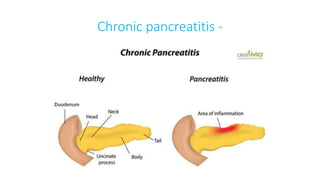
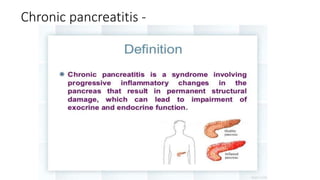
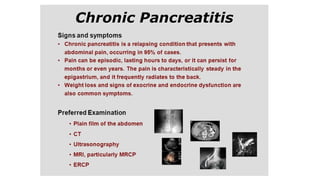
Chronic pancreatitis -
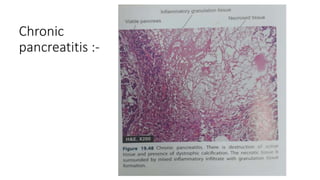
Chronic
pancreatitis :-
Chronic pancreatitis -
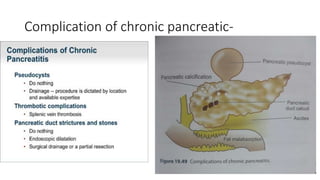
Complication of chronic pancreatic-
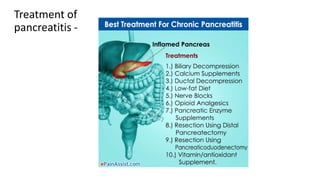
Treatment of
pancreatitis -
peritonitis
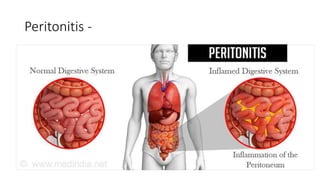
Peritonitis -
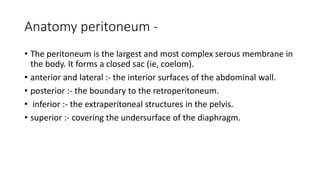
Anatomy peritoneum -
• The peritoneum is the largest and most complex serous membrane in
the body. It forms a closed sac (ie, coelom).
• anterior and lateral :- the interior surfaces of the abdominal wall.
• posterior :- the boundary to the retroperitoneum.
• inferior :- the extraperitoneal structures in the pelvis.
• superior :- covering the undersurface of the diaphragm.
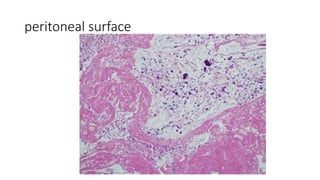
peritoneal surface
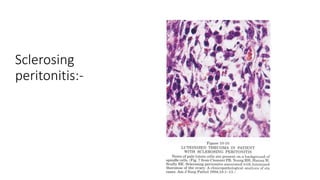
Sclerosing
peritonitis:-
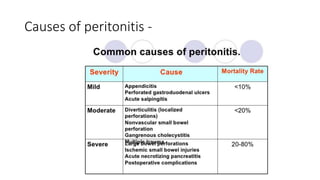
Causes of peritonitis -
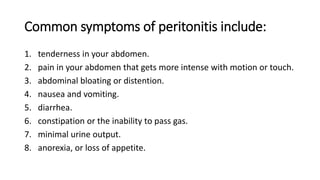
Common symptoms of peritonitis include:
1. tenderness in your abdomen.
2. pain in your abdomen that gets more intense with motion or touch.
3. abdominal bloating or distention.
4. nausea and vomiting.
5. diarrhea.
6. constipation or the inability to pass gas.
7. minimal urine output.
8. anorexia, or loss of appetite.
Etiology -
• The etiology of disease depends on the type, as well as location, of
peritonitis, as follows:
• Primary peritonitis
• Secondary peritonitis
• Tertiary peritonitis
• Chemical peritonitis
• Peritoneal abscess
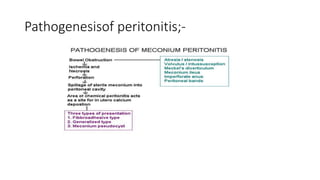
Pathogenesisof peritonitis;-

Pancreatitis and peritonitis