Flow Of Presentation
 Significance of Study
 Industry Profile
 Company Profile
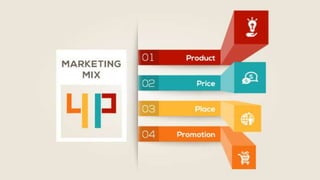
 4P Model
 SWOT analysis
 Porter: Five force model
 Way Forward
 Key Lessons
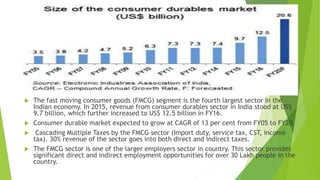
 The fast moving consumer goods (FMCG) segment is the fourth largest sector in the
Indian economy. In 2015, revenue from consumer durables sector in India stood at US$
9.7 billion, which further increased to US$ 12.5 billion in FY16.
 Consumer durable market expected to grow at CAGR of 13 per cent from FY05 to FY20.
 Cascading Multiple Taxes by the FMCG sector (Import duty, service tax, CST, income
tax). 30% revenue of the sector goes into both direct and indirect taxes.
 The FMCG sector is one of the larger employers sector in country. This sector provides
significant direct and indirect employment opportunities for over 30 Lakh people in the
country.
COMPANY PROFILE
 In 1837 William Proctor starred a soap and candle company.
 Proctor and Gamble is one of the largest FMCG company in the world
offering a wide range of products.
 It touches life of 4.4 billion people spreading across the 180 countries
in the world.
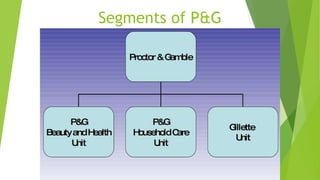
Segments of P&G
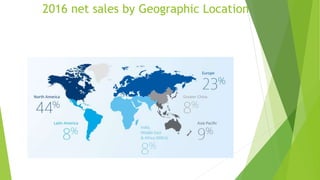
2016 net sales by Geographic Location
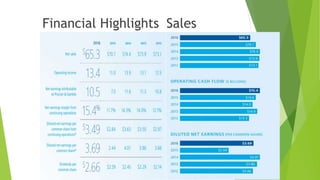
Financial Highlights Sales
Attractiveness and Growth Policy
 Brand Loyalty
 Distribution Channel
 Innovation
 Pricing Strategy
 Quality of the Product
Products
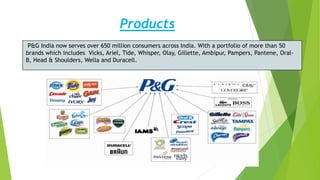
P&G India now serves over 650 million consumers across India. With a portfolio of more than 50
brands which includes Vicks, Ariel, Tide, Whisper, Olay, Gillette, Ambipur, Pampers, Pantene, Oral-
B, Head & Shoulders, Wella and Duracell.
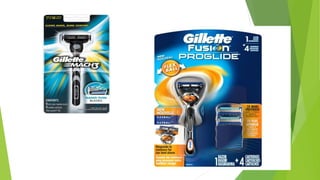
Gillette is a brand of men's safety razors and other personal care products including
shaving supplies, owned by the multi-national corporation Procter & Gamble (P&G).
Each day, more than 600 million men around the world trust their faces and skin to
Gillette’s innovative razors and shaving products designed for the unique needs of men –
helping them to look, feel and be their best every day.
Gillette’s has a wide range of products which include Razors, Trimmers, Blades, Shaving
Cream, Gel, Foams, Skincare and Aftershave.
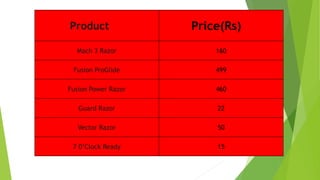
Product Price(Rs)
Mach 3 Razor 160
Fusion ProGlide 499
Fusion Power Razor 460
Guard Razor 22
Vector Razor 50
7 0’Clock Ready 15
Place
 Gillette’s own network reaches 1L outlets in 3600 towns.
 Hub and Spoke approach.
 20 Hub cities and Spoke are Tier 2 and Tier 3 towns.
Promotion
 P&G brand has high recognition rate.
 Focus on brand value, innovation and cutting edge technology.
 P&G uses pull strategy by means of heavy and innovative advertising.
Coupons.
SWOT ANALYSIS
STRENGTHS
 Large investment in consumer understanding and R&D (Nearly double
than its close competitor Unilever).
 Strong Brand portfolio: P&G is focusing on 10 product categories with
about 65 brands. Across the 10 categories, P&G has 21 brands with
annual sales of $1 billion to about $10 billion, and 11 brands with
sales of $500 million to $1billion.
 Extensive experience of marketing in different market segments,
counted as one of the best marketers in the world.
 Most admired brand by consumers in its segment because of consumer
understanding and Social responsibility to the community and
environment.
 Procter and Gamble operates in over 80 countries and offers products
and services in more than 180 countries worldwide, which makes it
global leader.
WEAKNESS
 The company continues to rely heavily on mature markets. The
emerging markets will outperform mature markets over the period.
 Resistance to divest its weak or poor brands. 90% of its profits are
driven by only 20% of its brands.
 Dynamic nature of beauty and skincare products.
 Dependence upon large retailers for its revenues.
 Lagging behind in On-line media leadership and presence.
THREATS
 Facing cut throat competition in FMCG segment by competitors like
Unilever, Colgate-Palmolive, Kimberly-Clark, Avon products etc.
 Many retail brands Like D Mart and Reliance fresh have starting with
their own brands and are planning their own private labels for
detergents, personal care products and others.
 Local firms give stiff competition in terms of price and availability,
especially in rural sector.
 Political instability, terrorist activities and economic changes can lead
business towards deflation, inflation, interruption or reduced
demand.
 Brand image and profits of P&G have negatively impacted by
counterfeit products.
OPPURTUNITIES
 Divest brands that doesn’t have significant share in revenue
generation.
 Rural market penetration.
 Opportunity to make and offer private label products for retail
consumers.
 Opportunity for more products in Men beauty and Healthcare
segment.
 Yet to Leverage social media and internet marketing to expand its
reach among people.
BARGAINING POWER OF SUPPLIERS
Bargaining power of suppliers in the model is explained by
the strength of the position of sellers
 Co-dependent relationship
 P&G is a key customer
 Supplier diversity is kept high
THREAT OF NEW ENTRANTS
The force describes how easy or difficult it is for new
entrants to start competing, and which barriers do exist.
 Established economies of scale
 Big Distribution network
 Brand Power
THREAT OF SUBTITUTES
Threat of substitutes in the model refers to how easy a product
or service can be substituted, especially if they are cheaper.
• Low involvement products
• Substitutes having lower quality.
• Low switching cost
BARGAINING POWER OF BUYERS
 Too many choices are available.
 High quality of information.
 Relationship of Walmart and P&G.
COMPETITIVE RIVALRY
Rivalry among the existing players considers whether there
is a strong competition between the existing players in the
industry. It also seeks to answer the question “is one player
very dominant or all equal in strength and size”.
 High because presence of strong competitors like HUL,
Colgate palmolive , ITC, patanjali .
 Low switching cost.
 High aggressiveness of firms.
WAY FORWARD
 Private Labels
 Counterfeit products
 Exploiting Emerging markets
 Special marketing strategy
KEY LESSONS
 Diversification of suppliers.
 High competitive market requires rigorous marketing strategies and
innovation in products.
P&g

P&g

  • 2.
    Flow Of Presentation Significance of Study  Industry Profile  Company Profile  4P Model  SWOT analysis  Porter: Five force model  Way Forward  Key Lessons
  • 3.
     The fastmoving consumer goods (FMCG) segment is the fourth largest sector in the Indian economy. In 2015, revenue from consumer durables sector in India stood at US$ 9.7 billion, which further increased to US$ 12.5 billion in FY16.  Consumer durable market expected to grow at CAGR of 13 per cent from FY05 to FY20.  Cascading Multiple Taxes by the FMCG sector (Import duty, service tax, CST, income tax). 30% revenue of the sector goes into both direct and indirect taxes.  The FMCG sector is one of the larger employers sector in country. This sector provides significant direct and indirect employment opportunities for over 30 Lakh people in the country.
  • 4.
  • 5.
     In 1837William Proctor starred a soap and candle company.  Proctor and Gamble is one of the largest FMCG company in the world offering a wide range of products.  It touches life of 4.4 billion people spreading across the 180 countries in the world.
  • 6.
  • 7.
    2016 net salesby Geographic Location
  • 8.
  • 9.
    Attractiveness and GrowthPolicy  Brand Loyalty  Distribution Channel  Innovation  Pricing Strategy  Quality of the Product
  • 11.
    Products P&G India nowserves over 650 million consumers across India. With a portfolio of more than 50 brands which includes Vicks, Ariel, Tide, Whisper, Olay, Gillette, Ambipur, Pampers, Pantene, Oral- B, Head & Shoulders, Wella and Duracell.
  • 12.
    Gillette is abrand of men's safety razors and other personal care products including shaving supplies, owned by the multi-national corporation Procter & Gamble (P&G). Each day, more than 600 million men around the world trust their faces and skin to Gillette’s innovative razors and shaving products designed for the unique needs of men – helping them to look, feel and be their best every day. Gillette’s has a wide range of products which include Razors, Trimmers, Blades, Shaving Cream, Gel, Foams, Skincare and Aftershave.
  • 16.
    Product Price(Rs) Mach 3Razor 160 Fusion ProGlide 499 Fusion Power Razor 460 Guard Razor 22 Vector Razor 50 7 0’Clock Ready 15
  • 17.
    Place  Gillette’s ownnetwork reaches 1L outlets in 3600 towns.  Hub and Spoke approach.  20 Hub cities and Spoke are Tier 2 and Tier 3 towns.
  • 18.
    Promotion  P&G brandhas high recognition rate.  Focus on brand value, innovation and cutting edge technology.  P&G uses pull strategy by means of heavy and innovative advertising. Coupons.
  • 23.
  • 24.
    STRENGTHS  Large investmentin consumer understanding and R&D (Nearly double than its close competitor Unilever).  Strong Brand portfolio: P&G is focusing on 10 product categories with about 65 brands. Across the 10 categories, P&G has 21 brands with annual sales of $1 billion to about $10 billion, and 11 brands with sales of $500 million to $1billion.  Extensive experience of marketing in different market segments, counted as one of the best marketers in the world.  Most admired brand by consumers in its segment because of consumer understanding and Social responsibility to the community and environment.  Procter and Gamble operates in over 80 countries and offers products and services in more than 180 countries worldwide, which makes it global leader.
  • 25.
    WEAKNESS  The companycontinues to rely heavily on mature markets. The emerging markets will outperform mature markets over the period.  Resistance to divest its weak or poor brands. 90% of its profits are driven by only 20% of its brands.  Dynamic nature of beauty and skincare products.  Dependence upon large retailers for its revenues.  Lagging behind in On-line media leadership and presence.
  • 26.
    THREATS  Facing cutthroat competition in FMCG segment by competitors like Unilever, Colgate-Palmolive, Kimberly-Clark, Avon products etc.  Many retail brands Like D Mart and Reliance fresh have starting with their own brands and are planning their own private labels for detergents, personal care products and others.  Local firms give stiff competition in terms of price and availability, especially in rural sector.  Political instability, terrorist activities and economic changes can lead business towards deflation, inflation, interruption or reduced demand.  Brand image and profits of P&G have negatively impacted by counterfeit products.
  • 27.
    OPPURTUNITIES  Divest brandsthat doesn’t have significant share in revenue generation.  Rural market penetration.  Opportunity to make and offer private label products for retail consumers.  Opportunity for more products in Men beauty and Healthcare segment.  Yet to Leverage social media and internet marketing to expand its reach among people.
  • 29.
    BARGAINING POWER OFSUPPLIERS Bargaining power of suppliers in the model is explained by the strength of the position of sellers  Co-dependent relationship  P&G is a key customer  Supplier diversity is kept high
  • 30.
    THREAT OF NEWENTRANTS The force describes how easy or difficult it is for new entrants to start competing, and which barriers do exist.  Established economies of scale  Big Distribution network  Brand Power
  • 31.
    THREAT OF SUBTITUTES Threatof substitutes in the model refers to how easy a product or service can be substituted, especially if they are cheaper. • Low involvement products • Substitutes having lower quality. • Low switching cost
  • 32.
    BARGAINING POWER OFBUYERS  Too many choices are available.  High quality of information.  Relationship of Walmart and P&G.
  • 33.
    COMPETITIVE RIVALRY Rivalry amongthe existing players considers whether there is a strong competition between the existing players in the industry. It also seeks to answer the question “is one player very dominant or all equal in strength and size”.  High because presence of strong competitors like HUL, Colgate palmolive , ITC, patanjali .  Low switching cost.  High aggressiveness of firms.
  • 34.
    WAY FORWARD  PrivateLabels  Counterfeit products  Exploiting Emerging markets  Special marketing strategy
  • 35.
    KEY LESSONS  Diversificationof suppliers.  High competitive market requires rigorous marketing strategies and innovation in products.