Pain Management
Definition: Pain is: “an unpleasant sensory and emotional experience
associated with actual or potential tissue damage.”
Pathophysiology:
Nociceptive pain-
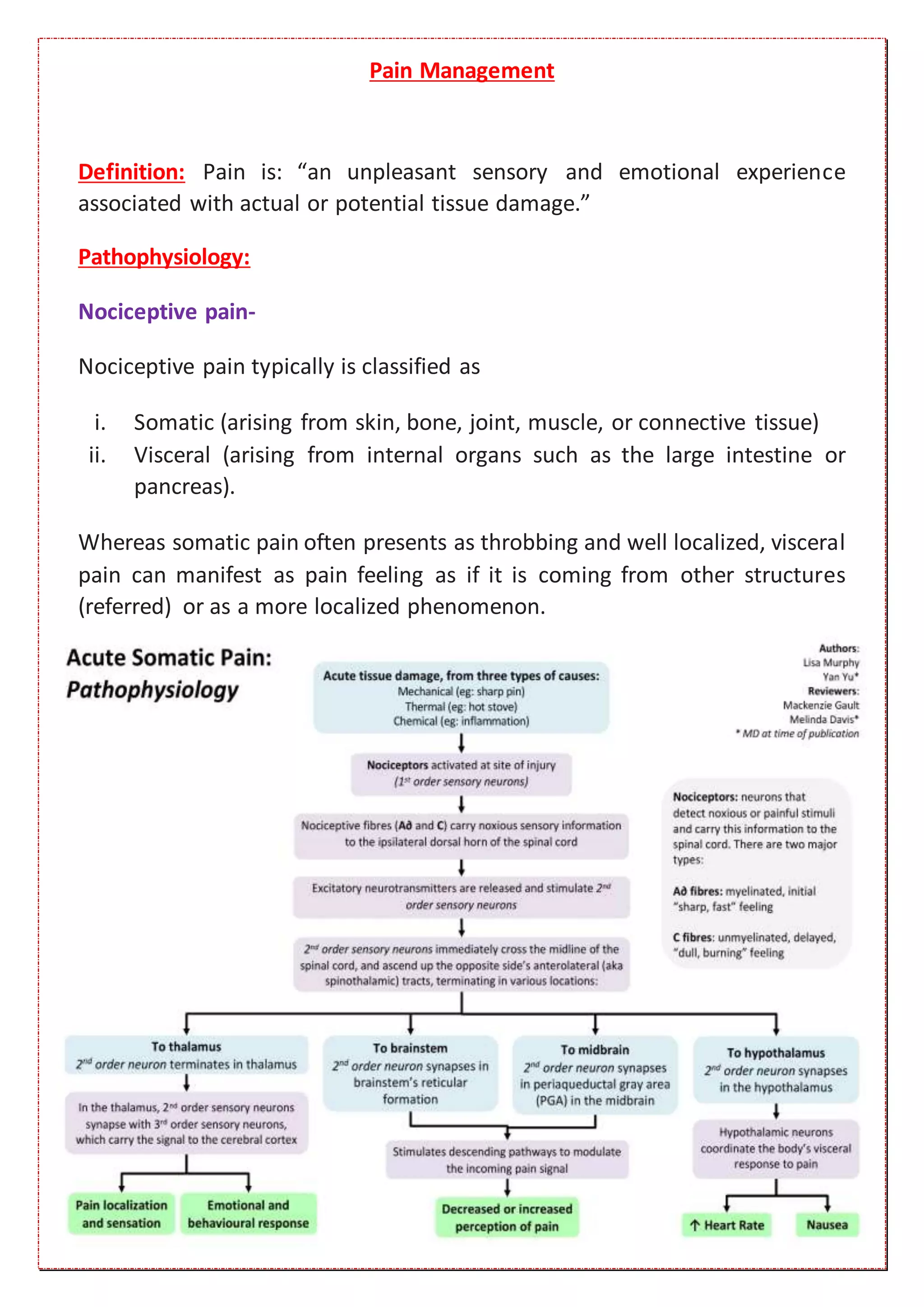
Nociceptive pain typically is classified as
i. Somatic (arising from skin, bone, joint, muscle, or connective tissue)
ii. Visceral (arising from internal organs such as the large intestine or
pancreas).
Whereas somatic pain often presents as throbbing and well localized, visceral
pain can manifest as pain feeling as if it is coming from other structures
(referred) or as a more localized phenomenon.
Neuropathic pain-
Classification of pain:
Acute pain:
 Acute pain can be a useful physiologic process, warning individuals
of disease states and potentially harmful situations.
 Acute pain is usually nociceptive in nature with common causes,
including surgery, acute illness, trauma, labor, and medical procedures.
Chronic pain:
 Under normal conditions, acute pain subsides quickly as the healing
process decreases the pain-producing stimuli; however, in some
instances, pain persists for months to years, leading to a chronic pain
state with features quite different from those of acute pain.
 This type of pain can be nociceptive, neuropathic/ functional, or mixed.
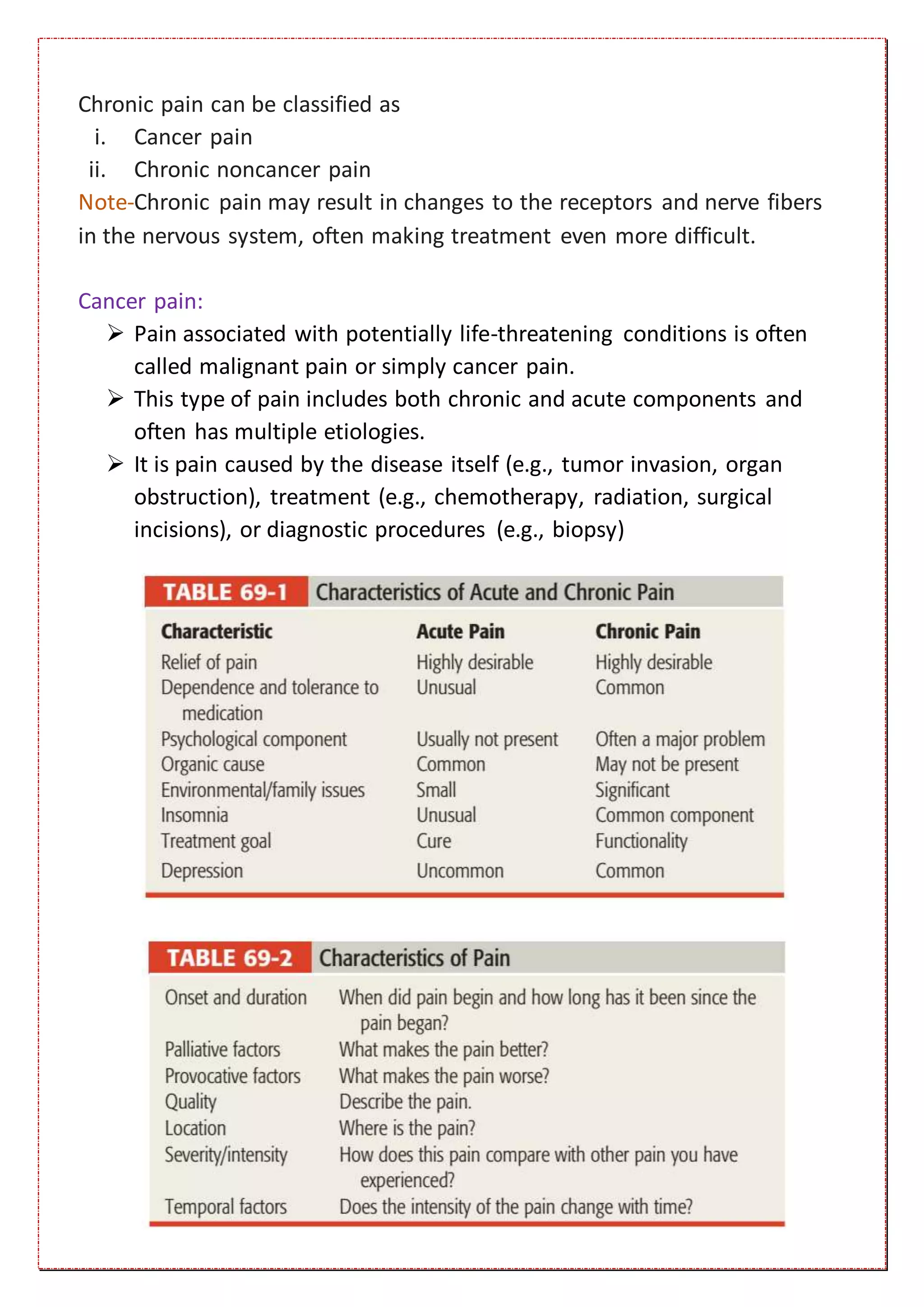
Chronic pain can be classified as
i. Cancer pain
ii. Chronic noncancer pain
Note-Chronic pain may result in changes to the receptors and nerve fibers
in the nervous system, often making treatment even more difficult.
Cancer pain:
 Pain associated with potentially life-threatening conditions is often
called malignant pain or simply cancer pain.
 This type of pain includes both chronic and acute components and
often has multiple etiologies.
 It is pain caused by the disease itself (e.g., tumor invasion, organ
obstruction), treatment (e.g., chemotherapy, radiation, surgical
incisions), or diagnostic procedures (e.g., biopsy)
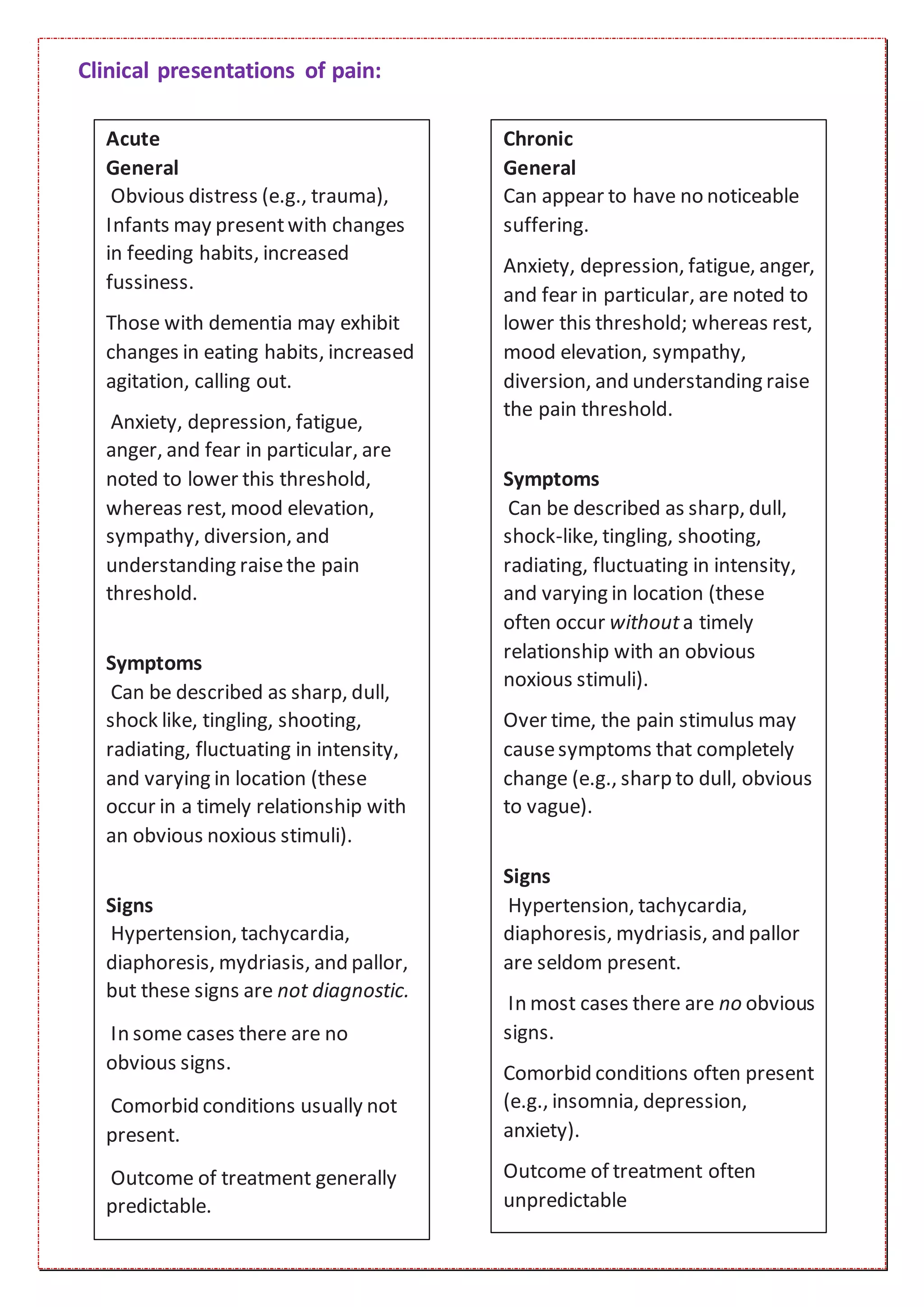
Clinical presentations of pain:
Acute
General
Obvious distress (e.g., trauma),
Infants may presentwith changes
in feeding habits, increased
fussiness.
Those with dementia may exhibit
changes in eating habits, increased
agitation, calling out.
Anxiety, depression, fatigue,
anger, and fear in particular, are
noted to lower this threshold,
whereas rest, mood elevation,
sympathy, diversion, and
understanding raisethe pain
threshold.
Symptoms
Can be described as sharp, dull,
shock like, tingling, shooting,
radiating, fluctuating in intensity,
and varying in location (these
occur in a timely relationship with
an obvious noxious stimuli).
Signs
Hypertension, tachycardia,
diaphoresis, mydriasis, and pallor,
but these signs are not diagnostic.
In some cases there are no
obvious signs.
Comorbid conditions usually not
present.
Outcome of treatment generally
predictable.
Chronic
General
Can appear to have no noticeable
suffering.
Anxiety, depression, fatigue, anger,
and fear in particular, are noted to
lower this threshold; whereas rest,
mood elevation, sympathy,
diversion, and understanding raise
the pain threshold.
Symptoms
Can be described as sharp, dull,
shock-like, tingling, shooting,
radiating, fluctuating in intensity,
and varying in location (these
often occur withouta timely
relationship with an obvious
noxious stimuli).
Over time, the pain stimulus may
causesymptoms that completely
change (e.g., sharp to dull, obvious
to vague).
Signs
Hypertension, tachycardia,
diaphoresis, mydriasis, and pallor
are seldom present.
In most cases there are no obvious
signs.
Comorbid conditions often present
(e.g., insomnia, depression,
anxiety).
Outcome of treatment often
unpredictable
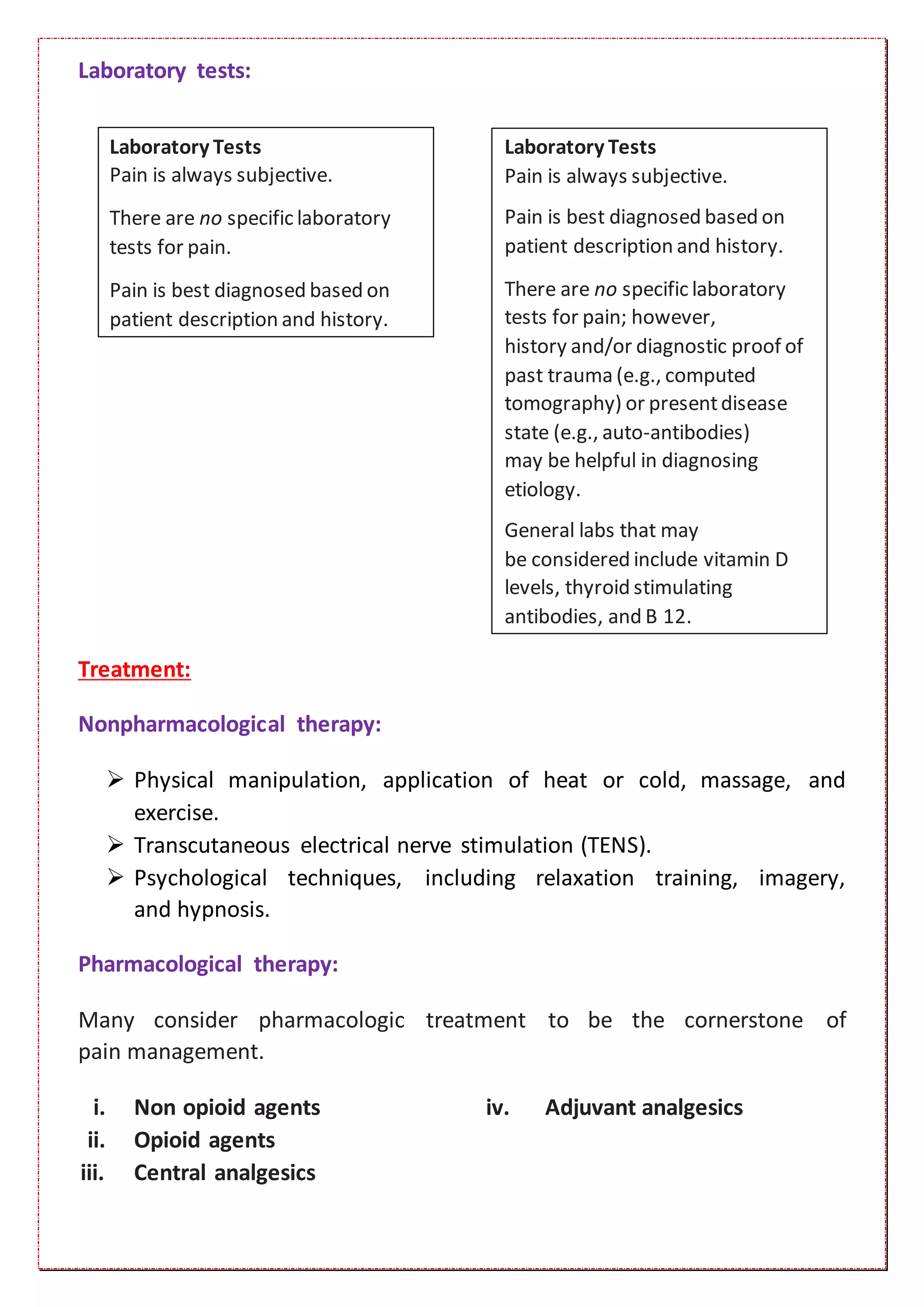
Laboratory tests:
Treatment:
Nonpharmacological therapy:
 Physical manipulation, application of heat or cold, massage, and
exercise.
 Transcutaneous electrical nerve stimulation (TENS).
 Psychological techniques, including relaxation training, imagery,
and hypnosis.
Pharmacological therapy:
Many consider pharmacologic treatment to be the cornerstone of
pain management.
i. Non opioid agents iv. Adjuvant analgesics
ii. Opioid agents
iii. Central analgesics
Laboratory Tests
Pain is always subjective.
There are no specific laboratory
tests for pain.
Pain is best diagnosed based on
patient description and history.
Laboratory Tests
Pain is always subjective.
Pain is best diagnosed based on
patient description and history.
There are no specific laboratory
tests for pain; however,
history and/or diagnostic proof of
past trauma (e.g., computed
tomography) or presentdisease
state (e.g., auto-antibodies)
may be helpful in diagnosing
etiology.
General labs that may
be considered include vitamin D
levels, thyroid stimulating
antibodies, and B 12.
Algorithm for acute pain
Nonopioid Agents
Opioid Agents
Used in mild-to-moderate pain
Effective in severe chronic pain
Use in moderate pain
Drug of choice in severe pain
Use in severe pain
Use in severe pain
Use in severe pain
Use in mild to moderate pain
Use in moderate/severe pain
Use in severe pain
Use in severe pain
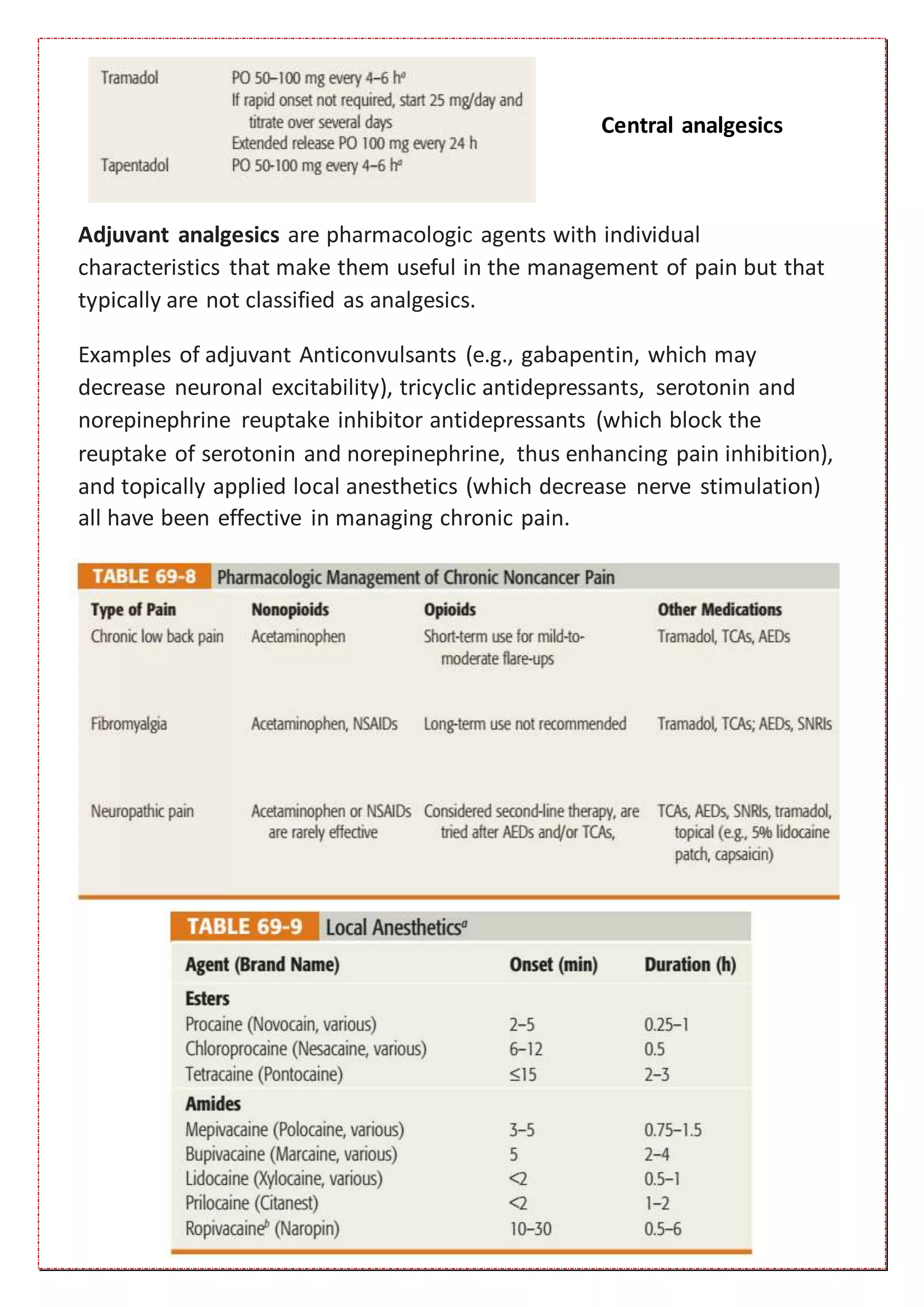
Central analgesics
Adjuvant analgesics are pharmacologic agents with individual
characteristics that make them useful in the management of pain but that
typically are not classified as analgesics.
Examples of adjuvant Anticonvulsants (e.g., gabapentin, which may
decrease neuronal excitability), tricyclic antidepressants, serotonin and
norepinephrine reuptake inhibitor antidepressants (which block the
reuptake of serotonin and norepinephrine, thus enhancing pain inhibition),
and topically applied local anesthetics (which decrease nerve stimulation)
all have been effective in managing chronic pain.

Pain management

  • 1.
    Pain Management Definition: Painis: “an unpleasant sensory and emotional experience associated with actual or potential tissue damage.” Pathophysiology: Nociceptive pain- Nociceptive pain typically is classified as i. Somatic (arising from skin, bone, joint, muscle, or connective tissue) ii. Visceral (arising from internal organs such as the large intestine or pancreas). Whereas somatic pain often presents as throbbing and well localized, visceral pain can manifest as pain feeling as if it is coming from other structures (referred) or as a more localized phenomenon.
  • 2.
    Neuropathic pain- Classification ofpain: Acute pain:  Acute pain can be a useful physiologic process, warning individuals of disease states and potentially harmful situations.  Acute pain is usually nociceptive in nature with common causes, including surgery, acute illness, trauma, labor, and medical procedures. Chronic pain:  Under normal conditions, acute pain subsides quickly as the healing process decreases the pain-producing stimuli; however, in some instances, pain persists for months to years, leading to a chronic pain state with features quite different from those of acute pain.  This type of pain can be nociceptive, neuropathic/ functional, or mixed.
  • 3.
    Chronic pain canbe classified as i. Cancer pain ii. Chronic noncancer pain Note-Chronic pain may result in changes to the receptors and nerve fibers in the nervous system, often making treatment even more difficult. Cancer pain:  Pain associated with potentially life-threatening conditions is often called malignant pain or simply cancer pain.  This type of pain includes both chronic and acute components and often has multiple etiologies.  It is pain caused by the disease itself (e.g., tumor invasion, organ obstruction), treatment (e.g., chemotherapy, radiation, surgical incisions), or diagnostic procedures (e.g., biopsy)
  • 4.
    Clinical presentations ofpain: Acute General Obvious distress (e.g., trauma), Infants may presentwith changes in feeding habits, increased fussiness. Those with dementia may exhibit changes in eating habits, increased agitation, calling out. Anxiety, depression, fatigue, anger, and fear in particular, are noted to lower this threshold, whereas rest, mood elevation, sympathy, diversion, and understanding raisethe pain threshold. Symptoms Can be described as sharp, dull, shock like, tingling, shooting, radiating, fluctuating in intensity, and varying in location (these occur in a timely relationship with an obvious noxious stimuli). Signs Hypertension, tachycardia, diaphoresis, mydriasis, and pallor, but these signs are not diagnostic. In some cases there are no obvious signs. Comorbid conditions usually not present. Outcome of treatment generally predictable. Chronic General Can appear to have no noticeable suffering. Anxiety, depression, fatigue, anger, and fear in particular, are noted to lower this threshold; whereas rest, mood elevation, sympathy, diversion, and understanding raise the pain threshold. Symptoms Can be described as sharp, dull, shock-like, tingling, shooting, radiating, fluctuating in intensity, and varying in location (these often occur withouta timely relationship with an obvious noxious stimuli). Over time, the pain stimulus may causesymptoms that completely change (e.g., sharp to dull, obvious to vague). Signs Hypertension, tachycardia, diaphoresis, mydriasis, and pallor are seldom present. In most cases there are no obvious signs. Comorbid conditions often present (e.g., insomnia, depression, anxiety). Outcome of treatment often unpredictable
  • 5.
    Laboratory tests: Treatment: Nonpharmacological therapy: Physical manipulation, application of heat or cold, massage, and exercise.  Transcutaneous electrical nerve stimulation (TENS).  Psychological techniques, including relaxation training, imagery, and hypnosis. Pharmacological therapy: Many consider pharmacologic treatment to be the cornerstone of pain management. i. Non opioid agents iv. Adjuvant analgesics ii. Opioid agents iii. Central analgesics Laboratory Tests Pain is always subjective. There are no specific laboratory tests for pain. Pain is best diagnosed based on patient description and history. Laboratory Tests Pain is always subjective. Pain is best diagnosed based on patient description and history. There are no specific laboratory tests for pain; however, history and/or diagnostic proof of past trauma (e.g., computed tomography) or presentdisease state (e.g., auto-antibodies) may be helpful in diagnosing etiology. General labs that may be considered include vitamin D levels, thyroid stimulating antibodies, and B 12.
  • 6.
  • 7.
  • 8.
    Opioid Agents Used inmild-to-moderate pain Effective in severe chronic pain Use in moderate pain Drug of choice in severe pain Use in severe pain Use in severe pain Use in severe pain Use in mild to moderate pain Use in moderate/severe pain Use in moderate/severe pain Use in severe pain Use in severe pain
  • 9.
    Central analgesics Adjuvant analgesicsare pharmacologic agents with individual characteristics that make them useful in the management of pain but that typically are not classified as analgesics. Examples of adjuvant Anticonvulsants (e.g., gabapentin, which may decrease neuronal excitability), tricyclic antidepressants, serotonin and norepinephrine reuptake inhibitor antidepressants (which block the reuptake of serotonin and norepinephrine, thus enhancing pain inhibition), and topically applied local anesthetics (which decrease nerve stimulation) all have been effective in managing chronic pain.