PAGET’S DISEASE
Submitted by :
Mukta kanbur
21NUG088
Submitted by
Mukta S Kanabur
21NUG088
Introduction
• Paget's disease is a chronic condition of bone characterized by
disorder of the normal bone remodeling process.
• Characterized by excessive breakdown of bone tissue followed by
abnormal bone formation.
• Also known as osteitis deformans is a bone disease unknown
cause.
• Affecting men twice as frequently as women.
• Named after the England surgeons Sir James Paget.
Definition
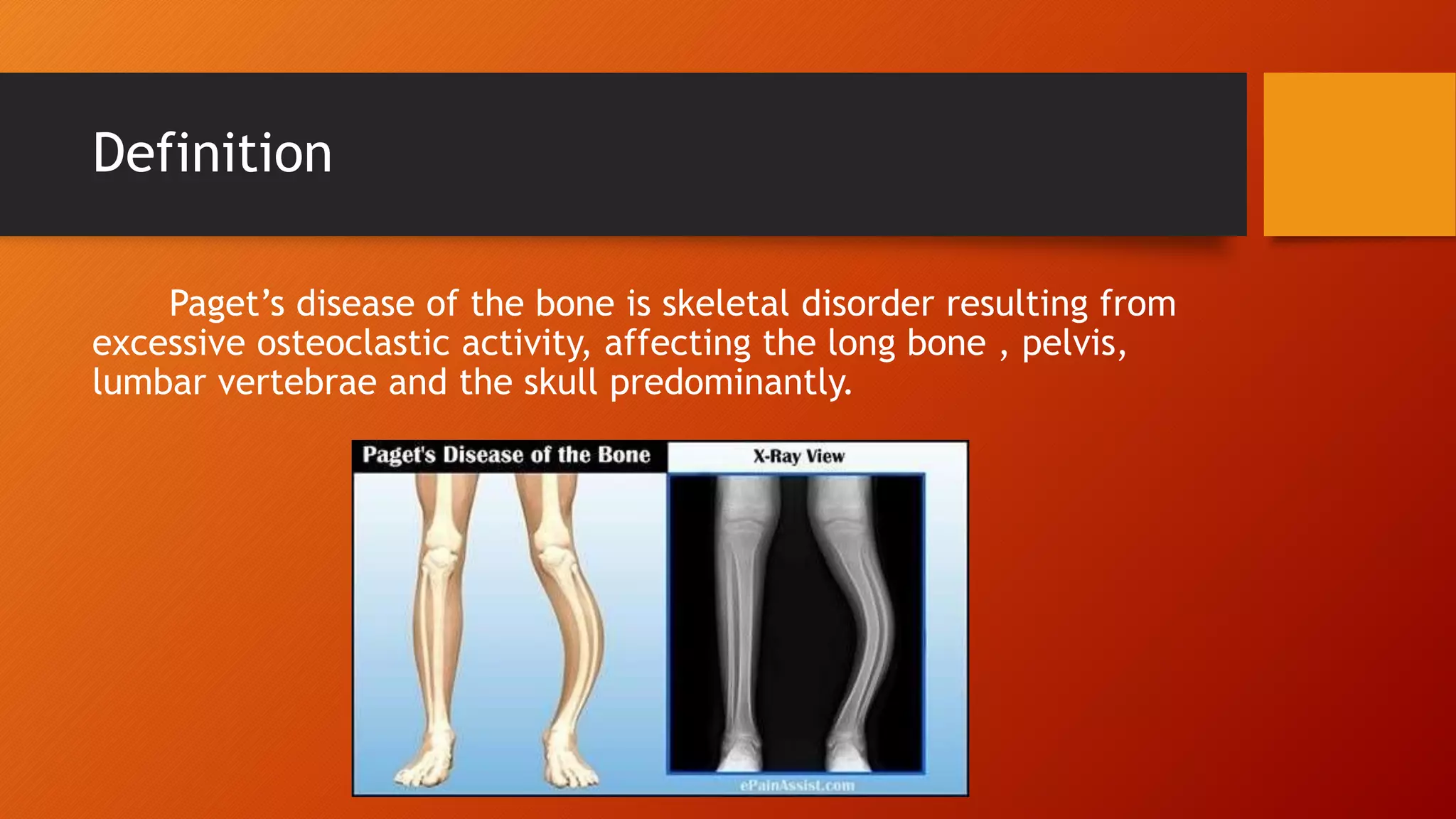
Paget’s disease of the bone is skeletal disorder resulting from
excessive osteoclastic activity, affecting the long bone , pelvis,
lumbar vertebrae and the skull predominantly.
Etiology
• Idiopathic
• Family history
• Common in men than women.
• Infection from blood borne viruses ,after acute viraemia,
osteoclasts become chronically infected, stimulating osteoclastic
proliferation.
Pathophysiology
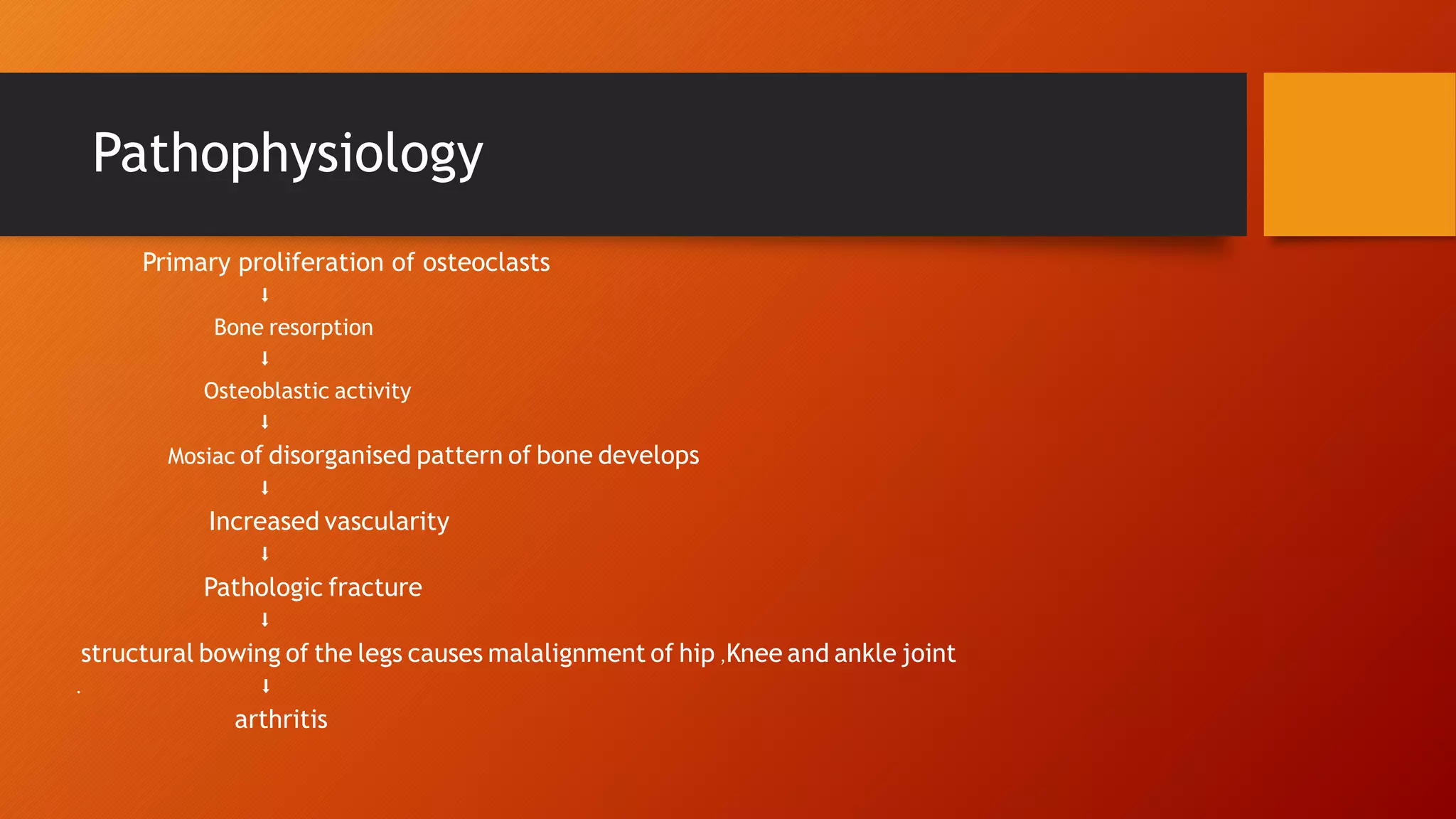
Primary proliferation of osteoclasts
⬇️
Bone resorption
⬇️
Osteoblastic activity
⬇️
Mosiac of disorganised pattern of bone develops
⬇️
Increased vascularity
⬇️
Pathologic fracture
⬇️
structural bowing of the legs causes malalignment of hip ,Knee and ankle joint
. ⬇️
arthritis
Classification
Signs and symptoms
Clinical manifestations
• Pain and predisposition to fracture.
• Pagetic lesions can lead to OA , joint destruction and spinal
deformity
• Impaired hearing as a result of skull enlargement
• Tinnitus or vertigo
• Rarely heart failure, hypertension, atherosclerosis and aortic
valve calcification occur
• Malignant bone tumour
Diagnostic evaluation
• Elevated serum alkaline phosphatase
• Serum calcium, phosphorus and albumin levels usually normal
• Generally confirmed with radiologic examinations
• Bone scans can evaluate pagetic activity
• Bone biopsy
Management
• No treatment for asymptomatic paget disease
• Pain management; NSAIDS and aspirin
• Medications: Calcitonin is the main medication used for this
disease
• Bisphosphonates : Etidronate disodium ( Didronel),
alendronate(fosamax) pamidronate (aredia), risedronate(actonel)
and an antineoplastic agent plicamycin(mithramycin) .
• Tibial osteotomy done to realign knees and relieve pain.
Nursing management
• Assessing pain and functional ability
• Observing for bowing of legs or complaint that hats feel tight.
• Assessing for cardiovascular complications
• Assessing for auditory symptoms such as tinnitus,vertigo and
hearing loss
• Prevention of falls
• Assisting patient with activities as necessary
• Providing function and mobility aids such as heel lifts and walking
aids as needed.
Health education
• Teaching safety measures in the home, removal of loose rugs and obstacles to
prevent falls and good lighting
• Providing education about the disease process and medication treatment
• Making sure that patient knows how to use mobility aids
• Initating home care referral as indicated
• Encouraging follow-up for periodic hearing tests and blood work.

paget's disease

  • 1.
    PAGET’S DISEASE Submitted by: Mukta kanbur 21NUG088 Submitted by Mukta S Kanabur 21NUG088
  • 2.
    Introduction • Paget's diseaseis a chronic condition of bone characterized by disorder of the normal bone remodeling process. • Characterized by excessive breakdown of bone tissue followed by abnormal bone formation. • Also known as osteitis deformans is a bone disease unknown cause. • Affecting men twice as frequently as women. • Named after the England surgeons Sir James Paget.
  • 3.
    Definition Paget’s disease ofthe bone is skeletal disorder resulting from excessive osteoclastic activity, affecting the long bone , pelvis, lumbar vertebrae and the skull predominantly.
  • 4.
    Etiology • Idiopathic • Familyhistory • Common in men than women. • Infection from blood borne viruses ,after acute viraemia, osteoclasts become chronically infected, stimulating osteoclastic proliferation.
  • 5.
    Pathophysiology Primary proliferation ofosteoclasts ⬇️ Bone resorption ⬇️ Osteoblastic activity ⬇️ Mosiac of disorganised pattern of bone develops ⬇️ Increased vascularity ⬇️ Pathologic fracture ⬇️ structural bowing of the legs causes malalignment of hip ,Knee and ankle joint . ⬇️ arthritis
  • 6.
  • 7.
  • 8.
    Clinical manifestations • Painand predisposition to fracture. • Pagetic lesions can lead to OA , joint destruction and spinal deformity • Impaired hearing as a result of skull enlargement • Tinnitus or vertigo • Rarely heart failure, hypertension, atherosclerosis and aortic valve calcification occur • Malignant bone tumour
  • 9.
    Diagnostic evaluation • Elevatedserum alkaline phosphatase • Serum calcium, phosphorus and albumin levels usually normal • Generally confirmed with radiologic examinations • Bone scans can evaluate pagetic activity • Bone biopsy
  • 10.
    Management • No treatmentfor asymptomatic paget disease • Pain management; NSAIDS and aspirin • Medications: Calcitonin is the main medication used for this disease • Bisphosphonates : Etidronate disodium ( Didronel), alendronate(fosamax) pamidronate (aredia), risedronate(actonel) and an antineoplastic agent plicamycin(mithramycin) . • Tibial osteotomy done to realign knees and relieve pain.
  • 11.
    Nursing management • Assessingpain and functional ability • Observing for bowing of legs or complaint that hats feel tight. • Assessing for cardiovascular complications • Assessing for auditory symptoms such as tinnitus,vertigo and hearing loss • Prevention of falls • Assisting patient with activities as necessary • Providing function and mobility aids such as heel lifts and walking aids as needed.
  • 12.
    Health education • Teachingsafety measures in the home, removal of loose rugs and obstacles to prevent falls and good lighting • Providing education about the disease process and medication treatment • Making sure that patient knows how to use mobility aids • Initating home care referral as indicated • Encouraging follow-up for periodic hearing tests and blood work.