DR. BIPUL BORTHAKUR
PROF, DEPT OF ORTHOPAEDICS, SMCH
OSTEOGENESIS
IMPERFECTA
OSTEOGENESIS IMPERFECTA
 Known by several names:
 Periosteal dysplasia
 Fragilitas ossium
 Brittle bone disease
 Vrolik’s disease
 Lobstein’s disease
INTRODUCTION
 The condition is hereditary
 Incidence is 1:20000
 Characterized by
 Fragile bones
 Blue sclera
 Deafness
 Laxity of joints
o There is a tendency of improvement with age.
ETIOLOGY
 Abnormality in gene that codes for alpha chain type
I collagen
 17q chromosome
PATHOGENESIS
 The disease affects both endochondral and intra-
membranous ossification.
 There is alteration in structural integrity
 Reduction in total amount of Type I collagen
 Weakening of tissue
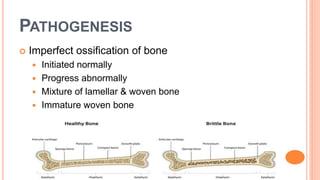
PATHOGENESIS
 Imperfect ossification of bone
 Initiated normally
 Progress abnormally
 Mixture of lamellar & woven bone
 Immature woven bone
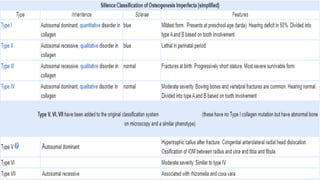
CLASSIFICATION
 Based on
 Pattern of inheritance
 Age of presentation
 Severity of changes in bone & extra-skeletal tissue
 SILLENCE classification
CLINICAL FEATURES
 Vary considerably
 Osteopenia
 Liability to fracture
 Minor trauma
 Recur frequently throughout childhood
 Florid callus
 Abnormal pliable new bone
 Heal within normal time interval
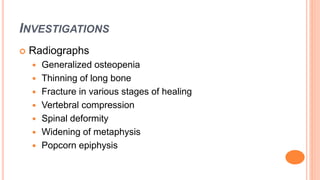
CLINICAL FEATURES
 Malunion and refracture
 Anterolateral bowing deformity of the femur, tibia
 Spinal deformity : Scoliosis/ kyphosis
 Laxity of ligaments & hypermobile joints
 Blue sclera
 Thin and loose skin
 Crumbling teeth
INVESTIGATIONS
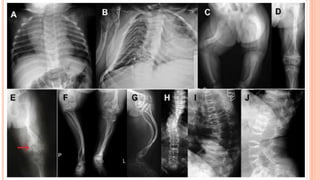
 Radiographs
 Generalized osteopenia
 Thinning of long bone
 Fracture in various stages of healing
 Vertebral compression
 Spinal deformity
 Widening of metaphysis
 Popcorn epiphysis
INVESTIGATIONS
 Prenatal diagnosis
 USG
 Chorionic villous sampling
MANAGEMENT
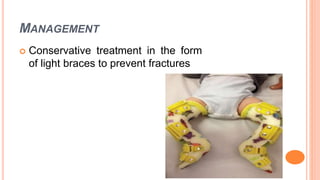
 Conservative treatment in the form
of light braces to prevent fractures
MANAGEMENT
 Bisphonates (i.v pamidronate)
 Increases bone mass
 Decrease incidence of fractures
 Relieves chronic bone pain
 Dose of pamidronate is 3mg/kg/cycle at 4-6 monthly
intervals for 1.3-5 years
MANAGEMENT
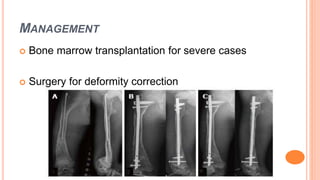
 Bone marrow transplantation for severe cases
 Surgery for deformity correction
Osteogenesis imperfecta

Osteogenesis imperfecta

  • 1.
    DR. BIPUL BORTHAKUR PROF,DEPT OF ORTHOPAEDICS, SMCH OSTEOGENESIS IMPERFECTA
  • 2.
    OSTEOGENESIS IMPERFECTA  Knownby several names:  Periosteal dysplasia  Fragilitas ossium  Brittle bone disease  Vrolik’s disease  Lobstein’s disease
  • 3.
    INTRODUCTION  The conditionis hereditary  Incidence is 1:20000  Characterized by  Fragile bones  Blue sclera  Deafness  Laxity of joints o There is a tendency of improvement with age.
  • 4.
    ETIOLOGY  Abnormality ingene that codes for alpha chain type I collagen  17q chromosome
  • 5.
    PATHOGENESIS  The diseaseaffects both endochondral and intra- membranous ossification.  There is alteration in structural integrity  Reduction in total amount of Type I collagen  Weakening of tissue
  • 6.
    PATHOGENESIS  Imperfect ossificationof bone  Initiated normally  Progress abnormally  Mixture of lamellar & woven bone  Immature woven bone
  • 7.
    CLASSIFICATION  Based on Pattern of inheritance  Age of presentation  Severity of changes in bone & extra-skeletal tissue  SILLENCE classification
  • 9.
    CLINICAL FEATURES  Varyconsiderably  Osteopenia  Liability to fracture  Minor trauma  Recur frequently throughout childhood  Florid callus  Abnormal pliable new bone  Heal within normal time interval
  • 10.
    CLINICAL FEATURES  Malunionand refracture  Anterolateral bowing deformity of the femur, tibia  Spinal deformity : Scoliosis/ kyphosis  Laxity of ligaments & hypermobile joints  Blue sclera  Thin and loose skin  Crumbling teeth
  • 12.
    INVESTIGATIONS  Radiographs  Generalizedosteopenia  Thinning of long bone  Fracture in various stages of healing  Vertebral compression  Spinal deformity  Widening of metaphysis  Popcorn epiphysis
  • 14.
    INVESTIGATIONS  Prenatal diagnosis USG  Chorionic villous sampling
  • 15.
    MANAGEMENT  Conservative treatmentin the form of light braces to prevent fractures
  • 16.
    MANAGEMENT  Bisphonates (i.vpamidronate)  Increases bone mass  Decrease incidence of fractures  Relieves chronic bone pain  Dose of pamidronate is 3mg/kg/cycle at 4-6 monthly intervals for 1.3-5 years
  • 17.
    MANAGEMENT  Bone marrowtransplantation for severe cases  Surgery for deformity correction