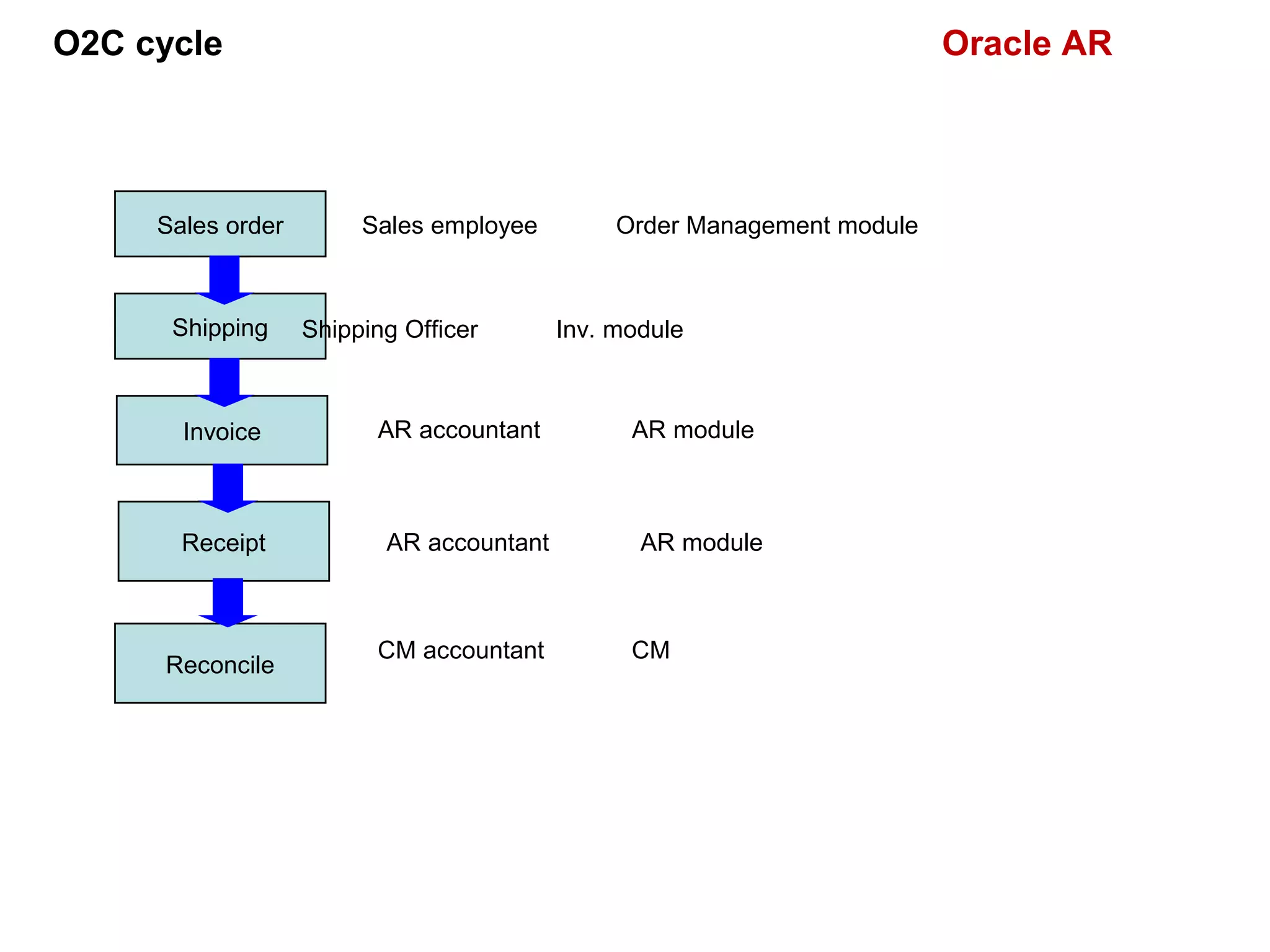
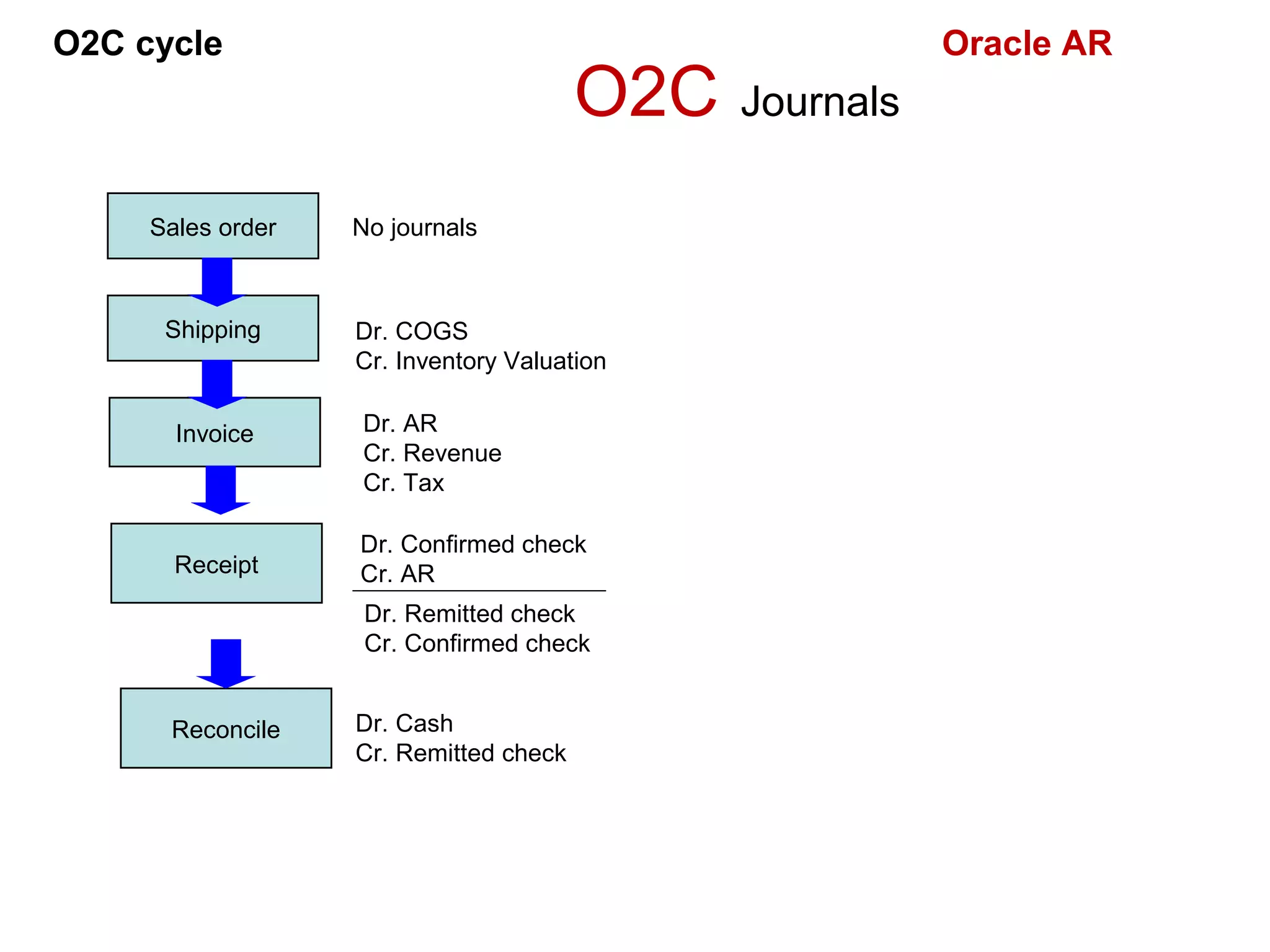
This document describes the procure-to-pay (P2P) and order-to-cash (O2C) cycles in Oracle applications. For P2P, it outlines the key steps of purchase requisition, purchase order, goods receipt, entering invoices, and payment. For O2C, it outlines the key steps of sales order, shipping, invoice creation, receipt, and reconciliation. It also provides details on the journals entries for transactions in each cycle.
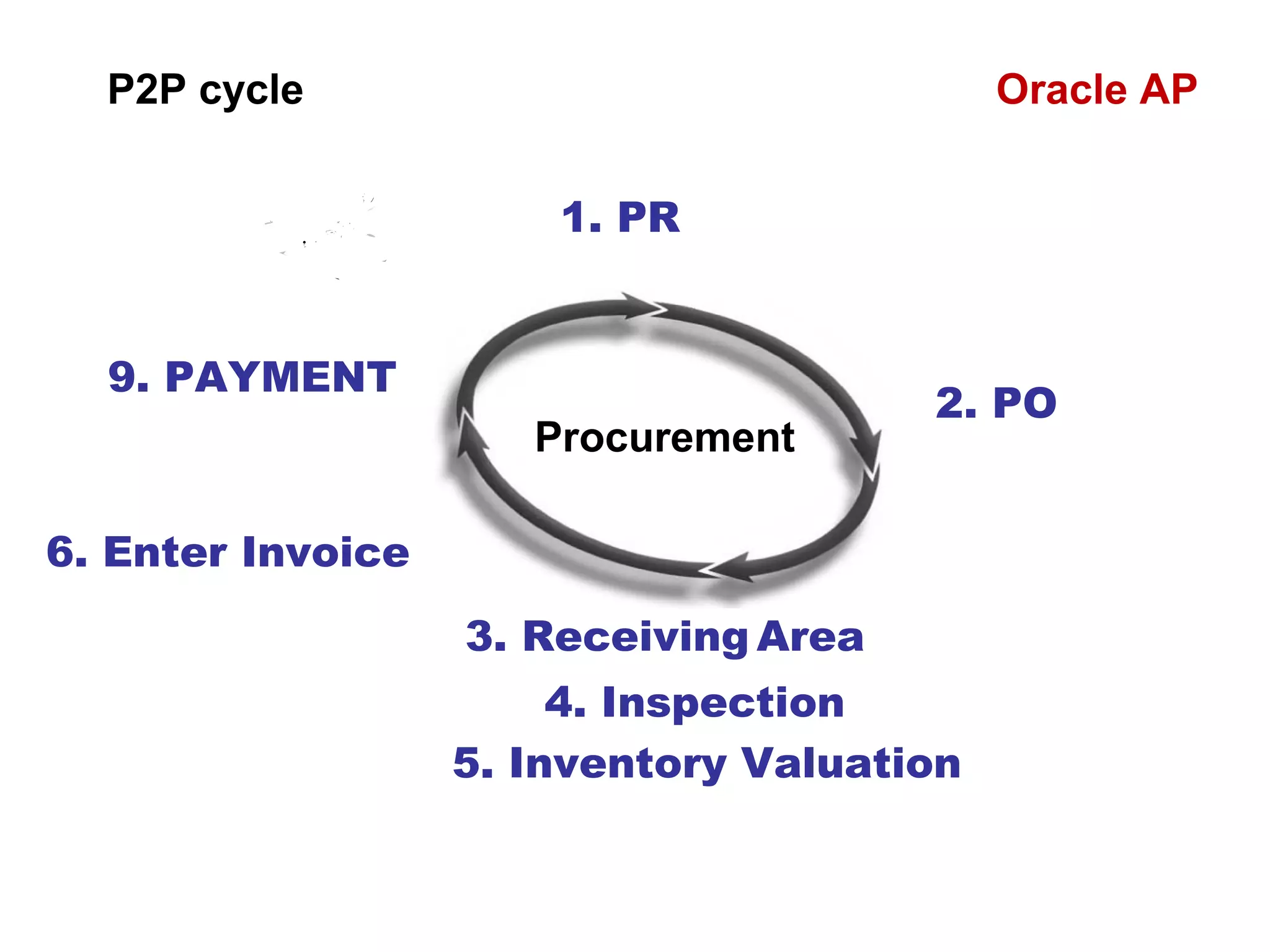
P2P cycle OracleAP
Procurement
2. PO
6. Enter Invoice
9. PAYMENT
3. Receiving Area
4. Inspection
5. Inventory Valuation
1. PR
4.
Purchase Req
Purchase Order
GoodsReceipt
Enter Invoice
Payment
Any employee Purchasing module
Purchasing Officer Purchasing module
Receiving Area Storekeeper Inv. module
Inspection Storekeeper Inv. module
Inventory Valuation Storekeeper Inv. module
AP accountant AP
AP accountant AP
Reconcile CM accountant CM
P2P cycle Oracle AP
Procure to pay cycle
5.
P2P Journals
PR
PO
Receiving Area
Inspection
EnterInvoice
No journals
No journals
Dr. Receiving Area
Cr. AP Accrual
Dr. Inventory Valuation
Cr. Inspection
Reconcile
Payment
Inventory
Valuation
Dr. Inspection
Cr. Receiving Area
Dr. AP Accrual
Cr. AP Supplier XXX (Liability)
Dr. AP Supplier XXX (Liability)
Cr. Cash clearing
Dr. Cash clearing
Cr. Cash in bank
P2P cycle Oracle AP
#4 Personalized Settings
Screen can be personalized by creating a folder and assigning your most commonly used transactions. With this, SAP makes your job faster and easier.
#5 Dunning - The process of notifying vendors to ensure the resubmission of vendor declarations that are about to reach their expiration dates.
Dunning procedures - A pre-defined procedure specifying how customers or vendors are dunned.
For each procedure, the user defines
Number of dunning levels
Dunning frequency
Amount limits
Texts for the dunning notices





![Accounting entries[1]](https://cdn.slidesharecdn.com/ss_thumbnails/accountingentries1-130712041544-phpapp01-thumbnail.jpg?width=640&height=640&fit=bounds)


