Hazardous Waste Management
Name: Patil Nikhil Ishwar
Class: SYBCA
Roll No: 40
Course Title : Environmental Awareness
Date : 16-12-2020
Teacher’s Name : Dr. Sharda Patil
What is Hazardous-waste?
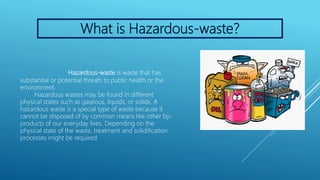
Hazardous-waste is waste that has
substantial or potential threats to public health or the
environment.
Hazardous wastes may be found in different
physical states such as gaseous, liquids, or solids. A
hazardous waste is a special type of waste because it
cannot be disposed of by common means like other by-
products of our everyday lives. Depending on the
physical state of the waste, treatment and solidification
processes might be required.
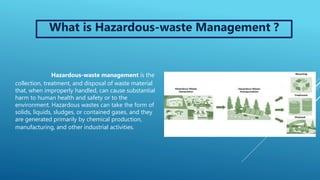
Hazardous-waste management is the
collection, treatment, and disposal of waste material
that, when improperly handled, can cause substantial
harm to human health and safety or to the
environment. Hazardous wastes can take the form of
solids, liquids, sludges, or contained gases, and they
are generated primarily by chemical production,
manufacturing, and other industrial activities.
What is Hazardous-waste Management ?
• Radioactive Substance
• Chemicals
• Bio-medical Wastes
• Flammable wastes
• Explosives
Hazardous wastes are generally classified into five categories.
Classification of Hazardous Waste
Remedy for Hazardous waste
Remedial action
Disposal of hazardous waste in unlined pits, ponds, or
lagoons poses a threat to human health and environmental quality.
One option for remediation is to completely remove all
the waste material from the site and transport it to another location for
treatment and proper disposal.
A less costly alternative is full containment of the waste.
This is done by placing an impermeable cover over the hazardous-
waste site and by blocking the lateral flow of groundwater with
subsurface cut-off walls.
Waste Generation
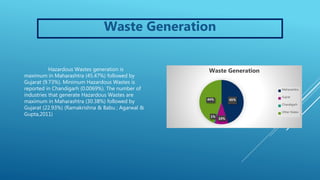
Hazardous Wastes generation is
maximum in Maharashtra (45.47%) followed by
Gujarat (9.73%). Minimum Hazardous Wastes is
reported in Chandigarh (0.0069%). The number of
industries that generate Hazardous Wastes are
maximum in Maharashtra (30.38%) followed by
Gujarat (22.93%) (Ramakrishna & Babu ; Agarwal &
Gupta,2011)
45%
10%
1%
44%
Waste Generation
Maharashtra
Gujrat
Chandigarh
Other States
Impact of Hazardous Waste on Environment?
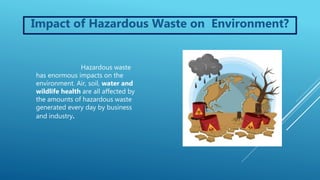
Hazardous waste
has enormous impacts on the
environment. Air, soil, water and
wildlife health are all affected by
the amounts of hazardous waste
generated every day by business
and industry.
Impact of Hazardous Waste on Environment?
Emergency response efforts must consider the health and ecological
hazards of a hazardous substance release. These hazards impact emergency
responders and effected communities. In some cases, hazardous substances may
irritate the skin or eyes, make it difficult to breathe, cause headaches and nausea,
or result in other types of illness. Some hazardous substances can cause far more
severe health effects, including:
o genetic mutations,
o behavioral abnormalities,
o physiological malfunctions (e.g., reproductive impairment, kidney
failure, etc.),
o cancer,
o physical deformations, and
o birth defects.
CONCLUSION
Developing countries should learn from the experiences of
developed nations regarding their hazardous waste management system and its
related problems and also keep looking for new and innovative solutions that achieve
a better fit with the limited resources available to developing countries. The MoEF has
elaborately identified various treatment and disposal options of different hazardous
waste streams that include physical/chemical treatment, landfill, biological, treatment,
incineration etc. still secured landfill is the most used option for disposal of waste. The
rules framed by MoEF regarding hazardous waste should be followed strictly by the
industries and regulatory body should be assigned for regular monitoring purpose.
Proper treatment, storage prior to treatment or disposal and safe disposal of
hazardous waste is essential for environmental health

hazradous waste management.pptx

  • 1.
    Hazardous Waste Management Name:Patil Nikhil Ishwar Class: SYBCA Roll No: 40 Course Title : Environmental Awareness Date : 16-12-2020 Teacher’s Name : Dr. Sharda Patil
  • 2.
    What is Hazardous-waste? Hazardous-wasteis waste that has substantial or potential threats to public health or the environment. Hazardous wastes may be found in different physical states such as gaseous, liquids, or solids. A hazardous waste is a special type of waste because it cannot be disposed of by common means like other by- products of our everyday lives. Depending on the physical state of the waste, treatment and solidification processes might be required.
  • 3.
    Hazardous-waste management isthe collection, treatment, and disposal of waste material that, when improperly handled, can cause substantial harm to human health and safety or to the environment. Hazardous wastes can take the form of solids, liquids, sludges, or contained gases, and they are generated primarily by chemical production, manufacturing, and other industrial activities. What is Hazardous-waste Management ?
  • 4.
    • Radioactive Substance •Chemicals • Bio-medical Wastes • Flammable wastes • Explosives Hazardous wastes are generally classified into five categories. Classification of Hazardous Waste
  • 5.
    Remedy for Hazardouswaste Remedial action Disposal of hazardous waste in unlined pits, ponds, or lagoons poses a threat to human health and environmental quality. One option for remediation is to completely remove all the waste material from the site and transport it to another location for treatment and proper disposal. A less costly alternative is full containment of the waste. This is done by placing an impermeable cover over the hazardous- waste site and by blocking the lateral flow of groundwater with subsurface cut-off walls.
  • 6.
    Waste Generation Hazardous Wastesgeneration is maximum in Maharashtra (45.47%) followed by Gujarat (9.73%). Minimum Hazardous Wastes is reported in Chandigarh (0.0069%). The number of industries that generate Hazardous Wastes are maximum in Maharashtra (30.38%) followed by Gujarat (22.93%) (Ramakrishna & Babu ; Agarwal & Gupta,2011) 45% 10% 1% 44% Waste Generation Maharashtra Gujrat Chandigarh Other States
  • 7.
    Impact of HazardousWaste on Environment? Hazardous waste has enormous impacts on the environment. Air, soil, water and wildlife health are all affected by the amounts of hazardous waste generated every day by business and industry.
  • 8.
    Impact of HazardousWaste on Environment? Emergency response efforts must consider the health and ecological hazards of a hazardous substance release. These hazards impact emergency responders and effected communities. In some cases, hazardous substances may irritate the skin or eyes, make it difficult to breathe, cause headaches and nausea, or result in other types of illness. Some hazardous substances can cause far more severe health effects, including: o genetic mutations, o behavioral abnormalities, o physiological malfunctions (e.g., reproductive impairment, kidney failure, etc.), o cancer, o physical deformations, and o birth defects.
  • 9.
    CONCLUSION Developing countries shouldlearn from the experiences of developed nations regarding their hazardous waste management system and its related problems and also keep looking for new and innovative solutions that achieve a better fit with the limited resources available to developing countries. The MoEF has elaborately identified various treatment and disposal options of different hazardous waste streams that include physical/chemical treatment, landfill, biological, treatment, incineration etc. still secured landfill is the most used option for disposal of waste. The rules framed by MoEF regarding hazardous waste should be followed strictly by the industries and regulatory body should be assigned for regular monitoring purpose. Proper treatment, storage prior to treatment or disposal and safe disposal of hazardous waste is essential for environmental health