HRM751
OVERVIEW OF PERFORMANCE
MANAGEMENT
 NUR SYAZANA BINTI HAJI AZMAN HISHAM

 2012423038

 ASSOC. PROF. DR ROSHIDI BIN HASSAN
Performance Management
Definition of
Performance Management
(PM)
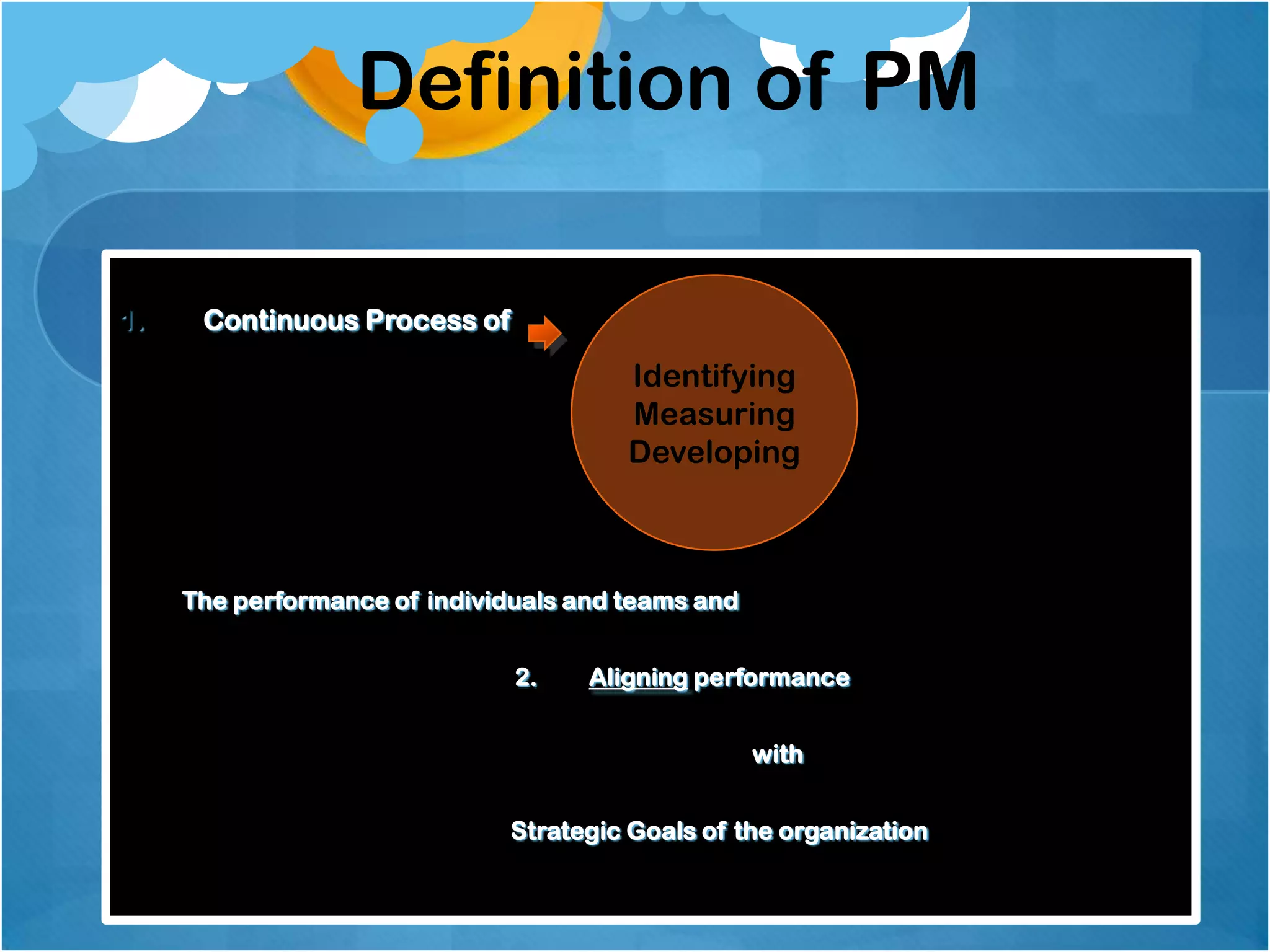
Definition of PM
1.

Continuous Process of

Identifying
Measuring
Developing

The performance of individuals and teams and
2.

Aligning performance

with
Strategic Goals of the organization
Definition of PM
(continued)
„…the process where steering of the
organization takes place through the systematic
definition of mission, strategy and objectives of
the organization, making these measurable
through critical success factors and key
performance indicators, in order to be able to
take corrective actions to keep the organization
on track‟ (Waal, Goedegebuure, & Geradts,
2011).
Definition of PM
(continued)
Performance management can be regarded as a
systematic process by which the overall
performance of an organization can be improved
by improving the performance of individuals
within a team framework (Singh, 2012).
Definition of PM
(continued)
Effective performance management-involving a
complete system of goal setting, training,
communication, and ongoing feedback-is a
practice on which research often has important
implications (Helm, Courtney L, Frank R, &
Christine, 2007).
Definition of PM
(continued)
PM is “something that people actually do and
can be observed . . . Performance is what the
organization hires one to do, and do well.
Performance is not the consequence or result of
action, it is the action itself” (W. Smither &
London, 2009).
Performance
Management
is NOT
Performance
Appraisal
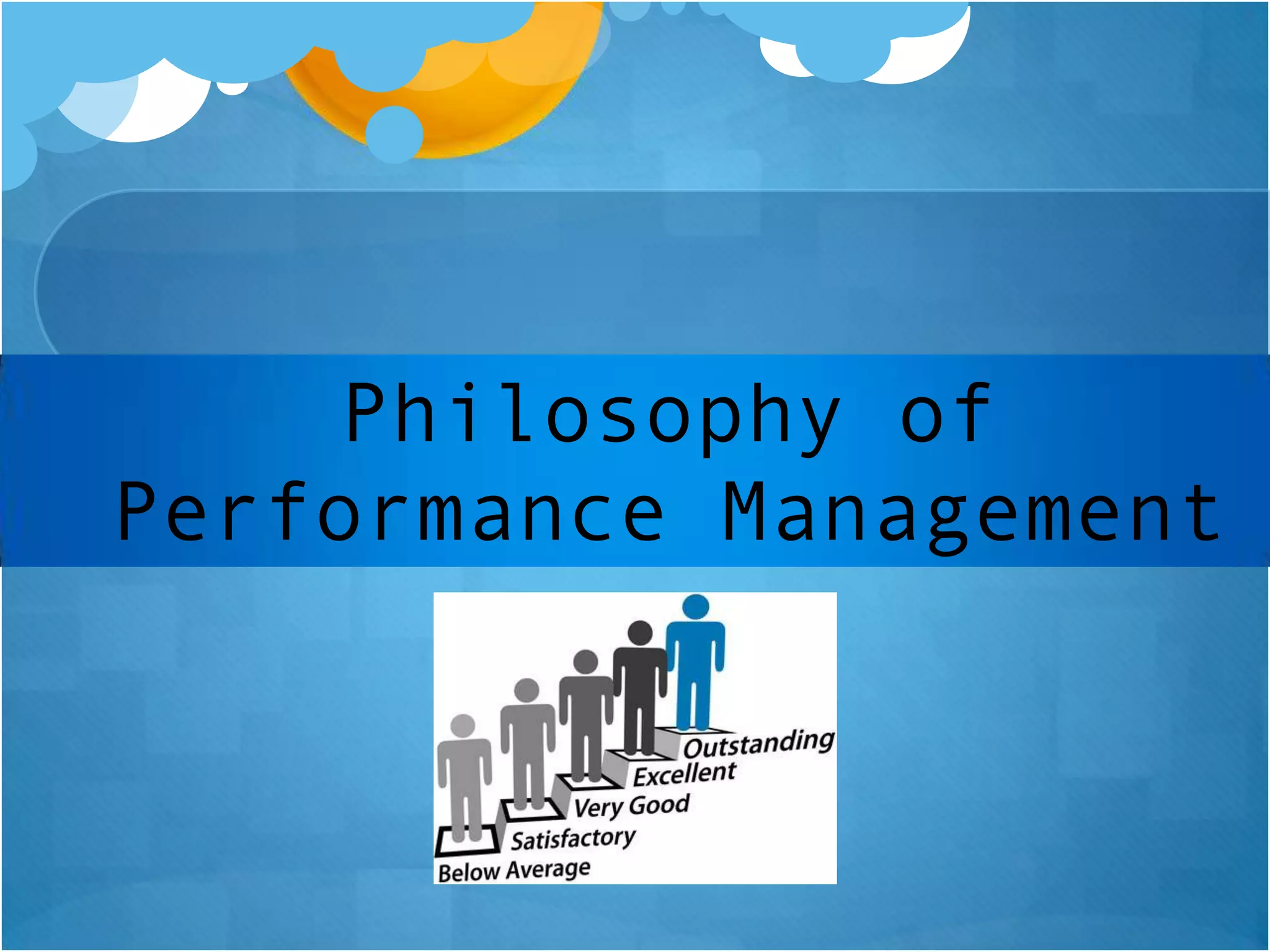
Philosophy of
Performance Management
Philosophy
Belief of employee
performance need to be
managed, to ensure that
organizational goal will be
achieved
Contributions of
Performance Management
Contributions of Performance
Management

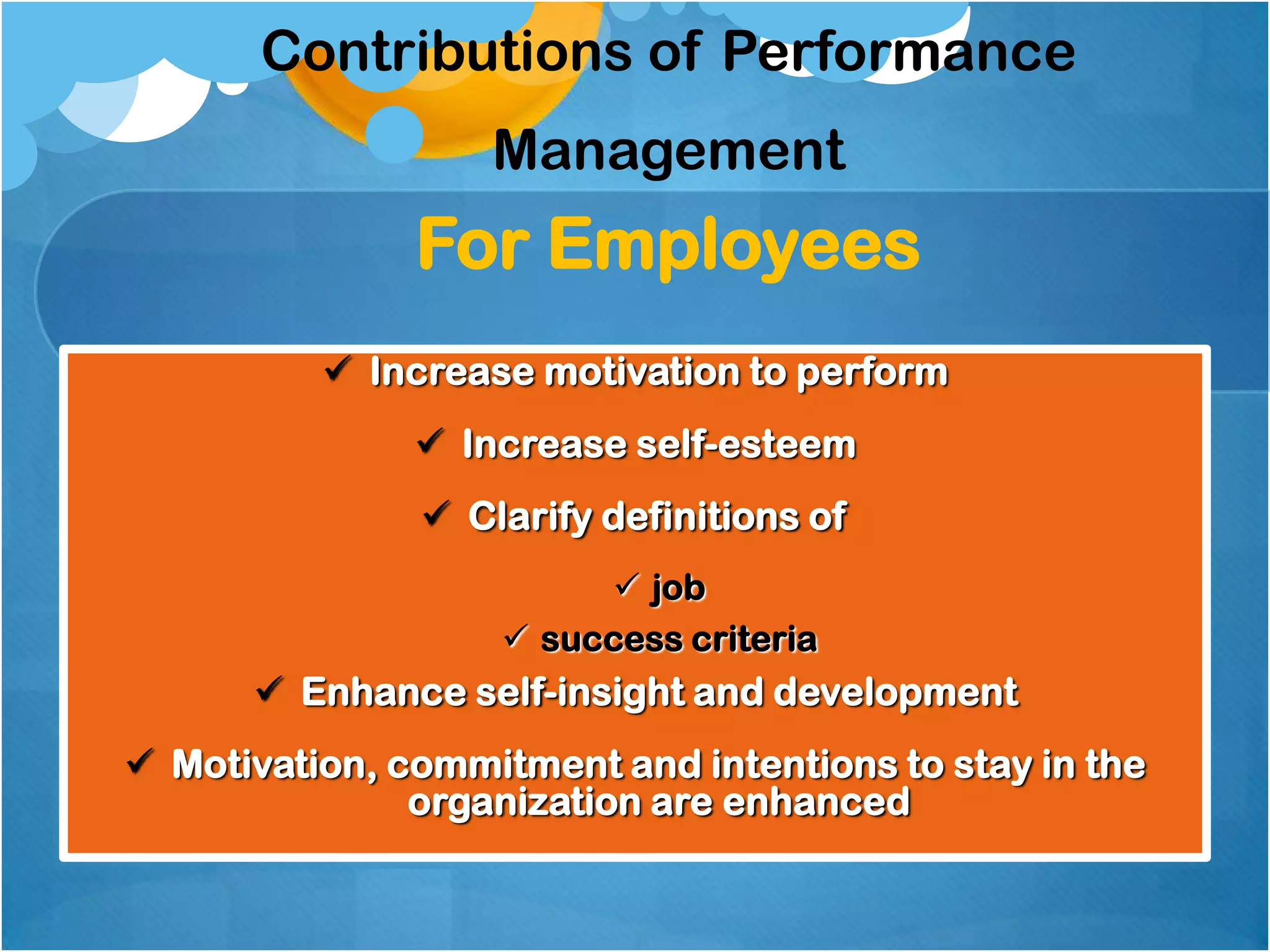
For Employees
 Increase motivation to perform
 Increase self-esteem
 Clarify definitions of
 job
 success criteria

 Enhance self-insight and development

 Motivation, commitment and intentions to stay in the
organization are enhanced
Contributions of Performance Management

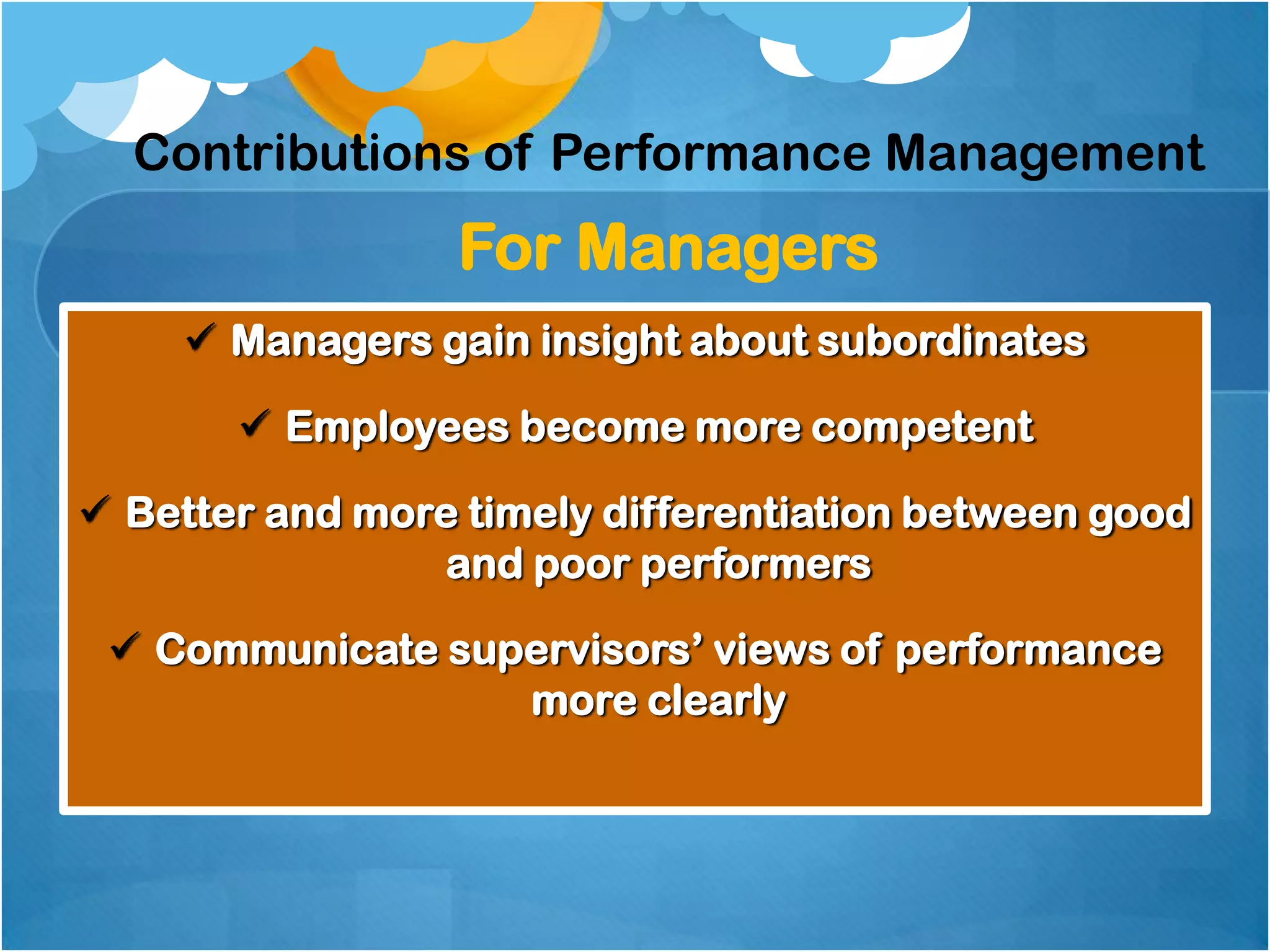
For Managers
 Managers gain insight about subordinates
 Employees become more competent
 Better and more timely differentiation between good
and poor performers
 Communicate supervisors‟ views of performance
more clearly
Contributions of Performance Management

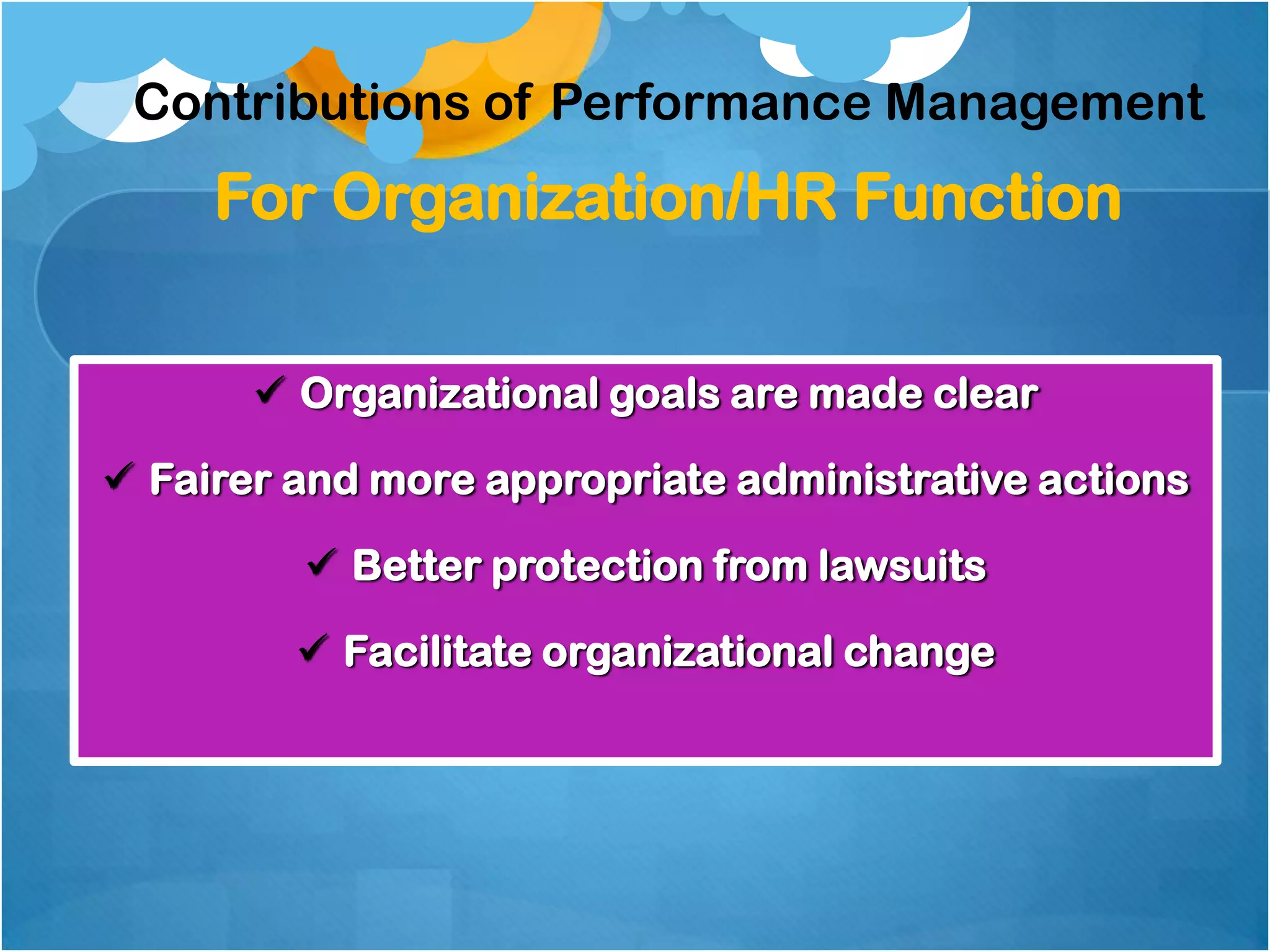
For Organization/HR Function
 Organizational goals are made clear
 Fairer and more appropriate administrative actions
 Better protection from lawsuits
 Facilitate organizational change
Disadvantages/Dangers
of
Poorly-implemented
PM Systems
Disadvantages/Dangers of Poorly-implemented
PM Systems

For Employees
• - Lowered self-esteem
• - Employee burnout and job dissatisfaction
• - Damaged relationships

• - Use of false or misleading information
Disadvantages/Dangers of Poorly-implemented
PM Systems

For Managers
Increased turnover

Decreased motivation to perform
Unjustified demands on managers‟ resources
Varying and unfair standards and ratings
Disadvantages/Dangers of Poorly-implemented
PM Systems

For Organization
Wasted time and money
Unclear ratings system
Emerging biases
Increased risk of litigation
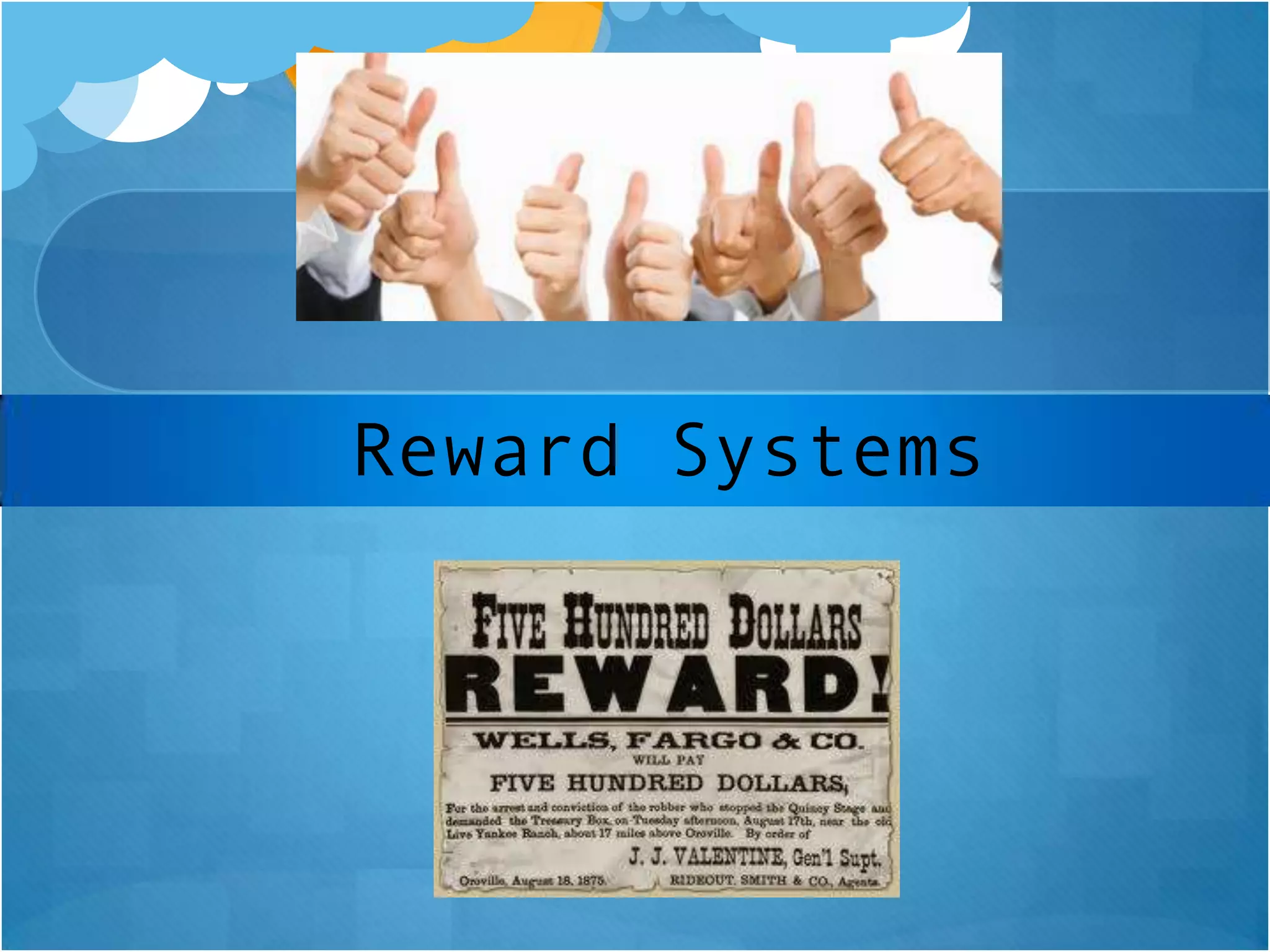
Reward Systems
Reward Systems

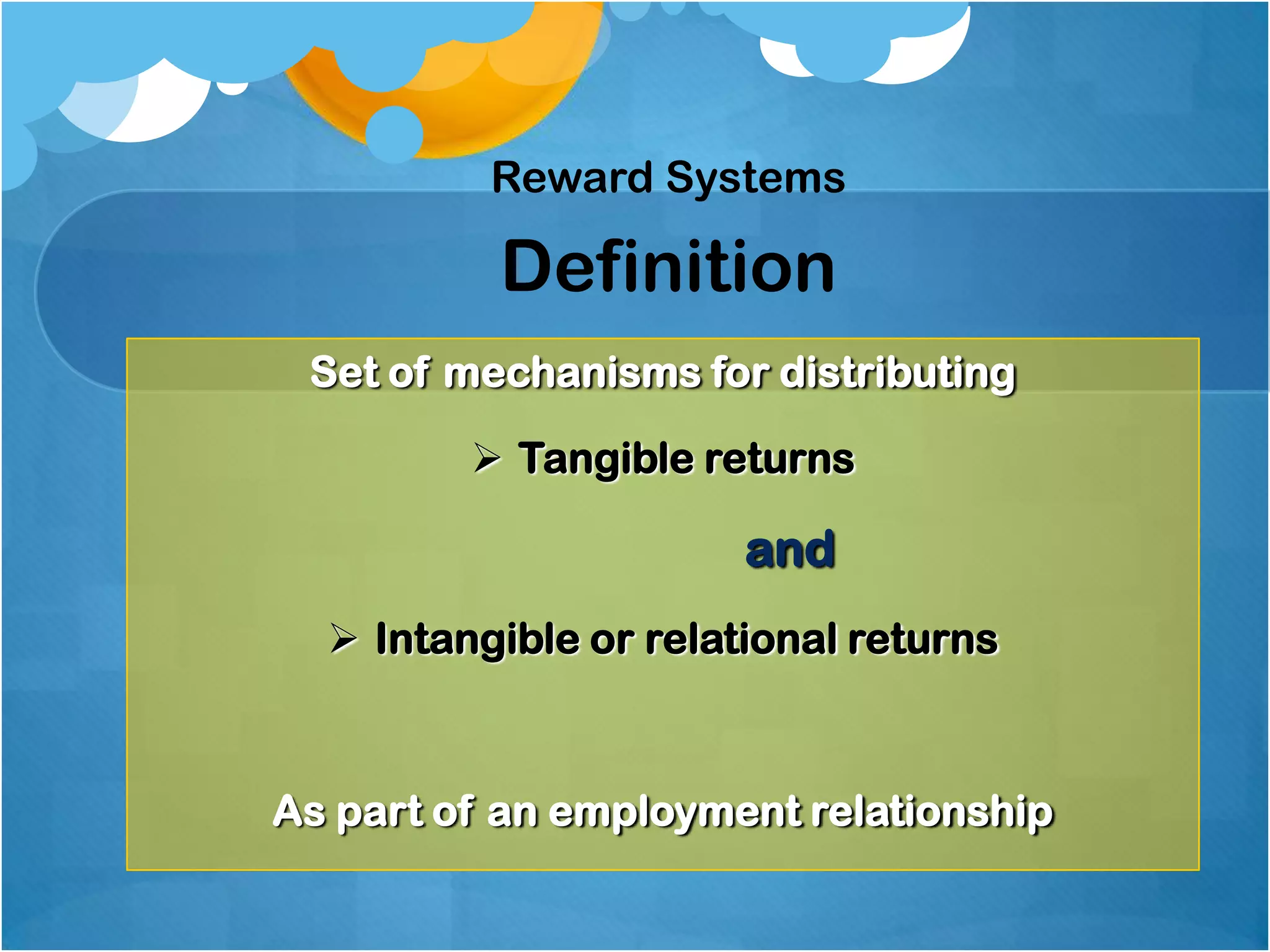
Motivation to obtain
rewards is one of the
fundamental drives
underlying much of both
human and non-human
animal behavior
(Christian & Ian, 2008).

Reward systems can
shape the behavior of
employees within the
organization (Suliyanto,
2011)
Reward Systems

Definition
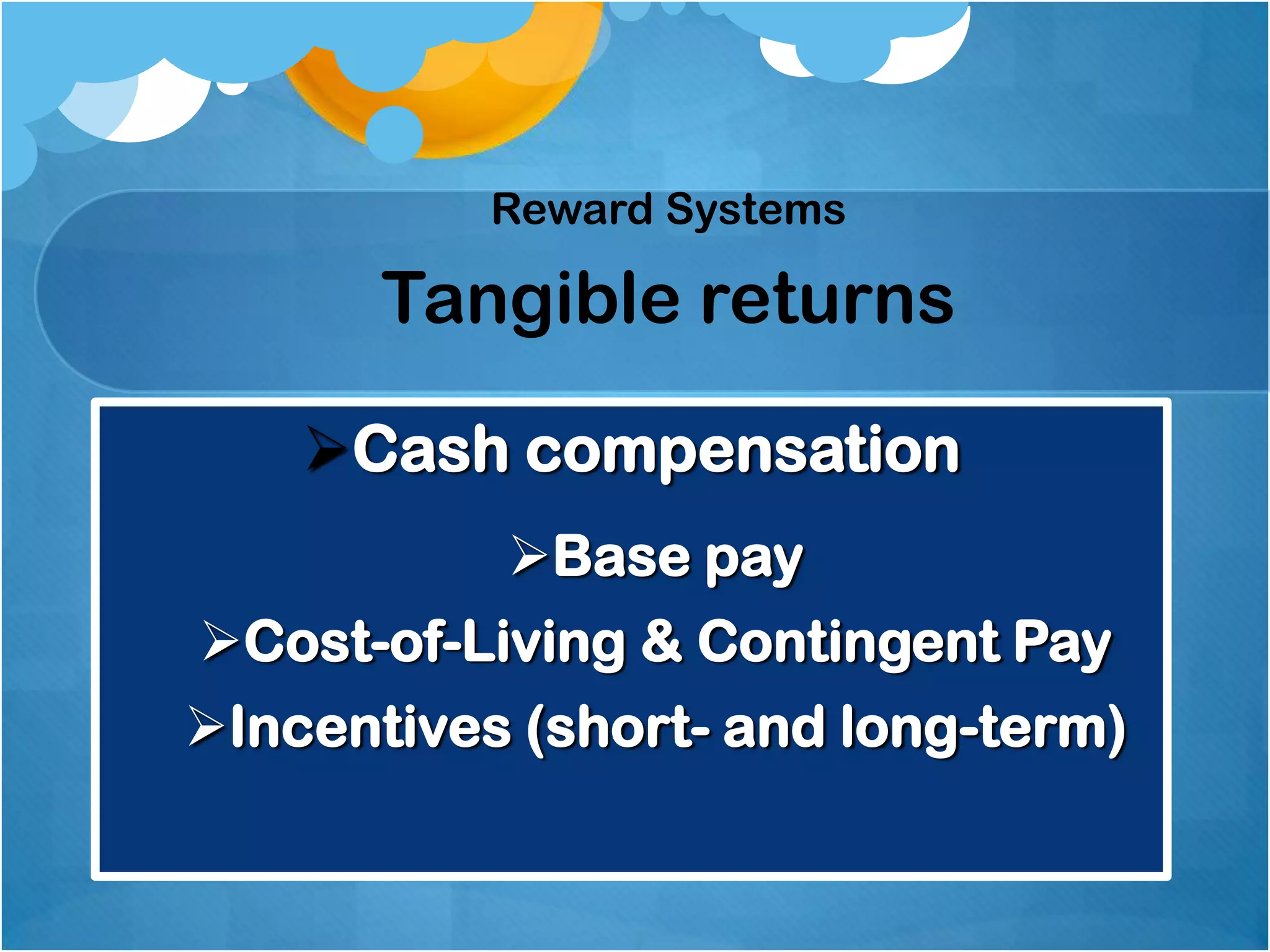
Set of mechanisms for distributing
 Tangible returns

and
 Intangible or relational returns

As part of an employment relationship
Reward Systems

Tangible returns
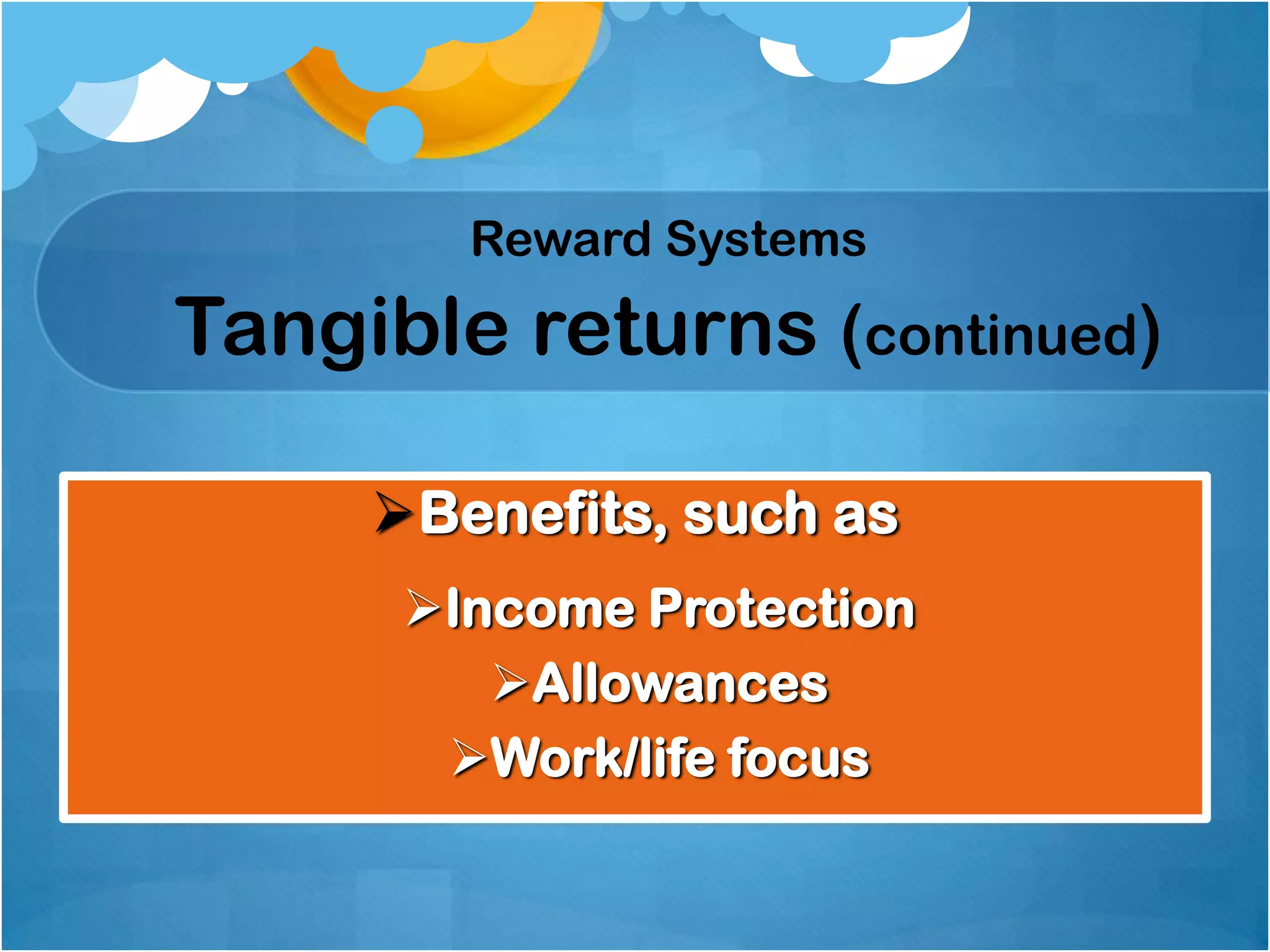
Cash compensation
Base pay
Cost-of-Living & Contingent Pay
Incentives (short- and long-term)
Reward Systems

Tangible returns (continued)
Benefits, such as
Income Protection
Allowances
Work/life focus
Reward Systems

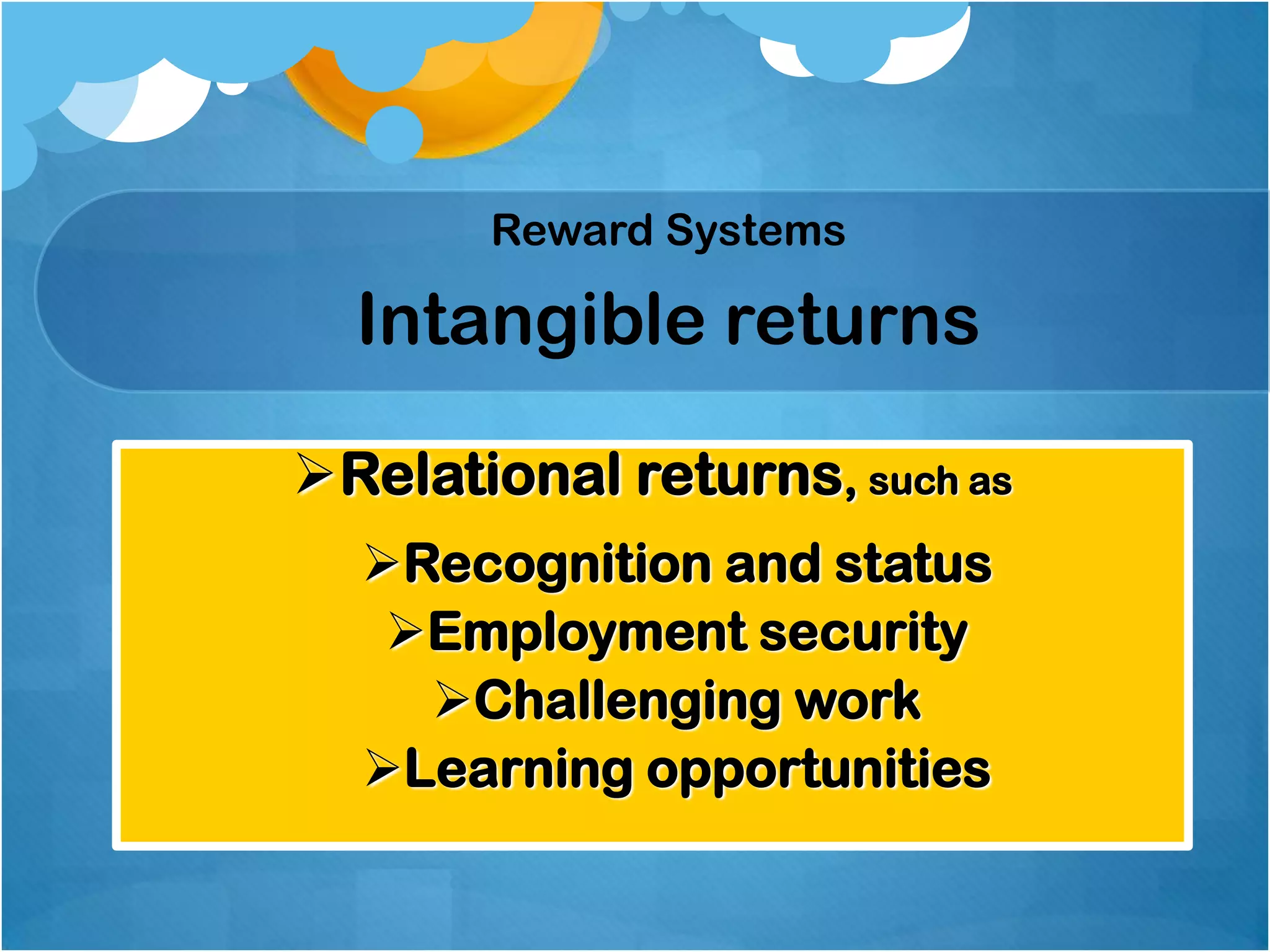
Intangible returns
Relational returns, such as
Recognition and status
Employment security
Challenging work
Learning opportunities
Types of Returns in
Performance Management System
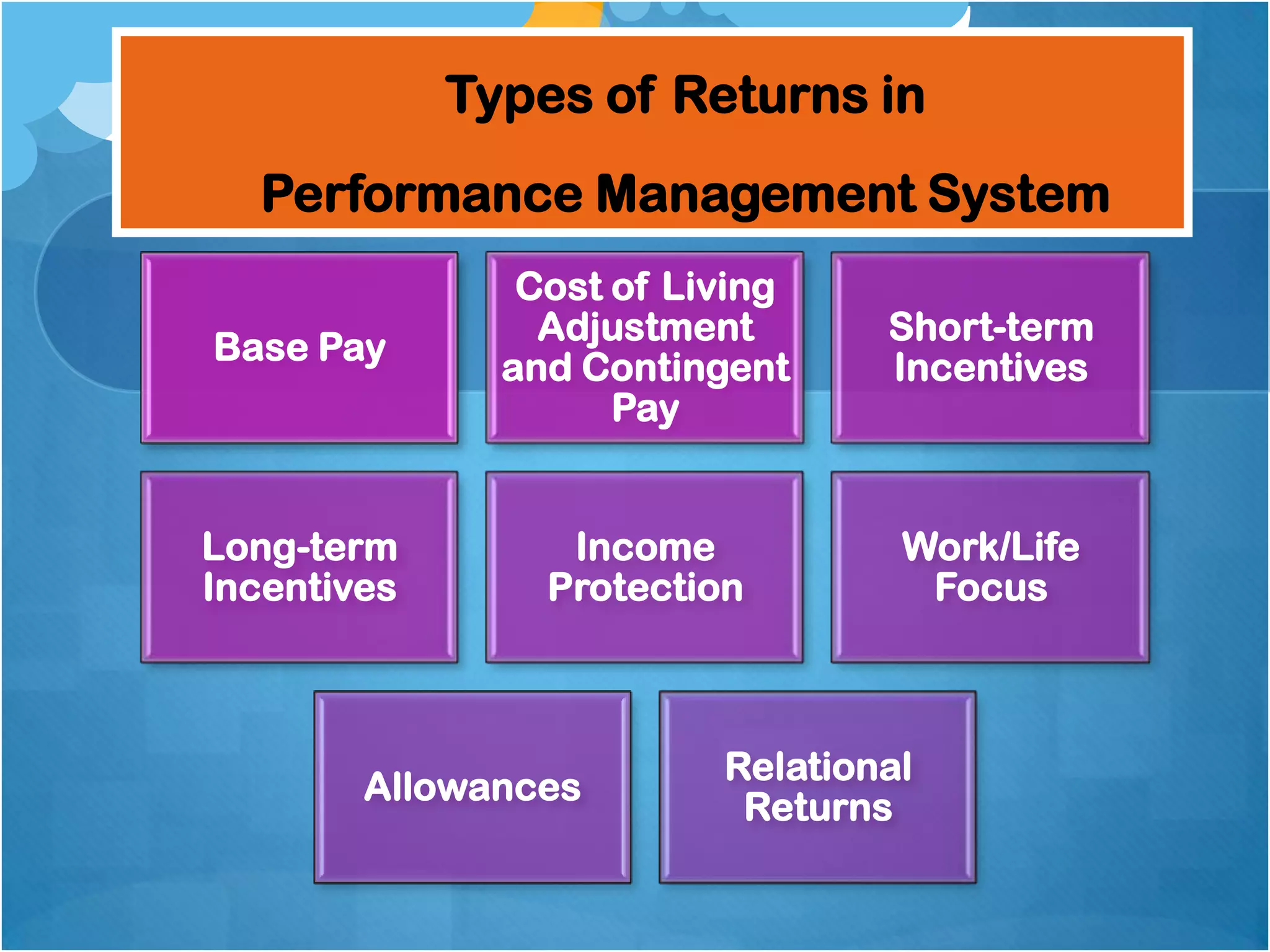
Types of Returns in
Performance Management System
Base Pay

Cost of Living
Adjustment
and Contingent
Pay

Short-term
Incentives

Long-term
Incentives

Income
Protection

Work/Life
Focus

Allowances

Relational
Returns
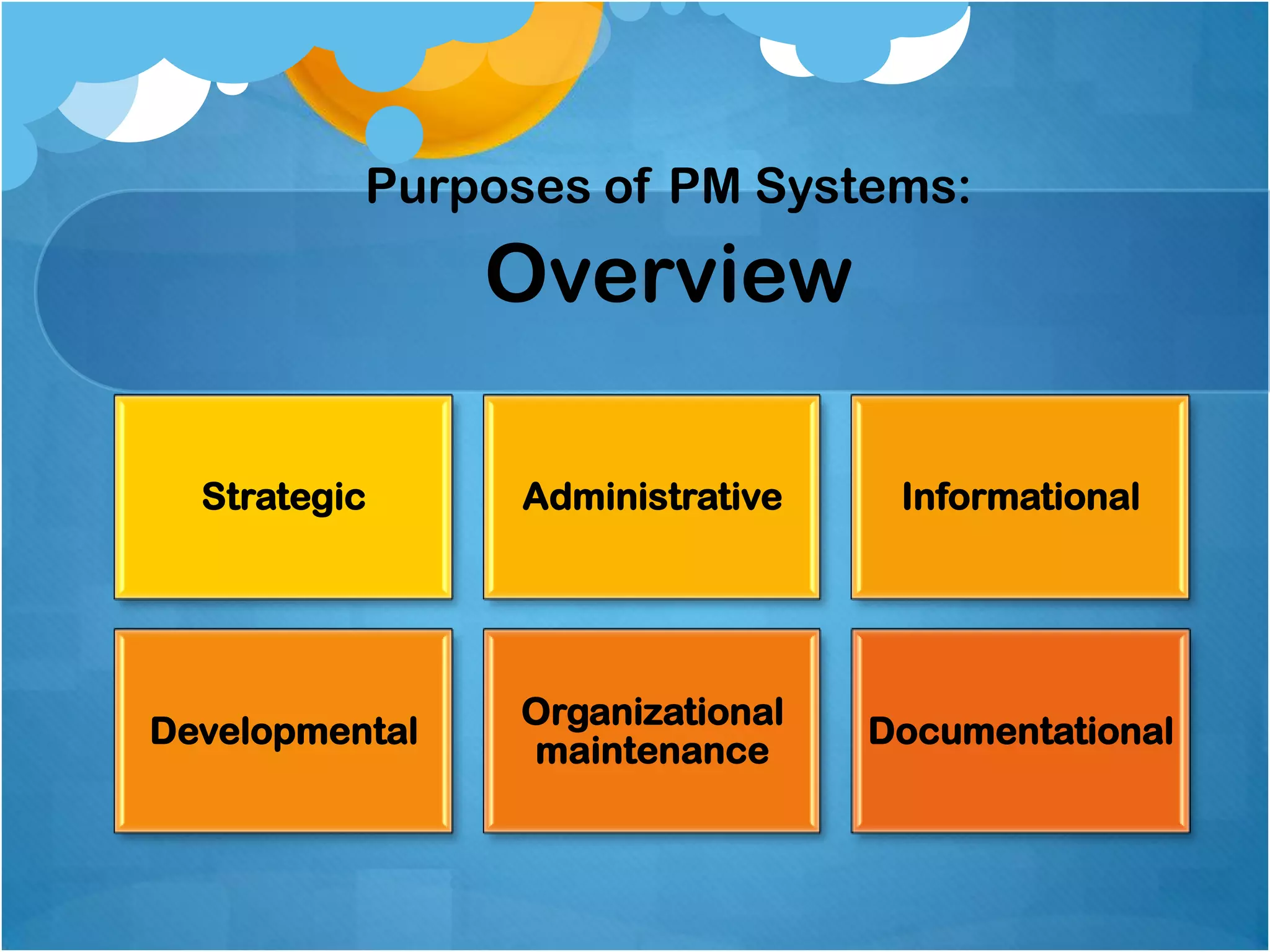
Purposes of PM Systems
Purposes of PM Systems:

Overview
Strategic

Administrative

Informational

Developmental

Organizational
maintenance

Documentational
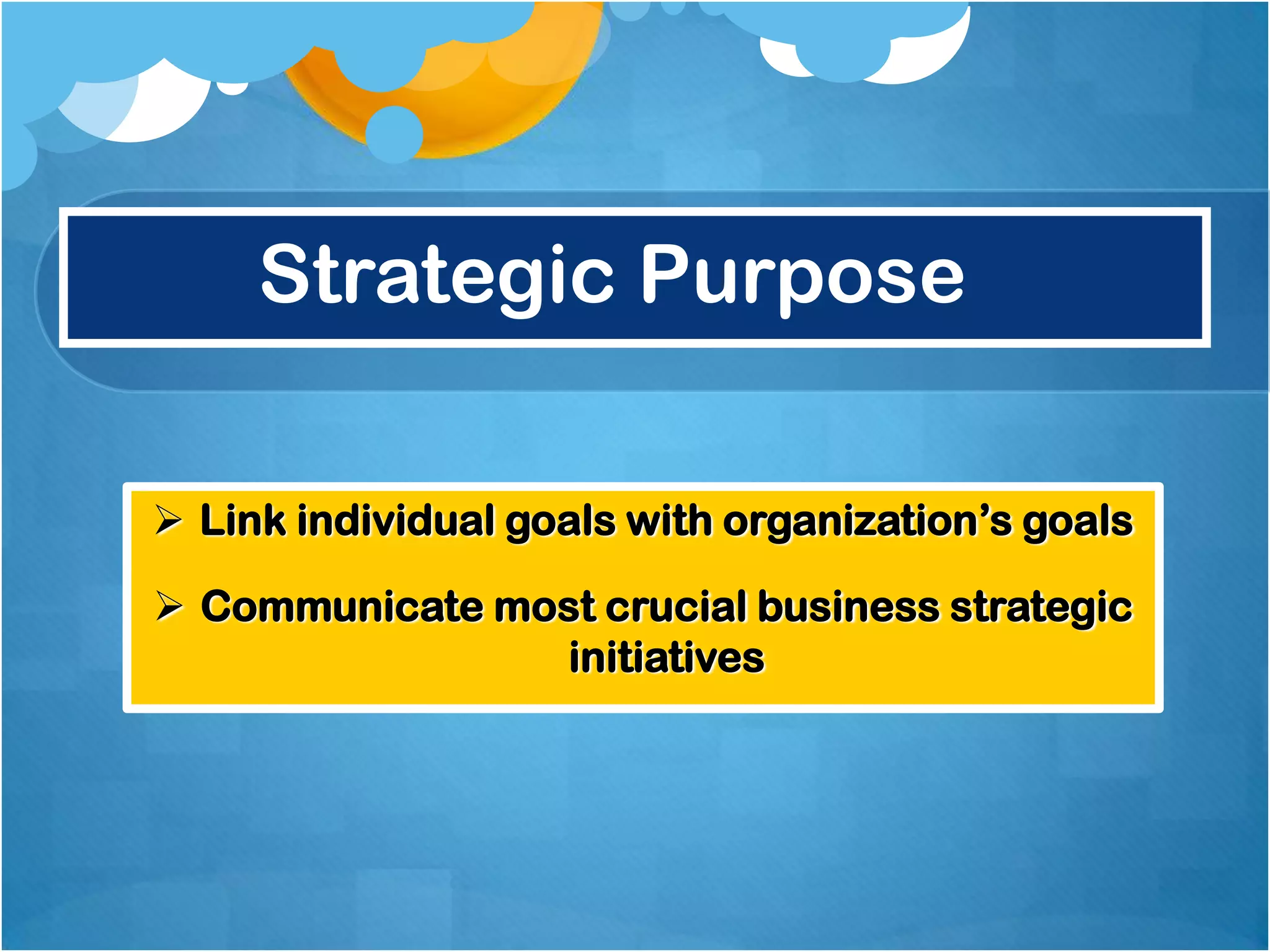
Strategic Purpose
 Link individual goals with organization‟s goals
 Communicate most crucial business strategic
initiatives
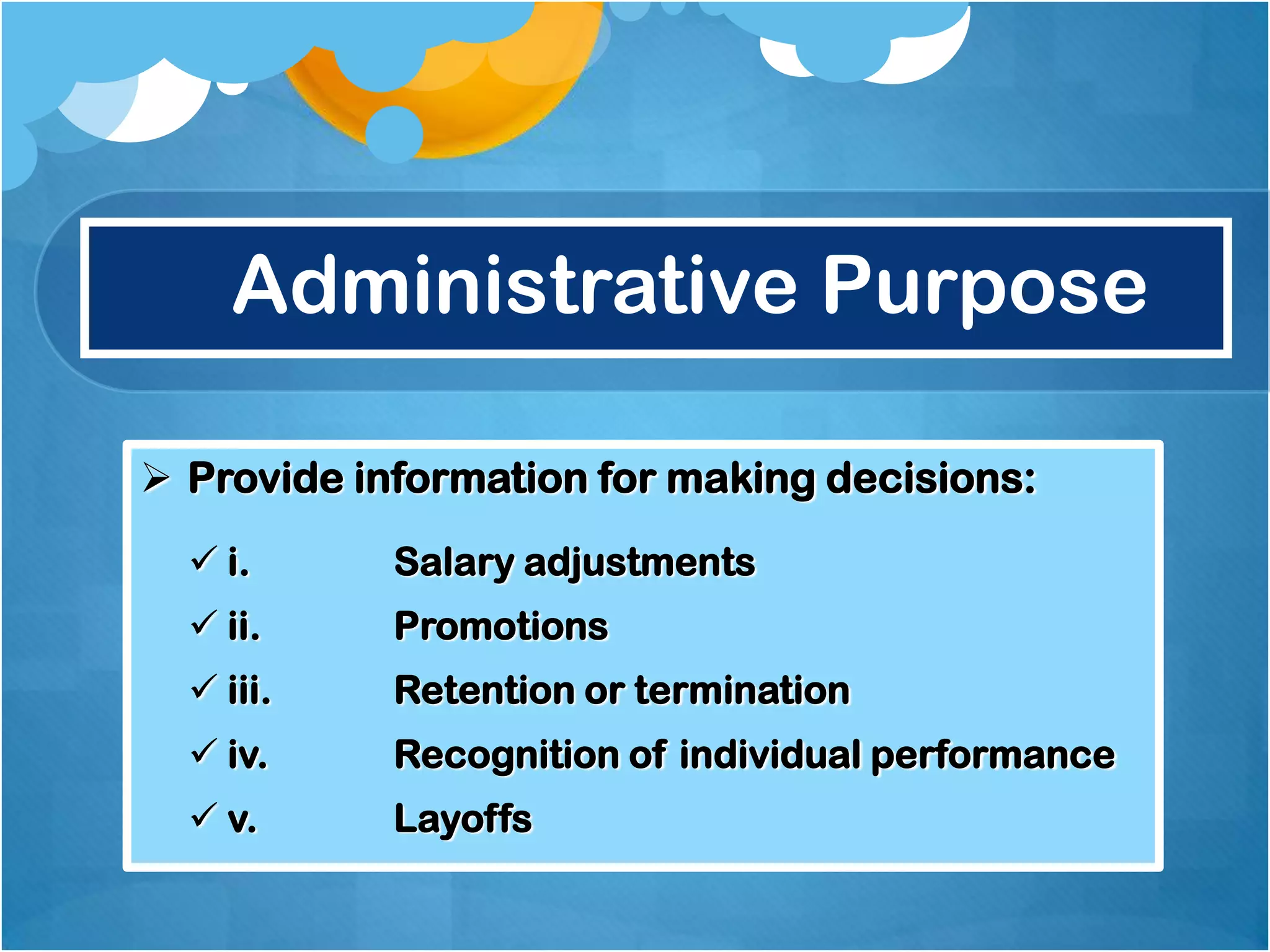
Administrative Purpose
 Provide information for making decisions:
 i.

Salary adjustments

 ii.

Promotions

 iii.

Retention or termination

 iv.

Recognition of individual performance

 v.

Layoffs
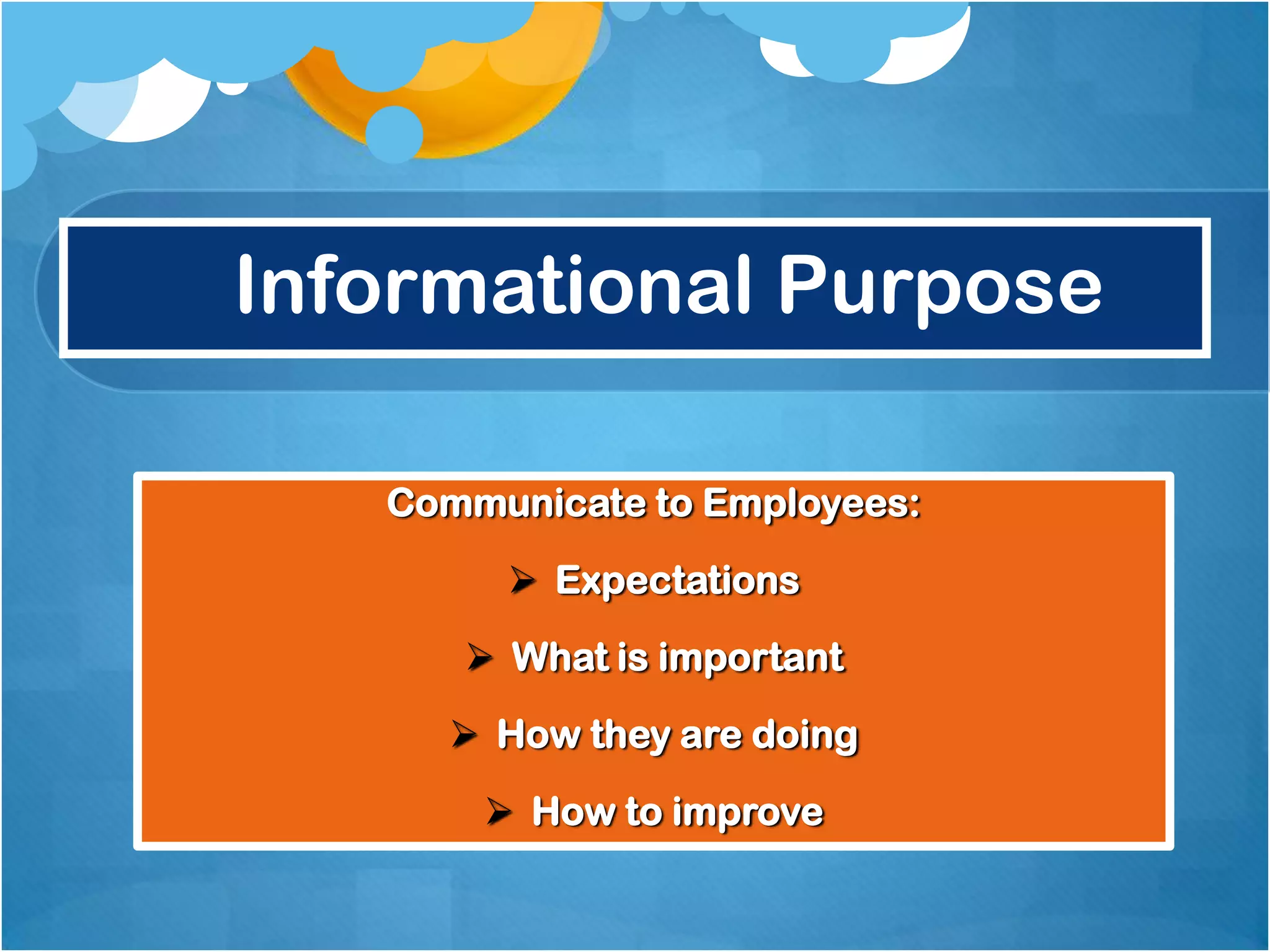
Informational Purpose
Communicate to Employees:
 Expectations
 What is important
 How they are doing
 How to improve
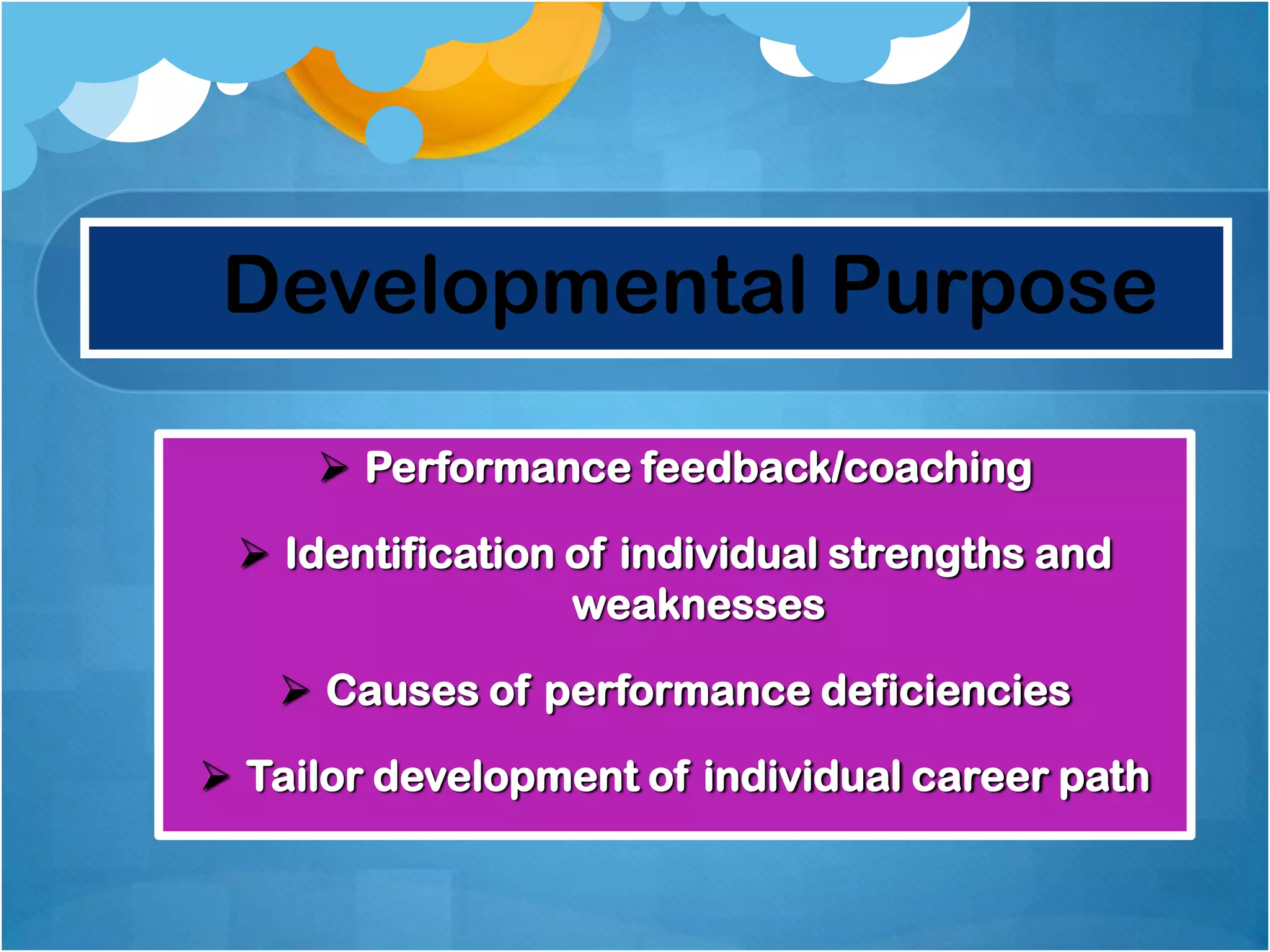
Developmental Purpose
 Performance feedback/coaching

 Identification of individual strengths and
weaknesses
 Causes of performance deficiencies
 Tailor development of individual career path
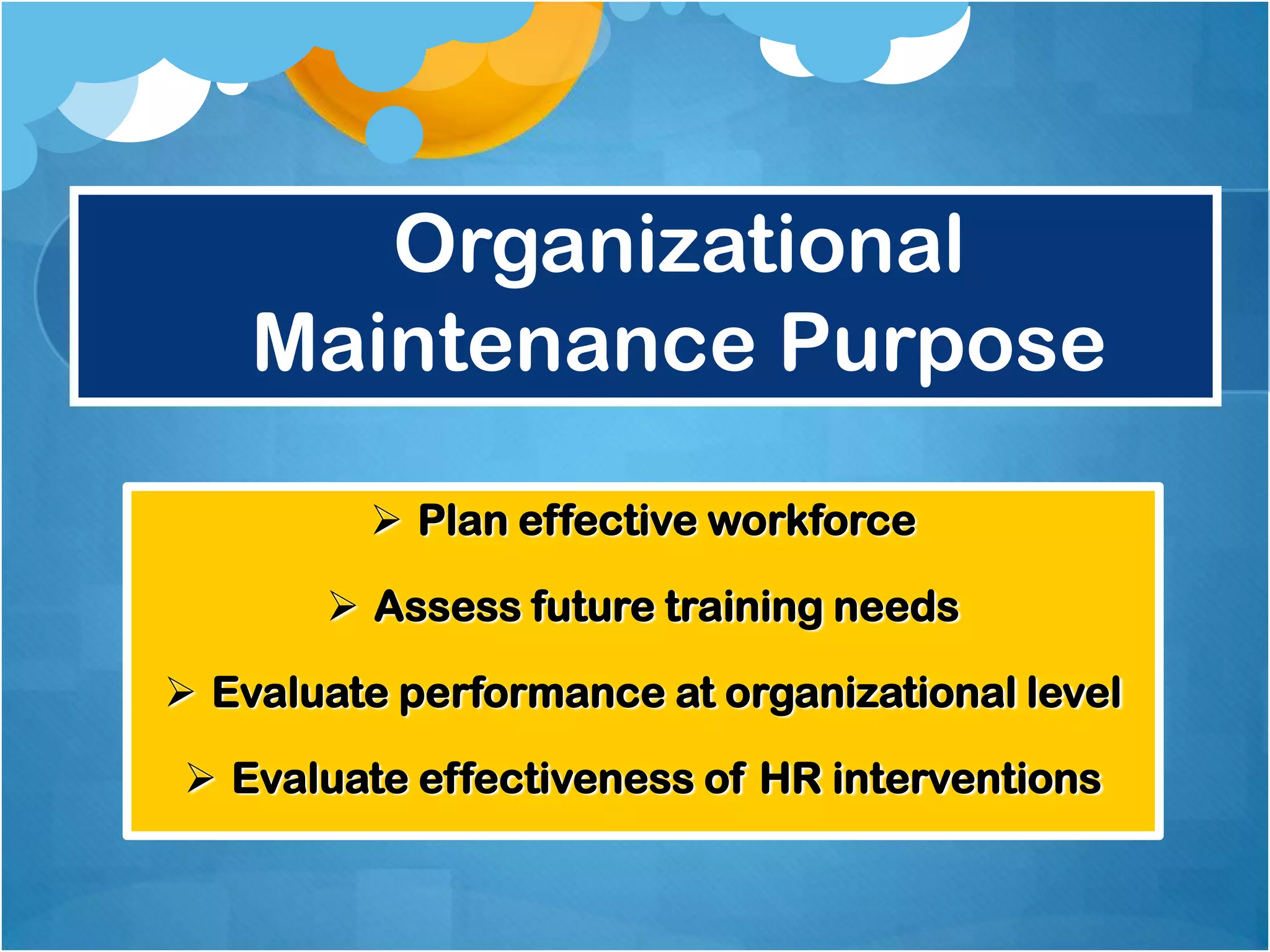
Organizational
Maintenance Purpose
 Plan effective workforce
 Assess future training needs
 Evaluate performance at organizational level
 Evaluate effectiveness of HR interventions
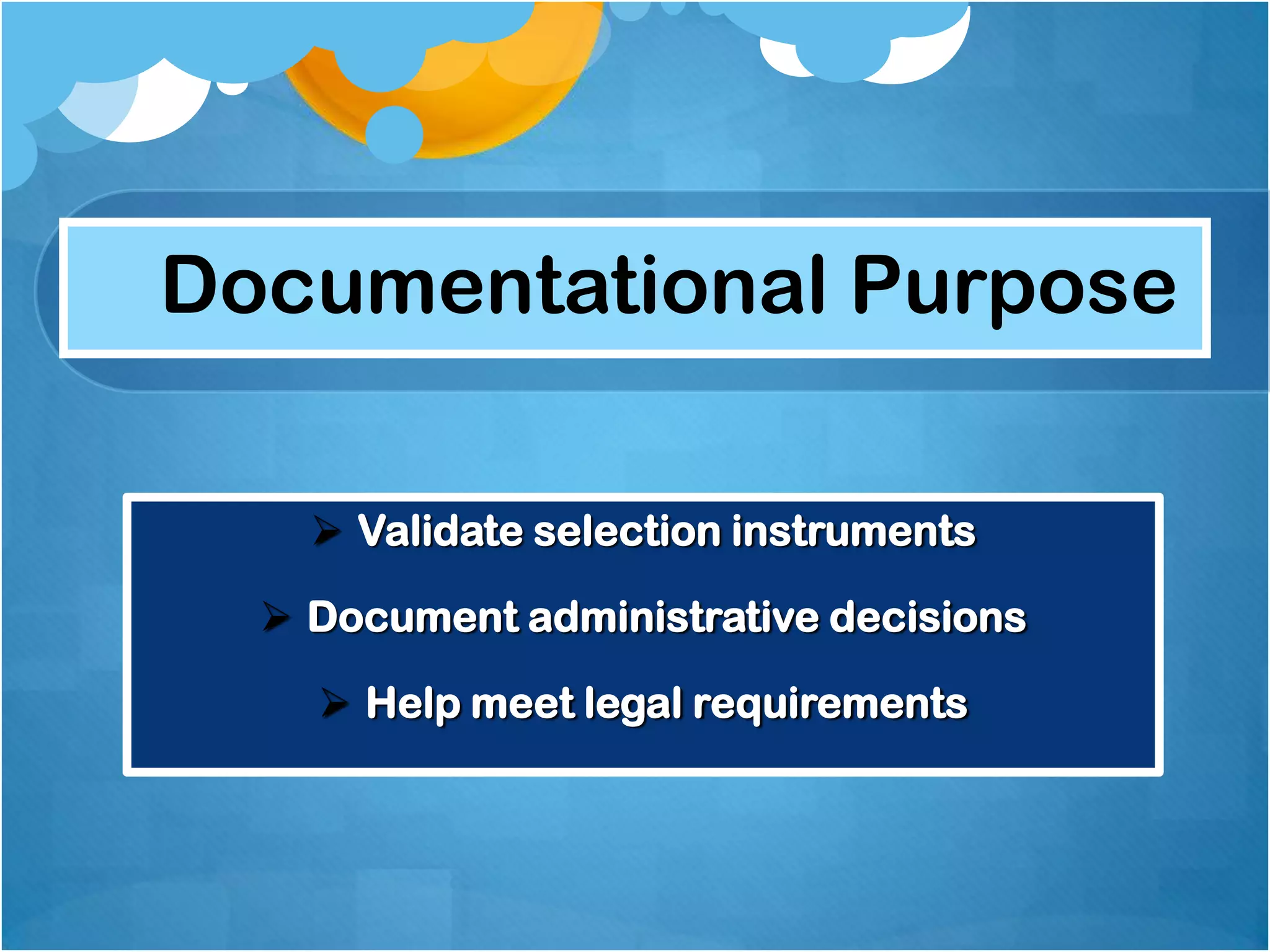
Documentational Purpose
 Validate selection instruments
 Document administrative decisions
 Help meet legal requirements
Characteristics Of An
Ideal PM System
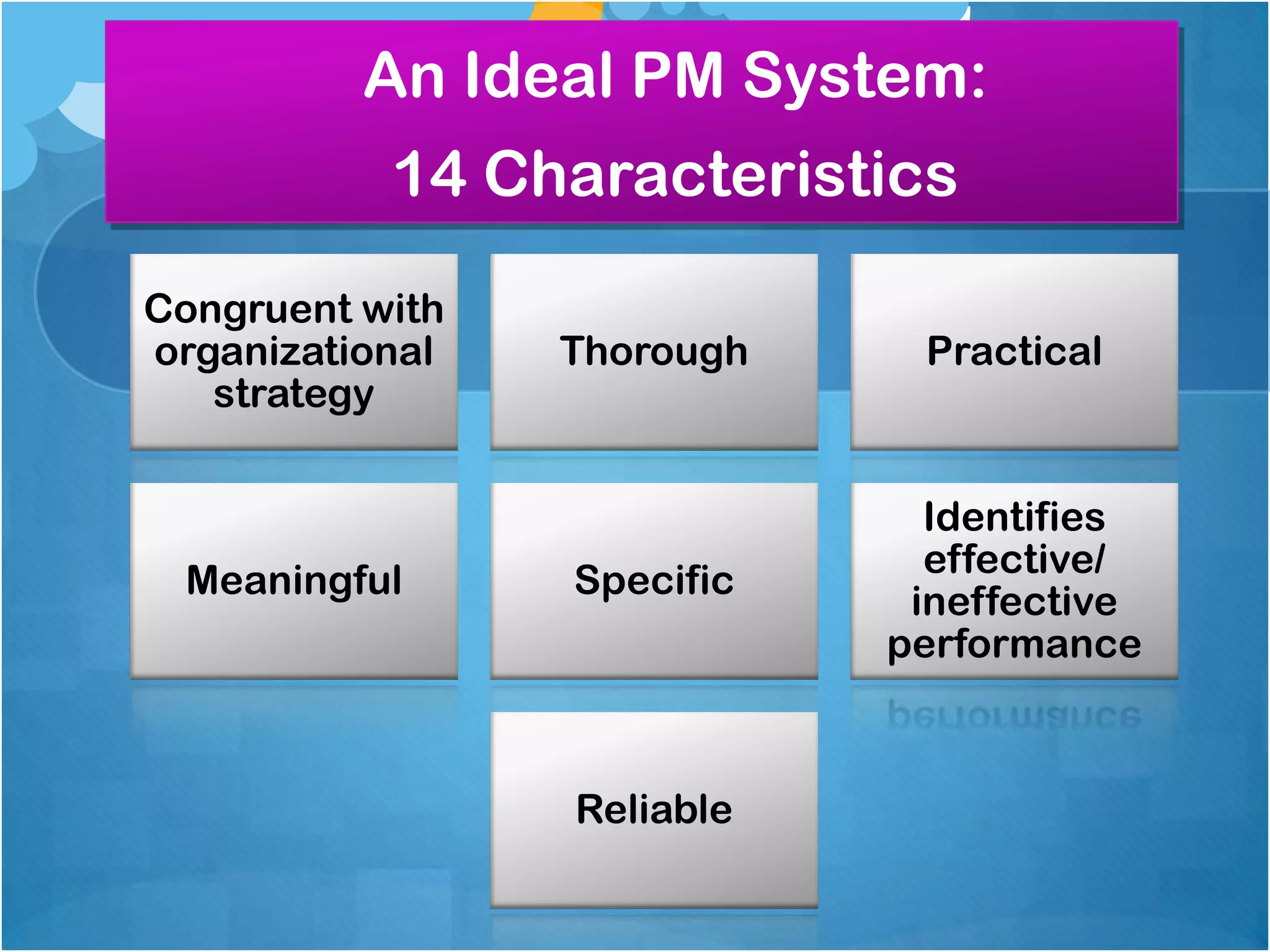
An Ideal PM System:

14 Characteristics
Congruent with
organizational
strategy

Meaningful

Thorough

Practical

Specific

Identifies
effective/
ineffective
performance

Reliable
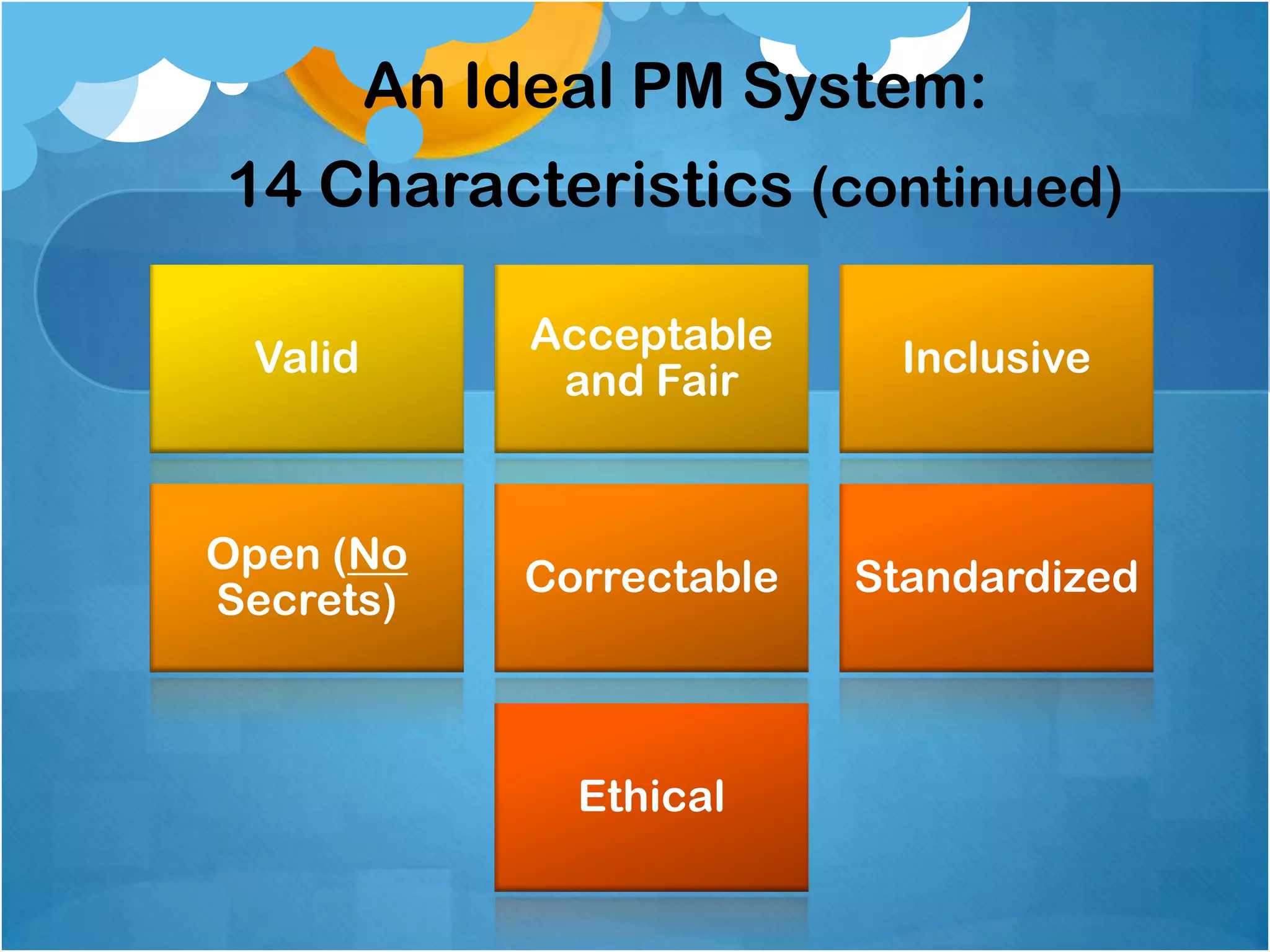
An Ideal PM System:

14 Characteristics (continued)
Valid

Acceptable
and Fair

Inclusive

Open (No
Secrets)

Correctable

Standardized

Ethical
Congruent with organizational
strategy
- Consistent with organization‟s strategy
- Aligned with unit and organizational goals
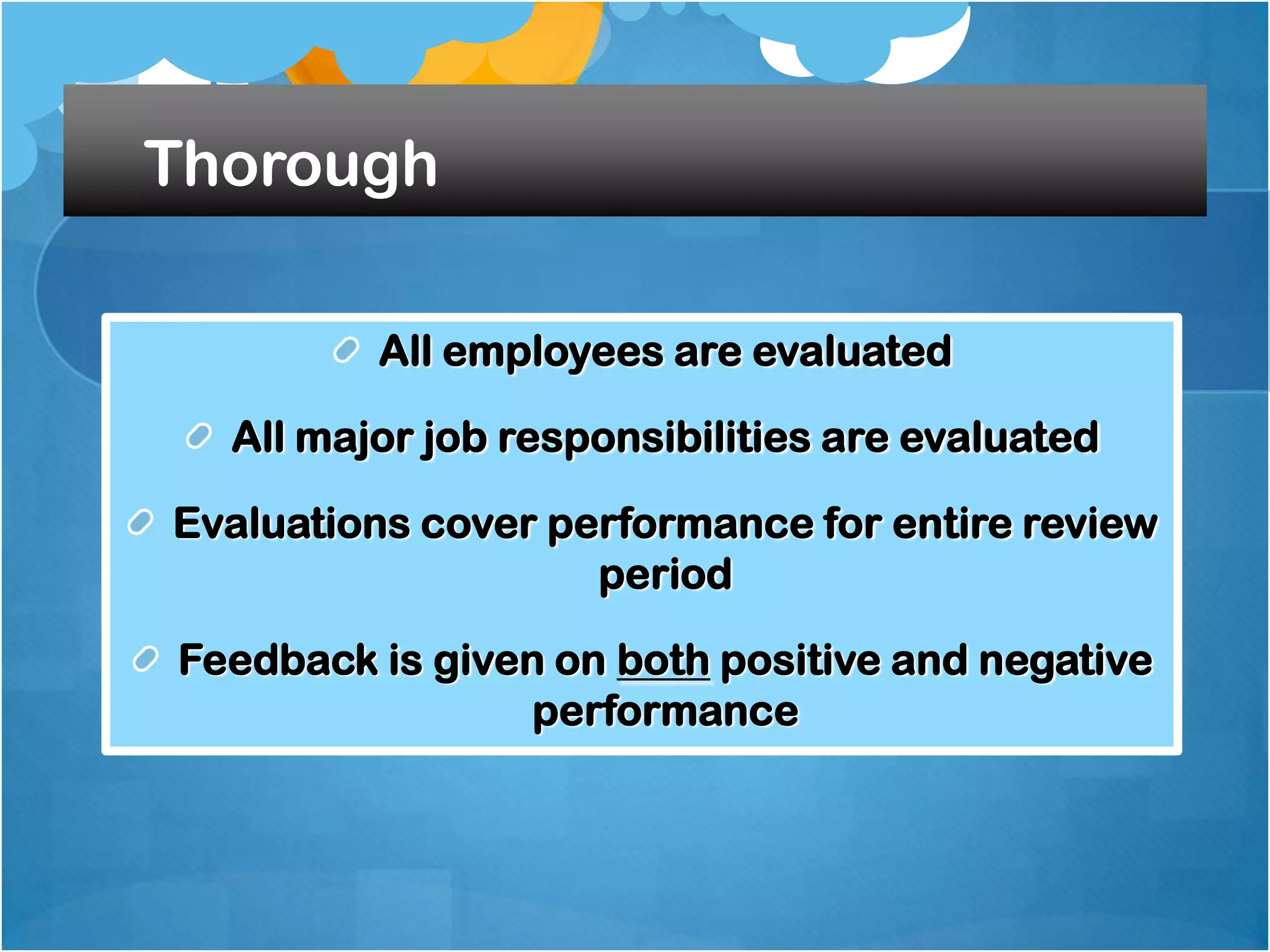
Thorough
All employees are evaluated
All major job responsibilities are evaluated

Evaluations cover performance for entire review
period
Feedback is given on both positive and negative
performance
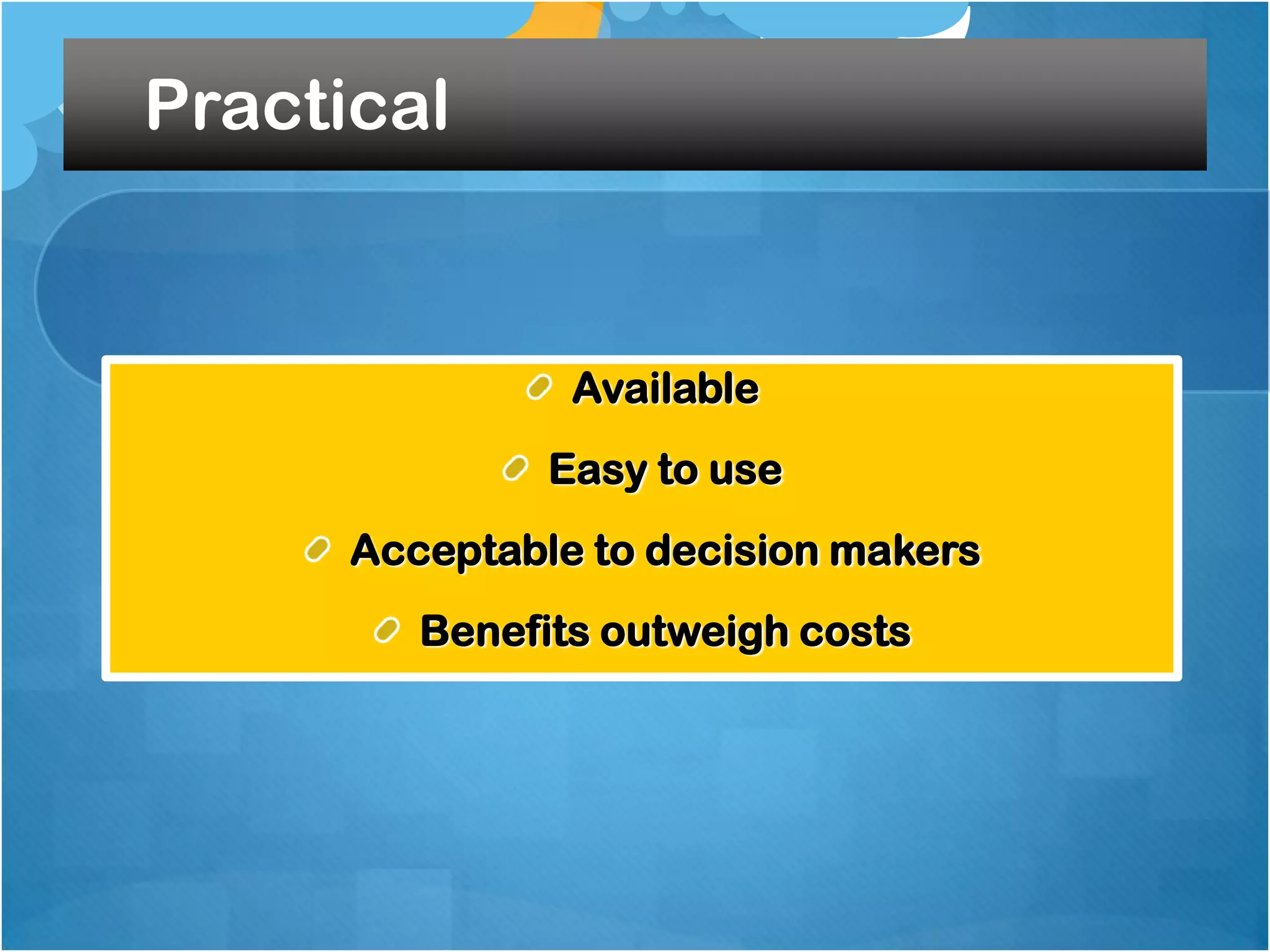
Practical

Available
Easy to use

Acceptable to decision makers
Benefits outweigh costs
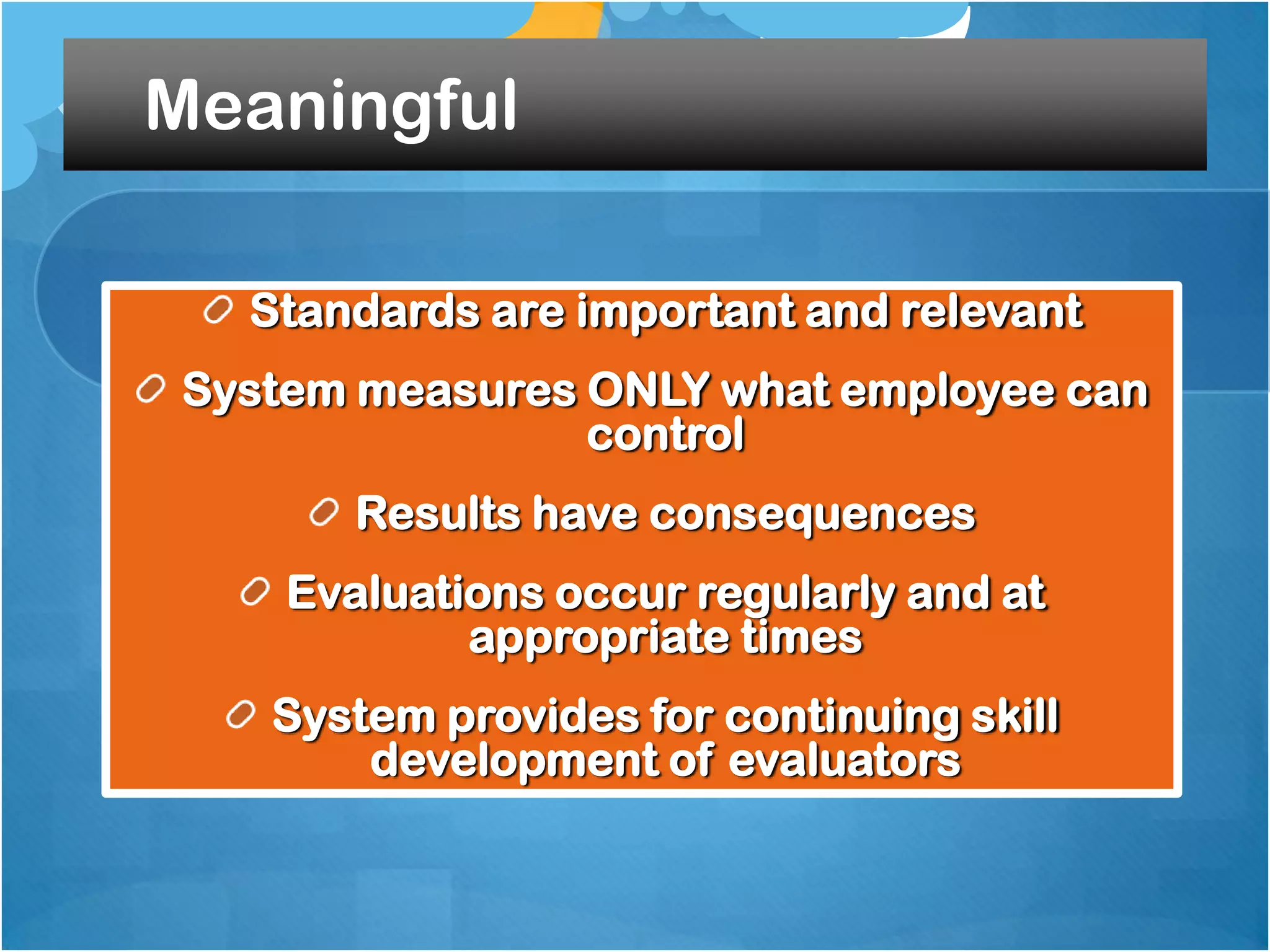
Meaningful
Standards are important and relevant
System measures ONLY what employee can
control

Results have consequences
Evaluations occur regularly and at
appropriate times
System provides for continuing skill
development of evaluators
Specific

Concrete and detailed guidance to
employees

• What‟s expected
• How to meet the expectations
Identifies
effective and ineffective
performance
Distinguish between effective and ineffective
Behaviors
Results

Provide ability to identify employees with various
levels of performance
Reliable

Consistent
Free of error
Inter-rater reliability
Valid

- Relevant (measures what is important)
- Not deficient (doesn‟t measure unimportant
facets of job)
- Not contaminated (only measures what the
employee can control)
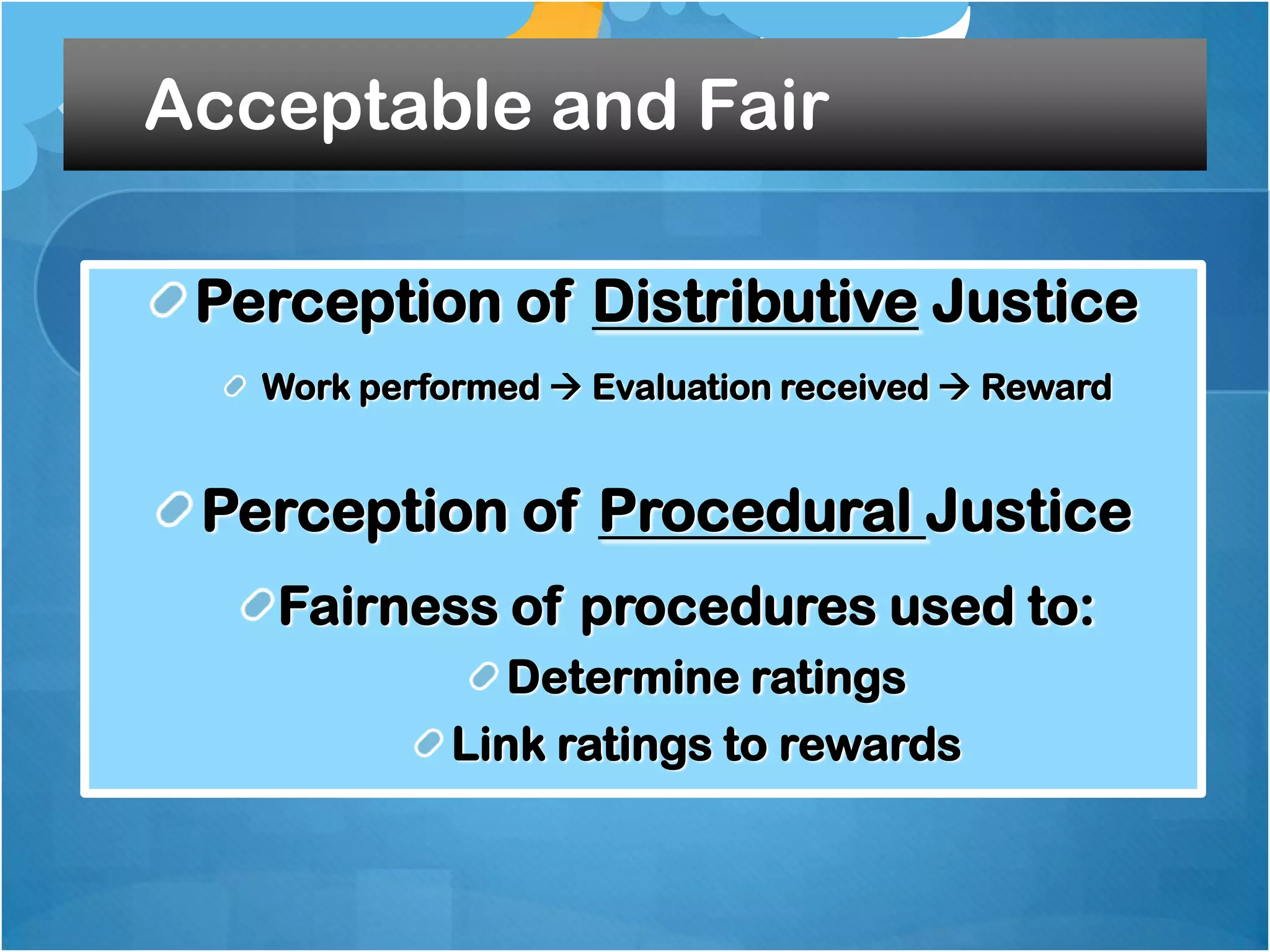
Acceptable and Fair
Perception of Distributive Justice
Work performed  Evaluation received  Reward

Perception of Procedural Justice
Fairness of procedures used to:
Determine ratings
Link ratings to rewards
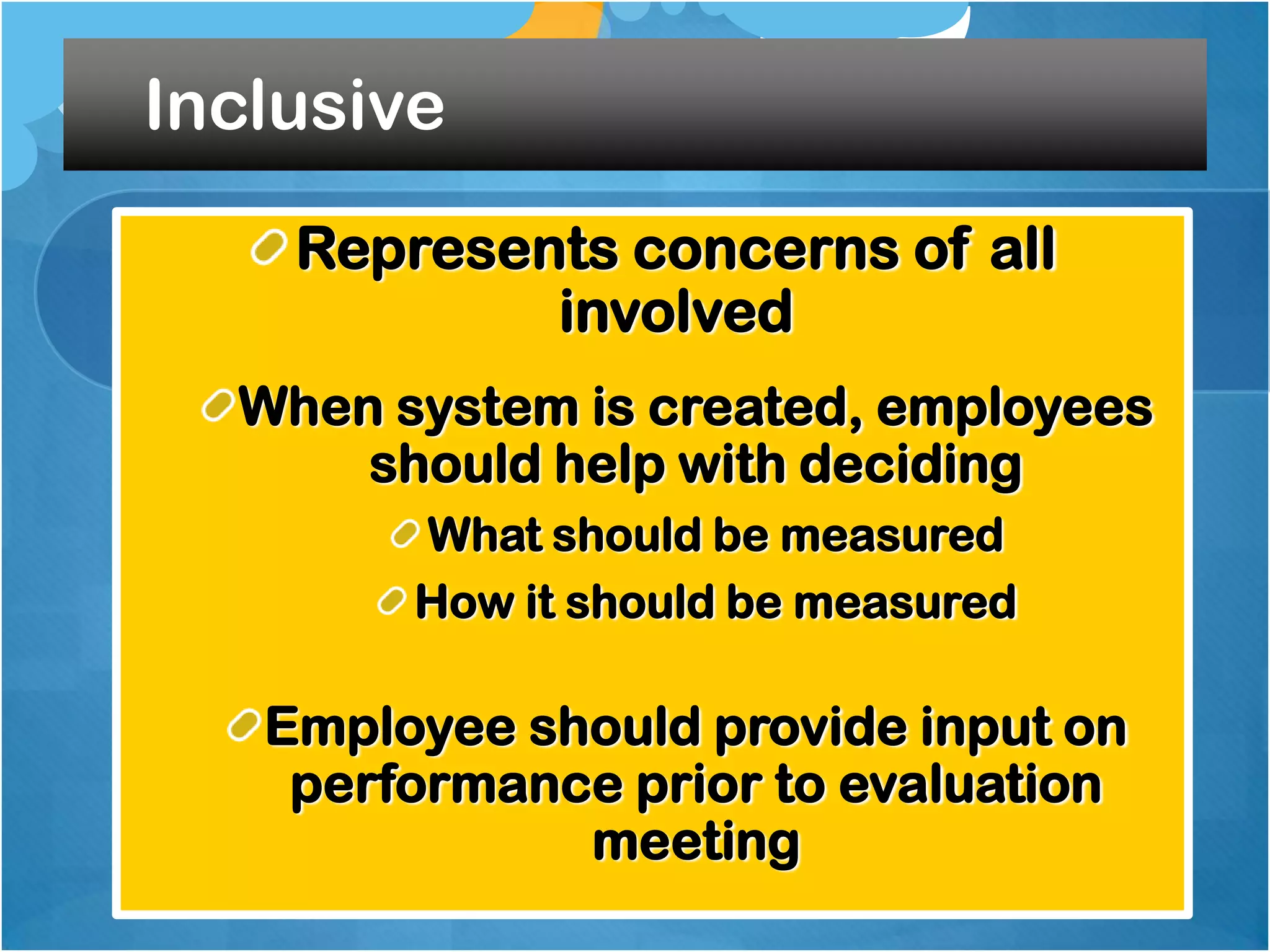
Inclusive
Represents concerns of all
involved
When system is created, employees
should help with deciding
What should be measured
How it should be measured

Employee should provide input on
performance prior to evaluation
meeting
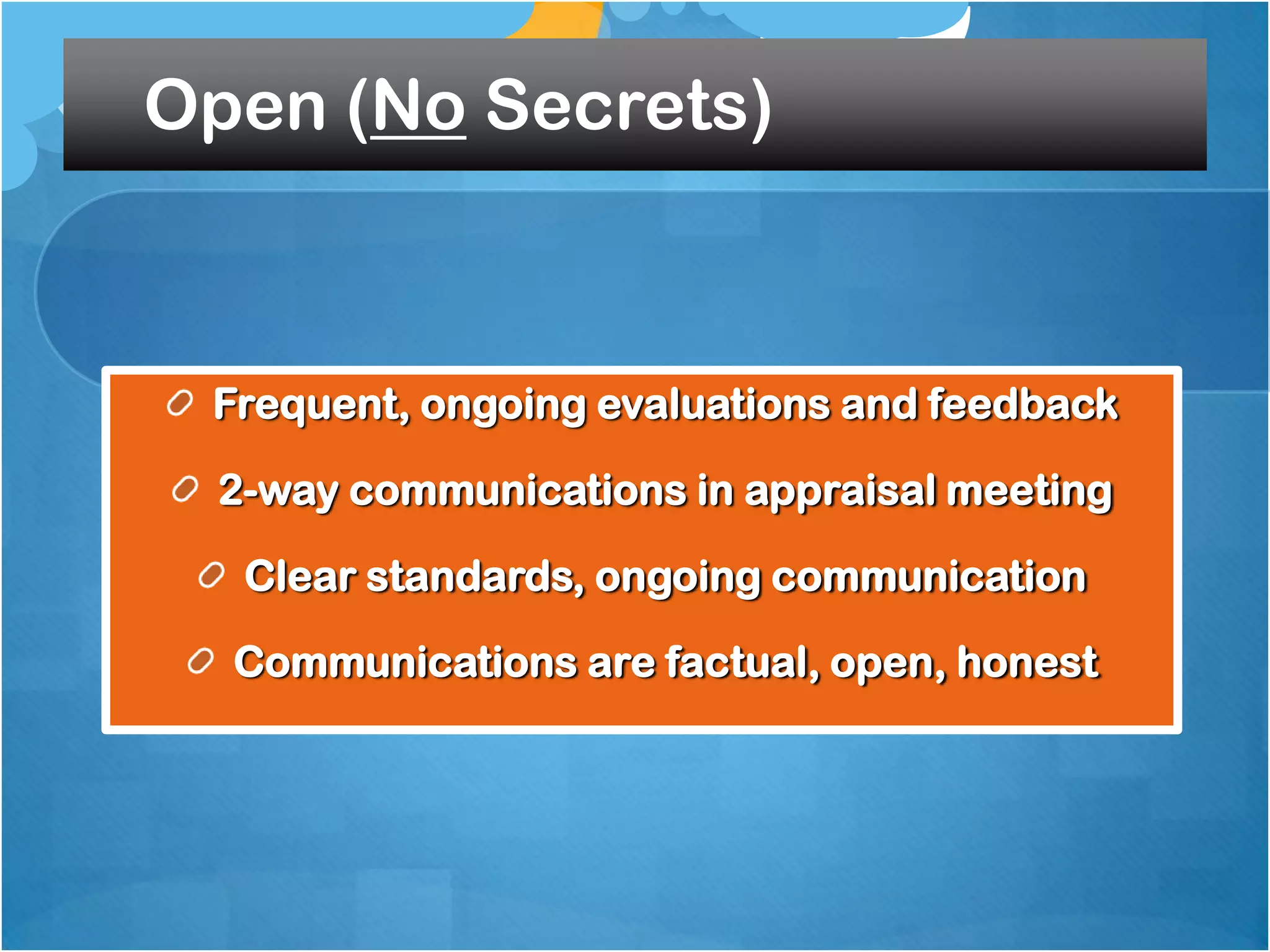
Open (No Secrets)

Frequent, ongoing evaluations and feedback
2-way communications in appraisal meeting
Clear standards, ongoing communication
Communications are factual, open, honest
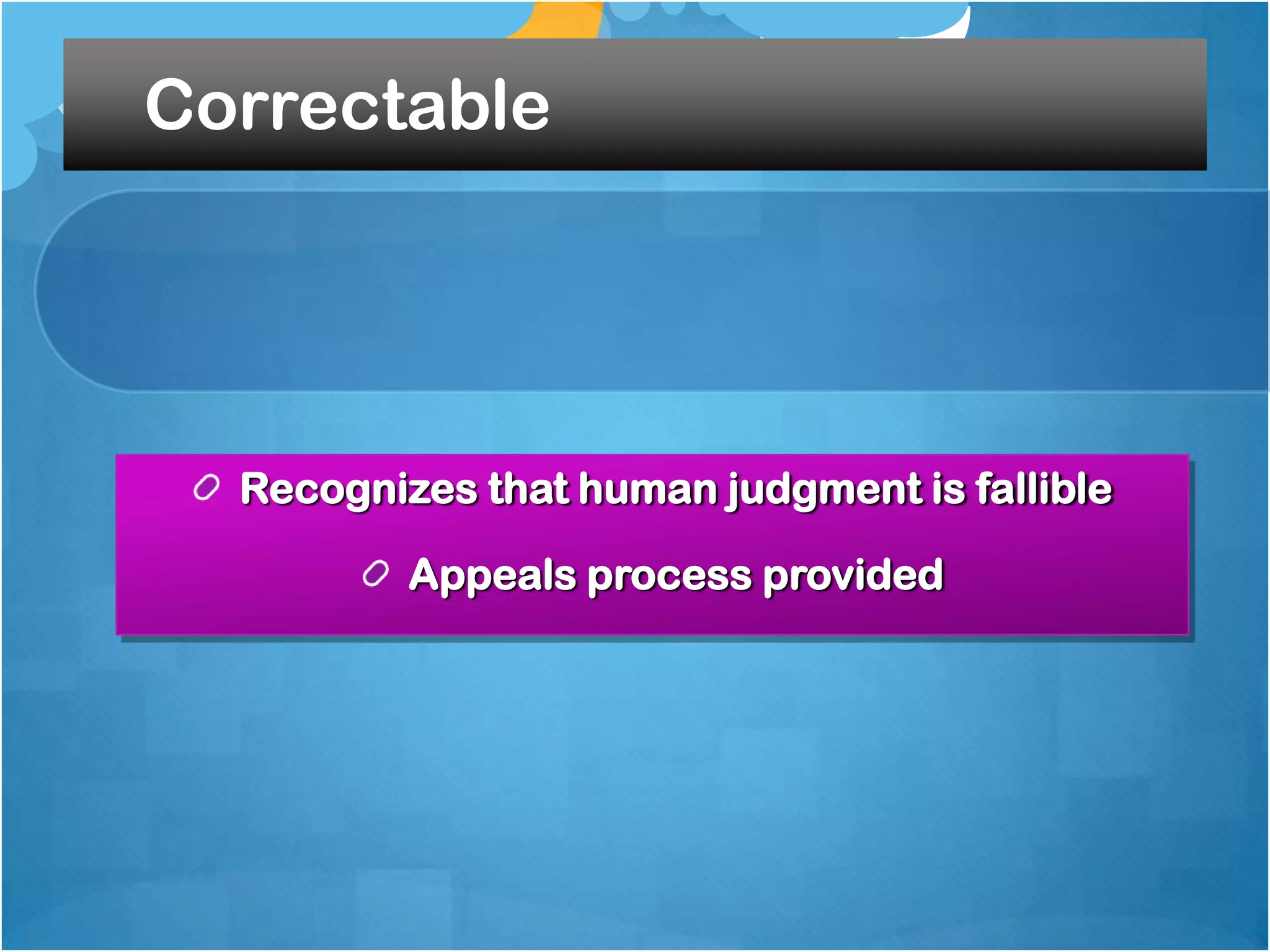
Correctable

Recognizes that human judgment is fallible
Appeals process provided
Standardized

Ongoing training of managers to provide
Consistent evaluations across
People
Time
Ethical
Supervisor suppresses self-interest
Supervisor rates only where she has sufficient
information about the performance dimension
Supervisor respects employee privacy
Integration with other
Human Resources
and Development
Activities
PM provides information for:
Issues on Performance
Management System
Counterproductive work behavior
(CWB) has been defined as “volitional acts that
harm or intend to harm organizations and their
stakeholders (for example, clients, co-workers,
customers, and supervisors)” (Atwater & Elkins,
2009).
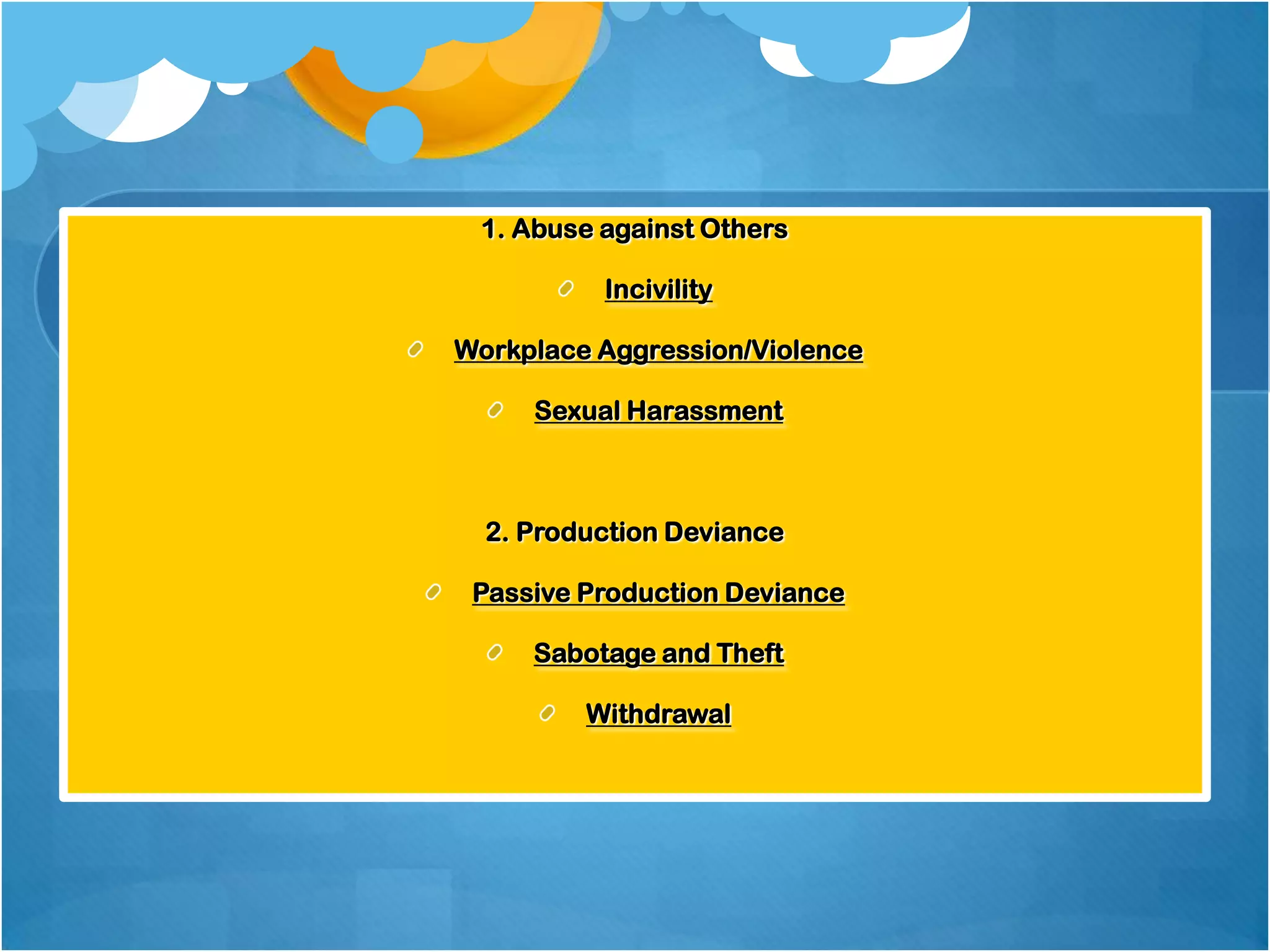
1. Abuse against Others

Types of CWB

Incivility

Workplace Aggression/Violence
Sexual Harassment

2. Production Deviance
Passive Production Deviance
Sabotage and Theft
Withdrawal
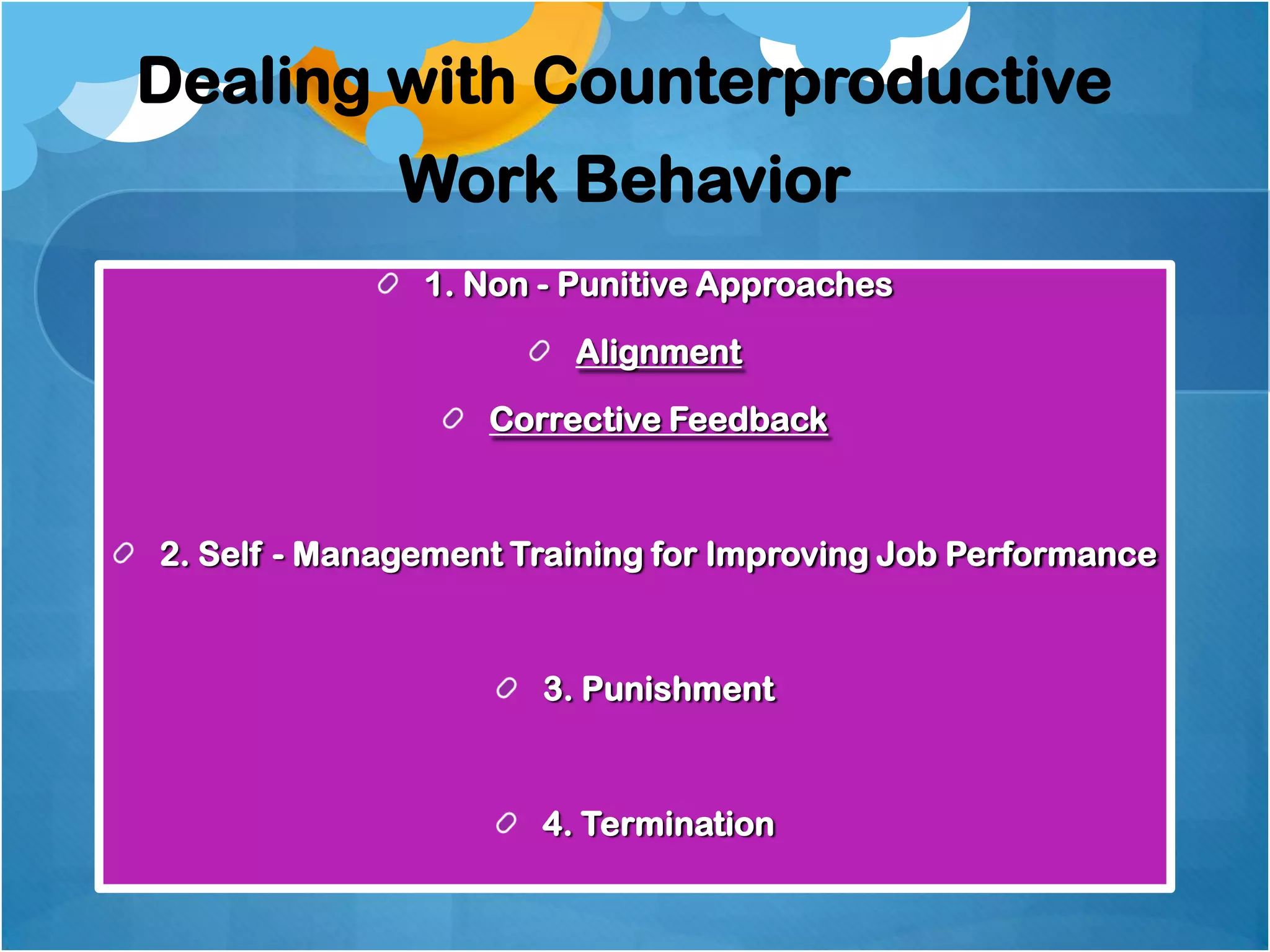
Dealing with Counterproductive

Work Behavior
1. Non - Punitive Approaches
Alignment
Corrective Feedback

2. Self - Management Training for Improving Job Performance

3. Punishment

4. Termination
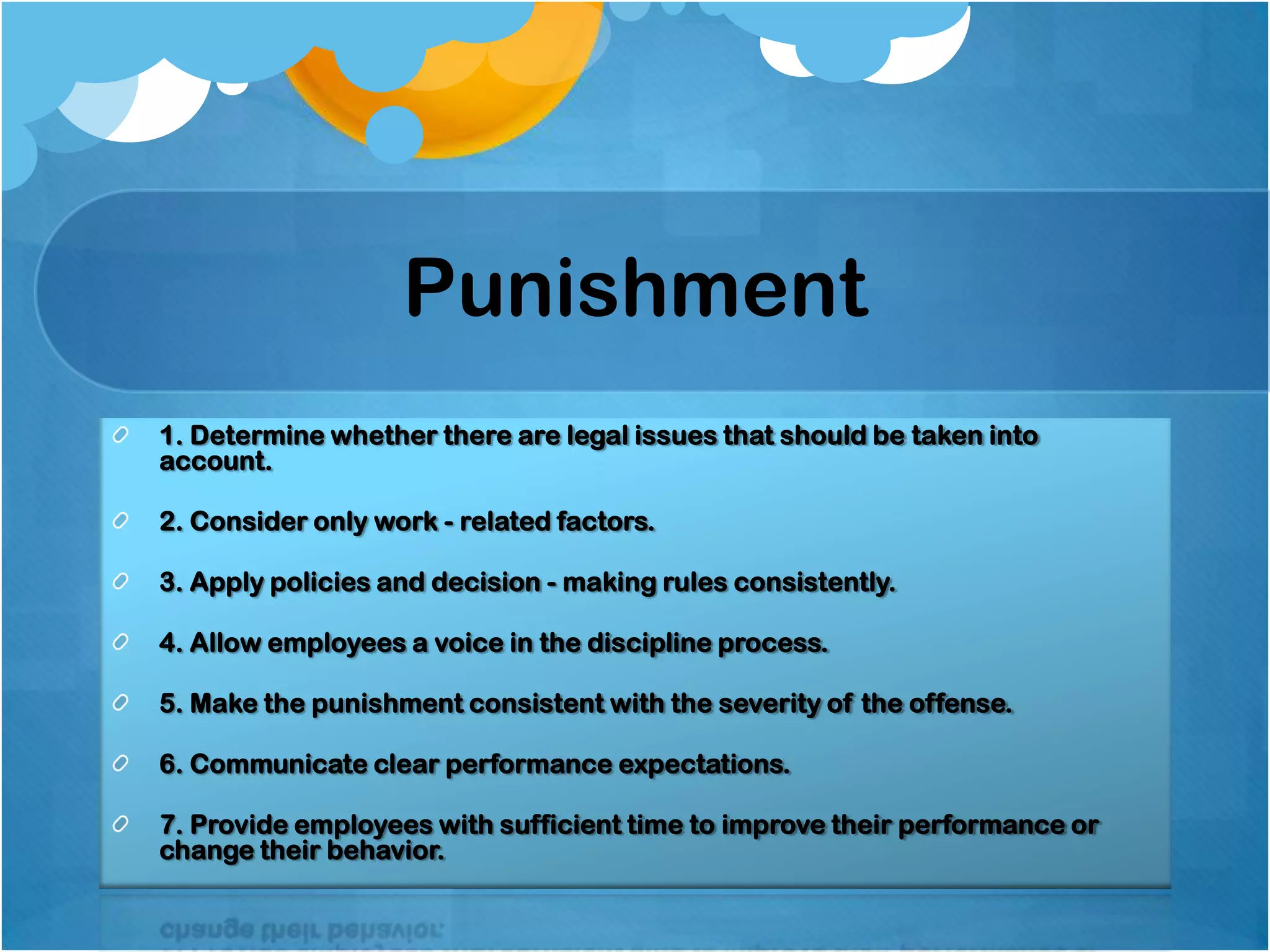
Punishment
1. Determine whether there are legal issues that should be taken into
account.
2. Consider only work - related factors.
3. Apply policies and decision - making rules consistently.
4. Allow employees a voice in the discipline process.
5. Make the punishment consistent with the severity of the offense.
6. Communicate clear performance expectations.
7. Provide employees with sufficient time to improve their performance or
change their behavior.
Overview of Performance Management

Overview of Performance Management