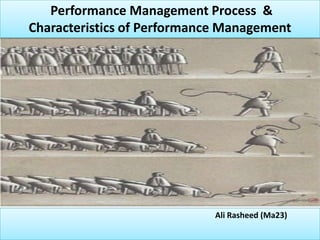
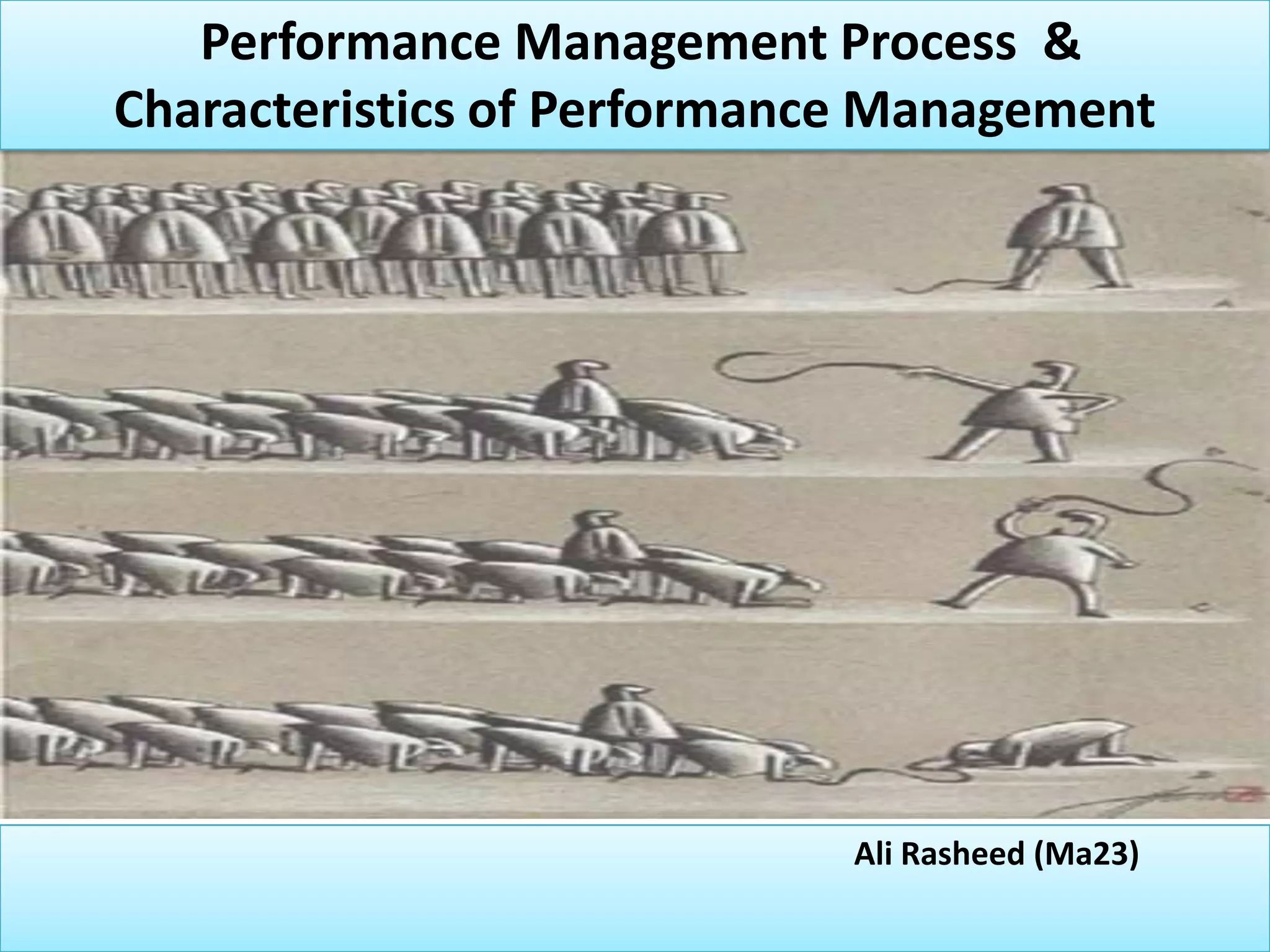
Performance Management Process &
Characteristics of Performance Management


                             Ali Rasheed (Ma23)
Contents
• Introduction
• Definition of performance management
• What is a “Performance management
  process”
• Performance management resources.
• Performance Management responsibilities.
• Characteristics of performance management.
• Conclusion.
Introduction
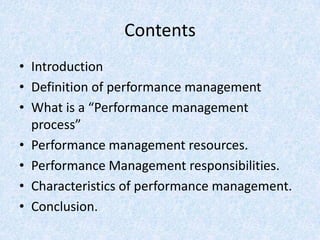
• While employer needs the maximum
  productivity from the workers.
  Employees always want to know.
• How they are doing?
• Are things going great?
• Any positive feed back?
• Are they encouraging us to do better?
• Is there room for improvement?
• Employee need a Constructive advice
  which will enable him as a roadmap
  to correct his performance.
Definition of Performance
               Management
• According to Armstrong and Baron (1998),
  Performance Management is a strategic and an
  integrated approach to delivering successful results in
  organizations
• By improving the performance and developing the
  capabilities of teams and individuals.
• It is an on-going, partnership between supervisors and
  employees, working together to accomplish the goals.
• The term “performance management” gained its
  popularity in early 1980’s. Due to the high achievement
  and the importance of the total quality management
  programs.
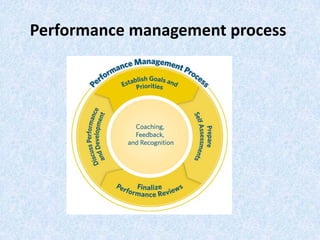
Performance management process
What to be Assess In the PM
             process?
•   Skills
•   Abilities
•   Needs
•   Traits of the employee
Methods used in PM
•   Essay
•   Ranking
•   Paired comparisons
•   Rating through check list.
•   BARS(Behaviorally Anchored
    Rating scale)
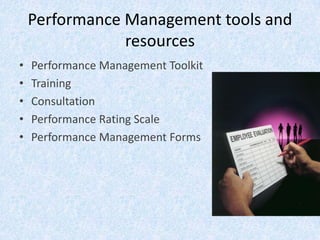
Performance Management tools and
                resources
•   Performance Management Toolkit
•   Training
•   Consultation
•   Performance Rating Scale
•   Performance Management Forms
Responsibilities
• Responsibility towards supervisors and managers:
• To monitor the performance of during the rating period.
• To collect “Every” possible, feedback from customers, team
  members, coworkers, suppliers, concerning the employee
  performance;
• To prepare the record of rating
• To meet with employees to discuss the rating and employee
  development needs.
• Recognizing employees who demonstrate high-quality
  performance.
Responsibilities towards employees
• Participating in all the discussion of their
  performance.
• Assuring that they have clear understanding of
  supervisors expectation.
• To seek the performance feedback from the
  supervisors and customers.
• To take action for the things that has been identified.
Characteristics of Performance
              management
•   Congruent with organizations strategy.
•   Sensible
•   Meaningful
•   Identify efficient and inefficient performance.
•   Openness
•   Specific
•   Realistic
Conclusion
• PM process can be regarded as a system of managing
  employee performance and driving the individuals
  towards desired performance results
• It’s about creating a harmonious alignment between
  individual and organizational objectives for
  accomplishment of excellence in performance.
• The success of employees depends on a clear
  performance management process, which recognizes
  the accomplishments and supports the professional
  development..
• This is the concept of using humans as a “ resource”
  to the success of the organization.
Thank you
References
http://www.fau.edu/hr/EmpRelations/Perf_Mng_0807.php#mng
http://www.gov.ns.ca/psc/hrCentre/resources/ode/performanceManagement/
http://www.jakoba.com/learn.htm
http://www.whatmakesagoodleader.com/Performance
http://www.bersin.com/lexicon/Details.aspx?id=14474

Books.
Armstrong HRM practice.
Armstrong's Handbook of Performance Management.

Performance management process hr

  • 1.
    Performance Management Process& Characteristics of Performance Management Ali Rasheed (Ma23)
  • 2.
    Contents • Introduction • Definitionof performance management • What is a “Performance management process” • Performance management resources. • Performance Management responsibilities. • Characteristics of performance management. • Conclusion.
  • 3.
    Introduction • While employerneeds the maximum productivity from the workers. Employees always want to know. • How they are doing? • Are things going great? • Any positive feed back? • Are they encouraging us to do better? • Is there room for improvement? • Employee need a Constructive advice which will enable him as a roadmap to correct his performance.
  • 4.
    Definition of Performance Management • According to Armstrong and Baron (1998), Performance Management is a strategic and an integrated approach to delivering successful results in organizations • By improving the performance and developing the capabilities of teams and individuals. • It is an on-going, partnership between supervisors and employees, working together to accomplish the goals. • The term “performance management” gained its popularity in early 1980’s. Due to the high achievement and the importance of the total quality management programs.
  • 5.
  • 6.
    What to beAssess In the PM process? • Skills • Abilities • Needs • Traits of the employee
  • 7.
    Methods used inPM • Essay • Ranking • Paired comparisons • Rating through check list. • BARS(Behaviorally Anchored Rating scale)
  • 8.
    Performance Management toolsand resources • Performance Management Toolkit • Training • Consultation • Performance Rating Scale • Performance Management Forms
  • 9.
    Responsibilities • Responsibility towardssupervisors and managers: • To monitor the performance of during the rating period. • To collect “Every” possible, feedback from customers, team members, coworkers, suppliers, concerning the employee performance; • To prepare the record of rating • To meet with employees to discuss the rating and employee development needs. • Recognizing employees who demonstrate high-quality performance.
  • 10.
    Responsibilities towards employees •Participating in all the discussion of their performance. • Assuring that they have clear understanding of supervisors expectation. • To seek the performance feedback from the supervisors and customers. • To take action for the things that has been identified.
  • 11.
    Characteristics of Performance management • Congruent with organizations strategy. • Sensible • Meaningful • Identify efficient and inefficient performance. • Openness • Specific • Realistic
  • 12.
    Conclusion • PM processcan be regarded as a system of managing employee performance and driving the individuals towards desired performance results • It’s about creating a harmonious alignment between individual and organizational objectives for accomplishment of excellence in performance. • The success of employees depends on a clear performance management process, which recognizes the accomplishments and supports the professional development.. • This is the concept of using humans as a “ resource” to the success of the organization.
  • 13.