YAZZRA FARAH YAHYA
2012239844
BM770 3F
ASSOC. PROF. DR ROSHIDI HASSAN
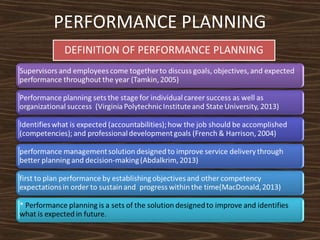
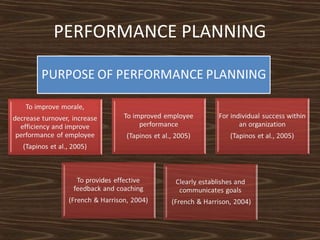
PERFORMANCE PLANNING
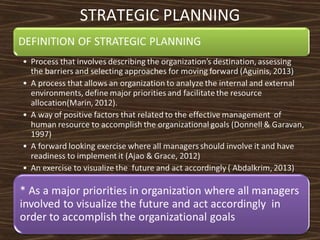
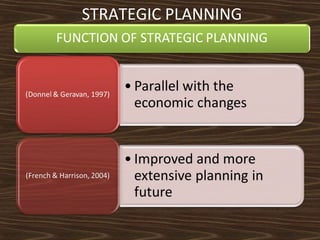
STRATEGIC PLANNING
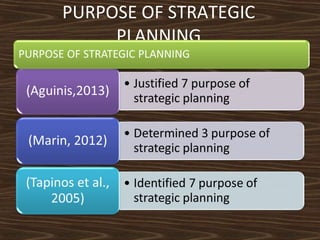
PURPOSE OF STRATEGIC
PLANNING
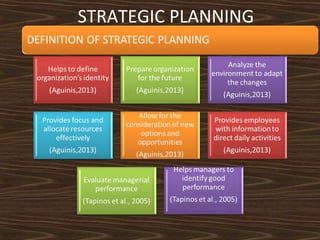
STRATEGIC PLANNING
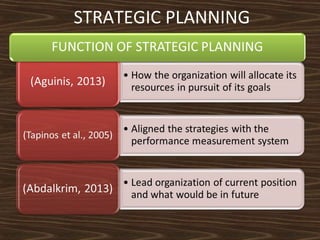
STRATEGIC PLANNING
STRATEGIC PLANNING
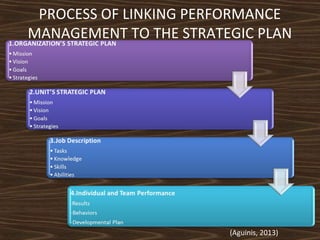
PROCESS OF LINKING PERFORMANCE
MANAGEMENT TO THE STRATEGIC PLAN

(Aguinis, 2013)
PROCESS OF LINKING PERFORMANCE
MANAGEMENT TO THE STRATEGIC PLAN

(Aguinis, 2013)
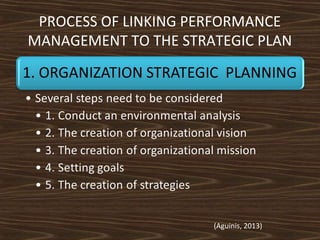
1.Organizational Strategic Planning
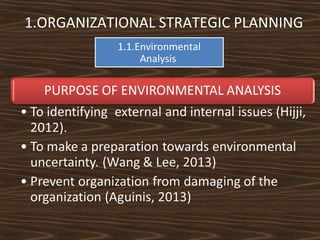
1.ORGANIZATIONAL STRATEGIC PLANNING
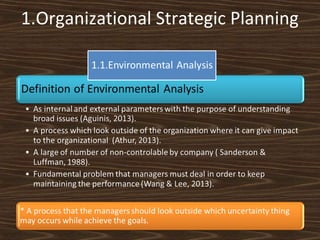
1.1.Environmental
Analysis
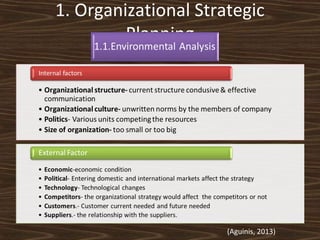
1. Organizational Strategic
Planning

(Aguinis, 2013)
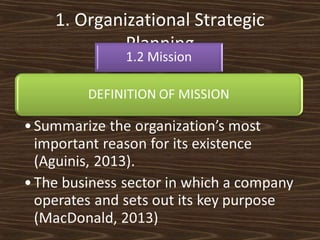
1. Organizational Strategic
Planning
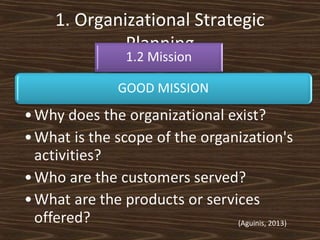
1. Organizational Strategic
Planning

(Aguinis, 2013)
1. Organizational Strategic
Planning
1. Organizational Strategic
Planning
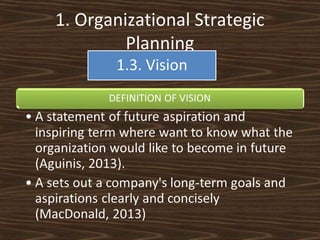
1.3. Vision

(Aguinis, 2013)
1. Organizational Strategic
Planning
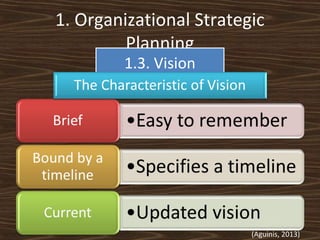
1.3. Vision

(Aguinis, 2013)
1. Organizational Strategic
Planning
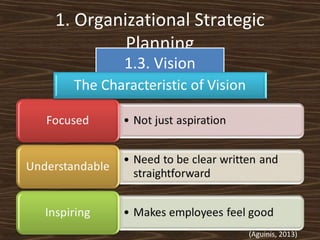
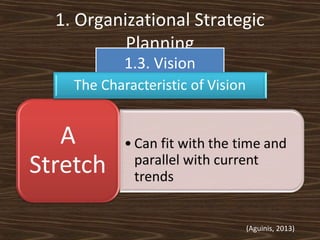
1.3. Vision

(Aguinis, 2013)
1. Organizational Strategic
Planning
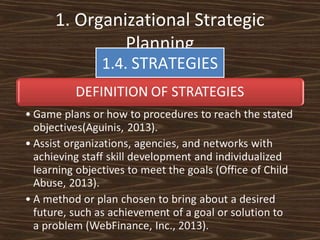
1.4. STRATEGIES
1. Organizational Strategic
Planning
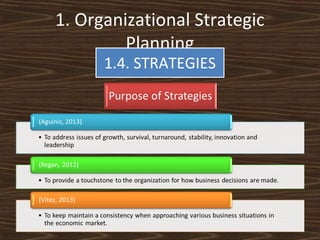
1.4. STRATEGIES
1. Organizational Strategic
Planning
1.4. STRATEGIES

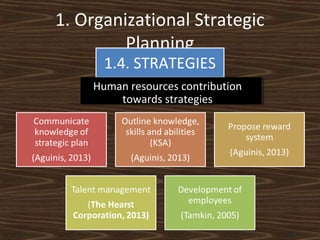
Human resources contribution
towards strategies
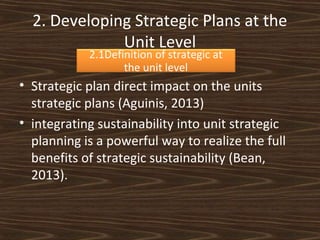
2. Developing Strategic Plans at the
Unit Level
2.1Definition of strategic at
the unit level

• Strategic plan direct impact on the units
strategic plans (Aguinis, 2013)
• integrating sustainability into unit strategic
planning is a powerful way to realize the full
benefits of strategic sustainability (Bean,
2013).
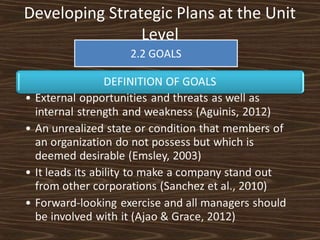
Developing Strategic Plans at the Unit
Level
2.2 GOALS
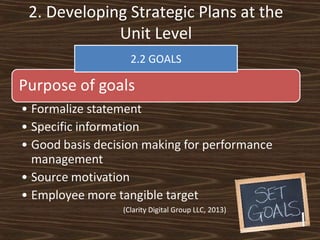
2. Developing Strategic Plans at the
Unit Level
2.2 GOALS

(Clarity Digital Group LLC, 2013)
3. Job description
3.1 Definition of job
description

• Provides information about the various task
performed with some knowledge, skills and
ability required for the position (Aguinis,
2013).
• A brief description about the job, designed by
the employers for the employee (Human
Resource & Skills Development Canada, 2012).
3) Job description
3.2 Purpose of job description

• providing a basis to evaluate employee
performance.
• identifying skill gaps
• helping to ensure an effective on hiring
process
• assisting in comparing the duties for positions
to better establish relative pay rates.
(Human Resource & Skills Development Canada, 2012).
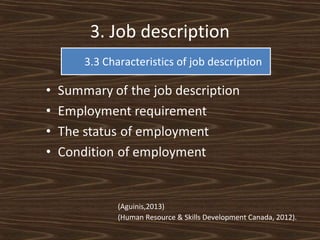
3. Job description
3.3 Characteristics of job description

(Aguinis,2013)
(Human Resource & Skills Development Canada, 2012).
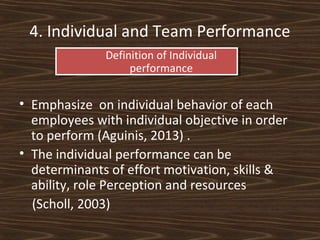
4. Individual and Team Performance
Definition of Individual
performance

• Emphasize on individual behavior of each
employees with individual objective in order
to perform (Aguinis, 2013) .
• The individual performance can be
determinants of effort motivation, skills &
ability, role Perception and resources
(Scholl, 2003)
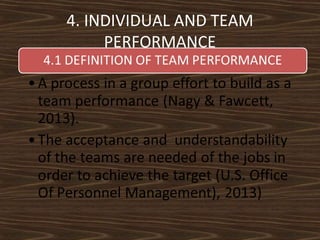
4. INDIVIDUAL AND TEAM
PERFORMANCE
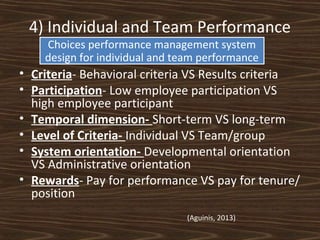
4) Individual and Team Performance
Choices performance management system
design for individual and team performance

• Criteria- Behavioral criteria VS Results criteria
• Participation- Low employee participation VS
high employee participant
• Temporal dimension- Short-term VS long-term
• Level of Criteria- Individual VS Team/group
• System orientation- Developmental orientation
VS Administrative orientation
• Rewards- Pay for performance VS pay for tenure/
position
(Aguinis, 2013)
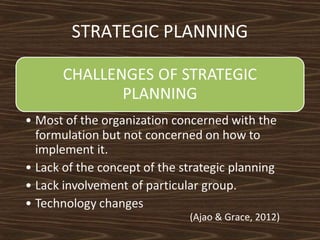
STRATEGIC PLANNING

(Ajao & Grace, 2012)
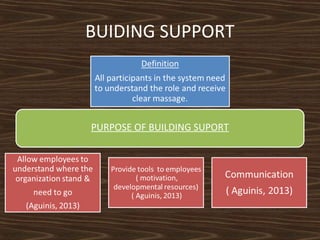
BUIDING SUPPORT

PURPOSE OF BUILDING SUPORT
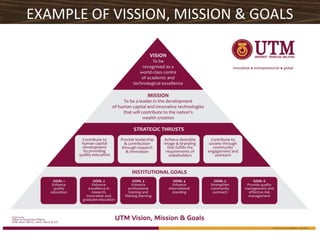
EXAMPLE OF VISSION, MISSION & GOALS
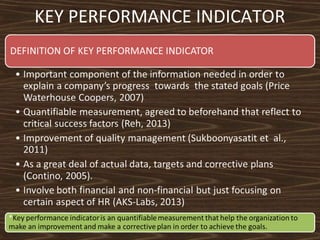
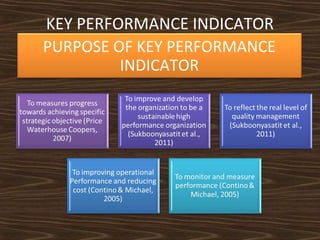
KEY PERFORMANCE INDICATOR
PURPOSE OF KEY PERFORMANCE
INDICATOR
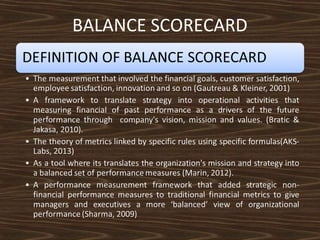
BALANCE SCORECARD
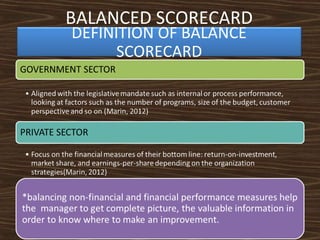
BALANCED SCORECARD
DEFINITION OF BALANCE
SCORECARD
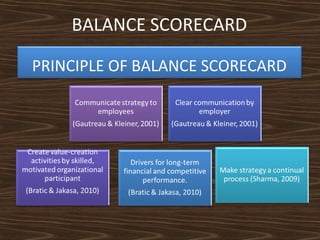
BALANCE SCORECARD
PRINCIPLE OF BALANCE SCORECARD
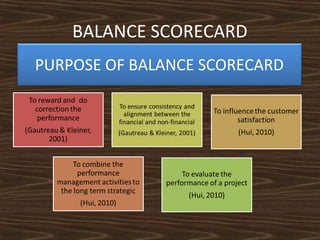
BALANCE SCORECARD
PURPOSE OF BALANCE SCORECARD
BALANCE SCORECARD

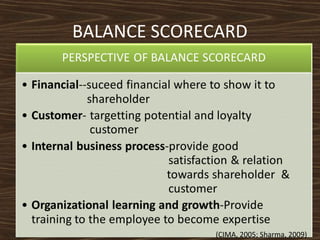
(CIMA, 2005; Sharma, 2009)
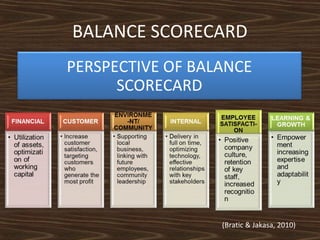
BALANCE SCORECARD
PERSPECTIVE OF BALANCE
SCORECARD

(Bratic & Jakasa, 2010)
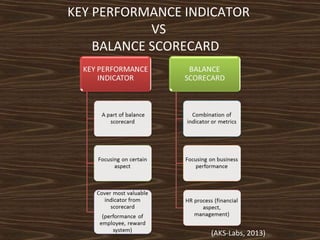
KEY PERFORMANCE INDICATOR
VS
BALANCE SCORECARD

(AKS-Labs, 2013)
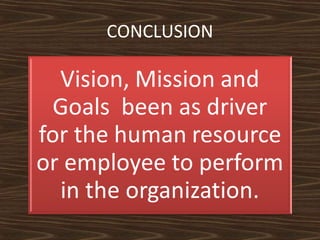
CONCLUSION

Chapter 3: Performance Planning