
Cloud computing 
-An overview
Outline 
 Cloud computing 
 Cloud services-SaaS, PaaS, IaaS 
 Types of clouds 
 Advantages 
 Disadvantages 
 Conclusion
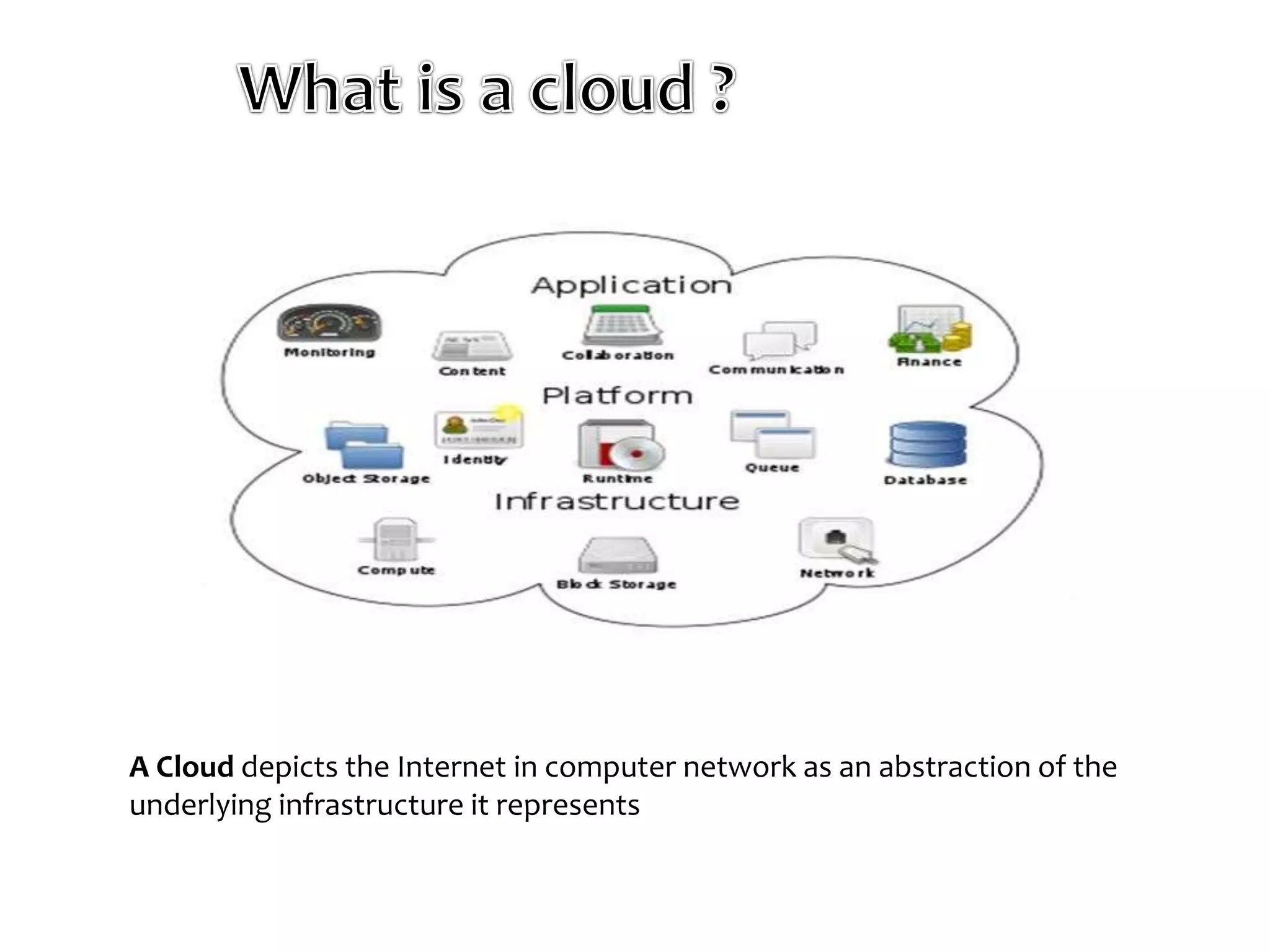
A Cloud depicts the Internet in computer network as an abstraction of the 
underlying infrastructure it represents
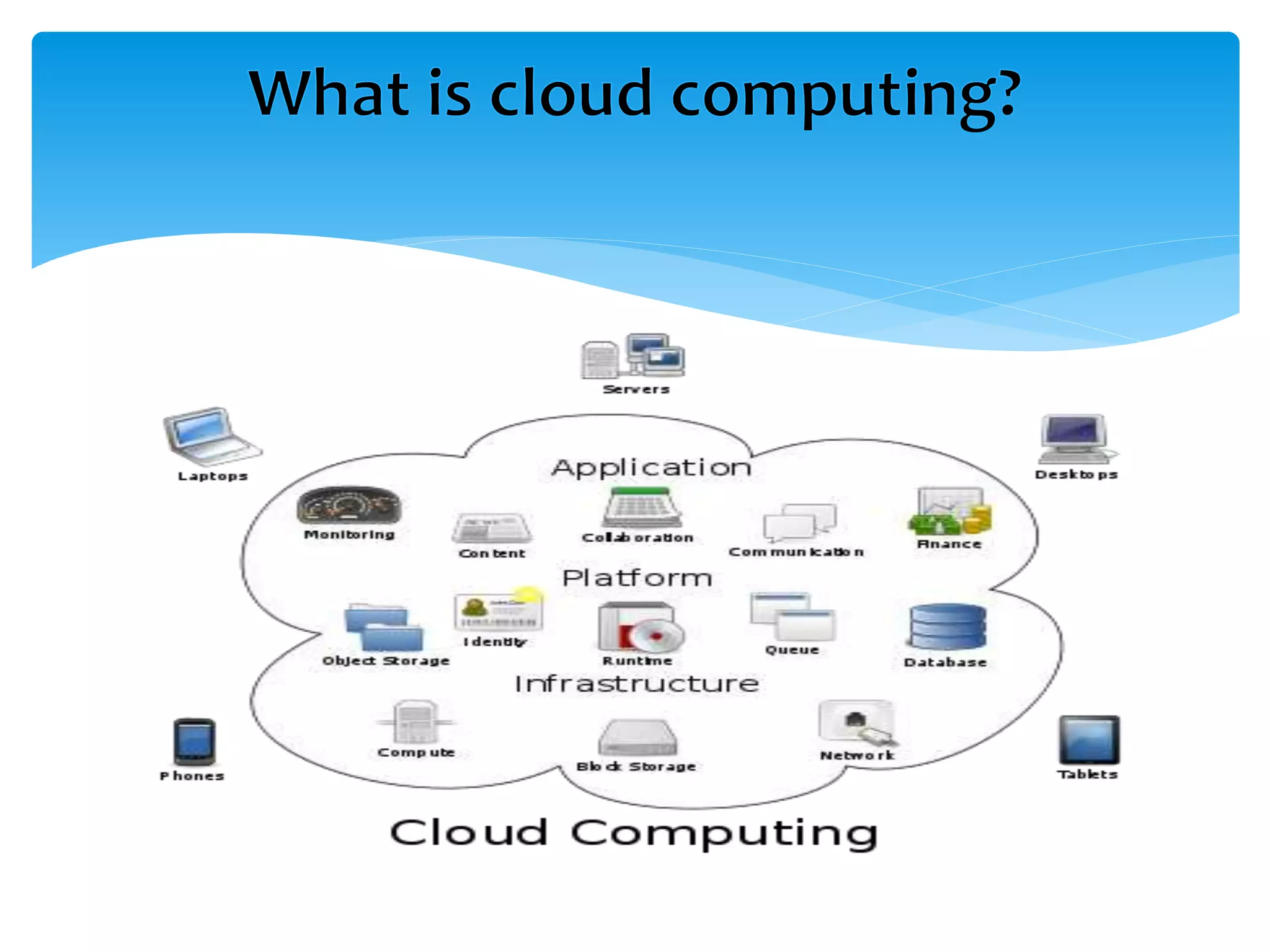
Definition of cloud computing: 
Collaboration and sharing of resources. 
Cloud computing is the Style of computing which must 
cater to the following computing needs: 
Dynamism 
Abstraction 
Resource sharing
Cloud services: 
1. Software as a Service (SaaS): 
 A single instance of the service runs on the 
cloud & multiple end users 
 Today SaaS is offered by companies 
such as Google, Salesforce, Microsoft, Zoho, etc
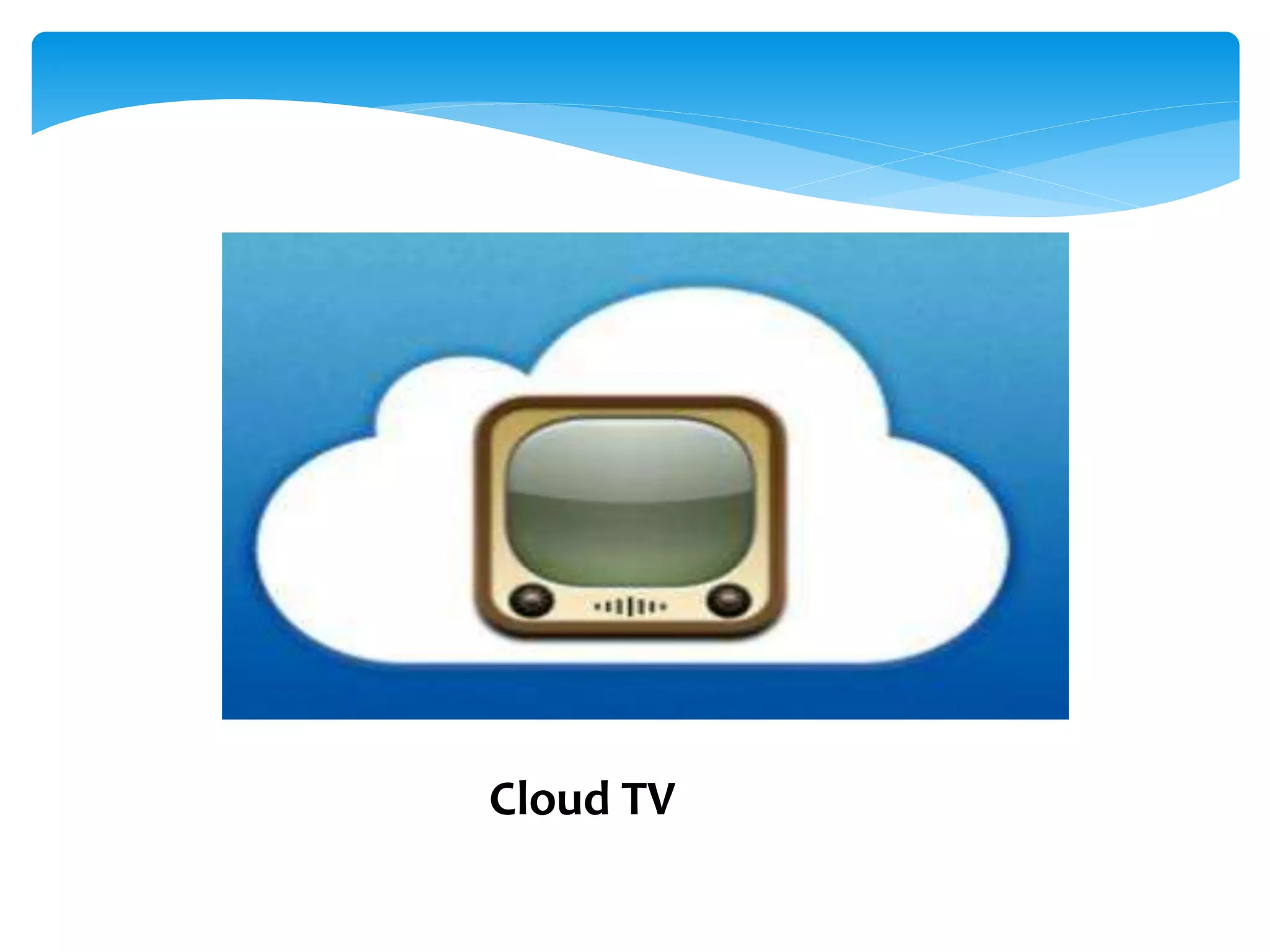
Cloud TV
2. Platform as a Service (Paas): 
 development environment is encapsulated & 
offered as a service 
offer a predefined combination of OS and 
application servers, such as LAMP platform
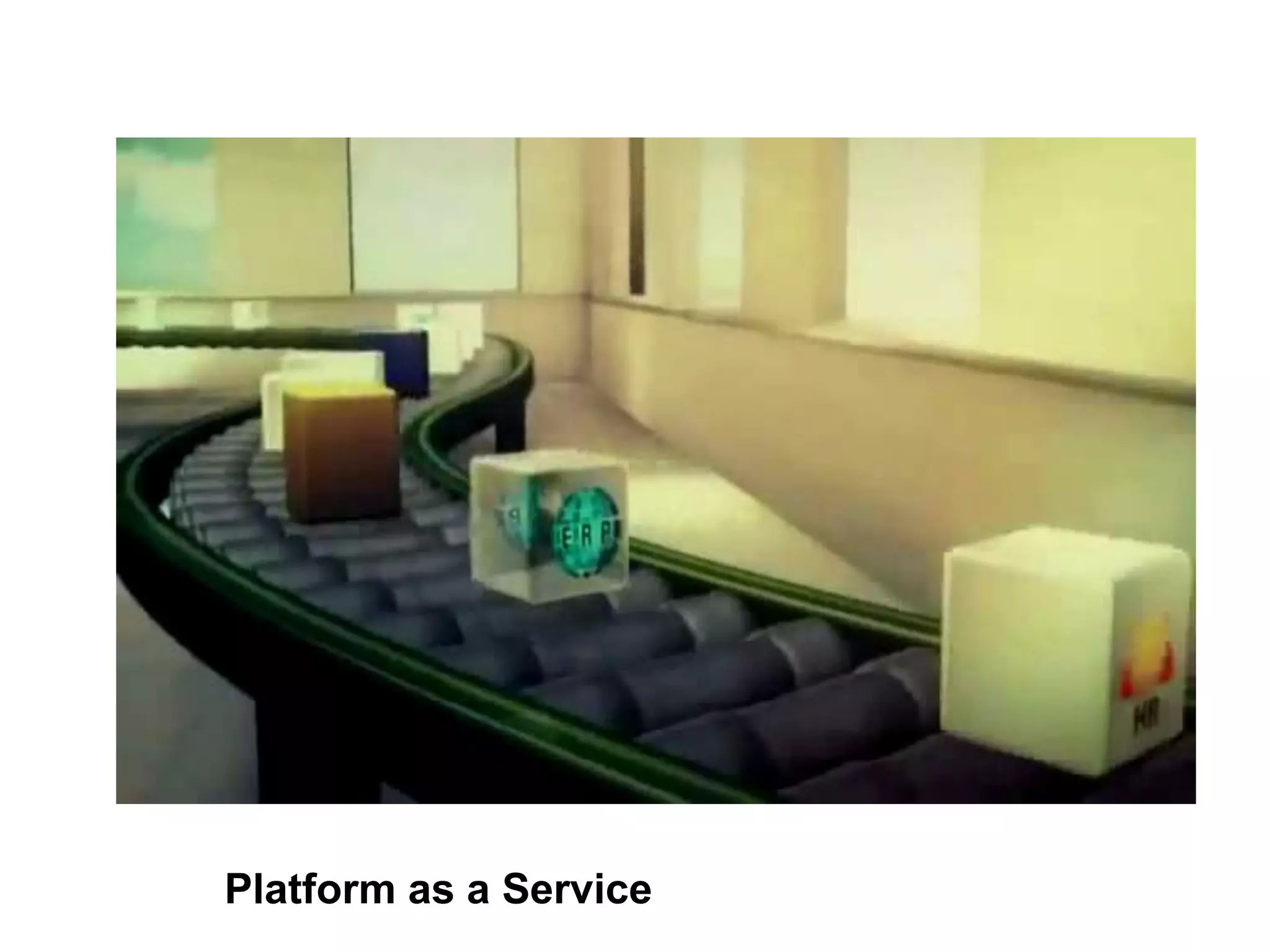
Platform as a Service
3. Infrastructure as a Service (Iaas): 
provides basic storage and computing capabilities 
Everything is done through Virtualization 
The customer would typically deploy his own 
software on the infrastructure
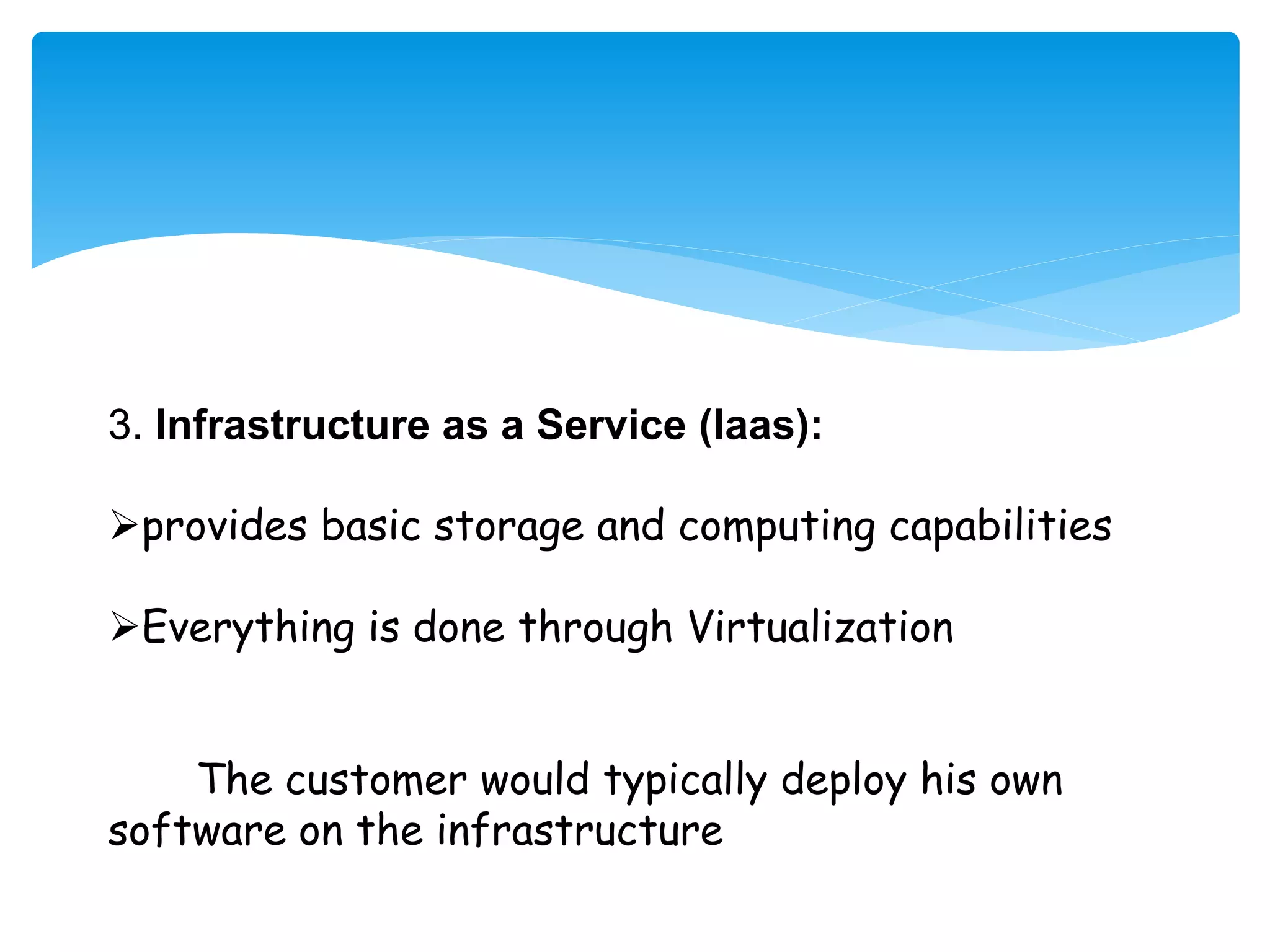
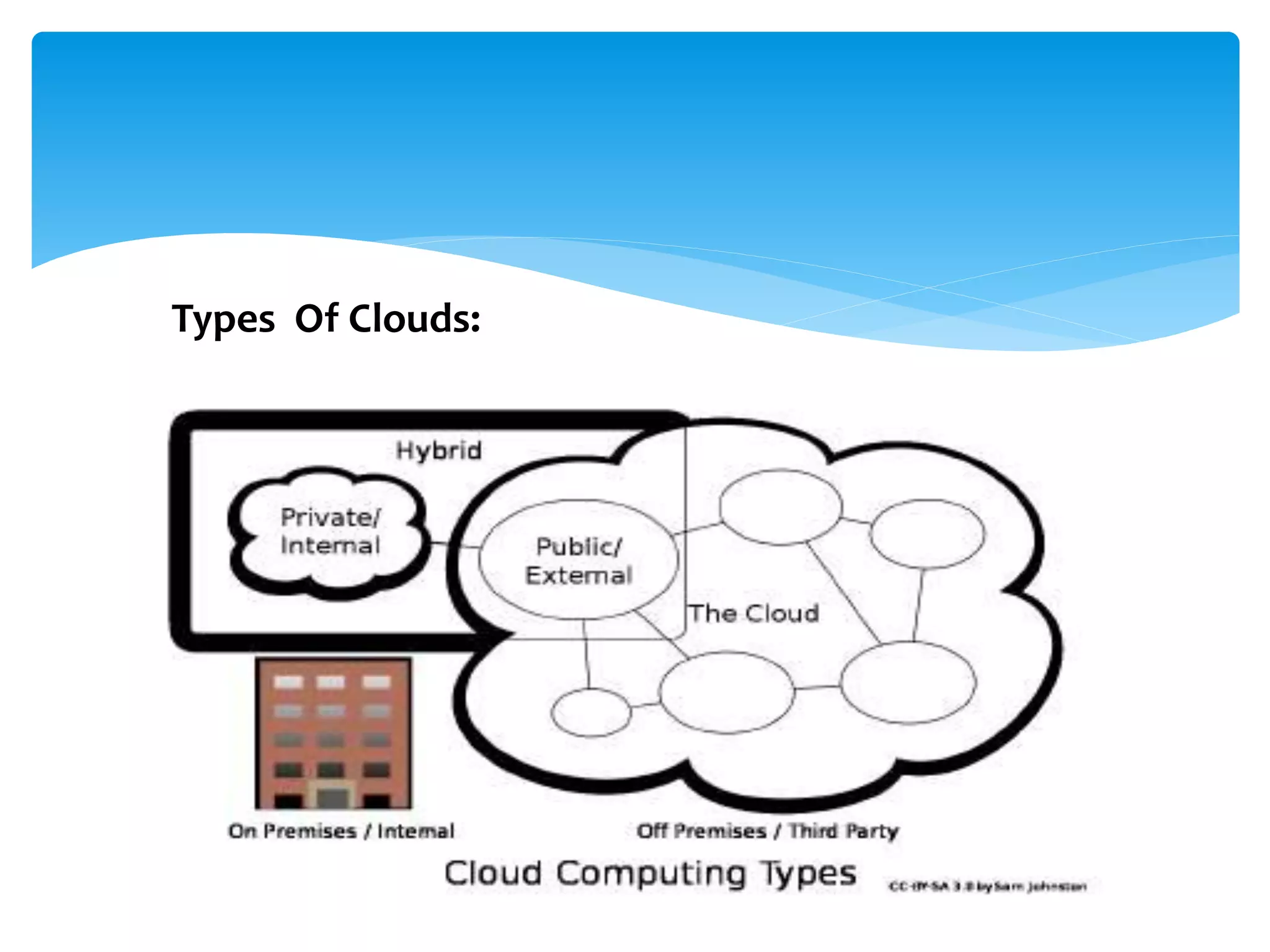
Infrastructure as a Service
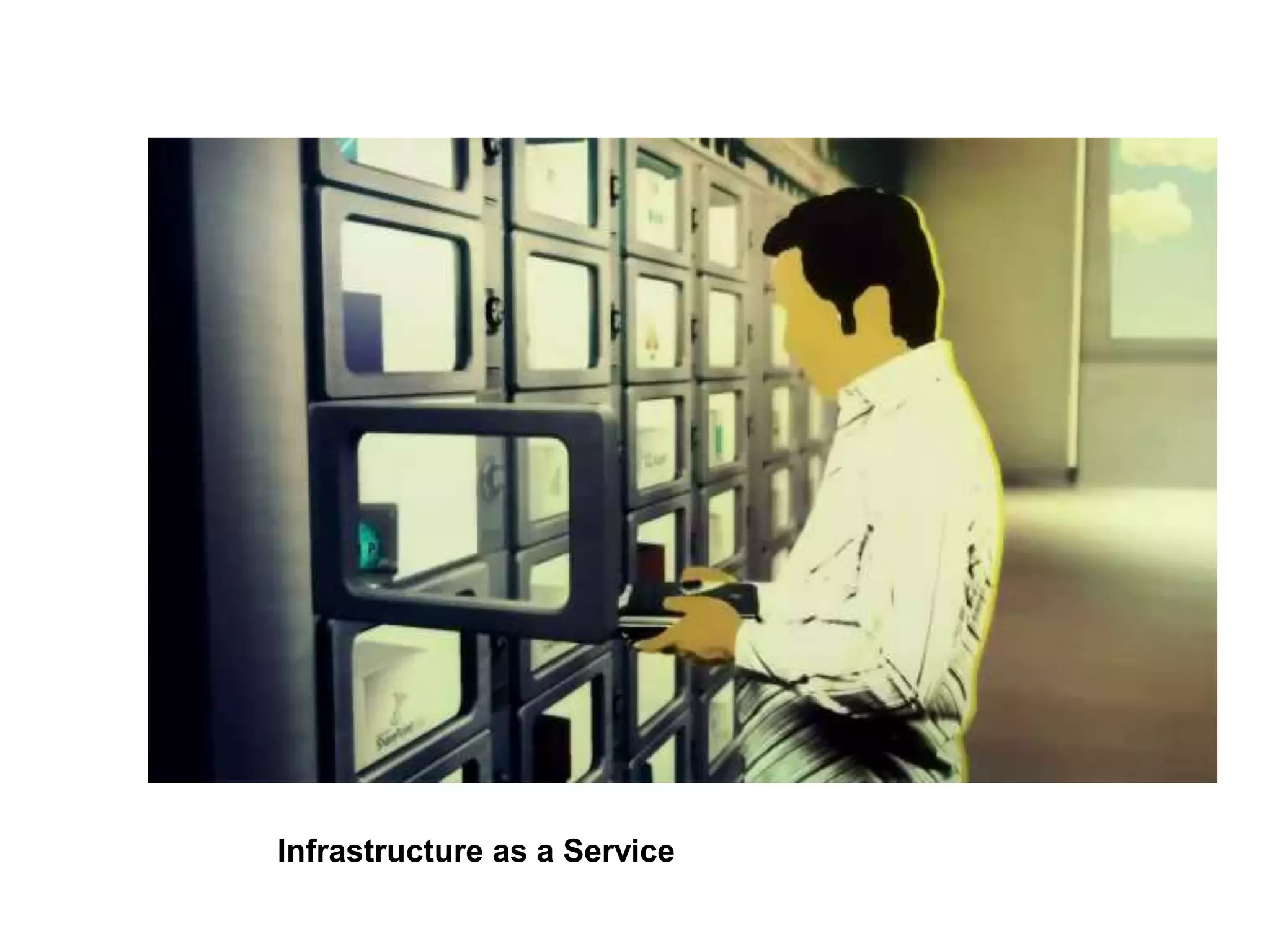
Types Of Clouds:
SECURITY (DATA TRANSPIRANCY)
Advantages: 
Reduce Runtime and Response time 
Minimize Infrastructure Risk 
Reduced cost 
Multi-tenancy 
UNLIMITED STORAGE 
ECONOMICAL
DISADVANTAGES OF CLOUD 
COMPUTING: 
TOTALLY INTERNET CONNECTION 
ORIENTED 
REQUIRE HIGH BANDWIDTH OF 
NET CONNECTION 
VENDOR DEPENDANC FOR DATA 
MAINTENANCE
HIGH BUDGET TO ESTABLISH 
CLOUD 
COMPUTING ENVIRONMENT 
NOT ACCESSIBLE BY EVERYONE 
HUGE POWER IS REQUIRED
Conclusion: 
Aims to provide a means of 
understanding the model and 
exploring options 
available for complementing your 
technology and infrastructure 
needs
References 
 www.en.wikipedia.org 
 www.cloudpower.in 
 www.google.co.in
Any 
Queries???
Presented by: 
Y.Prashanth 
Vaageswari Engineering College
Overview of Cloud Computing

Overview of Cloud Computing

  • 1.
  • 2.
    Outline  Cloudcomputing  Cloud services-SaaS, PaaS, IaaS  Types of clouds  Advantages  Disadvantages  Conclusion
  • 3.
    A Cloud depictsthe Internet in computer network as an abstraction of the underlying infrastructure it represents
  • 5.
    Definition of cloudcomputing: Collaboration and sharing of resources. Cloud computing is the Style of computing which must cater to the following computing needs: Dynamism Abstraction Resource sharing
  • 6.
    Cloud services: 1.Software as a Service (SaaS):  A single instance of the service runs on the cloud & multiple end users  Today SaaS is offered by companies such as Google, Salesforce, Microsoft, Zoho, etc
  • 7.
  • 8.
    2. Platform asa Service (Paas):  development environment is encapsulated & offered as a service offer a predefined combination of OS and application servers, such as LAMP platform
  • 9.
  • 10.
    3. Infrastructure asa Service (Iaas): provides basic storage and computing capabilities Everything is done through Virtualization The customer would typically deploy his own software on the infrastructure
  • 11.
  • 12.
  • 13.
  • 14.
    Advantages: Reduce Runtimeand Response time Minimize Infrastructure Risk Reduced cost Multi-tenancy UNLIMITED STORAGE ECONOMICAL
  • 15.
    DISADVANTAGES OF CLOUD COMPUTING: TOTALLY INTERNET CONNECTION ORIENTED REQUIRE HIGH BANDWIDTH OF NET CONNECTION VENDOR DEPENDANC FOR DATA MAINTENANCE
  • 16.
    HIGH BUDGET TOESTABLISH CLOUD COMPUTING ENVIRONMENT NOT ACCESSIBLE BY EVERYONE HUGE POWER IS REQUIRED
  • 17.
    Conclusion: Aims toprovide a means of understanding the model and exploring options available for complementing your technology and infrastructure needs
  • 18.
    References  www.en.wikipedia.org  www.cloudpower.in  www.google.co.in
  • 19.
  • 20.
    Presented by: Y.Prashanth Vaageswari Engineering College