
CLOUD COMPUTING PRIMER FOR
EXECUTIVES
Cloud Computing –
Who Cares?
Enables
• New products, services, business models
(digital)
• Faster growth (agility)
• Better efficiency (not necessarily cheaper)
Requires different
• People
• Processes
• Technologies
Cloud Computing –
Who Cares?
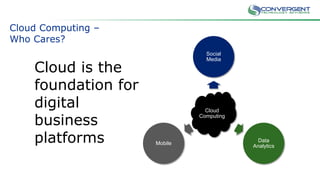
Cloud is the
foundation for
digital
business
platforms
Cloud
Computing
Social
Media
Data
Analytics
Mobile
Credit: flickr/jenny-pics/
Cloud Computing –
What is it?
IT delivered in a new way
• Over the Internet
• Capacity provided on an “as
needed basis” or utility
• Resources provided
programmatically (API)
• Some (or all) IT systems now
owned and operated by a Cloud
Service Provider (CSP)
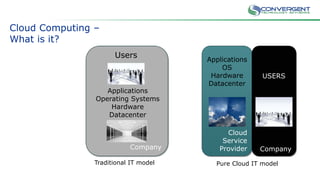
Cloud Computing –
What is it?
Company
Cloud
Service
Provider Company
Traditional IT model Pure Cloud IT model
Applications
OS
Hardware
Datacenter
USERS
Applications
Operating Systems
Hardware
Datacenter
Users
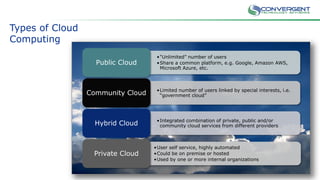
Types of Cloud
Computing
•“Unlimited” number of users
•Share a common platform, e.g. Google, Amazon AWS,
Microsoft Azure, etc.
Public Cloud
•Limited number of users linked by special interests, i.e.
“government cloud”Community Cloud
•Integrated combination of private, public and/or
community cloud services from different providersHybrid Cloud
•User self service, highly automated
•Could be on premise or hosted
•Used by one or more internal organizations
Private Cloud
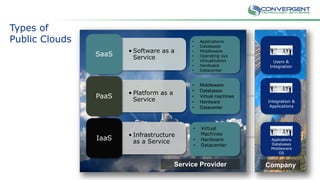
Types of
Public Clouds
• Software as a
Service
SaaS
• Platform as a
Service
PaaS
• Infrastructure
as a Service
IaaS
• Applications
• Databases
• Middleware
• Operating sys
• Virtualization
• Hardware
• Datacenter
• Middleware
• Databases
• Virtual machines
• Hardware
• Datacenter
Integration &
Applications
• Virtual
Machines
• Hardware
• Datacenter
Applications
Databases
Middleware
OS
CompanyService Provider
Users &
Integration
Is Amazon Web Services a
IaaS or PaaS?
• The answer is – yes, to both
• You can consume the platform
offerings, or just consume the
infrastructure and do the rest yourself
• Many combinations of service providers
are possible (and common)
(Example: A SaaS company using a IaaS
company for their infrastructure)
Why are There so Many Flavors
of Cloud?
Proliferation
• Many application types developed
over the last 50 years
• New business use cases drive new
architectures
• Companies have different internal
skillsets
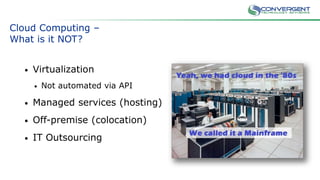
Cloud Computing –
What is it NOT?
• Virtualization
• Not automated via API
• Managed services (hosting)
• Off-premise (colocation)
• IT Outsourcing
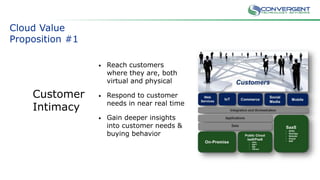
Cloud Value
Proposition #1
Customer
Intimacy
• Reach customers
where they are, both
virtual and physical
• Respond to customer
needs in near real time
• Gain deeper insights
into customer needs &
buying behavior
Cloud Value
Proposition #2
Business
Velocity
• Quickly provision IT capacity for
revenue growth
• New product development
• M&A integration
• Geographic expansion
• Efficiently test new markets,
products, business models
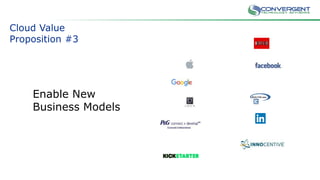
Cloud Value
Proposition #3
Enable New
Business Models
Cloud Value
Proposition #4 • Shift focus to developing and extending
core business capabilities
• Gain efficiencies & move talent to value
added activities
• Manage low value tasks with
automation
• Utilize pooled IT resources & standard
services of cloud providers
ACCELERATE
BUSINESS GROWTH
Focus on the
Core
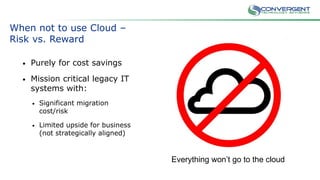
When not to use Cloud –
Risk vs. Reward
• Purely for cost savings
• Mission critical legacy IT
systems with:
• Significant migration
cost/risk
• Limited upside for business
(not strategically aligned)
Everything won’t go to the cloud
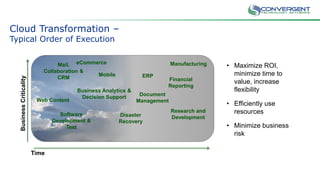
Cloud Transformation –
Typical Order of Execution
Mail,
Collaboration &
CRM
Web Content
Business Analytics &
Decision Support
Software
Development &
Test
Financial
Reporting
Document
Management
Manufacturing
ERP
eCommerce
Disaster
Recovery
Research and
Development
BusinessCriticality
Time
• Maximize ROI,
minimize time to
value, increase
flexibility
• Efficiently use
resources
• Minimize business
risk
Mobile
Q & A
THANK YOU

A cloud computing primer for non-technical executives

  • 1.
    CLOUD COMPUTING PRIMERFOR EXECUTIVES
  • 2.
    Cloud Computing – WhoCares? Enables • New products, services, business models (digital) • Faster growth (agility) • Better efficiency (not necessarily cheaper) Requires different • People • Processes • Technologies
  • 3.
    Cloud Computing – WhoCares? Cloud is the foundation for digital business platforms Cloud Computing Social Media Data Analytics Mobile
  • 4.
    Credit: flickr/jenny-pics/ Cloud Computing– What is it? IT delivered in a new way • Over the Internet • Capacity provided on an “as needed basis” or utility • Resources provided programmatically (API) • Some (or all) IT systems now owned and operated by a Cloud Service Provider (CSP)
  • 5.
    Cloud Computing – Whatis it? Company Cloud Service Provider Company Traditional IT model Pure Cloud IT model Applications OS Hardware Datacenter USERS Applications Operating Systems Hardware Datacenter Users
  • 6.
    Types of Cloud Computing •“Unlimited”number of users •Share a common platform, e.g. Google, Amazon AWS, Microsoft Azure, etc. Public Cloud •Limited number of users linked by special interests, i.e. “government cloud”Community Cloud •Integrated combination of private, public and/or community cloud services from different providersHybrid Cloud •User self service, highly automated •Could be on premise or hosted •Used by one or more internal organizations Private Cloud
  • 7.
    Types of Public Clouds •Software as a Service SaaS • Platform as a Service PaaS • Infrastructure as a Service IaaS • Applications • Databases • Middleware • Operating sys • Virtualization • Hardware • Datacenter • Middleware • Databases • Virtual machines • Hardware • Datacenter Integration & Applications • Virtual Machines • Hardware • Datacenter Applications Databases Middleware OS CompanyService Provider Users & Integration
  • 8.
    Is Amazon WebServices a IaaS or PaaS? • The answer is – yes, to both • You can consume the platform offerings, or just consume the infrastructure and do the rest yourself • Many combinations of service providers are possible (and common) (Example: A SaaS company using a IaaS company for their infrastructure)
  • 9.
    Why are Thereso Many Flavors of Cloud? Proliferation • Many application types developed over the last 50 years • New business use cases drive new architectures • Companies have different internal skillsets
  • 10.
    Cloud Computing – Whatis it NOT? • Virtualization • Not automated via API • Managed services (hosting) • Off-premise (colocation) • IT Outsourcing
  • 11.
    Cloud Value Proposition #1 Customer Intimacy •Reach customers where they are, both virtual and physical • Respond to customer needs in near real time • Gain deeper insights into customer needs & buying behavior
  • 12.
    Cloud Value Proposition #2 Business Velocity •Quickly provision IT capacity for revenue growth • New product development • M&A integration • Geographic expansion • Efficiently test new markets, products, business models
  • 13.
  • 14.
    Cloud Value Proposition #4• Shift focus to developing and extending core business capabilities • Gain efficiencies & move talent to value added activities • Manage low value tasks with automation • Utilize pooled IT resources & standard services of cloud providers ACCELERATE BUSINESS GROWTH Focus on the Core
  • 15.
    When not touse Cloud – Risk vs. Reward • Purely for cost savings • Mission critical legacy IT systems with: • Significant migration cost/risk • Limited upside for business (not strategically aligned) Everything won’t go to the cloud
  • 16.
    Cloud Transformation – TypicalOrder of Execution Mail, Collaboration & CRM Web Content Business Analytics & Decision Support Software Development & Test Financial Reporting Document Management Manufacturing ERP eCommerce Disaster Recovery Research and Development BusinessCriticality Time • Maximize ROI, minimize time to value, increase flexibility • Efficiently use resources • Minimize business risk Mobile
  • 17.
  • 18.