Outer orientation functions:
Prepared by
Ms Rijitha. R (M.A, M.Phil, SET)
Assistant Professor
PG Department of Electronic Media
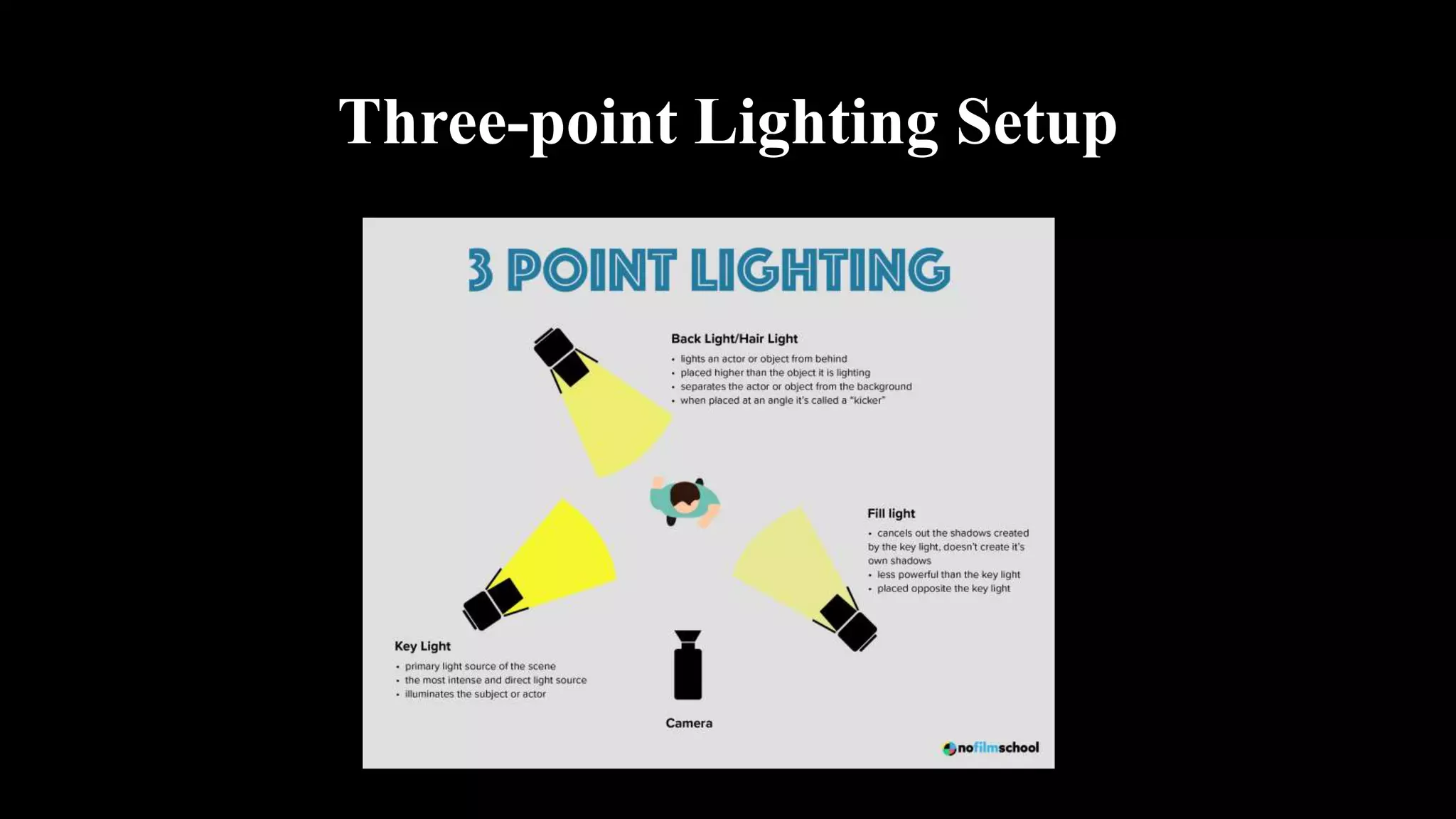
Three-point Lighting Setup
There are 12 basic types of lighting used in
filmmaking:
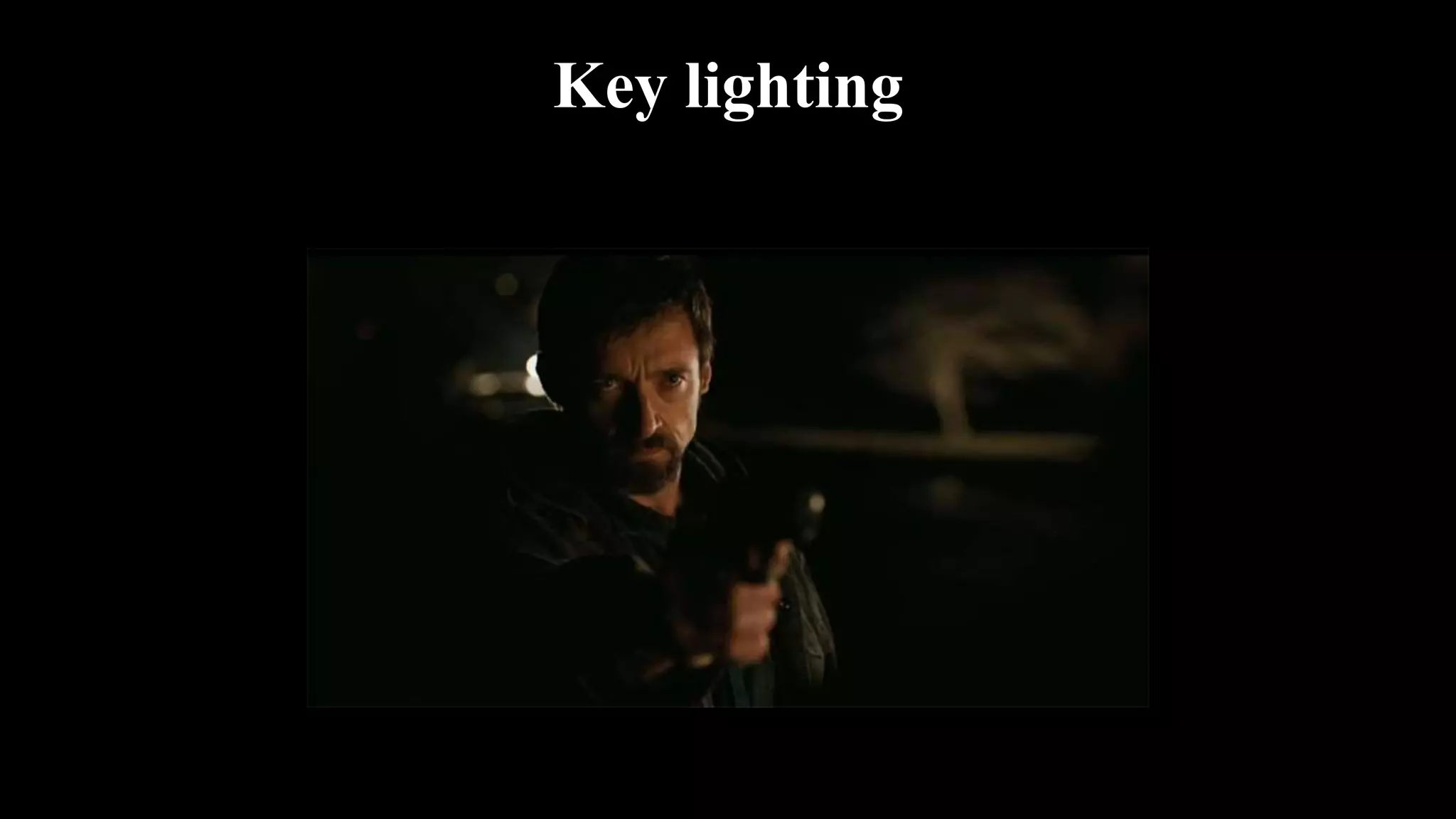
• Key lighting is the main—and strongest—light source in a scene or on the actor.
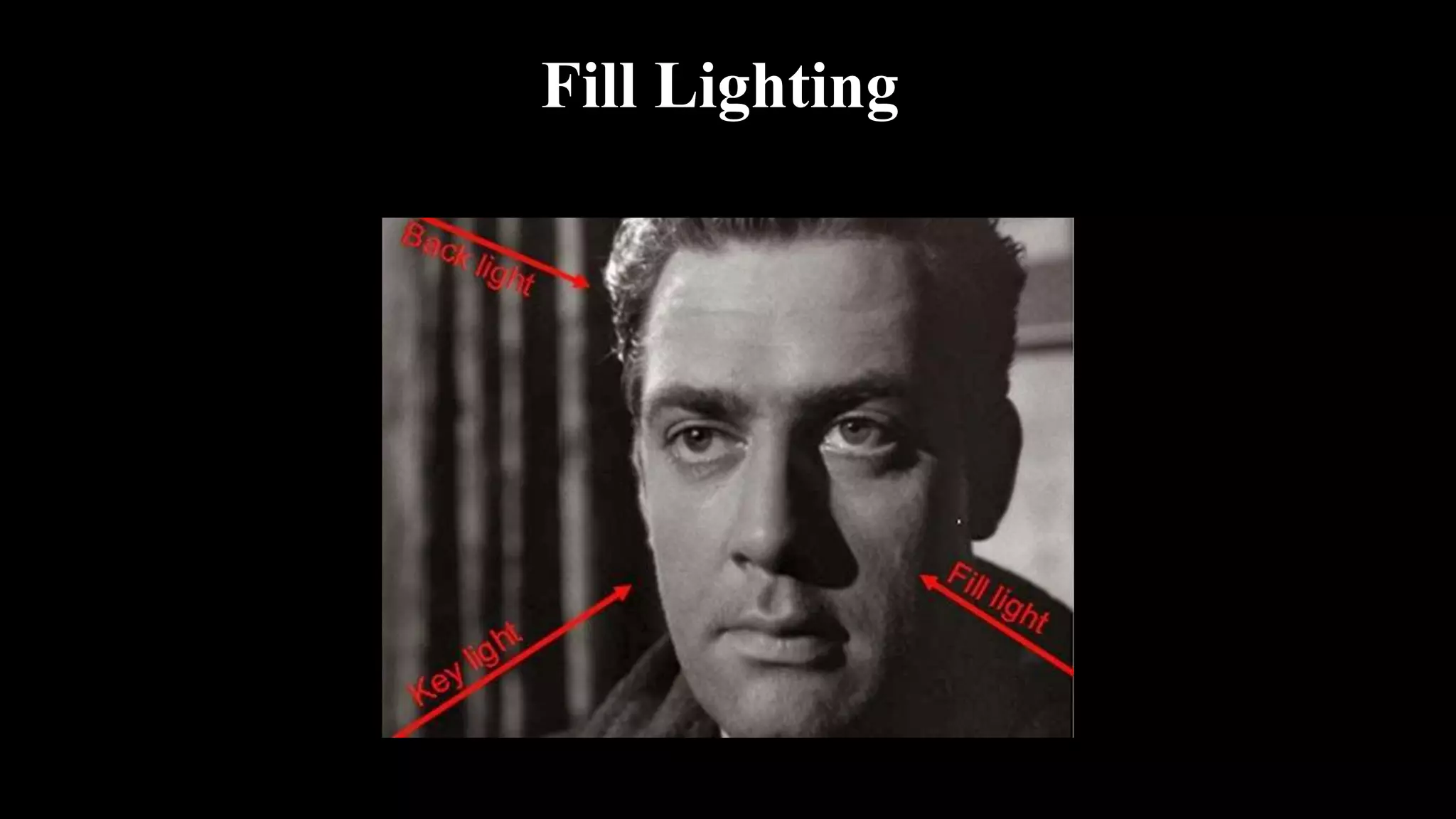
• Fill lighting adds dimension and softens harsh shadows created by the key light.
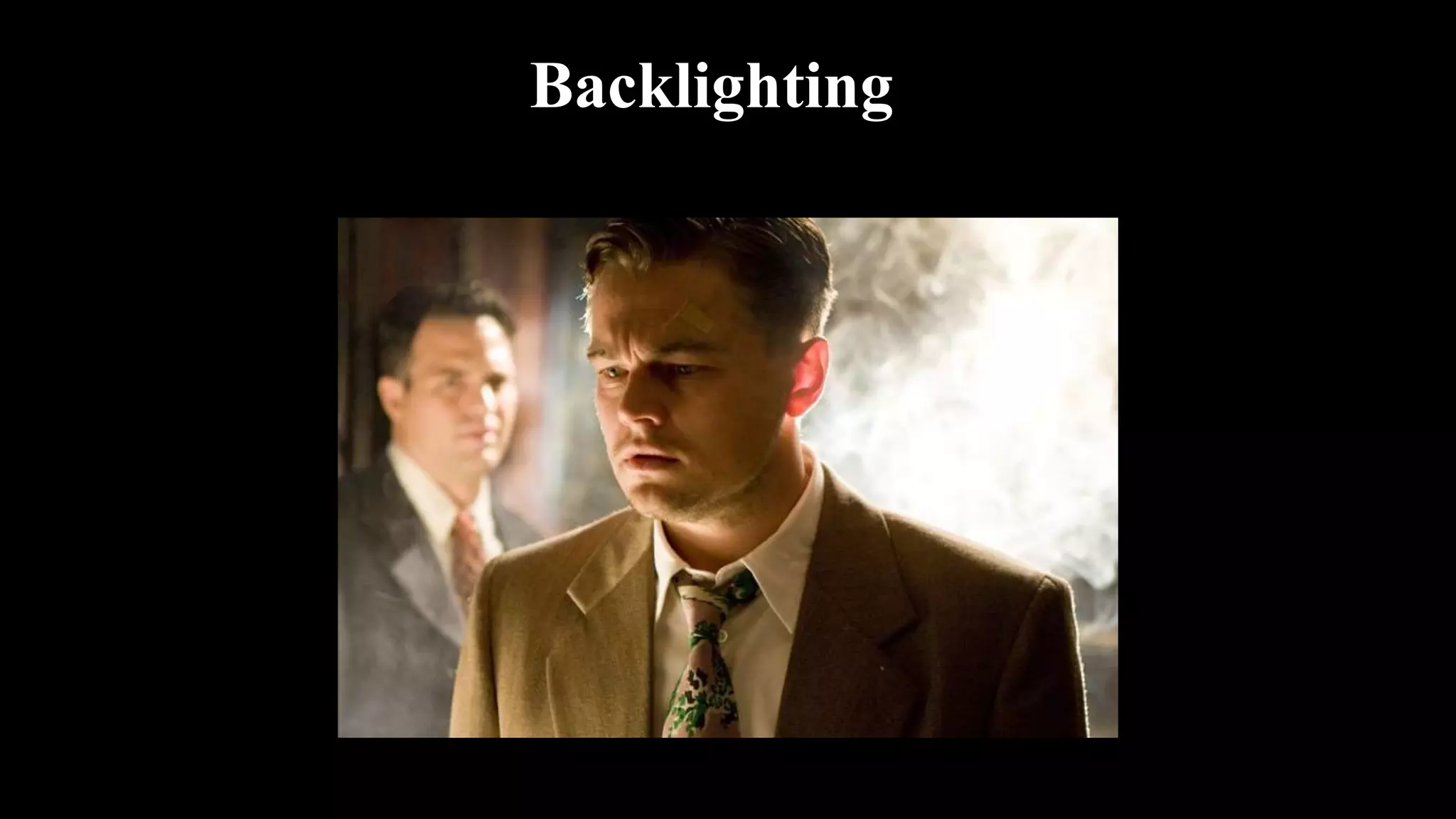
• Backlighting is placed behind the actor to help define their features and distinguish them
from the background.
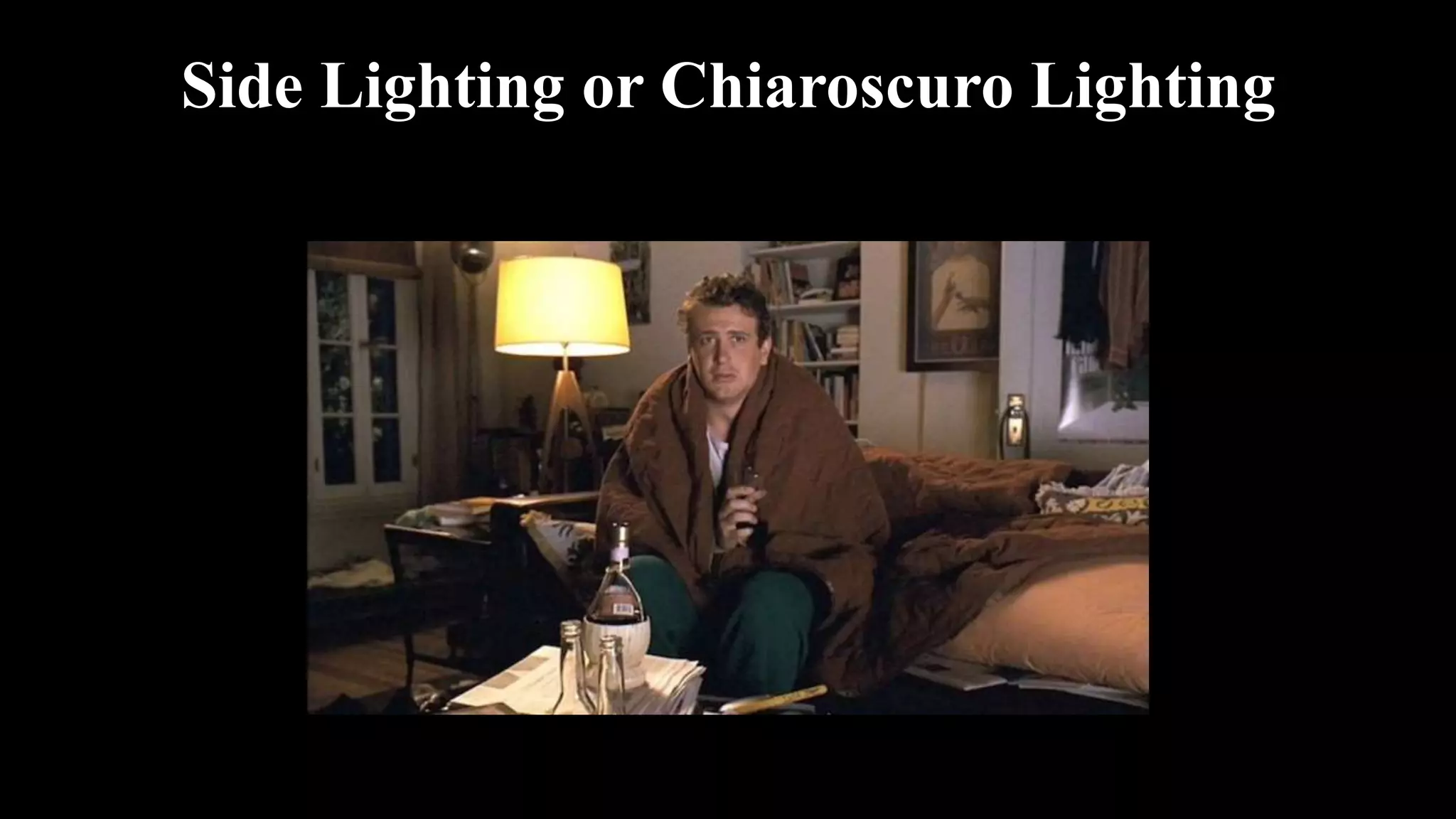
• Side lighting lights the actor from the side and focuses on the contours of their face for a
high-contrast dramatic effect.
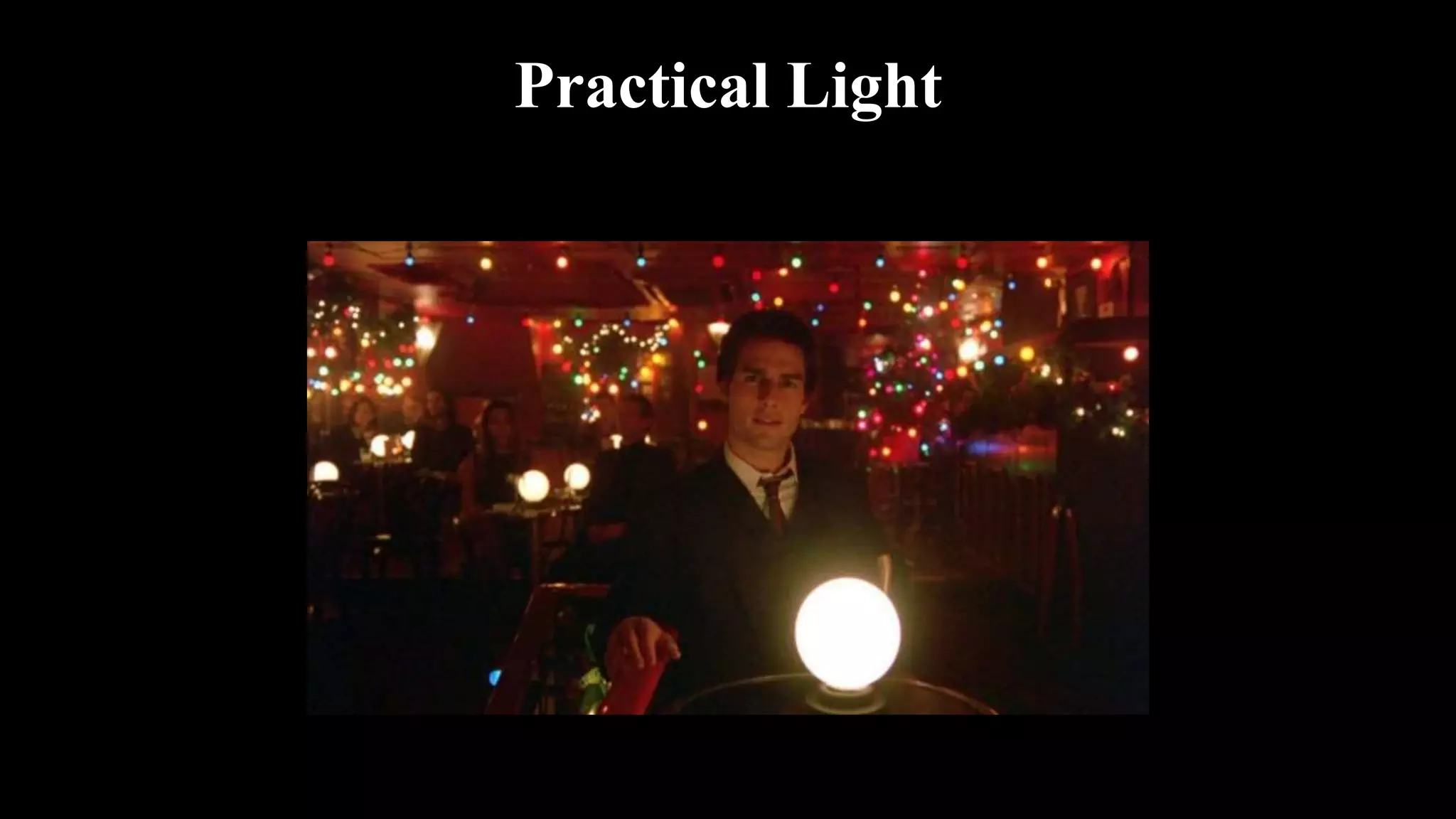
• Practical lighting is a light source that is visible within the scene like lamps, light fixtures,
candles, and television sets. They’re not usually strong enough to light a subject, but they
add to the cinematic ambiance of the scene.
There are 12 basic types of lighting used in
filmmaking:
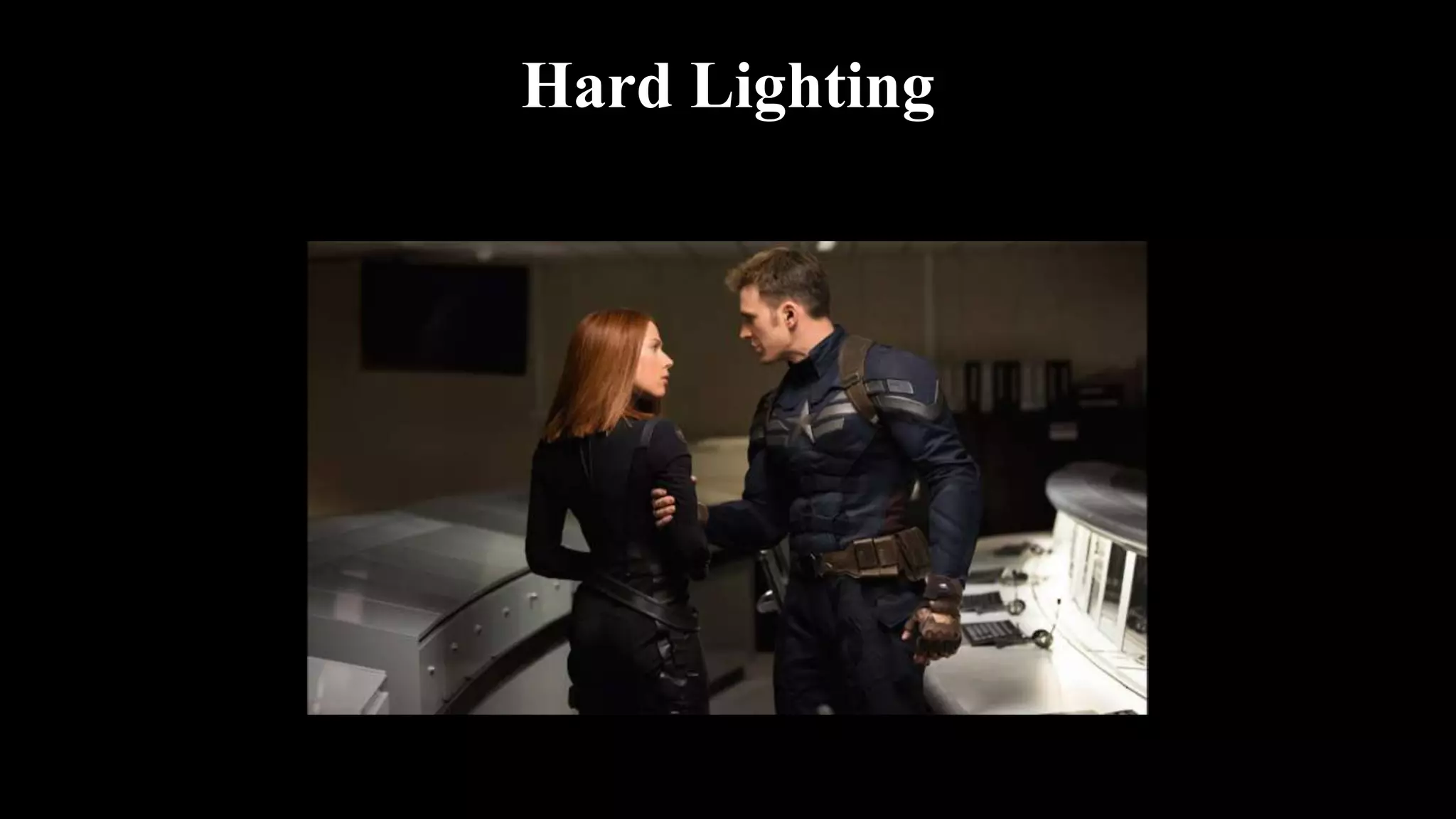
• Hard lighting is a lighting aesthetic with harsh shadows that draws attention to a specific
actor or part of a scene.
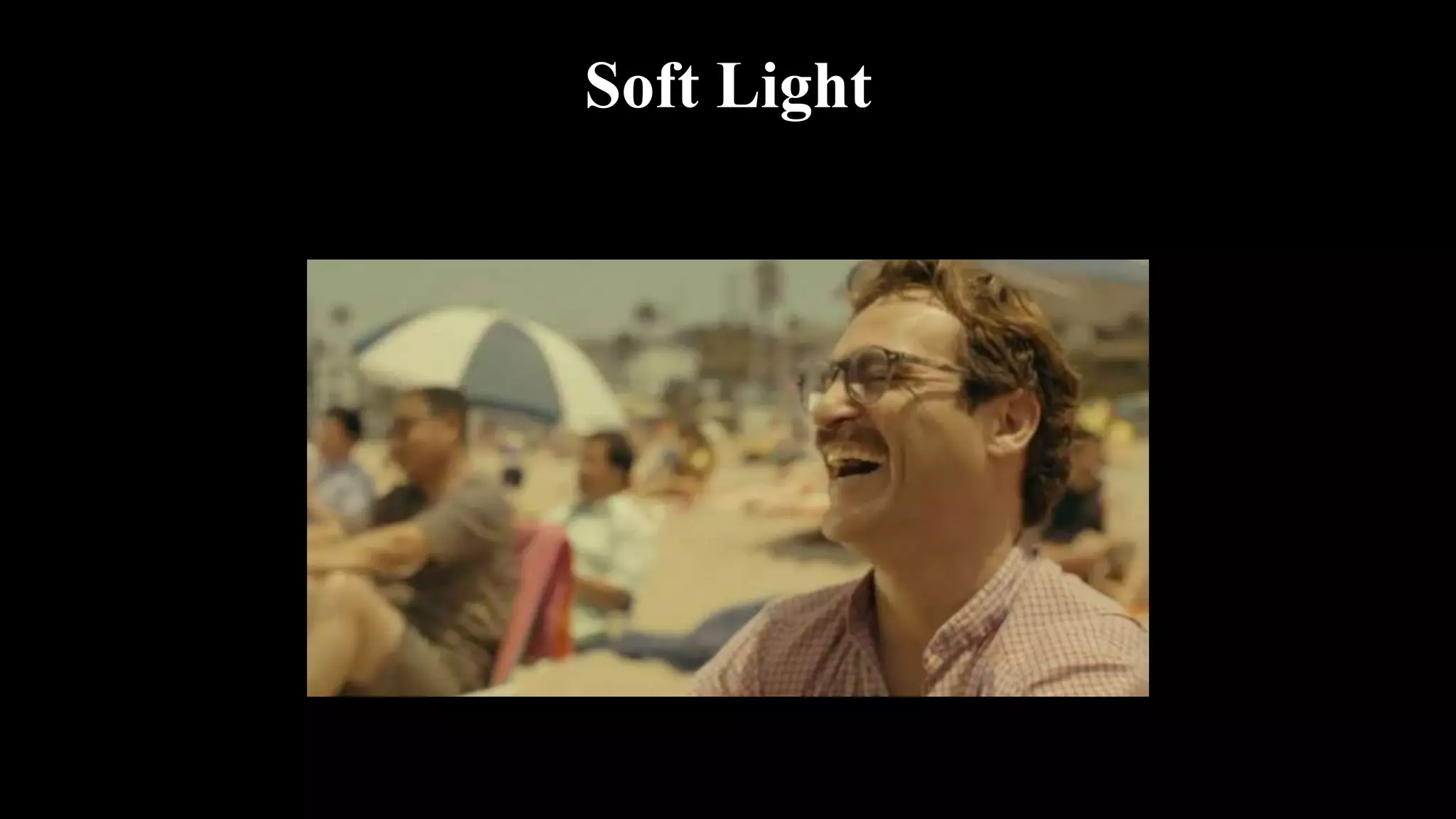
• Soft lighting is a lighting aesthetic with little to no harsh shadows that’s bright yet
balanced.
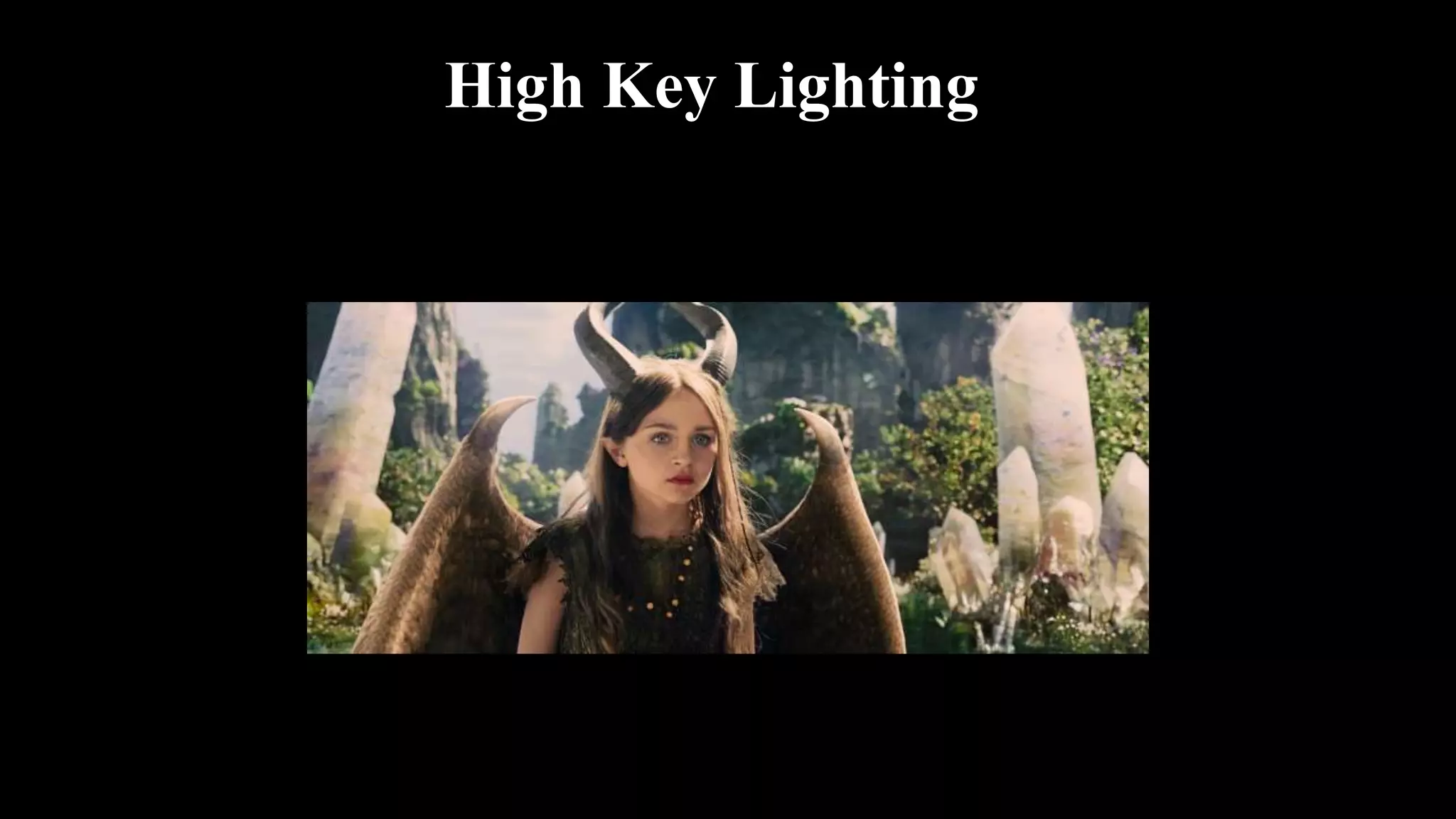
• High-key lighting is a lighting aesthetic with no shadows and intense brightness,
bordering on overexposure. You’ll commonly see high-key lighting in a television sitcom,
a music video, or a commercial.
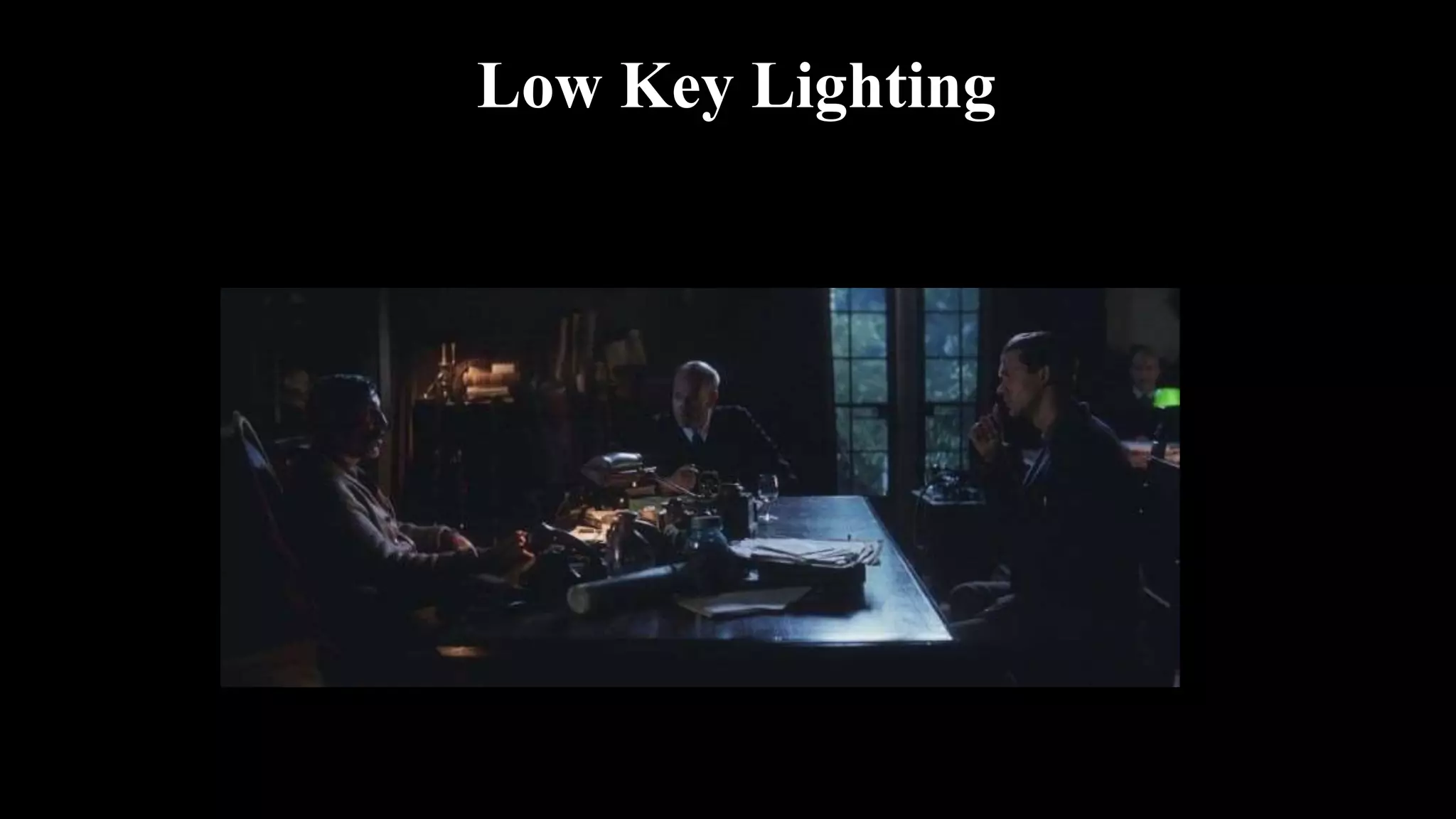
• Low-key lighting is a lighting aesthetic with a lot of shadows to create a sense of mystery
or suspense.
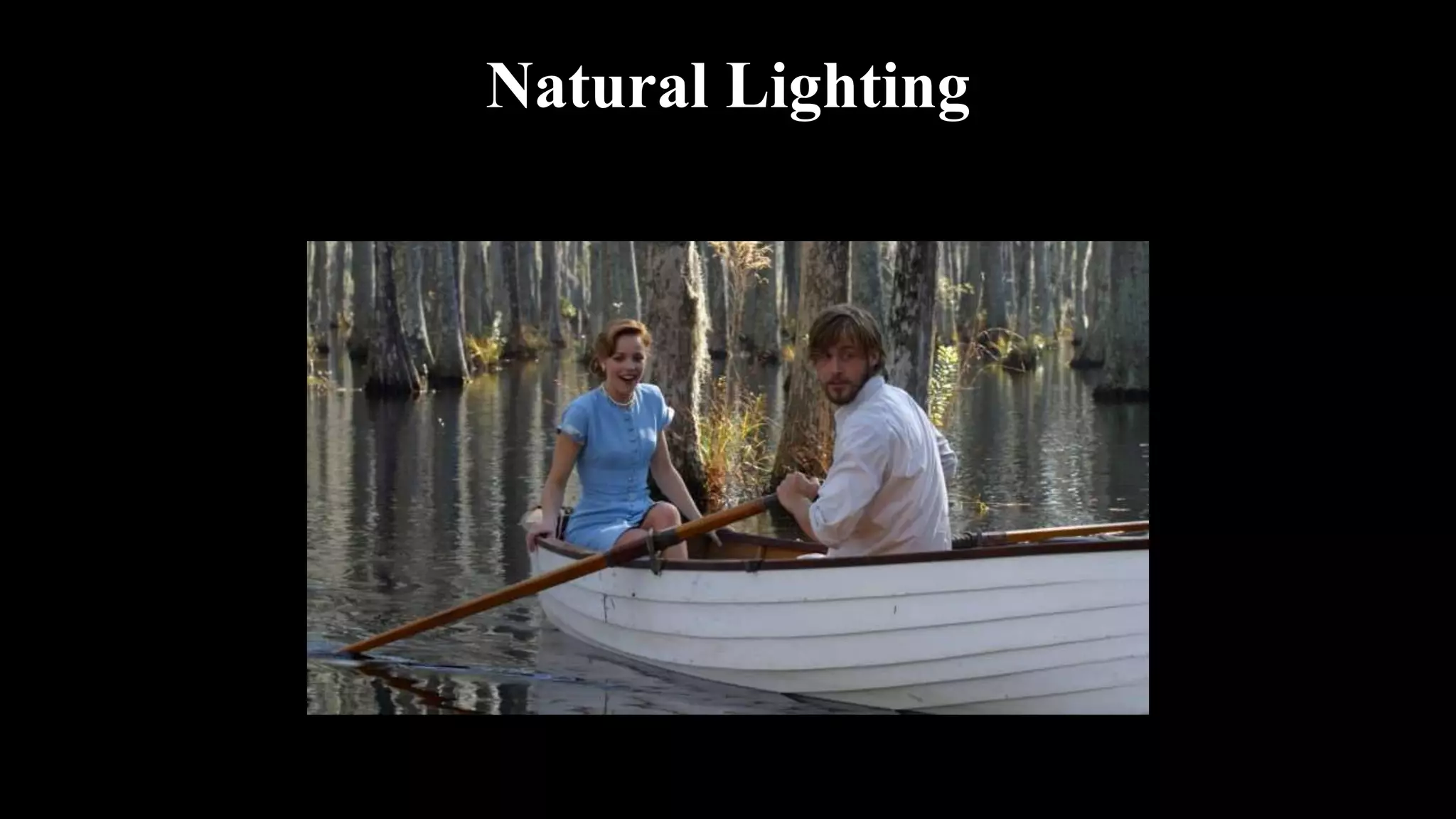
• Natural lighting uses and modifies the available light at the location of the shoot.
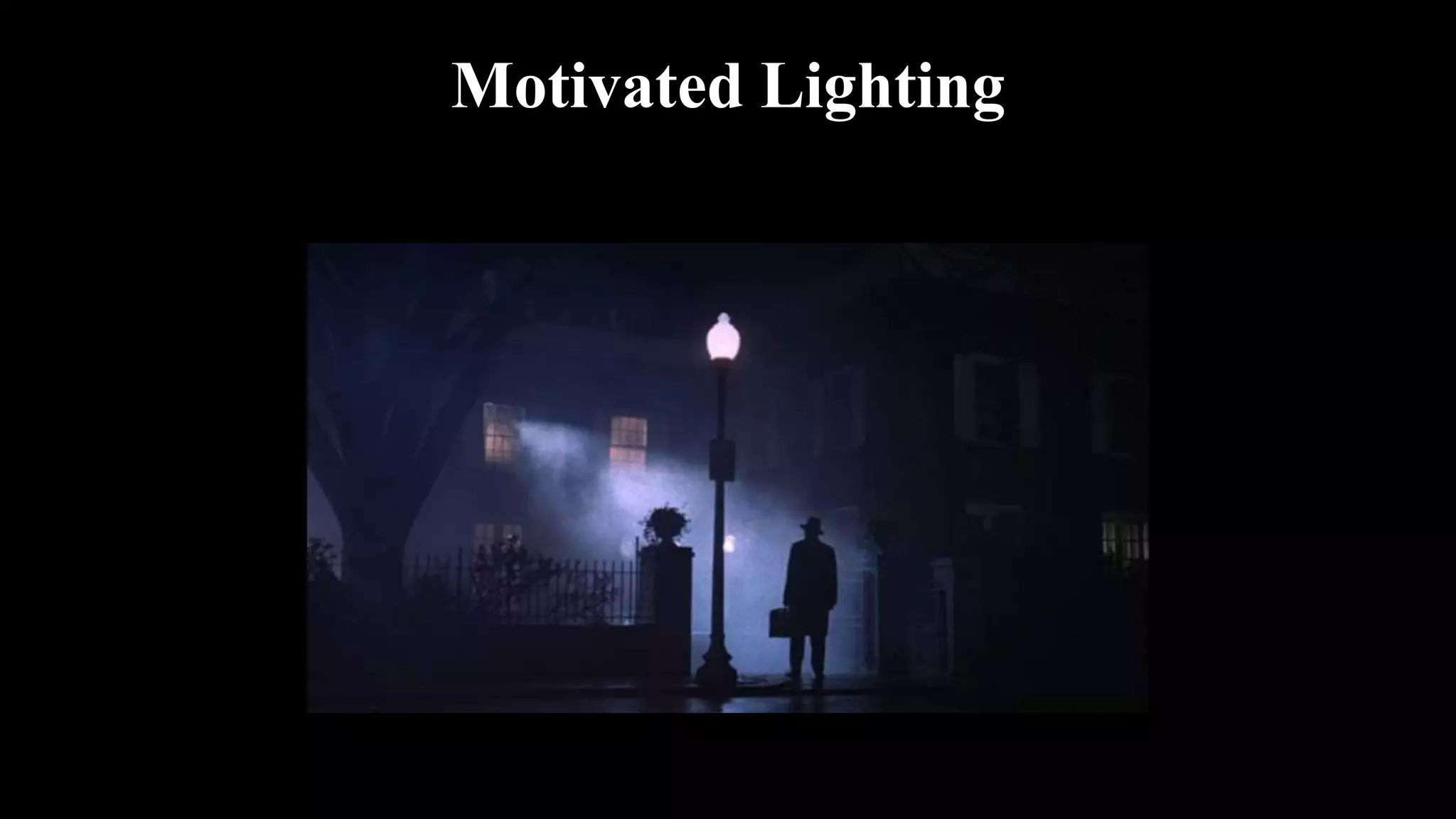
• Motivated lighting is a controlled lighting technique meant to imitate natural light sources
in the scene like the sun or the moon.
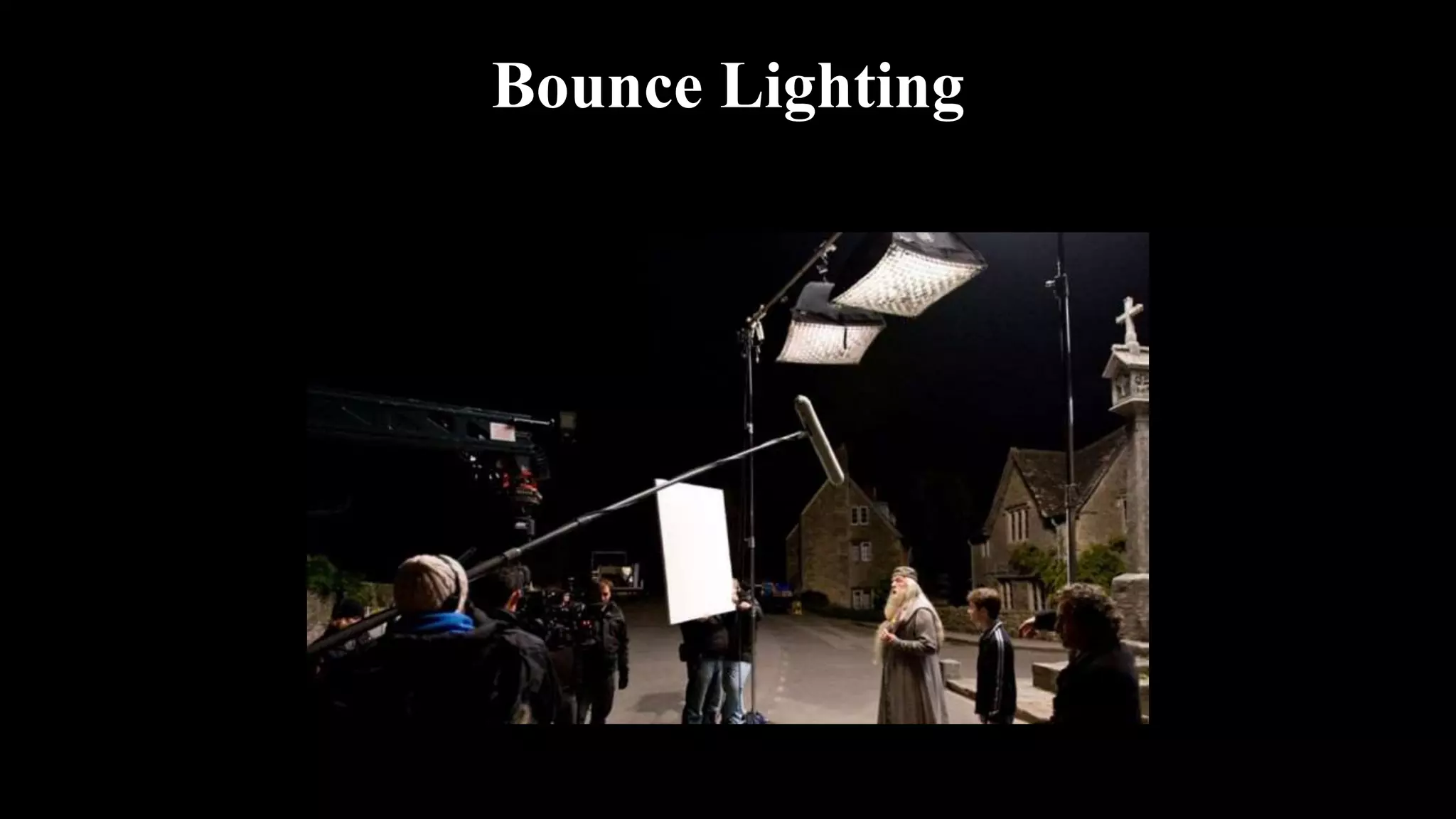
• Bounce lighting is a technique where light is bounced from a strong source toward the
actor with a reflector, which soften and spread the light.
Natural Lighting
Key lighting
High Key Lighting
Low Key Lighting
Fill Lighting
Backlighting
Practical Light
Hard Lighting
Soft Light
Bounce Lighting
Side Lighting or Chiaroscuro Lighting
Motivated Lighting
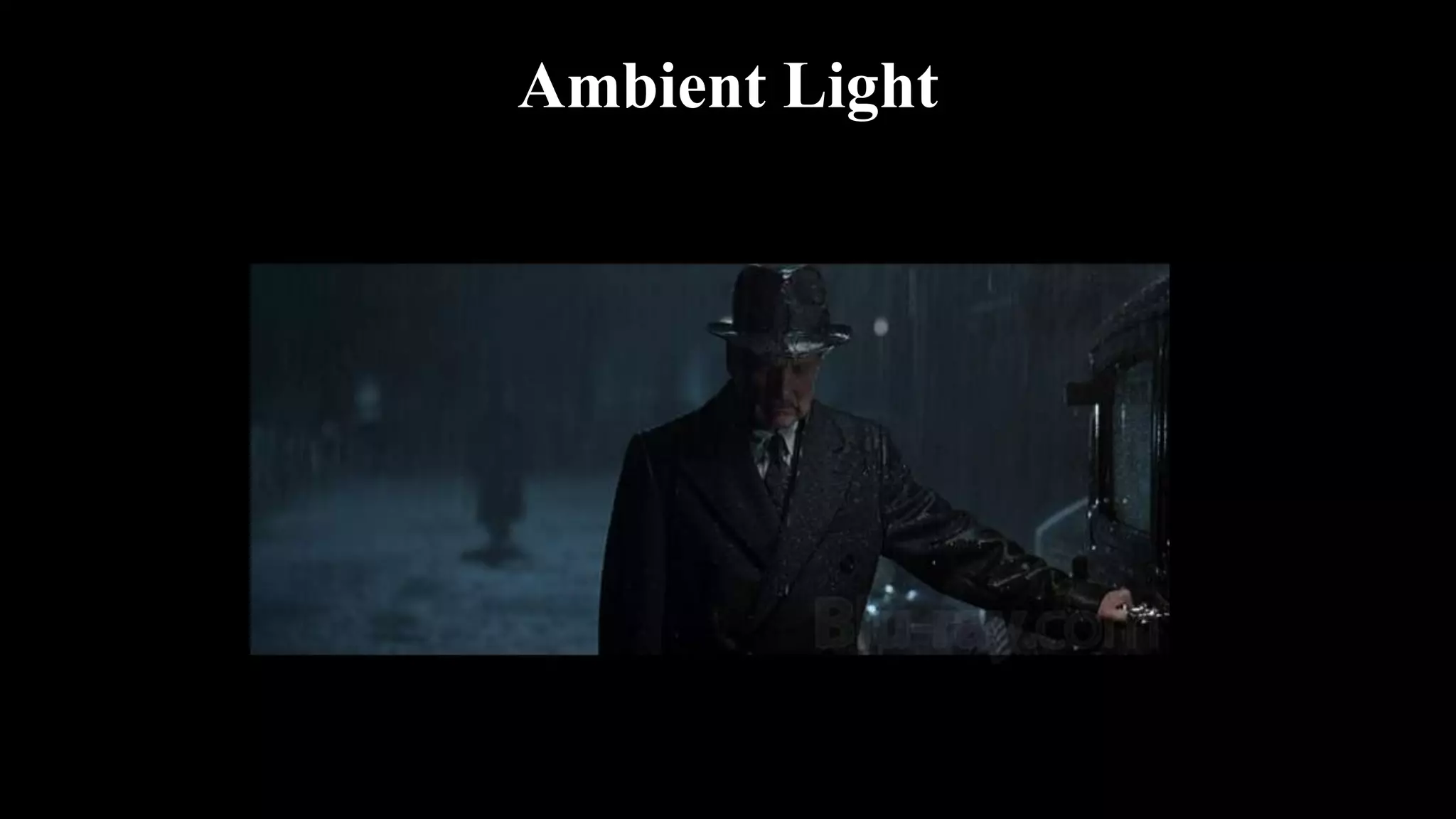
Ambient Light
END

Outer orientation functions

  • 1.
    Outer orientation functions: Preparedby Ms Rijitha. R (M.A, M.Phil, SET) Assistant Professor PG Department of Electronic Media
  • 2.
  • 3.
    There are 12basic types of lighting used in filmmaking: • Key lighting is the main—and strongest—light source in a scene or on the actor. • Fill lighting adds dimension and softens harsh shadows created by the key light. • Backlighting is placed behind the actor to help define their features and distinguish them from the background. • Side lighting lights the actor from the side and focuses on the contours of their face for a high-contrast dramatic effect. • Practical lighting is a light source that is visible within the scene like lamps, light fixtures, candles, and television sets. They’re not usually strong enough to light a subject, but they add to the cinematic ambiance of the scene.
  • 4.
    There are 12basic types of lighting used in filmmaking: • Hard lighting is a lighting aesthetic with harsh shadows that draws attention to a specific actor or part of a scene. • Soft lighting is a lighting aesthetic with little to no harsh shadows that’s bright yet balanced. • High-key lighting is a lighting aesthetic with no shadows and intense brightness, bordering on overexposure. You’ll commonly see high-key lighting in a television sitcom, a music video, or a commercial. • Low-key lighting is a lighting aesthetic with a lot of shadows to create a sense of mystery or suspense. • Natural lighting uses and modifies the available light at the location of the shoot. • Motivated lighting is a controlled lighting technique meant to imitate natural light sources in the scene like the sun or the moon. • Bounce lighting is a technique where light is bounced from a strong source toward the actor with a reflector, which soften and spread the light.
  • 5.
  • 6.
  • 7.
  • 8.
  • 9.
  • 10.
  • 11.
  • 12.
  • 13.
  • 14.
  • 15.
    Side Lighting orChiaroscuro Lighting
  • 16.
  • 17.
  • 18.