Our
Environment
Class – 10th
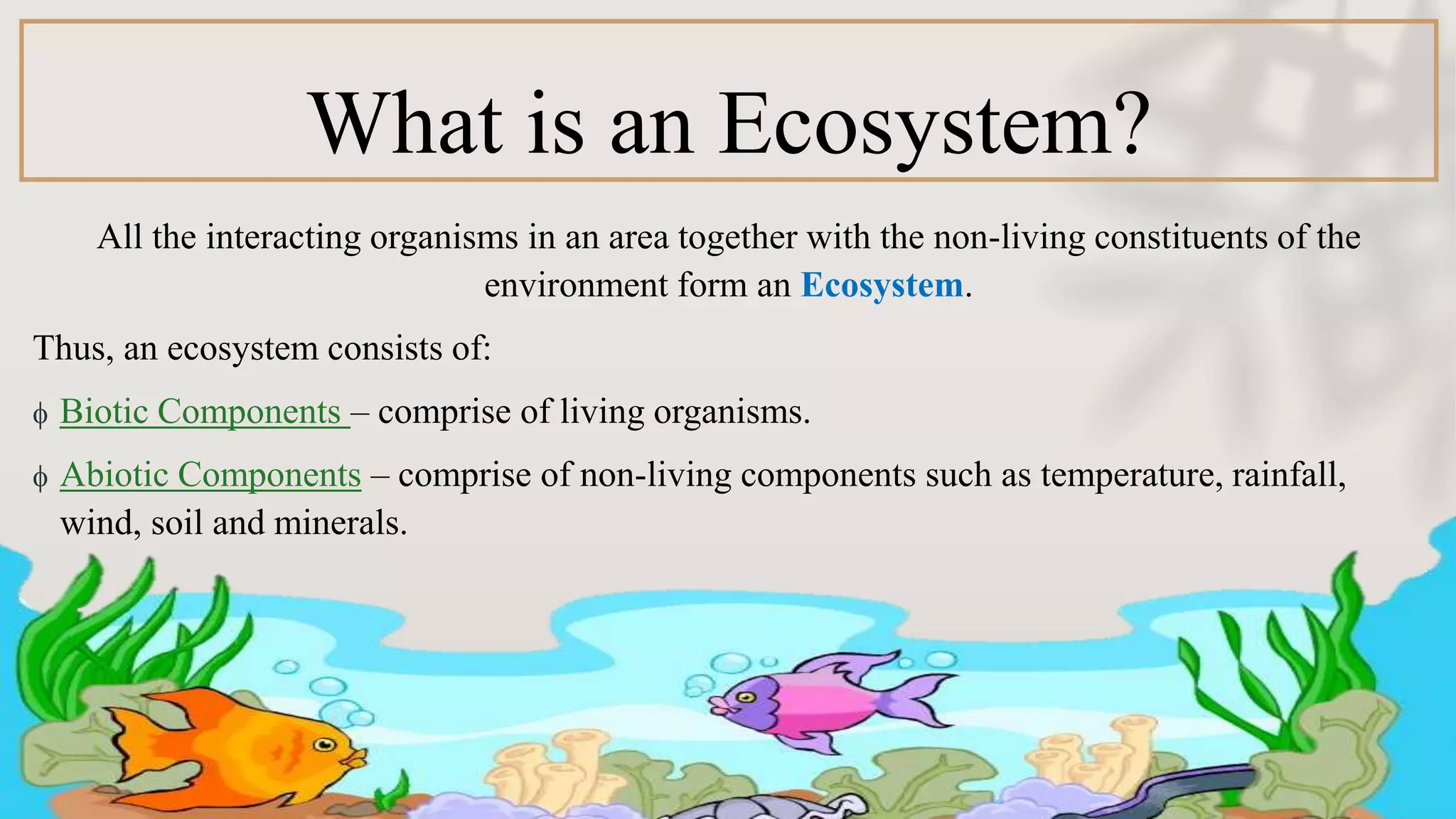
What is an Ecosystem?
All the interacting organisms in an area together with the non-living constituents of the
environment form an Ecosystem.
Thus, an ecosystem consists of:
 Biotic Components – comprise of living organisms.
 Abiotic Components – comprise of non-living components such as temperature, rainfall,
wind, soil and minerals.
Types of Ecosystems
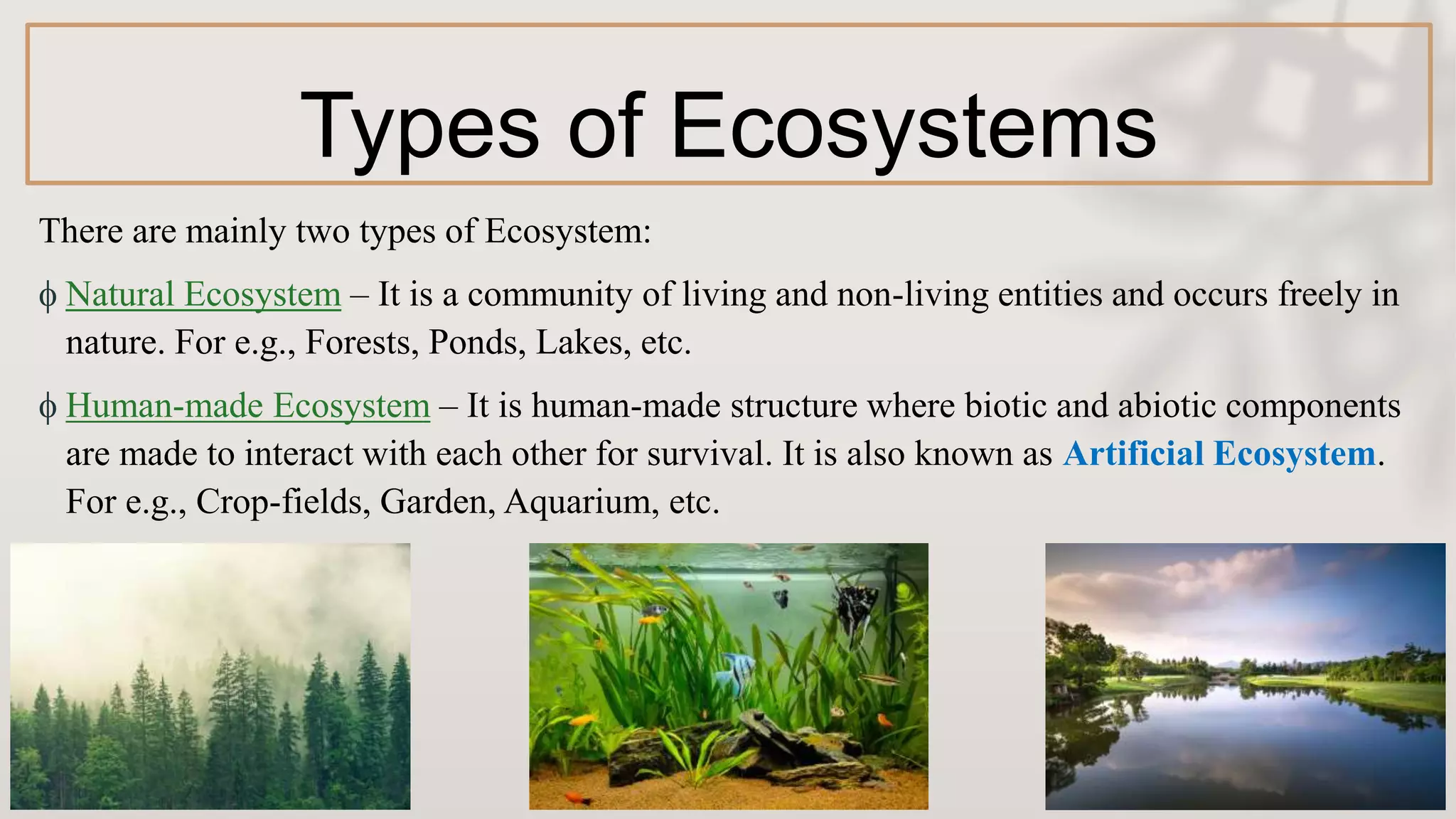
There are mainly two types of Ecosystem:
 Natural Ecosystem – It is a community of living and non-living entities and occurs freely in
nature. For e.g., Forests, Ponds, Lakes, etc.
 Human-made Ecosystem – It is human-made structure where biotic and abiotic components
are made to interact with each other for survival. It is also known as Artificial Ecosystem.
For e.g., Crop-fields, Garden, Aquarium, etc.
Types of Organisms
The organisms can be classed as:
 Producers – All green plants and certain bacteria which can produce food by photosynthesis
are called Producers.
 Consumers – The organisms which directly or indirectly depends on producers for food and
feed on others are called Consumers. Saprophytes, Holozoic, Parasites come under the
category of Consumers.
 Decomposers – The micro-organisms that convert the dead remains of plants and animals to
humus are called Decomposers. Fungi and Bacteria come under the Decomposers.
Producers Consumers Decomposers
Food Chain
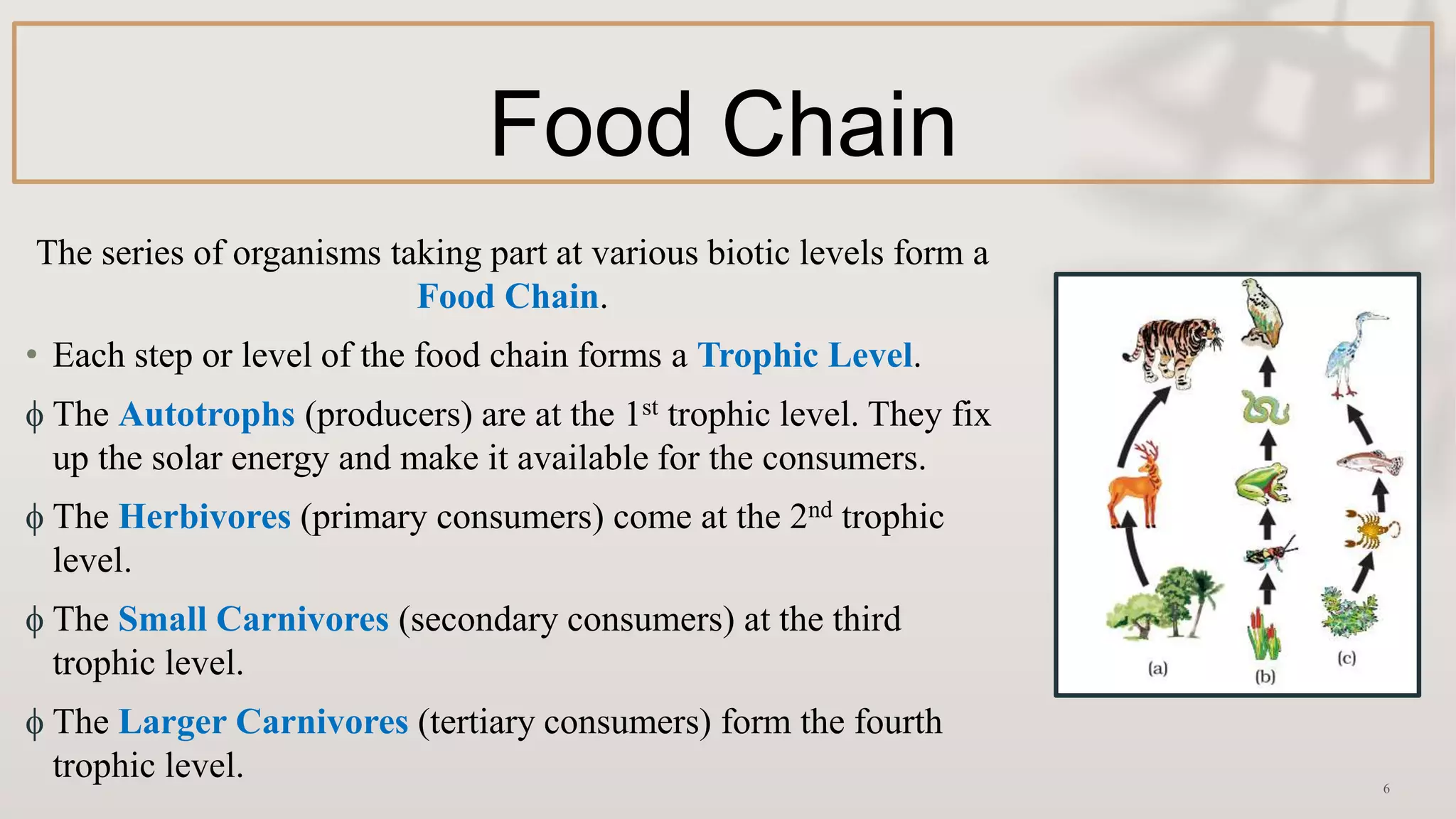
The series of organisms taking part at various biotic levels form a
Food Chain.
• Each step or level of the food chain forms a Trophic Level.
 The Autotrophs (producers) are at the 1st trophic level. They fix
up the solar energy and make it available for the consumers.
 The Herbivores (primary consumers) come at the 2nd trophic
level.
 The Small Carnivores (secondary consumers) at the third
trophic level.
 The Larger Carnivores (tertiary consumers) form the fourth
trophic level.
10% Law
 The interactions among various components of the environment involves flow of energy
from one component to another.
 The green plants in a terrestrial ecosystem capture about 1% of the energy of sunlight that
falls on their leaves and convert it into food energy.
 When green plants are eaten by primary consumers, a great deal of energy is lost as heat in
environment, some amount goes into digestion and work and the rest goes to growth and
reproduction. An Average Of 10% of the food eaten is turned into its own body and made
available for the next level.
 Therefore, 10% can be taken as the average value for the amount of organic matter that is
present at each step.
Tertiary Consumers
Secondary Consumers
Primary Consumers
Producers
Why Only 4 Trophic Levels?
Only a little amount of energy is available for the next level of consumers, food chains
generally consist of only three or four steps.
The loss of energy at each step is so great that very little usable energy remains after four
trophic levels.
Food Webs
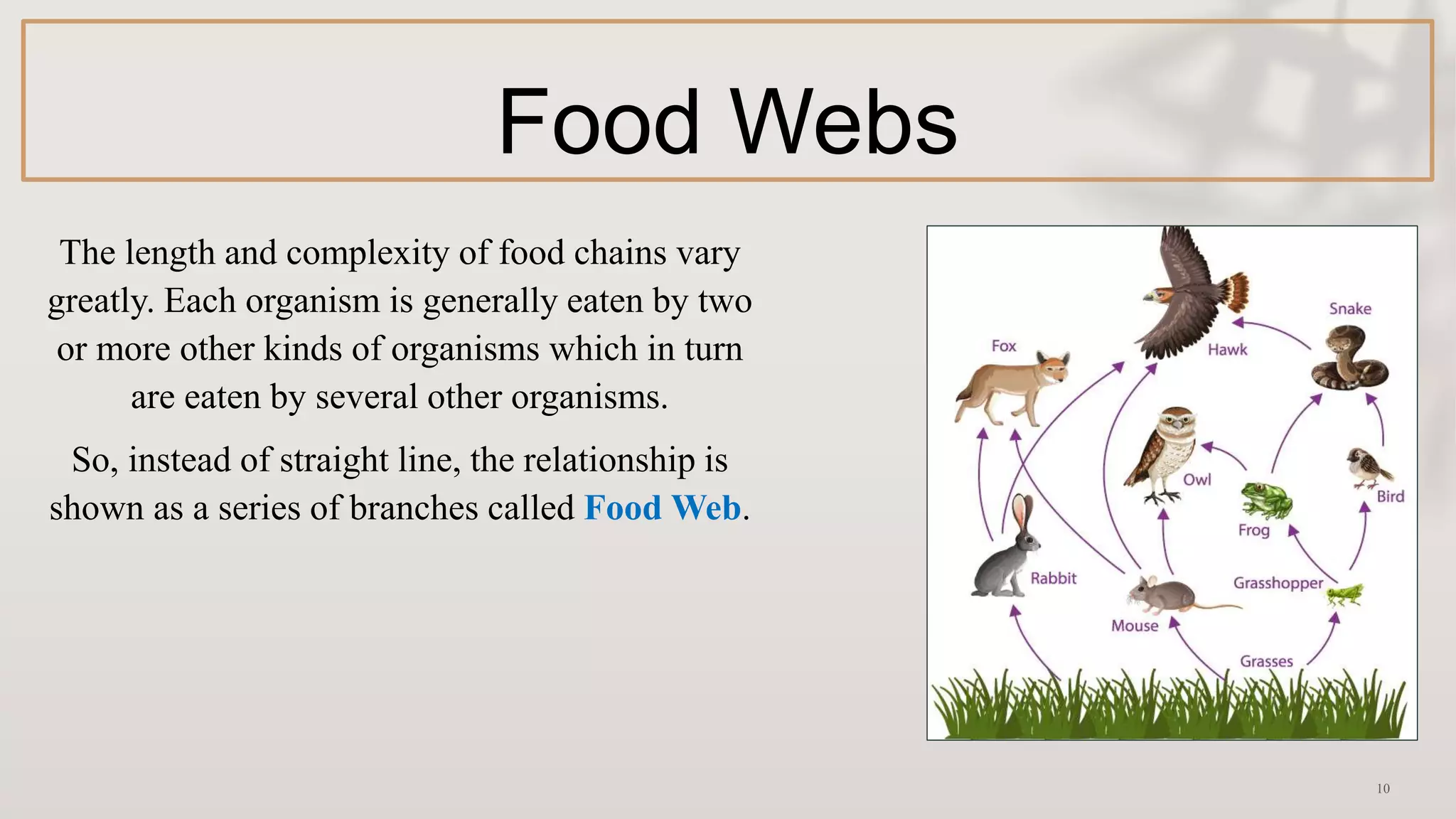
The length and complexity of food chains vary
greatly. Each organism is generally eaten by two
or more other kinds of organisms which in turn
are eaten by several other organisms.
So, instead of straight line, the relationship is
shown as a series of branches called Food Web.
Limitations of Energy Flow
The limitations of Flow Of Enrgy in our environment
are as follows:-
 The flow of energy is Unidirectional. The energy
that is captured by the autotrophs does not revert
back to the solar input.
 The energy available at each trophic level gets
diminished progressively due to loss of energy at
each level.
The EnergyFlow
Biological Magnification
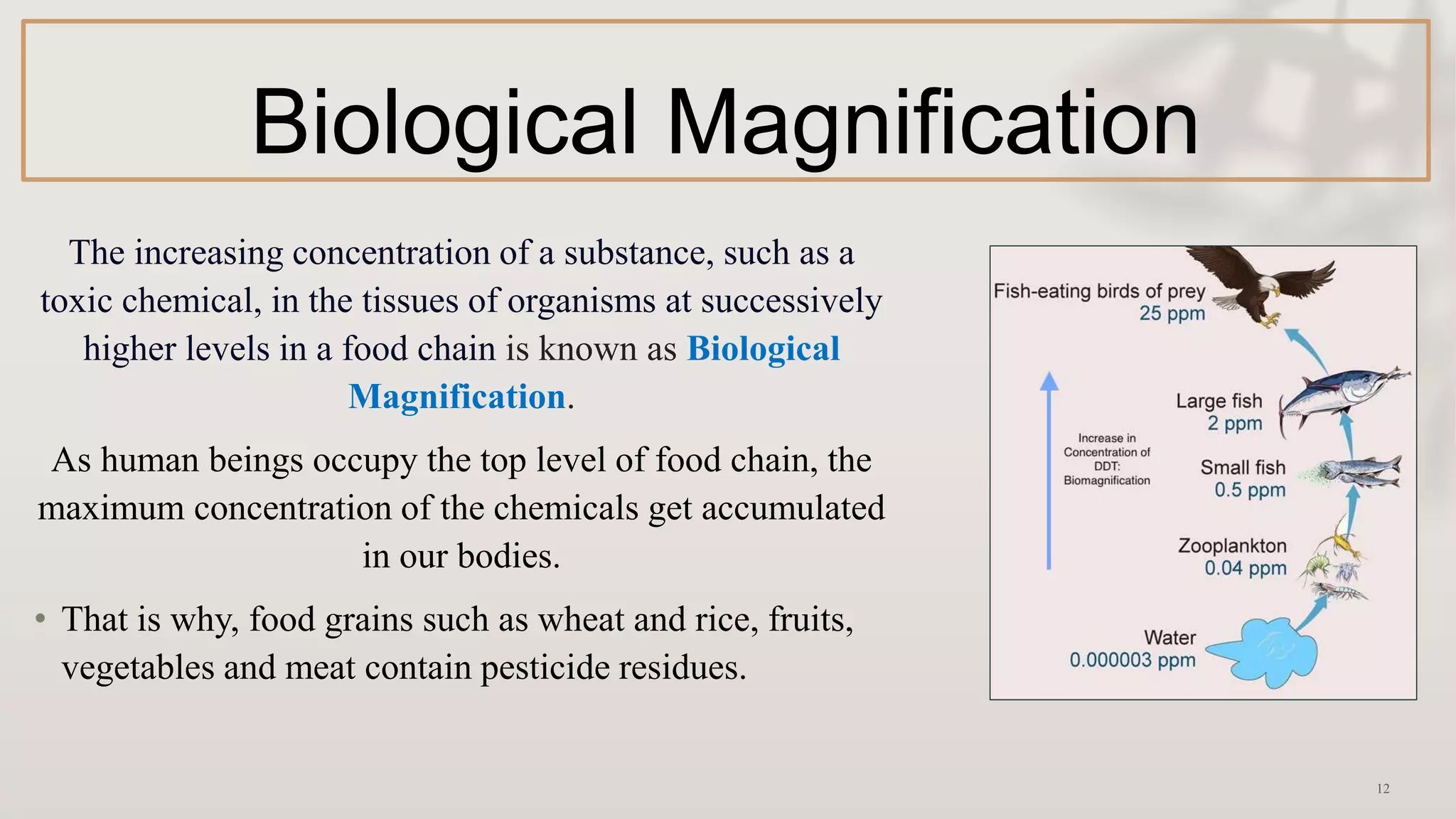
The increasing concentration of a substance, such as a
toxic chemical, in the tissues of organisms at successively
higher levels in a food chain is known as Biological
Magnification.
As human beings occupy the top level of food chain, the
maximum concentration of the chemicals get accumulated
in our bodies.
• That is why, food grains such as wheat and rice, fruits,
vegetables and meat contain pesticide residues.
Ozone Layer (O3)
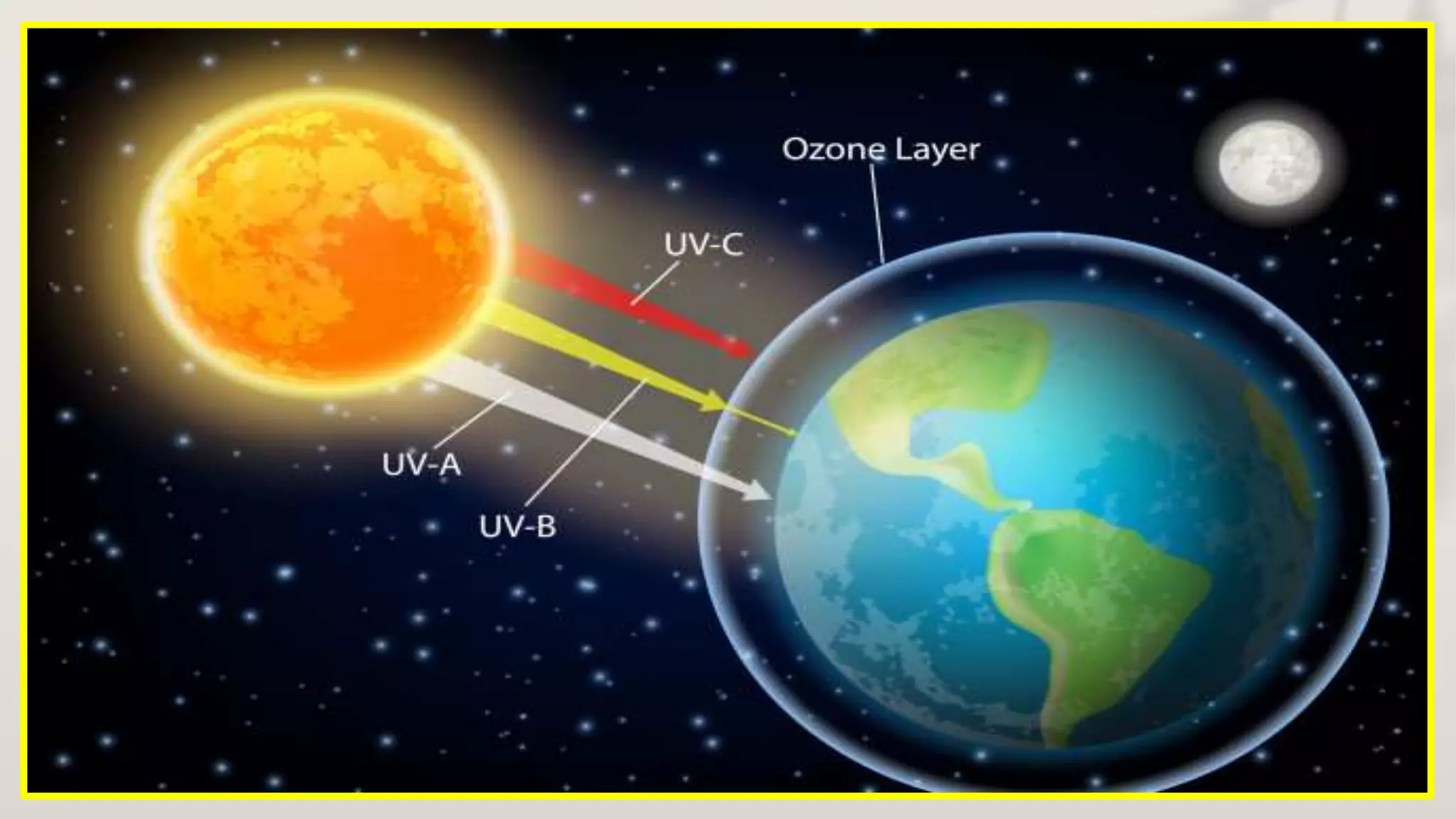
Ozone (O3) is a molecule formed by three atoms of oxygen. Ozone is a deadly poison.
However, at higher levels of the atmosphere, it performs an essential function. It shields the
earth’s surface from ultraviolet radiation from the Sun. This radiation is highly damaging to
organisms and can cause skin cancer in humans.
• Ozone at the higher levels of the atmosphere is a product of UV radiation acting on O2.
• The UV radiations split apart moleculer O2 into free O atoms.
• These atoms then combine to form Ozone.
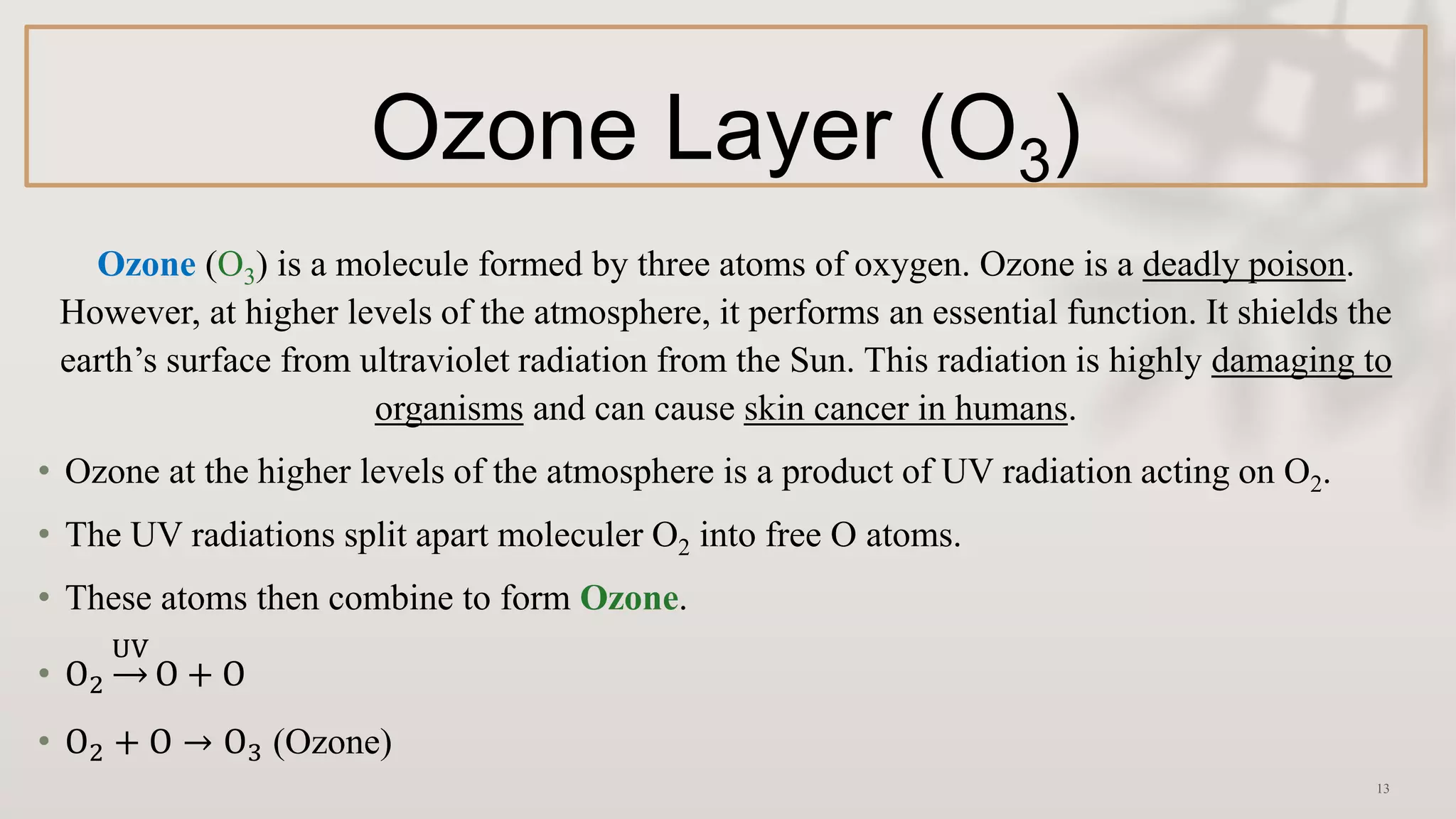
• O2
UV
O + O
• O2 + O → O3 (Ozone)
The Depletion of Ozone
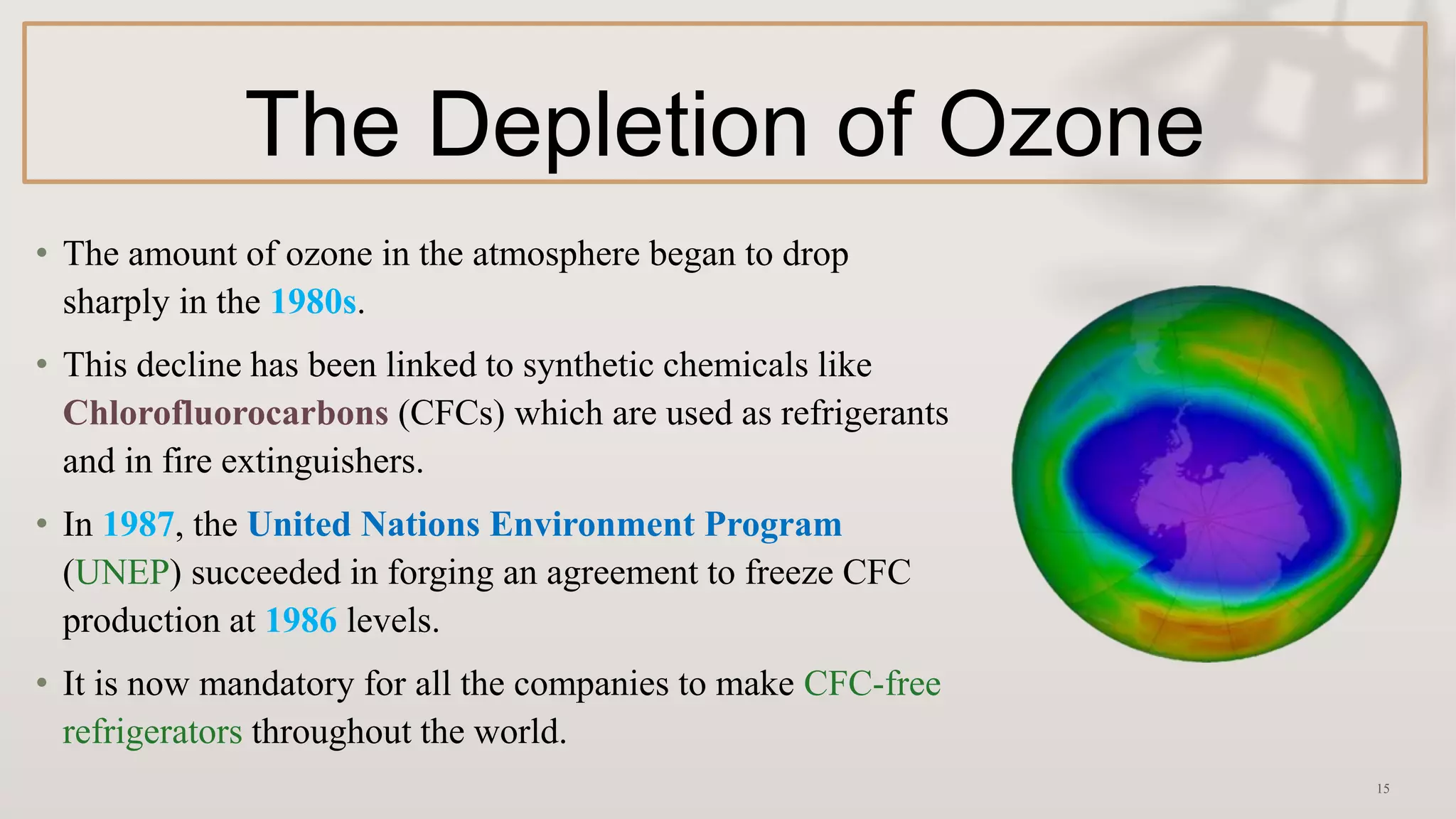
• The amount of ozone in the atmosphere began to drop
sharply in the 1980s.
• This decline has been linked to synthetic chemicals like
Chlorofluorocarbons (CFCs) which are used as refrigerants
and in fire extinguishers.
• In 1987, the United Nations Environment Program
(UNEP) succeeded in forging an agreement to freeze CFC
production at 1986 levels.
• It is now mandatory for all the companies to make CFC-free
refrigerators throughout the world.
What is Garbage?
Garbage refers to trash, waste materials, and unwanted or
used products.
Kitchen waste, waste from vegetables and fruits, spoiled food
products, animal wastes, waste papers, dried leaves and
plastic materials, husk, weed, cattle wastes, and other waste
products generated daily are all examples of this.
• The two types of garbage are:-
 Biodegradable Waste
 Non – Biodegradable Waste
Classification of Garbage
Biodegradable Waste
• Substances that are broken down by
biological processes are called
Biodegradable.
Non-biodegradable Waste
• Substances that cannot be broken down
by enzyme action are called Non-
biodegradable.
Our Environment Class - 10th

Our Environment Class - 10th

  • 1.
  • 2.
    What is anEcosystem? All the interacting organisms in an area together with the non-living constituents of the environment form an Ecosystem. Thus, an ecosystem consists of:  Biotic Components – comprise of living organisms.  Abiotic Components – comprise of non-living components such as temperature, rainfall, wind, soil and minerals.
  • 3.
    Types of Ecosystems Thereare mainly two types of Ecosystem:  Natural Ecosystem – It is a community of living and non-living entities and occurs freely in nature. For e.g., Forests, Ponds, Lakes, etc.  Human-made Ecosystem – It is human-made structure where biotic and abiotic components are made to interact with each other for survival. It is also known as Artificial Ecosystem. For e.g., Crop-fields, Garden, Aquarium, etc.
  • 4.
    Types of Organisms Theorganisms can be classed as:  Producers – All green plants and certain bacteria which can produce food by photosynthesis are called Producers.  Consumers – The organisms which directly or indirectly depends on producers for food and feed on others are called Consumers. Saprophytes, Holozoic, Parasites come under the category of Consumers.  Decomposers – The micro-organisms that convert the dead remains of plants and animals to humus are called Decomposers. Fungi and Bacteria come under the Decomposers.
  • 5.
  • 6.
    Food Chain The seriesof organisms taking part at various biotic levels form a Food Chain. • Each step or level of the food chain forms a Trophic Level.  The Autotrophs (producers) are at the 1st trophic level. They fix up the solar energy and make it available for the consumers.  The Herbivores (primary consumers) come at the 2nd trophic level.  The Small Carnivores (secondary consumers) at the third trophic level.  The Larger Carnivores (tertiary consumers) form the fourth trophic level.
  • 7.
    10% Law  Theinteractions among various components of the environment involves flow of energy from one component to another.  The green plants in a terrestrial ecosystem capture about 1% of the energy of sunlight that falls on their leaves and convert it into food energy.  When green plants are eaten by primary consumers, a great deal of energy is lost as heat in environment, some amount goes into digestion and work and the rest goes to growth and reproduction. An Average Of 10% of the food eaten is turned into its own body and made available for the next level.  Therefore, 10% can be taken as the average value for the amount of organic matter that is present at each step.
  • 8.
  • 9.
    Why Only 4Trophic Levels? Only a little amount of energy is available for the next level of consumers, food chains generally consist of only three or four steps. The loss of energy at each step is so great that very little usable energy remains after four trophic levels.
  • 10.
    Food Webs The lengthand complexity of food chains vary greatly. Each organism is generally eaten by two or more other kinds of organisms which in turn are eaten by several other organisms. So, instead of straight line, the relationship is shown as a series of branches called Food Web.
  • 11.
    Limitations of EnergyFlow The limitations of Flow Of Enrgy in our environment are as follows:-  The flow of energy is Unidirectional. The energy that is captured by the autotrophs does not revert back to the solar input.  The energy available at each trophic level gets diminished progressively due to loss of energy at each level. The EnergyFlow
  • 12.
    Biological Magnification The increasingconcentration of a substance, such as a toxic chemical, in the tissues of organisms at successively higher levels in a food chain is known as Biological Magnification. As human beings occupy the top level of food chain, the maximum concentration of the chemicals get accumulated in our bodies. • That is why, food grains such as wheat and rice, fruits, vegetables and meat contain pesticide residues.
  • 13.
    Ozone Layer (O3) Ozone(O3) is a molecule formed by three atoms of oxygen. Ozone is a deadly poison. However, at higher levels of the atmosphere, it performs an essential function. It shields the earth’s surface from ultraviolet radiation from the Sun. This radiation is highly damaging to organisms and can cause skin cancer in humans. • Ozone at the higher levels of the atmosphere is a product of UV radiation acting on O2. • The UV radiations split apart moleculer O2 into free O atoms. • These atoms then combine to form Ozone. • O2 UV O + O • O2 + O → O3 (Ozone)
  • 15.
    The Depletion ofOzone • The amount of ozone in the atmosphere began to drop sharply in the 1980s. • This decline has been linked to synthetic chemicals like Chlorofluorocarbons (CFCs) which are used as refrigerants and in fire extinguishers. • In 1987, the United Nations Environment Program (UNEP) succeeded in forging an agreement to freeze CFC production at 1986 levels. • It is now mandatory for all the companies to make CFC-free refrigerators throughout the world.
  • 16.
    What is Garbage? Garbagerefers to trash, waste materials, and unwanted or used products. Kitchen waste, waste from vegetables and fruits, spoiled food products, animal wastes, waste papers, dried leaves and plastic materials, husk, weed, cattle wastes, and other waste products generated daily are all examples of this. • The two types of garbage are:-  Biodegradable Waste  Non – Biodegradable Waste
  • 17.
    Classification of Garbage BiodegradableWaste • Substances that are broken down by biological processes are called Biodegradable. Non-biodegradable Waste • Substances that cannot be broken down by enzyme action are called Non- biodegradable.